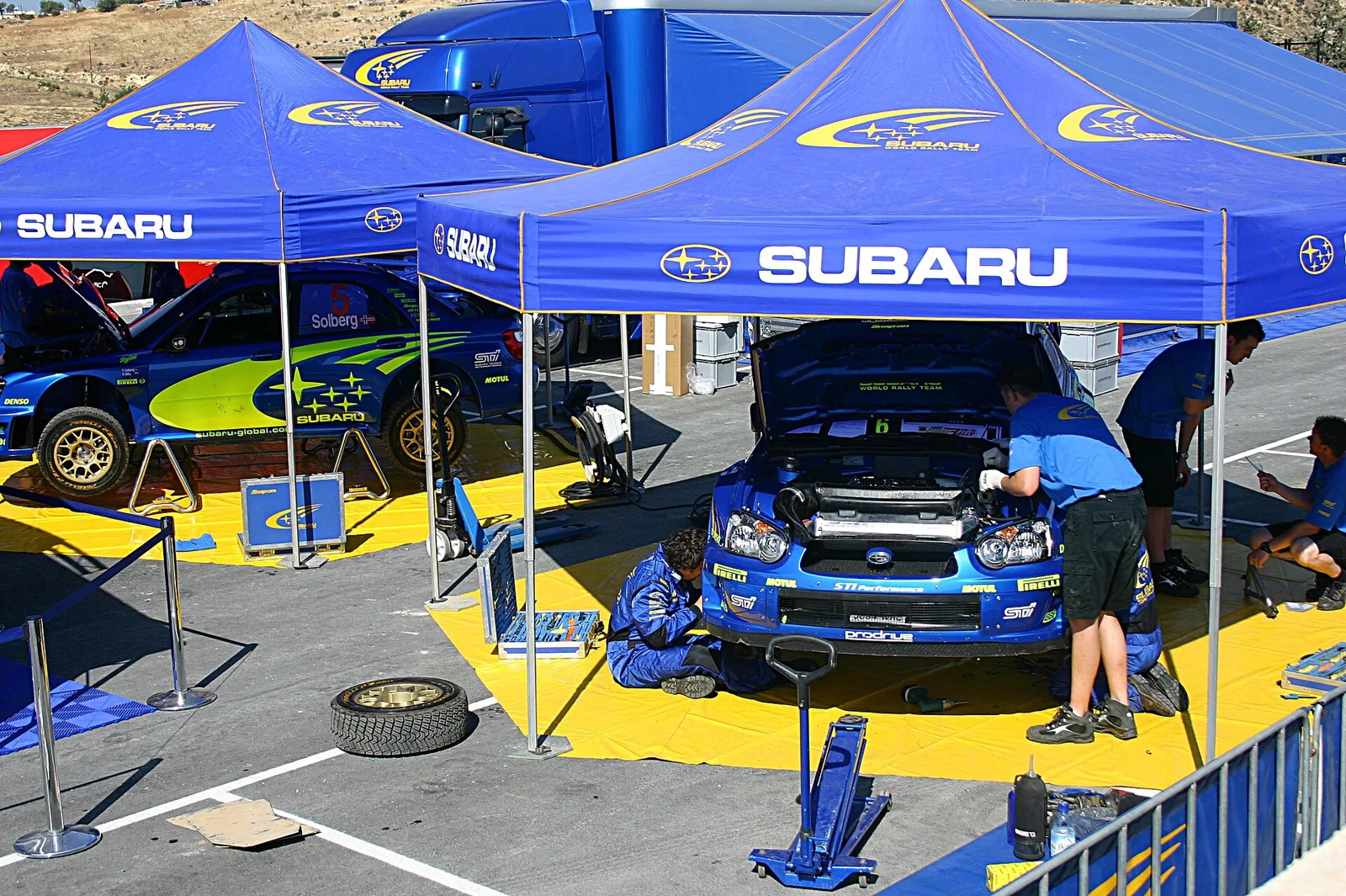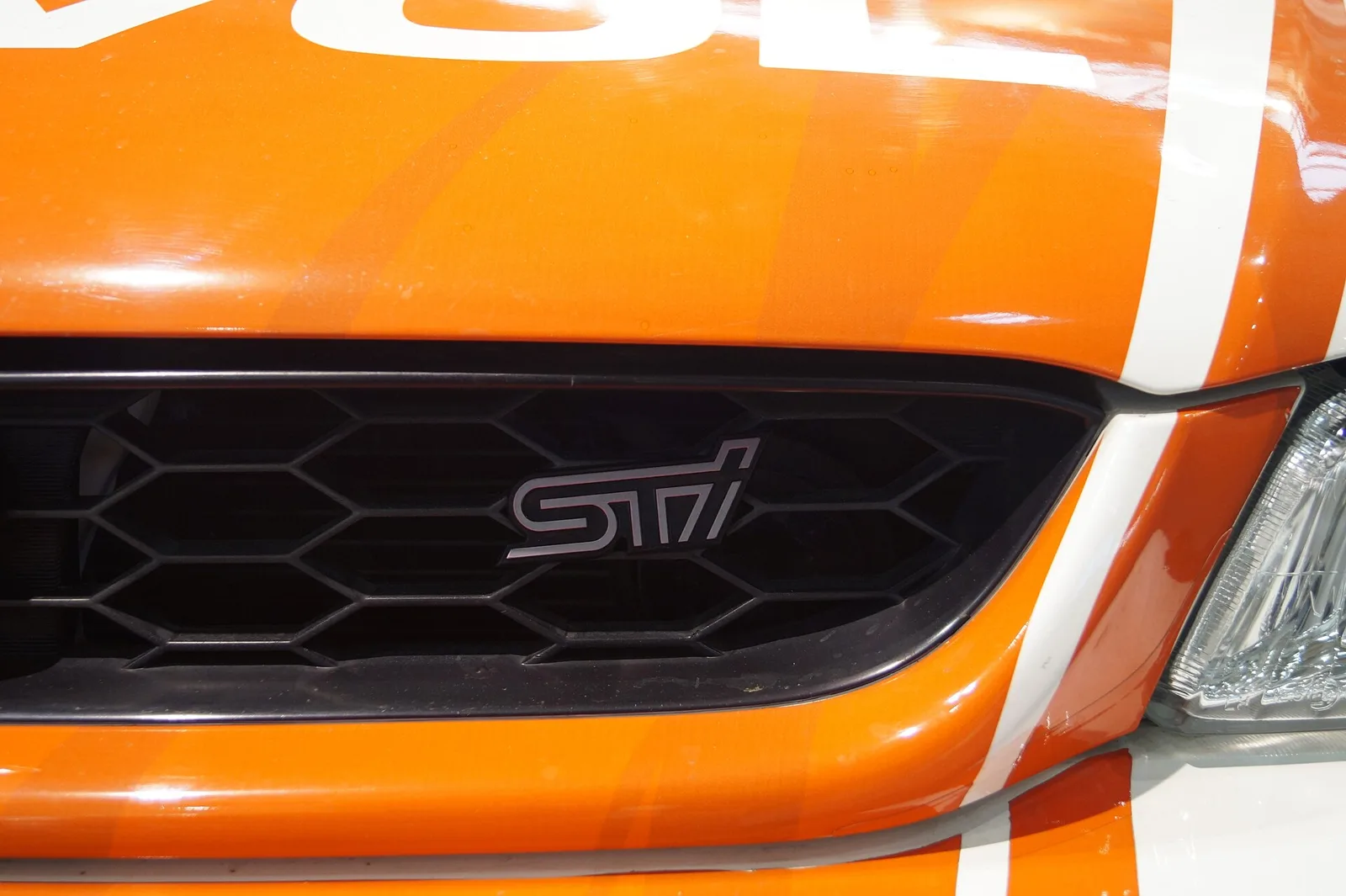
Founded in 1988 to run Subaru's competition work, STI helped win three straight rally constructors' titles and then turned to the Nurburgring, Super GT and road cars.
Subaru Tecnica International is Subaru's motorsport division, founded in 1988. It helped Subaru win three consecutive WRC constructors' titles, produced limited-edition road cars, and raced at the Nurburgring 24 Hours and in Super GT.
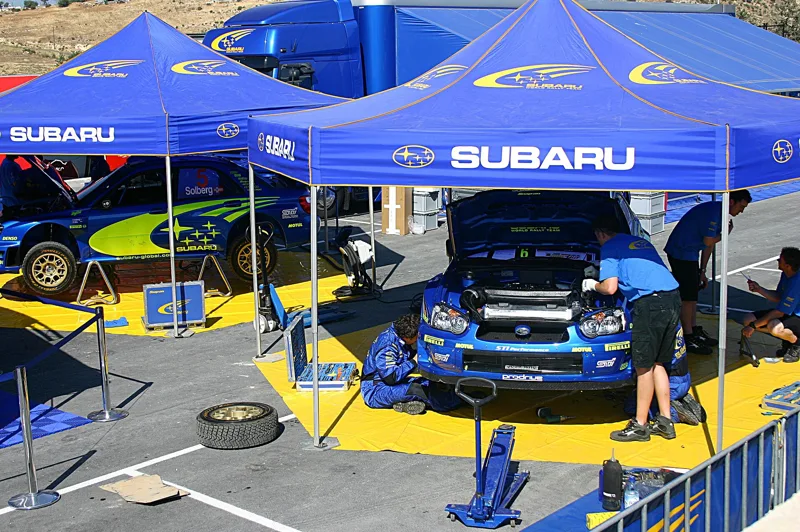
Subaru Tecnica International, usually known as STI, is the motorsport division of the Subaru Corporation. It was founded in 1988 and worked with the British firm Prodrive to prepare Subaru World Rally Team cars, before going on to build performance road cars and race in endurance and Super GT events. That mix still defines how the division presents itself.
What is Subaru Tecnica International?
Subaru Tecnica International, written in Japanese as Subaru Tekunika Intanashonaru, is the division that handles Subaru's motorsport work. It was established in 1988 by Fuji Heavy Industries, the company then known as the parent of Subaru, to take over all of Subaru's competition activities and to promote its performance image.
Subaru had been one of the top rally teams in the world, although it is no longer active at a factory level in the WRC. STI's name appears on the performance road cars it prepares, and its racing programmes have run from rallying to endurance racing and Super GT.
STI's role covered three areas: preparing rally cars, building limited-production road cars and supplying performance parts. Each area fed the others, so a result on a stage could shape the next special edition.
A motorsport division born in 1988 that turned a rally identity into limited-edition road cars and a strong Nurburgring record.
How did the STI story begin?
STI's roots go back to 1972, when Subaru ran the Leone in the Southern Cross Rally in Australia. In 1980 the Leone 4WD entered the Safari Rally, making history as the first all-wheel-drive car in the World Rally Championship.
STI was then formally founded in 1988 by Noriyuki Koseki and Ryuichiro Kuze. Koseki had earlier helped prepare a Subaru FF-1 for the 1971 Baja 500, entered by a Subaru dealer in California. The car did not finish that year, but it completed the 1973 race, and it now sits in a Subaru of America historical collection.
Koseki went on to campaign Subarus privately in the Safari Rally from 1979. That private work laid the groundwork for a division with its own engineering identity. Those early private entries kept the Subaru rally name alive between factory efforts.
What was the Legacy RS programme?
In 1989 STI president Ryuichiro Kuze partnered with the British firm Prodrive to develop a rally car on the Subaru Legacy chassis. The result was the Legacy RS, which produced 220 PS through a five-speed gearbox and weighed just over 2,600 pounds. Subaru built it to homologate the car for FIA Group A racing, and its top speed of 155 miles per hour was considered extremely powerful at the time.
One of STI's first activities was a world record for 100,000 km of endurance driving. A fleet of three modified Legacy RS sedans averaged 223.345 km/h over most of January 1989. Koseki coordinated the FIA attempt and drove one of the cars, which ran a 2.0-litre EJ20 turbo engine tuned for the attempt.
That November Subaru began marketing an upgraded Legacy RS Type RA, the Record Attempt, limited to 100 examples. In 1992 the Legacy Touring Wagon STi followed with similar modifications, showing how the record work fed road models. The Legacy RS was the base for the record cars too, so one platform served rally, record and road work.
How did Subaru win its WRC titles?
Subaru had taken part in WRC races since 1980, though with limited success by 1988 when STI was founded. The Prodrive-developed Legacy RS first ran in the 1990 WRC season and finished fourth in the constructors' standings that year. Colin McRae joined the Subaru World Rally Team in 1991, and Subaru won three straight British Rally Championships between 1991 and 1993. That 1990 result came with a car developed in Britain, a reminder of how closely STI worked with Prodrive.
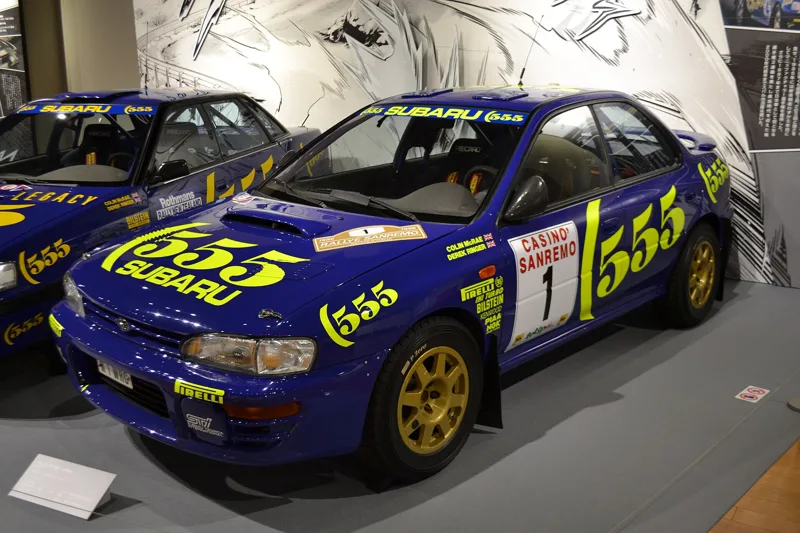
It took until the 1993 Rally New Zealand for a Legacy RS to win an individual WRC round, with McRae and Ringer aboard. By then rivals were fielding smaller and lighter cars, so Subaru began selling the Impreza WRX and homologated a Group A version, the Impreza 555.
A Prodrive-modified Impreza 555 was campaigned from the 1994 WRC season, and the new car immediately reached a podium on its debut, with Ari Vatanen second at the 1993 1000 Lakes Rally. Its 2.0-litre intercooled turbo engine made 250 horsepower, and a short-shifting transmission made changing gear quicker and easier.
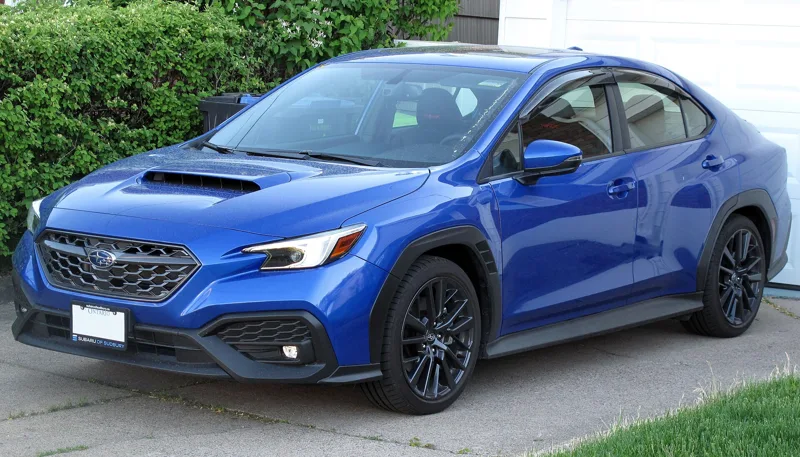
Meanwhile the Impreza 555 gave Subaru the constructors' championship in the World Rally Championship for three consecutive years between 1995 and 1997. Those titles became the foundation of STI's reputation for limited-production road cars. The WRX STI was the first STI vehicle made available to North American consumers, arriving in 2004 with 300 hp and a base price of between $35,000 and $40,000.
How did the limited-production road cars develop?
In 1994 Subaru introduced the WRX STi, with production cars taken from the regular line and modified for more output and a stiffer chassis. The WRX STi became the base for a series of special editions that STI later called its S-line. Those editions were produced in numbers too small for mass-market sales, which made each one a collector's item.
In 1998 STI introduced the 22B to celebrate its consecutive WRC constructors' titles and the fortieth anniversary of Subaru. Only 400 were built, and reportedly all sold in 30 minutes. The 22B was followed by a string of limited special editions with outputs above the Japanese manufacturers' gentleman's agreement limit of 280 PS, including the S201 in 2000, the S202 in 2002, the S203 in 2004 and the S204 in 2005. Japan-only Legacy models followed too, including the S401 of 2002, with 400 built, and the S402 of 2008, with 402 built.
Subaru told the market at the close of 2008 that it would leave the WRC from 2009, pointing to the financial crisis. The withdrawal closed the most successful chapter of the STI rally story. Earlier, the 2001 Forester STI II Type M had been limited to 800 units with 250 PS.
What did the Nurburgring 24 Hours bring?
STI first competed in the annual Nurburgring 24 Hours in 2008, although Subaru had used the Nordschleife circuit to prove its production models since 1992. A WRX STI first raced the 24 Hours in 2005 with a private team, finishing 14th overall and second in its class. The Nordschleife had been part of Subaru's production testing since 1992, and STI teams used it to prove each generation of cars. Its results from 2008 to 2019 show a steady presence in the class, with class titles in five different seasons.
In 2008 the first factory-backed entry finished 57th overall and fifth in the SP6 class. For 2009 STI moved to the SP3T class for production cars with turbo engines of two litres or less, finishing 33rd overall and fifth in the class.
Ahead of the 2010 event, Tommi Makinen drove a prototype WRX STI and covered a Nordschleife lap in 7 minutes 55 seconds. That year STI finished 24th overall and fourth in the SP3T class. In 2011 STI won the SP3T class title and finished 21st overall, while a limited-production NBR Challenge Package on the S206 replaced the steel roof with carbon fibre.
STI repeated as SP3T class champion in 2012, and it finished second in the class in 2013. Its class titles continued in 2016, 2018 and 2019, though a fire in 2017 forced the car out. Subaru withdrew from the 2020 and 2021 races, and a tyre blowout in 2022 ended its race.
What about Super GT and the E-RA concept?
STI also competes in the GT300 class of Super GT, campaigning the Legacy B4 GT300 from 2009 and the BRZ GT300 from 2012. Its best finishes before the title were fourth places in 2011 and 2013, and in 2021 Subaru won the series championship with the updated BRZ GT300. The BRZ GT300 took its name from the road car it was based on, linking the racing programme to Subaru's sports models.
At the 2022 Tokyo Auto Salon STI unveiled the E-RA Concept, an all-wheel-drive two-seat racing car with a carbon fibre body and four electric motors, one at each wheel. Its aggregate output was 800 kW (1,073 hp) with 1,100 N m of torque, and the motors were developed by Yamaha Motor Company. Torque vectoring came from varying each motor's output.
The E-RA was designed for the FIA Electric GT Championship, which was then scheduled to start in 2023. Automotive press speculated that STI would race it, which would have required a street-legal version under GT3 rules.
What are the key results?
The main results are the WRC constructors' titles of 1995 to 1997, the 2021 Super GT championship and the Nurburgring SP3T class titles. The table below sets out the headline results by series and year. Some entries are single rounds or class results, so the table is a guide rather than a full record.
| Series | Result | Year |
|---|---|---|
| World Rally Championship | Constructors' championship, Impreza 555 | 1995 |
| World Rally Championship | Constructors' championship, Impreza 555 | 1997 |
| World Rally Championship | First individual win, Legacy RS, McRae and Ringer | 1993 |
| Nurburgring 24 Hours | SP3T class title, 21st overall | 2011 |
| Nurburgring 24 Hours | SP3T class title, repeated | 2012 |
| Nurburgring 24 Hours | SP3T class title, repeated | 2016 |
| Nurburgring 24 Hours | SP3T class title, 18th overall | 2019 |
| Super GT | GT300 series championship, BRZ GT300 | 2021 |
| Record attempt | 100,000 km at 223.345 km/h average | 1989 |
What is the legacy of Subaru Tecnica International?
STI's legacy is a line of performance road cars built on rally knowledge, from the Impreza WRX STi and the 22B to the S-line editions. Its three WRC constructors' titles and its long Nurburgring record show what a small motorsport division can achieve with a clear identity. That link still shapes how Subaru presents its performance models.
The E-RA concept points to a future in electric racing, though its path to competition depends on series rules and funding. It also shows the division looking beyond combustion engines. STI's history suggests that its next chapter will be shaped by the same mix of racing and road cars that defined the first one. The division's road cars, from the WRX STi to the 22B, have kept a loyal following among enthusiasts who value rally heritage.