How a boxer-engined Impreza and a Galant-derived Lancer fought through rally rules, a 280 PS gentlemen's agreement and one retirement.
Born from rally rules in 1992, the Subaru WRX and Mitsubishi Lancer Evolution were rival turbocharged all-wheel-drive saloons. Subaru's WRX and STI became a model separate from the Impreza in 2015. Mitsubishi ended the Evo in April 2016 after ten versions.
In 1992 two Japanese companies each began selling a small saloon with a turbocharged four-cylinder engine and all-wheel drive, designed so a rally team could race a version of it.
What does WRX stand for?
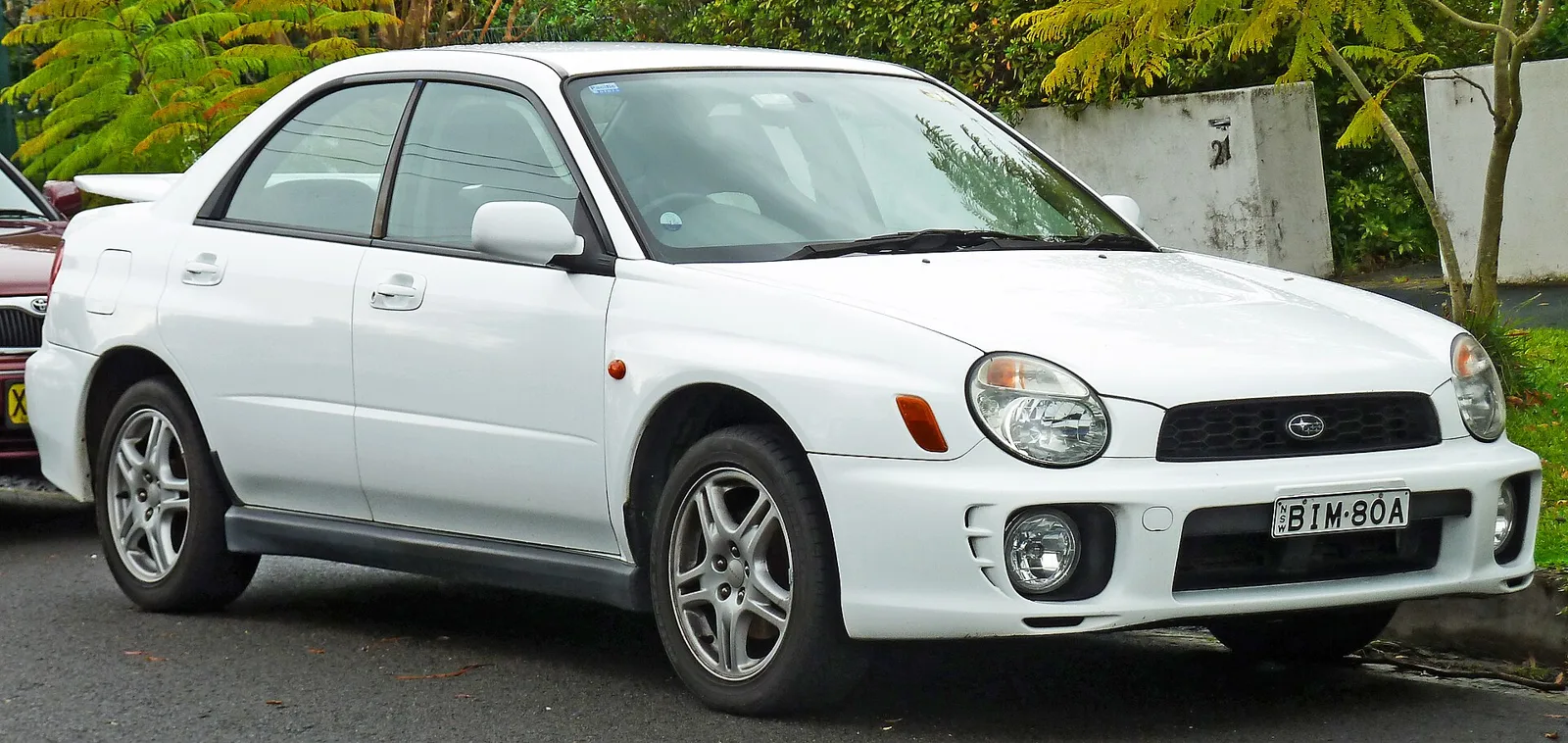
Subaru says WRX stands for "World Rally eXperimental". The car was originally based on the Impreza, a compact car Subaru launched in 1992, and was created for the World Rally Championship. The Impreza was announced on 22 October 1992 and reached Japanese showrooms that November, replacing the Leone.
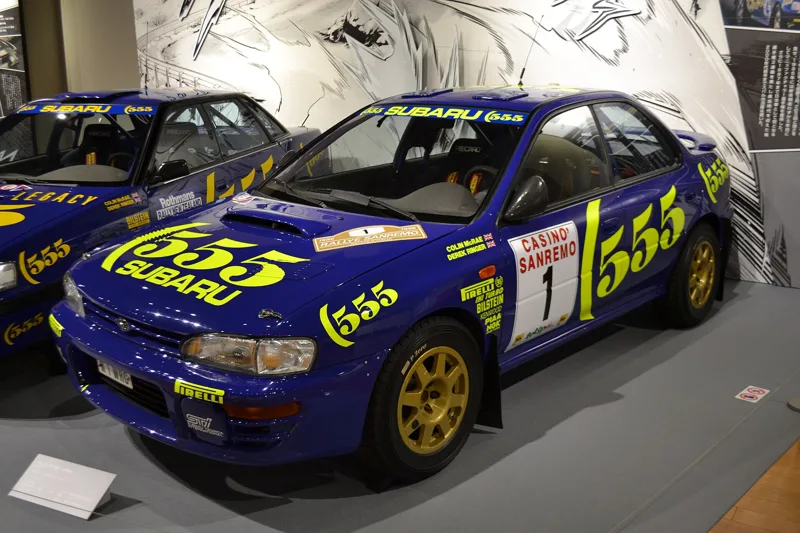
All WRX versions share rally-inspired technology: all-wheel drive, stiffened suspension and a turbocharged four-cylinder engine. The engine is a boxer, with its cylinders lying flat in two opposed banks. Subaru says that mounting it in line with the gearbox lowers the centre of gravity and so reduces body roll, and that equal-length front driveshafts reduce torque steer. The car is known for its blue paint with gold wheels, a scheme linked to a sponsorship deal.
A gentlemen's agreement kept both companies near 280 PS for years.
What is the Subaru STI?
STi stands for Subaru Tecnica International, the motorsport division Subaru created in 1988 to develop cars for the World Rally Championship and other competition. After the first-generation Impreza arrived in November 1992 and the Group A rally car made its debut a year later, an STi version went on sale in January 1994 as a homologation model under FIA rules.
STI models fall into two categories. One is a fully developed and tested homologation car, sold as a street-legal road car. The other is a complete car fitted at the factory with parts from the STI catalogue and marketed as "Tuned by STI". Many versions were sold only in Japan.
How powerful was the early WRX?
The first WRX, the GC8A, debuted in November 1992 with 240 PS (177 kW; 237 hp). In Europe the car was sold as the Impreza GT, and in the UK as the Impreza Turbo 2000, with 208 hp (155 kW; 211 PS). A stripped-down Type RA was available in Japan for people who wanted to race or rally: it had reduced soundproofing, manual windows, no air conditioning and no anti-lock brakes, plus a closer-ratio gearbox.
The first model badged STi produced 250 PS (184 kW; 247 hp). A lightweight Type RA version made 275 PS (202 kW; 271 hp) and came with a Driver Controlled Centre Differential, an electromechanical device that could lock the centre diff, along with water spray for the intercooler. In November 1994 the standard WRX rose to 260 PS (191 kW; 256 hp), and the regular STi produced 275 PS (202 kW; 271 hp) in a car weighing 1,240 kg (2,734 lb) on gold wheels like those of the rally car. From then on the STi was built on the main line instead of being sent to STi to be modified.
Limited editions marked rally success. In June 1995 Subaru UK released 200 "Series McRae" Turbo 2000s, prepared by Prodrive in "Rally Blue" with gold 16-inch wheels and numbered badges from 1 to 201. Car 13 was never built, because the number is considered unlucky. The 1996 model year brought the V-Limited editions in World Rally Blue, with 1,000 WRX STi Version II V-Limited cars built and 555 Type RA versions.
How did the Impreza WRC evolve in rallying?
Subaru's rally car replaced the Legacy RS in 1993, and it won six world rally titles: three consecutive manufacturers' titles and three drivers' titles. Prodrive reckoned a smaller, more agile car made a sounder base, so the Group A Impreza was 160 mm shorter overall, with a 60 mm shorter wheelbase and a more even front-to-rear weight split. It also had active differentials, a first for a rally car. The car debuted at the 1000 Lakes Rally in Finland, where Vatanen finished second.
The rules kept changing, and so did the car. In 1995 the FIA mandated more restrictive air intakes to slow cars down, and Subaru answered with a boxer engine with revised camshafts and compression. For 1997 the FIA replaced Group A with the World Rally Car formula, which allowed greater freedom over width, suspension, aerodynamics and engine. That produced the WRC97, with two doors, a width of 1,770 mm (69.9 in), 224 kW (300 hp) at 5500 rpm and 470 N m (347 lb ft).
The WRC98 added computer-controlled active differentials at the front, rear and centre and an electronic throttle, but mechanical failures were common. The WRC99 introduced a hydraulically actuated semi-automatic transmission with steering-wheel paddles, like a Formula One car, and Subaru was the first rally team to use the technology until the 2011 rules forbade it. Prodrive engineer Christian Loriaux redesigned over 80% of the mechanical and electronic components for the WRC2000 in 10 months, and the car won at the fourth event, Rally Portugal.
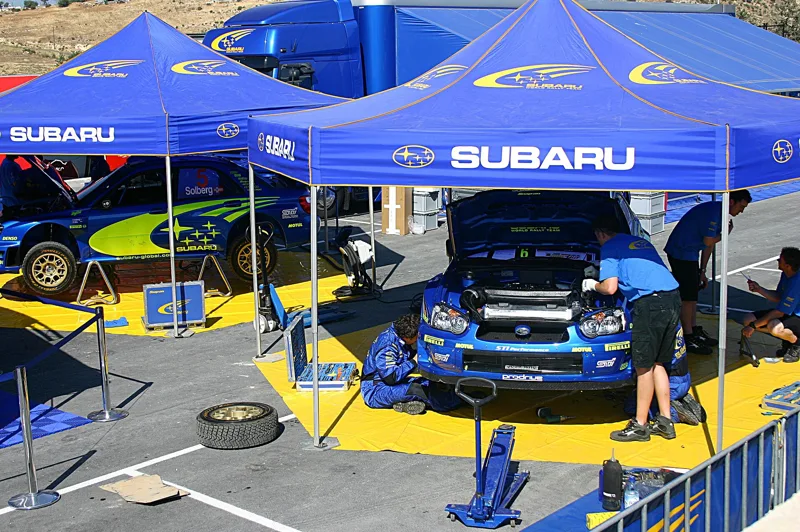
From 2001 the WRC car moved to the four-door GD body. The WRC2005 was 30 mm wider and used more composite panels to save weight. For 2006 the rules banned active differentials and water injection. By 2007 the car was considered to be underachieving against the new Focus WRC and Citroen C4 WRC. Each of its transmissions took 85 hours to build and cost more than 75,000 pounds, and the hydraulic shift could change gears in under 0.1 seconds. The WRC2008 took Petter Solberg to second place on its debut, at the Acropolis Rally, and Chris Atkinson's third place in Finland was the last podium for the car and the factory team. Subaru pulled out of the championship as 2008 ended, amid the financial crisis.
What is the Mitsubishi Lancer Evolution?
The Lancer Evolution, popularly called the Evo, was a sports saloon and rally car based on the Lancer, built by Mitsubishi Motors from 1992 until 2016. There were ten official versions, usually identified by Roman numerals. Every one used a two-litre intercooled turbocharged inline four-cylinder engine and all-wheel drive.
The Evo was meant for the Japanese market only, but demand for grey imports led to sales through Ralliart dealers in the UK and parts of Europe from around 1997 with the Evolution IV. In some European markets the IV, V, VI and VII were sold as the Carisma GT, because the regular Lancer saloon was not widely sold there and the name helped the unrelated Carisma. Proton also rebadged some Evolutions for its rally activities, as the Wira 4WD Turbo and the PERT.
Subaru's success had a direct effect on Mitsubishi. After Subaru sold the Impreza WRX successfully in the United States in 2002, Mitsubishi decided to export the Evolution VIII there in 2003.
How did the Evo develop from Evolution I to VI?
The first Evolution used the 2.0-litre turbo engine and all-wheel drive of the Galant VR-4 in a Lancer body. It came as a GSR and as a stripped RS that was about 70 kg lighter than the 1,238 kg GSR, ready for racing or tuning. About 5,000 were sold in 1992 and 1993.
| Version | Output | Torque |
|---|---|---|
| Evolution I (1992) | 250 PS (184 kW; 247 hp) | 309 N m (228 lb ft) |
| Evolution II (December 1993) | 260 PS (191 kW; 256 hp) | Unchanged |
| Evolution III (February 1995) | 270 PS (199 kW; 266 hp) | 309 N m (228 lb ft) |
| Evolution IV (1996) | 280 PS (206 kW; 276 hp) | 353 N m (260 lb ft) |
| Evolution V | 280 PS (officially) | 372.6 N m (275 lb ft) |
| Evolution VI | 280 PS (206 kW; 276 hp) | 373 N m (275 lb ft) |
The Evolution II focused on handling, with minor wheelbase adjustments, a lighter front anti-roll bar, a larger spoiler and tyres 10 mm wider. The Evolution III added a more aggressive nose to improve the air supply to the radiator, intercooler and brakes, and a larger rear spoiler. A bigger turbocharger compressor, from 65 mm to 68 mm, lifted power. Mitsubishi built 8,998 GSRs and 1,082 RS models, 10,080 in all.
The Evolution IV, on the redesigned Lancer platform of 1996, rotated the engine and transaxle by 180 degrees to balance the weight and remove torque steer. A twin-scroll turbocharger sharpened response. The GSR also gained Active Yaw Control, which used steering, throttle and g sensors to vary the torque split between the rear wheels. Mitsubishi planned to build just 6,000, and all sold out within three days of release. It was the last Evo considered compact under Japanese size rules.
The Evolution V brought flared arches, an adjustable aluminium rear spoiler, 17-inch wheels and Brembo brakes. It was now 70 mm wider than the 1,700 mm limit for Japanese compact cars. The Evolution VI concentrated on cooling and durability, with a larger intercooler and oil cooler, and a titanium-aluminide turbine wheel on the RS, a first in a production car. The Tommi Makinen Edition of December 1999 honoured the Finnish driver who had won four WRC drivers' championships for Mitsubishi, and Mitsubishi built 4,092 of them with Recaro seats, white Enkei wheels, a Momo steering wheel, a lowered ride height and quicker steering.
Why did Japanese makers cap power at 280 PS?
A gentlemen's agreement between Japanese car manufacturers held domestic-market advertising to no more than 280 PS (206 kW; 276 hp), and it applied to every domestic version until the Evolution IX in 2005. Mitsubishi was said to have already been building more powerful cars and underrating the official figures to comply. Each version has therefore unofficially exceeded the advertised numbers. The Japanese-market Evolution IX is alleged to produce around 320 PS (235 kW; 316 hp), while special versions in other markets, particularly the UK, were officially rated up to 446 PS (328 kW; 440 hp). Another UK special, the Evolution VI RS Sprint, was an RS tuned by Ralliart to reach 330 hp (246 kW).
The agreement covered Japanese manufacturers in general, and the Subaru figures of the 1990s top out at 275 PS, just under the line, from 240 PS in the first standard WRX.
Why did the Evo disappear?
Mitsubishi retired the Lancer Evolution in April 2016. The tenth and final version, the Evolution X, launched in Japan in 2007 and overseas in 2008 and was produced for nine years.
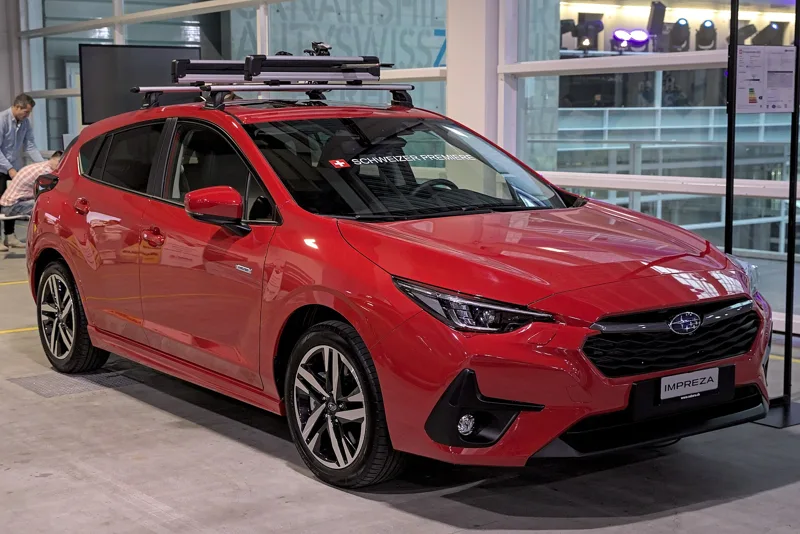
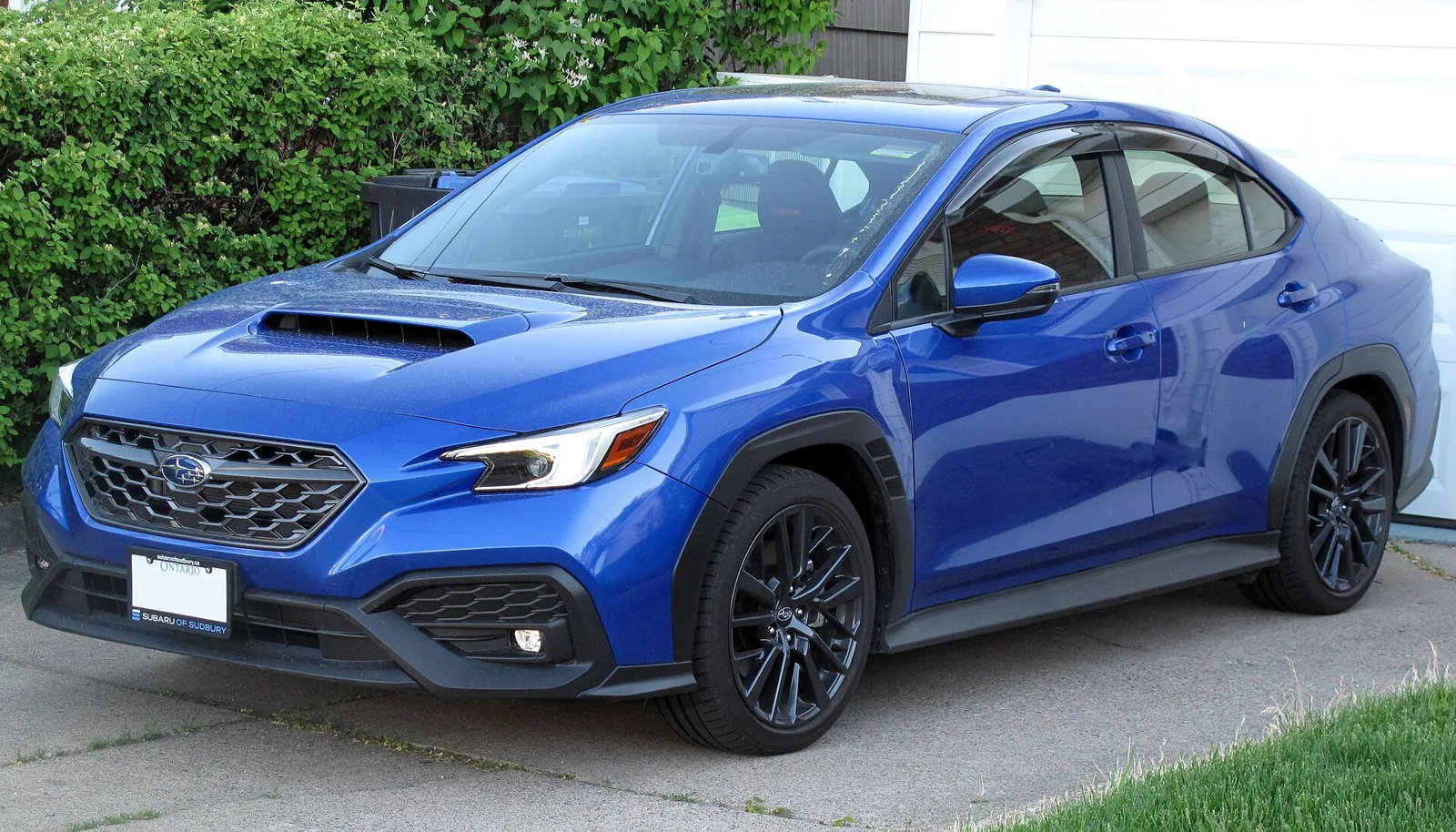
The WRX took a different path. For the VA series released in 2014 for the 2015 model year, Subaru stopped selling the WRX and WRX STI under the Impreza name, and the new car was marketed simply as the WRX, or the WRX S4 in Japan. It remained a development of the GJ Impreza, with stronger engines, stiffer suspension, bigger brakes and a lower ride height, but the entire front-end bodywork and the rear quarter panels were unique.
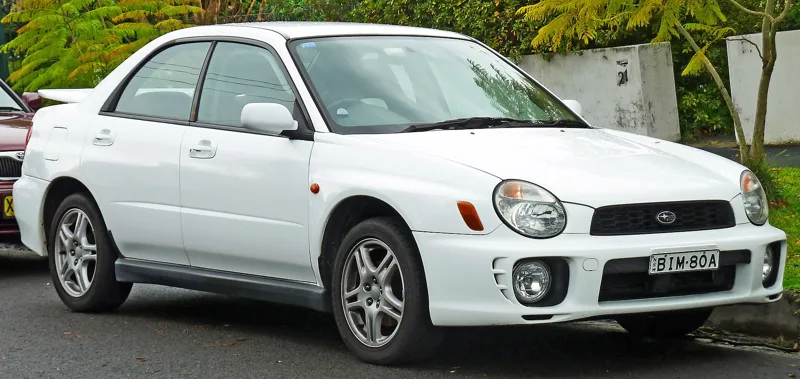
Earlier WRX generations had split into body styles: the second generation arrived in the United States for the 2002 model year and the STI followed for 2004, with "bugeye" styling in 2000, "blobeye" in 2004 and "hawkeye" in 2006. Saab, through a deal between Fuji Heavy Industries and General Motors, sold its own take on the WRX as the Saab 9-2X in the 2005 and 2006 model years.