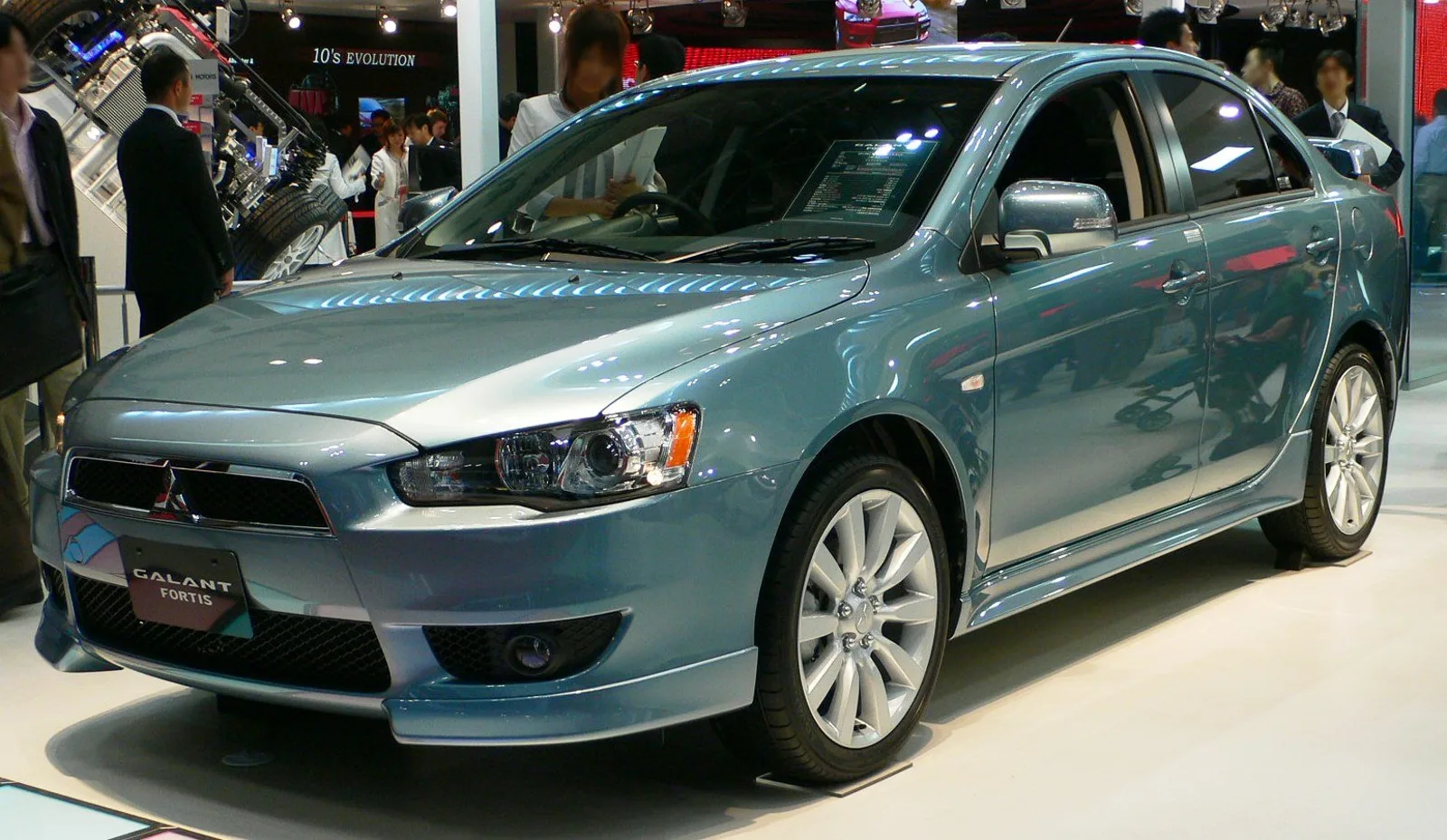
A mid-size saloon and Sportback sold in Japan as the Galant Fortis from 2007, built on Mitsubishi's PM platform, with a RALLIART turbo and a four-wheel-drive system.
Mitsubishi's Galant Fortis was a 3-number saloon sold under that name in Japan only, arriving in August 2007 and joined by a Sportback in December 2008. Its RALLIART grade brought a 240 PS turbo engine and a four-wheel-drive system, and new orders ended in 2015.
The Galant Fortis was a mid-size saloon that Mitsubishi Motors sold in Japan from 2007, with a Sportback hatchback added in December 2008. Abroad the same car was sold under other names such as Lancer, and the Galant name came back to the domestic market after an absence of about a year and a half.
Where did the Galant Fortis come from?
The Galant Fortis was the Japanese version of the seventh-generation Lancer, which Mitsubishi first revealed at the North American International Auto Show in January 2007. The saloon went on sale in Japan on 23 August 2007, with a monthly target of 1,000 cars. Counting the Lancer line it was the seventh generation, and counting the Galant name it was the ninth.
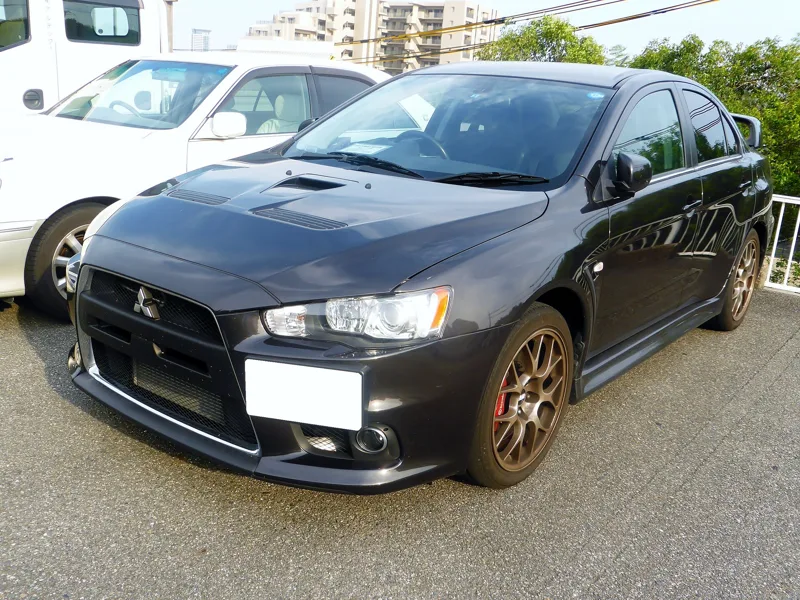
The Japanese seventh-generation Lancer was split in two. A hot model, the Lancer Evolution X, took the performance role, and the standard car became the Galant Fortis. The standard car was a 3-number saloon, and domestic sales of the Galant and Diamante had ended in 2005, leaving a gap in Mitsubishi's line-up for a general saloon.
A Lancer by any other name, sold in Japan as a Galant with a 240 PS RALLIART and a four-wheel-drive system.
Why did the car carry the Galant name?
Mitsubishi chose the Galant name because, in its domestic history, the name had been accepted for 3-number full-size saloons, and the target buyers were people in their 40s to 60s. The name had been absent since the eighth generation ended in 2005, and it came back after about a year and a half.
The sub-name Fortis separated it from the ninth-generation Galant sold in North America and signalled a fresh design. Overseas buyers saw other badges on the same car: Lancer in some markets, Lancer EX in the Middle East, and Lancer Fortis or Lancer Io names in Taiwan.
What platform did the Galant Fortis use?
The Galant Fortis rode on the PM platform, a compact version of Mitsubishi's GS architecture, which was the company's worldwide sales-strategy chassis. Many Mitsubishi models rely on it, including the Delica D:5, Outlander, RVR and Eclipse Cross, plus most of its mid-size passenger cars.
The second-generation Outlander became the first mass-production model on the PM family, and the Galant Fortis was built as its passenger-car counterpart. Engineers worked through the RVR, which filled the gap between them, before turning to the Delica D:5 minivan.
How was the body made safer?
Mitsubishi's own crash-safety body, called RISE, combined a high-energy absorbing structure with a high-strength cabin. High-tensile and ultra-high-tensile steel sheets were used to improve safety in frontal, offset, side and rear impacts.
The design also treated the bonnet and nose with care. The bonnet tip projects in front of the lower edge of the bumper, and a trapezoidal grille joins the bumper in what was called the Jet Fighter Grille. The car was designed from the outset to take 18-inch tyres, which made its tall saloon body look lower.
The suspension used MacPherson struts at the front with a rigid cross member. The rear was a trailing-arm multi-link arrangement.
What engines did the Galant Fortis use?
Mitsubishi began with the 2.0-litre 4B11 DOHC inline-four, which displaced 122 cu in. The car then switched to the 4B10, a 1.8-litre DOHC unit of 110 cu in. Autumn 2011 brought a newly developed 1.8-litre SOHC 4J10, also 110 cu in, which came with an idle-stop function called AS&G.
The move from DOHC to SOHC valve gear produced an engine tuned for low speeds and economy. It arrived in a 2011 mid-cycle change that responded to the environmental pressures of the period.
What made the RALLIART different?
The RALLIART grade used the 2.0-litre DOHC turbo 4B11, with a single-scroll turbocharger. Unlike the Evolution X, its tuning favoured low- to mid-range torque. Maximum output was 240 PS (237 hp) at 6,000 rpm, and maximum torque was 35.0 kg-m at 3,000 rpm.
The six-speed twin-clutch gearbox was the same unit fitted to the Evolution X, though its upper gears were lengthened for cruising economy and its shift timing retuned. The selector offered only a normal position and a sport mode, with no super sport setting and no launch control.
The RALLIART also had a vehicle stability brake as standard, and a later mid-cycle change fitted it to all cars. The SPORTS and RALLIART versions used sport ABS.
How did the four-wheel-drive system work?
Buyers could choose a front-drive car or one with electronically controlled four-wheel drive. The four-wheel-drive system could be switched between 2WD, aimed at fuel economy, 4WD Auto, which used an LSD to split the drive according to the road surface, and 4WD Lock, which removed the action of the centre differential for strong traction.
On the RALLIART the system was called AWC, All Wheel Control, with electronic control only at the centre. Its core was the ACD, Active Centre Differential, which read yaw and G sensors, steering angle, brakes, speed and accelerator input, then used an oil pump to set the front and rear drive. The base split was 50:50. An oil-operated multi-plate clutch controlled the limit on the centre differential, from free to direct four-wheel drive. A helical LSD sat at the front and a multi-plate LSD at the rear.
The ACD offered three modes, tarmac, gravel and snow, chosen according to the driving conditions.
How did the car sell beyond Japan?
The RALLIART with a 2.0-litre turbo was announced at the North American show in January 2008, aimed at well-balanced driving rather than the extremes of the Evolution X. Its six-speed dual-clutch transmission matched the Evolution X's unit. In July 2008 it was announced that South Korea would get the car from October, imported by MMSK Corporation of Seoul.
The Korean car was to carry the Lancer name, in a single grade equivalent to the Japanese SPORT. In July 2008 the RALLIART was added to the Japanese line-up as well, with dedicated front and rear bumpers and an aluminium bonnet borrowed from the Evolution X.
What did the Sportback add?
The Galant Fortis Sportback went on sale on 2 December 2008, as the CX4A model. Japanese-spec Sportbacks had only the 2-litre MIVEC engine, while European versions also had a 1.8-litre. Its grades were TOURING, SPORT and RALLIART, with the RALLIART running the 4B11 turbo and twin-clutch SST as in the saloon.
The rear seat folded in a split arrangement operated by a lever in the cargo room. With the seats folded, the cargo depth reached 1,570 mm. Except for the RALLIART, the cargo floor had two height settings, and in the lower position the capacity was 345 litres. The Sportback was also Mitsubishi's first car with an emergency stop signal, which flashes the hazard lights when the car brakes hard above 55 km/h or when ABS operates. The Sportback cost 31,500 yen more than the equivalent saloon grade, except for the TOURING.
How did the car change between 2009 and 2011?
The Black Leather Edition arrived on 4 February 2009, with black leather seats, a leather-wrapped parking brake lever, discharge headlamps, seat heaters and side and curtain airbags. Three body colours were offered, including Phantom Black Pearl, a dedicated colour popular on the Evolution X. Euro NCAP rated both bodies 5 stars on 19 February 2009.
The 24 December 2009 mid-cycle change switched all grades except the RALLIART to a 1.8-litre engine, which lifted economy and brought 2WD cars to the 2010 fuel economy standard plus 15%. Welcome and coming-home lights were added to most grades, and the ECO lamp was introduced on the SPORT and the SUPER EXCEED.
On 22 July 2010 the car was named a 2010 Top Safety Pick by the US Insurance Institute for Highway Safety. A mid-cycle change followed on 19 August 2010, and active stability control became standard across the range. The Navi Collection went on sale on 21 January 2011, and the 20 October 2011 change added the 4J10 engine and the AS&G idling stop to every grade except the RALLIART, lifting the economy figure to the 2010 standard plus 25%.
What did the 2012 and 2014 changes bring?
The 10 October 2012 update renewed the body colours of the saloon RALLIART and of every Sportback. The Sportback-only Passion Orange Pearl was dropped. The navigation system was replaced with a new unit using a high-resolution WVGA monitor. The premium audio option gained DTS Neural Surround. Every grade apart from the saloon EXCEED received a 6.1-inch QVGA touchscreen, and a display audio unit that shows the view behind the car when reversing became a manufacturer's option.
The July 2014 update, which applied to the RALLIART only, fitted indicators to the door mirrors and changed the Cosmic Blue Mica colour for Lightning Blue Mica. The saloon EXCEED and SUPER EXCEED took the front bumper design of the Sportback SPORT, and the SUPER EXCEED adopted round-rim aluminium wheels.
How did sales in Japan come to an end?
The RALLIART was the first grade to end, with production stopping in late 2014 and sales finishing on 28 February 2015. In late January 2015 all grades stopped taking orders and production ended, and the Japanese listing on the company website closed in March 2015.
The last unregistered domestic stock was registered by the end of March 2016, and the Galant trademark in Japan closed after 47 years. Export versions of the Lancer and Lancer Sportback continued in production and sales for overseas markets.
Galant Fortis milestones
| Date | Event |
|---|---|
| 23 August 2007 | Saloon on sale in Japan |
| 2 December 2008 | Sportback on sale |
| 19 February 2009 | Euro NCAP 5 stars for saloon and Sportback |
| 24 December 2009 | Mid-cycle change; 1.8-litre engine on most grades |
| 22 July 2010 | 2010 Top Safety Pick |
| 20 October 2011 | 4J10 SOHC engine and AS&G idling stop |
| 28 February 2015 | RALLIART sales end |
| End of March 2016 | Last domestic stock registered; Galant trademark closed |
What do the Galant Fortis names mean?
Galant comes from French, where it means brave or splendid. Fortis comes from Latin, where it means mighty or brave. Sportback combines sporty and hatchback.