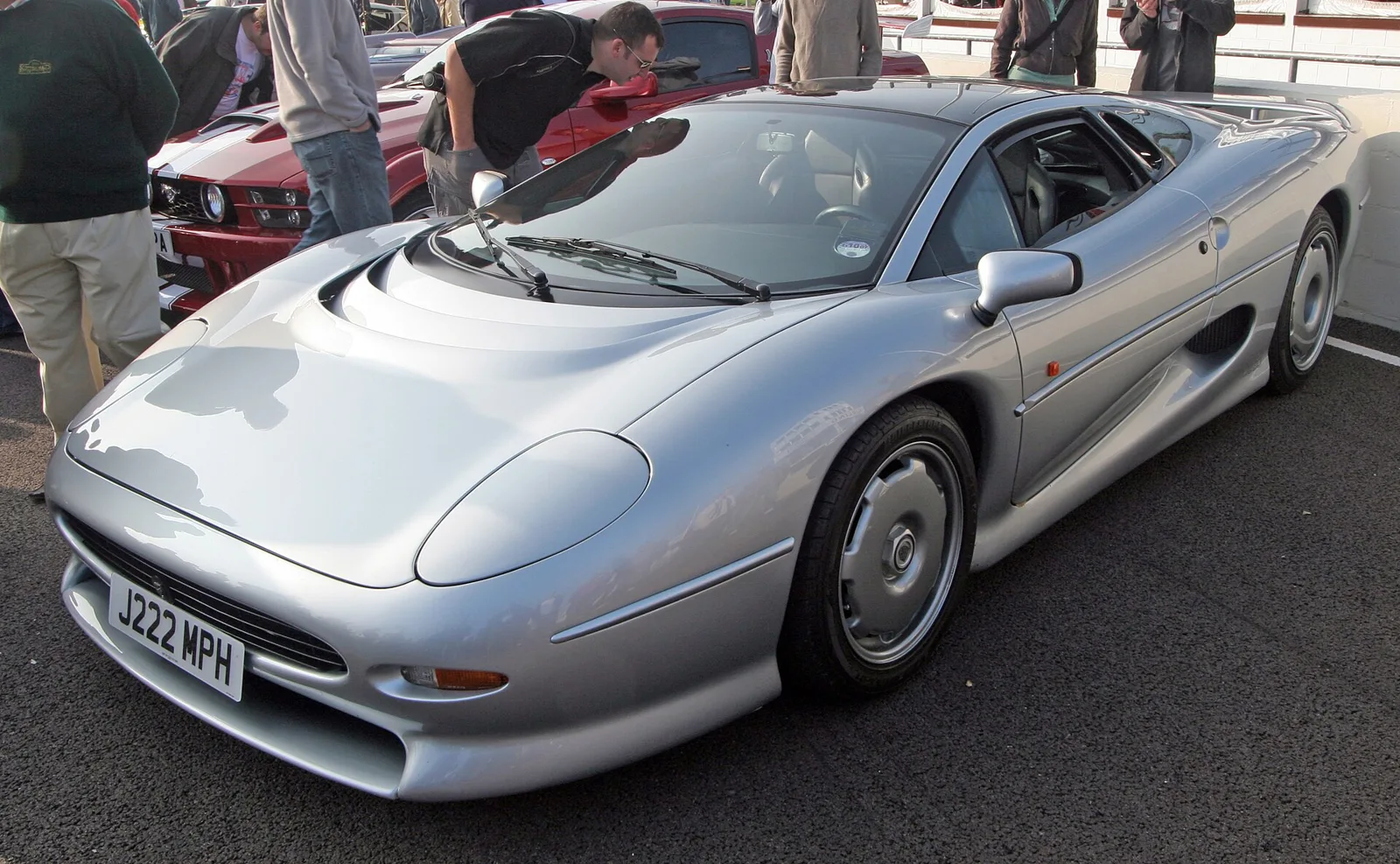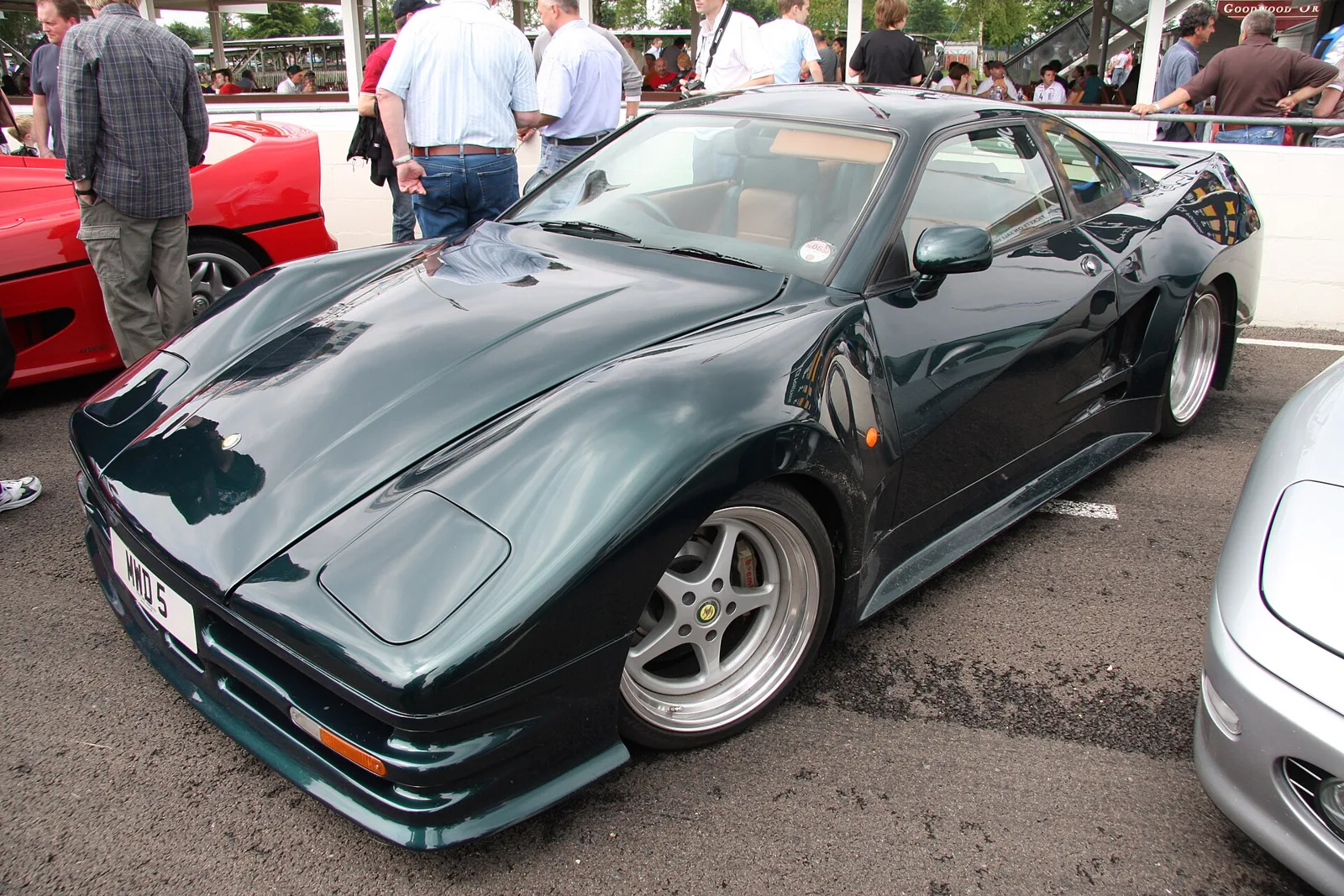
A 7.0-litre Jaguar V12 in a composite body, four road cars built and a racing career from Le Mans in 1995 to the Mil Milhas in 2006.
Lister Cars built the Storm, a GT racing car whose 1993 road version used a 7.0-litre Jaguar V12 producing 554 PS. Four road cars were made, and the GTS, GTL and GT racers competed from 1995 to 2006 in Le Mans, the BPR series and the British and FIA GT championships.
Built by the small British firm Lister Cars, the Storm was homologated for GT racing, and its road-going version first appeared in 1993. It used a 7.0-litre Jaguar V12, and its racing career ran from 1995 to 2006 through GTS, GTL and GT versions in Le Mans, the BPR series, the FIA GT Championship and the British GT Championship. The car is best remembered for its enormous engine, its pace on track and a run of British title wins.
What was the Lister Storm?
Lister Cars, a British low-volume manufacturer, began building the Storm in 1993, first as a road car. Only four road-going examples were built before that version was dropped. The racing family that followed combined a large Jaguar V12 with a lightweight composite body and raced until 2006.
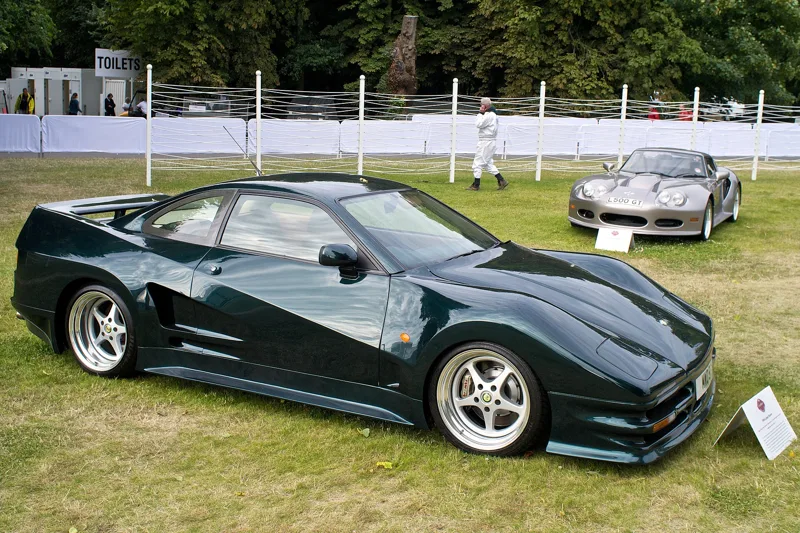
The road-going car used Kevlar and aluminium panels over an aluminium honeycomb monocoque. The doors and glasshouse came from a Volkswagen Corrado, and the shape gave a drag coefficient of Cd=0.35. That mix of light materials and a borrowed glasshouse kept the body simple to build in small numbers.
A road car with the largest production V12 since the war, then a racing career that won British titles in three different seasons.
How powerful was the Lister Storm road car?
The road Storm was powered by a 7.0-litre Jaguar V12 that produced 554 PS, or 407 kW and 546 hp, reached at 6,100 rpm. It weighed 1,664 kg (3,668.5 lb), took 4.1 seconds to reach 60 mph (97 km/h) and had a claimed top speed of 335 km/h (208 mph).
The engine was the largest V12 installed in a road car since the war years. It was a 6,996 cc unit derived from the Jaguar XJR-9 racer that ran at Le Mans, bored and stroked for road use, with 24 valves and a compression ratio of 10.5:1.
Peak torque was 790 Nm (582.7 lb ft) at 3,450 rpm. The price of 220,000 pounds sterling was steep, and production of the road car ended after just four cars. For several years it was regarded as the fastest four-seat grand tourer on sale.
How did the Storm GTS start its racing life?
The Storm GTS made its debut in the 1995 running of the 24 Hours of Le Mans, in the GT1 class. The line-up was Geoff Lees, Rupert Keegan and Dominic Chappell, and the car failed to finish after 40 laps because of gearbox failure. The team set out to correct that weakness.
The 1996 season brought sponsorship from Newcastle United, the football club, and the hiring of engineer Geoff Kingston. The engine went 5 inches (13 cm) further back, which aided weight distribution and left the driver beside the last three cylinders. The Hewland gearbox moved to the rear, and a transverse 6-speed sequential unit replaced the 5-speed.
Wide rear tyres went on the front to stiffen the front suspension while keeping the compliance of thicker sidewalls. Before Le Mans, the team entered a lone car at the 24 Hours of Daytona, shared by Lees, Tiff Needell and Kenny Acheson. Acheson was at the wheel when it crashed at high speed, ending the race and destroying the car.
A new car was built by G-Force for Le Mans, and Lees was joined by Tiff Needell and Anthony Reid. It finished 19th, 59 laps behind the winner, which was an improvement on the year before. The team then moved into the BPR Global GT Series, where the car retired in third at the Nurburgring and ran third at Suzuka before gearbox trouble ended that race.
At Brands Hatch the Storm qualified third overall, but an engine problem forced it out while it was still in that position. The season showed flashes of pace that the team could build on, even though reliability remained a problem.
What changed with the GTL in 1997?
For 1997 Lister gave the GTS a longer, more aerodynamic nose, and the GTL used carbon fibre for its structure and panels. The car finished 19th overall and fourth in its class at Daytona, but it struggled at Le Mans and in the FIA GT rounds.
Two GTLs entered Le Mans that year, but both were out by lap 77. One car then crossed the Atlantic for the final two FIA GT rounds at Sebring and Laguna Seca, and it failed to finish either race. In the British GT Championship the results were better, with one win and one second place, both at Donington Park.
The GTL's problems continued in 1998. Updates meant the car failed scrutineering and could not take part in the Le Mans race, even though the team entered and turned up to pre-qualify. The refreshed design also lacked a rear window, which became a point of argument. In British GT that year the car finished fifth overall with Tiff Needell and Julian Bailey, and three GTLs together won two races and took seven podiums, including the Silverstone Golden Jubilee Trophy.
How did the Storm GT win the British title in 1999?
The Storm GT returned in 1999 as a reworked GTS. It lost the GTL's aerodynamic bodywork in favour of a more conventional front and rear, and it competed under GT2 rules. The longer-nosed version of the GTL won the overall British GT title that season with seven race wins, while the GT took the GT2 category.
The title was contested. Rival Blue Coral Porsche team lodged several protests over the rear aerodynamics of the GTL, and the championship stayed provisional until the season ended. The protests failed, and the Lister was confirmed as champion, with GT2 cars becoming the leading class from 2000.
In the FIA GT Championship the Storm GT retired early at Monza and Silverstone, then took fourth at Hockenheimring two laps behind a pair of Chrysler Viper GTS-Rs. Pole position and third place followed at Zolder, and second at Donington came 26 seconds behind the winning Viper. Those results left Lister tied for fifth in the teams championship despite entering only half the races.
How did the Storm GT perform in FIA GT from 2000 to 2002?
In 2000 the Storm GT won five FIA GT races and gave Lister both the teams and drivers championships. In 2001 it won four races but finished third in the teams standings, and in 2002 it won three races and placed second behind Larbre.
The 2000 season opened with a win at Valencia, and Julian Bailey and Jamie Campbell-Walter took the other victories. Round seven at the A1 Ring brought a new inlet restrictor, intended to slow the cars. In British GT the factory and a customer Cirtek car together won nine races, with Tiff Needell winning at Spa and Silverstone.
Lister returned as champions in 2001 with two factory cars. Campbell-Walter led the effort, with Tom Coronel alongside him at first, and Julian Bailey drove his last season for the team with Nicolaus Springer in the second car. In British GT, David Warnock and Mike Jordan won the title in one Storm GT with seven race wins.
The 2002 season used a Pro-Am driver strategy, with amateurs sharing the cars against professional line-ups. At times the amateur drivers lost a full minute to the leaders during their stints. Campbell-Walter and Springer still finished third in the drivers championship, but the writing was on the wall as the Saleen S7-R proved dominant in its first season.
What happened to the Storm during 2003?
In 2003 a customer Storm ran for Creation Autosportif in FIA GT, and the factory team won only once but still finished second in the teams championship. Creation took fourth after adding a second customer car, despite a season hit by bad luck and by Prodrive-built Ferrari 550s that won every race but one.
The Barcelona opener was a cruel one. Campbell-Walter took pole and led early on, but debris from another car's splitter landed on the Lister and smashed its windscreen and roof. He later said the debris nearly hit him inside the cockpit. At Magny-Cours the team led with four laps left, until a technical problem forced retirement.
At Anderstorp, Campbell-Walter and Nathan Kinch took the last FIA win for a Storm. At Oschersleben they won again, only to be disqualified after a late collision with Philippe Alliot, while the Creation pair of Bobby Verdon-Roe and Marco Zadra took second place. The season finale at Monza brought third place, the last FIA GT rostrum finish for a Storm.
Lister's British GT programme ended the same year, because a rule change outlawed cars of the Storm's type. Work began on a new Storm LMP project to bring the marque back to Le Mans.
Why did the Storm racing career wind down?
After 2004 the factory concentrated on the Storm LMP prototype and retired its GT cars after the 2005 season. Creation Autosportif carried the FIA GT campaign for part of 2004, while privateers kept some Storms running in France and Brazil until 2006.
In 2004 Creation ran an older Storm with Jamie Campbell-Walter and amateur Jamie Derbyshire, who scored three top-five finishes. The factory squad appeared at only four races and scored a single point. Tom Coronel ran fourth at Monza until a water hose disconnected, and at Hockenheim a car fire ended another run.
Lister ran the car into 2005 but found only enough points for tenth in the teams championship. In the French FFSA GT Championship, Red Racing entered a Storm that won the opening race at Pau, driven by David Alexander and Gael Lesoudier. Red Racing did not appear again for the rest of the season.
In 2006 Red Racing and Creation both entered Storms in the French series, but only for a handful of races. Creation claimed sixth in the second race at Dijon. Capuava Racing Team entered a Storm for the Mil Milhas endurance race at Interlagos, where Pedro Lamy qualified ninth, but the car did not start. Red Racing's lone FIA GT attempt at Paul Ricard ended after seven laps.
What are the Lister Storm specifications?
| Specification | Detail |
|---|---|
| Type | Homologated GT racing car from Lister Cars, Britain |
| Production start | 1993 |
| Road car engine | 6,996 cc (7.0 L) Jaguar V12, 24-valve, 10.5:1 compression |
| Road car output | 554 PS, 407 kW or 546 hp, reached at 6,100 rpm |
| Road car torque | 790 Nm (582.7 lb ft) at 3,450 rpm |
| Weight | 1,664 kg (3,668.5 lb) |
| 0-97 km/h (60 mph) | 4.1 seconds |
| Claimed top speed | 335 km/h (208 mph) |
| Drag coefficient | Cd=0.35 |
| Road car price | 220,000 pounds sterling; four built |
| Racing debut | 1995 24 Hours of Le Mans, GTS in the GT1 class |
| Final outing | 2006 Mil Milhas at Interlagos, car did not start |