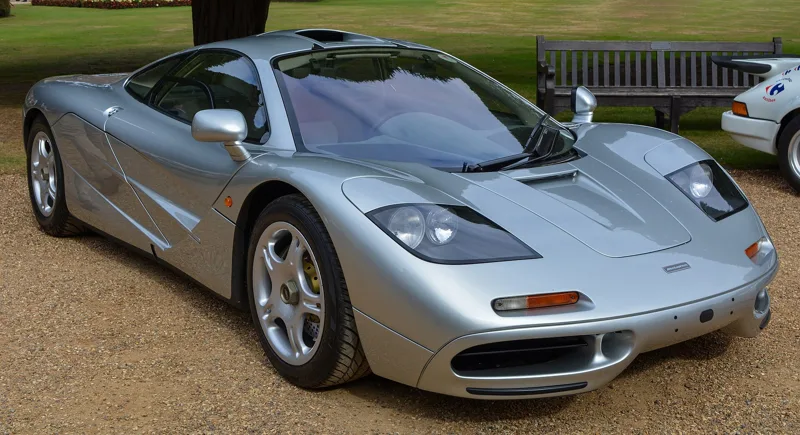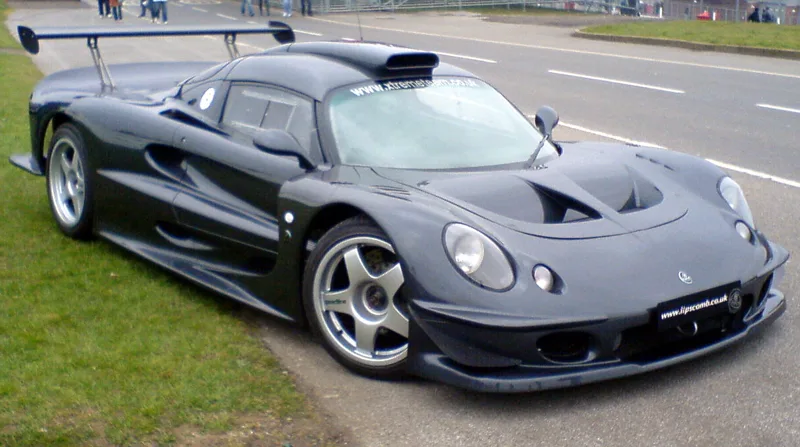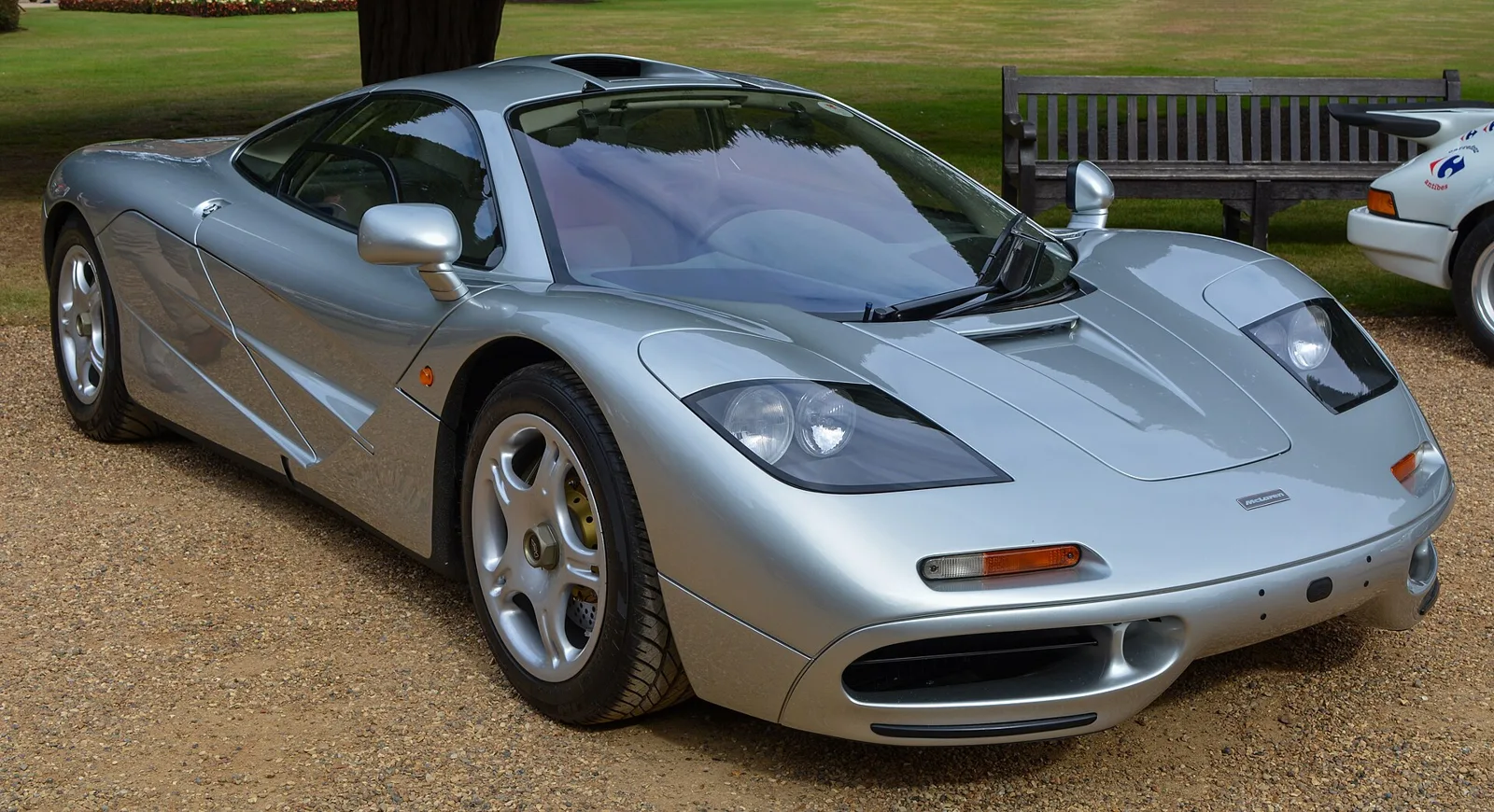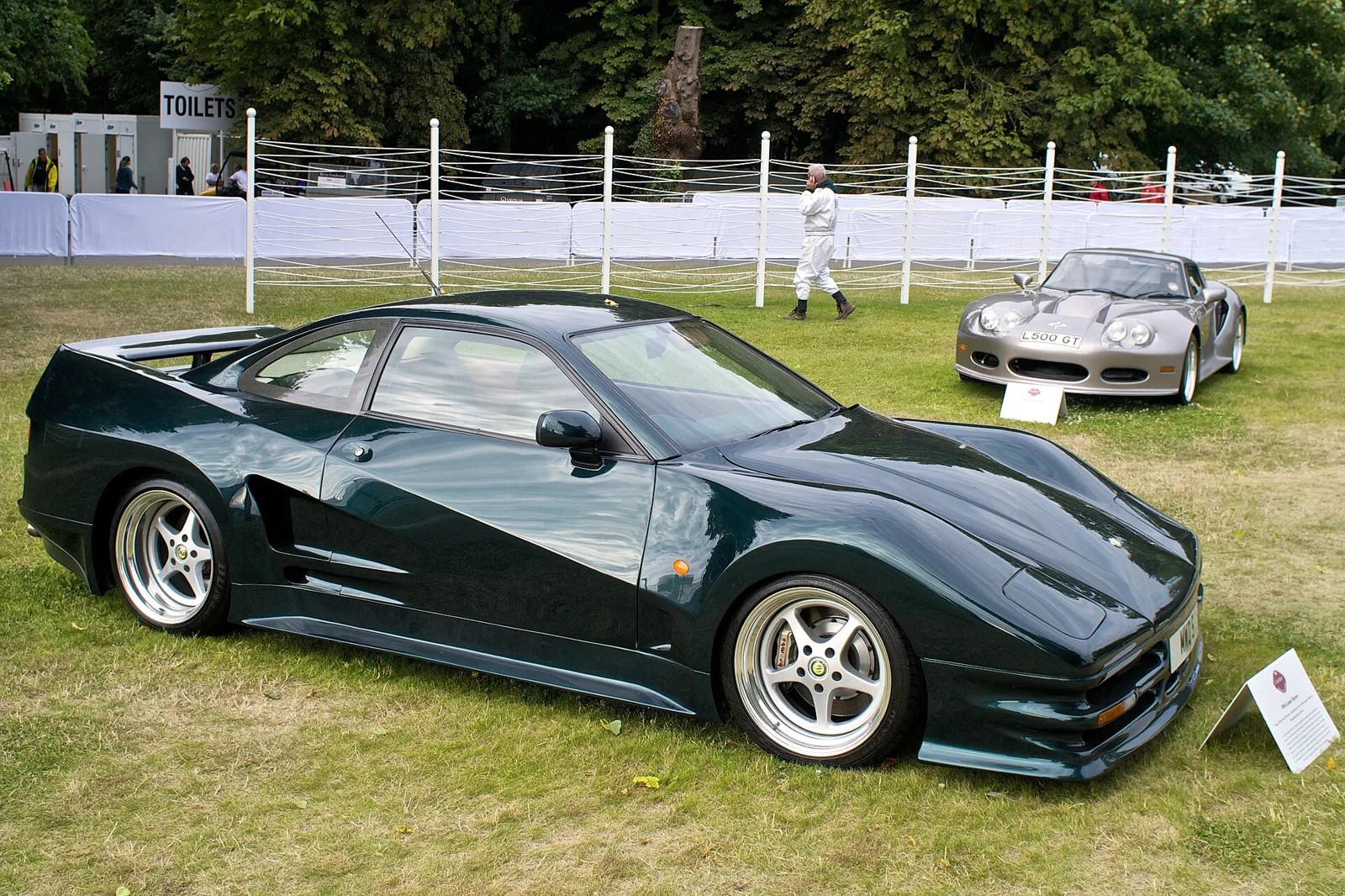
A Jaguar-powered four-seat grand tourer and a carbon-fibre McLaren with a BMW V12, compared on engines, speed, construction, racing and reception.
The Lister Storm was a homologated GT racing car with a 7.0-litre Jaguar V12, and only four road examples were built from 1993. The McLaren F1 was a carbon-fibre road car with a 6.1-litre BMW V12, built in 106 examples from 1992 to 1998, and it set the 1998 production car speed record.
The Lister Storm and the McLaren F1 were both extreme V12 road cars from British makers, but they came from very different traditions. The Storm was a homologated GT racing car built around a Jaguar racing engine, while the F1 was McLaren's first type-approved road car, developed with a V12 from BMW. The two cars started production within about a year of each other.
This comparison covers their engines, speed, construction, racing, production and reception. Where a figure exists for only one car, the gap is shown rather than estimated, and metric figures come first with imperial values in brackets.
Were the Storm and F1 rivals?
Yes, on the racetrack. The Storm GTS went up against the McLaren F1 GTR in the GT1 class at the 1995 24 Hours of Le Mans, alongside the Jaguar XJ220S and the Porsche 911 GT2. The Storm failed to finish after gearbox failure, while racing versions of the F1 won several races, including that 1995 Le Mans.
The two cars did not compete for the same buyers. The F1 was built as a road car first, with a production run of 106 cars. The Storm was a homologated racing car that gained a road version, of which only four examples were made.
One car was a four-seat grand tourer built in a handful, the other a carbon-fibre road car that set the production speed record.
What engines did they use?
The F1's BMW S70/2 was a 6,064 cc (6.1 L) 60-degree V12, designed and built by BMW M under Paul Rosche for Gordon Murray. It produced 461 kW (618 hp; 627 PS) at 7,400 rpm, and its torque peaked at 650 N m (479 lb ft) at 5,600 rpm. Its compression ratio was 11:1.
The Storm's 7.0-litre (6,996 cc) V12 was based on the unit used in the Jaguar XJR-9 that competed at Le Mans. It made 554 PS (407 kW; 546 hp) at 6,100 rpm, and its torque came in at 790 N m (582.7 lb ft) by 3,450 rpm. The record describes it as the largest V12 fitted to a production road car since the Second World War.
Honda was Murray's first choice for an engine of 410 kW (550 hp; 557 PS), but it declined, and Isuzu's 3.5-litre V12 was also considered. BMW took an interest, and its motorsport division built the engine that went into the car. In the end the BMW unit was 14% more powerful than Murray's brief, though 16 kg (35 lb) heavier.
The F1's engine used about 16 g (0.56 ounce) of gold foil per car to shield the carbon-fibre structure from heat. It also had Nikasil-coated cylinder bores, forged aluminium pistons and a dry sump, while the Storm's V12 was a bored and stroked twenty-four-valve unit.
Which car was faster?
The F1 holds the stronger speed record in the material. A prototype known as XP5, with a modified rev limiter, set the Guinness World Record for the fastest production car on 31 March 1998, at 240.1 mph (386.4 km/h). The Storm was claimed at 335 km/h (208 mph), and its run to 60 mph took 4.1 seconds.
The XP5 record beat the Jaguar XJ220's 217.1 mph (349.4 km/h) figure from 1992. The XJ220 figure had been achieved with an increased rev limit and the catalytic converters removed, which the record notes as the context for the comparison. The record gives no F1 acceleration time, so the sprint figures cannot be set side by side.
How were the two cars built?
The F1 was an early production road car with a complete carbon-fibre reinforced polymer monocoque. Murray's concept was low weight and high power, achieved with expensive materials including carbon fibre, titanium, Kevlar, magnesium and gold. The car's frontal area was 1.79 square metres (19.3 sq ft), and its S Cd figure was 0.57.
The Storm used Kevlar and aluminium panels over an aluminium honeycomb monocoque, with doors and a greenhouse borrowed from the Volkswagen Corrado. Its drag coefficient was Cd=0.35, against the F1's Cd=0.32. The Storm weighed 1,664 kg (3,668.5 lb), while the record gives no weight for the F1.
The F1 had a central driving seat with a passenger seat on each side, giving three seats in total. Its doors moved up and out, and Murray's door design was inspired by the Toyota Sera. The Storm kept four seats, and the record describes it as the fastest four-seat grand tourer on sale for several years.
How did the F1 design come about?
Gordon Murray sketched a three-seat sports car on a flight home from the 1988 Italian Grand Prix, and he proposed it to Ron Dennis as the ultimate road car. Two Ultima MK3 kit cars, named Albert and Edward, were used as test mules for components before the first cars were built.
The two mule cars were destroyed once testing ended, because McLaren did not want the car linked to kit cars and wished to keep the specialist magazines away from them.
Murray visited Honda's Tochigi Research Centre with Ayrton Senna, and the Honda NSX's ride quality and handling became a new target for the F1. He later asked Honda for a 4.5-litre V10 or V12, but Honda declined, and the car ended up with a BMW engine.
The car was unveiled on 28 May 1992 at The Sporting Club in Monaco. The first prototype's wing mirror sat at the top of the A-pillar, and the car was deemed not road legal because it had no front indicators. McLaren changed the production mirrors, which then carried indicators.
Safety testing took place in Namibia in April 1993, when a test driver wearing shorts and a T-shirt rolled the first prototype several times and walked away unhurt. A second prototype was built for crash testing later that year.
How many were built, and at what price?
McLaren built 106 F1s between 1992 and 1998, with some variations in the design. The record gives no price for the F1 in the material. The Storm was priced at GBP 220,000, and that high price is the record's reason for stopping at four road examples.
Although the F1 was not originally designed as a racing car, modified racing versions won several races, including the 1995 24 Hours of Le Mans. The Storm's racing career was different. It ran in GT1 and then GT2, and its road version never moved beyond the four examples. Its 1996 Le Mans finish came 59 laps behind the winner, after which the car was entered in the BPR Global GT Series.
How were the two cars received?
The F1 earned strong praise. In 1994 Autocar called it the finest driving machine built for the public road, and in 2005 Channel 4 placed it first on its list of the 100 greatest cars. In April 2017 Top Gear listed it among the fastest naturally aspirated cars available.
The F1 also has a racing legacy beyond its road cars. The record says the F1 was the final road-legal, series-built sports car to take an outright Le Mans win, and that one of its racing versions won in 1995.
The record gives no award for the Storm, although it is described as the quickest four-seat grand tourer for a period. The F1's reception is therefore the stronger of the two in the material, while the Storm's reputation rests on its four-seat layout and its engine.
Side-by-side specifications
| Specification | Lister Storm | McLaren F1 |
|---|---|---|
| Launch | Production from 1993 | Unveiled 28 May 1992; production 1992 to 1998 |
| Production | Four road examples | 106 cars |
| Price | GBP 220,000 | not given |
| Engine | 7.0 L (6,996 cc) Jaguar V12, based on XJR-9 unit | 6.1 L (6,064 cc) BMW S70/2 60-degree V12 |
| Power | 554 PS (407 kW; 546 hp) at 6,100 rpm | 461 kW (618 hp; 627 PS) at 7,400 rpm |
| Torque | 790 N m (582.7 lb ft) at 3,450 rpm | 650 N m (479 lb ft) at 5,600 rpm |
| Compression | 10.5:1 | 11:1 |
| Rev limit | not given | 7,500 rpm |
| Weight | 1,664 kg (3,668.5 lb) | not given |
| 0-97 km/h (60 mph) | 4.1 seconds | not given |
| Top speed | 335 km/h (208 mph), claimed | 240.1 mph (386.4 km/h), prototype XP5 record, 1998 |
| Drag | Cd=0.35 | Cd=0.32 |
| Construction | Kevlar and aluminium panels over aluminium honeycomb monocoque | Carbon-fibre reinforced polymer monocoque |
| Seats | Four | Three, central driving position |
| Fuel economy | not given | 15.2 mpg (15 L/100 km) average |
| Racing | GTS at Le Mans 1995; GT2 class win 1999 | Racing versions won 1995 Le Mans |
| Recognition | Fastest four-seat grand tourer on sale for several years | Autocar 1994 praise; Channel 4 first place 2005 |
Which buyer suits each car?
On the figures available, the F1 suits a buyer who wanted a road car first, with a carbon monocoque, a BMW V12 and a production speed record. The Storm suits a buyer who wanted a rarer four-seat grand tourer, with the largest road-car V12 fitted since the war and a racing pedigree.
Both cars were extremely limited, but for different reasons. The F1's 106 cars were built over six years, while the Storm's road run stopped at four. The record gives no sales total for the racing versions of either car.
Neither car is shown to be better overall. The record favours the F1 on speed records and recognition, and the Storm on its four seats. The choice depends on whether a buyer values a record-setting road car or a rarer, more practical grand tourer.
What does the record leave open?
Several points are missing. The F1's price, weight and 0-97 km/h time are absent, and the Storm's dimensions are not given. The record also gives no speed figure for the F1 on a standard car, only for the XP5 prototype.