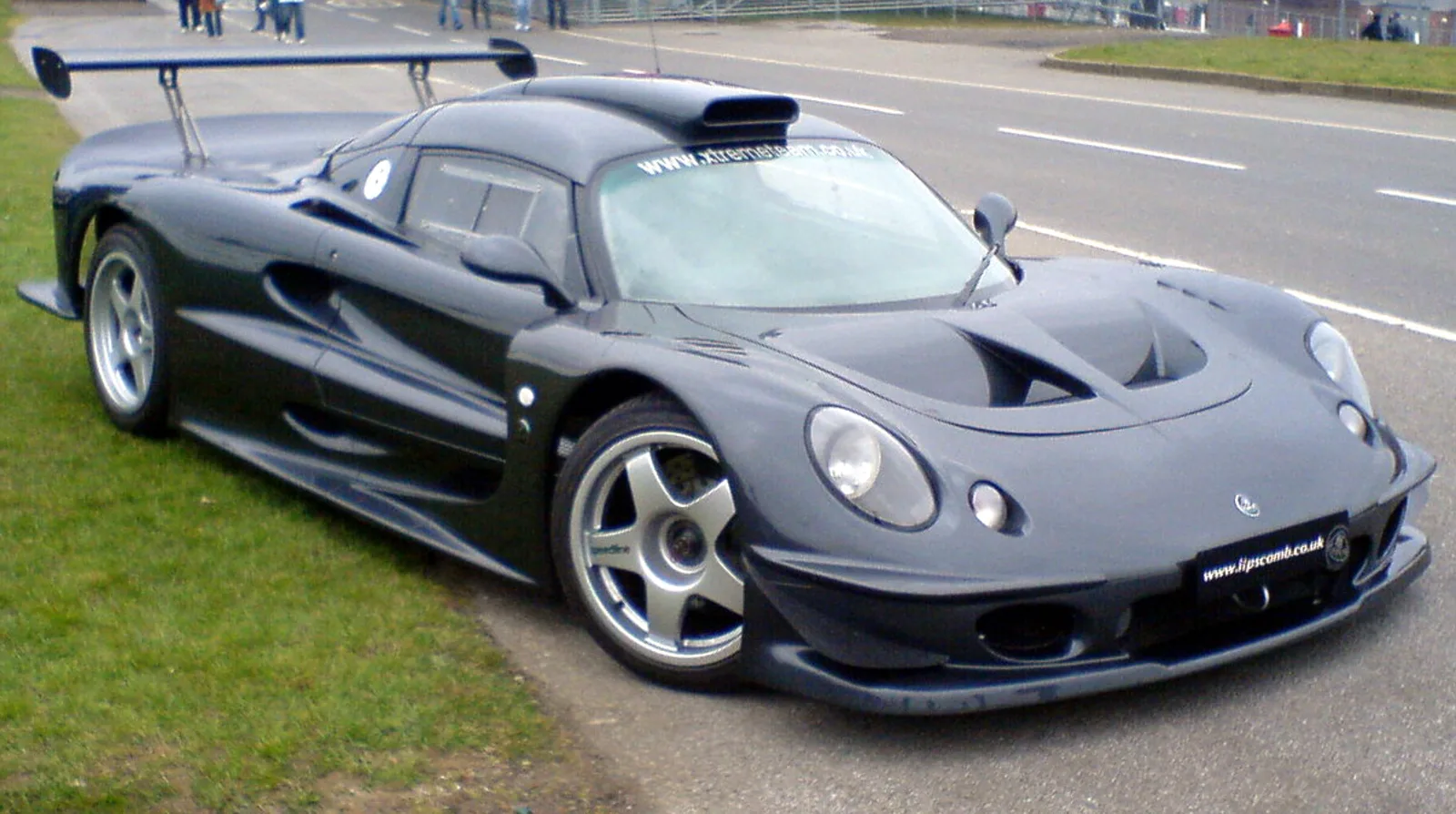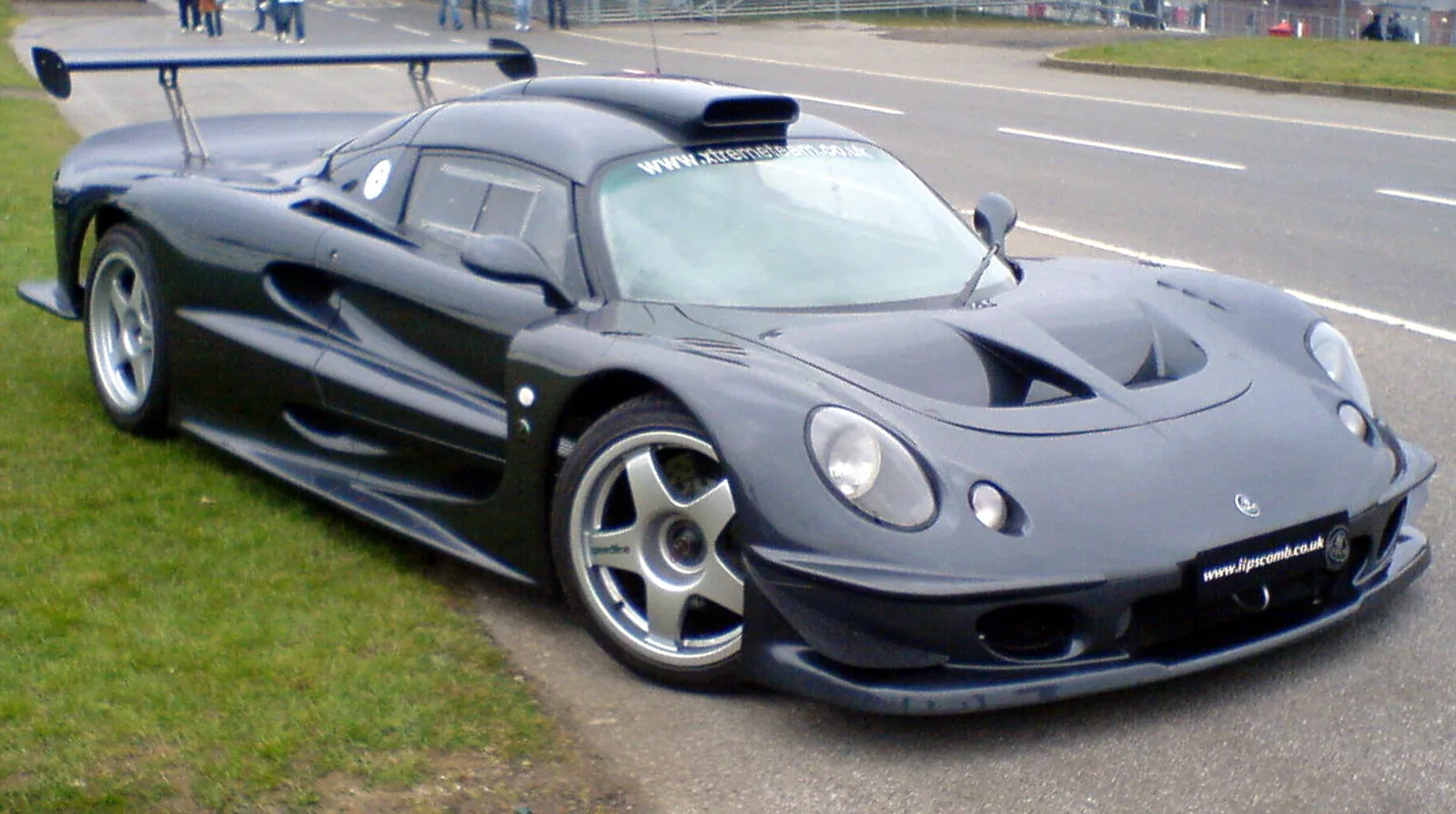
Two cars that met in the GT1 class of the late 1990s, compared on origins, engines, speed, construction, racing results and what happened to each project.
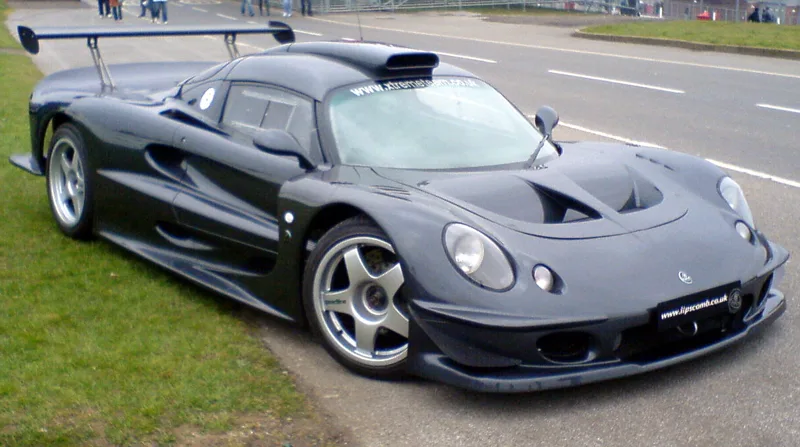
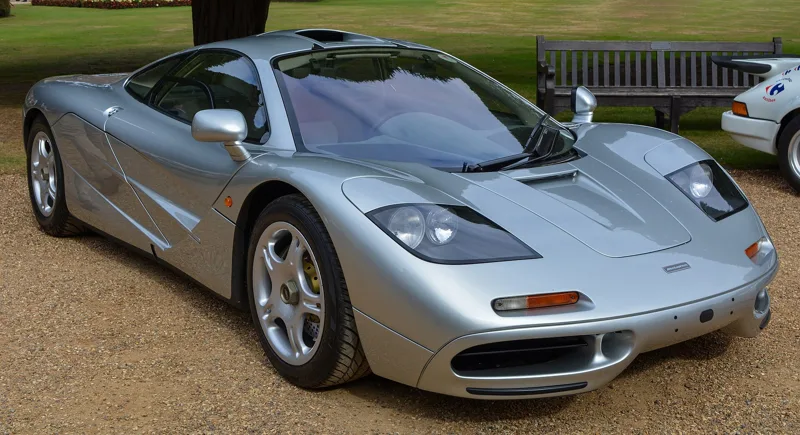
The Lotus Elise GT1 was a racing car from 1997, built on the Elise sports car and joined by a single road version. The McLaren F1 was a road supercar built in 106 examples from 1992 to 1998, and its racing versions won the 1995 Le Mans.
The Lotus Elise GT1 and the McLaren F1 met in the GT1 class of the late 1990s, although they came from very different places. The Elise GT1 was a racing car built on a sports car chassis by a company that could not afford to build race and road cars separately. The F1 was a McLaren road supercar first, designed with the company's Formula One experience and then raced.
This comparison covers origins, engines, speed, construction, racing results and what happened to each project. Where a figure exists for only one car, the gap is shown rather than estimated, and metric figures come first with imperial values in brackets.
Did the Elise GT1 and F1 race against each other?
They were rivals in the GT1 class. The record names the McLaren F1 GTR as one of the cars Lotus's Esprit GT1 faced in the BPR Global GT Series from 1994, and the Elise GT1 took on the same class in the FIA GT Championship from 1997. Porsche's 911 GT1 was also in the field.
The Elise GT1's factory team was outmatched. The record says the car was uncompetitive throughout its factory racing life, while racing versions of the F1 won several races, including the 1995 24 Hours of Le Mans.
A racing challenger built on a sports car chassis, and a road supercar that became the benchmark the GT1 class was measured against.
Why were the two cars built?
Gordon Murray sketched a three-seat sports car on a flight home from the 1988 Italian Grand Prix, and he proposed it to Ron Dennis as the ultimate road car. The F1 was built to be a road car first, with McLaren Cars set up to manufacture it.
The Elise GT1 was a racing answer to Porsche and Mercedes-Benz. Lotus abandoned the aging Esprit chassis and built the car on the Elise sports car, and because the company could not afford race and road cars separately, it made a single road version at a guaranteed financial loss.
Murray's concept was low weight and high power. It used expensive materials, including carbon fibre, titanium, Kevlar, magnesium and gold, while the Elise GT1 relied on an existing sports car chassis that had to be modified heavily.
McLaren Cars was created for the F1, and BMW was contracted to develop its V12 exclusively for the car. Because the F1 was among the first sports cars with a fully carbon-fibre monocoque, it was lighter and more streamlined than many later competitors, despite seating three adults.
How did the engines compare?
The F1's BMW S70/2 was a 6,064 cc (6.1 L) 60-degree V12 rated at 461 kW (618 hp; 627 PS) at 7,400 rpm. The Elise GT1 road car used a 3.5-litre Type 918 twin-turbo V8 at 550 PS (540 hp; 400 kW), while its race cars ran a 5.7-litre Chevrolet V8 of about 600 PS (590 hp; 440 kW).
The F1's torque peaked at 650 N m (479 lb ft) at 5,600 rpm, with a compression ratio of 11:1 and a rev limit of 7,500 rpm. The Elise GT1's engine was less settled: the Esprit's 3.5-litre V8 proved unreliable in testing, so the team turned to a 5.7-litre Chevrolet unit.
The F1 also needed a heat solution, and about 16 g (0.56 ounce) of gold foil lined each car's engine bay. The Elise GT1 team instead fitted a carbon intake and a dry sump system to its Chevrolet engine. The BMW engine's cylinder bores were coated in Nikasil for wear resistance, and each cylinder had its own miniature ignition coil.
Which car was faster?
The F1 holds the stronger speed record in the material. The XP5 prototype reached 240.1 mph (386.4 km/h) on 31 March 1998, which was recognised as a record for production cars. The Elise GT1 is reported to have exceeded 200 mph, and its 0-60 mph time was 3.8 seconds.
The XP5 record also beat the 1992 Jaguar XJ220 figure of 217.1 mph (349.4 km/h), which had been reached with an increased rev limit and the catalytic converters removed.
Those two speed figures rest on different kinds of evidence. The F1 figure is a prototype record, while the Elise GT1 figures are claimed rather than tested in the same way, and the record gives no lap time for the Elise GT1 at all.
How were the two cars built?
The F1 was an early production road car with a complete carbon-fibre reinforced polymer monocoque. Its driver sat in the centre, with a passenger seat slightly behind and on each side. Its drag coefficient was Cd=0.32, and its frontal area was 1.79 square metres (19.3 sq ft).
The Elise GT1 road car kept the Elise S1's aluminium chassis, heavily modified, and wore a carbon-fibre and Kevlar body. It measured 4510 mm long and 2070 mm wide, with a wheelbase of about 2675 mm and a weight of around 1050 kg. The record gives no weight for the F1, so the two cannot be compared on mass.
The car's safety was first tested in Namibia in April 1993, when a test driver wearing only shorts and a T-shirt rolled the first prototype several times and escaped unhurt. A second prototype, XP2, was then built for crash testing.
The F1's central seating layout and its butterfly doors were distinctive, and Murray's door design was inspired by the Toyota Sera. The Elise GT1 road car had double wishbone suspension and an aluminium roll cage, and its racing cars used a Hewland six-speed sequential transmission.
How did the racing records compare?
The F1's racing versions won several races, including the 1995 Le Mans, and the record describes the F1 as the last road-legal, series-produced sportscar to win that race outright. The Elise GT1 scored no factory points in 1997, while the privateer GBF team finished 8th in the championship after fifth place at Helsinki.
The Elise GT1's Le Mans appearance in 1997 was a lone car, and it suffered an engine block failure after 121 laps. Across the 1997 season the factory cars took best finishes of 11th at the Nurburgring and 8th at Spa-Francorchamps, and they retired at Zeltweg.
What happened to each project?
McLaren's F1 production ran from 1992 to 1998, with 106 cars built, and its record-setting XP5 prototype came in March 1998, during the final years of production. The record gives no price for the F1 in the material, so the value of each car cannot be compared.
Its production run gave the car some variations in design, and the record gives no sales total beyond the 106 cars. The Elise GT1 road car, the only one made, was last seen in public almost a decade before 2017.
The Elise GT1 project was cancelled after the 1997 season. Lotus and its parent company Proton decided the car was lacking in pace and very expensive. A Bitter GT1 version followed in 1998, but both cars failed to finish their only race, and the record notes that one survives today in the Hezemans family.
Side-by-side specifications
| Specification | Lotus Elise GT1 | McLaren F1 |
|---|---|---|
| Launch | Homologated 1 April 1997; racing from 1997 | Unveiled 28 May 1992 in Monaco; production 1992 to 1998 |
| Production | Seven racing chassis; one road car | 106 cars |
| Price | not given | not given |
| Layout | Engine behind the driver, central rear longitudinal | Central driving position with passenger seats either side |
| Engine | 3.5 L Type 918 twin-turbo V8 (road); 5.7 L Chevrolet V8 (race) | 6.1 L (6,064 cc) BMW S70/2 60-degree V12 |
| Power | 550 PS (540 hp; 400 kW) at 6,500 rpm (road); about 600 PS (590 hp; 440 kW) at 7,200 rpm (race) | 461 kW (618 hp; 627 PS) at 7,400 rpm |
| Torque | not given | 650 N m (479 lb ft) at 5,600 rpm |
| Compression | not given | 11:1 |
| Rev limit | not given | 7,500 rpm |
| Weight | Around 1050 kg (road car) | not given |
| Construction | Elise S1 aluminium chassis, heavily modified; carbon fibre and Kevlar body | Carbon-fibre reinforced polymer monocoque |
| Dimensions | Road car 4510 mm long, 2070 mm wide; wheelbase about 2675 mm | not given |
| 0-60 mph | 3.8 seconds | not given |
| Top speed | In excess of 200 mph, reported | 240.1 mph (386.4 km/h), XP5 prototype record, 1998 |
| Drag | not given | Cd=0.32 |
| Transmission | Hewland six-speed sequential (race); Renault five-speed manual (road) | not given |
| Racing | 1997 FIA GT season, no factory points; Le Mans 1997 retired after 121 laps | Racing versions won the 1995 Le Mans |
| Recognition | not given | Autocar 1994 praise; Channel 4 first place 2005 |
| End of project | Cancelled after 1997; Bitter GT1 in 1998 | Production ended 1998 |
Which buyer suits each car?
On the figures available, the F1 suits a buyer who wanted a road-legal supercar with a proven competition record and a documented production run of 106 cars. The Elise GT1 suits no practical buyer, since it was built as a racing car with a single road version whose whereabouts are uncertain.
The gap between the two is large. The F1 was designed as a road car and then raced, while the Elise GT1 was designed as a race car and given a road version only to meet the rules. The record favours the F1 on speed record, racing results and recognition.
Neither car is shown to be better overall, since they answered different questions. The choice depends on whether a buyer values a proven road supercar or a rare racing project that was cancelled after one season.
What does the record leave open?
Several points are missing. The F1's price and weight are absent, and the Elise GT1 has no lap time in the record. The Elise GT1 road car's location is uncertain, with some sources saying Lotus still owns it and others pointing to a private collector in the Netherlands.