A turbocharged Bugatti V12 set against McLaren's naturally aspirated BMW V12: origins, chassis, engines, records, reception and the buyer each suited.
The Bugatti EB110 and McLaren F1 were rival supercars from the early 1990s with opposite engine philosophies. The EB110 was built from 1991 to 1995, with 139 examples made. The F1 was built from 1992 to 1998, with 106 cars using a naturally aspirated BMW V12.
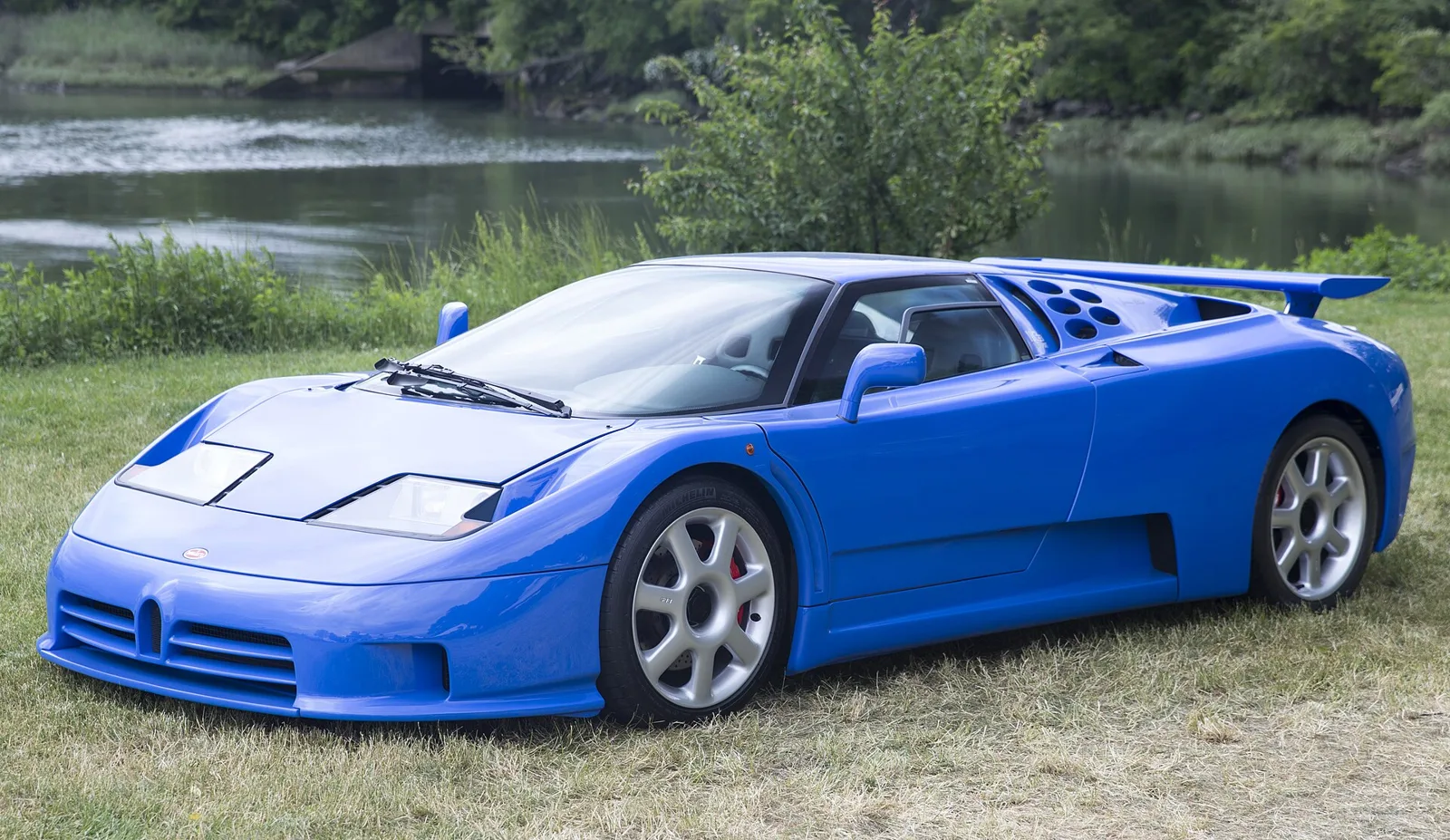
The Bugatti EB110 and McLaren F1 were two of the most ambitious road cars of the early 1990s, and they took opposite views on engine power. The EB110 used four turbochargers on a 3500 cc V12, while the F1 used a naturally aspirated 6.1 litre BMW V12.
This comparison looks at why the two were rivals, how each came about, the engine and chassis philosophies behind them, their styling and reception, their records, how many were built and which buyer each car suited on the facts available.
Why were the Bugatti EB110 and McLaren F1 rivals?
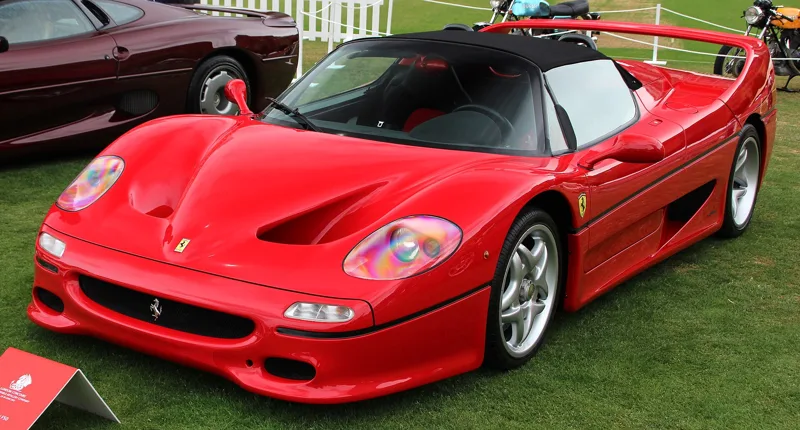
They were rivals because both were built for the same small group of buyers who wanted the most extreme road car of their time. Between 1992 and 1995 the EB110 was measured against the Lamborghini Diablo, Jaguar XJ220, Ferrari F40, Ferrari F50 and the McLaren F1. Those names make up the shortlist that the EB110 was meant to challenge.
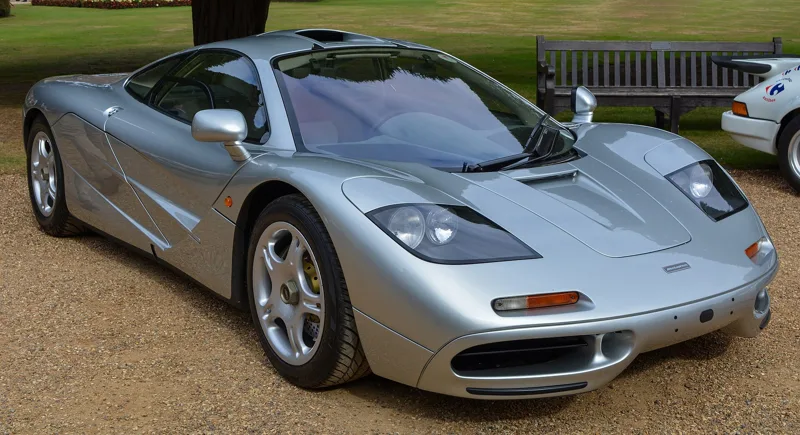
The F1 had a special place in that group. It was the first type-approved road car from McLaren, and at its launch it was recognised as the world's fastest production car. Its production ran from 1992 to 1998, which meant it was on sale for most of the EB110's short life.
Both cars were tied to motorsport. The F1 later produced modified racing versions that won the 1995 24 Hours of Le Mans, and it was the last road-legal, series-produced sportscar to win that race outright. The EB110 also drew on racing expertise, through the Formula One rules that shaped its engine size.
One car built its power on four turbochargers; the other made the case for naturally aspirated purity with a BMW V12 and a carbon tub.
How did the two cars come about?
The EB110 began as a Paolo Stanzani project, conceived in the mid 1980s. Stanzani had worked on Lamborghini's Miura, Countach, Espada, Urraco, Jarama and Jalpa, and development started in 1986 under the code FL12. Bugatti Automobili S.p.A. was founded on 14 October 1987.
The F1 came from a different kind of origin. Gordon Murray, the chief engineer behind the car, had been thinking about a three-seat sports car since his youth. He drew a sketch on a flight home from the 1988 Italian Grand Prix and pitched the idea to Ron Dennis, who backed McLaren's move into road cars.
McLaren then set up McLaren Cars to build the car, and Peter Stevens was hired to style its exterior and interior. Murray used two Ultima MK3 kit cars as test mules, one for the gearbox with a 7.4 litre Chevrolet V8 and the other for the V12 and its exhaust and cooling. The cars were later destroyed to keep them away from the specialist magazines.
The F1 was shown for the first time in May 1992, at a launch event in Monaco. The EB110 went into production in 1991, so the two cars overlapped in the market for a short but important period, with the F1 following into 1998.
What engines did the two cars use?
The EB110 used a 3500 cc V12 sized to match the Formula One rules of 1987. Stanzani judged that a naturally aspirated engine could not give enough torque and power for a supercar, so turbocharging was built into the design from the outset.
Four turbochargers were chosen rather than two larger ones. The aim was to reduce the lag caused by the rotational inertia of the compressors and turbines. That choice was made for technical, marketing and strategic reasons, and it set the EB110 on a very different path from the F1.
Murray took the opposite view. He insisted that the F1's engine be naturally aspirated, because turbochargers and superchargers add complexity, can reduce reliability and blur the driver's feel. He wanted the driver to keep maximum control over the engine, and that principle shaped the whole car.
Honda declined to supply an engine, and Isuzu's 3.5 litre V12 was considered but not chosen. Gordon Murray then approached BMW, whose motorsport division BMW M, led by engine expert Paul Rosche, designed the S70/2. It was a 6,064 cc 60 degree V12 with an aluminium block and heads, dry sump lubrication and a gold foil heat reflector in the engine bay.
The road version of the S70/2 had an 11:1 compression ratio and produced 461 kW (618 hp; 627 PS) at 7,400 rpm, with 650 N-m (479 lb-ft) of torque at 5,600 rpm. Its rev limiter was set at 7,500 rpm, and the engine weighed 266 kg (586 lb), which was 14% more powerful and 16 kg (35 lb) heavier than Murray's original specification.
How did the chassis and body differ?
The EB110 chassis was built from two aluminium skins bonded to an aluminium honeycomb core. The skins were typically 0.9 to 1.5mm thick, and the honeycomb was 8 to 12mm thick. Stanzani favoured that material for its stiffness, its cost and the lack of carbon experience in Italy.
Artioli wanted a carbon-aluminium chassis, arguing for safety and for the future of carbon composites in supercars. Aerospatiale quoted both options, and Stanzani judged the carbon version financially unviable. Later tests showed the carbon chassis to be stiffer, but heavier and significantly more expensive.
The F1 was one of the first production sportscars with a complete carbon fibre reinforced polymer monocoque. That made it lighter and more streamlined than many later rivals, even though it had seats for three adults. The engine bay was not built from carbon, because the heat from the engine would have stressed the material over time.
The seating layout was unusual. The driver sat in the centre of the car, with a passenger seat slightly behind and on each side, which gave the driver a better view. The doors rose up and out in a butterfly action, an idea Murray took from the Toyota Sera.
How did the two cars perform?
The F1 has the more celebrated record in this comparison. In March 1998 the XP5 test car, running a changed rev limiter, was timed at 240.1 mph (386.4 km/h), which broke the Jaguar XJ220's figure of 217.1 mph (349.4 km/h) from 1992. The record was for a production car, though the test car was a prototype.
The F1 also performed well in aerodynamic terms. Its drag coefficient was Cd 0.32, compared with 0.36 for the Bugatti Veyron and 0.357 for the SSC Ultimate Aero TT, itself billed as the fastest production car of 2007 to 2010. Its frontal area was 1.79 square metres (19.3 sq ft).
The EB110 has no performance figures in this comparison, so no direct verdict on speed or acceleration is possible. What is known is that its torque split was changed from 40:60 to 27:73 after test drivers reported too much understeer, a change based on dynamic load under acceleration.
Engine economy is a further point. The F1's engine averaged 15.2 mpg (15 L/100 km), with a worst figure of 9.3 mpg (25 L/100 km) and a best of 23.4 mpg (10 L/100 km). The comparison has no equivalent figure for the EB110, so the two cannot be ranked on that measure.
How did critics and owners respond?
The F1 won widespread praise. Autocar's 1994 road test called it the finest driving machine yet built for the public road, and Channel 4 placed it first on its 2005 list of the 100 greatest cars. Top Gear's April 2017 issue listed it among the fastest naturally aspirated cars then available.
The F1 also attracted famous owners. Lewis Hamilton and Elon Musk have both been linked with it, with Rowan Atkinson, Jay Leno and George Harrison among the others.
The EB110's reception is harder to measure from the material available here. The car restarted a famous brand, but the comparison has no review scores or owner lists to set beside the F1's record, so no firm verdict on its reception can be drawn.
How many of each were built?
The EB110 was built in 139 examples, plus post-production cars that were completed after the company's bankruptcy. The last was built by Dauer Sportwagen in 2002, and an unfinished example was completed in 2019. It was the only production model made by Artioli's Bugatti.
The F1 was built in 106 cars between 1992 and 1998, with some variations in design along the way.
Both cars were built in small numbers. The F1 came from McLaren Cars, while the EB110 came from Bugatti Automobili, a company that was liquidated in 1995.
Which buyer suits each car?
On the facts given, the EB110 suits a buyer drawn to a revived marque, a turbocharged V12 and a chassis with a debated material history. The F1 suits a buyer who wants a naturally aspirated V12, a carbon monocoque and a documented record of outright speed and motorsport success.
A buyer who values the story of a rebirth would find the EB110 compelling. Its turbochargers, its aluminium chassis debate and its design changes reflect a project pulled in several directions, and the company behind it did not last the decade.
A buyer who wants a car with a clear engineering philosophy would look to the F1. Murray's insistence on naturally aspirated power, the BMW engine and the carbon tub form one consistent design, and the car's records and Le Mans victory give it a well-documented pedigree.
Neither car is shown to be better across the board. The EB110 has the turbocharged drama and the rarer history, while the F1 has the fuller record and the more consistent engineering story. The better choice depends on whether the buyer values the turbo character of Bugatti or the naturally aspirated purity of McLaren.
Specifications at a glance
| Feature | Bugatti EB110 | McLaren F1 |
|---|---|---|
| Production | 1991 to 1995 | 1992 to 1998 |
| Cars built | 139 examples plus post-production cars | 106 |
| Engine | 3500 cc V12 with four turbochargers | BMW S70/2 6,064 cc V12, naturally aspirated |
| Power | No figure given | 461 kW (618 hp; 627 PS) at 7,400 rpm |
| Torque | No figure given | 650 N-m (479 lb-ft) at 5,600 rpm |
| Chassis | Aluminium skins and honeycomb; carbon option tested | Carbon fibre monocoque |
| Seating | No figure given | Three, driver in the centre |
| Drag coefficient | No figure given | Cd 0.32 |
| Top speed | No figure given | 240.1 mph (386.4 km/h), XP5 prototype |
| Fuel economy | No figure given | 15.2 mpg (15 L/100 km) average |
| Styling | Marcello Gandini, refined by Gianpaolo Benedini | Peter Stevens, with Gordon Murray's concept |
| Motorsport | No figure given | 1995 24 Hours of Le Mans win in modified racing versions |