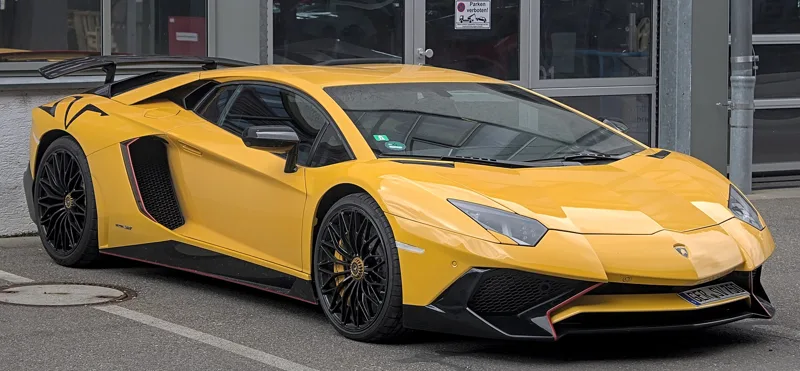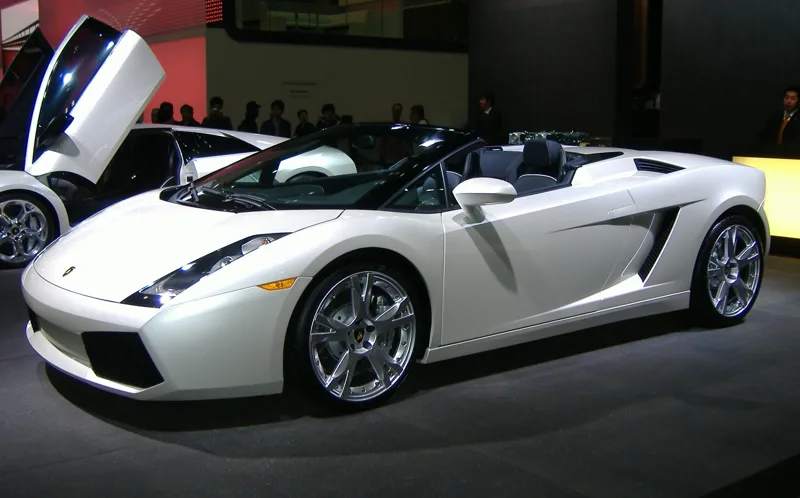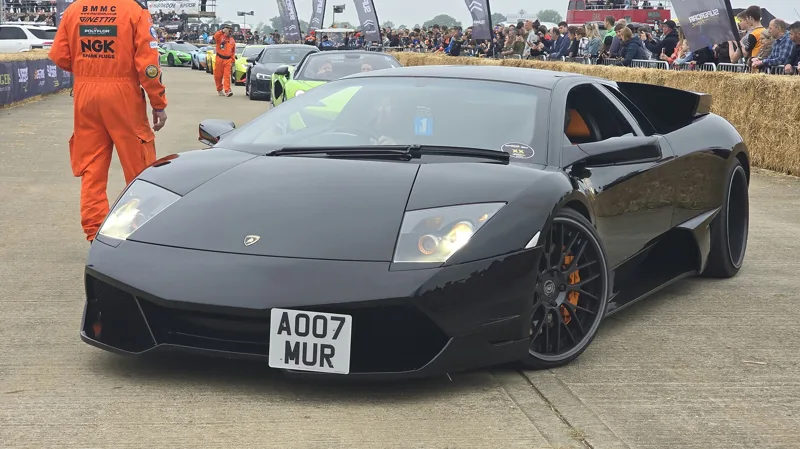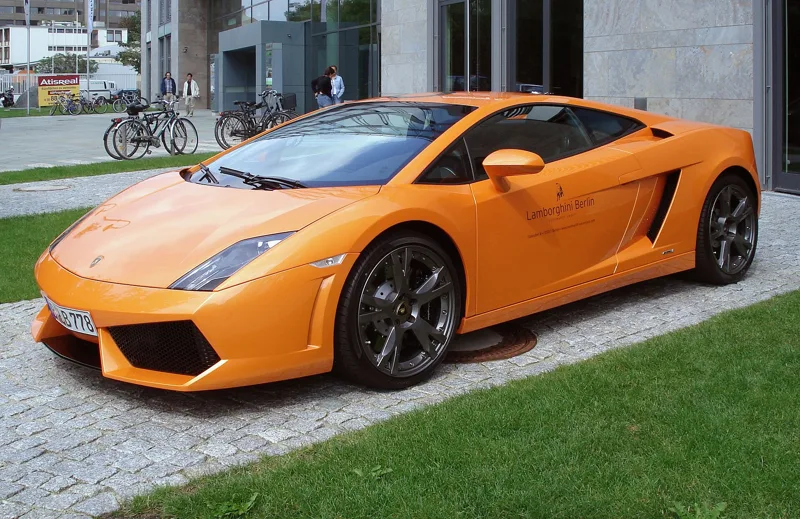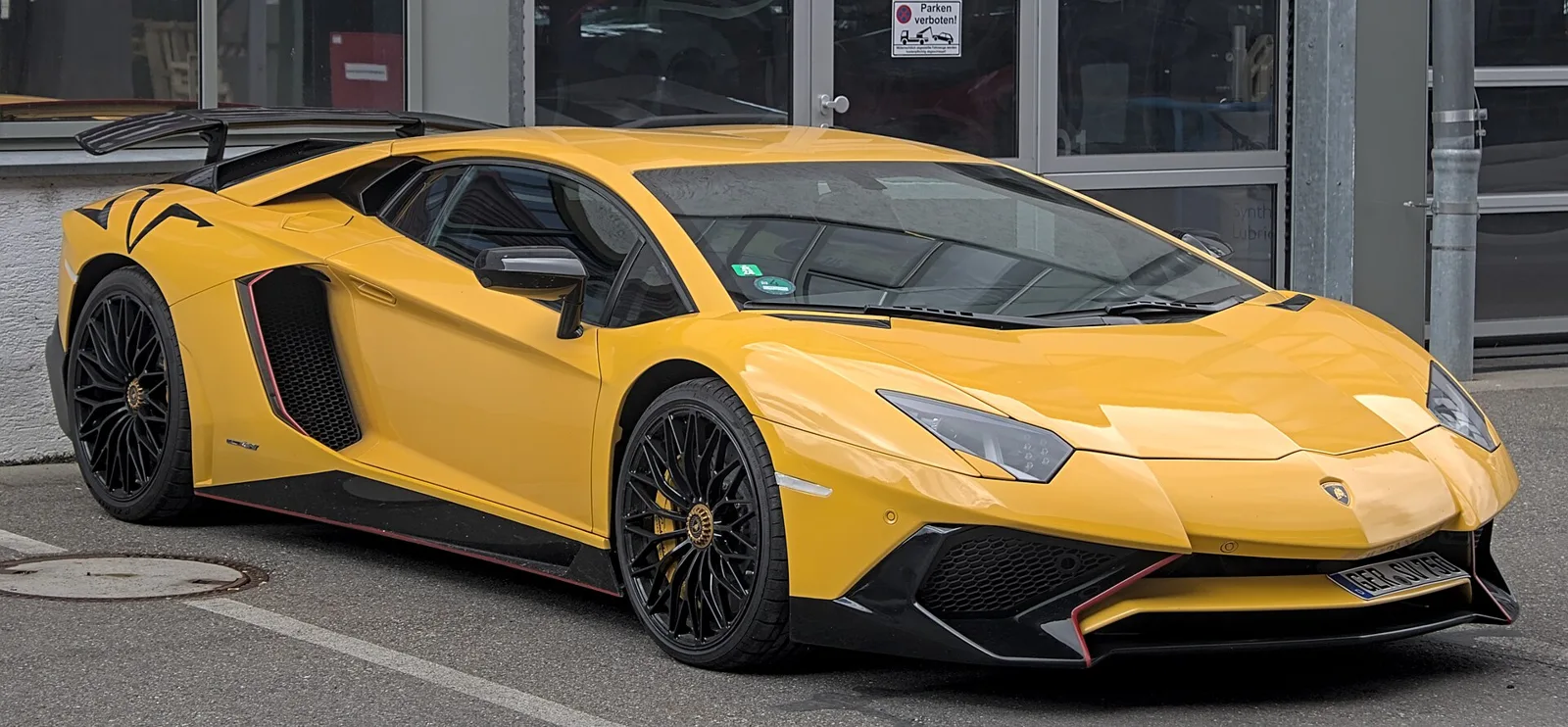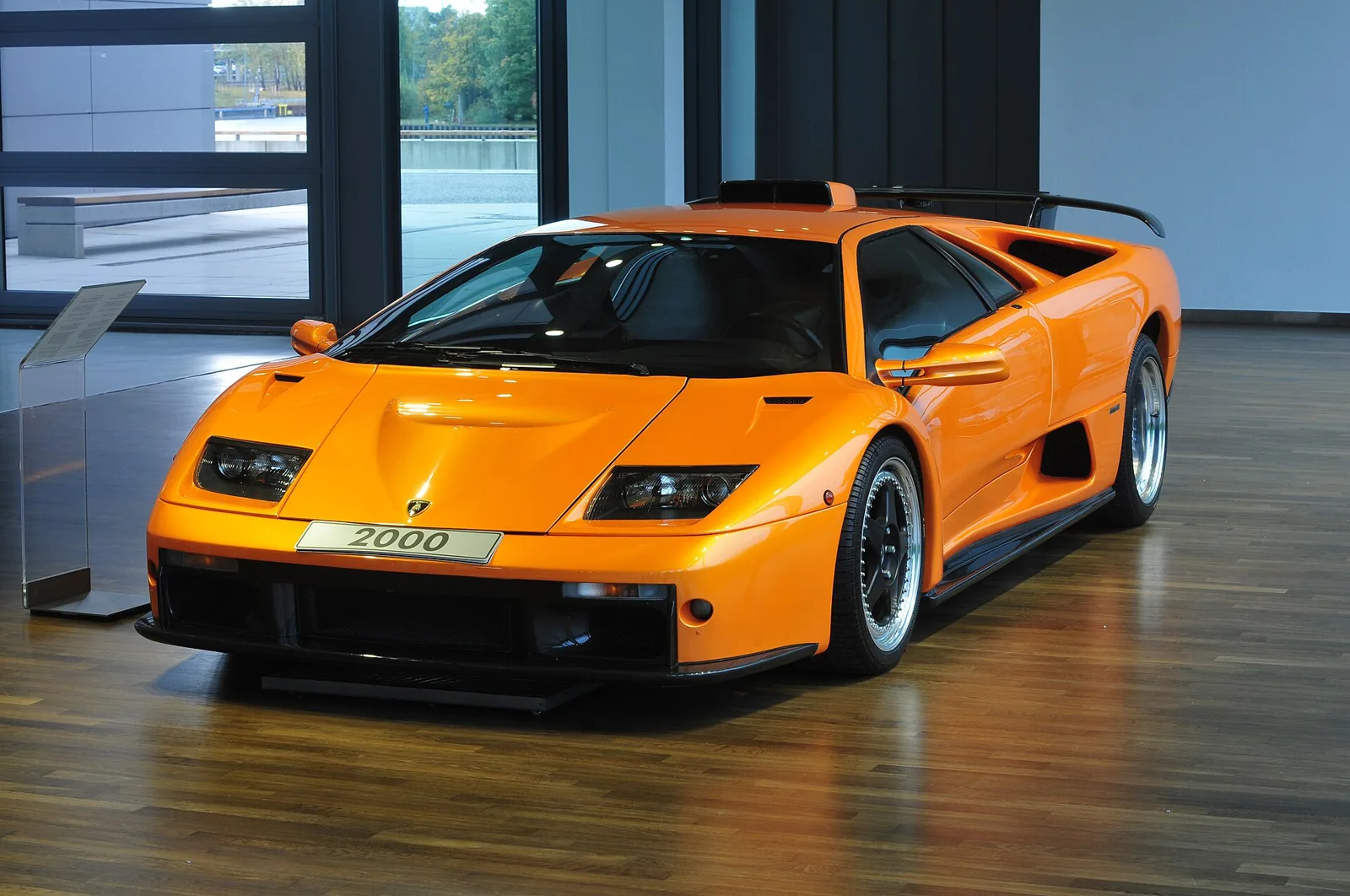
Developed as the Countach's successor, the Diablo carried Lamborghini's V12 from 1990 to 2001 across road, track and special-edition cars.
The Lamborghini Diablo was a mid-engined V12 supercar built from 1990 to 2001. It topped 200 mph, the first Lamborghini road car to do so, and its range spanned coupes, roadsters, track specials and limited runs.
The Lamborghini Diablo was the company's mid-engined V12 supercar, built from 1990 to 2001 as the successor to the Countach. Its top speed passed 200 mph, a first for a production Lamborghini, and its family ran from fixed-roof road cars to roadsters, track specials and small limited runs.
Why was the Diablo developed?
Development began in June 1985 as Project 132, with a brief that asked for a top speed of at least 315 km/h (196 mph). The new car was meant to replace the Countach, which had been the company's flagship sports car.
The Mimran brothers, Swiss-based financiers, backed the company at the time. Chrysler bought Lamborghini in 1987 and funded the car's completion, after which its Detroit design team carried out a third major redesign.
Marcello Gandini had designed both predecessors and was contracted for the Diablo. Chrysler's management disliked his sharp-edged styling, so the Detroit team smoothed away its corners. Gandini later realised his original idea in the Cizeta-Moroder V16T.
The Diablo's name honours a fighting bull from an 1869 battle in Madrid, and Lamborghini has named its cars after fighting bull breeds ever since.
Development was believed to have cost 6 billion lire. The car was presented for sale on 21 January 1990.
A bull named after a fighting legend, carrying a V12 that finally broke the 200 mph barrier.
What did the original Diablo offer?
The original Diablo used a 5.7-litre dual overhead cam V12 with four valves per cylinder and computer-controlled multi-point fuel injection. It produced 492 PS (362 kW; 485 hp) and 580 Nm (428 lbf ft) of torque, with a top speed of 325 km/h (202 mph).
Auto Motor und Sport timed the car at 4.5 seconds from 0-100 km/h, 9.3 seconds to 160 km/h and 13.7 seconds to 200 km/h.
The car was rear-wheel drive, and its engine sat amidships to balance the weight. Owners got adjustable seats and a steering wheel to match, plus electric windows and an Alpine stereo as standard.
Power steering arrived as standard from 1993 onwards. Anti-lock brakes were not offered at first, although they were added later in the car's life.
Which options could buyers add?
Buyers could add a custom-moulded driver's seat, a remote CD changer with a subwoofer and a rear spoiler. Factory luggage cost $2,600, and an exclusive Breguet dash clock cost $10,500.
The clock was the most expensive option on the list, at $10,500 against $2,600 for the luggage set.
How did the VT add all-wheel drive?
The VT, introduced in 1993, marked the first time a production Lamborghini sent power to all four wheels. A viscous centre differential, adapted from the LM002's four-wheel-drive system, could shift as much as a quarter of the torque forward when the rear wheels slipped.
The VT name stood for viscous traction. The car kept its rear-wheel-drive character, with the front axle joining only when the rear lost grip, which improved handling without changing the layout.
Many of the VT's detail changes later reached the base Diablo. Those improvements made the two versions look almost identical from outside, even though the all-wheel-drive system set the VT apart.
What made the SE30 special?
The SE30 marked the company's 30th anniversary in 1993 and was tuned to produce 525 PS (386 kW; 518 hp). Only 150 were built, and about 15 of those were converted to Jota specification.
To save weight, the SE30 dropped its power side glass for fixed plexiglass and lost the air conditioning, stereo and power steering. Its interior gained carbon fibre bucket seats with four-point belts and fire suppression, adding to its track focus.
The Jota kit turned the SE30 into a circuit racer, lifting output to 595 PS (438 kW; 587 hp) with 639 Nm of torque. It came at the cost of street-legal operation, so the Jota was a track machine rather than a road car.
How did the SV change the range?
The SV arrived at the 1995 Geneva Motor Show and brought back the Super Veloce name that the Miura had carried. It produced 510 PS (375 kW; 503 hp) at 7,100 rpm, with 580 Nm of torque at 5,900 rpm.
Although the SV made more power, it cost slightly less than the standard car, which made it the entry point to the range.
The rear-wheel-drive layout meant that the extra power could more easily break traction under hard driving.
In 1998 a limited run of 20 SV cars was produced exclusively for the United States, and it was called the Monterey Edition. Several of those cars were painted in vibrant colours, and one was driven by Mario Andretti during a Lamborghini-sponsored event in California.
What changed in the 1999 facelift?
The 1999 facelift simplified the range, because the SV became the entry-level trim and the base Diablo was dropped. The pop-up headlamps gave way to fixed composite lenses, borrowed under licence from the Nissan 300ZX.
The dashboard became an integrated wave-shaped design, with a thin strip of black glass carrying the warning lamps. That design took its cue from Bang and Olufsen hi-fi products rather than from the traditional Italian binnacle.
Power rose to 530 PS (390 kW; 523 hp) and 605 Nm of torque for the SV and VT models, which also gained variable valve timing. The Diablo became the first Lamborghini to use Kelsey-Hayes ABS, which worked with larger diameter brake rotors.
What was the VT Roadster?
The VT Roadster arrived in December 1995 with a carbon fibre targa top that could be lifted off by hand and set above the engine lid. The roof was removed by hand.
The engine lid was changed substantially to ventilate the car properly while the roof panel covered it. The roadster also used larger air intakes on its top and sides than the coupe did.
A Millennium Roadster followed as a final run of 30 cars for the 2000 model year. It offered an optional carbon fibre spoiler and two-tone leather, and it did not change the design in any major way.
What were the GT and VT 6.0 models?
The GT was introduced in 1998 with only 80 examples made. It was track-oriented, with aggressive bodywork and a stripped interior, and it was sold mainly in Europe, although some reached the United States.
The GT's body was mostly carbon fibre, with a steel roof and aluminium doors as the only exceptions. Its engine was stroked from 80 mm to 84 mm, taking the displacement to 6.0 litres, and it went without the all-wheel-drive hardware, saving mass.
The VT 6.0 followed under Audi ownership, which pushed for a more refined Diablo. Luc Donckerwolke styled it with a revised front fascia and new intakes, and its engine produced 550 PS (405 kW; 542 hp) and 620 Nm of torque.
The VT 6.0 SE was the last special. It was limited to 42 units, and it was offered in two colours, Oro Elios and Marrone Eklipsis, with a short-ratio transmission and carbon fibre trim.
How did the Diablo go racing?
The Diablo appeared in motorsport through several programmes. A GT1 entry was planned for the 1995 24 Hours of Le Mans, but the car never raced after disputes between the factory and its sponsors.
Three Jota cars were built for the Japanese JGTC series, and all three still exist in Japan. The GT1 Stradale was developed by Signes Advanced Technologies in Toulon, with a 6.0-litre engine producing 655 PS (482 kW; 646 hp) and a weight of 1,050 kg.
The racing Stradale competed in Japan from 1997 to 2000, and the SV-R was the first Lamborghini built for motorsport purposes. It was unveiled at the 1996 Geneva Motor Show, and 28 SV-R cars entered the first round of its Supertrophy.
Shown first at the 1999 Bologna Motor Show, the GTR was a track-focused version of the GT. Forty units were built, and a Team Lamborghini Australia car won the 2003 and 2004 Nations Cup.
What concepts tried to replace the Diablo?
In 1995 the company's ownership changed, with V'Power holding 60% of the shares. The new chief executive, Vittorio di Capua, cut costs and started work on the Diablo's successor under the code name L147.
Gandini's Acosta, a concept based on the Diablo's running gear, was rejected as too aggressive for a modern Lamborghini. Zagato built a one-off Raptor concept on the VT in 1996, but it was never put into production.
The Canto, designed by Norihiko Harada of Zagato, was tested in 1997 and was reported to reach 350 km/h at Nardo, although the figure was never confirmed. Volkswagen Group leadership rejected the car in 1999, and it was shelved.
The Murcielago was then developed from scratch after the failure of the Canto. The Diablo carried on until 2001, when its successor took over the Lamborghini range.
What are the Lamborghini Diablo specifications?
| Specification | Detail |
|---|---|
| Production years | 1990 to 2001 |
| Original engine | 5.7 L dual overhead cam V12, four valves per cylinder |
| Original output | 492 PS (362 kW; 485 hp), 580 Nm (428 lbf ft) |
| Original top speed | 325 km/h (202 mph) |
| 0-100 km/h (Auto Motor und Sport) | 4.5 seconds |
| Drive | Rear-wheel drive; VT adds a viscous centre differential, up to 25% torque to the front |
| SE30 | 525 PS (386 kW; 518 hp); 150 built |
| Jota SE30 | 595 PS (438 kW; 587 hp), 639 Nm |
| SV (1995) | 510 PS (375 kW; 503 hp), 580 Nm |
| GT (1998) | 80 built, 575 PS (423 kW; 567 hp), 6.0 L |
| VT 6.0 (2000) | 550 PS (405 kW; 542 hp), 620 Nm |
| GT1 Stradale | 655 PS (482 kW; 646 hp), 1,050 kg |
| SV-R | 540 PS (397 kW; 533 hp), 31 built |
| GTR | 590 PS (434 kW; 582 hp), 40 built |