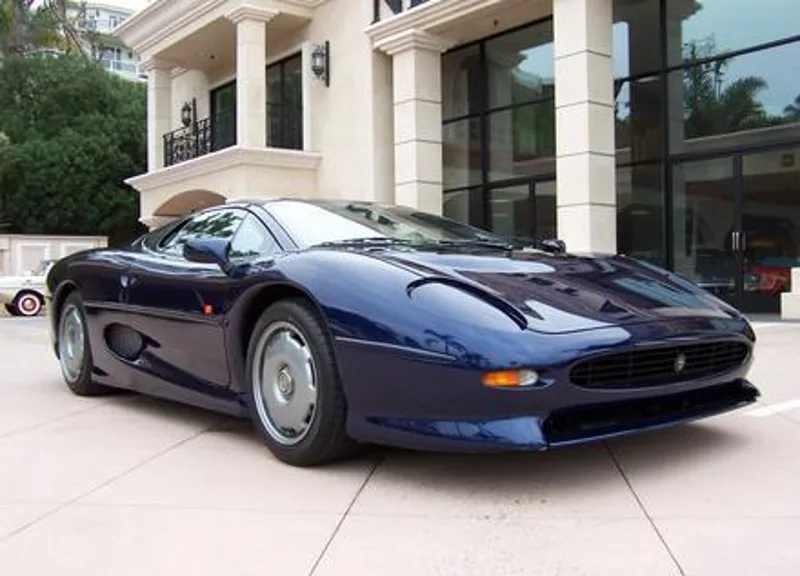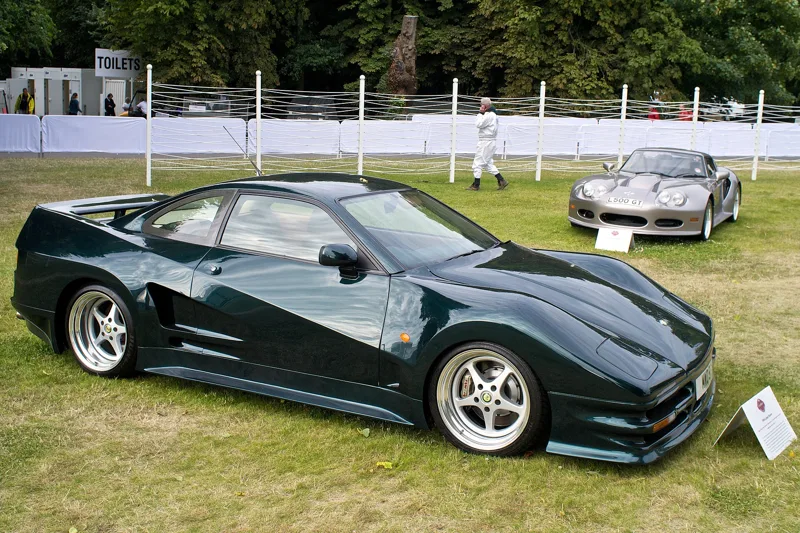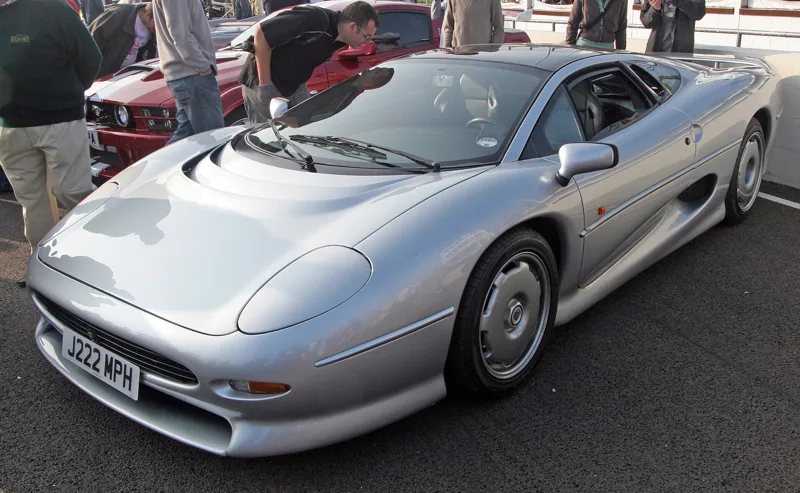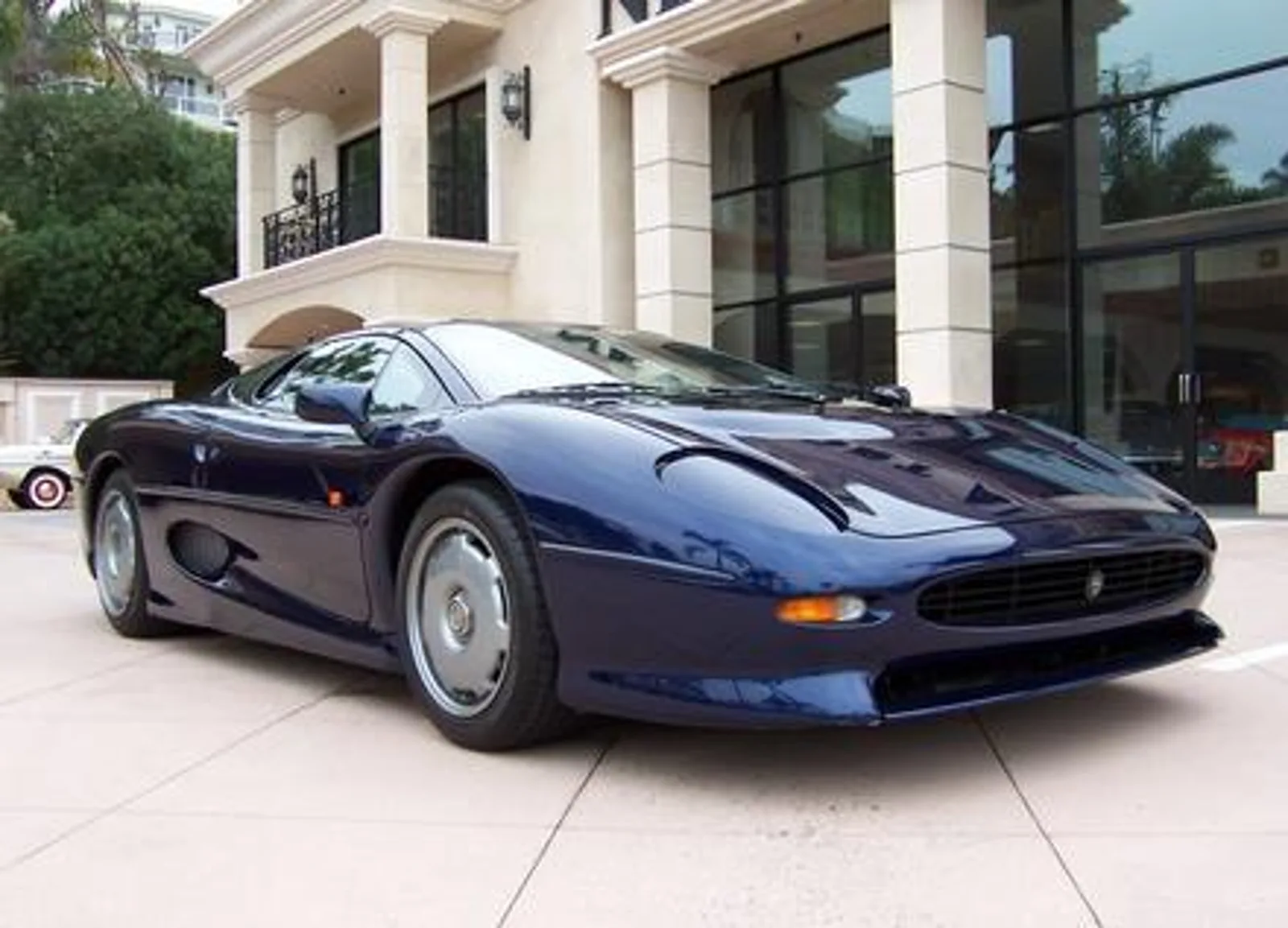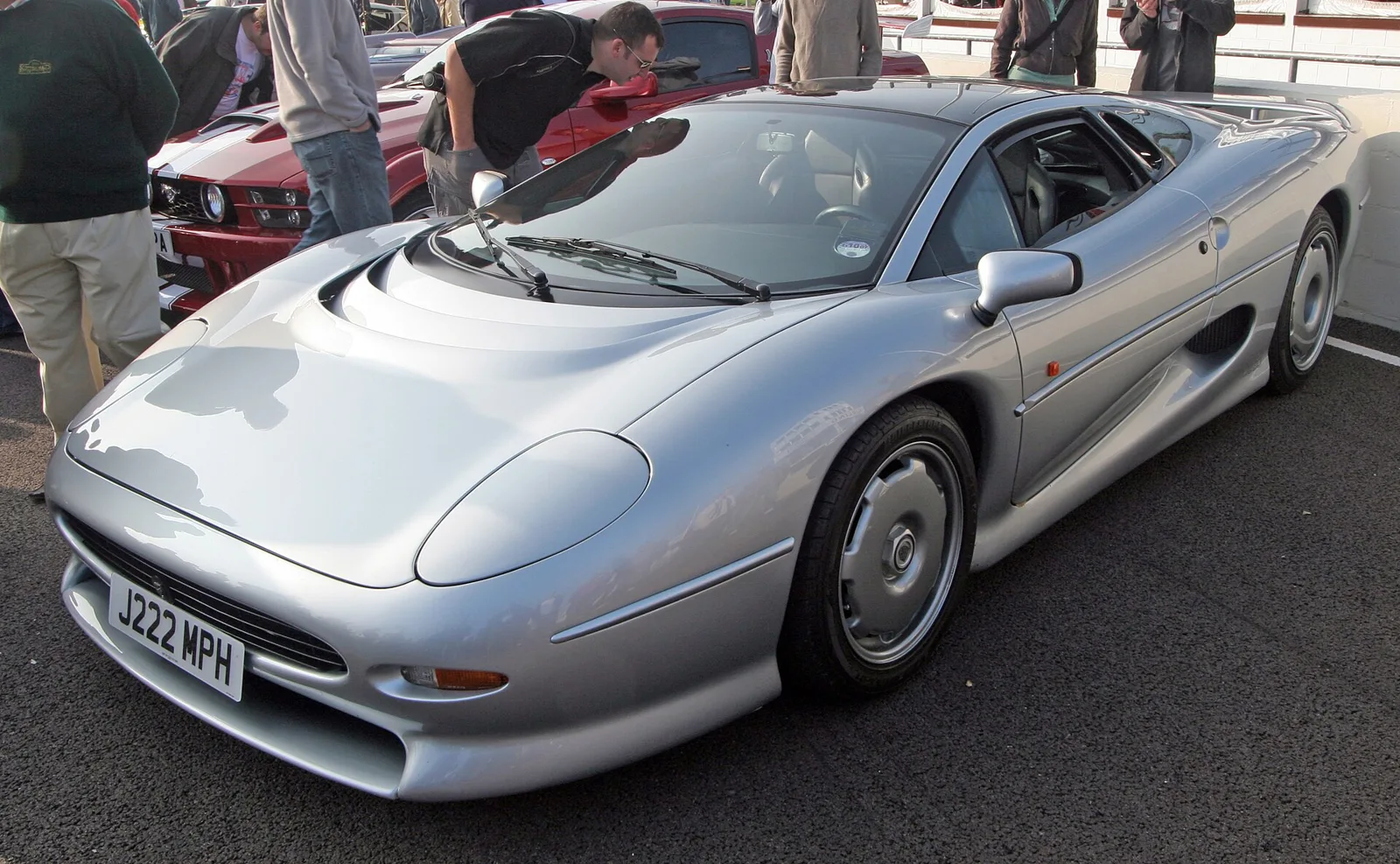
Both were built around Jaguar V12 racing engines, but one became a limited production supercar and the other a rare four-seat grand tourer.
The Jaguar XJ220 was a two-seat supercar built with Tom Walkinshaw Racing from 1992 to 1994, and the Lister Storm was a homologated GT car with a 7.0-litre V12 from 1993. Both grew from Jaguar's V12 racing engines, but the XJ220 was a limited production car while the Storm was built in very small numbers.
The Jaguar XJ220 and the Lister Storm were both British supercars with Jaguar V12 engines at their core. The XJ220 was a two-seat production supercar built by Jaguar with Tom Walkinshaw Racing from 1992 to 1994, while the Storm was a homologated GT car from Lister Cars that began production in 1993 and was sold as a road car in very small numbers. Their routes to the market were very different.
This comparison covers their origins, engines, speed, specifications, prices, production and racing. Where a figure exists for only one car, the gap is shown rather than estimated, and metric figures come first with imperial values in brackets.
Were the XJ220 and Storm connected?
Yes, through the same Jaguar V12 racing lineage. The XJ220 concept used a 6.2-litre V12 built from racing engines that Tom Walkinshaw Racing had made in the 1980s, and the Storm's 7.0-litre V12 was based on the unit used in the Jaguar XJR-9 that won Le Mans in 1988.
The XJ220 began as a spare-time project. An informal group of Jaguar employees worked on a V12 four-wheel-drive concept, aiming to recreate the Jaguar Le Mans cars of the 1950s and 1960s for FIA Group B competition. Jim Randle led the effort, and the volunteer team became known as The Saturday Club, with twelve members working evenings and weekends.
The Storm came from a different direction. Lister Cars, a British low-volume manufacturer, began production of the car in 1993 as a homologated GT racing car. A road version followed, but the record says only four examples were produced before production of the road car ceased.
Two British V12 cars from one Jaguar engine family: a production supercar built in a limited run, and a four-seat grand tourer built in handfuls.
How fast were the two cars?
The XJ220, with its catalytic converter removed, recorded 217 mph (349 km/h) during Jaguar's testing at the Nardo track in Italy. That made it the fastest production car from 1992 to 1993. The Storm was claimed at 335 km/h (208 mph), and it reached 0-97 km/h (60 mph) in 4.1 seconds.
The XJ220 also has a lap record in the material. A prototype is said to have run a Nurburgring lap of 7:46.36 in 1991, which Jaguar described as faster than any production car lap before it. The record gives no acceleration time for the production XJ220, so the two cars' sprint figures cannot be set against each other.
What engines powered the two cars?
The XJ220 concept used a 6.2-litre V12 with titanium connecting rods and dry sump lubrication. Five racing V12s were still in existence, and the dry sump lowered the centre of gravity. Production changed to a turbocharged V6, following engineering changes and emissions requirements.
The Storm kept the big V12 at 7.0 litres (6,996 cc). Its engine developed 554 PS (407 kW; 546 hp), peaking at 6,100 rpm, with 790 N m (582.7 lb ft) of torque at 3,450 rpm. The compression ratio was 10.5:1. The record describes it as the largest V12 fitted to a production road car since the Second World War.
The XJ220's drive system came from FF Developments, which Tony Rolt led. Rolt had designed the four-wheel-drive system used in the Jensen FF, and he won the 1953 Le Mans with the factory C-Type. The drive ran through the centre of the engine's V and used a quill drive, with a twin-plate clutch by AP Racing.
How were the bodies and chassis built?
The XJ220 concept had an aluminium chassis built with Alcan's bonded structure technology, a wheelbase of 2,845 mm (112 in), rear wheel steering and an adjustable suspension height. It measured 5,140 mm (202 in) long and 2,000 mm (79 in) wide, and weighed 1,560 kg (3,439 lb). Its bodywork was hand built from aluminium by Park Sheet Metal.
The Storm used Kevlar and aluminium panels over an aluminium honeycomb monocoque, with doors and a greenhouse borrowed from the Volkswagen Corrado. Its drag coefficient was Cd=0.35, and it weighed 1,664 kg (3,668.5 lb). The record does not give its length or width.
The XJ220's design brief limited aerodynamic aids while allowing extra downforce for racing. The concept generated about 3,000 lb (1,400 kg) of downforce when travelling at 200 mph (322 km/h). Its wind tunnel work was done on a 1:4 scale model, because the project could not afford a full-size mock-up.
How much did each car cost?
The XJ220 was announced as a limited run of 220 to 350 cars on 20 December 1989. Its list price from 1 January 1990 was GBP 290,000 excluding VAT, and it rose by 1992 as contracts were indexed. Deposits of GBP 50,000, excluding VAT, were taken from around 281 customers.
The Storm cost GBP 220,000, and the record ties that high price to the small number of road examples. The XJ220's specification changes and the early 1990s recession led many buyers not to exercise their purchase options, and the record counts 275 cars produced in total.
How many cars were built?
The XJ220 reached a total of 275 cars by the end of production. Its retail price in 1992 was GBP 470,000, which made it one of the most expensive cars of its time. The concept had attracted wealthy enthusiasts who handed over blank cheques for purchase options after its 1988 unveiling.
The Storm's output was much smaller. Only four road examples were produced, and the record gives no separate production total for the racing cars, which were built in larger numbers.
How did the XJ220 concept reach the public?
The concept was finished in the early hours of 18 October 1988, on the morning it was due to appear at the British International Motor Show in Birmingham. Its positive reception prompted Jaguar to consider production. Chairman John Egan and racing director Roger Putnam signed off the car the week before the show.
The name came from the XK120, which referred to that car's top speed in miles per hour. The XJ220 concept targeted 220 mph (350 km/h), and the production car was developed by Project XJ220 Ltd, a company formed by JaguarSport to build it. Mike Moreton, who had run Ford's RS200 and Sierra RS500 Cosworth programmes, headed the team.
What was the racing link between Jaguar and TWR?
Tom Walkinshaw approached Jaguar with the XJS for the 1981 European Touring Car Championship, and the partnership won the title in 1983. Jaguar also supplied V12 engines to the Group 44 Racing IMSA team from 1983, and TWR developed the XJR-6 for Group C in 1985.
TWR took over the IMSA GT Championship operation in 1988, and the XJR-9 won the 1988 24 Hours of Le Mans. The poor fuel consumption of the V12 and new refuelling rules later forced a switch to the Austin Rover V64V engine in the XJR-10 and XJR-11, and TWR bought the design rights after the Group B rally ban.
How did the Storm race?
The Storm GTS debuted at the 1995 24 Hours of Le Mans in the GT1 class, against the McLaren F1 GTR, the Ferrari F40 LM, the Jaguar XJ220S and the Porsche 911 GT2. It did not perform well and failed to finish, after gearbox failure that came after 40 laps.
The Storm went on to the BPR Global GT Series, the British GT Championship and FIA GT. In 1999 the Storm GT won the GT2 category of the British GT Championship, and in 2000 Lister claimed the team and driver championships in FIA GT, with five wins. The XJ220 never raced in the same championship as the Storm, and the record ties its design brief to FIA Group B competition.
What do the two cars share, and where do they differ?
Both cars grew from Jaguar's racing V12s, and both were conceived in Britain by teams working outside the mainstream. The XJ220 was a supercar for sale, with a production run and a published top speed. The Storm began as a racing car, and only four road examples followed.
The two differ in scale and purpose. The XJ220 concept was a four-wheel-drive car with a mid-mounted engine, and the production version moved to a turbocharged V6. The Storm kept its V12 and used Kevlar and aluminium panels, with doors and a greenhouse from the Volkswagen Corrado.
Side-by-side specifications
| Specification | Jaguar XJ220 | Lister Storm |
|---|---|---|
| Production | Limited run of 220 to 350 announced; 275 built | Homologated GT car from 1993; four road examples |
| Layout | Concept: mid-mounted engine, four-wheel drive | not given |
| Engine | Concept 6.2 L (6,222 cc) V12; production turbocharged V6 | 7.0 L (6,996 cc) V12 |
| Power | Concept figure not given; production V6 not given | 554 PS (407 kW; 546 hp) at 6,100 rpm |
| Torque | not given | 790 N m (582.7 lb ft) at 3,450 rpm |
| Compression | not given | 10.5:1 |
| Top speed | 217 mph (349 km/h) at Nardo, catalytic converter removed | 335 km/h (208 mph), claimed |
| 0-97 km/h (60 mph) | not given | 4.1 seconds |
| Weight | Concept 1,560 kg (3,439 lb) | 1,664 kg (3,668.5 lb) |
| Length and width | Concept 5,140 mm (202 in) long, 2,000 mm (79 in) wide | not given |
| Wheelbase | 2,845 mm (112 in) concept | not given |
| Drag | not given | Cd=0.35 |
| Body | Hand-built aluminium concept body | Kevlar and aluminium panels over aluminium honeycomb monocoque |
| Price | GBP 290,000 excluding VAT list in 1990; GBP 470,000 retail in 1992 | GBP 220,000 |
| Deposits | GBP 50,000 excluding VAT from about 281 customers | not given |
| Racing | Designed for FIA Group B; TWR and XJR-9 lineage | GTS at Le Mans 1995; GT2 class win 1999; team title 2000 |
| Award or record | Fastest production car 1992 to 1993 | Fastest four-seat grand tourer on sale for several years |
Which buyer suits each car?
On the figures available, the XJ220 suits a buyer who wanted a Jaguar supercar built in a limited run, with a published top speed that was a production record for its time. The Storm suits a buyer who wanted a rarer four-seat grand tourer, with the largest V12 fitted to a road car since the war and a lower price.
Neither car is shown to be better overall. The XJ220 had the larger production run and the higher price, while the Storm had the bigger V12 and the only published sprint time. The record leaves the choice to buyer priorities.
What does the record leave open?
Several points are missing. The production XJ220's sprint time, its V6 output and the Storm's dimensions are all absent. No award is listed for the XJ220 in the material, so the reception comparison is one-sided.