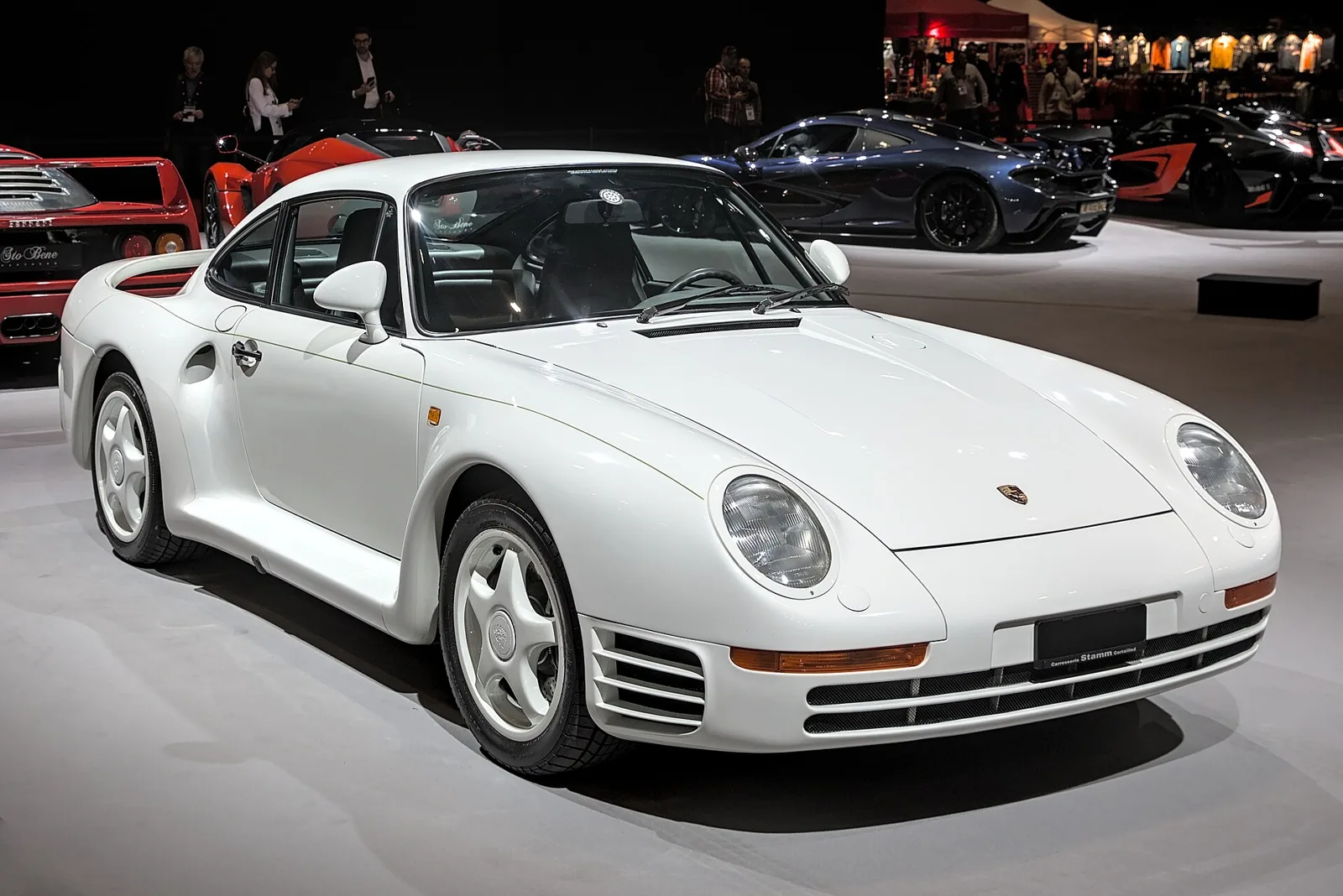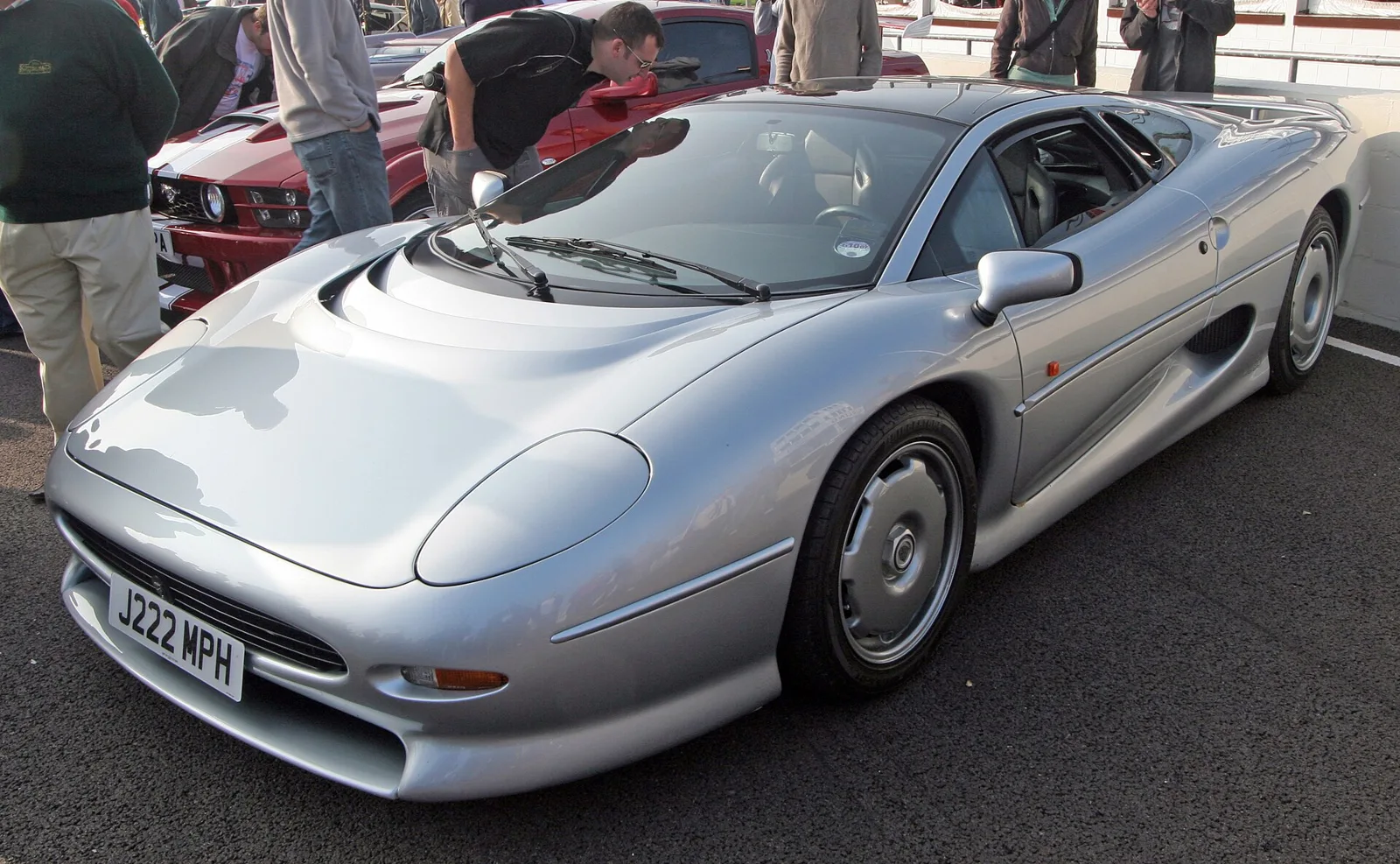
Jaguar's XJ220 and Porsche's 959 both began as motorsport ideas and became the fastest road cars of their day, each by a very different engineering route.
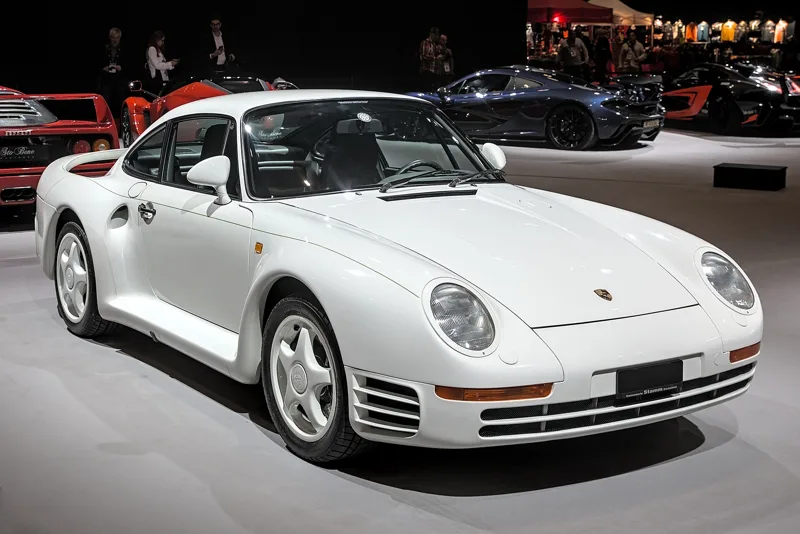
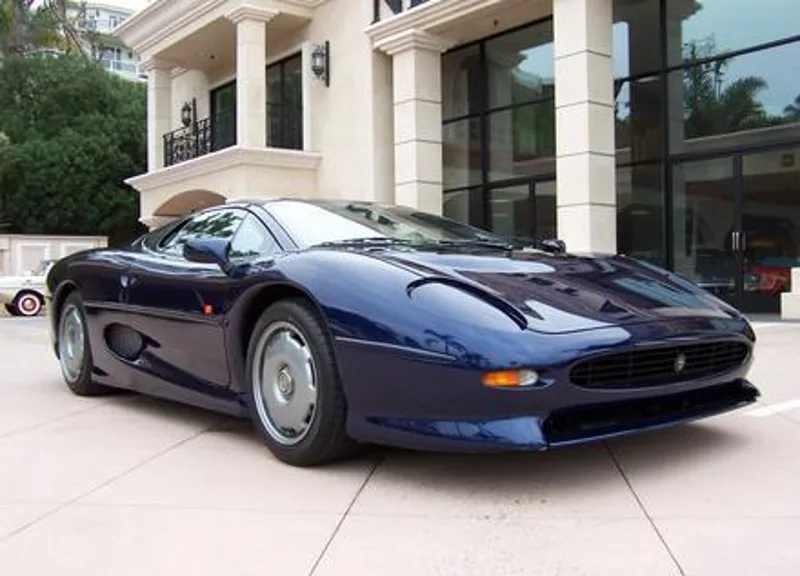
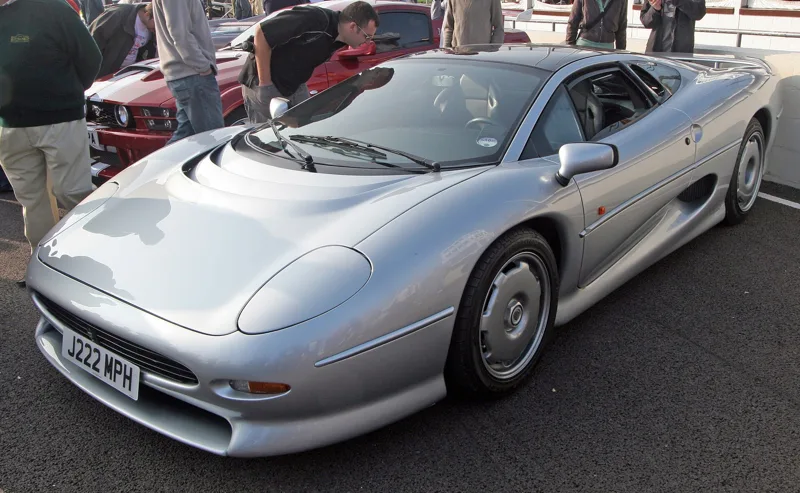
The Jaguar XJ220 was a two-seat supercar built by Jaguar with Tom Walkinshaw Racing from 1992 to 1994, topping out at 217 mph (349 km/h). The Porsche 959 was built from 1986 to 1993 as a Group B rally car and then a road car, with a twin-turbocharged flat-six topping out at 317 km/h (197 mph).
The Jaguar XJ220 and the Porsche 959 were both born from motorsport, and both were built to show what a road car could do at the top of the market. One came from a volunteer project inside Jaguar, the other from Porsche's development of its Group B rally programme.
They also shared a practical constraint. The 959 needed to be built in at least 200 units to qualify for homologation, while the XJ220's planned run of 220 to 350 cars was set by a feasibility study rather than by any rule.
Where did the two supercars come from?
The XJ220 grew from a V12, four-wheel-drive concept designed by Jaguar employees working in their spare time, a group known as The Saturday Club. The 959 began in 1981 under managing director Peter Schutz, when chief engineer Helmuth Bott proposed a new all-wheel-drive car and a Group B racing programme to develop it.
The XJ220 concept was shown at the 1988 British International Motor Show in Birmingham. Its positive reception prompted Jaguar to take it into production, and about 281 deposits of GBP 50,000 were taken from buyers who wanted a car based on the concept.
The Saturday Club consisted of twelve volunteers who worked evenings and weekends. Their project needed a feasibility study by teams from TWR and Jaguar before it could become a production car, and the conclusion was that the car was technically feasible and financially viable.
The road version was first shown at the 1985 Frankfurt show as a 1986 model, though a series of problems pushed production back by more than a year. First customer deliveries began in 1987, and the car was built until 1988 before the rest of the run was completed.
Two supercars that began as racing ideas and ended as the fastest road cars of their time, each taking a very different route to the same speed.
How did the two cars differ in design?
The XJ220 used an aluminium chassis built with Alcan's bonded structure technology and a mid-mounted engine layout. The 959 used an aluminium and Aramid composite body and chassis, with a Nomex floor and a drag coefficient as low as 0.31.
The XJ220 concept had a wheelbase of 2,845 mm (112 in) and measured 5,140 mm (202 in) long and 2,000 mm (79 in) wide. It weighed 1,560 kg (3,439 lb), and its body was designed to produce about 3,000 lb (1,400 kg) of downforce at 200 mph (322 km/h).
The 959's bodywork was produced at Karosserie Baur, not at the Porsche factory in Zuffenhausen, on a line with Porsche inspectors overseeing the finished bodies. Its magnesium alloy wheels were hollow, forming a sealed chamber with a built-in tyre pressure monitoring system.
The XJ220's design brief restricted aerodynamic aids to keep the road car simple, while a variable rear wing was meant to fold into the bodywork at lower speeds. The concept's electric scissor doors and transparent engine cover showed the V12 off to visitors at the 1988 show.
How did the engines and performance compare?
The 959 used a 2,849 cc sequential twin-turbocharged flat-six that made 450 PS (331 kW; 444 hp) at 6,500 rpm, while the production XJ220 used a turbocharged V6 in place of the concept's V12. The XJ220 reached 217 mph (349 km/h) at the Nardo test track, with its catalytic converter removed.
The 959's torque was 500 N-m (369 lb-ft) at 5,000 rpm, and its sequential twin turbochargers gave smooth delivery across the rev range. Auto, Motor und Sport measured a top speed of 318 km/h (198 mph) and 3.7 seconds to 100 km/h, figures that Guinness World Records recognised.
Road & Track measured the 959 at 198 mph (319 km/h) and 3.6 seconds to 60 mph, while Car and Driver recorded 3.6 seconds to 60 mph in komfort trim. Those results put the 959 among the quickest road cars the magazines had tested.
The XJ220 prototype set a Nurburgring lap of 7:46.36 in 1991, which Jaguar said was faster than any production car lap before it. The concept's target top speed of 220 mph (350 km/h) became the name of the production car.
The 959 Sport was pushed further in the 959 S, with larger turbochargers, 515 PS (379 kW; 508 hp) and a top speed of 339 km/h (211 mph); twenty-nine cars were built. Porsche also offered a factory upgrade to 530 PS (390 kW; 523 hp) for customer cars.
What were the interiors and equipment like?
The concept XJ220 had a Connolly leather interior, heated electric seats and an Alpine CD player, with heated windscreens and air conditioning. The 959 offered Komfort and Sport trims, with Komfort adding more creature comforts and Sport a more track-focused set-up.
The 959's road cars had automatic ride-height adjustment, and its dashboard displayed the rear differential slip and the power sent to the front axle. Those gauges reflected an all-wheel-drive system that could send up to 80% of its power to the rear under hard acceleration.
The 959 S removed air conditioning, central locking, electric windows, rear seats and the levelling system to save weight. It was a clear sign of how far the 959 could be pared back when the goal was pure speed.
Komfort cars built from spare parts in 1992 and 1993 cost DM 747,500, much more than the earlier cars. Their newer suspension damping and their rarity have made them the most prized examples.
How much did they cost, and how many were built?
The XJ220 had a list price of GBP 290,000 excluding VAT on 1 January 1990, rising to GBP 470,000 by 1992. Only 275 cars were produced, because the early 1990s recession and buyers' decisions to decline their purchase options cut the run.
The 959 cost DM431,550 (US$225,000) at launch, still less than half what Porsche spent building each car. Production ended in 1988 with 292 cars completed, and 337 were built in total, including 37 prototypes and pre-production models.
Porsche reportedly lost US$200,000 on each 959 sold in the United States, given the poor exchange rate between the Deutschmark and the dollar. That loss was one reason the car stayed a rarity outside Europe.
The XJ220's concept heritage stayed visible in its shape. The design brief kept the car close to classic Jaguar sports cars such as the D-Type and E-Type, with a simple, clean body that was not burdened with aerodynamic aids. The XJ220's price rose by 1992 owing to indexation of contracts. The 281 deposits of GBP 50,000 each showed serious interest, but not all of those buyers went on to take delivery of a car.
How were the cars received?
The XJ220 concept was overwhelmingly welcomed at its 1988 debut, and its unveiling overshadowed Ferrari's F40 display. The 959 became one of the most respected road cars of its era, and Sports Car International named it the top sports car of the 1980s in 2004.
An estimated 90,000 additional visitors came to see the XJ220 at the 1988 show, and wealthy enthusiasts handed over blank cheques for purchase options before the car was approved for production. That response made the concept a commercial proposition almost overnight.
Many consider the 959 the most technologically advanced road car of its time. Its all-wheel-drive system influenced Porsche's first all-wheel-drive 911 Carrera 4 and later made all-wheel drive standard on the turbocharged 911 from the 993 generation.
The XJ220's fate was less kind. A recession and the high price of the car led many buyers to decline their purchase options, so the run ended at 275 cars, against about 281 initial deposits.
Did either car race?
Both cars had racing roots. The 959 was developed for Group B rallying, and its racing variant, the 961, ran at Le Mans and in the IMSA series. The XJ220 grew from a Group B concept, while Jaguar's Le Mans successes came from the XJR-9 and its successors.
The 959 finished 1st, 2nd and 6th in the 1986 Paris-Dakar Rally, and its earlier competition variants had won the Rallye des Pharaons in 1985. Those results were the proof of concept that Porsche took into the road car.
At Le Mans in 1986 the 961 finished first in its class and seventh overall. The Group B programme itself was cancelled a year before the road car was ready for homologation, which ended Porsche's involvement in that class.
Which buyer suits each car?
The XJ220 suits a buyer who wanted a British supercar with a V12 concept heritage and a rare production run of 275 cars. The 959 suits a buyer who wanted an all-wheel-drive Porsche with proven competition credentials and a 317 km/h (197 mph) top speed.
Buyers focused on the most sought-after versions will look at the Komfort cars built from spare parts, or the 959 S with its 515 PS (379 kW; 508 hp). Collectors and historians will value the 959's documented racing career and the XJ220's place in Jaguar's history.
The record gives no current prices for either car, so any buyer should check present-day values carefully before comparing the two.
How do the specifications compare?
| Specification | Jaguar XJ220 | Porsche 959 |
|---|---|---|
| Production | 1992 to 1994, 275 cars | 1986 to 1993, 337 cars in total |
| Engine | turbocharged V6 in production (V12 in the concept) | 2,849 cc sequential twin-turbo flat-six |
| Power | no figure given | 450 PS (331 kW; 444 hp) at 6,500 rpm |
| Torque | no figure given | 500 N-m (369 lb-ft) at 5,000 rpm |
| Top speed | 217 mph (349 km/h), catalytic converter removed | 317 km/h (197 mph) |
| 0-60 mph | no figure given | 3.6 seconds, Road & Track |
| Structure | aluminium chassis | aluminium and Aramid composite |
| Drag coefficient | no figure given | as low as 0.31 |
| Price | GBP 470,000 in 1992 | DM431,550 (US$225,000) at launch |