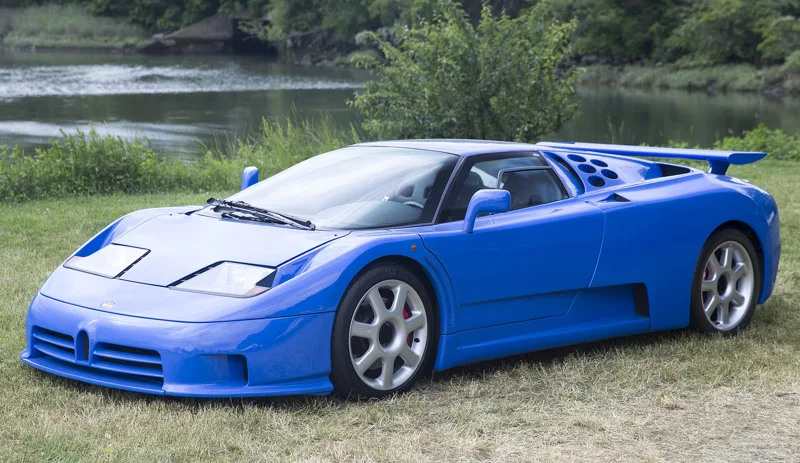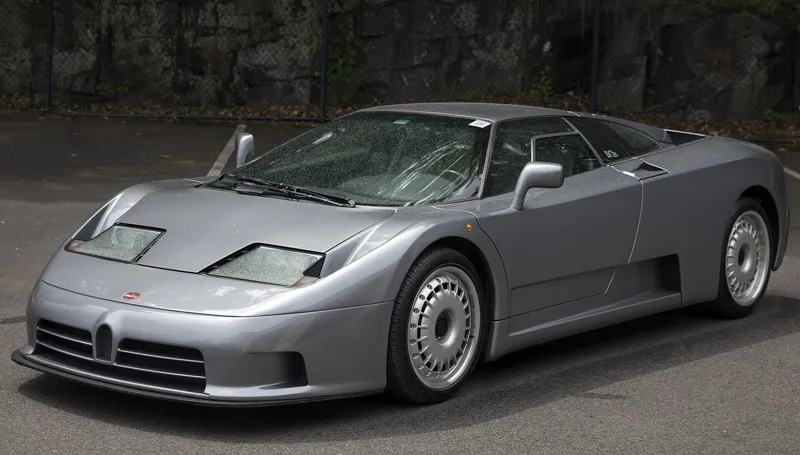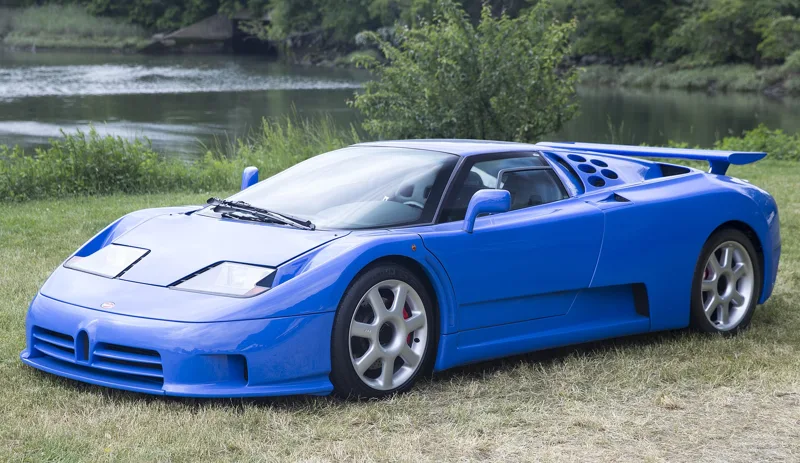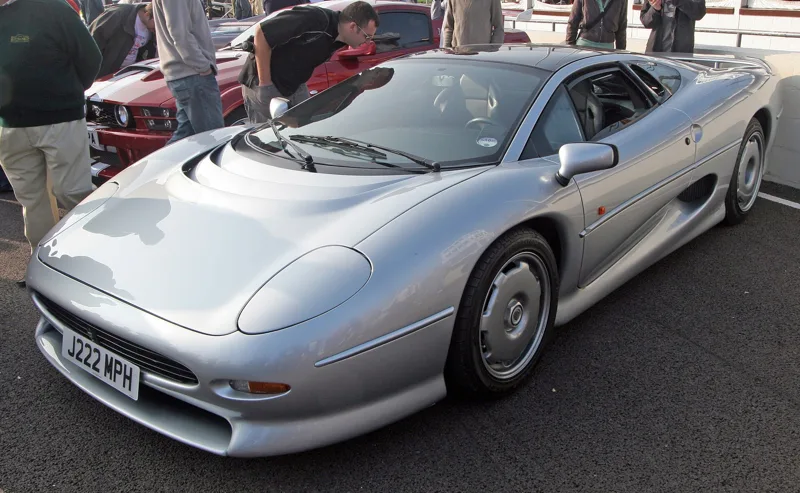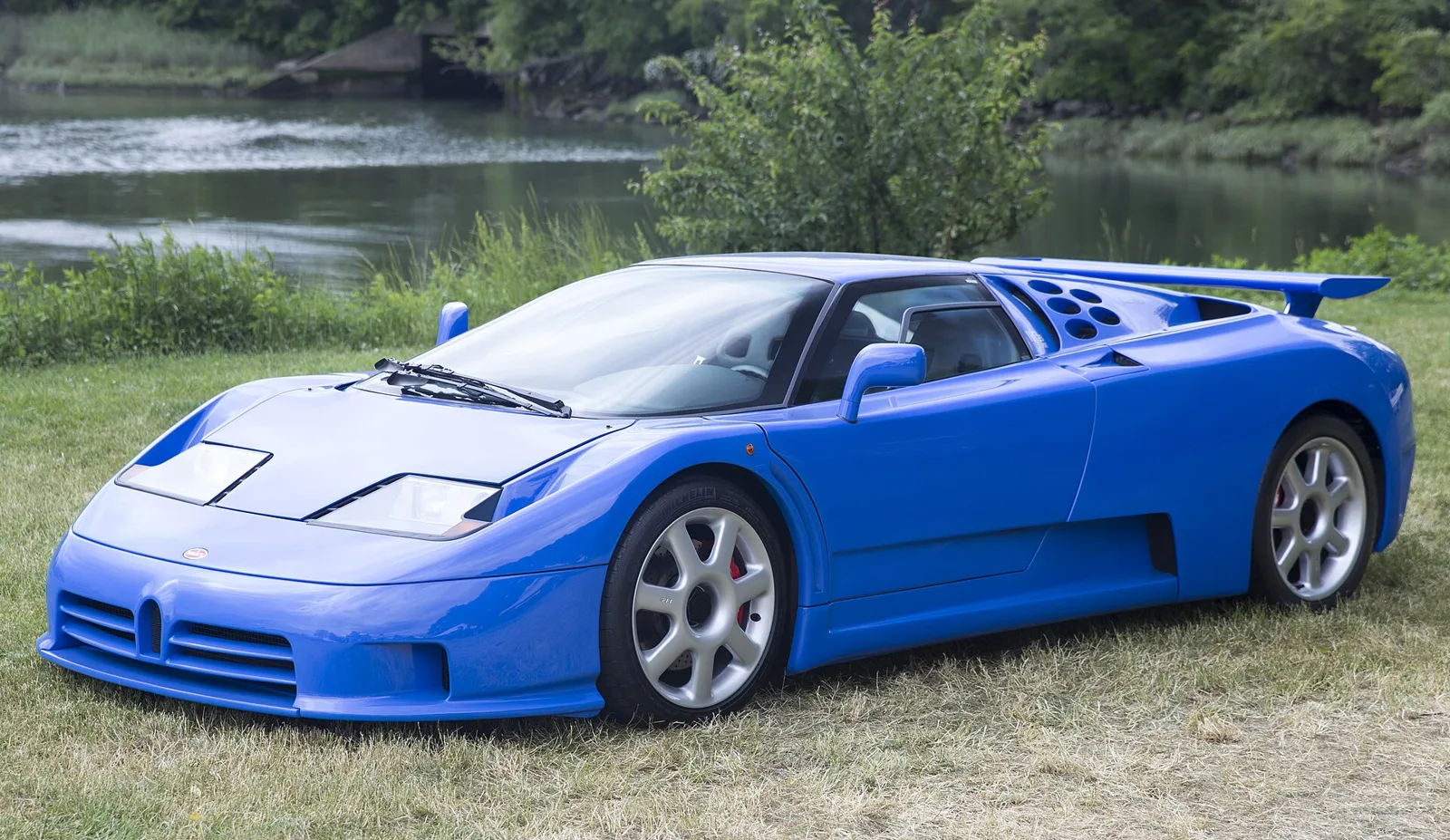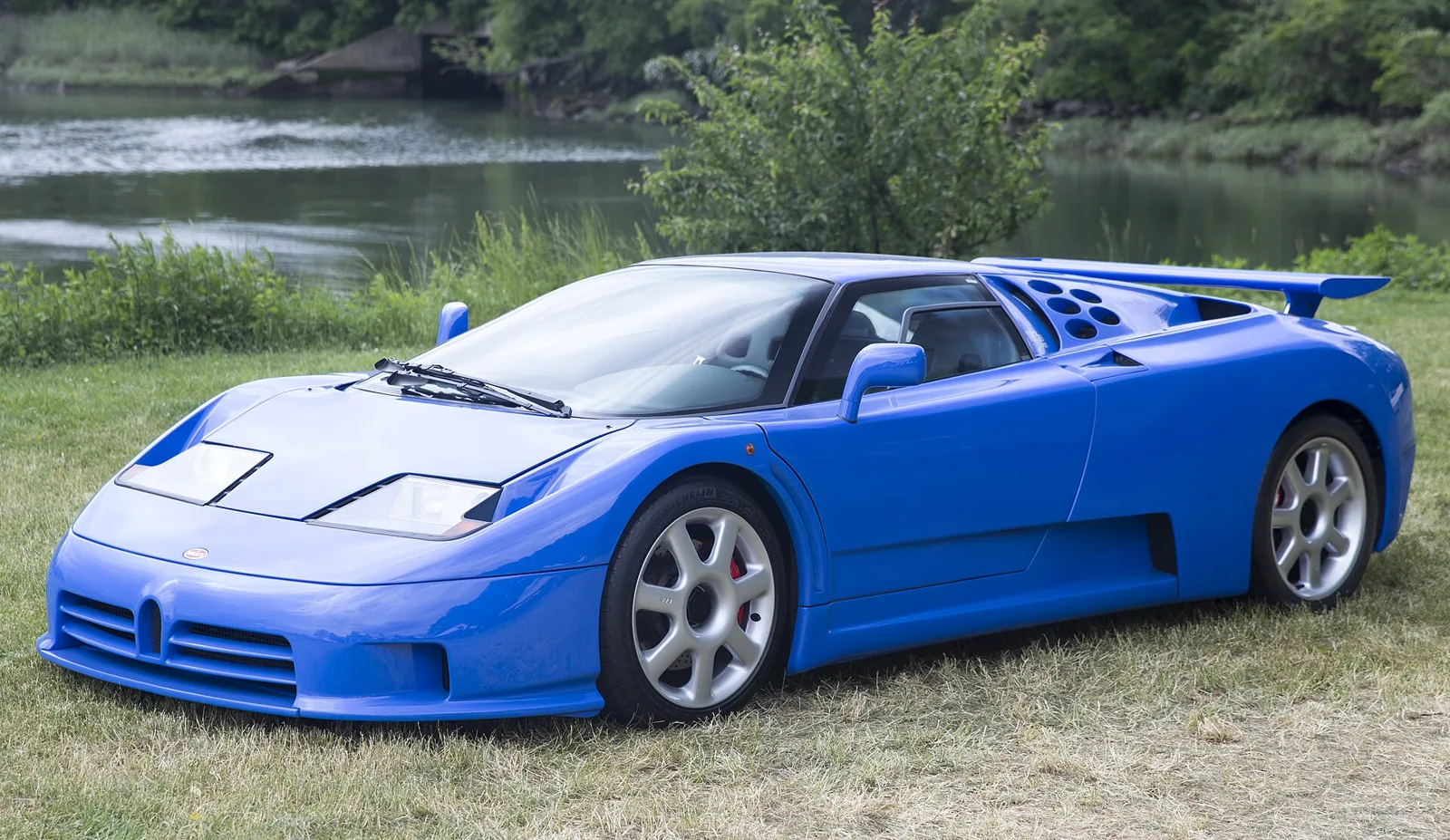
A turbocharged Bugatti V12 set against a British supercar that began life as a V12 concept and ended with a turbocharged V6: origins, engineering, performance and the buyer each suited.
The Bugatti EB110 and Jaguar XJ220 were early-1990s supercars that competed for the same wealthy buyers. The EB110 was built from 1991 to 1995 with four turbochargers, and 139 examples were made. The XJ220 was built from 1992 to 1994, with 275 cars produced.
The Bugatti EB110 and the Jaguar XJ220 were two of the most talked-about supercars of the early 1990s, and both were on sale or in planning at the same time. The EB110 was a mid-engined Bugatti with a 3500 cc V12 and four turbochargers. The XJ220 started life as a V12 concept, but the production car ended up with a turbocharged V6.
This comparison looks at why the two were rivals, how each came about, what engines and chassis they used, how they were styled, what performance figures exist, how many were built and which buyer each car suited on the facts available.
Why were the Bugatti EB110 and Jaguar XJ220 rivals?
They were rivals because both were exotic, expensive sports cars aimed at a small group of wealthy buyers in the early 1990s. Between 1992 and 1995 the EB110 was measured against the Lamborghini Diablo, Jaguar XJ220, Ferrari F40, Ferrari F50 and McLaren F1. The XJ220 was one of the cars in that group, so the two were directly competing for the same audience.
Both carried a strong sense of history. The EB110 restarted the Bugatti name after a hiatus of nearly 40 years, since 1952. The XJ220 was a modern echo of Jaguar's Le Mans cars of the 1950s and 1960s, built so that it could be entered in FIA Group B competition.
The XJ220 also had a more direct link to the market at its launch. Its concept was shown in 1988, and enough buyers wanted it that Jaguar decided to build it. The EB110 took a longer and more uneven route to market, shaped by changes of design and of chassis material.
One car was a Bugatti built on four turbochargers; the other began as a V12 concept and ended as a turbocharged V6.
How did the two cars come about?
The EB110 began as a project of Paolo Stanzani, who discussed a new supercar with Ferruccio Lamborghini at the end of 1984. Development started in 1986 under the code FL12, short for Ferruccio Lamborghini 12-cylinder. Bugatti Automobili S.p.A. was founded on 14 October 1987, after Romano Artioli's Autoexpo had bought the Bugatti brand earlier that year.
The XJ220 started as an informal project. A group of Jaguar employees worked on a V12-engined four-wheel drive concept in their spare time, and Director of Engineering Jim Randle led the effort. Randle built a 1:4 scale cardboard model over Christmas 1987, and a team of twelve volunteers, known as The Saturday Club, worked on evenings and weekends.
The XJ220 concept was unveiled at the 1988 British International Motor Show in Birmingham. Its reception was overwhelmingly positive, and the car was completed in the early hours of 18 October 1988. Ferrari's F40 display at the same event was overshadowed, with an estimated 90,000 extra visitors coming to see the Jaguar.
Production followed from that reception. The announcement of a limited production run of 220 to 350 cars came on 20 December 1989. The XJ220 was then built by a joint venture team that included Tom Walkinshaw Racing, and production ran from 1992 to 1994.
What engines did the two cars use?
The EB110 used a 3500 cc V12 sized to suit the Formula One rules of 1987. Stanzani judged that the naturally aspirated form did not produce enough torque and power for a supercar, so turbocharging was built into the design from the start.
Four turbochargers were chosen rather than two larger ones. The aim was to reduce the lag caused by the rotational inertia of the compressors and turbines. The decision reflected technical, marketing and strategic thinking together, and it gave the EB110 its distinctive character.
The XJ220 concept had a 6.2 litre V12 of 6,222 cc, with titanium connecting rods. The engine came from a family of Jaguar racing V12s, and a dry sump was chosen to lower the centre of gravity. That concept engine did not survive into the production car, which was changed to a turbocharged V6.
The V6 change was driven by engineering and emissions requirements. Those requirements, along with a collapse in demand for high performance cars during the early 1990s recession, shaped the car that buyers were finally offered. Each car, therefore, changed under pressure, though in very different ways.
How did the two cars differ in chassis and drive?
The EB110 chassis was built from two aluminium skins bonded to an aluminium honeycomb core. The skins were typically 0.9 to 1.5mm thick and the honeycomb 8 to 12mm, and the sheets were glued and riveted into a three-dimensional shape. Stanzani chose that construction for stiffness, cost and repairability.
Romano Artioli pushed for a carbon-aluminium chassis, arguing that carbon composites would become the norm in future supercars. When Aerospatiale produced carbon quotes, Stanzani judged the option financially unviable. Later tests found the carbon chassis stiffer than the aluminium one, but also heavier and significantly more expensive.
The XJ220 used a bonded aluminium structure developed with Alcan's ASVT technology. Its wheelbase was 2,845 mm (112 in), and the chassis featured rear wheel steering with the fuel tank packaged behind the centre bulkhead. The four-channel anti-lock braking system was fitted to the concept car.
Four-wheel drive was a major challenge for the XJ220. Jaguar had little experience with it, so Randle turned to FF Developments, run by Tony Rolt's son Stuart. The chosen design sent power from the mid-mounted engine to the front wheels through a quill drive, with a twin-plate clutch designed by AP Racing.
How were the two cars styled?
Several designers were invited to propose bodywork for the EB110, including Paolo Martin, Giorgetto Giugiaro, Bertone and Marcello Gandini. Gandini's angular design was chosen, though it drew criticism for its shovel nose and flared rear wheel arches. A second Gandini design softened those lines before Gianpaolo Benedini made the final changes.
The XJ220's styling took a different route. The brief called for a simple, clean and functional body in the spirit of the D-Type and E-Type. Two mock-ups were produced, one echoing the Porsche 956 and the other drawing on the XJ41 project and Malcolm Sayer's XJ13. The design by Keith Helfet won because it looked more like a Jaguar.
The XJ220 was aerodynamically ambitious. The body was designed to generate downforce of roughly 3,000 lb (1,400 kg) at 200 mph (322 km/h), and a variable rear wing was intended to fold into the bodywork at lower speeds. Aerodynamic work was carried out in a wind tunnel using a 1:4 scale model.
The concept car was hand built from aluminium, and it had doors that opened on electric scissor hinges and a see-through cover over its V12. Its interior was Connolly leather with heated, electrically adjustable seats, and the concept's length of 5,140 mm (202 in) made it larger than the production car would have been.
Which car performed better on the figures?
The XJ220 has the stronger published performance record. Jaguar's testing at the Nardo track recorded a top speed of 217 mph (349 km/h), with the catalytic converter removed. That made it the fastest production car from 1992 to 1993, according to Jaguar.
The XJ220 prototype was also said to have lapped the Nurburgring in 7:46.36 in 1991, which Jaguar described as faster than any production car lap before it. That claim comes from the manufacturer, and it relates to a prototype rather than a production car, so it should be read as such.
The EB110 has no performance figures in this comparison, so no like-for-like verdict on speed, acceleration or lap time can be reached. What the record does show is that its handling was reworked after test drivers complained of too much understeer.
That handling rework altered the EB110's front to rear torque distribution from 40:60 to 27:73. The change was made on dynamic load rather than static weight, in a similar way to rally cars of the 1980s such as the Audi Quattro. The result was a car tuned on track, not only on paper.
How many of each car were built?
The EB110 was built in 139 examples, plus a small number of post-production cars finished after the company's liquidation in 1995. The final car came from Dauer Sportwagen in 2002, and a further unfinished car was finished in 2019.
The XJ220 was planned at between 220 and 350 cars, but a total of 275 were produced by the time production ended. Its list price in January 1990 was 290,000 pounds, and by 1992 the retail price had risen to 470,000 pounds owing to indexation of contracts.
Deposits were a key part of the XJ220 story. Around 281 customers paid deposits of 50,000 pounds each, but the recession and the change of engine led many buyers to decline to exercise their options. That gap between deposits and final production shaped the car's reputation.
Which buyer suits each car?
On the facts given, the EB110 suits a buyer drawn to a revived marque, a turbocharged V12 and a chassis with a debated material history. The XJ220 suits a buyer who wants a British supercar with a documented speed record, a concept-to-production story and four-wheel drive.
A buyer who values the story of a rebirth would find the EB110 a fascinating object. Its turbochargers, its aluminium chassis debate and its design changes all reflect a project that was pulled in several directions at once, and its company did not survive the decade.
A buyer who wants a figure to point to would look to the XJ220. Its top speed, its Nurburgring claim and its place as the fastest production car in its early years give a clearer picture of what the car offered. Its move from V12 to V6 is part of that story too.
Neither car is shown to be better across the board. The EB110 has the more dramatic engineering narrative and the rarer history, while the XJ220 has the fuller published performance record and the larger planned production run. The better choice depends on whether the buyer prizes the Bugatti story or the Jaguar figures.
Specifications at a glance
| Feature | Bugatti EB110 | Jaguar XJ220 |
|---|---|---|
| Production | 1991 to 1995 | 1992 to 1994 |
| Cars built | 139 examples plus post-production cars | 275 |
| Engine | 3500 cc V12 with four turbochargers | Concept 6.2 litre V12; production turbocharged V6 |
| Drive | No figure given | Four-wheel drive |
| Chassis | Aluminium skins and honeycomb; carbon option tested | Bonded aluminium structure |
| Wheelbase | No figure given | 2,845 mm (112 in) |
| Top speed | No figure given | 217 mph (349 km/h) in testing |
| Lap record | No figure given | Nurburgring 7:46.36 in 1991, prototype |
| Price | No figure given | 470,000 pounds in 1992 |
| Deposits | No figure given | 281 at 50,000 pounds each |
| Styling | Marcello Gandini, refined by Gianpaolo Benedini | Keith Helfet design chosen from the mock-ups |
| Partner | Bugatti Automobili S.p.A. | Tom Walkinshaw Racing |