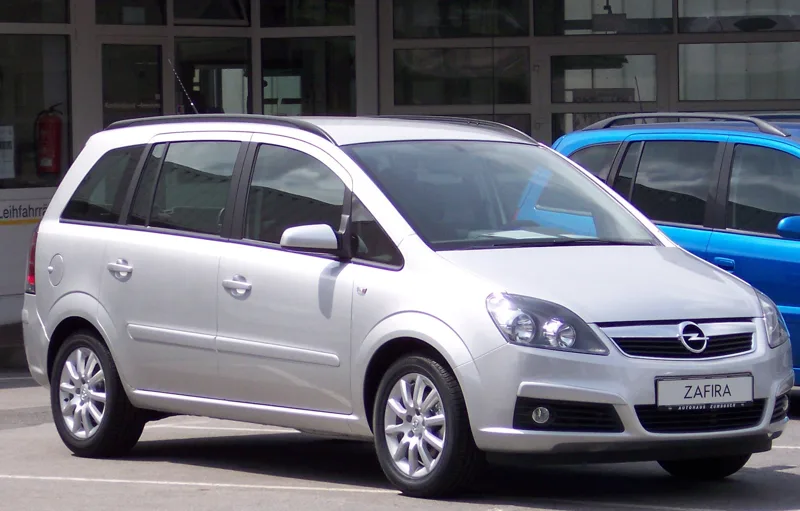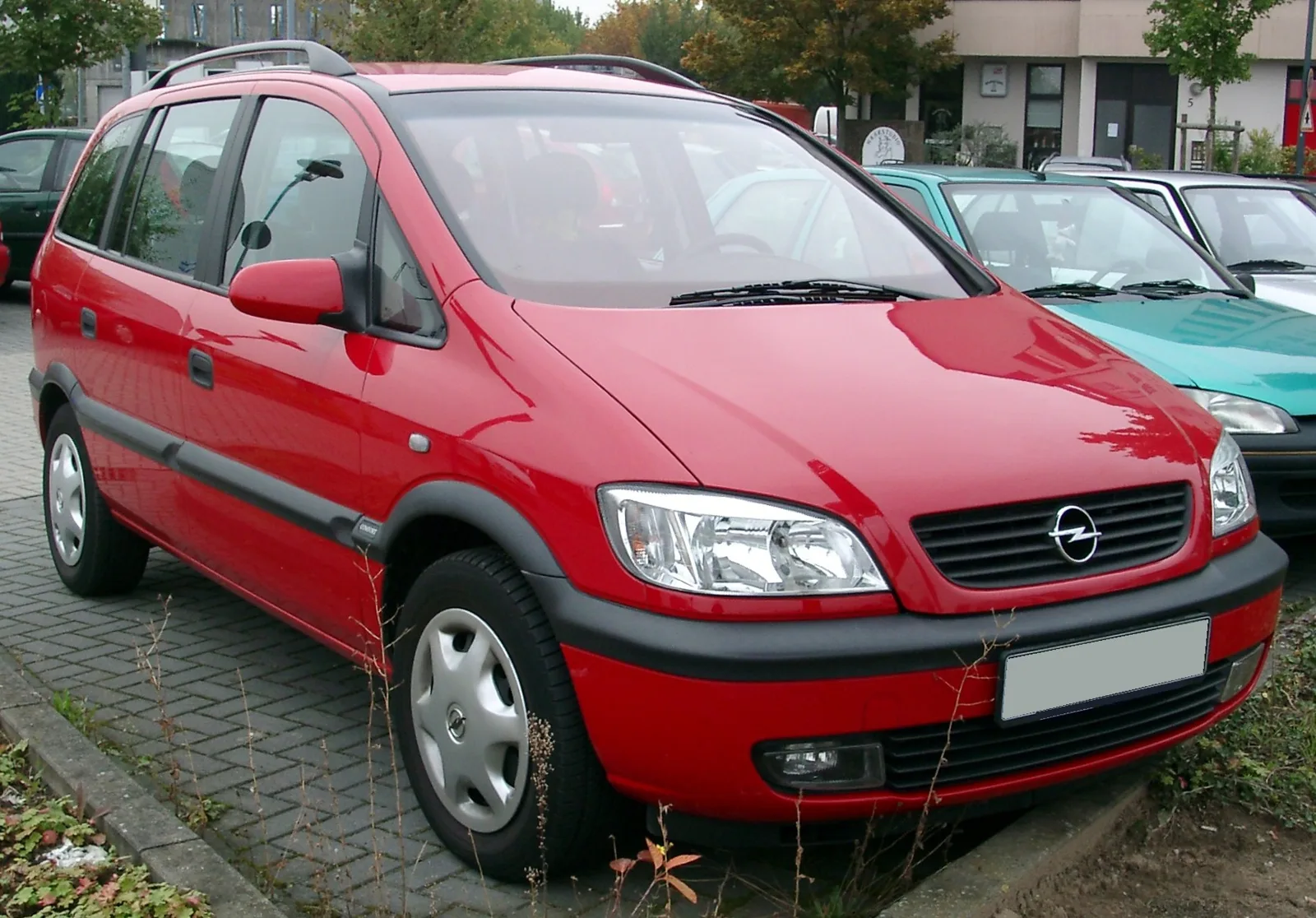
Opel's 1999 people carrier seated seven in three rows, folded its rear seats into the floor and later gained a sporty OPC version.
The Opel Zafira A was a mid-size people carrier built from 1999 to 2005 on the platform of the Astra G. It seated seven in three rows, folded its rear seats into the floor, and offered petrol and diesel engines, later adding a sporty OPC version with 192 PS.
The Opel Zafira A arrived in 1999 on the Astra G's platform and seated seven people in three rows, a rare offer at a time when rivals had few seven-seat models. Its rear seats folded into the floor, and a later OPC version made it the first sporty people carrier. Production ran until 2005, when the Zafira B took over.
Why did Opel return to the people-carrier market?
Opel had struggled in this segment before. Its earlier attempt, the Sintra, was a big upper-range vehicle with an American look. It offered room and easy handling, but its finish was poor and it could not be trusted where safety mattered, so it failed in Europe.
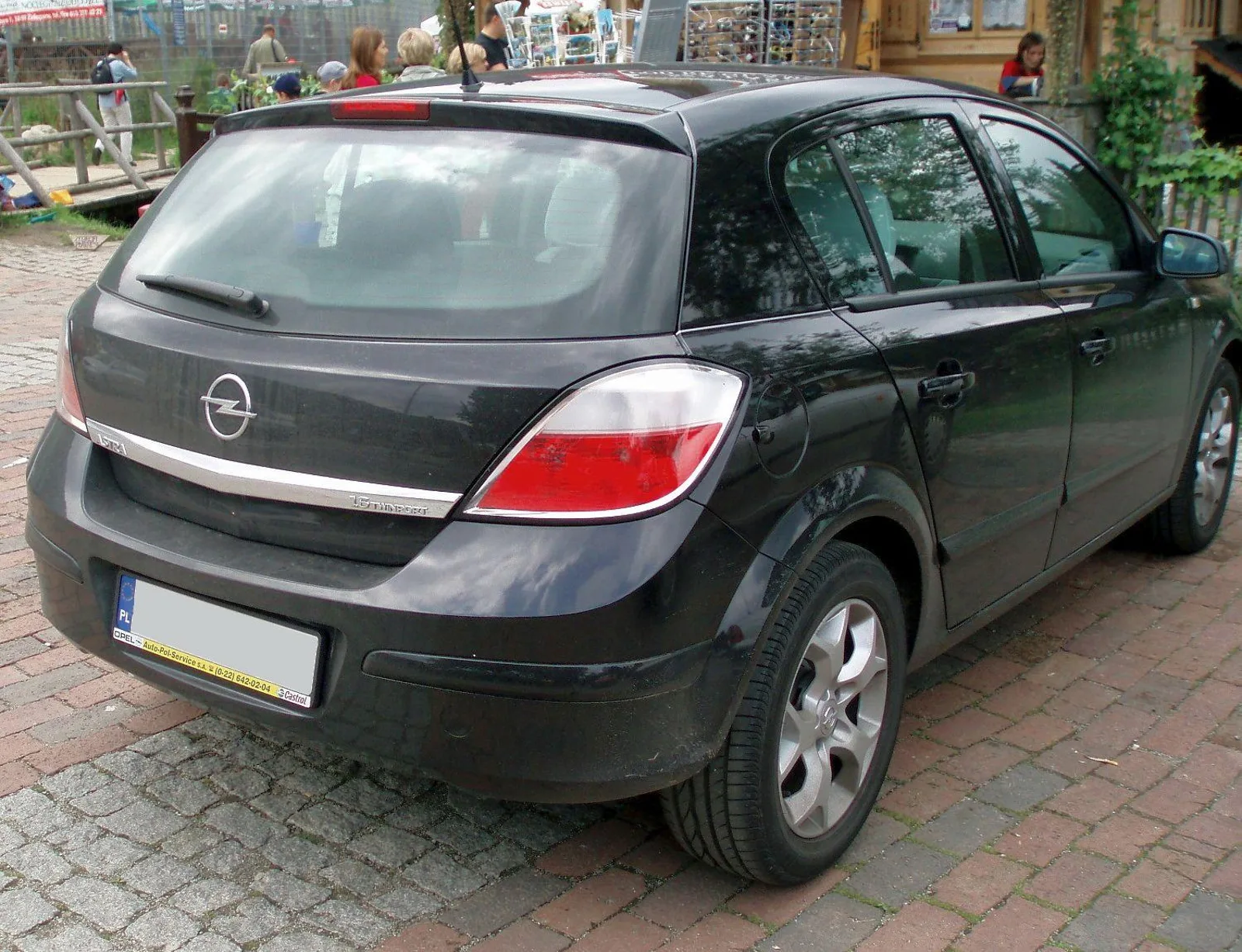
By 1997 Renault's Megane range offered six bodies on one platform, and one of them, the medium-sized Scenic, competed in Europe with little beyond the Mitsubishi Space Runner, a car with very limited distribution. That year the second-generation Opel Astra was shown at Frankfurt, a lower-medium car that rivalled the Golf and Megane.
Opel's answer was a people carrier built on the Astra's platform. It would be smaller than the Sintra and sit in a lower segment, while keeping some of the features of larger people carriers. The medium model appeared first as a concept car at the same show where the Astra G was launched, so the company could gauge public reaction.
The concept's job was to test appetite for a car that could challenge the Scenic on its home ground.
A people carrier that put seven seats in three rows and folded them into the floor.
How was the Zafira A designed inside and out?
Outside, the Zafira A was sober rather than anonymous. Its front light clusters were almost identical in shape to the Astra G's, and the grille was taken from the lower-medium saloon. Raw plastic protection strips wrapped the car, climbing over the wheel arches and linking up with the strips on the bumpers.
At the back, the tailgate sill sat flush with the bumper, which lowered the loading height and made heavy luggage easier to lift in. The flank looked slimmer than its main rivals, largely because the car was bigger.
The cabin was plainer. The dashboard and instrument panel showed little flair, but the interior packaging made up for it. Most of the design effort went into the cabin, and the project's originality lay in how it used space rather than in its body.
The headline feature was Flex 7. The second and third rows could fold into the floor, individually or together, which opened up the boot without anyone lifting seats out. Other people carriers of the time required the unused seats to be physically removed, so the system was considered revolutionary when it arrived. A similar folding solution appeared on the second-generation Mitsubishi Space Wagon, which was also a key rival.
With seven seats the boot held 150 litres. With five seats it grew to 600 litres. The centre sofa could be folded and slid forward, lifting capacity to 1,700 litres up to the roof, although only two people could reach that load area. The sofa split 1/3 to 2/3, which made long items such as skis easy to carry.
How did the chassis and safety compare with the Astra G?
The Zafira A shared the T platform with the Astra G, but its wheelbase was about 9 cm longer. Its mechanical parts came largely from the saloon, with MacPherson struts at the front and a U-shaped semi-trailing axle at the rear.
Opel put real effort into crash performance. The structure was designed to be rigid while absorbing crash energy well. An auxiliary front subframe was fitted to take frontal impacts, and anti-intrusion bars in the doors protected occupants in a side impact.
The brakes used ventilated discs at the front and solid discs at the rear, and they were larger than the Astra G's. The front discs measured 280 mm (11.0 in), against 256 mm on the Astra, and the rear discs measured 264 mm (10.4 in), against 240 mm. ABS and traction control ran from the same control unit. Traction control was available at launch only with the 1.8.
The steering was rack-and-pinion with electro-hydraulic assistance. That system needs less energy and trims fuel consumption slightly.
Which engines did the Zafira A offer?
At launch there were only two petrol engines: a 1.6-litre with 101 PS (74 kW; 100 hp), and a 1.8-litre with 115 PS (85 kW; 113 hp). Both had four valves per cylinder and both were already used in the Astra. The five-speed manual was standard on each. The automatic gearbox was an option on the 1.8 alone.
By the end of 1999 the range added the Zafira 2.0 DI 16v, the first diesel. It was a 2-litre direct-injection turbodiesel producing 82 PS (60 kW; 81 hp). It was offered on both of the top trim levels, but never with traction control.
Engine changes followed in 2000. The 1.8 rose from 115 PS to 125 PS (92 kW; 123 hp). The intercooler-less 2-litre diesel gave way to a 101 PS (74 kW; 100 hp) turbodiesel with an intercooler. The newer Z engine generation, with variable intake manifolds, could meet Euro 3 emissions standards, and the base 1.6 was revised to move from Euro 3 to Euro 4.
Some markets, Germany among them, also received a 2.2 16v petrol with 147 PS (108 kW; 145 hp). It was the same engine that powered the sporty Speedster, and it was not offered in Italy. In 2002 a 2.2 16v DTI turbodiesel with Ecotec technology arrived, delivering up to 125 PS (92 kW; 123 hp).
What was the Zafira 2.0 16v Turbo OPC?
The OPC was first shown at Geneva in February 2001 and went on sale in October of that year. Its supercharged 2-litre engine came straight from the Astra OPC and produced 192 PS (141 kW; 189 hp). That made it the fastest minivan on sale in Europe at the time. Only a five-speed manual was offered, 0-100 km/h took 8.2 seconds, and the top speed was 220 km/h (137 mph).
Aggressive bodywork gave the car a sporty look, and traction control was fitted as standard. The OPC stayed at the top of the range. In 2003 its output rose from 192 PS to 200 PS (147 kW; 197 hp). It left the range the year after the restyling.
How did the trim levels change?
At launch the Zafira came in one trim, the CDX. It included ABS, a double front airbag, front side airbags, a car radio, alloy wheels and traction control on the 1.8. A simpler CD trim arrived with the diesel in late 1999. It went without the side airbags, the radio, the alloy wheels, the rear power windows and the fog lamps, and traction control was not available on it at any price. In 2000 the CDX was renamed Elegance and the CD became Comfort.
The Fashion Line trim was introduced for the 1.6 16v. The Sport Design Edition began on the 2.2 DTI alone, then spread to the 1.8 and to the 2.0 DTI.
The 2003 facelift split the radiator grille lengthways into two pieces and redesigned the front bumper. The rear light clusters received new graphics. Inside, the centre sofa became more flexible, and its side seats gained Isofix anchorages for child seats.
Where was it built and what did other badges call it?
Opel built the Zafira A at Bochum in Germany. Production also took place at Rayong in Thailand and at Sao Jose dos Campos in Brazil, where the car could be fitted with a flex-fuel engine.
General Motors sold the car under other names around the world. It was the Vauxhall Zafira in the UK and the Holden Zafira in Australia and New Zealand. Chevrolet used the name in Latin America, Thailand, Indonesia and the Philippines, and sold it as the Chevrolet Nabira in Malaysia. Under the Opel badge it was sold in South Africa, China and Singapore, and across Europe except the UK.
Japan had its own version. Subaru sold the car there as the Traviq from August 2001 to November 2004. The name combined the words travel and quick. The Traviq was first offered only with the 2.2-litre engine, and a 1.8 joined the range in July 2003.
Other versions and reception
The Zafira A body also carried GM's HydroGen3, a hydrogen fuel-cell prototype. A compressed natural gas version sold in Italy as the Zafira Eco M had its 1.6 reduced from 101 PS to 97 PS (71 kW; 96 hp).
The car finished third in the European Car of the Year award for 2000, behind only the Fiat Multipla and the Toyota Yaris. In a TUV survey of three-year-old cars, the Zafira came out well ahead of every other Opel and trailed the winner, the Ford Focus, only narrowly.
Production of the first generation ended on 25 May 2005 at Bochum, and the Zafira B replaced it. The Zafira B shared its platform and mechanical parts with the Astra H.
Opel Zafira A key specifications
| Specification | Detail |
|---|---|
| Production | 1999 to 2005, Bochum, Germany |
| Seating | Seven seats in three rows, Flex 7 |
| Boot | 150 litres with seven seats, 600 litres with five |
| 1.6 | 101 PS (74 kW; 100 hp), four valves per cylinder |
| 1.8 | 115 PS (85 kW; 113 hp), rising to 125 PS (92 kW; 123 hp) in 2000 |
| 2.0 DI 16v | 82 PS (60 kW; 81 hp), diesel, from late 1999 |
| 2.0 turbodiesel | 101 PS (74 kW; 100 hp), with intercooler, from 2000 |
| 2.2 16v | 147 PS (108 kW; 145 hp), for some markets |
| 2.2 16v DTI | Up to 125 PS (92 kW; 123 hp), Ecotec turbodiesel, from 2002 |
| 2.0 16v Turbo OPC | 192 PS (141 kW; 189 hp), later 200 PS (147 kW; 197 hp) |
| OPC performance | 0-100 km/h in 8.2 seconds; top speed 220 km/h (137 mph) |
| Gearbox | Five-speed manual; automatic option on the 1.8 |