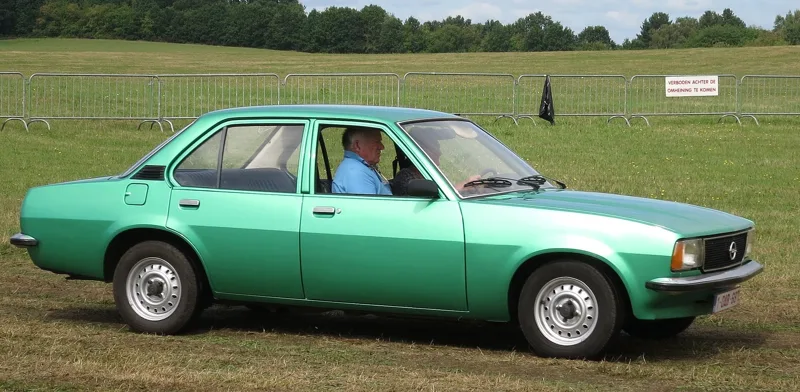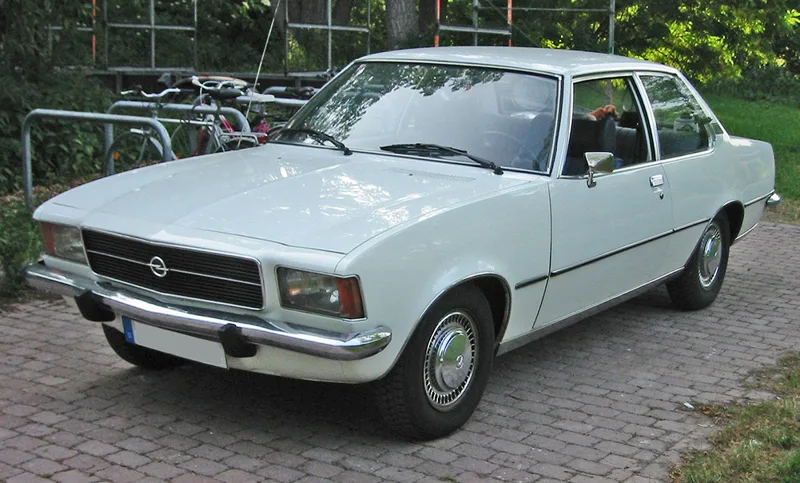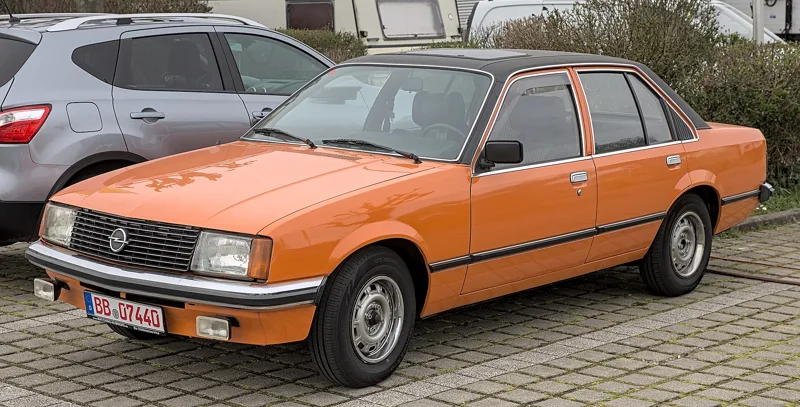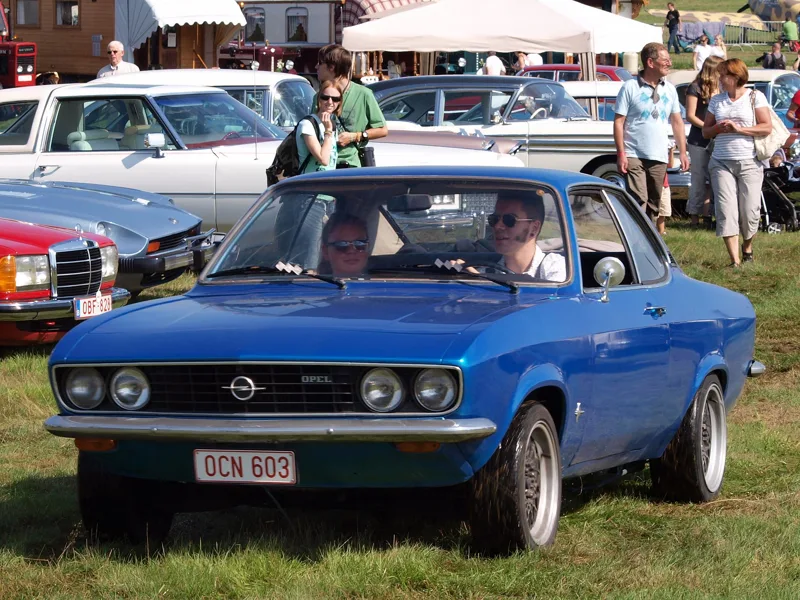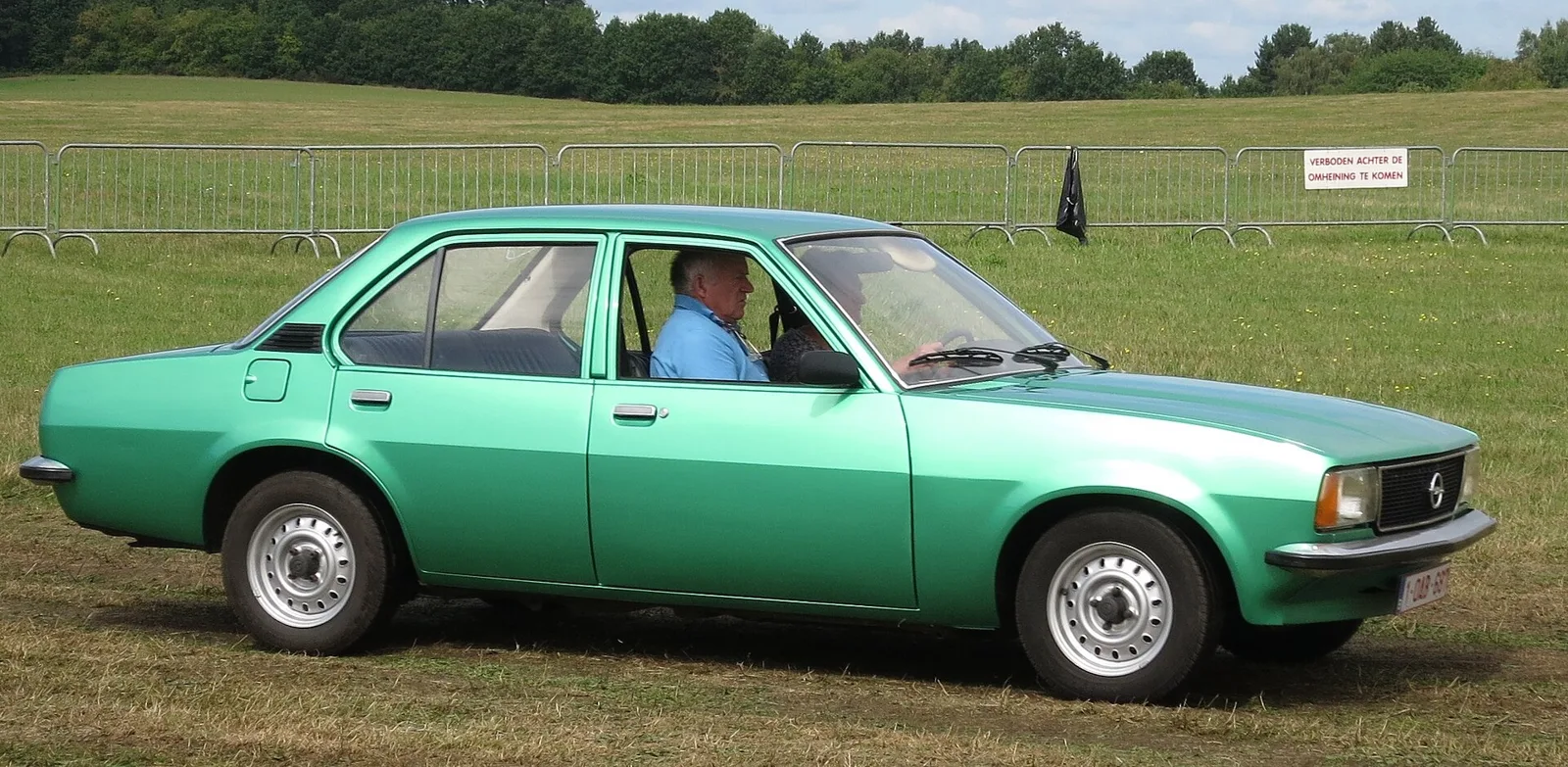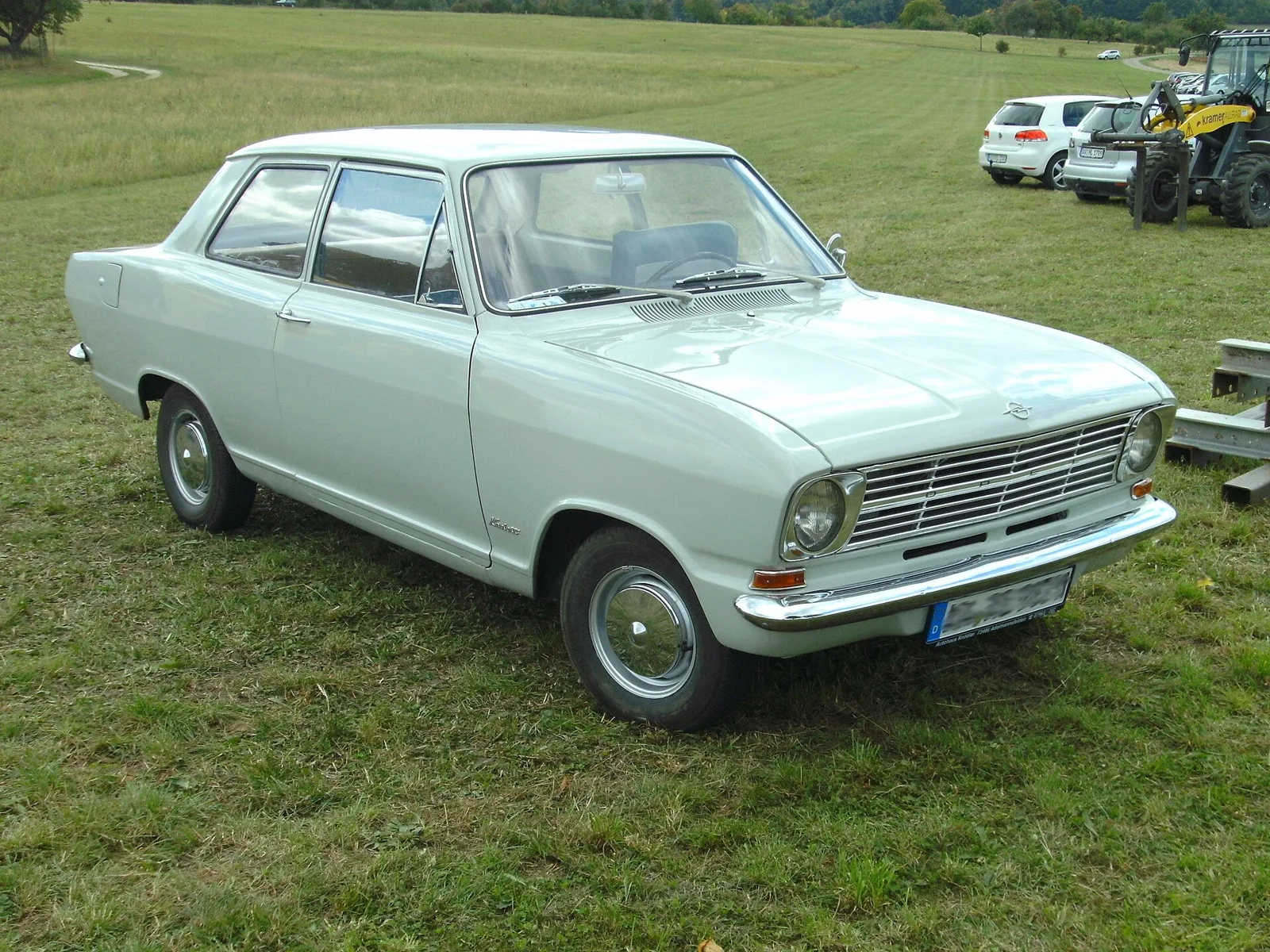
A 1965 launch, a gills coupe, a 1.1 to 1.9-litre engine range and 2,691,300 cars built before production ended in 1973.
The Opel Kadett B was a compact Opel built from 1965 to 1973. It came as a saloon, estate and coupe, used engines from 1.1 to 1.9 litres, and sold 2,691,300 examples. Its successor arrived in August 1973, a month after production ended.
The Opel Kadett B was a compact family car that Opel unveiled in 1965 and kept in production until 1973. It was larger than the Kadett A it replaced, came as a saloon, estate and coupe, and sold 2,691,300 examples over its run. Its plain, slab-sided body drew criticism from some observers, but it gave buyers more interior space than the Volkswagen.
When was the Opel Kadett B launched?
Opel launched the Kadett B at the Frankfurt Motor Show in late summer 1965. The two-door Limousine saloon was the entry model at 5,175 Marks that September. Production ended in July 1973, and the successor arrived in August 1973, a month later.
The new car was larger all round than the Kadett A. Opel made it 5% longer overall and in wheelbase, 7% wider and 9% heavier unladen. The basic saloon sat 10 mm (0.39 in) lower, though, and the slab-sided styling disappointed some commentators at launch.
The Kadett A had arrived in 1962 with a 993 cc engine, and the Kadett B that followed bore no relation to the Vauxhall Viva. Interior space in the Kadett B was greater than that of the Volkswagen small car.
Plain in style but generous inside, the Kadett B found 2,691,300 buyers between 1965 and 1973.
What body styles did the Kadett B come in?
The Kadett B came as a two-door and four-door Limousine saloon, a fastback Kadett LS from September 1967, and three-door and five-door Car-A-Van estates. A two-door coupe was also offered. Four-door Limousines returned for the first time since 1940.
The fastback Kadett LS arrived in September 1967 and was offered in two-door and four-door forms. The three-door Car-A-Van estate was available from the 1965 launch, and a five-door Car-A-Van was added in 1967 to give buyers a second estate layout.
The two-door coupe had reduced rear headroom and a C-pillar with three air extractor slots. Those slots earned the car the nickname Kiemencoupe, or gills coupe. The Coupe F arrived in 1967 with larger rear side windows. It was slightly heavier and less aerodynamic than the gills car, and from 1971 every coupe used the Coupe F body.
The padded Safety steering wheel, mounted on a telescopic column, was introduced in August 1967.
Which engines powered the Kadett B?
The Kadett B used four-cylinder engines from 1,078 cc at launch through to a 1,897 cc unit by 1967. The 1,078 cc engine powered 89% of the cars built, with 2.3 of 2.6 million Kadett Bs fitted with it. Other capacities filled the rest of the range, including 1,196 cc, 1,492 cc and 1,698 cc.
The 1.1-litre family
The four-cylinder OHV engine was water-cooled and shared its architecture with the 1962 Kadett A unit. Both had a 61 mm (2.4 in) cylinder stroke, but the bore of the 1.1-litre engine was increased to 75 mm (2.95 in). That change lifted capacity to 1,078 cc.
In standard form the engine produced 45 PS (33 kW) at 5,000 rpm. The high-compression 1100 S gave 55 PS (40 kW) at 5,400 rpm, and the twin-carburettor 1100 SR delivered 60 PS (44 kW; 59 hp) at 5,200 rpm. The SR's compression ratio was 9.2:1. The 1.1-litre engines used a Solex 35 PDSI carburettor.
From August 1971 the high-compression versions were withdrawn, leaving a single 50 PS (37 kW) unit in the 1.1-litre line. A low-compression export engine producing 40 PS (29 kW) was also offered for overseas buyers.
The 1.2-litre and 1.0-litre engines
The 1200 S used a 1,196 cc engine that produced 60 PS (44 kW; 59 hp) at 5,400 rpm. Only 95,000 Kadett Bs received it, which makes it a small part of the overall output. Its 1,196 cc capacity sat between the 1.1-litre and the 1.7-litre units in the range.
Opel also built 10,000 cars in 1972 and 1973 with a 1.0-litre engine, which was built for export only. The engine's displacement of 993 cc matched the unit that had first appeared in the Kadett A.
The 1.7-litre, 1.9-litre and 1.5-litre engines
The 1.7-litre cam-in-head engine arrived in September 1967 with 1,698 cc. It produced 75 PS (55 kW; 74 hp) with a compression ratio of 9.5:1, and cars fitted with it reached 153 or 155 km/h (95 or 96 mph). Only 6,000 Kadetts received this unit.
The 1,897 cc 1.9-litre engine was the more widely fitted of the two larger units. It produced 90 PS (66 kW; 89 hp) at 5,100 rpm and went into 143,000 Kadett Bs. Its compression ratio was reduced to 9.0:1 after August 1971. Set against the 6,000 cars fitted with the 1.7-litre engine, the 143,000 cars with the 1.9-litre show where most buyers of the larger engines ended up.
A more highly tuned HL version of the 1.9-litre gave 106 PS (78 kW; 105 hp). It was available from April 1970 on the Rallye Sprint. An export-only 1.5-litre engine of 1,492 cc, producing 65 PS (48 kW; 64 hp), was fitted to 44,000 Kadetts from 1967 to 1970.
How did the Kadett B handle and brake?
The Kadett B used disc brakes at the front, measuring 238 mm (9.4 in), with 200 mm (7.9 in) drums at the rear. A dual brake circuit arrived in February 1967, and servo assistance came with the front discs from the same month. February 1967 was therefore the single month in which both braking changes were introduced.
The rear leaf springs and rigid axle were replaced in August 1967 by coil springs, trailing arms and a Panhard rod.
What transmissions could buyers choose?
Every Kadett B came with a four-speed all-synchromesh manual gearbox as standard. Buyers could instead specify a three-speed GM Strasbourg Turbo-Hydramatic 180 automatic, which was an optional extra. The automatic cost 800 Marks when it was first offered.
The automatic was never part of the standard specification, so buyers who wanted one had to pay extra for it.
How did the Rallye and Kadett L versions differ?
The Kadett L had more chrome, over-riders and better trim than the basic car. The Rallye, by contrast, carried twin halogen driving lights and black panels, and it was offered with either the twin-carburettor 1.1-litre or the 1.9-litre engine. Both versions sat within the standard Kadett B line. A further option was the stripped Kadett XE, sold in France from 1968 with an 1100 cc engine.
The Rallye Sprint took the tuned HL version of the 1.9-litre, which produced 106 PS (78 kW; 105 hp) from April 1970. That 106 PS (78 kW; 105 hp) figure was the highest power output listed for any Kadett B engine.
How many Kadett Bs were built?
Opel built 2,691,300 Kadett Bs between 1965 and 1973. The 1,078 cc engine powered 89% of them, or 2.3 million of the 2.6 million cars built. The model's run closed in July 1973.
Volkswagen had dominated the German small car market for over a decade before the Kadett B appeared. The Kadett B offered more interior space than that car.
German buyers found the Ford Escort cramped and uncomfortable. Opel's long run with the Kadett B also let the company focus development effort on the Ascona and Manta, which followed the Kadett B into the market.
Export-only builds were significant as well. The 1.0-litre export run accounted for 10,000 cars, while the 1.5-litre export engine went into 44,000 Kadetts.
Which special editions closed out production?
For the 1973 model year Opel produced run-out special editions of the Kadett B. The Kadett Sport was priced 1,171 Marks (12%) below the Rallye. Some of the options fitted as standard on these cars later became standard on cars of the same class.
The Kadett Holiday included a steel sliding sun roof. The Kadett Festival offered velour seats and metallic colours, and the Kadett Grand Prix added carpets and a sports steering wheel to its specification.
Each of these editions came with its package of equipment already fitted, so the run-out cars were sold as complete specifications rather than as blank bases.
Where was the Kadett B assembled?
Opel Ascona 1700 four-door Kadetts were built at Bochum and Biel, and Biel assembled 2,560 Kadett-based Asconas from imported parts. General Motors South Africa also built the Kadett B from about 1966, using a 1,159 cc Vauxhall four-cylinder engine.
Kadetts for South Africa received a 997 cc Vauxhall engine as well. The 1700 Ascona name should not be confused with the all-new Ascona that replaced the Olympia in 1970.
The Olympia name had been revived in 1967 for a luxury version of the Kadett B, and it was replaced in 1970 by the all-new Ascona.
How did the Kadett B sell in the United States?
About 430,000 Kadett Bs were imported into the United States. Car and Driver published a critical test of a Kadett L 1500 Caravan in February 1968, and GM reportedly withdrew advertising from the magazine for months afterwards. The car also competed in the 2000 cc class of the Trans-Am.
The test's photographs showed the Caravan in a junkyard, which is how the magazine chose to illustrate its criticism.
American cars took part in the Trans-Am Series during their sales life, and the Kadett B also raced in the Trans-American Sedan Championship.
What are the Kadett B specifications?
| Specification | Detail |
|---|---|
| Production period | 1965 to July 1973 |
| Total built | 2,691,300 (1965-1973) |
| Engine range | 1,078 cc, 1,196 cc, 1,492 cc, 1,698 cc, 1,897 cc |
| Power range | 40 PS to 106 PS |
| Top speed (1100 SR) | 140 km/h (87 mph) |
| Gearbox | Four-speed manual; three-speed automatic option |
| Front brakes | 238 mm (9.4 in) discs |
| Rear brakes | 200 mm (7.9 in) drums |
| US imports | About 430,000 |