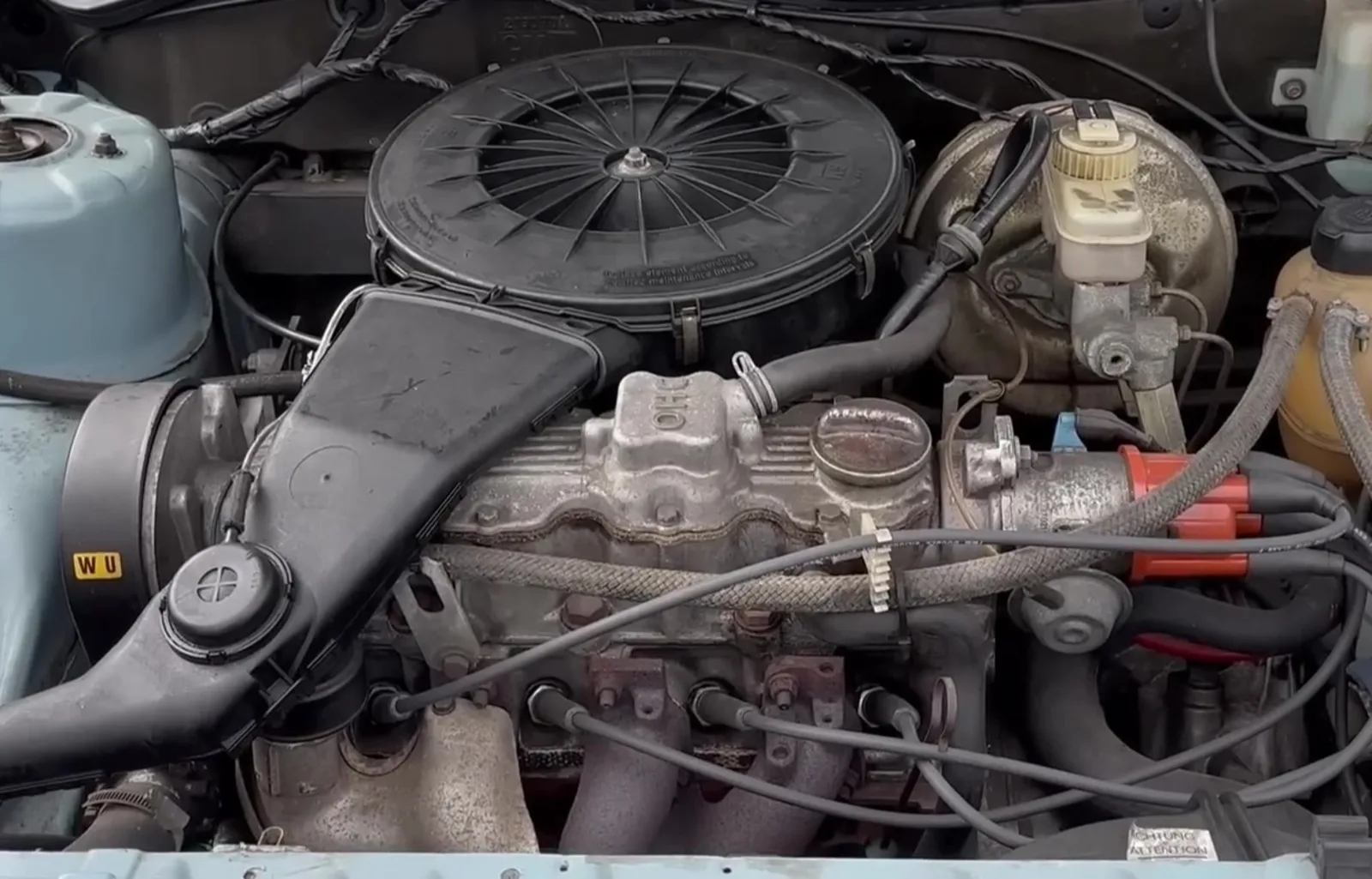
From the 1981 16SH to the Cosworth-designed C20XE and the Ecotec era, the Family II was the core four-cylinder of GM Europe for a decade.
Opel's 1981 straight-four, the Family II, covered 1,598 to 2,405 cc. It replaced the CIH and Slant-4 engines and became GM Europe's core mid-sized unit through the 1980s, before the Ecotec branding took over in the 1990s. Holden built it for Australasia until 2009.
The GM Family II is a straight-four engine that Opel developed through the 1970s and launched in 1981. It spanned capacities from 1,598 cc to 2,405 cc, and it became GM Europe's main mid-sized powerplant for much of the 1980s before giving way to the Ecotec family.
When did the Family II arrive?
The Family II debuted in 1981, having been developed by Opel during the 1970s. It replaced both the Opel CIH and the Vauxhall Slant-4 engines at the same time, which made it the single successor to two different families across the range.
Its first cars were the Opel Kadett D and Ascona C, along with their Vauxhall sister models, the Astra and the Cavalier II. The engine then spread across the General Motors network, with Daewoo, GM do Brasil, GM Powertrain and Holden all using the design over the following years.
By 1986 the Family II had almost completely replaced the CIH as Opel and Vauxhall's core four-cylinder engine. The CIH carried on only in 2.4 litre four-cylinder form and in the six-cylinder Omega and Senator models until 1994.
A big block four that replaced two families at once, then gave GM a 16-valve engine that won over motorsport.
How did the Family II relate to the Family I?
Its layout mirrors the smaller Family I, which spanned 1.0 to 1.6 litres, and enthusiasts call the pair the small block and the big block. The 1.6 litre could be built as either type depending on fuelling, so the two families overlapped at that size. The nicknames are informal, but they are used widely.
GM's Australian arm, Holden, branded the engine as Camtech 4. Holden built the Family II for the European and Australasian markets at its Fisherman's Bend plant in Melbourne until 2009, while the Americas were supplied from a plant in Brazil.
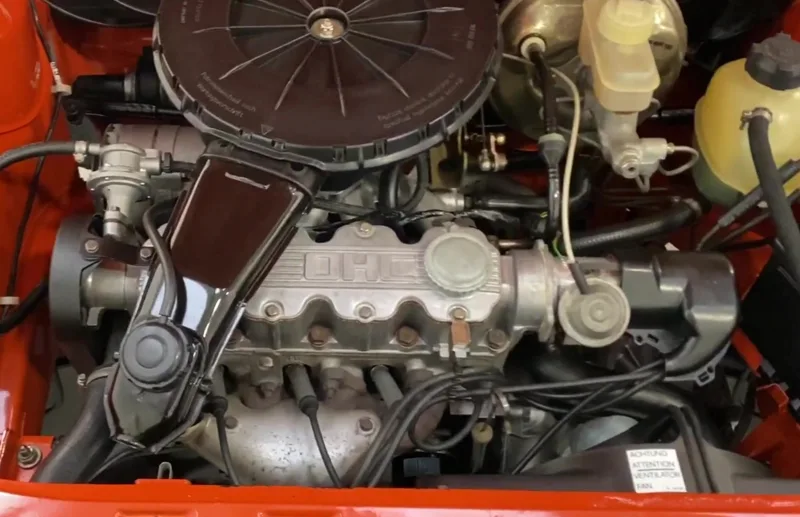
The block is cast iron and the head is aluminium, and a timing belt runs both the valves and the water pump. That pump link matters when problems arise later in this story.
What were the main Family II capacities?
The Family II came in several capacities, from the 1.6 litre that began production in 1980 to the 2.4 litre used in later SUVs. The table sets out the bore, stroke and a notable application for each main size. Those figures show how bore and stroke were varied to suit each capacity.
| Capacity | Bore x stroke | Notable application |
|---|---|---|
| 1.6 L (1,598 cc) | 80.0 mm x 79.5 mm | Production from 1980, plus a diesel version |
| 1.8 L (1,796 cc) | 84.8 mm x 79.5 mm | Facelifted Opel Manta B from May 1982 |
| 2.0 L (1,998 cc) | 86 mm x 86 mm | Omega A from 1986 in Europe |
| 2.2 L (2,198 cc) | 86 mm x 94.6 mm | Omega and Vectra in Brazil |
| 2.4 L (2,405 cc) | 87.5 mm x 100 mm | Isuzu Rodeo and Chevrolet Captiva |
Only the 2.0 has a square bore and stroke, and it carries a 6,400 rpm redline. The bigger 2.2 and 2.4 engines use longer strokes, while the 1.6 and 1.8 share a 79.5 mm stroke with different bore sizes.
How did the early SOHC engines work?
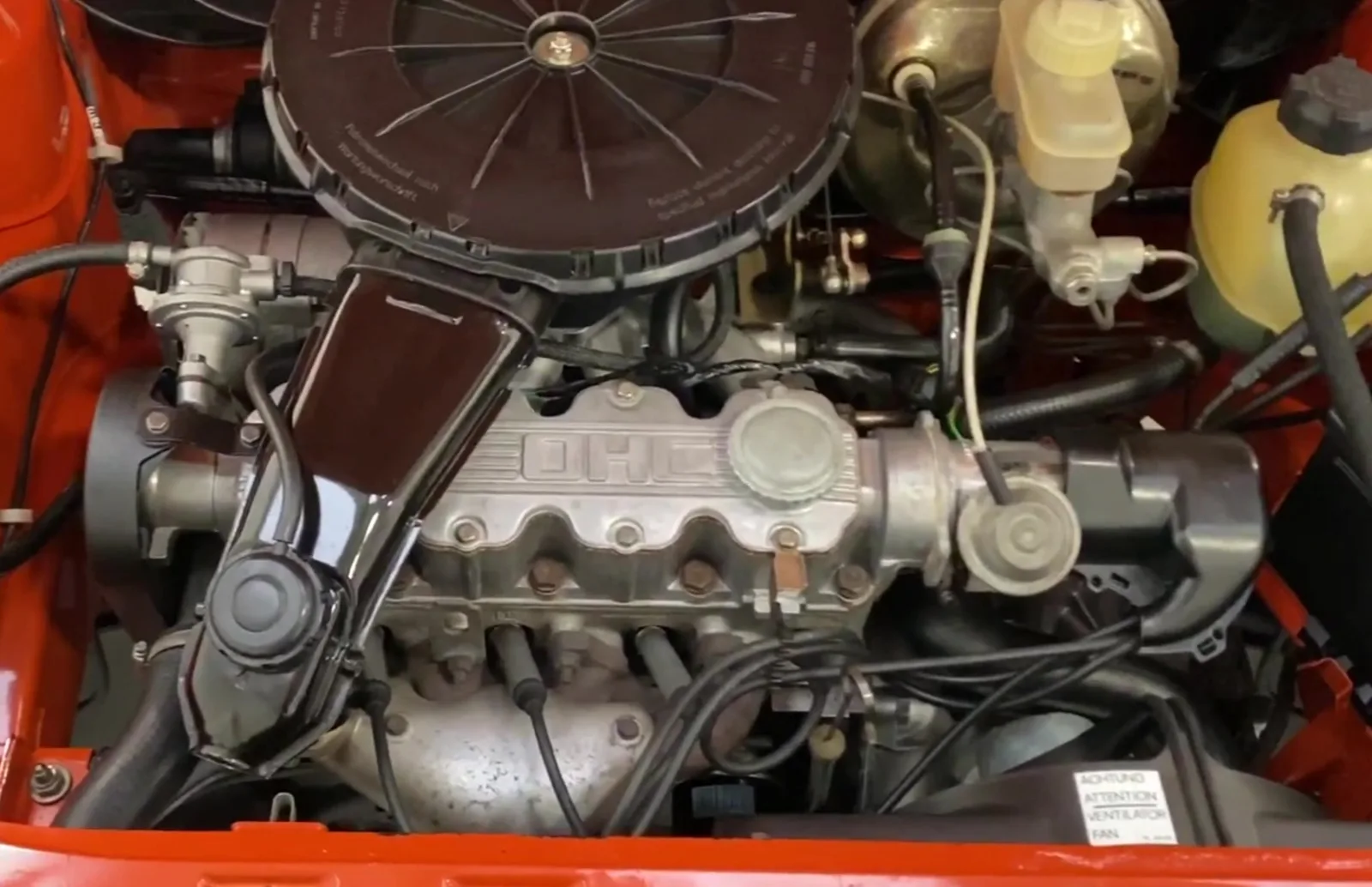
The modern Family II line began with the 16SH, sold as the 1600S, in the Opel Kadett D and Ascona C in 1981. It had a single overhead camshaft and two valves per cylinder in a cross flow layout, which gave eight valves in total.
Spotting a Family II is simple once you know where to look. The oil filter sits beside the crankshaft pulley and points downwards, whereas on the Family I it faces forward from the block face. The Family II also had a more sophisticated crankcase breathing circuit.
The 1.8 litre appeared first in carburetted 18N form in 1982, and later in injected 18LE and other forms. The 2.0 litre 20NE arrived in 1986 for the Omega A and Ascona C3, and it became the base for the 20SEH and the later 20XE and C20XE Red Top engines.
Which faults affected early Family II engines?
Camshaft and follower wear was a known weakness early on, and the smaller Family I suffered from it too. The problem affected Kadett D and Astra I cars, along with Ascona C and Cavalier II vehicles, until better metallurgy for the cam lobes and followers and a change to the lubrication specification solved it.
A second weak point involved the water pump. Corrosion could jam it in its mounting if the engine ran without antifreeze. The pump sits in an eccentric aperture so that it doubles as the timing belt tensioner, so a stuck pump also stops the belt from being tensioned. Later engines fitted a separate jockey pulley to deal with the issue.
What were the Family II diesels?
The engine also spawned diesel variants, notably the 1.6 and 1.7 litre units. The 1.6 diesel produced 54 PS (40 kW) at 4600 rpm and 96.0 Nm of torque at 2400 rpm. It had a 23:1 compression ratio and a Bosch injection pump, and its valves were designed to rotate for longer life.
The 1.7 litre diesel had an 82.5 mm bore and a 79.5 mm stroke, and it used indirect injection. The diesels gave buyers an economical choice within the four-cylinder range.
What was the 20XE and why was it called Red Top?
The Family II development track split in 1987 with the 20XE, which had a 16-valve DOHC head. The engine was designed by Cosworth in the United Kingdom, because it was originally intended for racing, and it became a milestone unit in Europe.
The 20XE went into production in 1987, and the catalysed C20XE followed in 1988. The engine is nicknamed the Red Top or just XE because of its red L-shaped spark plug cover, although black covers were available as well. Its valves were set at 46 degrees, and pistons with shallow valve pockets allowed a suitable compression ratio.
Early power was rated at 157 bhp. The C20XE picked up a catalyst and an oxygen sensor in 1988, which allowed Bosch Motronic 2.5 management, and power fell to 150 PS (110 kW). Later engines carried the C20XELN Low Noise suffix to meet EU rules, and the final version used Bosch Motronic 2.8 with distributorless ignition.
What was the Coscast problem?
Early C20XE cylinder heads were made by Coscast, which pumped liquid metal into the mould rather than pouring it. That method reduced the tiny air bubbles that normally form during casting, which gave the heads an unusual resistance to porosity.
In 1991 the Coscast head was replaced with a poured GM casting made by Kolben-Schmidt. The GM head had a slightly different oil and water gallery design, which required a pair of Welch plugs at either end. A reinforced GM version came later, but its inlet and exhaust channels were smaller than those of the other two.
A porous head lets oil seep into the coolant, and the result is a mayonnaise-like residue or a thick brown sludge inside the cooling system. Engine oil can then degrade rubber hoses, and many workshops now repair affected heads by sleeving the gallery or injecting a polymer. Reportedly, only a small number of GM C20XE heads showed significant porosity.
How did the C20XE perform in motorsport?
The C20XE has a long motorsport record, running in hillclimbs and open wheel categories. Its racing record is one reason it is still widely known. It remained the engine of choice for many Formula 3 teams, and Tim Macrow, the 2007 Australian F3 champion, won in an Opel-Spiess powered car.
Tuned by Spiess, an F3 grade C20XE could produce 250 bhp (190 kW) in naturally aspirated form. The engine was also used by the Chevrolet and Lada World Touring Car Championship teams, and it was an option in Westfield kit cars.
What was the C20LET turbo?
The C20LET appeared in 1992 for the Vectra Turbo, the Cavalier Turbo, the Calibra Turbo and the South African built Astra 200t S. It was similar to the C20XE apart from a KKK-16 turbocharger, forged Mahle pistons and a Bosch Motronic M2.7 control unit.
It produced 150 kW (201 hp) and 280 Nm of torque, with boost of 0.6 bar continuous and 0.8 bar overboost. Some versions also had switchable traction control, which used a secondary throttle valve beneath the primary throttle body.
How did the Ecotec era change the engine?
In 1994 the Ecotec series arrived, with a 16-valve DOHC head co-developed with Lotus mounted on a development of the Family II block. The X20XEV became the first Family II engine branded as Ecotec. It was a mass-market successor to the C20XE, with a smaller valve angle for more low-speed torque.
The X20XEV used exhaust gas recirculation and air injection to reduce emissions. It was rated at 100 kW (136 PS; 134 bhp), and the higher output X20XER made 118 kW (158 hp). The engine was aimed at mainstream family cars rather than racing, reflecting how the market was moving towards multivalve engines.
The Z20LET turbo for the Astra G was rated at 200 PS (147 kW; 197 hp). From 2005 it was revised for the Astra H and Zafira B in 170, 200 and 240 PS versions. The 240 PS Z20LEH, used in the Astra VXR, dropped its contra-rotating balancer shafts to reduce mechanical losses and used Mahle forged pistons.
What were the later Family II engines?
The 2.2 litre X22XE appeared in 1995, built by Holden in Australia. It was used in Isuzu-derived trucks and SUVs first, and later in the Isuzu Rodeo, the Daewoo Leganza and the Opel Sintra from 1996 to 1999. The X22XE made 136 hp at 5,200 rpm.
The L34 2.0 litre, also known as the U20SED, was built by Holden until 2009. It powered the Daewoo Lacetti and its rebadged models, including the Chevrolet Optra and Suzuki Forenza. It was discontinued in 2010, and its successors used an A prefix in their codes.
The 2.4 litre Z24XE was a DOHC engine used in the Chevrolet Captiva and the Opel Antara from 2006 to 2010. In 2004 a 2.0 litre MultiPower version was also offered for taxi operators, able to run on petrol, alcohol or natural gas.