Four General Motors engine families, from a 310,000-unit diesel that collapsed to mail vans, racing fours and a new generation of small turbo engines.
The Iron Duke, Oldsmobile Diesel, Family 1 and E-Turbo are four separate General Motors engine families. The Pontiac Iron Duke 2.5 ran from 1977 to 1993, the Oldsmobile Diesel V6 and V8 from 1978 to 1985, the Opel-designed Family 1 from 1979, and the E-Turbo small turbocharged family from 2019.
At its peak in 1981 the Oldsmobile Diesel sold roughly 310,000 units and held 60% of the American passenger-car diesel market. By the end of the 1985 model year General Motors had pulled it, and its reputation hurt North American passenger diesels for the next 30 years.
What are the GM Iron Duke, Oldsmobile Diesel, Family 1 and E-Turbo engines?
They are four unrelated General Motors engine families. The Iron Duke is a 2.5-litre Pontiac four built from 1977 to 1993, the Oldsmobile Diesel a V6 and V8 line from 1978 to 1985, the Family 1 an Opel-designed four from 1979, and the E-Turbo a small-capacity family introduced in 2019.
Each answered a different pressure. The Iron Duke came out of the 1973 oil crisis, the Oldsmobile Diesel out of a rush to meet upcoming fuel economy standards, the Family 1 out of the need to replace older overhead-valve Opel and Vauxhall engines, and the E-Turbo out of GM's push for a next-generation turbocharged family.
The Oldsmobile Diesel kept the gasoline engine's head bolt pattern to reuse its tooling, even though diesel compression ratios can be as much as three times higher.
What is the GM Iron Duke 2.5 engine?
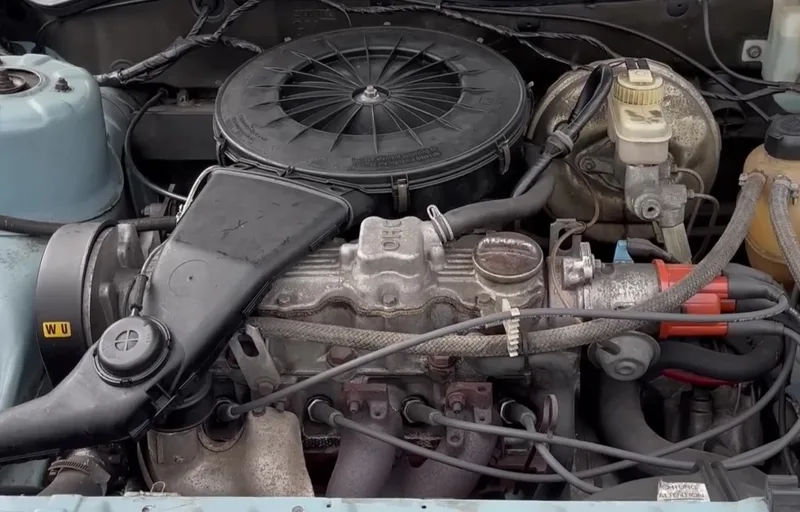
The Iron Duke is a 151 cu in (2.5 L) straight-four produced by Pontiac Motor Division, part of General Motors, from 1977 to 1993. It was engineered for fuel efficiency, smooth running and long life rather than performance, and production is estimated at between 3.8 and 4.2 million units.
It also went by the names 151, 2500, Pontiac 2.5 and Tech IV. Pontiac developed it as its new economy car engine, GM used it widely across its 1980s lineup, and it was supplied to American Motors Corporation (AMC) as well.
Why did Pontiac build the Iron Duke?
When the 1973 oil crisis hit, Pontiac built only V8s of 350, 400 and 455 cu in. Its engineers weighed a smaller V8, a V6, a V4 and an inline-four cut from one bank of the V8, then chose an entirely new four-cylinder.
The "all-new" label was partly marketing. The distributor, water pump, manifolds and carburettor came largely from the earlier Chevrolet four, sometimes with small dimensional changes, and the bare blocks look almost identical although few internal parts swap. The water pump from late production even bolts onto a first-year 1961 Chevrolet 151, though it turns the other way.
The design brief called for low noise and vibration, durability, drivability and economy, plus usable power at low revs. Engineers studied other GM fours and found that the 151 cu in engine built by GM do Brasil, with a 3-inch (76 mm) stroke and 6-inch (150 mm) rods, shorter and longer respectively than the Chevrolet original, shook far less than that engine or the 2.3-litre in the Vega. That made counter-rotating balance shafts unnecessary, and they would have added weight, complexity and cost.
For toughness, Pontiac chose a cast iron block with five main bearings in place of the fragile aluminium block of the Vega engine, which added about 20 pounds (9 kg). It used pushrods and timing gears rather than a belt-driven cam. Special stretch bolts hold the manifolds so that they can move a little as they heat up, and a two-stage, two-barrel carburettor with an electric choke helped cold starts. Cars with air conditioning had a cut-off switch that dropped the compressor at wide open throttle, plus a twelve-second delay before it engaged after starting.
How did the Iron Duke change over time?
The first Iron Dukes went into the 1977 Astre, Sunbird and Phoenix, followed by the Monza and Starfire in 1978. For 1979 the engine was thoroughly redesigned, with a crossflow head, a new Vara-Jet carburettor and peak power of 90 hp. Only the connecting rods carried over.
In 1980 the engine was reworked for transverse mounting in GM's front-drive X-body cars, and that year AMC began buying it. It became the base engine in the Spirit, Concord and Eagle and in base Jeep CJs. AMC dropped it from rear-drive models after 1982, and the Eagle changed in 1983 to a four developed by AMC itself.
Throttle-body fuel injection arrived in 1982, with a single injector, and the engine was christened the Tech IV, a name Car and Driver mocked as the low-Tech IV. A swirl-port head lifted compression from 8.25:1 to 9.0:1 in 1984 and added 2 hp (1.5 kW). Roller lifters, better bearings and a new crankshaft followed in 1985. The 1987 changes, including a serpentine belt, a distributorless ignition and an improved head, raised output to 98 hp (73 kW).
In 1988 GM finally added a balance shaft. Until then, a "dogbone" upper engine mount secured to the hood latch helped control vibration. In its strongest form the Tech IV allowed 5,500 rpm and made 110 hp (82 kW). From 1978 to 1990 the engines used a micarta camshaft gear meshing with a steel gear on the crankshaft, and versions of 1991-92 switched to a timing chain.
The Grumman LLV mail van, built from 1987 to 1994 for the United States Postal Service, was first powered by the Iron Duke. The specification called for a 24-year service life, and the 2.5-litre vehicles have surpassed expectations.
What was the Pontiac Super Duty engine?
Super Duty was a line of 1980s racing fours built on the Iron Duke block, the last of Pontiac's high-performance Super Duty engines. They competed in NASCAR's Charlotte/Daytona Dash Series, in IMSA GT racing and in American Power Boat Association boats, and ARCA used them into the 2000s.
Pontiac Motorsports offered different crankshafts and rods to give displacements from 2.1 to 3.2 L. A 2.7-litre Super Duty with 232 hp (173 kW) took the 1984 Fiero Indy Pace Car past 138 mph (222 km/h). Super Duty engines were never fitted to factory-built GM vehicles, though dealers sold the parts to convert a stock engine. Cosworth produced a 16-valve, twin-cam head for the 3.0-litre version in 1987.
Why did the Oldsmobile Diesel fail?
The Oldsmobile Diesel kept the gasoline engine's head bolt pattern to reuse its tooling, even though diesel compression ratios can be as much as three times higher. The result was catastrophic head bolt failures. GM also left out a water separator to save money.
Oldsmobile based the diesel on its 350 cu in gasoline V8 architecture. The 5.7-litre V8 arrived in 1978, a 4.3-litre V8 followed for the 1979 model year only, and a 4.3-litre V6 joined in 1982 for front- and rear-drive cars. Low quality fuel was common at the time, and most diesels carried a separator to protect their injection pumps. Owners who poured in anhydrous alcohol to deal with water in the fuel instead dissolved pump seals and other parts. A stretchy fuel-pump timing chain and poor dealer training made things worse, and GM redesigned heads and bolts, labelling the upgraded 1981 engines "350 DX".
The engine also had a troubled birth. An Oldsmobile engineer on the V8 diesel project reportedly told his bosses not to release it, and GM, needing to meet upcoming CAFE standards, is said to have forced him into early retirement and launched the unfinished engine anyway.
Oldsmobile Diesel V8 and V6 output
| Engine | Years | Power | Torque |
|---|---|---|---|
| LF9 5.7 L V8, original D block | 1978-1980 | 120 hp (89 kW) at 3,600 rpm | 298 Nm (220 lb ft) at 1,900 rpm |
| LF9 5.7 L V8, DX block, passenger cars | 1981-1985 | 105 hp (78 kW) at 3,200 rpm | 278 Nm (205 lb ft) at 1,600 rpm |
| LF7 4.3 L V8 | 1979 | 90 hp (67 kW) | 217 Nm (160 lb ft) |
| 4.3 L V6 (LT6, LT7, LS2) | 1982-1985 | 85 bhp (63 kW) at 3,600 rpm | 224 Nm (165 lb ft) at 1,600 rpm |
How badly did the Oldsmobile Diesel hurt GM?
It brought lawsuits, a Federal Trade Commission complaint and a class action that forced GM to pay up to 80 percent of the cost of new engines. Many owners simply had their diesels replaced with conventional gasoline engines.
Trouble with GM's new THM200 automatic transmission compounded the problem. The California Air Resources Board could not approve the diesel V8 for California in 1979 and early 1980, because all nine test cars it received had engine trouble and seven also had gearbox failures. The Federal Trade Commission lodged a complaint in 1980 covering the diesel and transmission troubles and camshaft problems on gasoline V8s. Even so, GM pushed the diesel hard, offering it on 19 of the 23 Oldsmobile models in 1981.
Falling gas prices and poor fuel quality, including large volumes of diesel containing water or foreign particles, added to the damage. Used-car price guides have always shown much lower prices for diesel cars, and they remain undesirable in the collector market. The V6 launched in 1982 did not share the V8's problems, because it has a denser bolt pattern and its engineers had more time to develop and test it.
When did GM end the Oldsmobile Diesel?
GM announced in December 1984 that the Oldsmobile Diesels would be discontinued during the 1985 model year. Diesel sales had already dropped 43 percent in 1982, and the V8 vanished from California showrooms for 1984 because of tighter emissions rules.
For the V6 diesel GM put up an entirely new plant, yet sales never broke 30,000 a year. The plant ran below ten percent of capacity, with much of its tooling still unopened. GM continued to offer Isuzu's 1.8-litre 4FB1 diesel in the Chevette and Pontiac 1000, but only 588 sold in 1986, and the company abandoned the diesel passenger car segment for many decades. The strong Oldsmobile blocks live on in gasoline-powered race engines.
What is the GM Family 1 engine?
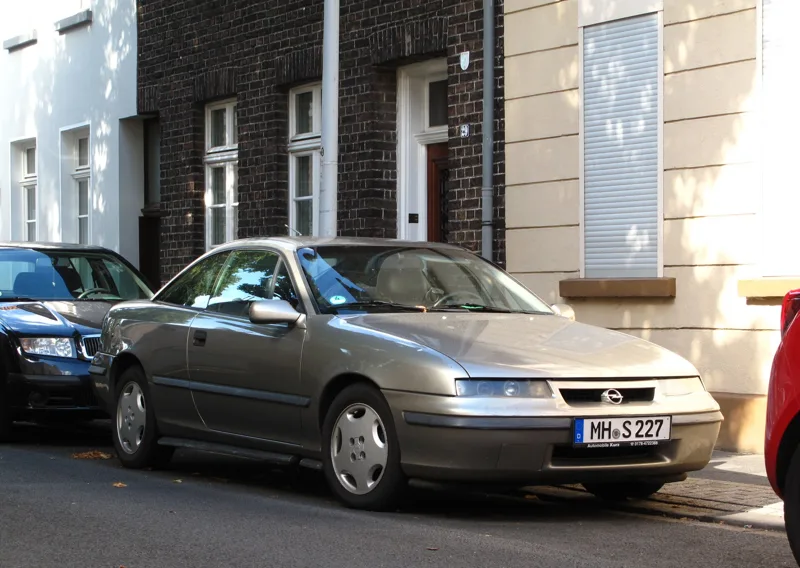
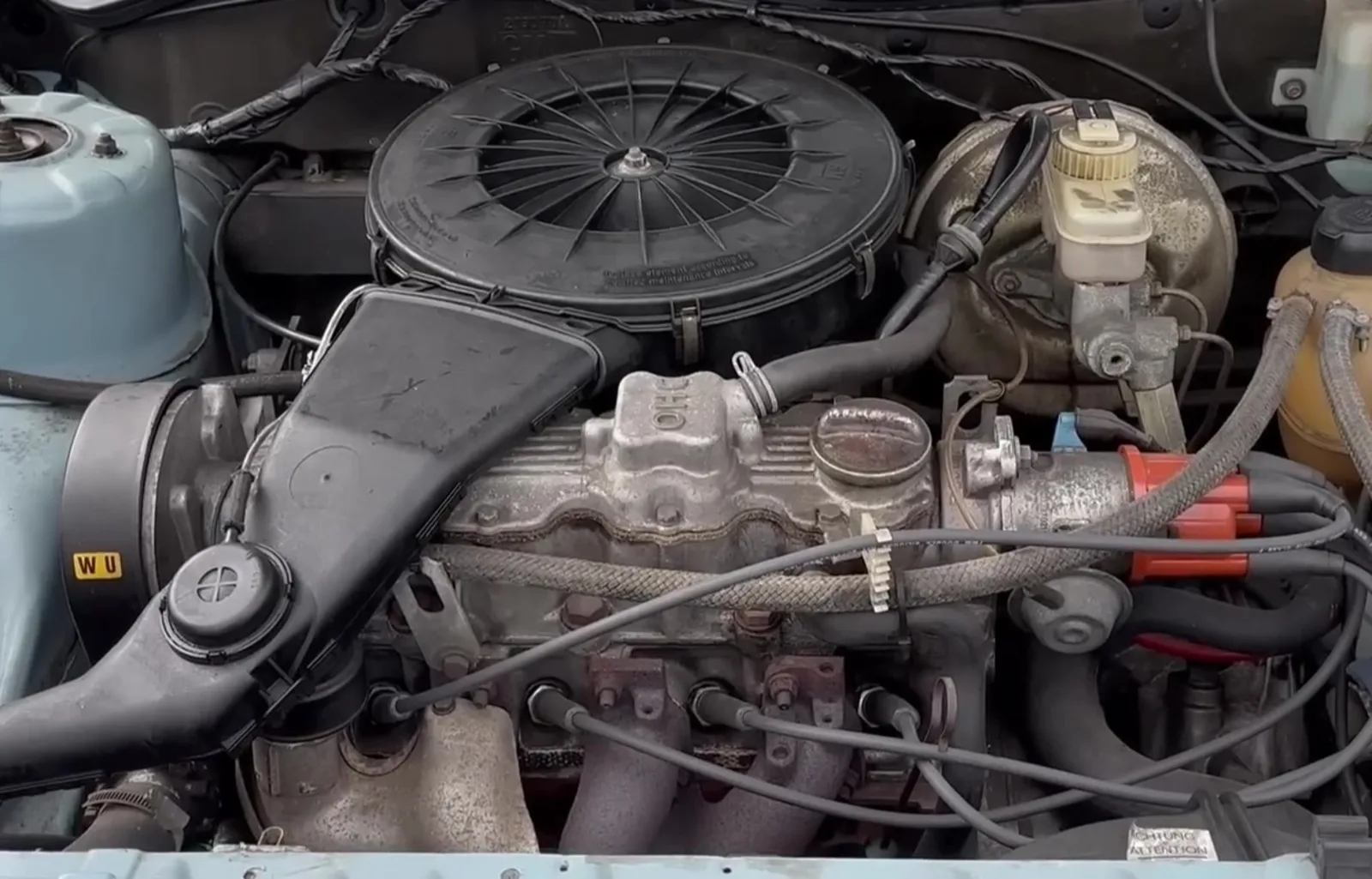
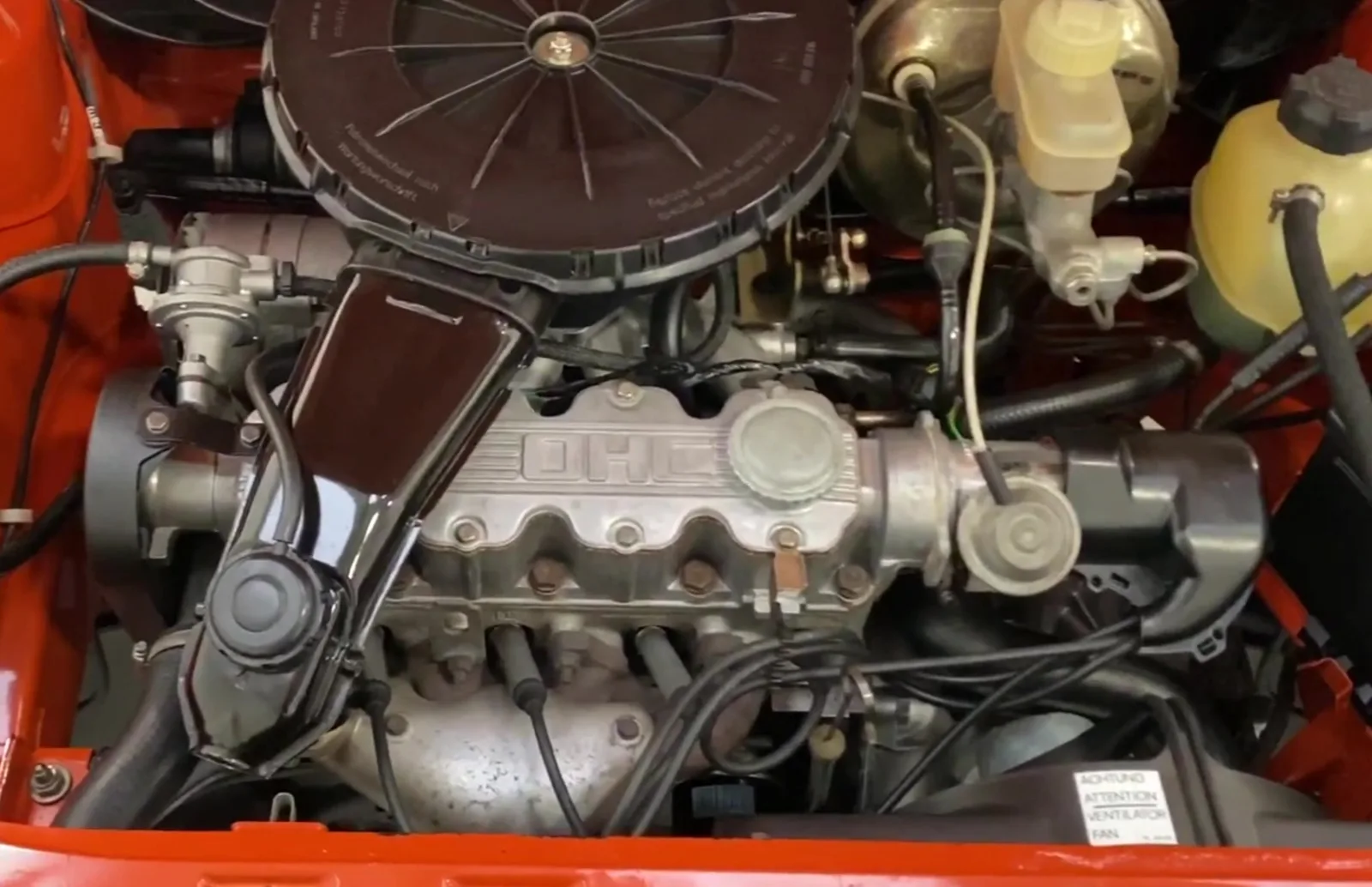
The GM Family 1 is a straight-four developed by Opel to replace its older overhead-valve engines and the smaller CIH engines in small and mid-range Opel and Vauxhall cars. It debuted in the Opel Kadett D in 1979, with the Vauxhall Astra Mk.1 getting it in 1980.
It is informally called the "small block" because it shares its basic design with the larger Family II, the "large block", which stretches to 2400cc. Aspern was the first plant to build it, and production moved to Szentgotthard in Hungary with the arrival of the DOHC version.
Technically it is an inline-four with a belt-driven single or double overhead camshaft, an aluminium head and a cast iron block. GM do Brasil engines could run on ethanol.
Early engines earned a bad name for camshaft and follower failures. A special lubricant was used during running in and was meant to be changed at the first service, and owners used to older overhead-valve engines often changed the oil themselves, which made it worse. Opel solved the problem with better camshaft and follower metallurgy and a changed lubrication specification. The water pump, sitting in an eccentric housing, also served as the timing belt tensioner and could seize if corrosion jammed it, so later engines gained a separate jockey pulley.
The capacities ran from a 999 cc 1.0 to a 1,796 cc 1.8. In between were the 1.2, the 1.3 at 1,297 cc, the 1.4 at 1,389 cc and the 1.6 at 1,598 cc. Around 1990 a narrower-bore 1.2 of 1,195 cc, with a 72.0 mm x 73.4 mm bore and stroke, replaced the original carburettor-only 1.2 that had powered the Opel Corsa.
How did the GM Family 1 evolve into Ecotec and Gen III?
The first DOHC Family 1 was the C16XE, with a Lotus-developed 16-valve head, sold only in the 1993 and 1994 Corsa GSi. It was succeeded by the Ecotec, a belt-driven 16-valve engine with exhaust valves filled with sodium, a steel-cast crankshaft, exhaust gas recirculation and Multec engine control.
First-generation Ecotec engines went into the Corsa and Tigra, the Zafira from 1999 and into the Astra and Vectra. Daewoo built its own variant, E-TEC, at Bupyeong, for the Lanos, Nubira, Aveo and Lacetti, and its 1.4 and 1.6 used variable intake geometry. GM do Brasil specialised in SOHC and FlexPower engines that ran on ethanol, petrol or any mix, and a 16-valve 1.0 was in the Corsa line-up from 1999 to 2001. The Brazilian SPE/4, built at Joinville, was offered in 1.0 and 1.4 sizes and ran on pure ethanol or standard Brazilian gasoline.
Generation III entered production in spring 2005, replacing both the Ecotec and Daewoo's E-TEC 16V. It uses a lighter cast-iron block, higher compression, double continuous variable cam phasing, oil jets to cool the pistons and an integrated catalytic converter. Reliability improved with a wider camshaft belt and a water pump that the belt no longer drives. The LDE variant complies with Euro VI and KULEV limits, and with secondary air injection the LWE achieves PZEV status.
Gen III fitted the Opel Zafira from 2005 to 2019, the Opel Astra to 2012, the Chevrolet Cruze from 2008 and the Opel Insignia from 2009. Turbocharged versions went into the Corsa GSi and OPC, the 2011 to 2012 Saab 9-5, the Buick Verano and, from 2016, the Chevrolet Malibu.
What is the GM E-Turbo engine?
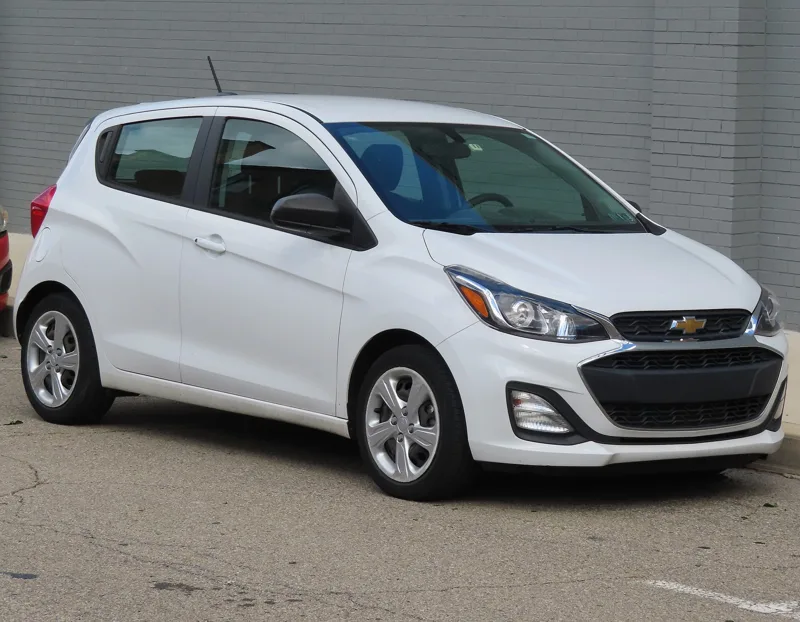
The E-Turbo is GM's next-generation turbocharged petrol engine, also known as the Eighth Generation Ecotec. It debuted in the 2019 Korean-market Chevrolet Malibu, and it combines start-stop with direct injection, plus an electric water pump and wastegate for the turbocharger, all aimed at efficiency.
There are four capacities. The 1.0-litre inline-three comes in two families: the CSS Prime, measuring 74 mm x 77.5 mm across bore and stroke, and the dual-injection E-Tec from SAIC-GM, at 72.6 mm x 80.4 mm. The 1.2 is a Prime CSS engine at 75 mm x 90.5 mm. The 1.3-litre inline-three also has two families, the global CSS 45T E-Turbo at 1,341 cc, or 447 cc per cylinder, and the E-Tec at 1,349 cc. The 1.5 displaces 1,498 cc and uses a 35 MPa (5,100 psi; 350 bar) direct injection system.
The variants are numerous. In Latin America the 1.0 appears as the naturally aspirated LIJ with a 12.5:1 compression ratio and the turbocharged L4G and L4F, all with an oil-immersed timing belt and flex-fuel options in Brazil. In July 2025 the flex-fuel L4F was updated to qualify for Brazil's IPI Verde tax reduction programme, and its belt warranty rose to 240,000 km (150,000 mi) from 150,000 km (93,000 mi).
Among the 1.2 engines, the L4K was first into production in the CSS Prime family, and the Opel Astra used it with 10.0:1 compression. South American versions moved from port to direct injection in 2024. The LBP is a US-only E85 flex-fuel variant, offered in the 2025 Chevy Trailblazer, Chevy Trax, Buick Encore GX and Buick Envista.
The 1.3 L3Z was developed for China 6B emissions and first used in the South Korean Malibu, with an electric brake booster as well as the electric water pump and wastegate. Branded Ecotec, the L3T serves North America and Europe. The LIY adds a 48-volt mild hybrid system, and on the 1.5 the LAH mild hybrid contributes 13 hp (10 kW) and 50 Nm (37 lb ft). The LAX is optimised for Chinese plug-in hybrids and uses the Miller cycle, and the LD3 for range-extender vehicles.
The E-Turbo is the family still being developed
The E-Turbo is the family still being developed. An updated higher-output 1.5 LP5 arrived in March 2025 with the Buick Envision S, and the 1.5 range includes the rear-drive LDF. The Family 1's Gen III engine remains listed in the Chevrolet Malibu from 2016 to the present.