A founder who lost his company twice, a manager who built the ladder of brands and an inventor who made the electric starter: the history of General Motors in three lives.
William Durant founded General Motors in Flint, Michigan, on 16 September 1908, as a holding company. Alfred Sloan, president from 1923, organised its brands into a price ladder and introduced annual styling changes, while Charles Kettering led research and developed the electric starter and leaded petrol additive.
The man who founded General Motors was forced out of it twice, went bankrupt, and in his last years backed ventures that ranged from a bowling alley in Flint, Michigan, to a mine in Nevada. William Durant created the company on 16 September 1908 and bought Buick the next day. By 1910 he was gone. He returned in 1916, lost control again in 1920, and spent the rest of his life chasing the kind of success he had once held.
Durant built General Motors, Alfred Sloan organised it, and Charles Kettering gave its cars the electrical system every driver uses. Their three careers explain who founded General Motors, how the company grew into one of the largest car makers in the world, and why its brands are arranged the way they are.
William Durant and the birth of GM
Durant was born in Boston in 1861 and grew up in Flint after his father left the family in 1869. He left school to work in his grandfather's lumberyard, sold cigars, and then went into carriages. In 1886 he and Josiah Dallas Dort founded the Flint Road Cart Company, which turned $2,000 of start-up money into a $2-million firm with worldwide sales. By 1890 the Durant-Dort Carriage Company had become a leading maker of horse-drawn vehicles, and by 1900 it was turning out upwards of 100,000 carriages annually, making it the largest in the United States by the early 1900s.
He did not like cars. The smell of burnt fuel and the noise of the engines struck him as dangerous enough that his own daughter was forbidden to ride in one. But by 1900 there was public outcry over weak regulation of petrol-powered carriages, and Durant saw an opening to build a company that could make them safer. The first step was Buick, a local firm with few sales and large debts. He took control of it on 1 November 1904 and used the money and factories of Durant-Dort to turn it around. When the 1905 New York Automobile Show opened, Buick had orders for more than 1,100 cars, even though it had no manufacturing line and only a handful of cars to show. The company became the best-selling car in America, ahead of Ford, Cadillac and Oldsmobile.
It was also Durant who conceived the modern system of dealer franchises. His partner in Canada, Samuel McLaughlin, ran the largest carriage business in that country and agreed to supply Buick power trains for 15 years on cost-plus terms.
Durant built General Motors, Sloan organised it, and Kettering gave its cars the electrical system every driver uses.
The 1908 buying spree and the first fall
With Buick as a base, Durant wanted a large company that would make several brands and control the firms that supplied components, much as he had done in carriages. He founded General Motors Holding Company on 16 September 1908 and bought Olds Motor Works on 12 November. Within the year he had gathered 13 car companies and 10 parts and accessory makers. In 1909 he added Cadillac and Oakland, which was eventually replaced by Pontiac, and the company produced and sold 25,000 cars.
Part of the thinking was a direct response to Henry Ford. Ford committed to the basic Model T, available in one colour and with one engine. Durant, drawing on his carriage experience, wanted cars for different incomes and tastes, so GM offered several colour combinations and engines on a sliding scale of price.
The problem was speed. In 1909 Durant lined up an $8 million purchase of Ford, which the bankers rejected. Some purchases looked poor in hindsight: Cartercar, which he bought on 26 October 1909, was dropped by the board once sales failed to reach the 1,000 to 2,000 cars a year he had predicted. By 1910 the corporation was grossly overextended and short of cash, and banking interests took control and forced Durant out.
Chevrolet and the comeback
Durant started again immediately. In 1911 he went into partnership with Louis Chevrolet, with Dort as vice-president, helped by a loan of $52,935.25 cosigned by R. S. McLaughlin. A disagreement led Durant to buy out Chevrolet in 1914. Backed by Pierre S. du Pont, he used the rising value of Chevrolet to win back General Motors in 1916 and led it until 1920. General Motors Corporation was incorporated on 13 October 1916.
Chevrolet was folded into the corporation around 1918 to 1919, and its first GM car was the 1918 Chevrolet 490. Durant also brought in Fisher Body and Frigidaire. In 1917 he refused to let GM take defence work after the United States entered the First World War, which put him at odds with Cadillac's founder Henry Leland. Leland left, set up the Lincoln Motor Company and won contracts to build Liberty aircraft engines.
Another Durant creation was a parts group called United Motors Company. He assembled makers of roller bearings, electrical systems, radiators and other components, including Hyatt Roller Bearing and Dayton Engineering Laboratories, and put Alfred Sloan of Hyatt in charge. General Motors bought United Motors in 1918 for $44,065,000. Sloan went on to become president of GM and build it into the world's largest automaker.
In 1920 Durant lost control to the du Pont and McLaughlin shareholders, at a cost to him of $21,000,000. His last GM project, the Sheridan, was the first brand the company started from scratch. When Durant was dismissed for the second and final time, he bought the rights to it and its Muncie, Indiana, plant in May 1921.
After GM, Durant Motors and the long decline
In 1921 Durant set up Durant Motors, and two years on it sold several makes, among them Durant, Star, Flint and Eagle, and a factory at Leaside, Ontario. The structure copied GM. The Star was the entry brand for the buyer who would otherwise choose a Model T, the Princeton was designed to rival Packard and Cadillac but never went into production, and the Locomobile sat at the top. Durant could not repeat his earlier success. The 1929 Wall Street Crash and the Great Depression that followed proved too much, and Durant Motors failed in 1933.
He had also become a major player on Wall Street. On Black Tuesday he joined members of the Rockefeller family and other financiers in buying large quantities of shares to show confidence, against the advice of friends. The effort failed to stop the fall and was costly. By 1936 Durant was bankrupt. He and his wife lived on a yearly pension that Sloan arranged on behalf of GM, with McLaughlin and others. He opened a bowling alley and restaurant in Flint, worked the kitchen himself, and dreamed of a chain of 30.
In 1942, aged 80, Durant travelled to Goldfield, Nevada, to open a cinnabar mine, hoping for defence contracts. A few days after he returned to Flint, he suffered a stroke. He died in March 1947, was interred at Woodlawn Cemetery in the Bronx, and entered the Automotive Hall of Fame in 1968.
Alfred Sloan, the organiser
Alfred Pritchard Sloan Jr. was born in New Haven, Connecticut, in 1875 and graduated in electrical engineering from MIT in 1895. In 1899 he took over Hyatt Roller Bearing as president and owner, after his father bought a controlling interest for $5,000. Oldsmobile was its first automotive customer, and for a time more than half of Hyatt's bearings went to Ford for the Model T. After Hyatt merged into United Motors in 1916, Sloan became a GM vice-president, then president in 1923 and chairman of the board in 1937. He retired on 2 April 1956.
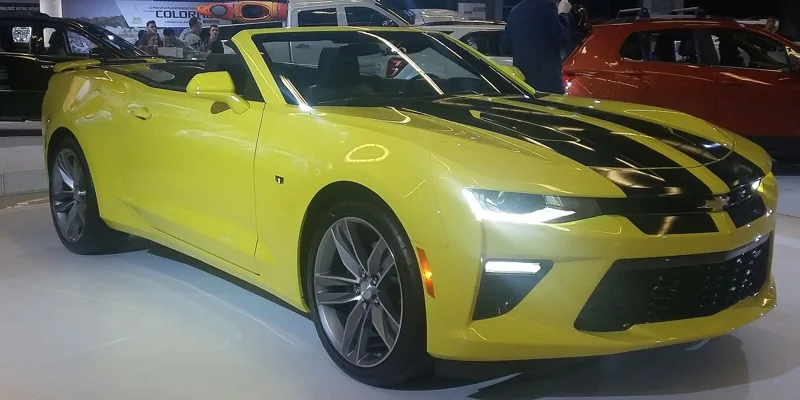
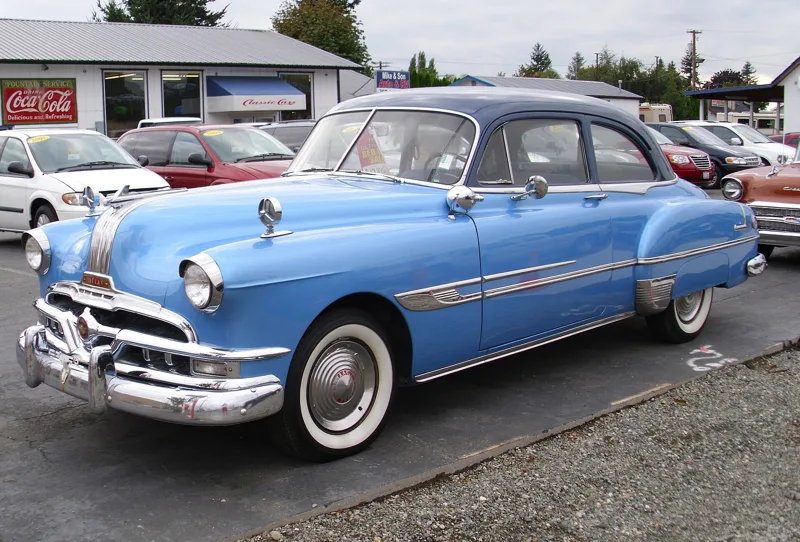
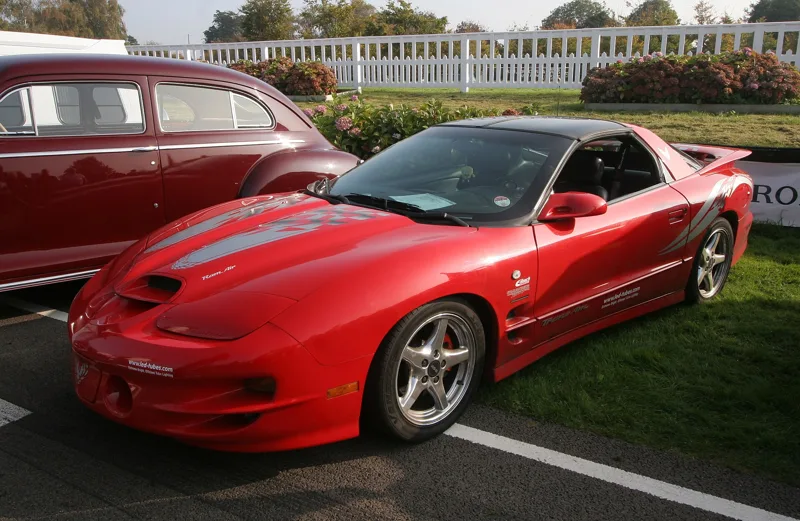
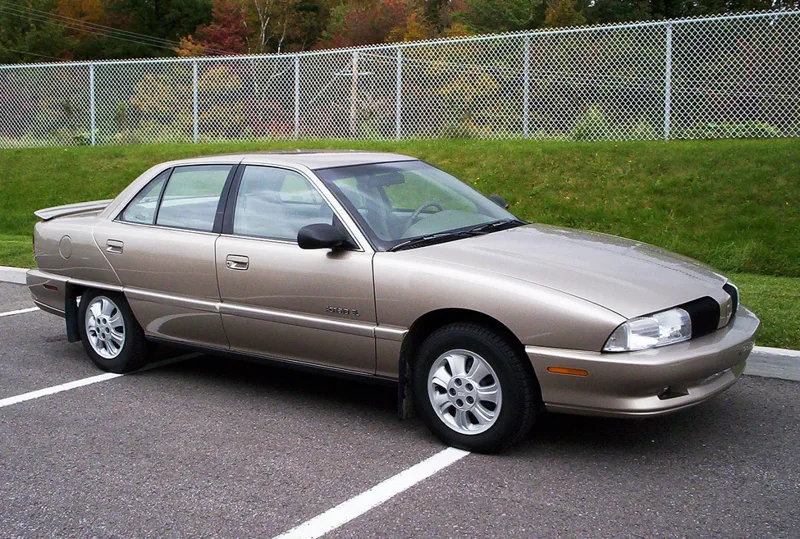
Sloan's system was to separate the brands by price so that they would not compete with each other. He called the result the ladder of success: Chevrolet, Pontiac, Oldsmobile, Buick and Cadillac, from lowest to highest price, so that buyers could stay in the GM family as their income grew. Each division aimed at a specific market segment, and although they shared some components, each had its own styling and technology. Shared parts and common management produced economies of scale.
He is credited with establishing annual styling changes, the root of planned obsolescence. In 1919 he and his deputies created the General Motors Acceptance Corporation, which practically invented the auto loan and let buyers avoid saving for years to afford a Ford. Ford opposed credit on moral grounds and did not form Ford Credit until 1959. GM also adopted financial measures such as return on investment, which Donaldson Brown introduced. Together with Ford's resistance to change in the 1920s, these ideas carried GM to the top of industry sales by the early 1930s, and it stayed there for more than 70 years. Cost mattered to him too: he resisted a proposal for safety glass on Chevrolets because of the threat to profits.
| Name | Years | Role at GM | Best-known contribution |
|---|---|---|---|
| William Durant | 1861-1947 | Founder, president 1916-1920 | The holding company of many brands |
| Alfred Sloan | 1875-1966 | President from 1923, chairman 1937-1956 | Ladder of success, annual styling changes, auto loans |
| Charles Kettering | 1876-1958 | Head of research 1920-1947 | Electric self-starter, leaded petrol |
The labour fight and the criticisms
In the 1930s GM, long hostile to unions, fought its newly organised workforce. Sloan avoided the violence associated with Ford and preferred spying, building an internal undercover apparatus. When workers organised the Flint sit-down strike in 1936, that espionage proved little use against such open tactics, and the successful strike legitimised the United Auto Workers as the bargaining representative for GM workers.
Critics have said Sloan's system was too rational. According to O'Toole, Sloan's system paid too little attention to people and values, and the resulting culture resisted change. In 2005 his accounting system was criticised for valuing inventory the same as cash, which meant no penalty for building stock and made lean manufacturing harder. That judgement comes with hindsight, since the infrastructure of his day could not support just-in-time delivery. Sloan himself said his system was far better than the one it replaced, and admitted he had no accounting training.
His memoir, My Years with General Motors, was essentially complete around 1956, but GM's lawyers feared it would feed an antitrust case and held it back for nearly a decade. It was published in 1964. In 1934 Sloan set up the Alfred P. Sloan Foundation, which gave extensively to business management programmes and had assets of about $2.38 billion at the end of 2023.
Charles Kettering, the inventor
Kettering was born in 1876 in Loudonville, Ohio, and graduated in electrical engineering from Ohio State in 1904. At National Cash Register he invented an easy credit approval system and the electric cash register in 1906, and secured 23 patents in five years. From 1907 his colleague Edward Deeds persuaded him to work on automobiles. They tinkered at nights and weekends in Deeds's barn with other NCR engineers, a group that became known as the Barn Gang, with Kettering nicknamed Boss Ket. In 1909 he left NCR and the group became the Dayton Engineering Laboratories Company, known as Delco.
The self-starter came from tragedy. The hand crank used to start early cars could kick back, and Byron Carter, the founder of Cartercar, died of complications after such an accident at Belle Isle in Detroit. Cadillac's Henry Leland resolved to find an electric alternative. When his own engineers failed to make one small enough, he consulted Kettering, and Delco had a practical model by February 1911.
Kettering's insight was a single electrical system doing three jobs that it still performs in modern cars: turning the engine over, producing the spark for ignition, and supplying lighting current. For his 1912 models Leland ordered 12,000 starters, and Delco had to shift from research to production. The system won a Dewar Trophy in 1913 and, by making cars easy for anyone to start, helped the American industry grow. In 1916 Kettering sold Delco to United Motors for $2.5 million. It passed to GM in 1918 and became the basis of GM's research arm and of Delco Electronics.
Kettering was vice-president of GM Research from 1920 for 27 years. Between 1918 and 1923 his Dayton laboratories tried to commercialise air-cooled engines in which fans pushed air across copper fins. The attempt between 1921 and 1923 failed for a mix of technical and non-technical reasons, though air-cooled engines have succeeded elsewhere, in the Volkswagen Beetle and many Porsche sports cars.
His fuel research left a harder legacy. In December 1921 Thomas Midgley Jr. and Kettering identified tetraethyllead as an additive that stopped engine knock when diluted a thousandfold. Ethanol could not be patented, but this could, and the two men promoted the additive. Kettering became the first president of the Ethyl Corporation, which started producing it in 1923. Leaded petrol released large quantities of lead into the atmosphere worldwide, and because of lead's neurotoxic effects it has been widely outlawed since the late 1990s. Freon, a CFC, has been blamed in part for damage to the ozone layer.
Kettering held 186 US patents in all, including the Duco lacquers that gave mass-produced cars their first practical coloured paints. In 1945 he was a founder of the institution that became Memorial Sloan Kettering, and in 1998 the General Motors Institute was renamed Kettering University.
How General Motors grew
General Motors started out in 1908 as a holding company set up in Flint. By 1918 its staff had grown from about 49,000 to 85,000, and it set aside nearly $2.5 million for employee housing. The headquarters stayed in Flint until the mid-1920s and then moved to Detroit, in a building begun in 1919, completed in 1923 and dedicated in 1929.
The company reached abroad too. It bought Vauxhall of England in 1925, an 80 percent share of Germany's Opel in 1929 (rising to 100 percent two years later) and Holden of Australia in 1931. In 1926 it created Pontiac as a companion to Oakland, and the newcomer outsold its parent so strongly that Oakland was ended. Other companion makes, including Marquette, Viking and LaSalle, faded during the Great Depression. In 1930 GM bought Electro-Motive Corporation and Winton Engine, and diesel locomotives went on to replace most other forms of traction on American railroads. In 1932 it formed United Cities Motor Transport to fund small-town streetcar-to-bus conversions, and from 1936 it joined an unpublicised scheme later called the General Motors streetcar conspiracy.
By 2008 GM sold 8.35 million cars and trucks worldwide. In 2012 it employed about 209,000 people and built vehicles in 35 countries. Current brands are Chevrolet, Buick, Cadillac, GMC, Wuling and Baojun, while former ones include Oldsmobile, Pontiac, Saab, Saturn, Hummer, Opel, Vauxhall and Holden.
Where GM's headquarters is now
The company's headquarters is moving again. In April 2024 GM said it would leave the Renaissance Center for the neighbouring Hudson's Detroit site in 2025, and it began formally occupying that site on 12 January 2026.
What the three men left in the car you drive
Kettering's electrical system, with its starter, ignition and lighting, is still how a car works. Sloan's ladder is still visible in the way GM places Chevrolet, Buick and Cadillac at different prices, and his idea of an annual model change shaped what a showroom looked like for decades. Durant's holding company, with its different brands under one roof, is the pattern the whole industry followed.