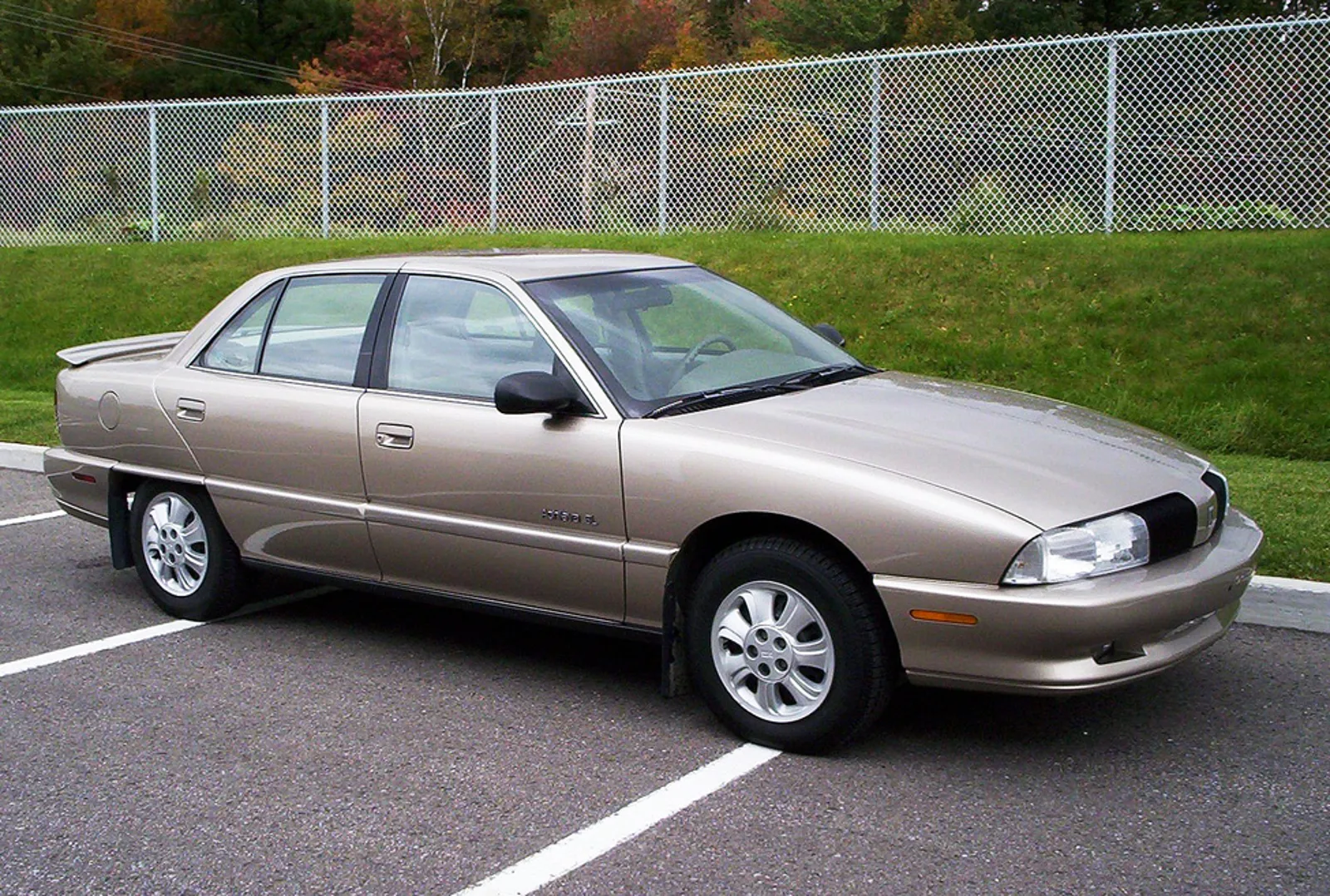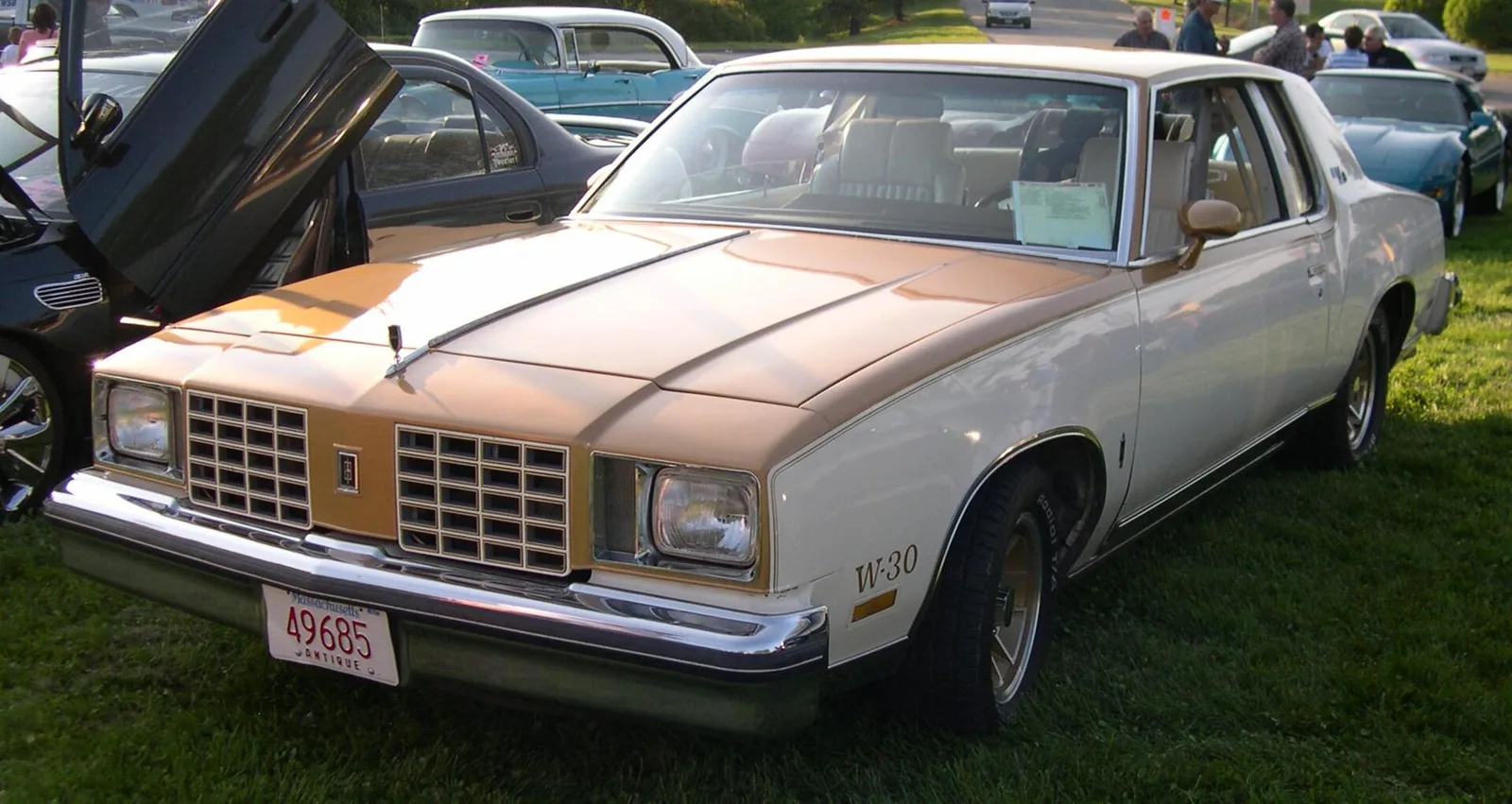
Hurst Performance parts, a 455 cubic-inch V8 that GM's engine rules discouraged, and a 1972 Indianapolis pace car role shaped the Hurst/Olds from 1968 to 1984.
Built with Hurst Performance from 1968 to 1984, the Hurst/Olds used a 390 hp, 455 cubic-inch V8 on Cutlass and 442 bodies at first. Later cars included a 1972 Indianapolis 500 pace car, a 1975 T-top and a 1983 anniversary edition.
The Oldsmobile Hurst/Olds was a performance special built with Hurst Performance from 1968 to 1984. Its 455 cubic-inch V8 was an engine size that General Motors kept out of its intermediate cars, and the name returned in several forms, from Colonnade Cutlass coupes to a 1983 anniversary edition.
The name covered very different cars. A 1968 coupe on Cutlass and 442 bodywork, a 1975 T-top on the Cutlass Supreme and a 1979 car on the downsized Calais shared little beyond the Hurst parts.
Where did the Hurst/Olds come from?
The Hurst/Olds grew out of Hurst components already fitted to Oldsmobile 442 models. Oldsmobile worked with Hurst Performance of Warminster, Pennsylvania, to offer a special-edition performance version of the 442 or Cutlass Supreme, and the first cars were built for the 1968 model year.
Building one was a two-site job. Cars left the Oldsmobile line with their special drivetrain and ram-air package already installed, then went across town to Demmer Engineering in Lansing, Michigan, where the remaining Hurst components were added.
Oldsmobile also had a rule to work around. GM policy kept engines above 400 cubic inches out of intermediate cars, with the Chevrolet Corvette as the only exception. Oldsmobile got around that limit by implying that Hurst, not Olds, had installed the large engine.
A 455 cubic-inch V8 in an intermediate car, dressed in Hurst's name and gold stripes.
How was the 1968 Hurst/Olds built?
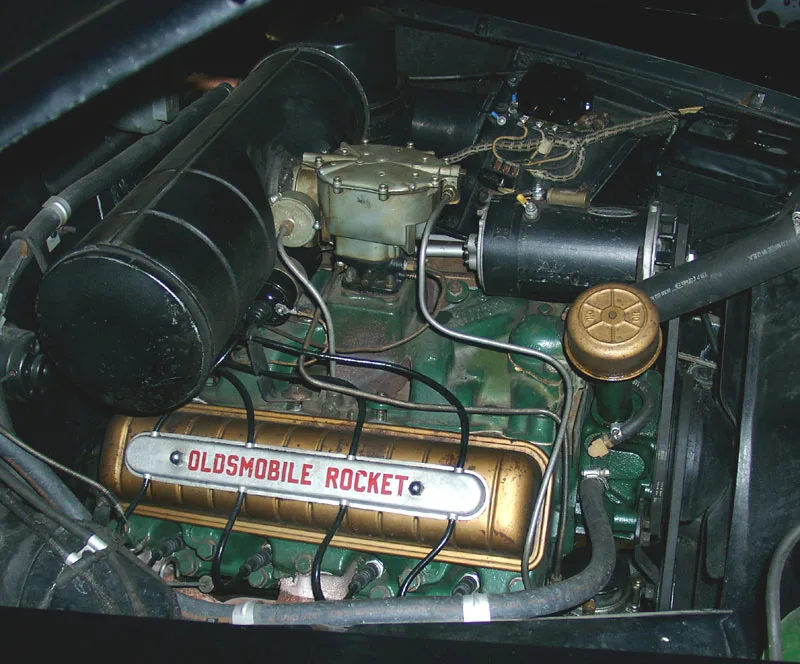
The 1968 car used a 7.5-litre (455 cu in) Rocket V8 rated at 390 hp (395 PS; 291 kW) at 5,000 rpm. Its 500 lb ft (678 N m) of torque arrived at 3,200 rpm, and the engine fed a single Quadrajet four-barrel carburettor and a Turbo-Hydramatic 400 transmission.
Two camshafts were offered. The W-45 cam, with a 308-degree duration, went into cars without air conditioning. The milder W-46, at 285/287 degrees, was fitted to cars with air conditioning, and the two engines differed mainly in camshaft and cylinder-head selection.
The 455 was mated to a three-speed Turbo-Hydramatic 400 with a console-mounted Hurst Dual-Gate shifter. The shifter allowed automatic running or manually ratcheted shifts, so the driver could choose which to use.
The engine was a close relative of the 400 hp (406 PS; 298 kW) W-34 455 offered in the Toronado. The Hurst/Olds was the only GM intermediate offered with an engine above 400 cubic inches, so the 455 set it apart from its own family.
Styling was more understated than the engine. The body was shared with the regular Cutlass and 442, but Demmer added black accent paint, hand-applied white pinstripes, real walnut dash trim and H/O emblems. Peruvian Silver and Black was the 1968 paint scheme.
Production was small. Of the 515 built, 51 were Sport coupes and 464 were Holiday coupes.
What changed in 1969, and why did the car pause?
The 1969 model switched from silver and black to Firefrost gold on white, and it replaced the twin ram-air scoops under the front bumper with a fibreglass mailbox hood scoop. Around 913 cars were built before the model was paused for 1970 and 1971, because GM dropped its 400 cubic-inch limit for 1970.
The 1969 engine was the W46 455, rated at 380 hp (280 kW) and 500 lb ft of torque. It had a unique intake, chrome steel valve covers and a vacuum-operated air cleaner lid that drew cold air from the hood scoop. The same engine was used for both air-conditioned and non-air-conditioned cars, which gave better drivability. Gearing was 3.42 without air conditioning and 3.08 with it, and 3.91 was available only on cars without air conditioning.
A single person pinstriped every 1968 and 1969 car by hand, and the 1969 model added gold painted stripes on the headrests and a Hurst/Olds emblem on the glove box door. Two convertibles served Hurst's promotions, with one attending events on each coast. A third car was made after one of the originals was destroyed.
Oldsmobile had planned a cheaper companion to the 442 for 1970, with a 350 cubic-inch V8 and special graphics. That car arrived mid-year as the Rallye 350, painted bright yellow with matching yellow urethane bumpers.
Why did a Hurst/Olds pace the 1972 Indianapolis 500?
Hurst Performance stepped in after the major manufacturers were reluctant to provide the pace car, following a tragic accident involving the 1971 Indianapolis pace car, a Dodge Challenger. Hurst volunteered to sponsor the 1972 pace car, and Oldsmobile supplied the Cutlass Supreme coupe and convertible.
It was the only Indianapolis pace car sponsored by a company other than a carmaker, and the first to carry a major supplier's name in its title. Hurst Performance developed the car itself, not Oldsmobile.
Only 629 were built. Every car was Cameo White with gold 3M stripes applied as stickers, not paint. The W-25 Ram Air hood, gold SS III Rally wheels and Goodyear Polysteel Radial tyres came standard, and the cabin had a black Strato bucket interior with a centre console. Every car carried a W-45 code on its cowl tag, and special Hurst/Olds Pace Car badging went on the glove box door.
The standard engine was the L75 455, rated at 250 net hp. The W-30 option brought a blueprinted L77 455 at 300 net hp, and both engines were mated to a Turbo-Hydramatic 400 with the Hurst Dual-Gate shifter.
How did the 1973 Hurst/Olds differ from the 1972 car?
The 1973 car moved onto GM's Colonnade A-body, the most extensive redesign those cars had seen in ten years. The Cutlass kept the Colonnade styling until 1977. It was based on the semi-fastback Cutlass S coupe, and it came in two colour schemes for the first time, black with gold or white with gold.
The chassis was new as well. It used a stronger perimeter frame with more suspension travel, a larger 8.5-inch rear axle, and power front disc brakes as standard on all 1973 Cutlasses. Swivelling Strato buckets came with a centre console, and a power moonroof was optional.
Engines were limited to the 455. The L75 U code made 250 hp (190 kW), while the L77 V code made 270 hp (200 kW) and was offered only without air conditioning. Pontiac's SD 455 was still available for one more year at 290 hp (220 kW), and Oldsmobile's 455 ended in 1974 with the L76 W-30.
Production reached 1,097 for 1973. About 60 percent were white with gold and about 40 percent were black with gold. Hurst added a console-mounted digital tachometer, air shocks and an alarm system as its own options, and those three were available only on the Hurst/Olds.
Was the 1974 Hurst/Olds a pace car?
Oldsmobile intended the 1974 Hurst/Olds to be an Indianapolis 500 pace car, but the track's parade laps needed convertibles, so the Delta 88 was chosen instead. Buyers could still order the pace-car graphics as an option on their Hurst/Olds. 92 Hurst/Olds parade cars carried celebrities and guests around the track.
Production for 1974 was 1,800. Of those, 380 were W-30 cars with the 455, rated at 230 net hp. The other 1,420 had the 350 cubic-inch V8 at 180 hp (130 kW), which was also the only engine offered for California cars.
What did the 1975 T-top Hurst/Olds add?
The 1975 car fitted a removable T-top roof, known as the Hurst/Hatch, and it was the first General Motors car to have one. Its underpinning was the formal-roofed Cutlass Supreme coupe, where the 1973 and 1974 cars had used the semi-fastback Cutlass S.
Buyers chose black or white bodies with a half vinyl top offset by a wide aluminium band. The W-25 used an Oldsmobile 350, while the W-30 kept the 455. US Environmental Protection Agency rules made catalytic converters mandatory that year, which left only a single exhaust.
Gold stripes ran along the sides, trunk, hood and mirrors, and the car wore gold 15x7 Super Stock III rims. The centre-louvred hood carried over from 1974. The most popular interior paired white seats and door panels with a black dashboard, carpet, steering wheel and console, and an optional digital LED tachometer sat on the console.
What was the 1979 Hurst/Olds?
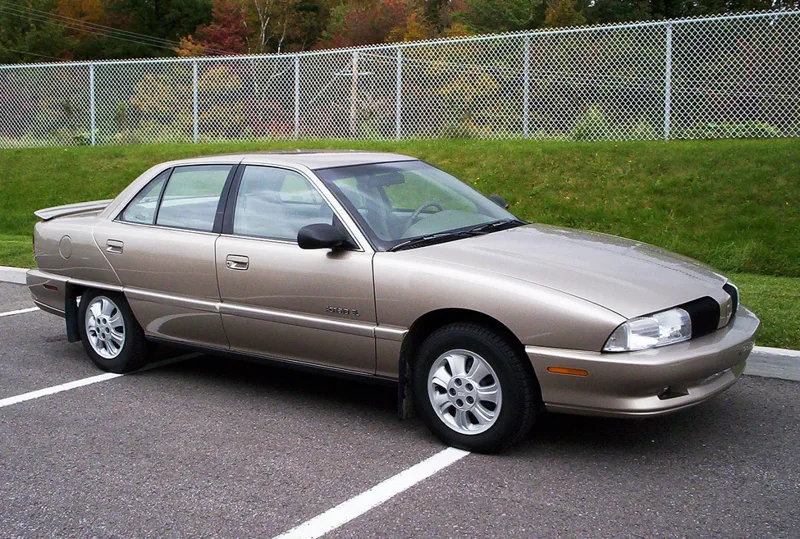
The 1979 Hurst/Olds returned after a three-year gap as a Cutlass Calais coupe on the newly downsized Cutlass body. It used Oldsmobile's 5.7-litre (350 cu in) V8, and it was the first H/O built entirely by Oldsmobile Division at its Lansing plant.
It was also the first H/O without a 455, and the only GM G-body offered with a 350 V8 that year. The Hurst Dual Gate shifter was standard, and the W-30 name, which had previously meant the 455, moved to the 350.
Gold covered the hood, most of the roof and the rear of the trunk, and the grille and aluminium wheels were gold too. The W-30 name carried into the 1980 Olds 442, which differed mainly in its headlights and lacked the Hurst shifter.
Why were the 1983 and 1984 editions limited?
GM revived the name for the 15th anniversary of the first Hurst/Olds, after the Cutlass line was split in 1982 between front-wheel drive Ciera and rear-wheel drive Supreme models. Oldsmobile planned 2,500 cars for 1983, but demand was very strong and the figure rose to 3,001.
The 1983 car was black with silver rocker panels, chrome 15-inch wheels and Goodyear Eagle GT tyres. A power bulge hood and a rear spoiler finished the look, and dual exhausts with rumbling mufflers gave it a distinct voice. Under the bonnet sat a modified 307 cu in V8 with 3.73 gears, and the new Hurst Lightning Rod floor shifter came with it. A new Hurst/Olds emblem appeared on the car, and red and silver stripes separated the black and silver paint.
The 1984 car was mechanically almost identical to the 1983 model, and its reversed colours were the most obvious change. Silver became the main body colour, with black on the rocker panels. It received a stronger 8.5-inch rear end, and 3,500 were built. A fully loaded 1984 model cost $19,500 ($60,430 in 2025 dollars), while the base car was priced at around $11,000 ($34,089 in 2025 dollars).
Hurst/Olds specifications by model year
| Year | Engine and output | Built |
|---|---|---|
| 1968 | 7.5-litre (455 cu in) Rocket V8, 390 hp (395 PS; 291 kW) | 515 |
| 1969 | 455 cu in W46, 380 hp (280 kW) | Approximately 913 |
| 1972 | 455 cu in L75, 250 net hp; W-30 L77, 300 net hp | 629 |
| 1973 | 455 cu in L75, 250 hp (190 kW); L77, 270 hp (200 kW) | 1,097 |
| 1974 | W-30 455, 230 net hp; 350 cu in, 180 hp (130 kW) | 1,800 |
| 1975 | W-25 with Oldsmobile 350; W-30 with 455 | - |
| 1979 | 5.7-litre (350 cu in) L34 V8 | - |
| 1983 | Modified 307 cu in V8, 3.73 gears | 2,500 scheduled, then 3,001 |
| 1984 | Modified 307 cu in V8, 3.73 gears | 3,500 |