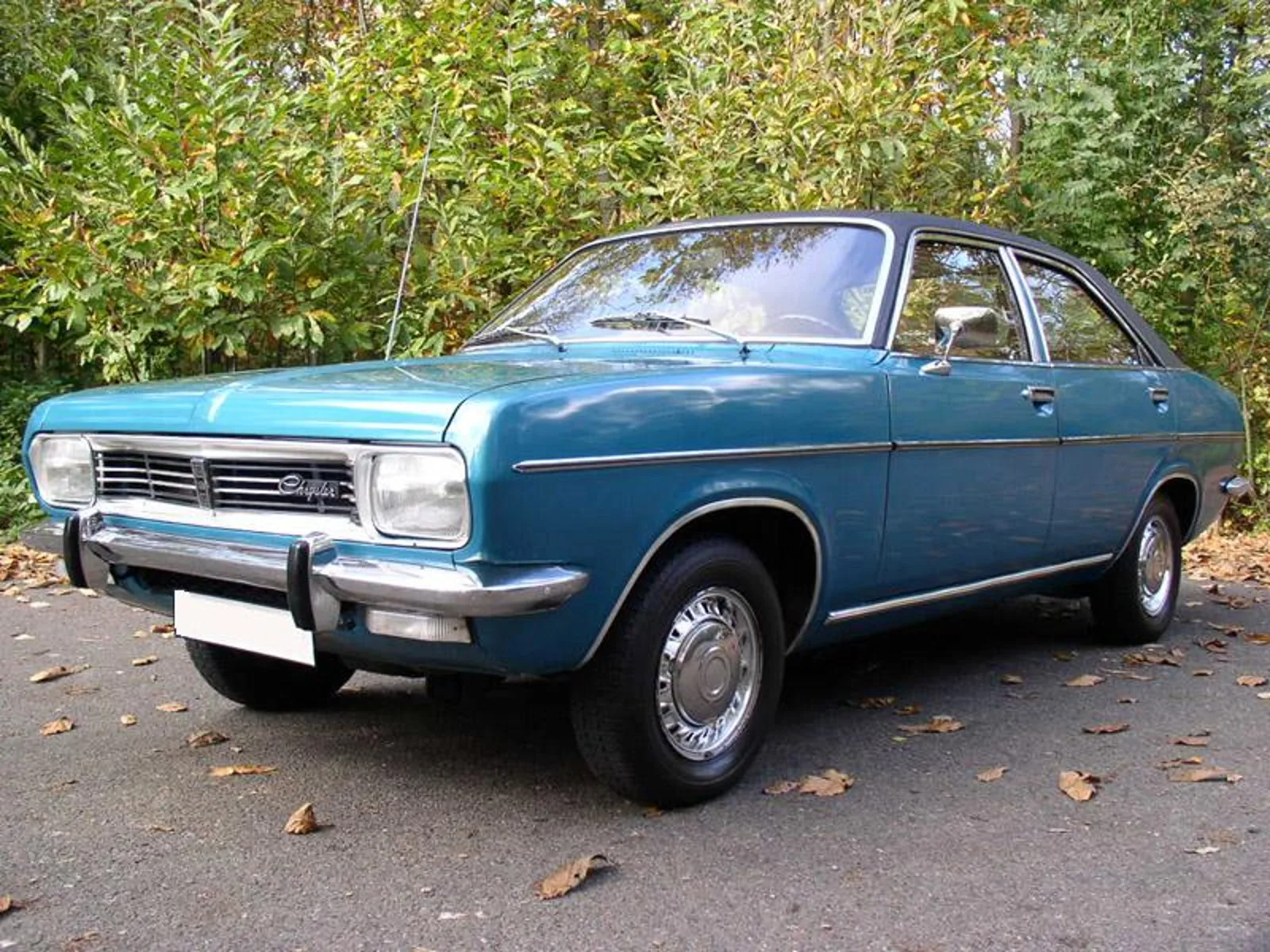
A Franco-American Chrysler built from Rootes and Simca work set against the Ford Cortina that dominated British sales in the 1970s: origins, engines, road tests, sales and the buyer each suited.
The Chrysler 180 and Ford Cortina competed in the British executive and family car market of the early 1970s. The 180 was built in France from 1970 and placed third of five in a 1971 road test. The Cortina, launched in 1962, became Britain's best-selling car of the 1970s.
The Chrysler 180 and the Ford Cortina were both executive or family cars sold in Britain and continental Europe in the early 1970s, and they competed for the same buyers. The 180 was built by Chrysler Europe from the joined efforts of Rootes Group and Simca. The Cortina was Ford's mid-sized family car, and it went on to become the best-selling car in Britain during the 1970s.
This comparison covers why the two were rivals, how each car came about, their engines, a 1971 road test that ranked the 180 against the Cortina, their sales in Britain and the United States, and which buyer each car suited on the facts available.
Why were the Chrysler 180 and Ford Cortina rivals?
They were rivals in the British market, and a 1971 road test made that rivalry explicit. In that road test the Chrysler was one of five models, and it did not take the top spot among them.
Their UK routes differed, though. The Chrysler reached Britain in 1971 with only the 180 available, while the Cortina already offered a full range of bodies and engines by then.
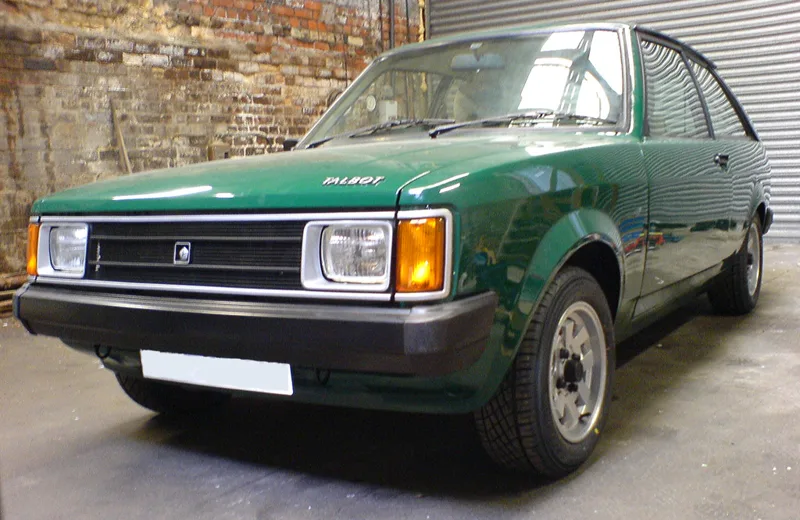
The Chrysler 180 also faced the same market expectations as other imports. Its mixed pedigree and non-established brand did not sit well with nationalistic buyers and reviewers in France and Britain. There was little to make the car stand out among many rivals that already held established positions in the class.
The Cortina was a much stronger brand in the same market. It was launched in 1962 and was Britain's most popular new car in 1967, a goal that Ford had been chasing since the Cortina's creation. That history gave it a long head start over the Chrysler, which arrived in 1970 as a new name.
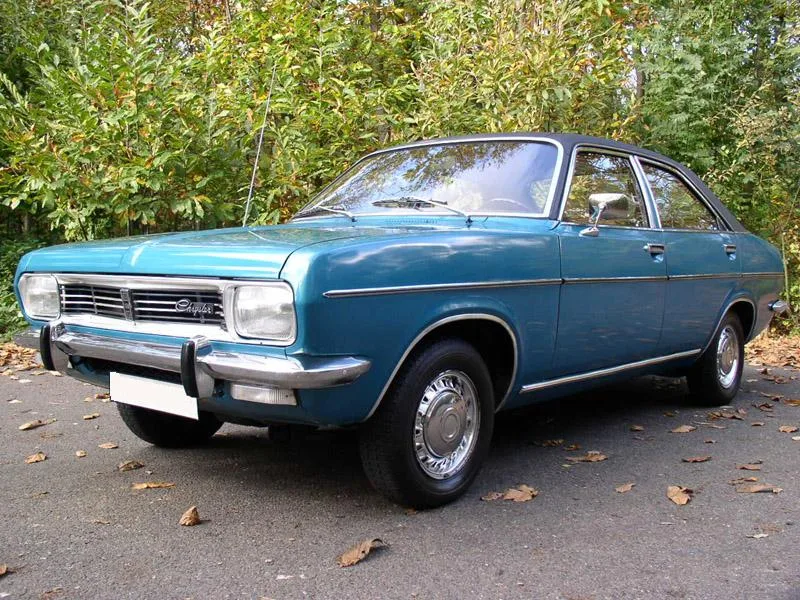
A French-built executive with an American look, finishing behind Britain's best-selling family car in a 1971 road test.
How did the two cars come about?
The Chrysler 180 began as two separate programmes. In 1966 Rootes Group started a large car, known as the C Car, under Roy Axe, while Simca worked on Projet 929 in France. Chrysler called for both proposals in early 1969, and then trimmed the programme down to a single version built at Simca's Poissy factory.
The name combined two worlds. Rootes brought British work and Simca brought French design, and the new large car was the first to unify the two sides of the Channel under one common brand.
The C Car had been planned under three brands. The base version was to be a Hillman, a 2.0-litre would be a Sunbeam 2000, and the top model a Humber Hawk. A V6 engine of 2.0 and 2.5 litres was developed for it, though that engine was scrapped when the programme moved to Simca in 1970.
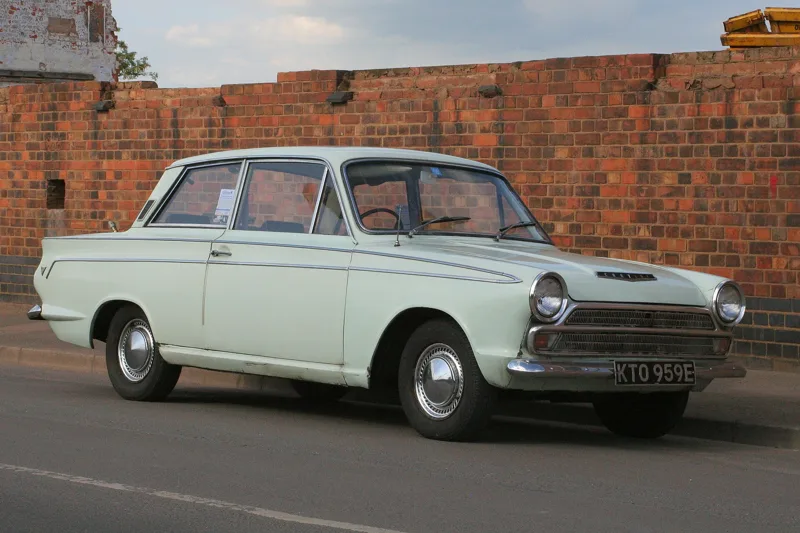
The Cortina, by contrast, began inside Ford of Britain at Dagenham. Its project name was Archbishop, and its chief designer was Roy Brown Jr., who had worked on the Edsel. The car was launched on 20 September 1962 as a family car aimed at buyers of the Morris Oxford Farina and Vauxhall Victor.
The Cortina's name came from Cortina d'Ampezzo, the Italian ski resort that hosted the 1956 Winter Olympics, and Ford promoted the car with a bobsled stunt called Cortina Auto-Bobbing. The Cortina was rear-wheel drive by design, even though Ford of Germany's similar Taunus P4 used front-wheel drive. Ford's choice gave the car a traditional layout that its British buyers would know, and the car was initially named the Consul Cortina before the simpler name took over.
What engines did the two cars use?
The Chrysler's engines were named after their size. The 160 had a 1,632 cc unit, while the 180 came with 1,812 cc. The 160 produced 80 PS (59 kW), and the 160 GT and 180 produced 97 PS (71 kW). A 2.0-litre model with 1,981 cc joined the range in 1973, and it could be ordered with Chrysler's TorqueFlite automatic.
The Cortina's first engines were 1,200 cc and, from early 1963, 1,500 cc four-cylinder units with an all-synchromesh gearbox. The 1,500 cc Cortina GT was tuned to a claimed 78 bhp (58 kW; 79 PS), against 60 bhp (45 kW; 61 PS) for the standard 1500 Super. The engine family became known as the pre-crossflow design.
Later Cortinas used crossflow engines. The Mark II from 1966 had a five-bearing 1,300 cc unit, and a crossflow 1,600 cc replaced the 1,500 cc in 1967. The Cortina Lotus had its own unique twin-cam engine in the first generation and a different one later.
The Chrysler's engine range was narrower than the Cortina's at launch, and the Rover SD1 rival in Britain offered six- and eight-cylinder units that the 180 could not match. That gap was one of the reasons the 180 struggled to stand out in the UK.
How did the two cars perform on the road?
The Chrysler 180 was tested by the British magazine Motor in April 1971, a few months after its UK launch. It reached a top speed of 101.0 mph (162.5 km/h) and took 12.4 seconds to go from 0 to 60 mph (97 km/h). Its overall fuel consumption was 21.7 miles per imperial gallon (13.0 L/100 km; 18.1 mpg-US). The two fuel figures differ because the US gallon is smaller than the imperial one, and the material gives no fuel comparison for the Cortina.
The Motor test placed the 180 third of five, behind the Cortina Mk III 2000 GXL and the Vauxhall VX 4/90. The magazine's overall verdict was positive, describing the car as a pleasing one that only just fell short of being a luxury sporting saloon.
The Cortina's performance figures are not given in the material available for this comparison, so the road test is the only direct performance record in the table. That makes the Chrysler's figures a sound baseline but leaves the Cortina's side open.
The road test also shows how the market rated the two. A car that finished behind the Cortina in a test of five competitors had a clear disadvantage in the eyes of the reviewers, even if its overall tone was warmer than many would have expected.
How did the two cars sell?
The Chrysler 180 found its best market in Spain, after production moved there from Poissy. Its later history under the Talbot name shows how far its position in Europe had weakened. In France the Chrysler sold so poorly that the old Simca 1501 was offered again for 1974. In the UK, sales had reached a rate of about 2,000 a year by 1976, which was below the company's expectations, though still above the figure in France.
The Cortina's British record is stronger. It was Britain's most popular new car in 1967, and it became the country's best-selling car across the 1970s. Ford was also working to unify its European operations, and the Cortina shared much of its engineering with the German Taunus.
In the United States the Cortina Mark II sold 16,193 cars in 1967, followed by 22,983 in 1968 and 21,496 in 1969. Sales fell to 10,216 in 1970, and Ford then dropped the model for the American-built Pinto. The material available gives no US sales figure for the Chrysler 180, so no comparison is possible there.
Which buyer suits each car?
On the facts given, the Chrysler 180 suits a buyer who wants an executive car with an American-inspired look, a choice of 1.8 and 2.0 litre engines and, from 1973, an automatic option. The Cortina suits a buyer who wants a mid-sized family car with a long history, a broad range of trims and bodies and a strong place in the British market.
A buyer who wanted a car with a distinct character and a Franco-American pedigree would look at the Chrysler. Its styling, with twin headlamps and a light bar in early designs, and its TorqueFlite option made it different from the usual choice.
A buyer who wanted reassurance and a wide choice of engines and bodies would look at the Cortina. Its estate, saloon and GT versions, and the later Lotus and 1600E models, gave buyers a wider set of options than the Chrysler offered.
For a British buyer in 1971 the choice was therefore between a newer, less familiar car and an established best-seller. Neither car is shown to be better across the board. The Cortina has the stronger sales record and the broader range, while the Chrysler offered a different style and an automatic-equipped 2.0 litre. The better choice depends on whether the buyer values familiarity and choice or a less common alternative.
Specifications at a glance
| Feature | Chrysler 180 | Ford Cortina |
|---|---|---|
| Production | 1970 to 1975 in Poissy, France; later Spain | 1962 to 1982, five generations |
| Launch engines | 1,632 cc (160) and 1,812 cc (180) | 1,200 cc and 1,500 cc four-cylinder |
| Top engine | 1,981 cc 2 litre with TorqueFlite option | Crossflow 1,600 cc; Cortina GT 78 bhp |
| Power | 80 PS (59 kW) for the 160; 97 PS (71 kW) for the 180 | No figure given |
| Top speed | 101.0 mph (162.5 km/h), 1971 Motor test | No figure given |
| 0-60 mph | 12.4 seconds, 1971 Motor test | No figure given |
| Fuel economy | 21.7 mpg imperial (18.1 mpg US), 1971 Motor test | No figure given |
| Road test placing | Third of five | Ahead of the 180 in the same test |
| Sales | About 2,000 a year in the UK by 1976 | Britain's best-selling car in the 1970s |
| US sales | Not offered | 16,193 Mark II cars in 1967 |