A 1932 Fiat with a 995 cc side-valve engine, Spider and Coupe variants, licence builds across Europe and a famously disputed name.
The Fiat 508 Balilla was a four-seat compact from 1932 with a 995 cc side-valve engine, and its body styles ranged from saloons to the Spider Sport. Licensed plants in Poland, Germany, France and Czechoslovakia also built it during the decade, adding to its reach.
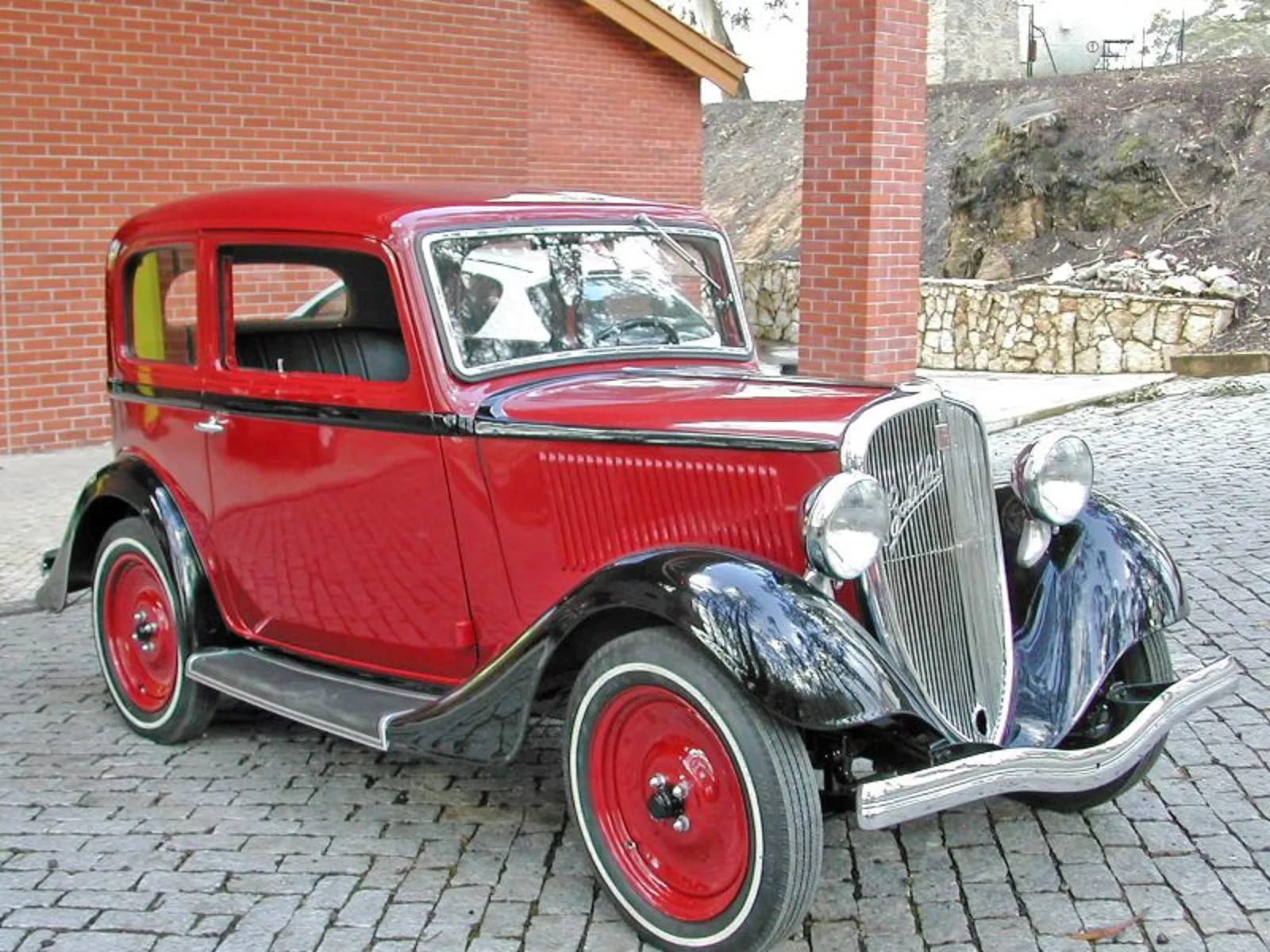
The Fiat 508 Balilla was a compact car that Fiat designed and built from 1932 to 1937. It replaced the Fiat 509, seated four, and came in a remarkable range of bodies, from saloons to sporting two-seaters, while its small side-valve engine kept running costs low.
When was the 508 Balilla launched and what did it replace?
The 508 was unveiled on 12 April 1932 at the Milan trade fair site, as the successor to the Fiat 509, whose production had ended in 1929. Nebbia, Fessia and Tranquillo Zerbi were among the engineers who worked on it, all counted among Italy's best at the time.
Their aim was to give a cheap car some of the refinement usually found in expensive ones. Dante Giacosa is credited with the design of the popular car that was launched at the 1932 Milan show, which sold at a price of 10,800 lire.
The first version had a 995 cc four-cylinder side-valve petrol engine, which produced 20 hp (15 kW) at 3500 rpm. It used a three-speed gearbox without synchromesh on any ratio, with drum brakes on all four wheels, and its top speed was about 80 km/h (50 mph).
A compact Fiat with a disputed name, the Balilla was built in several countries and even found a place in a comic strip.
What was the Balilla name about?
The Balilla name honoured Giovanni Battista Perasso, a Genoese youth who in 1746 threw a stone at an Austrian officer during an occupation, and the action sparked a revolt against the Austrians. Perasso was celebrated across northern Italy for the next two centuries, and his nickname became the car's name.
Plenty of readers assumed a link to Fascism, yet Fiat maintained that the car honoured the Genoese hero rather than the Fascist youth group. The provenance of the name was older than the movement, and the story of the boy had gained prominence in the early twentieth century.
The name had been used before the car. A class of light Regia Marina submarines carried it, as did a pony tractor from Milan firm Motomeccanica, and Fiat itself had used it for the Fiat-Ansaldo A1 biplane of the First World War.
How did the 508A and 508B differ?
At the end of 1933 the engine's power rose to 24 hp (18 kW) at 3500 rpm, and the top speed increased to 85 km/h (53 mph). The transmission was upgraded to four speeds at the same time, which gave the car a more relaxed cruise on longer journeys.
For 1934 the saloon took on a more aerodynamic shape, and the original 1932 model became known retrospectively as the 508A. The 508B used two-door and four-door berlina bodies, and the two-door was removed from the Italian range in June 1934 while the four-door received a modified grille.
The 1937 508C brought more wholesale styling changes, with a sharper windscreen and a fresh look that hinted at the direction of the family. By then the original Balilla had been in production for five seasons, and its engineering had been refined without a wholesale change of concept.
What body styles did the 508 come in?
The 508 came as a two-door berlina, a four-door saloon, a two-seat Spider, a four-door Torpedo, a Spider Sport and a two-seat Coupe. The same chassis also served as a commercial vehicle, with panel van and flat-bed truck bodies.
The 1932 two-door berlina seated four, with front seats that slid forwards and backrests that tilted to allow access to the rear. The windows were wound down by a crank on each door, and the windscreen could be hinged open, while two wipers were driven by a single electric motor.
The Spider was a two-seat cabriolet with leather seats and a folding windscreen. Its fabric hood stowed in a fitted bag, and the driver sat slightly rearward of the passenger, leaving the pair staggered.
The Torpedo had four seats and four doors, and it was offered only in the Lusso trim with coloured leather and chrome-plated pillars and hinges. A Torpedo Coloniale variant was built for the Italian military in Tripolitania, with wider tyres and a sand-coloured finish. The 1934 move to four speeds left the Torpedo's bodywork unchanged.
The Spider Sport had a lower, sleeker body with a distinctive tail treatment that earned the nickname insect tail. Ghia designed that tail in 1933, and early cars used a special carburettor and a compression ratio of 7:1 to produce 30 hp (22 kW) at 4000 rpm.
The Coupe of 1935, sometimes called the Berlinetta Mille Miglia, shared its mechanics with the Spider Sport, including the more powerful 108CS engine. Its two-seat body was built for competition in the cold conditions of northern Italy during the Mille Miglia.
How fast was the Spider Sport in its later form?
The Spider Sport's top speed reached 110 km/h (69 mph) after a change of final drive ratio. In 1934 it moved to four speeds and overhead valves, which pushed the output to 36 hp (26 kW) at a time when other 508 variants still used side valves.
Small-run enhanced versions were built, including the 508S, which was known as the Fiat 508 Coppa d'Oro. Collectors still prize that name, and the sporting versions advertised their intent with an even more steeply tapered tail.
Fiat assembled the Spider Sport in Italy and also scheduled it at its affiliates in Germany, France and Czechoslovakia. That spread the sporting body style across the continent, so its reputation reached buyers well beyond the Turin plant.
The Coupe was intended for the Mille Miglia, which was run in late winter. It was warmer than the Spider Sport in cold weather, but also heavier, and competition success proved elusive despite its aerodynamic intent.
How was the 508 built under licence in Poland?
Centralne Warsztaty Samochodowe in Warsaw assembled the car under an agreement signed on 21 September 1932. The Polish-built 508 was the most popular passenger car in the country for a spell in the 1930s, a notable result for a foreign-designed model.
The Polish version was branded Polski-Fiat 508 and priced at 5,400 zloty. The roads in Poland were poor, so the chassis and axles were strengthened and the suspension was modified to cope with the harsh winters and rough surfaces.
Full-scale production began in 1935, and the upgraded car was known as the 508 II. Its 20 hp engine came from the same 995 cc unit as the Italian car, and output ran to several thousand before the outbreak of war halted production.
What happened to the 508 in Germany?
NSU had been a motorcycle maker that tried to enter car production, and after the economic downturn its bankers pushed it to sell its plant. Fiat bought the nearly new purpose-built factory near Heilbronn in 1929 for one million marks, and the 508 became one of the first two models built there.
The factory produced the car as the Fiat-NSU from 1934 to 1938 and as the NSU-Fiat from 1938 to 1941. Roughly 11,000 Fiat 508s were built in Germany over that period, and about 6,000 of them were local versions of the 508A and 508B built between 1934 and 1938. Production stopped with the war, and precise statistics for the period do not survive.
The entitlement to the NSU badge on German-built cars later became the subject of a noisy legal fight, which reflected how much value the two companies placed on the badge.
How was the 508 assembled in France?
In France the car was built from 1932 by SAFAF at Suresnes, and it was sold as the Fiat 6CV, a name that referred to the tax band rather than the engine. The French cars came as a berline, a coach, a coupe and a roadster, all with the 995 cc side-valve engine.
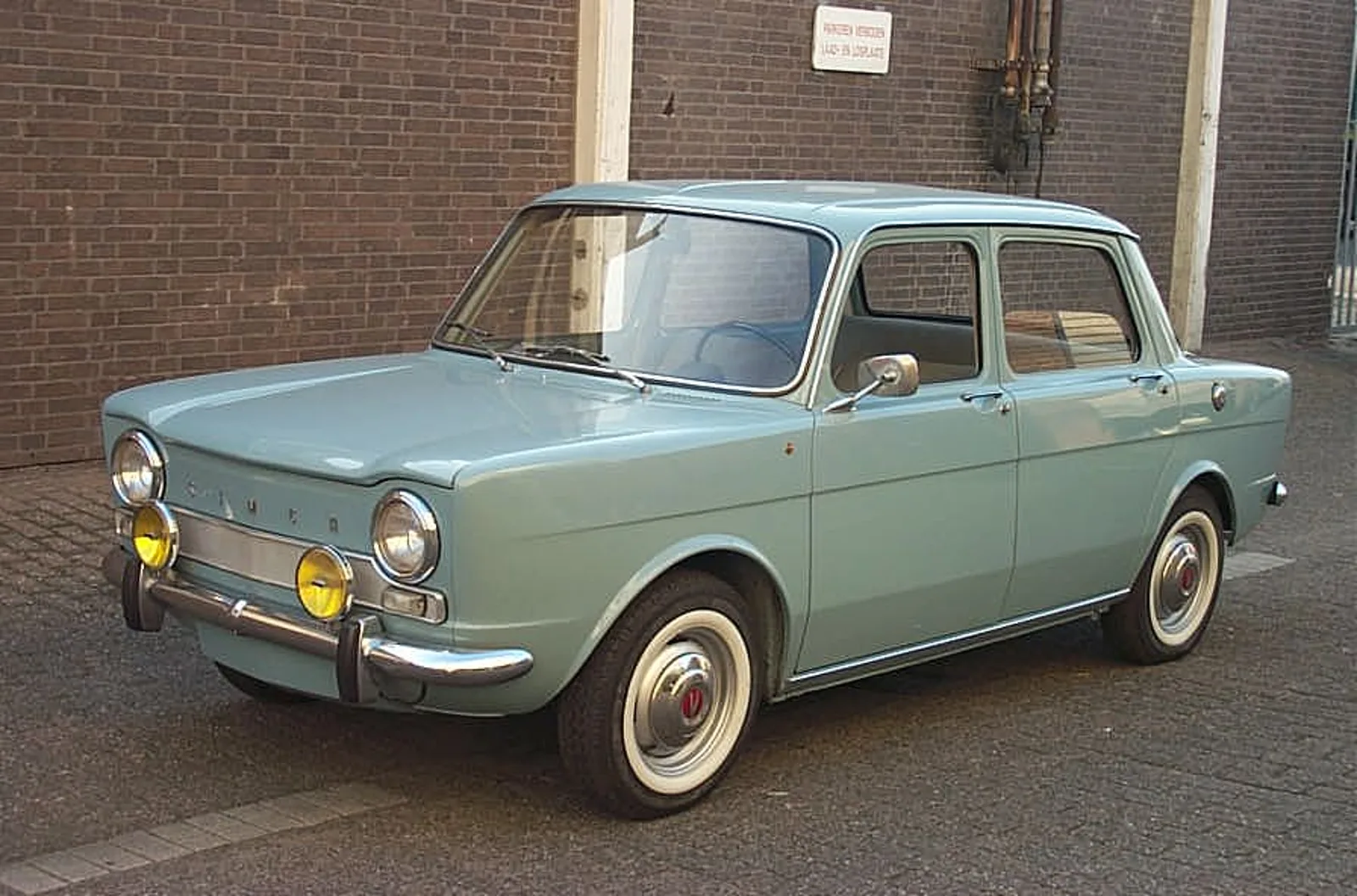
In November 1934 Fiat took over the plant of the defunct Donnet company at Nanterre, and it created Simca to run the operation. The French-built car was rebranded as the Simca-Fiat 6CV, and the name Simca was gradually introduced to French customers.
By 1936 the company's new models were branded simply as Simcas, but the Simca-Fiat 6CV kept the Balilla engine and mechanical parts. Simca's boss, Henri Pigozzi, understood the value of marketing, so the Fiat link was played down over time. The car made its final Motor Show appearance in October 1937, and in its last year it was rebaptised the Comete.
Before the Simca 8 took over in France, 26,472 cars had left the Nanterre and Suresnes lines under the Simca and SAFAF names. The eight body shapes listed for 1937 showed how broad the French range had become.
How did the Czechoslovak Walter Junior compare?
Walter a.s. built the car at Prague-Jinonice, calling the version the Walter Junior. Production began in autumn 1932, and by 1936 little over a thousand vehicles had been built, all with the three-speed gearbox.
The two-door saloon was the entry model, with prices starting at 27,500 koruna. The factory's output was modest by comparison with the Italian and German lines, but the Walter Junior gave Czech motorists a compact Fiat-engineered alternative, and the car remained the Balilla in all but name.
What was the Balilla's place in popular culture?
The Belgian cartoonist Andre Franquin gave the car to his hero Gaston Lagaffe, who used it as his daily transport. Franquin's Balilla was customised with a checkered flag stripe and was a wheezy, misfiring wreck that regularly broke down with disastrous results.
The Balilla was one of the first attempts at mass motorisation in Europe, earlier than the Volkswagen Beetle or the Citroen 2CV. Its buyers were mostly from the lower middle and middle classes, and it was a desirable but often stolen item in 1930s Italy.
A burlesque ballad called La Balilla was written around the time of the car's launch, and it describes a small trader who buys a top-of-the-range Balilla with eel-skin upholstery. Relatives and neighbours then eat the car piece by piece, and dialect versions followed from Lombardy to Sicily and Naples.
What are the Fiat 508 Balilla specifications?
| Specification | Detail |
|---|---|
| Type | Compact front-engined, rear-wheel-drive car |
| Production | 1932 to 1937; about 113,000 built |
| Engine | 995 cc side-valve four-cylinder petrol |
| Power | 20 hp (15 kW) at 3500 rpm; 24 hp (18 kW) from late 1933 |
| Gearbox | Three-speed manual, without synchromesh; four speeds from 1934 |
| Top speed | About 80 km/h (50 mph); 85 km/h (53 mph) after 1933 |
| Brakes | Drums on all four wheels |
| Spider Sport | 30 hp (22 kW) at 4000 rpm; 110 km/h (69 mph); 36 hp (26 kW) from 1934 |
| Launch price | 10,800 lire |
| Commercial payload | 350 kg load capacity |
| Simca-Fiat 6CV | 26,472 built in France by Simca or SAFAF |
| Walter Junior | Little over a thousand built in Czechoslovakia by 1936 |