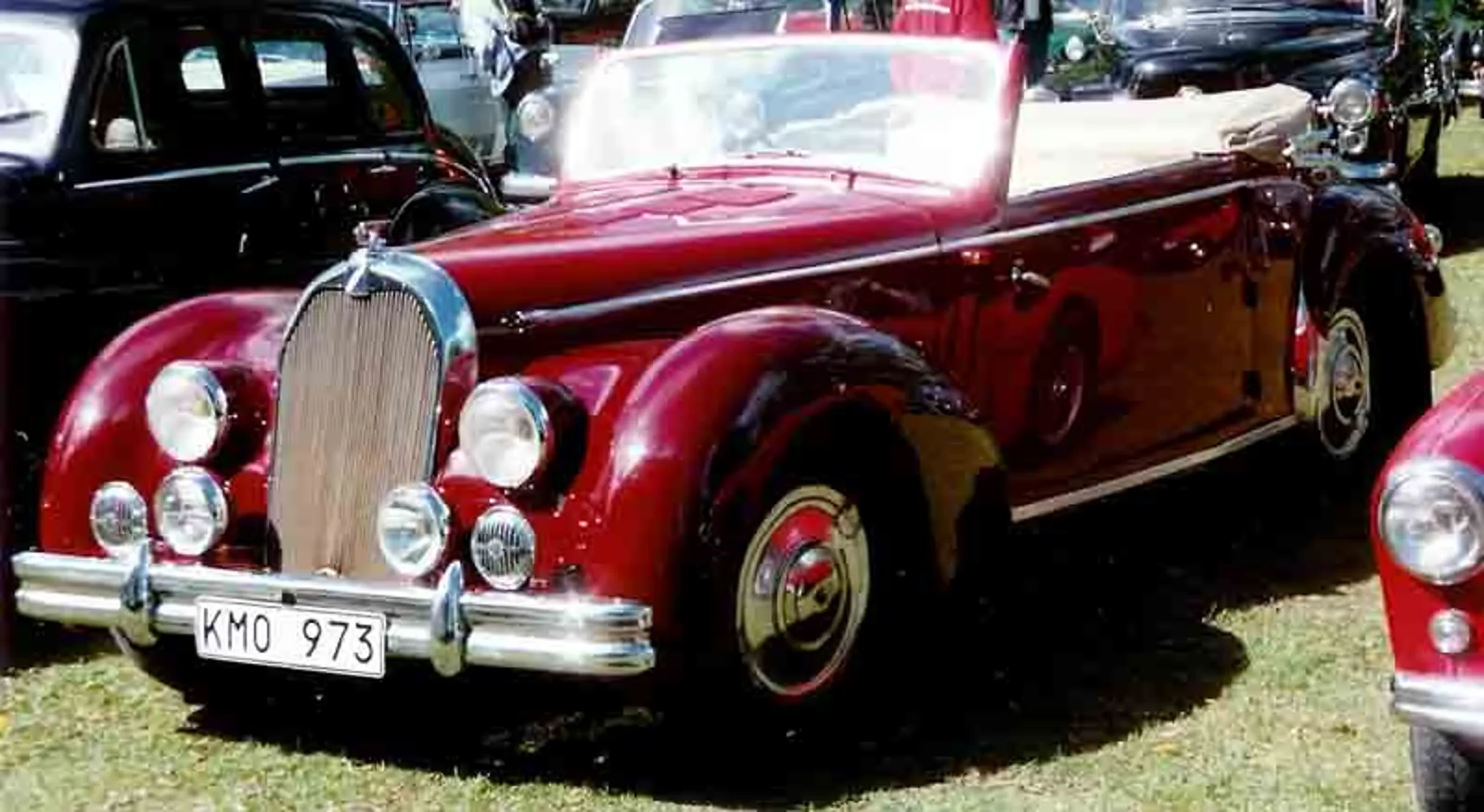
From the Darracq works at Suresnes to the T26 Record and Grand Sport, the Figoni bodies that now sell for millions and the 1959 sale to Simca.
Talbot-Lago was a French maker at Suresnes, run by the Italian engineer Antonio Lago from 1936. It built sporting and luxury cars with coachbuilt bodies until financial trouble led Lago to sell the business to Simca in 1959.
Talbot-Lago was a French car maker based at Suresnes, just outside Paris, and owned and run by the Italian engineer Antonio Lago. Lago gained the Talbot name in 1936 and built sporting and touring cars with bodies from firms such as Figoni et Falaschi. Financial trouble eventually forced him to sell the business to Simca in 1959, and the company's cars now command some of the highest prices in classic car auctions.
How did the Suresnes factory begin?
The Suresnes works was built by Alexandre Darracq for a car business he started in 1896 under the name A. Darracq and Cie. The business was very profitable, and Darracq became famous for his racing successes as well as for his ordinary cars. He sold his remaining share in the company in 1912.
New owners renamed the business Automobiles Talbot in 1922. Its production cars carried the Talbot badge, while its competition cars continued to use the Darracq name as Talbot-Darracq. British sales of the French cars were badged Darracq-Talbot or Talbot-Darracq, because British Talbot cars already existed.
A Darracq works turned sporting and luxury marque, carried by Antonio Lago through the postwar years and sold to Simca in 1959.
Who was Antonio Lago?
Antonio Lago was an Italo-British businessman who became managing director of Automobiles Talbot in 1932, in the hope of reviving a firm hit by the Great Depression. The backers failed to keep the firm out of receivership past 1934. Its receiver did not shut the works at once, and in 1936 Lago completed a management buy-out, acquiring the Talbot name.
From then on the company was run under Lago's control, and it became known as Talbot-Lago. Lago remained in charge until he sold the business to Simca in 1959.
What cars did Lago introduce from 1936?
From 1936 the existing range was gradually replaced by cars designed by Walter Becchia, which used transverse leaf-sprung independent suspension. The four-cylinder 2323 cc Talbot T4 Minor appeared unexpectedly at the 1937 Paris show, and the six-cylinder 2,696 cc Cadette-15 followed, along with the Major and the long-wheelbase Master.
The sporting range of the later 1930s started with the Baby-15, which used the Cadette-15 engine on a shorter, lighter chassis. The Baby was offered with 2,996 cc or 3,996 cc engines, rated 17 or 23 CV. Lago-Speciale and Lago-SS versions carried two and three carburettors respectively, for extra power and performance.
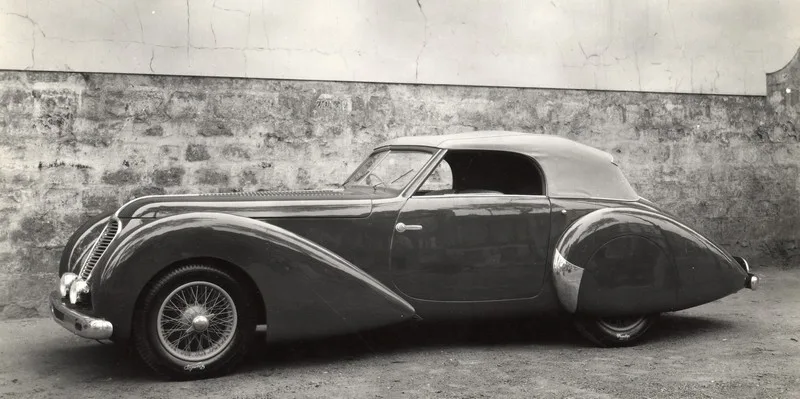
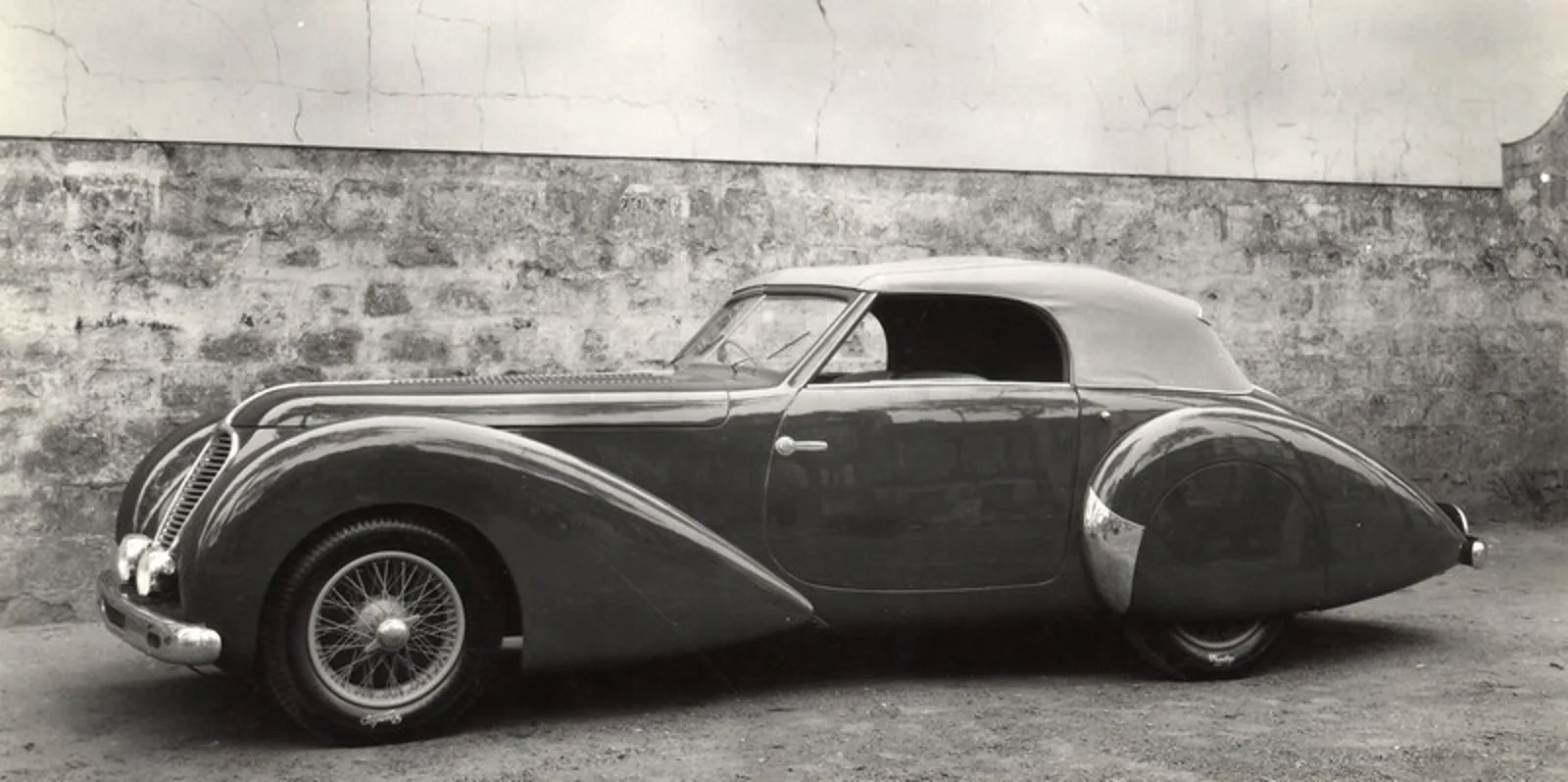
Lago also developed the six-cylinder engine into a 4-litre unit, and the sporting six-cylinder models built a strong racing record. Bodies on the T150 coupe were made by Figoni et Falaschi or by Saoutchik, and the Lago-SS was most often fitted with a Figoni body of particularly aerodynamic form.
How many chassis did the 1935 to 1940 range use?
The range looked bewildering, but it used only four standard chassis lengths. The short chassis had a 2,950 mm (116.1 in) wheelbase and carried the Minor, Junior 11, Baby-15, Baby and T150 models, together with the Baby 4-litre and the Lago Speciale. An extra short 2,650 mm (104.3 in) chassis carried the Lago SS.
The normal chassis measured 3,200 mm (126.0 in) between axles and served the Cadette-15 and the Major in 3-litre and 4-litre forms. The long seven-seater chassis, at 3,450 mm (135.8 in), was used for the 3-litre and 4-litre Master.
How did the wartime years shape Talbot's engines?
During the early war years Walter Becchia left Talbot to work for Citroen. In 1942 Lago was joined by the engineer Carlo Machetti, and together they developed a 4483 cc six-cylinder unit with twin camshafts. That engine lay at the heart of the Talbot T26 that arrived in 1946.
What did the postwar Talbots look like?
After the war the company was known both for high-performance racing cars and for large luxury cars, and it shared many chassis and engine parts between the two. Those years brought economic stagnation and tight money, and the firm struggled to find customers.
In 1946 the company began building a new engine with twin in-block camshafts and a new cylinder head. The design was led by Carlo Marchetti, and it powered the Talbot Lago Record and the Talbot Grand Sport 26CV, which were priced against cars from Delahaye, Delage, Hotchkiss and Salmson.
What was the Talbot Lago Record T26?
The Record was a large car rated at 26 CV for tax, with a claimed output of 170 hp. It drove the rear wheels through a four-speed manual gearbox, and a Wilson pre-selector was available at extra cost. Its claimed top speed was 170 km/h (105 mph). It was usually sold as a four-door saloon, though a two-door cabriolet was offered too, and some coachbuilt specials were made by traditional firms such as Graber.
What was the T26 Grand Sport?
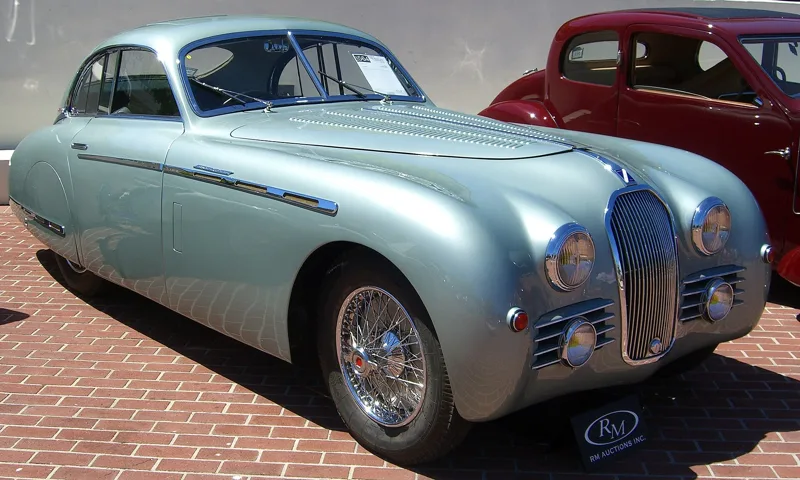
The T26 Grand Sport was first shown in October 1947 on a shortened chassis. Only 12 were built in 1948, its first full year, and its engine was tuned from the Record's 170 hp to 190 bhp (140 kW), later 195 bhp (145 kW). Depending on the body, the claimed maximum was about 200 km/h (124 mph).
The car drew directly on Talbot's T26C Grand Prix racer. It had a 4.5-litre inline-six with an aluminium cylinder head, and it came in wheelbases of 104 and 110 inches (2,800 mm). Unlike most Talbots of the period, it was supplied as a bare chassis, so customers chose bodywork from a specialist coachbuilder. With Louis Rosier and his son at the wheel, one of these cars won the 1950 Le Mans 24 Hours.
What was the Talbot Lago Baby?
The Baby, built from 1948 to 1951, revived a prewar Talbot name and was the third model the company presented in the 1940s. It had a 2690 cc four-cylinder engine with twin overhead camshafts, rated 15 CV, which kept it under the punitive French tax on large cars. Power was 110 PS (81 kW) at first and rose to 120 PS (88 kW) in 1949.
Against the Record's 3130 mm wheelbase, the Baby measured 2,950 mm, so its body was shorter too. Its suspension was simpler, and a Wilson pre-selector could be ordered. A six-cylinder Baby/6 Luxe later used the Record's larger engine.
Did Talbot build cars for heads of state?
Yes. Three special seven-seat cars were made for heads of state: one for France's president, one for Tunisia's, and one for a Saudi royal household.
Did Talbot-Lago race in Formula One?
The T26C was an open-wheel racer that Talbot-Lago designed for the 1948 Formula One rules. It was the company's Grand Prix machine, and its engineering fed the Grand Sport.
How did the postwar bodies change?
In 1951, as rumours of financial trouble grew, a new Ponton-format body appeared on the Baby and Record. Its wheelbases were carried over, and it had a two-piece windscreen where its predecessor had one flat screen. A three-piece panoramic rear window came in the first face-lift for the 1952 Paris Motor Show.
The new body was about 100 kg heavier than the old one, and the four-cylinder's performance figures did not change. The Baby/6 Luxe carried the six-cylinder Record engine and had a slightly longer wheelbase and overall length to suit it.
What was the last Talbot-Lago engine?
At the 1954 Paris motor show Talbot-Lago presented its last new engine, the T14 LS. It was a four-cylinder of 2,491 cc with twin lateral camshafts and five main bearings, producing 120 PS (88 kW). The car it was meant for, the Talbot-Lago 2500 Coupe T14 LS, was not presented until May 1955.
The first coupes had all-aluminium bodies and later cars used more steel. Only 54 were built, and they sold poorly, because the bodies could not quite hide their prewar underpinnings and the engine was rough and short-lived.
Why did Talbot-Lago use a BMW engine?
Talbot-Lago lacked the resources to improve the T14 LS, so for 1957 it bought in a V8 from BMW, a 2580 cc unit with its bore reduced to 72.5 mm to give 2476 cc. That kept the car within the 14 CV tax band. The company renamed it the Talbot Lago America and moved the driving position to the left, to match other French makers.
Demand stayed weak, and only about a dozen BMW-engined Lago Americas were made. In the early summer of 1958 Lago accepted a Simca proposal from Henri Pigozzi for the Talbot brand, and the sale went ahead in 1959.
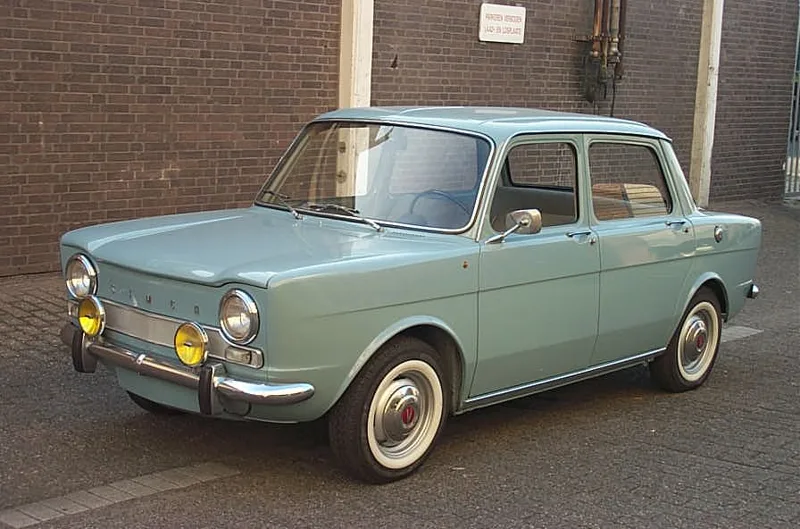
The last few Americas awaiting engines were fitted with Simca's own 2351 cc V8. It was a Ford-derived unit that had first powered the Vedette in France, and it produced only 95 bhp (71 kW), compared with the BMW cars' 138 bhp (103 kW). The final car was rated at 165 km/h (103 mph), down from 200 km/h (124 mph).
Why did Talbot-Lago's finances collapse?
Sales were hard to keep up after the war. The Suresnes plant made 155 cars in 1947, rising by 23 in 1948. Output reached 433 cars in 1950 but then fell to 80 in 1951 and 34 in 1952. In 1953 about 13 Record and 4 Baby models were made, and no more than 54 T14 LS cars were built in 1955 and 1956.
Other luxury makers suffered too. Delage, Delahaye, Hotchkiss and Bugatti left the car business, while Panhard turned to small economical cars. Wealthy buyers were few, and the post-war tax regime heavily penalised cars with engines above two litres. Government support went to five automakers under the Pons Plan, and the other luxury firms, Talbot among them, lost out.
Lago sought court protection under the French depot de bilan procedure. On 6 March 1951 the court granted a debt moratorium that allowed a limited restart at Suresnes. The affair damaged the company's reputation and made credit harder to obtain.
How did Simca take over Talbot?
The business staggered on until 1959 but lacked the money to develop its last model. To avoid bankruptcy Lago put the firm up for sale in 1958, and it went to Henri Pigozzi, the Simca president and fellow Italian expatriate, in 1959. Commentators suggest Pigozzi got a bargain: he gained a Suresnes site and buildings valued far above the price, plus a brand name that still meant something to older buyers.
Antonio Lago died in 1960.
What are Talbot-Lagos worth today?
Talbot-Lagos are now among the top prizes at auction. A Figoni et Falaschi-bodied car owned by Brooks Stevens fetched US$3,535,000 at Pebble Beach on 18 August 2005. Another sold for US$3,905,000 at Palm Beach in January 2006, where it was voted Best in Show, and a third fetched US$4,620,000 at Pebble Beach in August 2010.
A Pourtout Aerocoupe-bodied T150 C SS, styled by Georges Paulin, made US$4,847,000 in 2008 at a Bonhams and Butterfields sale at Quail Lodge. Even factory-bodied cars are prized, and a factory-bodied 1939 T150 C SS sold for US$418,000 in 2013.
Key dates in the Talbot-Lago story
| Year | Event |
|---|---|
| 1896 | Alexandre Darracq starts A. Darracq and Cie |
| 1922 | Business renamed Automobiles Talbot |
| 1932 | Antonio Lago appointed managing director |
| 1936 | Lago completes a management buy-out from the receiver |
| 1937 | T4 Minor shown at the Paris Motor Show |
| 1946 | Talbot T26 family launched with the 4483 cc six |
| 1947 | Grand Sport first shown in October; 155 cars built at Suresnes |
| 1950 | Le Mans 24 Hours win for a Grand Sport driven by Rosier and his son |
| 1951 | Court-approved debt moratorium on 6 March |
| 1955 | Talbot-Lago 2500 Coupe T14 LS presented in May |
| 1957 | BMW V8 fitted to the Talbot Lago America |
| 1959 | Talbot brand passes to Simca |
| 1960 | Antonio Lago dies |