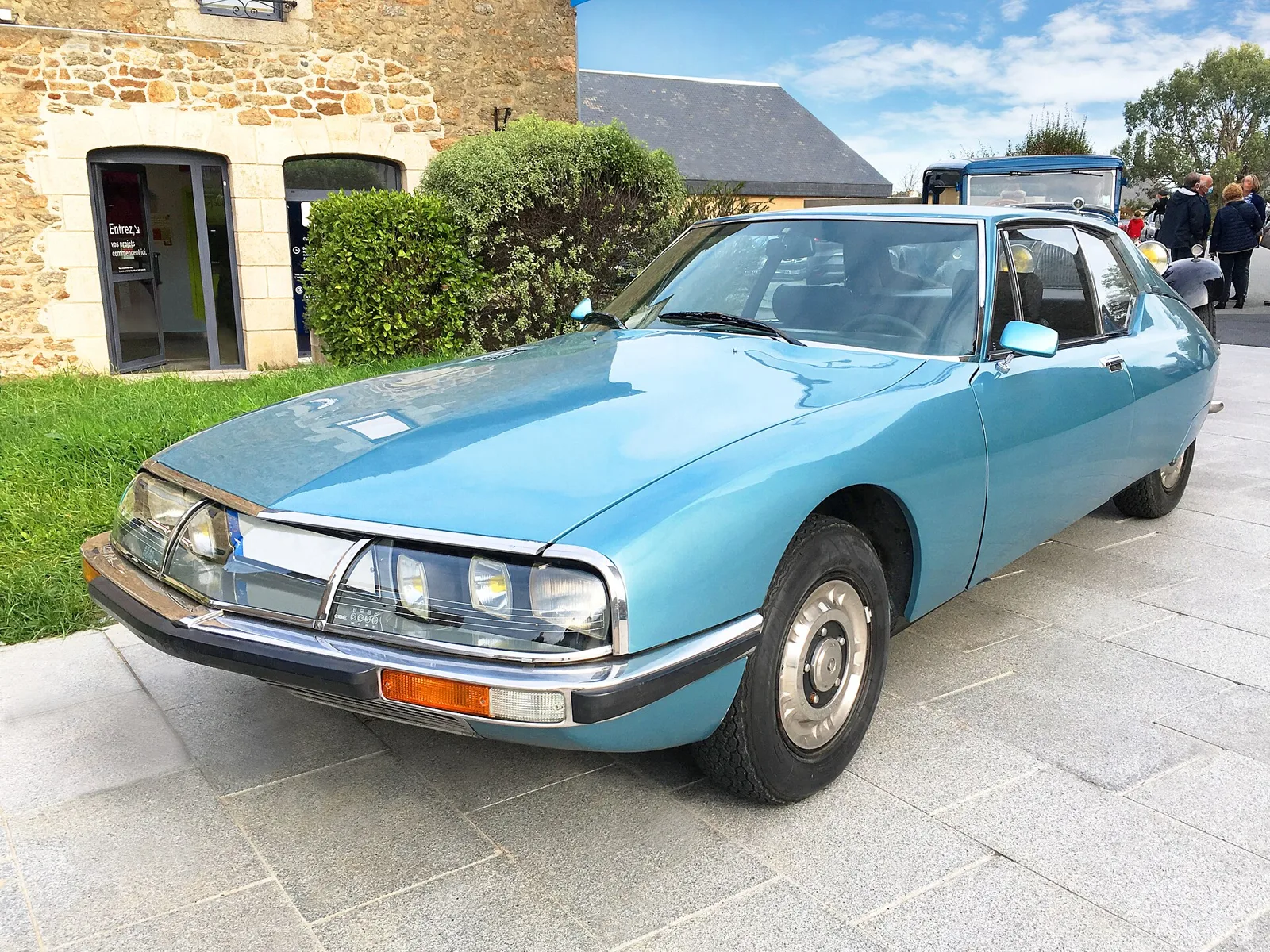
From Ford Vedette conversions to Raymond Loewy commissions and Dolomite racers, the Sens workshop of Pichon and Parat ran until it was struck off the register in 1983.
Pichon-Parat was a coachbuilder in Sens, Yonne, founded in 1952 by Bernard Pichon and Andre Parat. It converted established cars into cabriolets, coupes and estates, and built its own sporting models, including the Dolomite berlinette and Izoard 4CV. The company was struck off the French register in 1983.
Pichon-Parat was a French carrosserie based in Sens, in the Yonne department. From 1952 it built custom cabriolets, coupes, estate cars and shooting brakes on established models, and it also produced its own sporting models with original bodywork.
The firm was the work of two friends, Bernard Pichon and Andre Parat. Its output ranged from estate conversions for mainstream sedans to racing bodies for small specialist cars, and its later years saw the coachwork slow almost to a halt.
Who were Bernard Pichon and Andre Parat?
Bernard Pichon and Andre Parat were close friends from a young age in Sens. Pichon, born on 28 April 1923, drew cars while still at school and later trained as a lathe operator. Parat, born eleven days later, trained as a boilermaker and gained his welder's ticket.
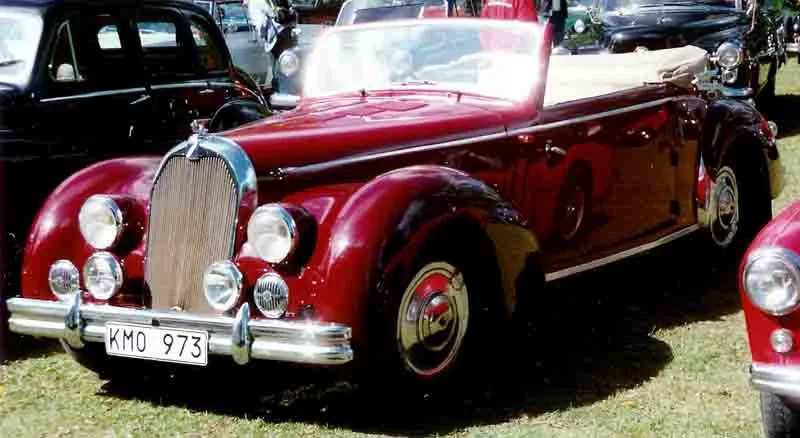
Pichon came from the wealthier family. He later ran a truck in transport work, then decided in 1950 to design cars full time. The two men began by converting large American cars into utility vehicles, and in 1949 they built a custom coupe version of the Ford Vedette sedan.
Two friends from Sens who converted popular French and American cars, then built racers of their own.
Where did the Sens workshop operate?
The partners formally set up their carrosserie in Sens in 1952. It started at 73 rue du General Leclerc before moving to 39 rue Mocquesouris. The later factory was a rustic cluster of sheds grouped around a courtyard, and chickens wandered there.
The company name was Pichon & Parat, but the hyphenated Pichon-Parat was used far more often, and some badges read Pichon Parat Sens. Trade talk also used the town itself, Sens or Senonais, just as the Citroen works was called Quai de Javel and the Panhard works Porte d'Ivry.
What did Raymond Loewy commission from the firm?
Raymond Loewy saw the firm's Renault-based cabriolet and Aronde coupe at the 1956 Paris show and asked Pichon to build a body to his exact design. The result was a two-seat coupe on a V8 BMW 507. Several later Loewy projects followed, including Cadillac, Jaguar and Studebaker work.
The BMW 507 was chassis 70.024, and its features anticipated Loewy's later Studebaker Avanti. The 1959 Cadillac Coupe de Ville, bought new, was shipped to Sens and finished in only a few weeks. Pichon and his team gave a weekend to Loewy at his home near Chevreuse, where he marked his changes on paper wrapped around the car.
The car went on display at the 1959 Paris Auto Show. Loewy drove it around Europe with his family before shipping it back to California, and he sold it in 1970.
Loewy then turned to four-door Studebaker designs. Designers John Ebstein and Bob Andrews came to France and produced two proposals in six weeks, a notchback and a fastback. Pichon-Parat built both prototypes on stock Studebaker chassis and running gear. The cars were rediscovered in 2010.
The firm also reworked at least two Jaguar E-Type coupes. The first, a 1966 4.2 Litre Series 1 with chassis 1E30635, became Loewy's personal car. Its nose was cut back by 25 cm (9.8 in) and its tail by 12 cm (4.7 in), and quad headlamps were added. A second E-Type was stretched at the front by 97 cm (38.2 in).
Which Panhard-based cars did the firm make?
Panhard was a major base for the firm. It made a fixed-head coupe version of the Dyna Junior from 1953, about 30 cars in all, and in the same period it released a coupe version of the Dyna Z sedan. Its Dyna Z estate conversion was first seen in 1956 and revised in 1957 and 1958.
The estate conversion's rear end and tailgate came from the Peugeot 403 Familiale. At the 1958 Paris Auto Show the firm showed a Dyna convertible called Bordeaux, with shrouded headlamps and a mesh grille. It was a joint venture with the Bordeaux coachbuilder Vivez, and ten copies were planned.
In 1960 the company showed a small cabriolet on a Panhard PL 17 base, using a shortened chassis shared with the Tigre Z Sports. It had no engine or electrics and sat unfinished at the factory for thirty years, until an enthusiast fitted a Panhard Tigre engine.
What was the Dolomite berlinette?
The Dolomite was a berlinette unveiled in 1954 as a follow-on to the Dyna Junior coupes, with a more streamlined body. The engine was a Panhard flat-twin, either 750 cc or 850 cc. About 60 were built from 1954 until 1956, and a cabriolet followed in 1956.
One car used a DB chassis. The others used Panhard Dyna X or Junior underpinnings, bought new or secondhand to suit the buyer.
Dolomites ran at the Bol d'Or in 1954 and at the Tour de Corse in both 1955 and 1956. They also took part in the Mille Miglia of 1956 and 1957, plus events at Mont Ventoux and Lyon-Charbonnieres, and some cars won their classes.
What were the Salmson 2300S cars?
Pichon-Parat built three cars on the Salmson 2300S in 1953 and 1954, though some histories list only two. The second and third were named 2300GS. The Salmson had a 2,328 cc aluminium DOHC straight-four rated at 110 hp (82.0 kW).
A Solex 35/40 twin-barrel carburettor fed the engine, and the gearbox could be a Cotal preselector or a ZF manual. Independent front suspension used wishbones and longitudinal torsion bars, while the rear kept a live axle on semi-elliptic springs.
The second car went on show at the 1954 Paris Motor Show with an aluminium berlinette body. At 1,000 kg it was 230 kg lighter than the original Salmson. Owner Rene Cotton raced it at Monte Carlo, the Coupe des Alpes, Liege-Rome-Liege and Lyon-Charbonnieres before the car was abandoned and scrapped.
The third car had its wheelbase trimmed to 2,350 mm (92.5 in), down from 2,680 mm (105.5 in). It was painted Ile de France blue, carried a Borgward four-speed gearbox, and was sold for 7500 New Francs. It was rediscovered in 1956 and vanished again by the end of the 1950s.
What were the Guepard barquettes?
The Guepard, or Cheetah, was a pair of Renault-powered specials commissioned in 1954 by Andre Delacourt's S.E.R. company. Pichon-Parat made the aluminium barquette bodies for the cars, which were built for Rene Paris and Paul Bobet and homologated as Guepards. Each used a Renault 4 CV engine block.
The motor was a Renault 4 CV Type 662-2 block, topped by an R1063 head with bigger valves and a Solex carburettor. A five-speed gearbox from Andre-Georges Claude carried the drive to the rear wheels.
Both entries ran at the 1954 race of the Bol d'Or, carrying numbers 76 and 77. Paris's car did not finish, while Bobet placed twenty-second among the twenty-six cars classified. Bobet later had his car rebodied by Marcel Riffard, with Heuliez building the shape, and it was renamed the Riffard-Renault in 1956.
The Delage D6 3 Litre and Talbot-Lago racers
The firm gave a Delage D6 3 Litre racer a new body in 1955. The supercharged 3.0-litre inline six had three Solex carburettors, and it made 142 bhp (105.9 kW), peaking at 5300 rpm. Its wheelbase was 106.3 in (2,700 mm), and only five cars were built.
The car with chassis 880004 was a new purchase for Henri Louveau in 1947. Its results from 1948 to 1950 included a second at Le Mans, a second at Spa's 24-hour race, and runs in Paris's 12-hour event. In 1953 Jacques Nolle had it rebodied as a long-nosed coupe with short, peaked tailfins.
Peter Mullin became the owner in 1995 and had the car restored to its 1947 racing form by Auto Classique Touraine in Tours.
Antonio Lago commissioned Pichon-Parat to build barquette bodies on two Talbot-Lago T14 LS chassis for Le Mans in 1956. Power came from a 2,494 cc Maserati inline six, with a bore and stroke of 84 mm x 75 mm. Neither car finished, and in 1957 one car did not start while the other retired with gearbox trouble.
The Talbot-Lago parts collection was later bought by George Grignard. In 1979 Dominique Dupont acquired it. He built a single Le Mans 2500 replica for his own use and sold five chassis for completion by others, and the cars became known as the Dupont Barquettes.
What was the Izoard 4CV?
The Pichon-Parat Izoard 4CV was a sports car unveiled in 1955. The name refers to the Col d'Izoard, a mountain pass in the Alps. Its body, drawn by Pichon, sat on the Renault 4CV platform. The first version was a two-door berlinette with gullwing doors and aluminium panels, and a cabriolet arrived in 1956.
It competed in a number of rallies, and it also took part in the 1956 Mille Miglia.
Which styling exercises did Pichon-Parat show?
Early in 1956 the firm made a styling study using a Lancia Aurelia B20 GT with a unibody structure. Its two-door berlinette, with a quad-headlamp nose, drew mixed reactions. The company also displayed a Simca Aronde coupe that year, with a panoramic windscreen and concave rear lines.
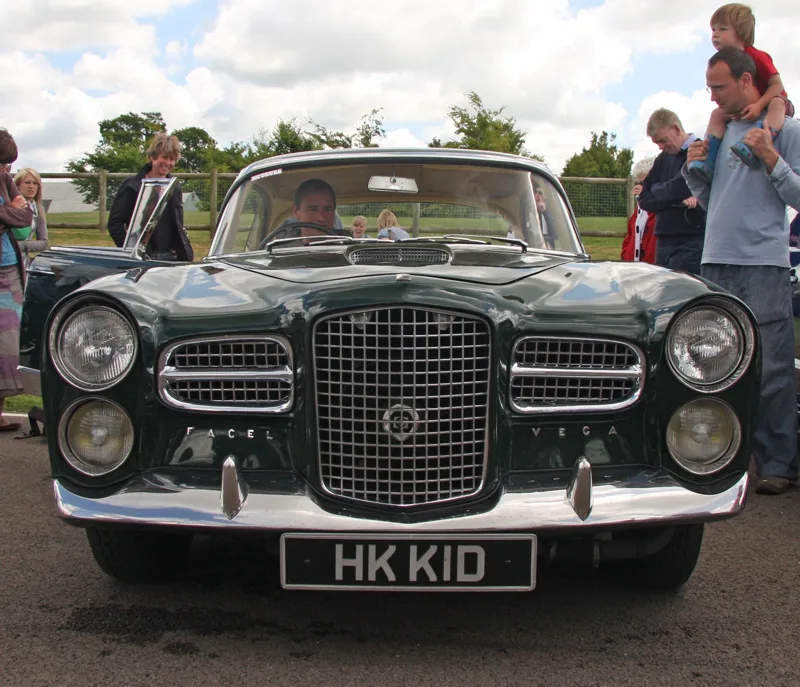
Simca gave the Aronde project no backing, and its later Plein Ciel model was built by Facel Metallon. The coupe reached the cover of l'Automobile in December 1956, and the show car is thought to have been lost in a crash.
What did Pichon-Parat change on the Citroen DS?
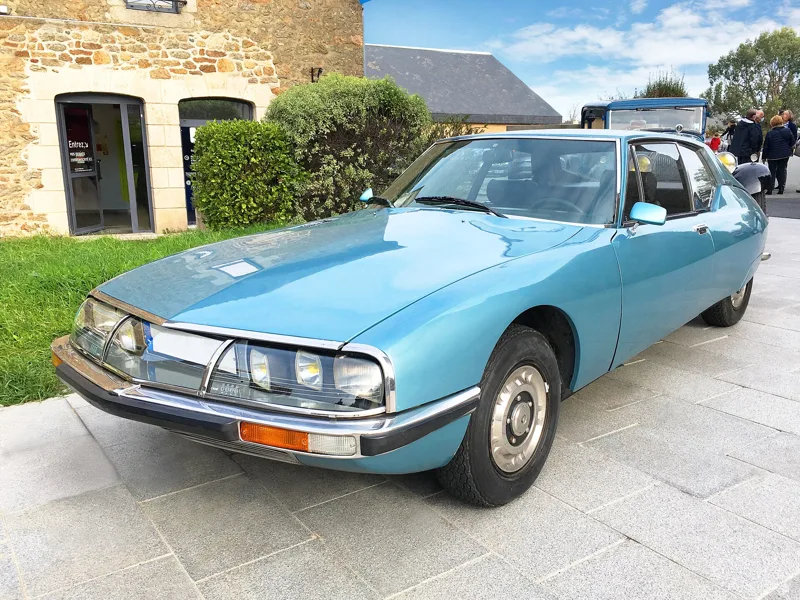
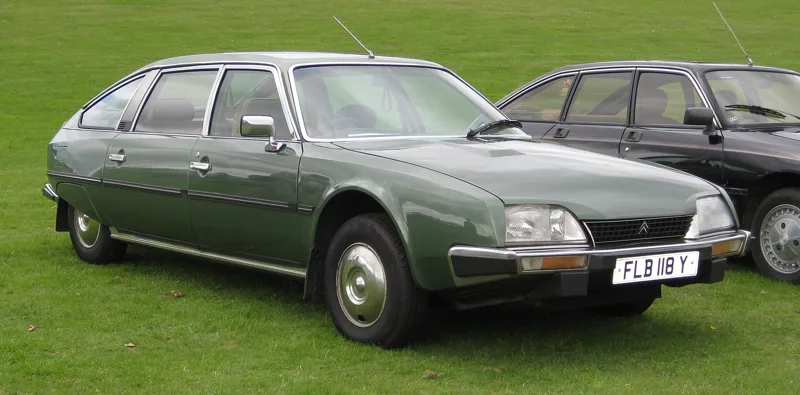
In late 1964 the firm presented a DS with a quad-headlamp conversion, three years before Citroen made the same change. New front wings took Cibie headlamps from the Panhard 24, and the job took one day per car. About 300 conversions were carried out.
The firm then used the new front end on a short-wheelbase DS/ID coupe, which it released in 1965. Sales were modest. Citroen's racing department also commissioned shortened two-door DS bodies from the firm, and a shortened ID with a Panhard flat-twin was considered, but the Panhard 24CT launch removed the market window for it.
Did Pichon-Parat build race cars for Matra and Ligier?
In 1966 Matra unveiled its first Group 6 car, the MS620, and Pichon-Parat supplied its berlinette bodywork. The engine was a 1.9 litre BRM V8, and its output of 245 hp (182.7 kW) arrived at 9,000 rpm. Bernard Boyer, a former Alpine engineer, drew the tubular frame.
Four cars were built, and they first appeared at the 1966 Le Mans test. The best result was a win at Magny-Cours, with a second place at the Coupe de Paris. The MS620 made its last appearance at the 1967 Le Mans test.
Ligier's first car, the JS1, was a two-seat mid-engined coupe styled by Pietro Frua and named to honour Jo Schlesser. Its follow-on, the JS2, used a Maserati DOHC V6 that was shared with the Citroen SM. Pichon-Parat reworked Frua's JS1 design, revising the nose, luggage area and taillamps, and adapted the body to the Maserati engine.
Karts and the Vespa 400 Esterel
Pichon had encountered kart racing during his time in the United States, and he brought the idea back to France. The first Pipat-kart appeared in 1957, built on a tubular steel chassis with Vespa wheels and a chainsaw engine. Soon the karts used two-stroke engines from tillers or motorcycles, and they sold across France.
The firm also built the Vespa 400 Esterel in 1959, a tiny beach car. Six or seven were reportedly built. It had a rear 400 cc two-stroke rated at 14 hp (10.4 kW), fully independent suspension, rattan or plastic upholstery and a removable canopy.
Why did Pichon-Parat stop building coachwork?
Coachbuilding slowed sharply after the mid-1960s, and it only came back in the late 1970s. Panhard encouraged a merger with Monopole Poissy, which never happened, and Parat turned down offers from Loewy and Enzo Ferrari to keep the business independent. Parat became a distributor of Sterckeman caravans instead.
Parat shifted his workshop to the Route de Lyon in Sens on 1 January 1971. Two years after the move he gave up coachwork altogether to focus on boiler-making and car repairs. Bernard Pichon died on 19 June 1979, and the company was removed from the French register on 30 November 1983.
What late projects did the company take on?
Estate conversions returned in the late 1970s, when the workshop was mainly doing boiler-making and car repairs, so the estates were occasional jobs. In 1977 the firm presented a Peugeot 604 station wagon, and only two were built, one of them used by driver Bernard Consten.
BMW later contracted the firm to produce a limited series of estates on the 1800 and 2000 bases, shortly after BMW set up its French operation at Brumath near Strasbourg. The estates were priced at double a Peugeot 404 Super Luxe estate, and few were sold.
Estate conversions were still offered as late as 1980, and the Renault 30 TS and BMW 7 Series were among the cars treated.
Key Pichon-Parat projects at a glance
| Project | Years | Base | Details |
|---|---|---|---|
| Ford Vedette coupe | 1949 to 1951 | Ford Vedette sedan | Just short of 300 conversions |
| Dyna Junior coupe | From 1953 | Panhard Dyna Junior | About 30 built |
| Dolomite berlinette | 1954 to 1956 | Panhard Dyna X or Junior, or a DB chassis | About 60 built, with a cabriolet in 1956 |
| Salmson 2300GS | 1953 and 1954 | Salmson 2300S | Three cars built (some say two) |
| Delage D6 3 Litre | 1955 | Delage D6 racer | Five cars built |
| Izoard 4CV | 1955 | Renault 4CV | Cabriolet added in 1956 |
| BMW 507 coupe | 1956 | BMW 507 V8 | Loewy design, chassis 70.024 |
| Cadillac Coupe de Ville | 1959 | Cadillac | Loewy commission, bought new |
| Vespa 400 Esterel | 1959 | Vespa 400 | Six or seven built |
| Citroen DS quad headlamps | 1964 | Citroen DS | About 300 conversions |
| Matra MS620 | 1966 | Matra Group 6 car | Four cars built |
| Peugeot 604 estate | 1977 | Peugeot 604 | Two built |