A Paris coachbuilder that fitted Chrysler Hemis, the sorcerer who tuned Renault Dauphines and a racing driver who ended up in microcars.
Facel Vega built Chrysler-powered French grand tourers from 1954 until its factory closed in October 1964. Gordini tuned Renaults from 1946 and became a Renault division in 1968. Ligier raced in Formula One from 1976 to 1996 and now makes microcars.
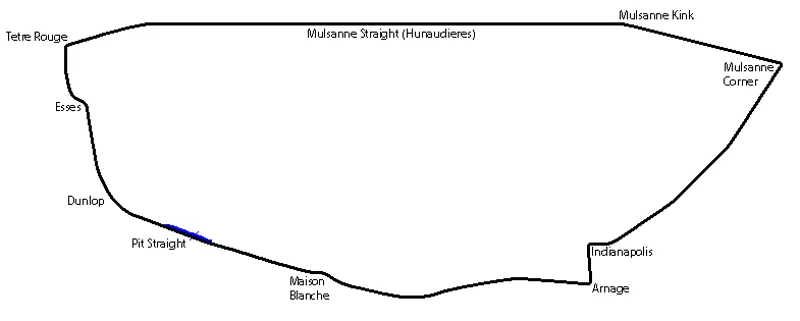
In January 2026 a Ligier JS50 Diesel took the record for the slowest lap of the Nurburgring: 28 minutes and 25.8 seconds, almost nine minutes worse than the previous mark, set by a Trabant P50 in 1960. It is a long way from the days when the Ligier name sat on a Formula One grid.
Three French marques tell the story of the country's smaller carmakers. Facel Vega built hand-finished grand tourers around Chrysler V8s and attracted film stars, and the writer Albert Camus died as a passenger in one. Gordini tuned Renaults and lent its name to some of France's best-loved small performance cars. Ligier went from racing to microcars, and still builds them.
What was the Facel Vega?
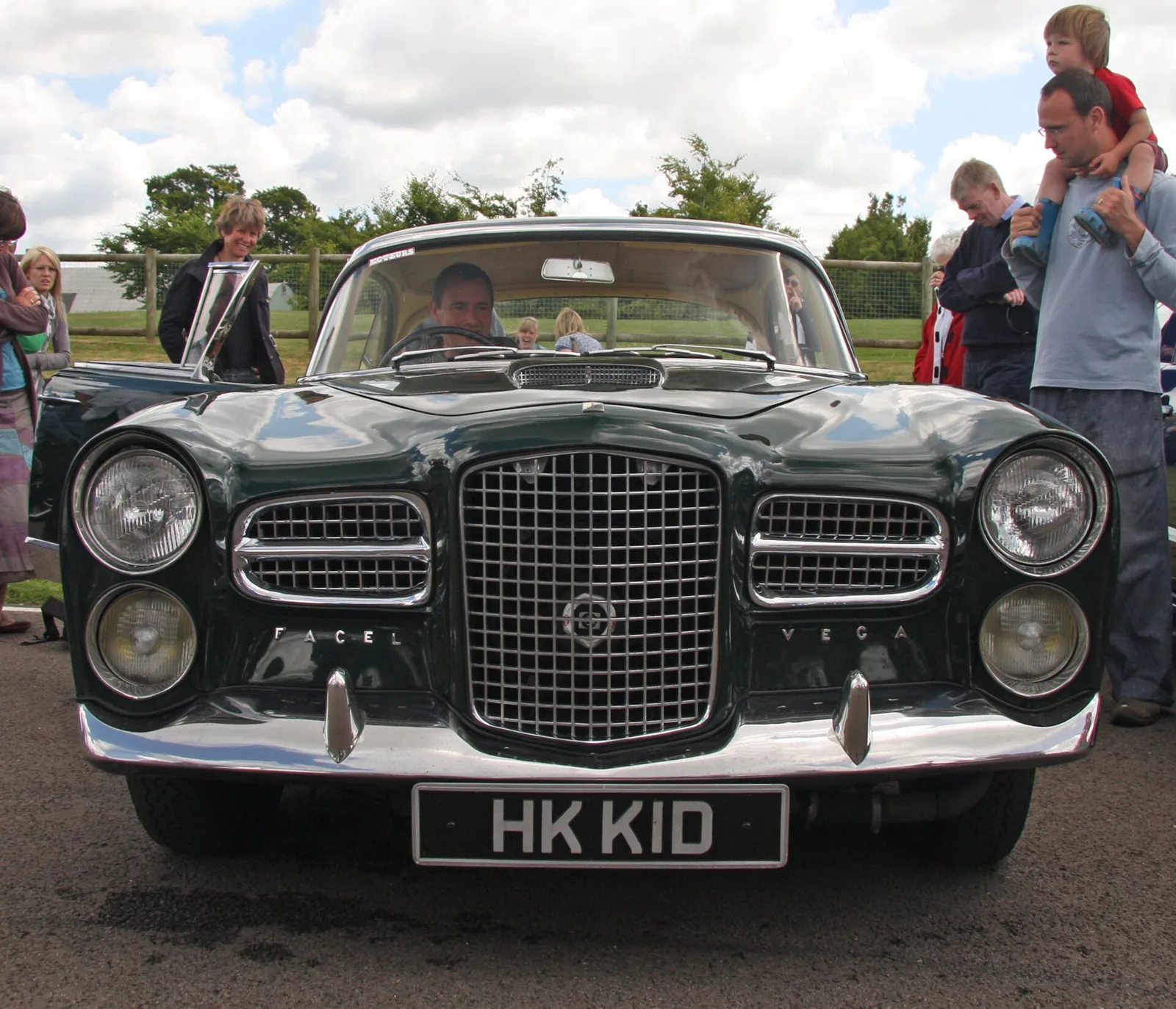
The Facel Vega was a French luxury grand tourer built by Jean Daninos from 1954, with a Chrysler V8 engine under the bonnet and bodywork of Parisian elegance. About 2,900 cars of all Facel models were built by hand before the company closed in October 1964.
Facel began as a wartime subsidiary. Bronzavia, a French military aircraft supplier, created it on 20 December 1939 to make special components, and the name is short for Forges et Ateliers de Constructions d'Eure-et-Loir. After the war Jean Daninos, a former Citroen man who had run technical work at Bronzavia, took charge and merged Facel with Metallon. The firm built special bodies for Simca, Ford of France, Panhard and Delahaye. It also designed the all-aluminium body of the Panhard Dyna X and made around 45,000 of them. With Pininfarina it created bodywork for a Bentley Mark VI chassis, the Bentley Cresta, and followed it with the Cresta II in 1951.
Work for others also covered scooters, tractors and trucks, and even combustion chambers for Rolls-Royce jet engines. But the move to unitary bodies took away Facel's big customers. Metallon left in January 1953, and Facel decided to design and build its own complete cars using engines from Chrysler, Volvo and Austin. The Vega marque was created on 22 July 1954 by Daninos, brother of the humorist Pierre Daninos.
The production car, first shown at the Paris Salon in October 1954, was initially called the FV and later became the HK500. No French firm made an engine that met Facel's aims, so it used a 4.5-litre (276 cu in) DeSoto Hemi from Chrysler. The engineering was straightforward American practice: a tubular chassis, double-wishbone front suspension and a live rear axle. At about 1,800 kg (3,968 lb) the Vega was as heavy as a Detroit car, but a top speed of about 190 km/h (118 mph) and 0-100 km/h (62 mph) in just under 10 seconds made it brisk for 1954.
Facel built the grand tourers, Gordini built the legend, and Ligier built the smallest cars of the three.
What made the Facel II the last of the V8 grand tourers?
The Facel Vega II of 1962 was the final evolution of the V8 range: lighter than the HK500, sleeker, substantially faster and famously elegant. It followed a decade in which each new Chrysler V8 made the cars quicker despite their extra weight.
The sequence was steady. A 5.4-litre (331 cu in) Chrysler Hemi arrived in 1956, and 1959 cars received first a 5.8-litre (354 cu in) engine and later the 6.28-litre (383 cu in) Chrysler Typhoon. Most Facels were two-door pillarless hardtops. Only eleven FV convertibles and a single HK500 drop-top were made, out of 842 built in total, partly because Daninos disliked the lack of rigidity in open cars. In 1956 a four-door Excellence with rear-hinged doors and no centre pillar followed, but the missing pillar hurt rigidity and handling, and survivors are rare.
Export drove the business. Fully 77 per cent of production left France, thanks to the punitive tax horsepower system at home. The buyers read like a society column: Pablo Picasso, Ava Gardner, Christian Dior, Ringo Starr, Dean Martin, Frank Sinatra, Fred Astaire and the Shah of Iran, plus French embassies around the world. Stirling Moss drove his HK500 from event to event instead of flying. The writer Albert Camus was a passenger in a Facel Vega FV2 driven by Michel Gallimard, his publisher's nephew, when he died.
Why did Facel Vega fail?
Facel failed because its attempt at a mass-market sports car went wrong. The Facellia, introduced in 1959, had an unreliable engine, and warranty losses were impossible to recover. The company, losing money on every car, closed its factory at the end of October 1964.
The Facellia was meant to take on the Alfa Romeo Giulietta, Triumph TR3 and Porsche 356B. Chrysler had no four-cylinder engine to offer, so Facel commissioned a 1.6-litre twin-cam from Carlo Machetti, the former Talbot-Lago chief engineer, with advice from the British cylinder-head specialist Harry Weslake. It was built by Paul Cavallier of Pont-a-Mousson and kept each camshaft on only two bearings, against the usual four or five. The result was excessive flex, timing problems and frequent engine failures. Charles Deutsch and Jean Bertin were called in, and the engine was still pronounced a disaster.
A revised Facellia F2 appeared at Geneva in March 1961, but Daninos had to resign in August 1961 over the financial problems. His replacement, the former oil executive Andre Belin, ordered that failed engines be replaced free of charge. A Volvo B18 engine went into the Facel III, and the Facel 6 used an Austin-Healey 2.8-litre, but the damage was done. Production stopped in 1963 after about 1,100 Facellias, more than any other Facel. Fewer than 30 Facel 6 cars had been made when the financial guarantors withdrew support. Facel had passed into the hands of an aerospace subsidiary before the end, and the luxury side of the company had been kept alive by other work done by Facel-Metallon.
Who was Amedee Gordini?
Amedee Gordini (1899-1979), nicknamed Le Sorcier, was a French tuner and racer who founded Gordini in 1946. He prepared cars for Simca, raced his own Fiat-engined single-seaters and later worked for Renault, which took over his firm. Gordini became a division of Renault in 1968.
Gordini tuned cars and raced from the 1930s, and his results led Simca, which assembled Fiats in France, to hire him for its motorsport and to develop road cars. In 1946 he introduced the first cars to carry his name, Fiat-engined single-seaters raced by him and Jose Scaron, which won several times. He opened a workshop on the Boulevard Victor in Paris and entered sports car and Grand Prix races. Gordini and Simca began to drift apart in 1951 over political conflicts.
Formula One entries ran from 1950 to 1956, with a one-off return in 1957 using an eight-cylinder engine, and the stronger results came in Formula Two. With the Grand Prix effort over, Gordini became an engine tuner for Renault, and Renault-Gordini cars were entered at Le Mans between 1962 and 1969. The firm prepared engines for Alpine too, a competing builder that also had ties to Renault.
What is a Renault Gordini?
A Renault Gordini is a performance version of a Renault road car, tuned by or named for Amedee Gordini's firm. The first big seller was the 1957 Dauphine Gordini, a modified Renault Dauphine that proved a sales success. Later Gordinis wore the French racing colour, bleu de France, with white stripes.
The sequence of Gordini-badged Renaults is easy to list. The Dauphine Gordini ran from 1957 to 1967, the Renault 8 Gordini from 1964 to 1970, the 12 Gordini from 1970 to 1974 and the 17 Gordini from 1974 to 1978. The Renault 5 Gordini of 1979 to 1985 was a UK-only name, sold elsewhere as the Renault 5 Alpine. Gordini-tuned Renaults also won rallies in the 1950s and 1960s.
The firm's own future was tied to Renault before the decade closed. At the end of 1968 Amedee Gordini retired and sold a 70 per cent majority stake to Renault. Renault-Gordini moved to Viry-Chatillon in 1969 and in 1976 merged with Alpine to form Renault Sport. Rene Vuaillat became director of Gordini on 1 January 1976, and by 1977 Renault owned the Gordini name outright.
What are Ligier cars?
Ligier cars are French microcars and minibuses made by a company created by Guy Ligier (1930-2015), a former racing driver and rugby player. Ligier started with a mid-engined road sports car, the JS2, entered Formula One from 1976 to 1996, and now specialises in small vehicles that can be driven without a full car licence.
The JS2 used a Ford V6 at first and, from 1971, the same Maserati V6 as the Citroen SM. The early Ligier road cars all carry the prefix JS in honour of Jo Schlesser, a friend of Guy Ligier who was killed in the 1968 French Grand Prix driving for Honda. The last Citroen SMs also came out of Ligier's plant at Vichy. The 1973 energy crisis hit the JS2 market so hard that production stopped soon afterwards, and the company changed course to microcars, starting with the moped-powered JS4 in 1980.
The motorsport record is better known than the road cars. Ligier arrived in Formula One in 1976 with a car powered by a Matra V12 and won its first Grand Prix with Jacques Laffite in 1977. It also raced at Le Mans from 1970 to 1975. Ligier and Martini have built sports prototypes together, and with Onroak Automotive they offer a range that covers LMP3 and other classes.
How did Ligier go from Formula 1 to microcars?
Ligier moved to microcars after the 1973 energy crisis ended demand for the JS2, then expanded by buying Beneteau's Microcar division in September 2008. That deal, with Philippe Ligier as chief executive, made Ligier Europe's second-largest microcar maker after Daimler's Smart, if Smart counts, and the largest maker of vehicles exempt from driving licences.
The current line includes the JS50 family of mini cars, about two and a half metres long with two seats and a front engine, powered by twin-cylinder diesel engines of roughly half a litre, driving through a continuously variable transmission. The company also builds the X-Pro small commercial vehicles, the Be Up and Be Two open-air roadsters, and the Be Pro, Be Four and Be Truck utility range. In 2011 it launched the Due brand for cheap lightweight quadricycles and folded it into Microcar two years later. In 2023 it unveiled its first electric quadricycle, the Myli.
One technical footnote stands out. In the mid-1990s one of the world's first experimental systems for automatic parallel parking was tested on an electric Ligier at INRIA. Ligier also joined the self-driving field through EasyMile, a joint venture formed in June 2014 with Robosoft that makes the EZ10 shuttle, which carries 8 to 10 passengers at up to 40 km/h (25 mph). In 2017 it ran on a university campus in Taipei and in Tallinn, Estonia.
Three marques compared
| Facel Vega | Gordini | Ligier | |
|---|---|---|---|
| Began | 1939 as Facel, marque in 1954 | 1946 | Cars from the JS2 |
| Known for | V8 grand tourers | Tuning and racing Renaults | Formula One, then microcars |
| Engines | Chrysler V8s, later Volvo and Austin | Fiat, then Renault | Ford and Maserati V6, then small diesels |
| Racing | None noted | Formula One 1950 to 1956 | Formula One 1976 to 1996 |
| Outcome | Factory closed October 1964 | Renault division from 1968 | Still building microcars |
Where this goes next
Gordini was the first to return. In November 2009 Renault announced that it would revive the name for a limited line of hot hatches, in the way Fiat had revived Abarth. The Twingo and Clio carried the badge, and the Wind Gordini ran from 2011 to 2013.
Ligier's plans are more recent. In August 2018 the company teased a new road-going sports car for its 50th anniversary, to be built with Onroak, with a 3.7-litre V6 of about 330 hp, a six-speed manual gearbox and an expected price of 89,000 euros, with sales expected from November 2018. In January 2025 Ligier announced that it would close its Montaigu-Vendee factory and concentrate all production at Abrest, its historic headquarters. Facel Vega, by contrast, left no successor after October 1964.