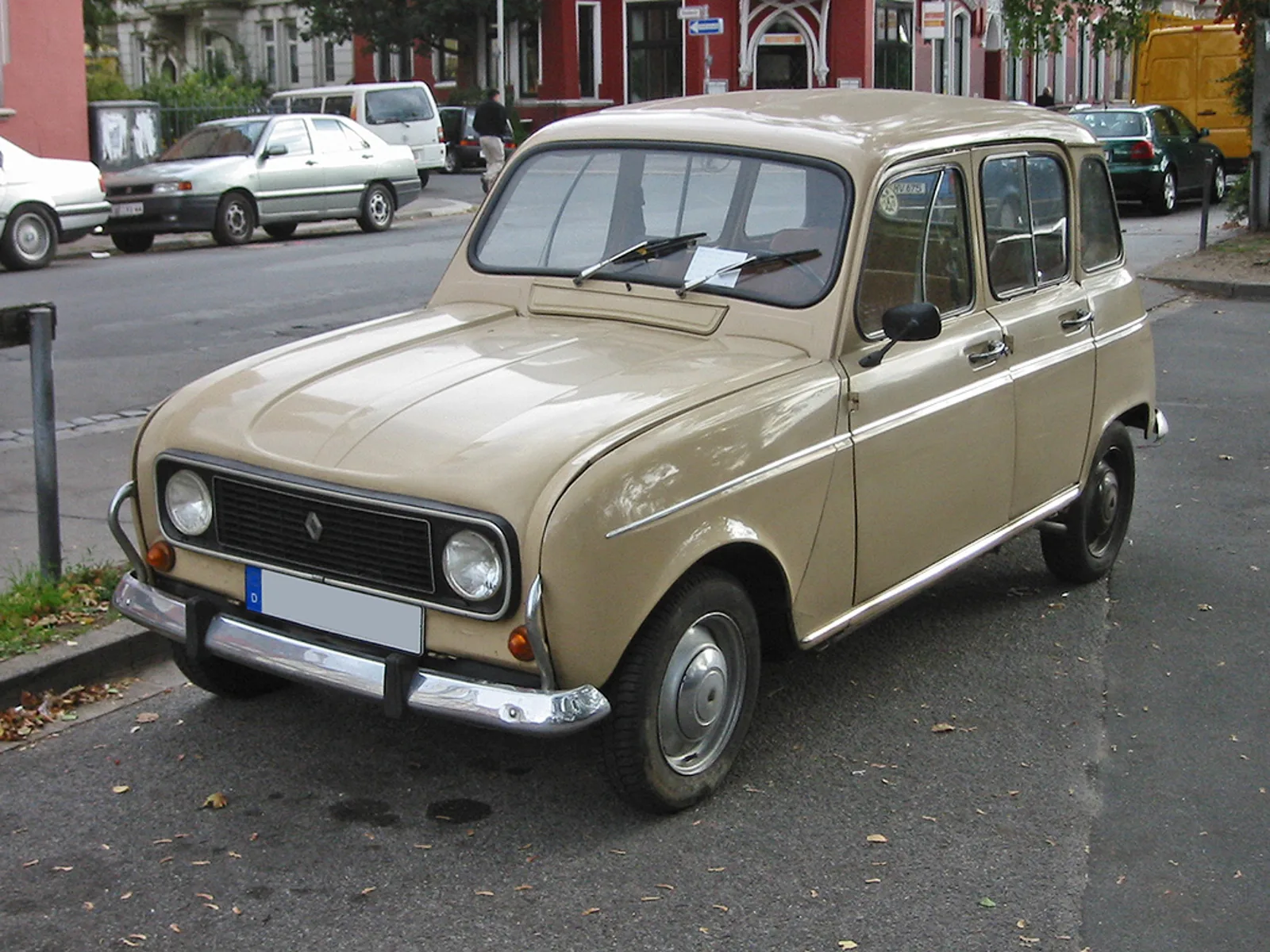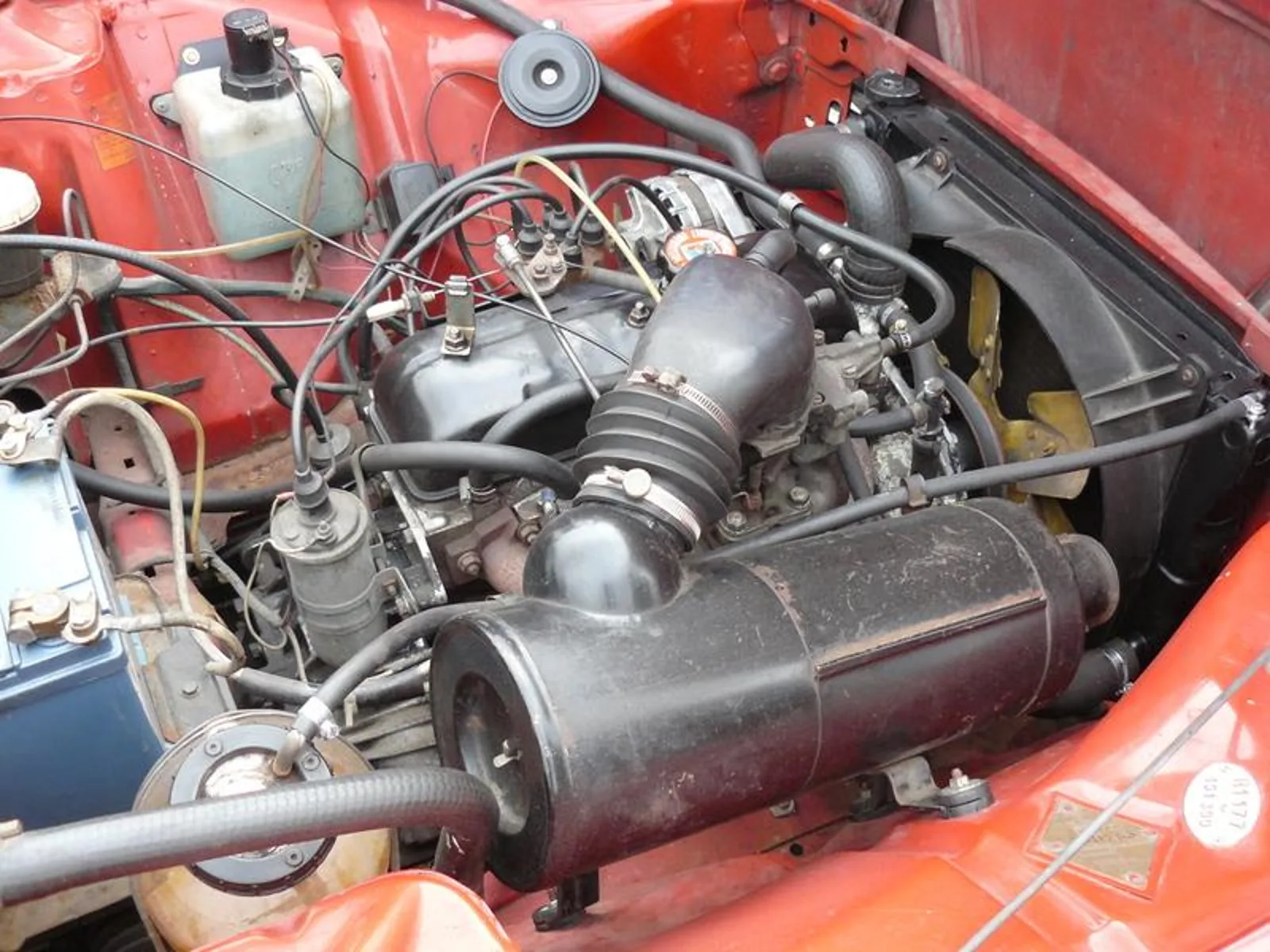
From the 1962 Floride to the 1993 Twingo, a cast-iron pushrod four that powered Renault's small cars, Group B rally machines and Dacia's last models.
The Renault Cleon-Fonte is a cast-iron pushrod four built from 1962 to 2004, with over 27 million engines made and versions that ran from small cars to 360 PS rally machines.
The Cleon-Fonte is a family of inline four-cylinder engines from Renault. It was built in continuous production by Renault or a licensee from 1962 to 2004, and it powered small Renaults for several decades, from the Floride to the first-generation Twingo. Its career lasted close to half a century, which is unusually long for a car engine.
Where did the Cleon-Fonte come from?
The engine began in the late 1950s as a modern replacement for the Billancourt unit. Engineer Fernand Picard led Renault's engineering, and Rene Vuaillat designed the all-new small four. It was first called the Sierra, then took the name Cleon after the new Renault factory where it was built, with Fonte, meaning cast iron, to tell it apart from the aluminium-block Cleon-Alu.
The design used a cast iron block topped by an aluminium head, with the camshaft set high in the block and driving the valves through short pushrods and rocker arms. Five crankshaft bearings were unusual for the period. From the first test, the new engine showed more torque and considerably more power than the 845 cc Billancourt, whose design dated back to 1944.
Renault had not yet adopted its later scheme of letter codes, which is why the engine began as the Sierra. The name Cleon referred to the plant, and the engine was later shortened to the C engine.
A cast-iron four that began as the Sierra, went rallying as a 360 PS turbo and lasted until the last Dacia rolled out in 2004.
How did the engine debut in 1962?
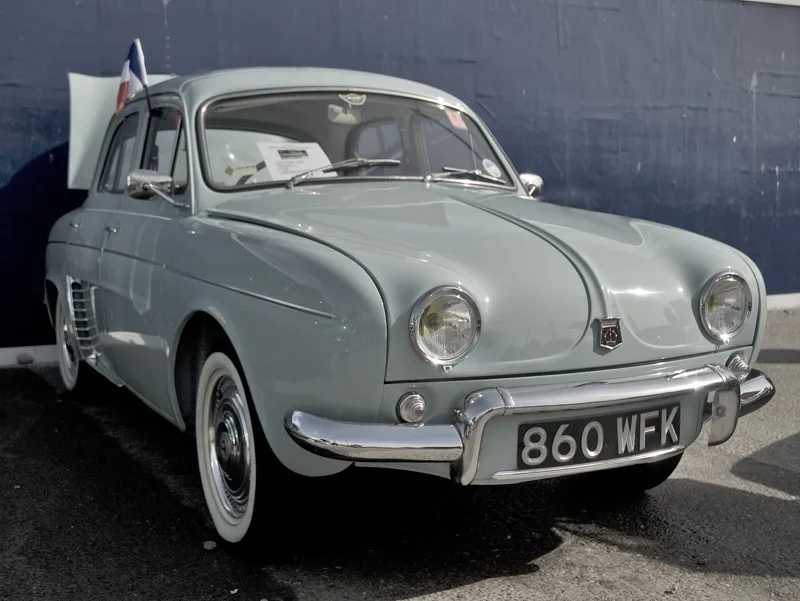
The engine first appeared publicly at Geneva in the 1962 Renault Floride S, where it took over from the 845 cc Dauphine Gordini unit. Its 956 cc form delivered 51 PS (38 kW; 50 hp) SAE and appeared a few months later in the R8 saloon.
The basic design allowed many capacities. It was built with single and dual carburettors, later with fuel injection, with or without a turbo, and it was coupled to four-speed and five-speed manual gearboxes as well as automatics.
Amedee Gordini had the first performance version built, designing a hemispherical combustion chamber head for racing. It allowed 85 to 90 PS (63 to 66 kW; 84 to 89 hp) from a 1000 cc version, against 70 PS (51 kW; 69 hp) from the previous 700 cc Gordini engine. The work also exposed a weakness, since the block lacked rigidity and could lead to blown head gaskets. Renault stiffened the block slightly in response.
The 1,108 cc and 1,296 cc Gordini units shared the same engine type code, 804, despite their different displacements. Both went into the Renault 8 Gordini and the Alpine A110, so one design served two very different roles.
How did capacity grow during the 1960s?
In 1963 Renault introduced a 1,108 cc version, with the bore increased to 70 mm for more torque and power. By the end of 1966 a new block with a specific offset crankshaft gave the R8 Gordini 1300 a 1,255 cc engine producing 88 PS (65 kW; 87 hp) DIN.
The R12 of 1969 brought a front-wheel drive layout with the engine mounted ahead of the driver. Reworked to 1,289 cc, it produced 54 PS (40 kW; 53 hp), and the 956 cc version went under the hood of the R6 and later the R5. Through the late 1960s the engine was used in most small Renaults, including the R8 and R10 saloons, and it was also made in Valladolid, Spain.
How did the Cleon-Fonte become a rally engine?
Renault chose small saloon cars to represent the company in racing, and it pushed the Cleon-Fonte to 1,397 cc with a new hemispherical head. That gave 93 PS (68 kW; 92 hp) in the 1976 R5 Alpine Gordini, and by 1981 the R5 Alpine Gordini Turbo made 110 PS (81 kW; 108 hp).
The turbo route went further. The 1980 R5 Turbo was launched with 160 PS (118 kW; 158 hp) from its 1,397 cc unit, mounted mid-engined for the first time and driving the rear wheels. In Group B rallying the power climbed from 200 to 300 PS before peaking at 360 PS (265 kW; 355 hp) in 1.5 litre (1,527 cc) form in 1985.
By 1987 the tour versions of the Blockbuster championship machine reached 385 PS (283 kW; 380 hp). They used water injection into the intake, a technique borrowed from Formula One turbo engines of the time. Renault relied on cheap, robust parts throughout, including a special magnesium Solex carburettor that could withstand the heat from the turbocharger.
Renault used the turbocharged 1.4 litre engine in several cars of the early 1980s. Its pushrod layout was chosen for sturdiness and low cost, which suited a manufacturer that needed economical power units for a wide range of models rather than a single high-tech design.
Which Renault models used the Cleon-Fonte?
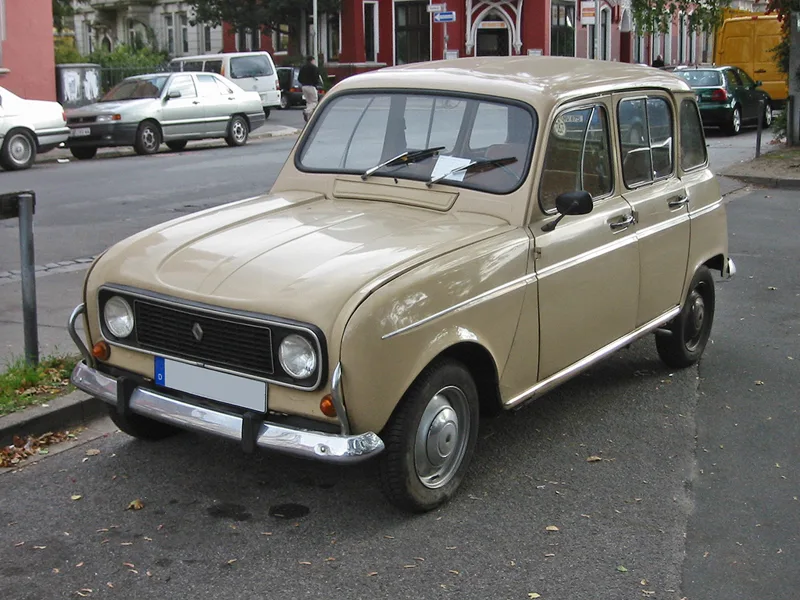
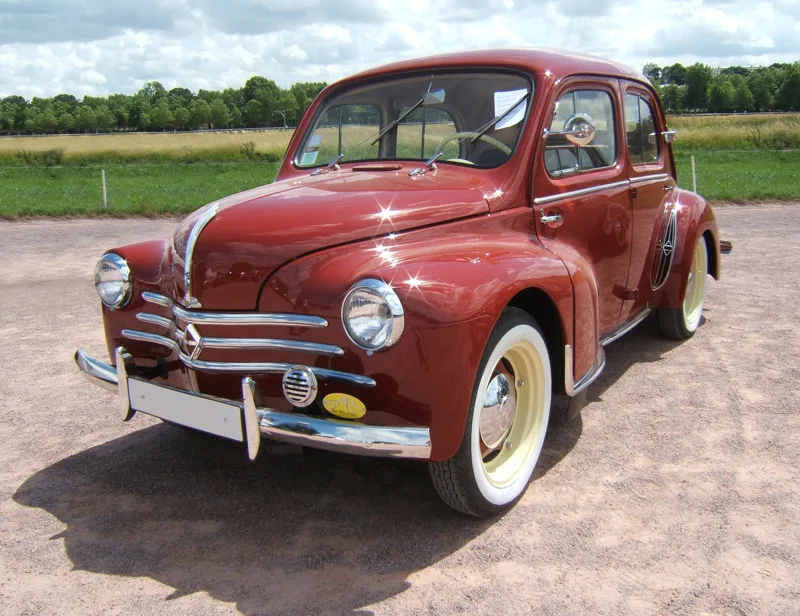
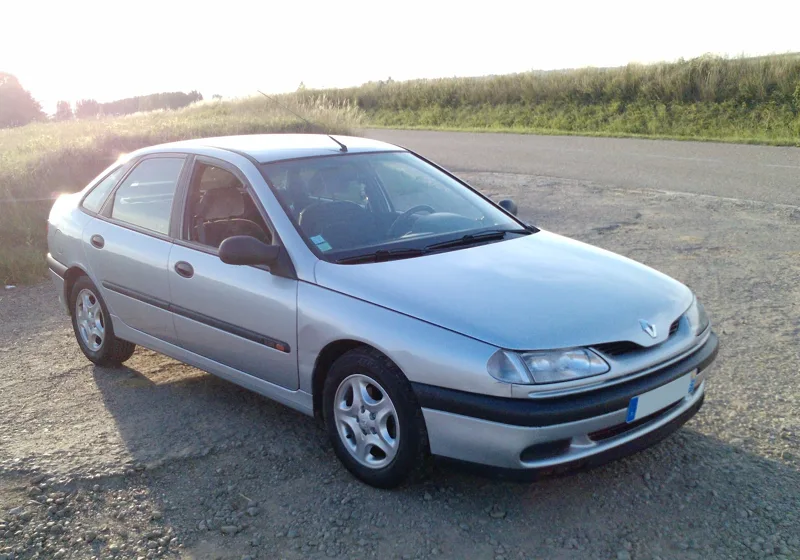
The engine served a long list of Renault models in rear-, mid- and front-engined layouts. They included the Floride, Caravelle, Alpine A110, R4, R5, R6, R7, R8, R10, R12, R15, R18, R19, R21, Estafette, Traffic, Express, Fuego and the first Twingo, along with the Clio 1.
Sports applications included the Renault 8 Gordini, the Renault 5 Alpine and Turbo, the Renault 9 GTS and Turbo, the Renault 11 Turbo and the Super 5 GT Turbo, along with the Dacia 1410 Sport and Nova GT. The Dacia 1300 and 1310 range, based on the R12, kept the engine in production from 1969 to 2004.
Why were the R9 and R11 mounted transversely?
The Renault 9 and 11 were the first Renault cars to use the Cleon-Fonte in a transverse position, and that change gave rise to the JB gearbox used until the Twingo 2. The chassis was later reused for the Renault 19, Megane 1 and Scenic 1, and derived designs carried the platform into the Super 5, Express, Clio 1 and 2, Kangoo 1 and Twingo 2.
The R9 was the 1982 Car of the Year. The R9 and R11 introduced a new technical philosophy that Renault applied across many models.
The R9 and 11 story began with a setback. The Renault 14, launched in 1976, used the PSA-Renault X-Type engine that Peugeot and Renault shared. Customers and the service network disliked the partnership with a main competitor, so for the Renault 9 and 11 Renault returned to the Cleon-Fonte, which many people had assumed was finished.
What replaced the Cleon-Fonte?
The Energy engine replaced it as Renault's main four. Its camshaft moved into the cylinder head, the chain drive gave way to a timing belt, and the design first appeared in the Renault 19. The Energy then evolved into the K engine, which bored the cylinders directly into an iron block and appeared in the Megane 1.
The 1,390 cc Energy and the 1,390 cc Cleon-Fonte shared the same stroke and bore, so the two engines were closely related. The K family later branched out, and the K9K 1.5 dCi diesel became one of its best-known variants.
Renault was about to stop the Cleon-Fonte when the Twingo needed a compact unit, so the engine returned in 1993, this time bored out to 1.2 litres (1,239 cc). Journalists criticised the Twingo for using it, because the Energy and the Clio's R19 unit could not fit under the little car's bonnet.
Production ended in France in December 1996. The Twingo and Clio used the 1,239 cc C3G, and the final Supercinq used the 1,390 cc C3J. The 1.1 litre D7F then replaced the old engine in the base Clio and the Twingo.
How many Cleon-Fonte engines were built?
Renault and Dacia built more than 27 million Cleon-Fonte engines, with 27,277,306 made in 42 years, a record in Europe. About 15 million were built in France, and the engine was also assembled in Portugal, Spain, Turkey, Colombia and Argentina.
The last Cleon-Fonte built by Dacia was rolled out on 29 November 2004. It was a 1.6 litre fuel-injected model producing 68 horsepower, with serial number 2527155. Dacia still makes components for the engine for service in Romania and abroad.
Which codes and capacities did the family use?
The family carried alphanumeric codes, with the C1C at 956 cc, the C1E at 1,108 cc and the C3G at 1.2 litres for the Twingo. The table lists the main codes, their capacities and where they appeared. Where no output is published, the table says so.
| Code | Capacity | Published output | Notable applications |
|---|---|---|---|
| C1C | 956 cc (1.0 L) | Not given | Original name 689, R8 family |
| C1E | 1,108 cc (1.1 L) | Not given | Original name 688, R4 GTL, DAF 55 |
| C1G and C3G | 1,237 or 1,239 cc (1.2 L) | 55 PS (40 kW; 54 bhp) at 5,300 rpm | Twingo, C3G built until July 1996 |
| C1H | 1,289 cc (1.3 L) | 32 to 47 kW (44 to 64 PS; 43 to 63 bhp) | 810-type engine, out of production before the codes were introduced |
| C1J, C2J, C3J, C6J | 1,397 cc (1.4 L) | Not given | R5 Turbo, R18, Super 5 |
| C1L, C2L, C3L | 1,565 cc (1.6 L) | 12.5 kg-m (123 N m; 90 lbf-ft) at 3,000 rpm | Argentina, Brazil, Colombia, Turkey |
The C1L was an Argentinian-developed engine, available only in Argentina, Brazil, Colombia and Turkey. It derived from the C1J and shared dimensions with Renault's A-series, and its main gain was torque, which reached the 12.5 kg-m mark at 3,000 rpm. The twin-carburettor version was the C2L, and the single-point injection version was the C3L.
How did the engine reach other makers?
DAF used the 1,108 cc Cleon-Fonte as its B110, with a higher output BR110 that had a different cam, distributor and carburettor jetting. DAF also offered the 1,289 cc unit as the B130 in its DAF 66, and Volvo later launched the 1,397 cc B14 in the 300 series. After Volvo took over DAF, it launched the Volvo 66, a rebadged DAF 66 with the same engine options.
Ford do Brasil gained the manufacturing rights as it absorbed Willys' Brazilian business in the late 1960s. The unit belonged to the Renault-based Projeto M venture, which became the Ford Corcel in 1968. Ford later designed a new cylinder head, called the CHT, which debuted in 1983 in the Brazilian Escort Mk III.
From 1987 to 1996 Ford and Volkswagen in Brazil ran a joint venture called AutoLatina, which renamed the CHT the AE engine. Volkswagen fitted the AE-1600 and later the AE-1000 to the Gol and its derivatives, so the design had a second career far from Renault's own plants.
Why does the Cleon-Fonte still matter?
The Cleon-Fonte matters because it outlived many of the cars it was designed for. It stayed in production for 42 years and was made in several countries, and its story runs from a 1962 Floride to a 360 PS rally car and the last Dacia built in 2004.
The engine also shows how a modest design can keep adapting. It was bored out, turbocharged, fitted with injection and eventually succeeded by the Energy, which had a different camshaft layout. Each step kept the basic cast iron block and the compact four-cylinder format at the core of the family.