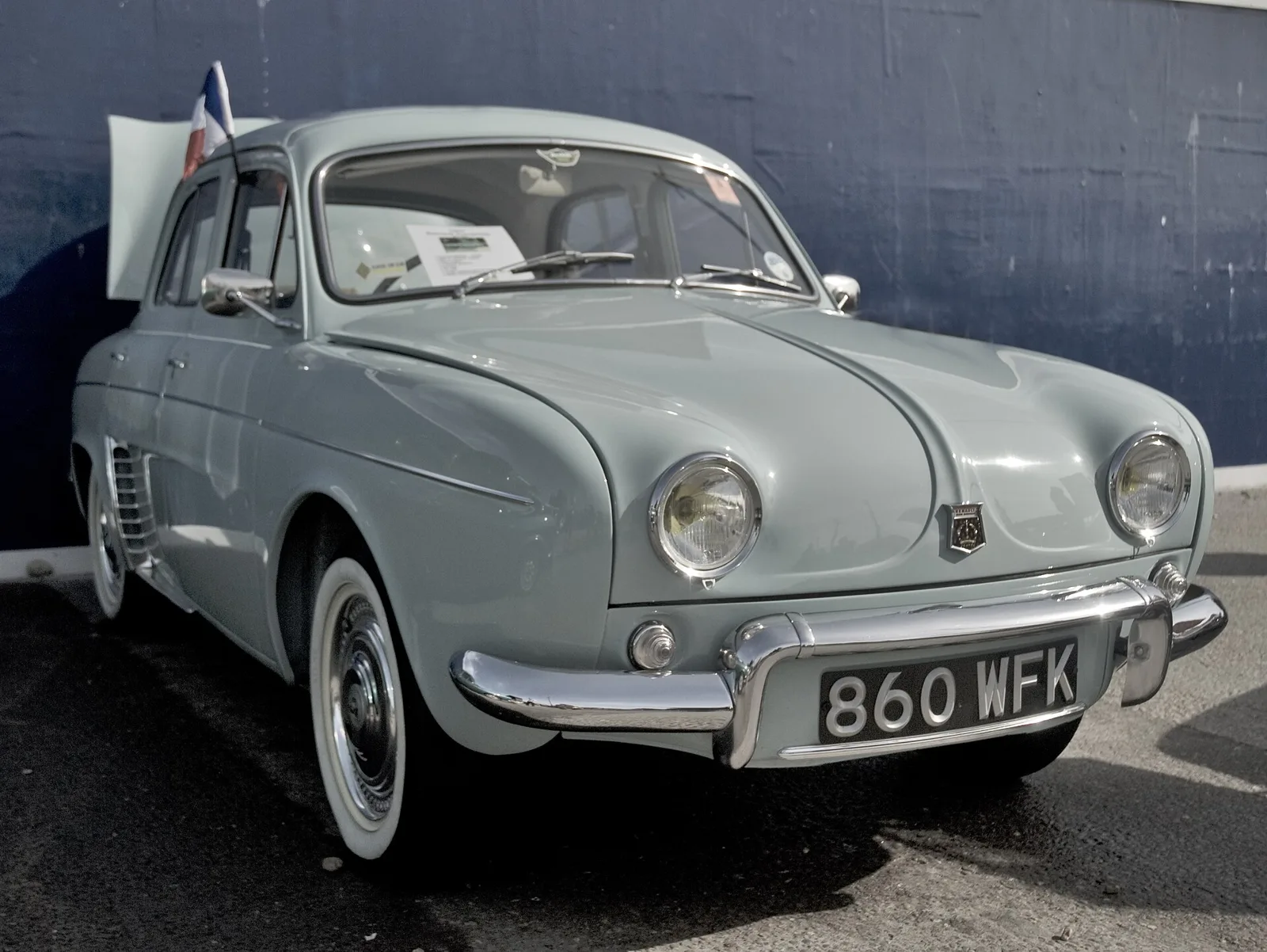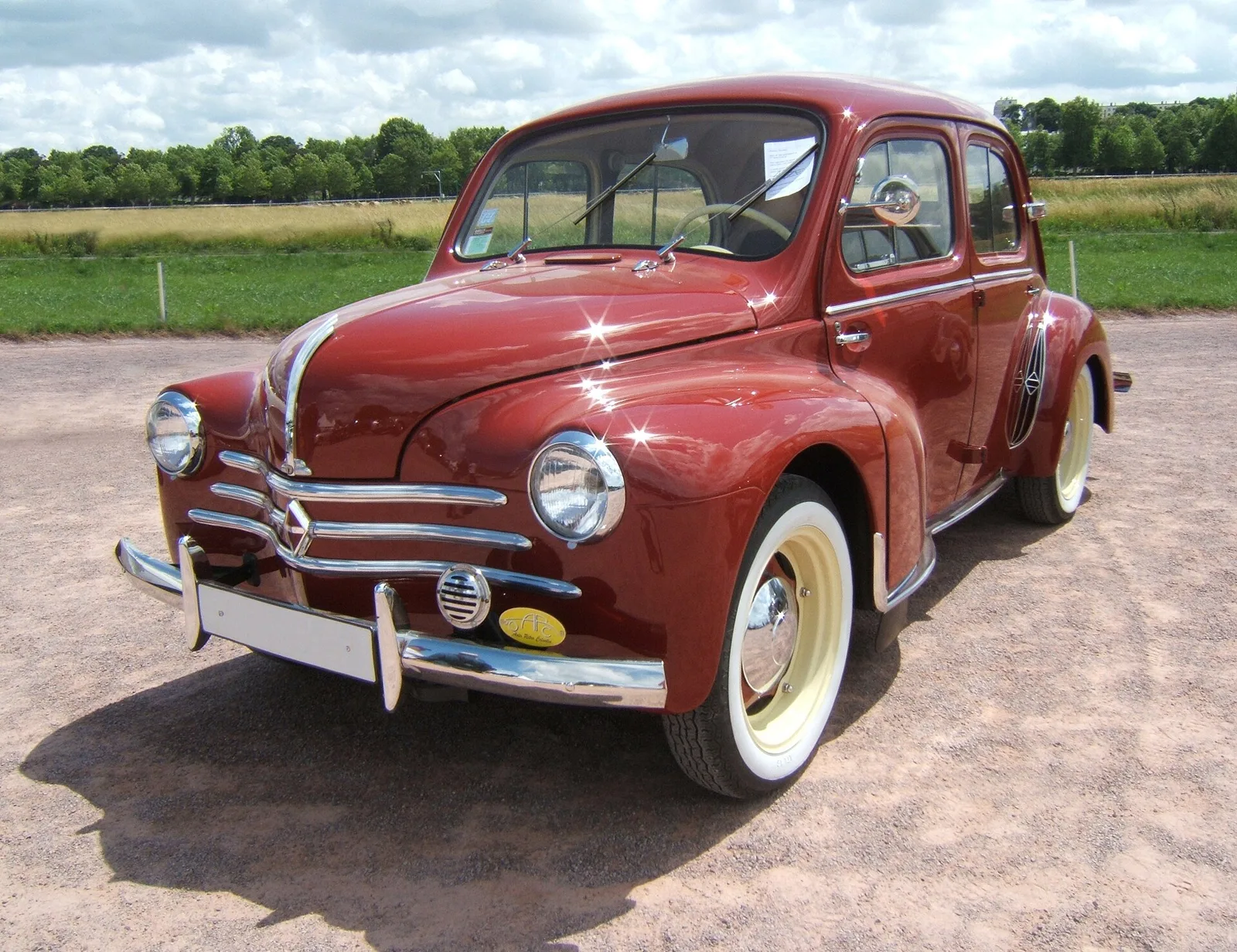
Built from 1947 to 1961, the four-door 4CV was the first French car to sell over a million units, and its wartime origins were anything but ordinary.
The Renault 4CV was a rear-engined economy car that Renault built from 1947 to 1961. Its sales passed a million, and it was superseded by the Dauphine. Its name referred to the tax horsepower rating, and its design began as a secret project during the German occupation.
The Renault 4CV was a small four-door economy car that Renault built from August 1947 to July 1961, with its engine mounted at the back and driving the rear wheels. Its sales passed a million, a landmark for any French make, and it was superseded by the Dauphine. The name came from its tax horsepower rating.
Its origins lay in a secret wartime project, a controversial episode involving Ferdinand Porsche and a manufacturing revolution that allowed Renault to build cars in large numbers. Each of those threads shaped the 4CV, and together they explain how a small car came out of a country under occupation.
What was the Renault 4CV?
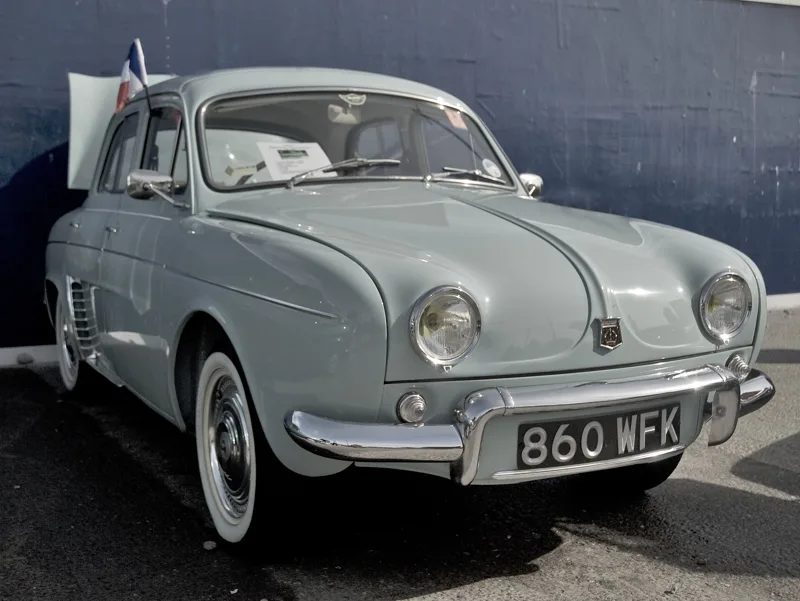
The 4CV was a rear-engined, rear-wheel-drive economy car with a monocoque body, about 3.6 m (11 ft 10 in) long. Its name is short for chevaux-vapeur, the French word for horsepower, and it refers to the car's tax rating rather than the engine output. The model was produced until 1961 and sold over one million examples.
The body had four doors, with the front pair hinged at the front, a layout often called suicide doors. The car was light and compact, with its engine behind the rear axle.
A rear-engined economy car born in wartime secrecy that became the first French car to sell over a million units.
Where did the 4CV design begin?
The 4CV was conceived in secret during the German occupation of France, when Renault could build only commercial and military vehicles. Louis Renault approved the project in May 1941 under the code 106E, and it was officially treated as a low-priority spin-off of an engine project for the Juvaquatre.
Wilhelm von Urach held the technical directorship from 1941 to 1944, and the project went ahead largely unnoticed under his watch. Fernand Picard led the design team, while the car's first prototype had two doors and was completed in 1942.
The project was tucked inside a larger programme, and the departmental bosses installed by the German authorities were not trusted with the details of the car. Those who knew about it kept it moving quietly until the war ended.
Two more prototypes followed over the next three years. The design was refined through those prototypes before production began.
How did Volkswagen influence the 4CV?
The Volkswagen connection is one of the most debated parts of the story. In November 1945 the French government invited Ferdinand Porsche to France to explore relocating the Volkswagen project, as part of a reparations package then under discussion. On 15 December 1945 he was asked to advise Renault on the 4CV.
Pierre Lefaucheux, who ran Renault after nationalisation, was angry at any suggestion that the 4CV had been inspired by Volkswagen. The government insisted on nine meetings involving Porsche, and Lefaucheux maintained that the meetings would have no influence on the design.
Porsche was then arrested in connection with war crimes allegations involving forced labour at the Volkswagen plant. He spent twenty months in a Dijon jail without ever facing a trial.
The dummy grille of six thin horizontal chrome strips was meant to distract attention from the car's overall architecture, which resembled the German car. Louis Renault had reportedly asked his engineers for a car like the Germans', and the grille was a visual cover for that similarity.
How was the 4CV made?
The 4CV was made possible by new production methods, many developed by Pierre Bezier. Bezier spent 42 years at Renault, and in 1949, while running production engineering, he laid out the transfer lines that made most of the car's mechanical parts.
The transfer machines were high-performance tools that machined the engine blocks. Bezier built on the automatic machine principle that General Motors had introduced before the war, and he developed it further while he was imprisoned during the war.
The new transfer stations used several workstations and electromagnetic heads, so one part could move from station to station for a series of operations.
How did the 4CV launch and sell?
Renault presented the 4CV at the 1946 Paris Motor Show and put it on sale in 1947. It sold 37,000 units by mid-1949 and became the most popular car in France. Volume production began at Billancourt before the October 1947 Paris Motor Show.
Sales abroad were strong as well. Renault sold 1,760 cars in West Germany in 1950, which made up 23% of imported cars and placed the 4CV second only to the Fiat 500 on that list.
Early sales were uncertain, because the French economy was badly damaged after the war. Cars were in very short supply for a year or so after launch, and buyers had to wait for their deliveries.
Early on, the car earned a nickname based on its shape: the lump of butter. Early deliveries also used surplus sand-yellow paint from Afrika Korps vehicles, which gave the car an unusual look on the road.
How did the 4CV drive?
The 4CV used a 760 cc rear-mounted four-cylinder engine and a three-speed manual gearbox at launch. In 1950 the engine was replaced by a 747 cc Billancourt unit producing 17 PS (12.5 kW), a size chosen to keep the car under the 750 cc tax threshold in many markets.
Claimed output later rose to 21 hp (16 kW). With its weight of 620 kg (1,370 lb), the car managed 0-90 km/h in 38 seconds, and its top speed was barely under 100 km/h (62 mph). Those were the manufacturer's own figures, reported at the time.
The rear engine allowed very direct steering, which needed only 2 1/4 turns from lock to lock in the early cars. Road tests warned drivers about oversteer on wet roads, and later cars were given 4 1/2 turns from lock to lock to calm the handling.
The gearbox had quirks of its own. Second and top gear were both usable between 5 and 100 km/h (3 and 62 mph), and first gear was not synchronised, which discouraged its use except when starting from rest.
Did Renault make a cheaper 4CV?
Yes. In early 1953 Renault launched a stripped-down version called the 4CV Service, which removed anything that could be considered a luxury. It was grey only, and the car was priced to retail for under 400,000 Francs.
The Dauphine was already at an advanced stage of development when the Service version appeared. A cheaper 4CV could have opened a clearer gap between the two models, which would be built side by side for several years.
The Service version disappeared from showrooms after less than a year. Its poor sales were linked to the growing popularity of the Citroen 2CV, which was bigger and started at 341,870 francs in 1952, even though its engine was only 375 cc.
What replaced the 4CV?
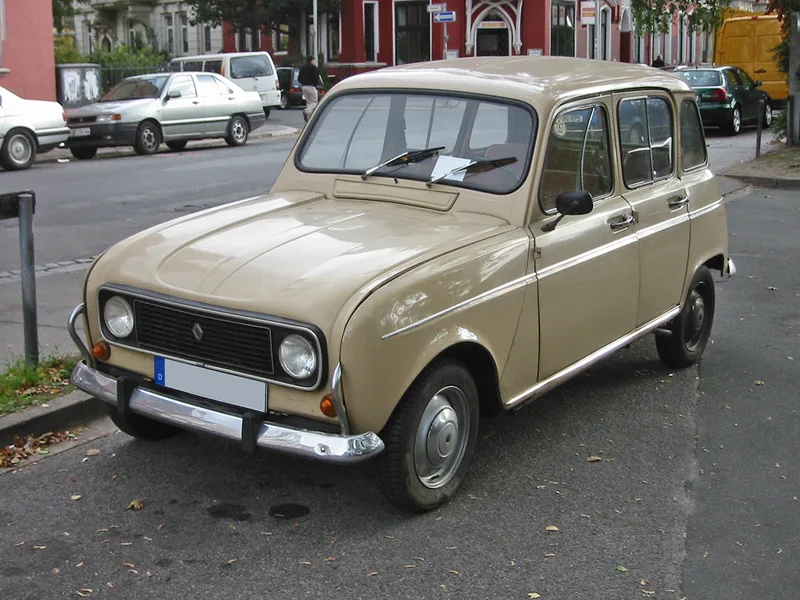
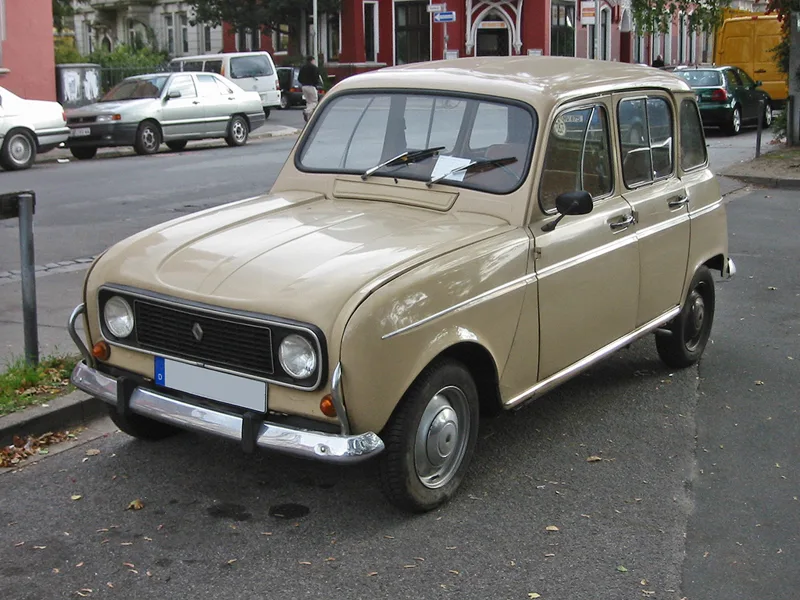
The direct replacement was the Dauphine, launched in 1956, but the 4CV stayed in production until 1961. Renault then replaced it with the Renault 4, a car that shared the 4CV's engine and carried a similar price tag.
Total production reached 1,105,543 cars across the run. That figure made the 4CV the first French car to sell over a million units.
Where was the 4CV built outside France?
Most cars came from Renault's Ile Seguin plant, on an island in the Seine, but the 4CV was assembled in seven other countries. Those included Australia, Belgium, England, Ireland, Japan, Spain and South Africa.
At the Acton factory in West London, right-hand drive 4CVs were built from December 1949, using components that were largely imported from France. The car replaced the Juvaquatre at that plant.
- Spain: FASA built the 4CV at its Valladolid factory from 1951 to 1961.
- Japan: Hino Motors built it under licence from 1953 to 1961, as the Hino Renault 4CV.
- Australia: the car was marketed from 1949 to 1961 as the Renault 760, later the Renault 750, with CKD cars assembled in Sydney.
The Hino car gained a reputation for superior quality, and it was later replaced by the Hino Contessa, which kept the Renault powertrain.
Did the 4CV inspire a motorsport legacy?
Yes. Its simple layout made the 4CV easy to modify, and racers used it widely. It also provided the basis for the first collaboration between Alpine and Renault, which produced the Alpine A106.
The Alpine A106 was based on the 4CV, and the partnership later won the 1973 World Rally Championship with the Alpine A110.
The 4CV was also easy to modify, and that made it a popular base for competition cars across Europe. The early Alpine work was built on exactly that quality.
What variants did the 4CV spawn?
The best-known variant is the Renault Beach Wagon, also called the Jolly. Ghia built 50 of them in 1961 using consecutively numbered 4CVs, and about a dozen are thought to survive today.
Only 50 Beach Wagons were built, all in 1961, so each survivor is a rare piece of the 4CV story. Their consecutively numbered donor cars also give them a neat link to the production line.
In 1996 Renault marked the 50th anniversary of the 4CV's debut with the Fiftie concept. It was a two-door, mid-engined design with styling similar to the original car.
What are the Renault 4CV specifications?
| Feature | Detail | Note |
|---|---|---|
| Layout | Rear-mounted four-cylinder | Rear-wheel drive |
| Launch engine | 760 cc | Three-speed manual gearbox |
| Production engine | 747 cc Billancourt unit | From 1950 |
| Output | 17 PS (12.5 kW) | Later claimed as 21 hp (16 kW) |
| Weight | 620 kg (1,370 lb) | Kerb figure |
| Length | 3.6 m (11 ft 10 in) | Monocoque body |
| 0-90 km/h | 38 seconds | Top speed barely under 100 km/h (62 mph) |
| Steering | 2 1/4 turns lock to lock | Later cars 4 1/2 turns |
| Total production | 1,105,543 cars | August 1947 to July 1961 |