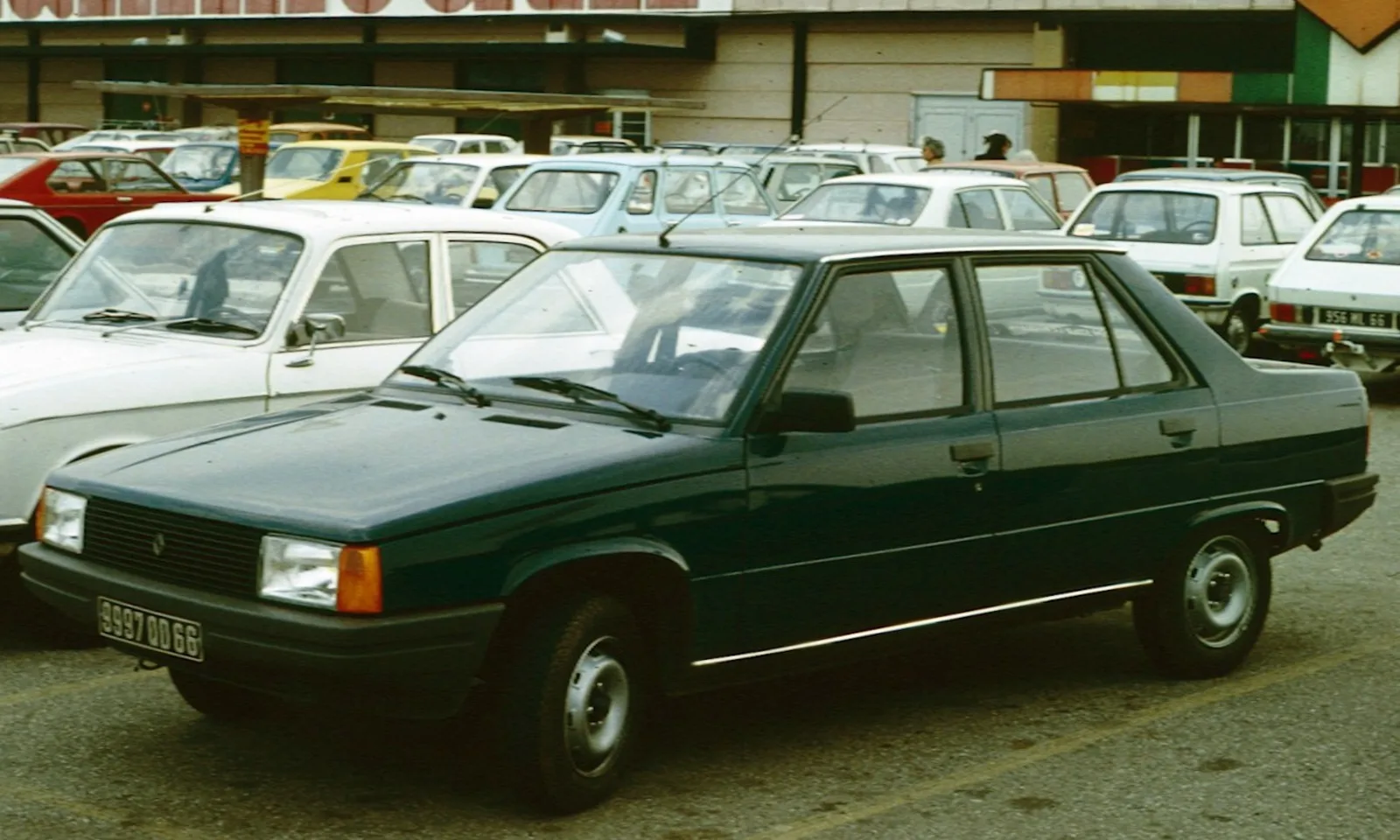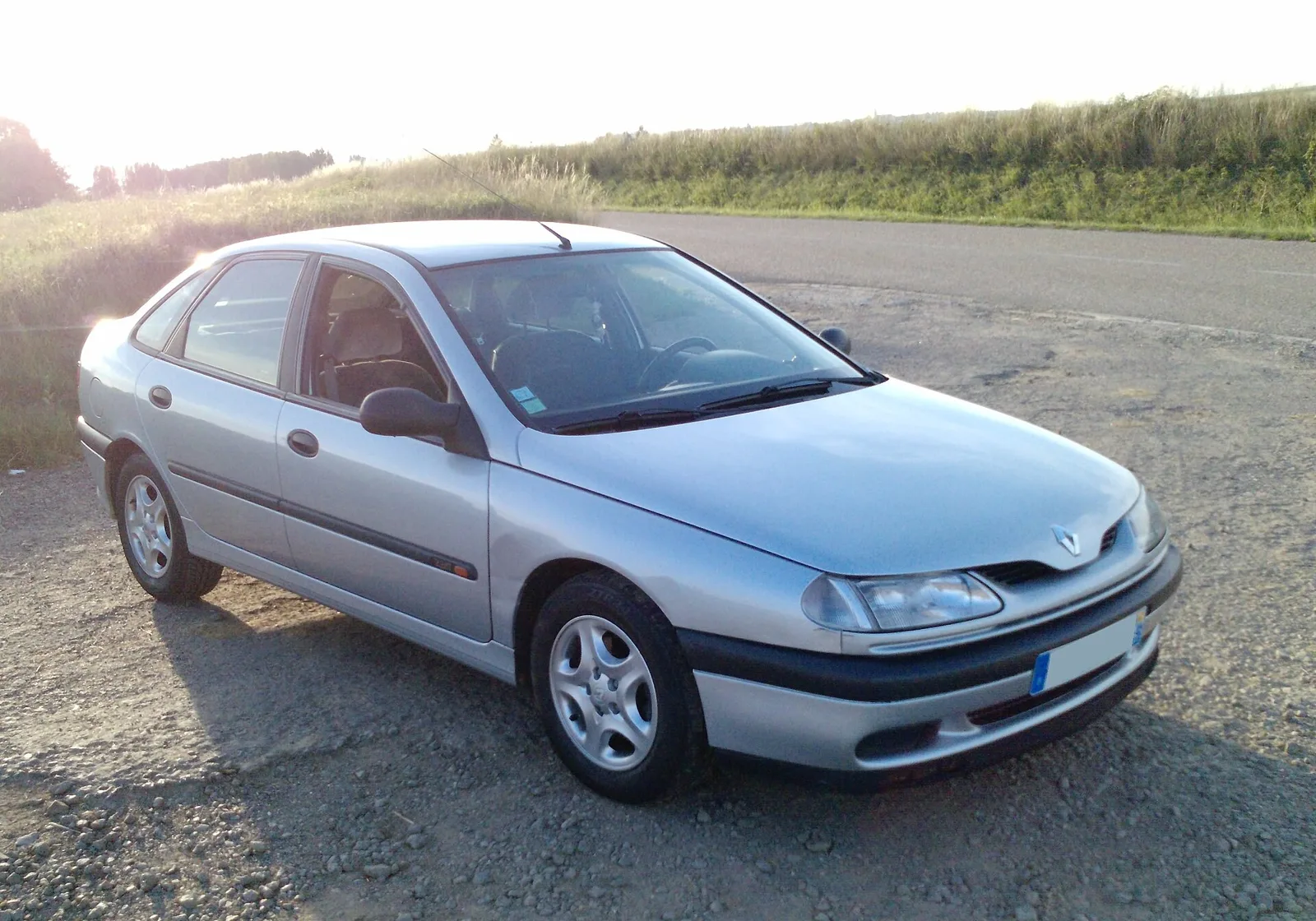
Soft, edgeless bodywork, a single platform, an estate version and more than 485,000 cars built by the end of 1995.
The Renault Laguna I was the first generation of Renault's Laguna, a mid-size saloon built from 1994 to 2001. It had front-wheel drive, a single platform and petrol engines at launch from 93 PS to 167 PS, and a second-generation car replaced it in 2001.
Launched in 1994, the Renault Laguna I was the first Laguna, a mid-size saloon whose production ran until 2001. Its soft, edgeless body broke sharply from the Renault 21 it replaced. By the end of 1995, more than 485,000 cars had been built.
Why did Renault start the Laguna project?
Project X56 began in early 1989 as the successor to the Renault 21. The 21 was selling well, but some of its engineering choices had pushed up development costs, including two platforms with different wheelbases. The new car was meant to be clean and linear, with no convoluted solutions.
The period was one of sweeping change. Renault was recovering from the financial crisis of the eighties under Raymond Levy, and merger talks with Volvo, a partner for several years, had been opened. Those talks later fell through. In 1992, in the middle of the project, the historic Billancourt plant on the Ile Seguin was closed.
The X56 programme took 58 months and cost 7.7 billion francs, which in late-1993 terms was 2,200 billion lire. The architecture of the new segment D car followed the by then usual scheme: front-wheel drive, a transverse engine and a single platform.
Specialist magazines saw a Safrane in reduced scale, yet more than 485,000 Lagunas had been built by the end of 1995.
Where did the name Laguna come from?
The name came from a concept car shown at the 1990 Paris Motor Show. It marked Renault's move away from its old numerical model names, a change already made with the Clio, the Safrane and the Twingo. The production Laguna went on sale in January 1994 after a launch in December 1993.
Each of those earlier names replaced an older number. The Clio succeeded the Supercinque, the Safrane took over from the Renault 25, and the Twingo followed the much-loved Renault 4. The Laguna continued that pattern.
How was the Laguna styled?
The Laguna had a body with no sharp edges, in sharp contrast to the 21 it succeeded. Its lines were drawn by a team led by Patrick Le Quement, and a number of specialist magazines saw the car as a reduced-scale Safrane, since the flagship had adopted the same styling direction two years earlier.
The 1990 concept was a roadster with futuristic and very soft lines. Although the body types were far apart, those fluid lines linked the concept to the production car. The soft shapes also matched a trend Renault had already set on other models. Some observers read the look as a reply to the Japanese models then arriving in Europe, some of which had plants built specially for their assembly on the continent.
Its soft shapes and two-and-a-half-volume body were the basis for that comparison. Specialist press reported that a three-volume variant had been planned during development, but that version did not materialise.
The front was low and streamlined, with horizontal headlights cut at the top by the edge of the bonnet. The bonnet reached towards the centre of the grille and formed a nose on which the Losange badge sat. That motif had been hinted at on the facelifted Renault 19 and later evolved on the Megane I range. From the side the lines flowed smoothly, and the rear wheel arches were simply arched rather than cut as on the 21. At the back, large oval light clusters were split into four parts, and the tail met the rear window through a slightly protruding curve.
How roomy was the Laguna I?
The Laguna I was one of the roomiest cars in its class from the start. Its wheelbase was 7 cm longer than that of the short-wheelbase 21 and one centimetre longer than the long-wheelbase version. Its boot held 452 litres, and with the rear seat backs folded the figure tripled to 1,335 litres.
Rear passenger room was decent even with the front seats pushed fully back, and the rear bench could be folded asymmetrically in split form. Offering a five-door body also had a noticeable effect on luggage capacity.
The dashboard was completely redesigned and flowed into the central tunnel as a single enveloping shape, with curved elements throughout. The instrument panel was unusually complete. Alongside the speedometer, rev counter, fuel, oil and water temperature gauges and headlight warning lamps, it had a warning light that came on when the windscreen washer fluid began to run low. The four-spoke steering wheel was not multifunction.
How was the Laguna I built to protect its occupants?
Comfort and occupant safety were the central aims of the first Laguna. The bodyshell had anti-intrusion side bars, and steel longitudinal members reinforced the platform. Both front seats were fixed to a transverse steel bar so they could not advance in a frontal impact, and the dashboard was locked to a bar at windscreen-pillar height so that it could not move back.
The platform was new to the Laguna and would be reused only in 1997, on the Espace III. It took up ideas from the Renault 21, although partly revised. The front used independent wheels with MacPherson struts, while the rear used interconnected wheels on torsion bars, as on the 21. The difference was that the rear axle had been redesigned to give a steering effect when the load shifted.
Braking depended on the engine. Basic versions used a mixed system with self-ventilated front discs, while the top version came with four disc brakes, self-ventilated at the front and solid at the rear. ABS was standard only on the top version and optional on the rest.
Which engines did the Laguna I launch with?
The Laguna I launched with three petrol engines, all catalysed and all with a single overhead camshaft. They ranged from a 1.8-litre with 93 PS to a 3.0-litre V6 from the PRV family with 167 PS, and diesels followed later. The original plan was a manual gearbox, with an automatic offered only on the larger engines.
- 1.8i: F3P engine of 1,794 cc (109.5 cu in), 93 PS (68 kW; 92 hp)
- 2.0i: 1,998 cc (121.9 cu in), 115 PS (85 kW; 113 hp)
- 3.0 V6: single-cam variant of the PRV V6, 2,963 cc (180.8 cu in), 167 PS (123 kW; 165 hp)
The five-speed manual was the original gearbox. A four-speed electronically controlled automatic could be chosen with the 2-litre and 3-litre engines only, which left the 1.8 with the manual alone.
What did the 1995 and 1996 updates bring?
In 1995 the Laguna gained an estate, a first diesel, a new 16-valve 2-litre built with Volvo and the Baccara trim. In 1996 a turbocharged diesel and a revised 1.8 joined the range.
The estate was called SW in most markets but kept the names Nevada in France and Savanna in the United Kingdom. Those were the same names the estate version of the 21 had carried, although the 21's Nevada name was used in other markets as well. The first diesel was a naturally aspirated 2.2-litre with three valves per cylinder, producing 83 PS (61 kW; 82 hp).
The new 2-litre with 16 valves and twin cams, developed with Volvo, produced 140 PS (103 kW; 138 hp). Baccara was reserved for the single-cam 2-litre and the 3-litre, and on the lower of those engines it included ABS as standard.
The 1996 diesel was the existing diesel with turbocharging, lifting maximum power to 113 PS (83 kW; 111 hp). The original 1.8 gave way to a single-cam 1.8 with two valves per cylinder, an engine with better delivery and slightly higher torque at lower revs.
In 1997 the range gained the RNX and RTX trims. The strongest engine was reworked with four valves per cylinder, and output climbed to 190 PS (140 kW; 187 hp), while the old single-cam 3-litre was dropped from the price list.
The 1998 facelift and the final changes
The mid-career facelift in 1998 brought mostly detail changes at the front. The turn indicators moved under a single polycarbonate cover, the headlights became polyellipsoidal with a non-prismatic outer lens tinted slightly smoke, and the fog lamps turned round. The front bumper took a new grille and round fog lamps like those of the Clio II, which had launched that year.
The saloon's rear light clusters turned orange and red instead of smoked and red, and the radio aerial moved from the roof into the rear window. Inside, lighter trim made the cabin feel brighter and more spacious.
The engine changes were more significant. The basic 1.8 was replaced by a 1.6 16-valve twin-cam producing 110 PS (81 kW; 108 hp), and the single-cam 2-litre gave way to a 1.8 16-valve with 120 PS (88 kW; 118 hp). In the diesel line, the naturally aspirated 2.2 of 83 PS was replaced by a 1.9 turbodiesel rated at 100 PS (74 kW; 99 hp), which used direct injection though not yet common rail. The 2.2 turbodiesel stayed on, with updates to improve its delivery.
Trim levels were regrouped into four: RTE, RXE, RXT and Initiale, the most luxurious of the set. Late in 1999 a 1.9 common rail diesel with direct injection arrived at 107 PS (79 kW; 106 hp), and it was the final update to the Laguna I range.
The Laguna SW estate
The SW debuted in the second half of 1995 with a reworked tail. Its rear light clusters were vertical and set into the rear pillars, and the rear window opened independently. Every engine offered on the saloon was also available on the SW. With the rear seat folded, the SW offered 1,782 litres of luggage space.
Wide pillars sat between the second and third side windows, and the third side window was taller at the top, with heating elements to clear it as on the rear window of any car. Reinforcing bars at the wheel arches stiffened the rear body, and the suspension received its own calibration. With the rear bench upright, luggage capacity fell to 520 litres.
An optional pair of emergency seats, suitable for two children, could be added to the SW. Another option adjusted the car's attitude automatically according to the load in the boot. The 1998 restyling gave the SW the same front updates as the saloon, along with a more upright tailgate.
How well did the Laguna I sell?
By the end of 1995, more than 485,000 Lagunas, saloon and SW together, had been built. The car reached 26% of French D-segment sales and finished fourth in European D-segment sales. Its first two years brought good sales after it reached showrooms in January 1994.
Did the Laguna I race?
A competition Laguna, built by Williams Touring Car Engineering and driven by Alain Menu, took the British Touring Car Championship in 1997 with 12 wins and 9 podiums. The same version also won the Tourist Trophy that year, and Tommy Rustad took the BTCC Independent Drivers' Cup in 1998.
Renault Laguna I specifications
| Specification | Detail |
|---|---|
| Platform | Single platform, front-wheel drive, transverse engine |
| Launch engines | 1.8i: 1,794 cc (109.5 cu in), 93 PS (68 kW; 92 hp); 2.0i: 1,998 cc (121.9 cu in), 115 PS (85 kW; 113 hp); 3.0 V6: 2,963 cc (180.8 cu in), 167 PS (123 kW; 165 hp) |
| Diesel, 1995 | 2.2 naturally aspirated, 83 PS (61 kW; 82 hp) |
| Diesel, 1996 | Turbocharged, 113 PS (83 kW; 111 hp) |
| Gearbox | Five-speed manual; four-speed electronically controlled automatic on 2-litre and 3-litre engines |
| Boot | 452 litres; 1,335 litres with rear seat backs folded |
| SW boot | 520 litres with rear bench upright; 1,782 litres with it folded |
| Trim levels, launch | RN, RT and RXE |
| Trim levels, 1998 | RTE, RXE, RXT and Initiale |
| Production | More than 485,000 saloons and SW estates by the end of 1995 |
What replaced the Laguna I?
In 2001 the first-generation Laguna went out of the price list and the second generation replaced it. The first generation had been built in more than 485,000 examples by the end of 1995, and its late update in 1999 was the final change to the range. No further changes were made the following year.