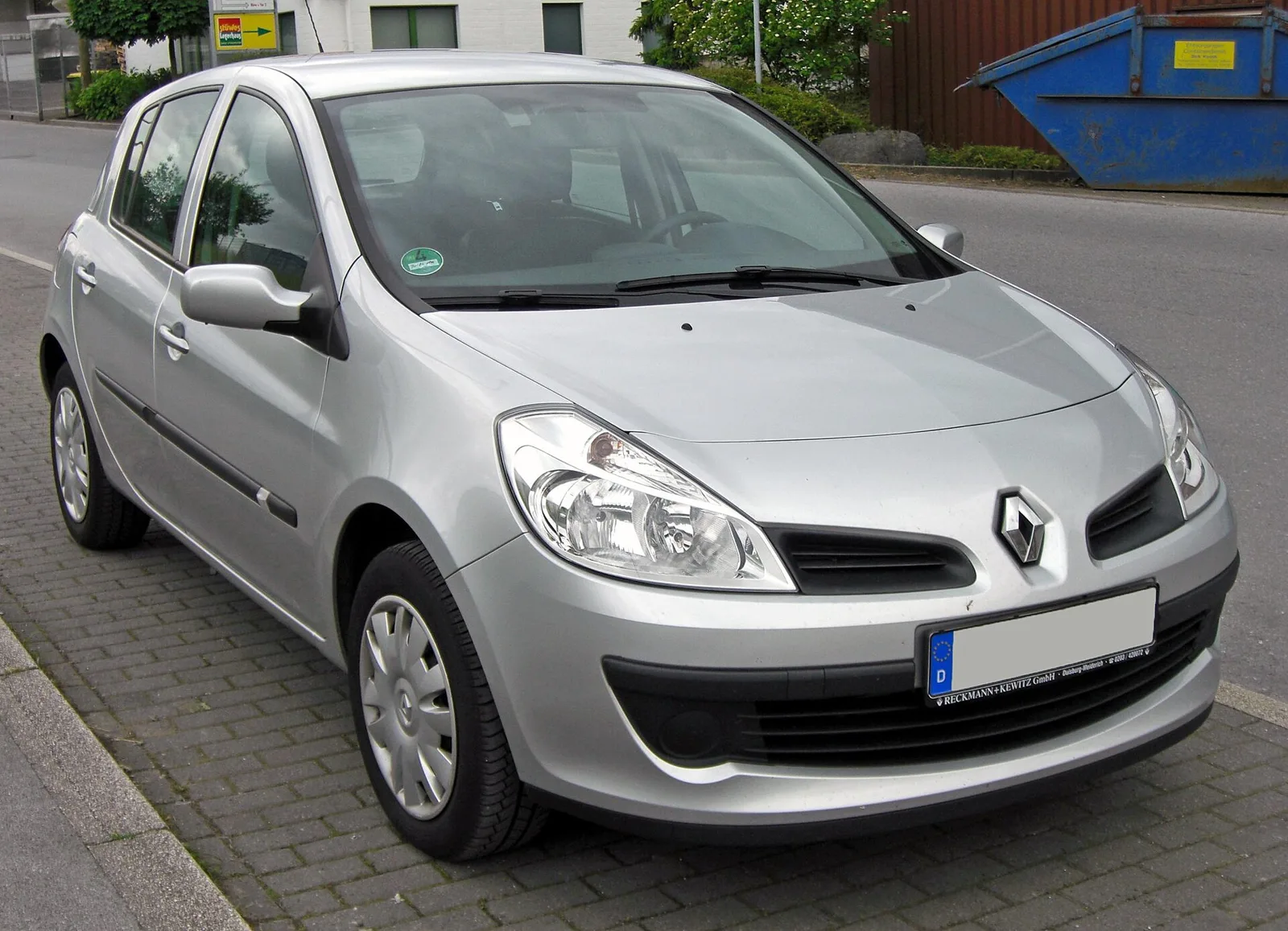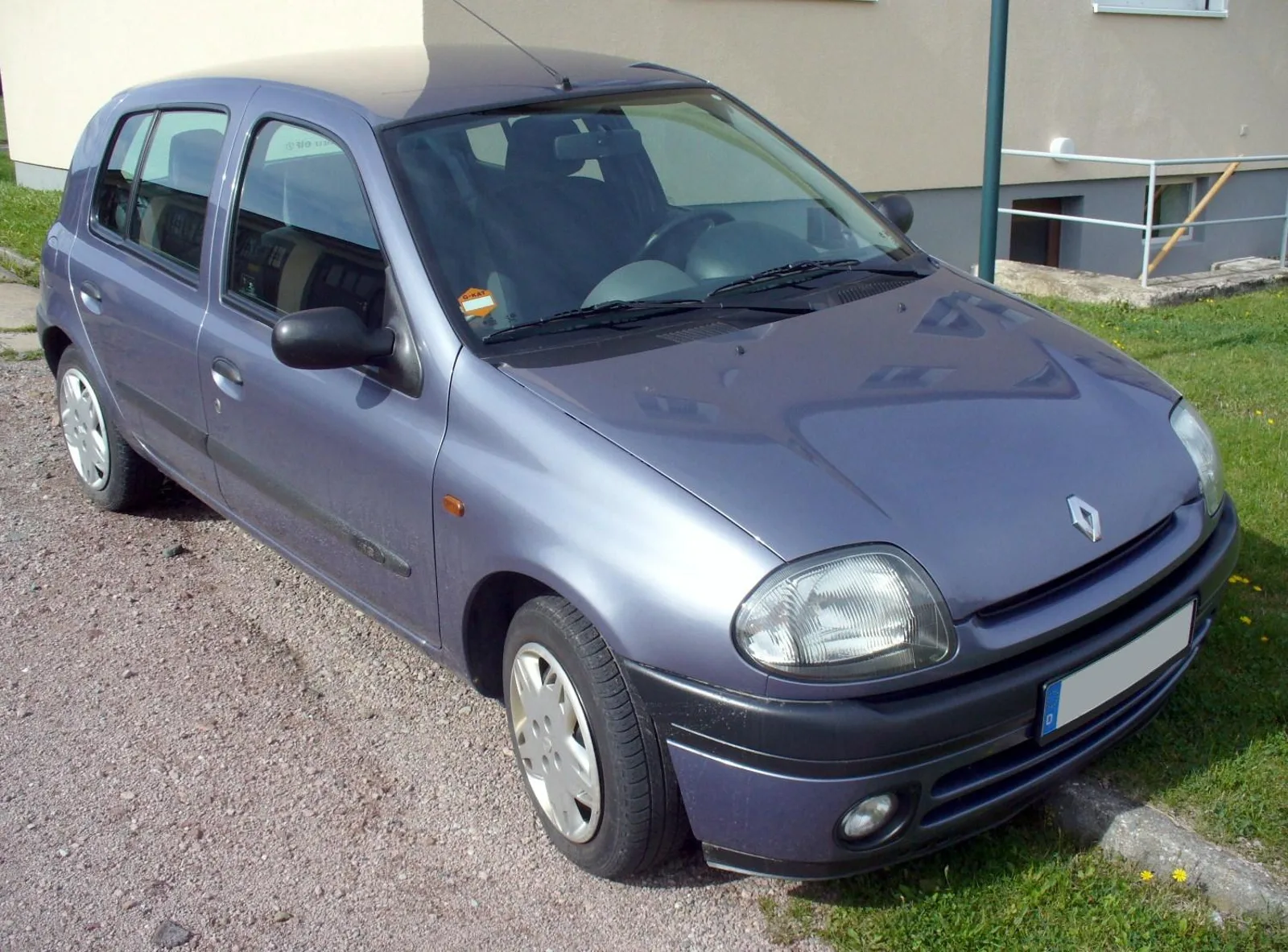
Rounded 1998 styling, an H-beam rear axle, four Euro NCAP stars and a long afterlife as the Clio Campus and Clio Storia.
The Renault Clio II was the second generation of Renault's small Clio, built from 1998 to 2012. It had four engines at launch, a new H-beam rear axle and four Euro NCAP stars, and it stayed on sale as the Clio Campus after the third generation arrived in 2005.
Built from 1998 to 2012, the Clio II gave Renault's small hatchback a new chassis, a rear axle unlike its predecessor's and four Euro NCAP stars. It stayed on sale for years after its successor appeared, living on as the Clio Campus.
How did the Clio II come to be?
Renault began project X65 in the early nineties, shortly after Louis Schweitzer took over from Raymond Levy as chairman. The team worked at a brisk pace, but the company chose not to rush the timetable because the first Clio was still selling well. The definitive car was shown at the Geneva Motor Show in March 1998.
Work moved quickly enough that the first leaks about the finished look surfaced in the summer of 1994. The first Clio had only just reached its first update, so the company did not want to spoil the market for that profitable model. A long series of tests, on the road and off it, still had to be completed before the launch.
Renault kept the second Clio on the price list for years after its successor arrived.
What did the Clio II look like?
The Clio II had rounded lines, larger light units and a grille that was still narrow, so it linked clearly to the first Clio. Its tail was the most personal part of the design, with a convex wrap-around rear window and sickle-shaped rear lights. The tail drew inspiration from the Ludo concept.
The flanks had smooth surfaces throughout, with the rounded styling running through the whole body. Three-door and five-door cars differed most at the back. The three-door had a fixed one-piece rear window, while the five-door's window was split in two, and the three-door belt line rose further towards the rear for a sportier outline. In both bodies the roof sloped down at the back to meet the tail.
Inside, the car was roughly as spacious as its predecessor, but rear passengers gained room from a redesigned rear bench. The roof line still cut into the space for taller people. The dashboard was rebuilt in a rounded, ellipsoidal shape, with a circular speedometer surrounded by segments that each held one or two instruments or a group of warning lights.
The cabin also had plenty of storage compartments. The boot gained no real extra volume, but it had a cross-bar that held luggage in a frontal accident. The seats were reshaped so that a driver or front passenger could not slide under the seat belt in a frontal impact, and the head restraints were built on a frame designed to reduce whiplash.
Engines and specifications at launch
| Specification | Detail |
|---|---|
| Body | Three-door or five-door, segment B |
| 1.2 petrol | D7F, 1,149 cc (70.1 cu in), 58 PS (43 kW; 57 hp) |
| 1.4 petrol | E7 J, 1,390 cc (84.8 cu in), 75 PS (55 kW; 74 hp) |
| 1.6 petrol | K7M, 1,598 cc (97.5 cu in), 90 PS (66 kW; 89 hp) |
| 1.9 D diesel | F8Q, naturally aspirated, indirect injection, 1,870 cc (114.1 cu in), 64 PS (47 kW; 63 hp) |
| Gearbox | 5-speed manual; 4-speed Proactive automatic with the 1.6 only |
| Front brakes | Self-ventilating discs on the 1.6 version |
| Steering | Rack and pinion, power-assisted |
| Rear suspension | Interconnected H-beam flexible axle |
| Euro NCAP | Four stars |
The engine list grew quickly after launch. In 1999 the 1.4 16v with 98 PS and the 1.6 16v arrived, and in 2000 the 1.9 dTi with 80 PS became the first Clio with a turbodiesel and direct injection. The 1.6 8v left the price list that same year. In 2001 a 1.2 16v with 75 PS was added alongside the single-camshaft 1.2 of 59 PS, rather than replacing it.
Which trim levels and special editions were offered?
The launch range used RT, SI, RXE and RXT trims, with RXT at the top. In 1999 the seven trims were RN, RT, RXE, RXT, Initiale, One-o-One and Max, and the Mtv and Vitaminic specials followed in 2000 and 2001, each with its own styling and equipment.
The One O One arrived in March 1999 as an RT with a CD radio and double airbags, available with the 1.2 and 1.4 engines in both body styles. The Mtv edition followed in January 2000 with the channel's logo on the tailgate and flanks, fabric seats bearing the Mtv logo, fog lights and a radio as standard.
The Max debuted in October 1999 with the 1.4 16v engine of 98 PS and took its name from the men's magazine. It added partly leather sports seats, split five-spoke alloy wheels and a rear spoiler, plus the split lenticular headlights of the 1.6 16v. In January 2001 it gained a 1.9 dTi of 80 PS, and the five-door version added rear head restraints as standard. The Vitaminic of 2001 used the Max trim without leather seats, but came with a cassette-style radio with steering-wheel controls and an MP3 player.
How did the sporting versions differ?
The Clio 2.0 16v RS arrived in 2000 with 172 PS, a figure that rose to 182 PS in 2004. The Clio 3.0 V6 put a 3-litre engine mid-rear in place of the rear bench, giving 230 PS when it arrived in 2000 and 255 PS from June 2003.
The RS used an engine derived from the Williams unit. The 2001 restyling reached the RS but not the V6, which kept the early Clio II styling for a couple of years more. In June 2003 the V6 received the aesthetic updates given to the other Clios two years earlier, adapted to its different dimensions and body shape. That update also raised its maximum output to 255 PS through a deep revision of the engine.
What changed in the 2001 update?
In June 2001 the Clio II received the first of its two updates. The large oval light units gave way to triangular ones with a more aggressive look, the grille gained its own identity, and side airbags and satellite navigation became available. Patrick Le Quement used the update to move Renault towards a new styling direction.
Sharp edges mixed with curves replaced the rounded lines that had prevailed until then. The grille, a black plastic panel split in half by an extension of the bonnet, now carried the diamond badge of the French maker. Inside, the steering wheel, dashboard and materials were renewed. The trims planned for the updated car were Authentique, Expression, Dynamique and Privilege, and by late 2005 the list had grown to Symbol, Reebok, Fairway, Ice, Nokia and others, plus the RS and V6.
Under the bonnet the most important change was the 1.5 dCi of 65 PS, which brought common rail injection to a Renault and replaced the outdated naturally aspirated 1.9 diesel. The four-speed automatic returned to the options list, standard on the 1.4 16v Proactive.
In 2002 new trims arrived. The Reebok, an enriched Expression offered in five body colours, came with blue-and-anthracite sports seats and options such as an electric sunroof and satellite navigation. The Initiale, the top trim, matched the equipment of premium-category cars, with leather and Alcantara upholstery, wood trim, xenon headlights and a six-disc CD changer. A 1.5 dCi with 82 PS arrived the same year. In 2004 a third 1.5 dCi, with 100 PS, joined the other two diesels, and the Ice and Nokia trims arrived.
How safe was the Clio II?
The Clio II earned four Euro NCAP stars after crash testing, compared with two for the original Clio. Its shell was reinforced at the front, with larger cross-members and high-strength steel side members. The work was done ahead of stricter safety rules due to take effect a few months after the debut.
The door bars and roof cross-member were also reinforced, to meet the same rules. The chassis itself was new, sharing only its wheelbase measurement with the first Clio. The front used a MacPherson-type suspension, lightly revised to improve comfort and reduce roll in corners. Both axles carried coil springs, telescopic hydraulic dampers and anti-roll bars.
The braking system used a dual hydraulic circuit, and the steering was rack and pinion with power assistance. The five-speed manual was standard, while the four-speed Proactive automatic was offered only with the 1.6, adapting to the driver's style.
Why did the Clio II stay on sale after 2005?
The third-generation Clio arrived in September 2005, but the second series stayed in the range as the Clio Campus, filling the space between the larger Clio III and the Twingo. In Italy it was sold as the Clio Storia from January 2006, a name used only in that market.
The approach was not unique to Renault. The Ford Fiesta Mk3 became the Fiesta Pro in 1995 when the Fiesta Mk4 launched, the Fiat Punto Mk2 became the Punto Classic after the Grande Punto arrived in 2005, and the Peugeot 206 stayed in the list when the Peugeot 207 launched in 2006.
The Storia was on sale in Italy from 2006 until 2011, while the Campus name carried on across the rest of the continent.
The third series launched in September 2005, but the second series continued to be built in the final months of that year in a simplified range with the Fairway trim alone. From October to December 2005 a 1.5 dCi with 68 PS sat alongside the 65 PS unit without replacing it.
Across most of Europe the Campus had updated bumpers and a rear lid that lost its recess for the number plate, which moved to the rear bumper. The range began with the 1.2 58 PS, the 1.2 16v 75 PS and the 1.5 dCi 68 PS. From 2008 only the five-door body remained, so prices could be cut without competing with the new Twingo.
A bi-fuel LPG 1.2 arrived at the end of 2006 as the first bi-fuel Clio. In 2007 the 1.5 dCi fell from 68 PS to 65 PS, while an 85 PS version of the same engine arrived.
In July 2009, with the third series already restyled and the fourth series in the specialist press, the Campus received another light restyle. The bi-fuel version was deleted at that point, and the range was reduced to two engines: the 1.2 petrol with 58 PS and the 1.5 dCi with 64 PS. The prices were 11,100 euros and 13,100 euros respectively.
How did the Clio II's run end?
The Clio Storia left the Italian market in 2011. The Clio Campus was still sold in some European markets through most of 2012, and a Bye Bye farewell edition appeared in France from late summer that year.
The Bye Bye name followed a French tradition seen earlier on the Renault 4 and the Renault Supercinque. That edition was intended to close the production of the longest-lived Clio ever. Official images of the Clio IV were released in the same period.