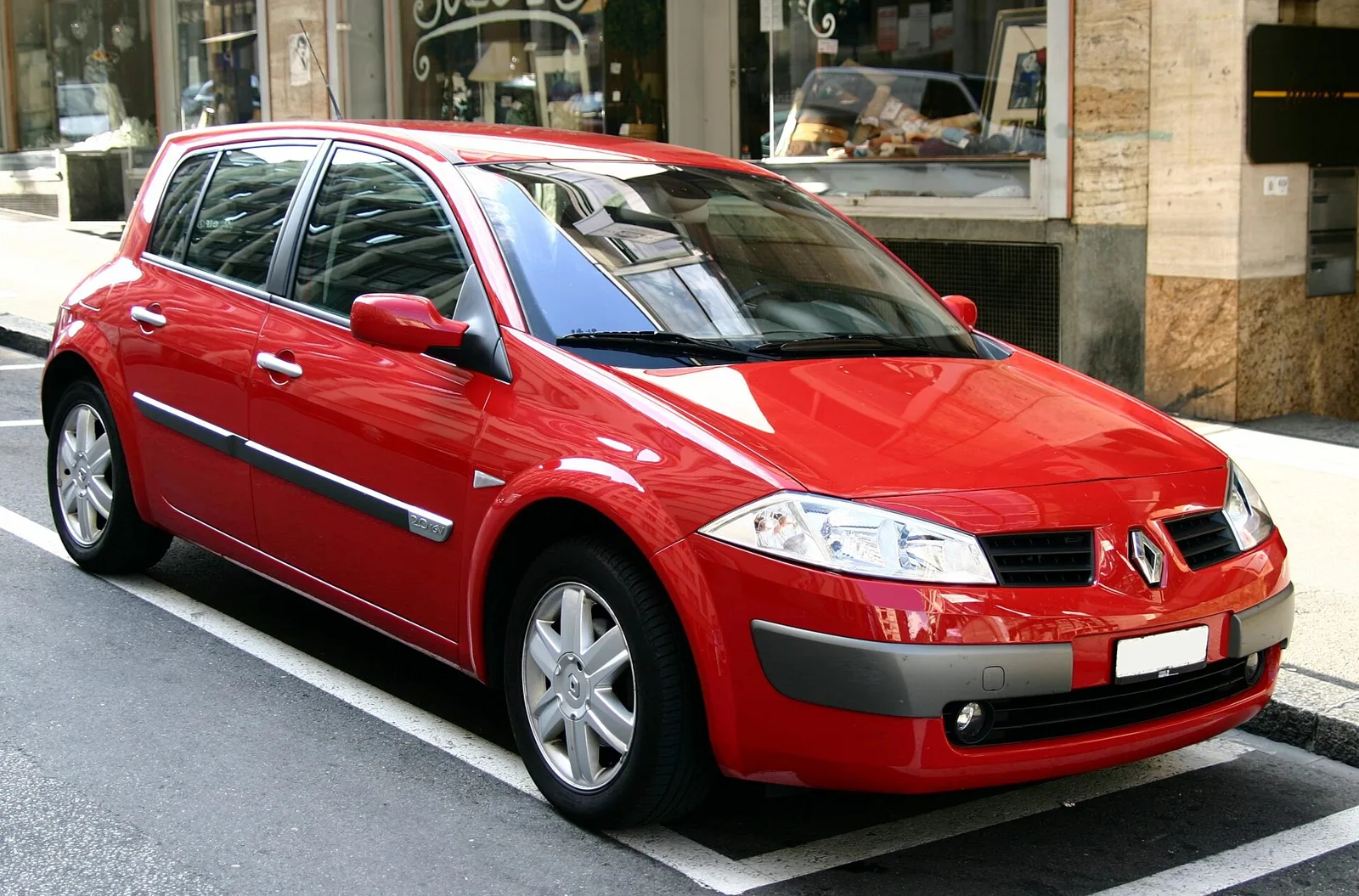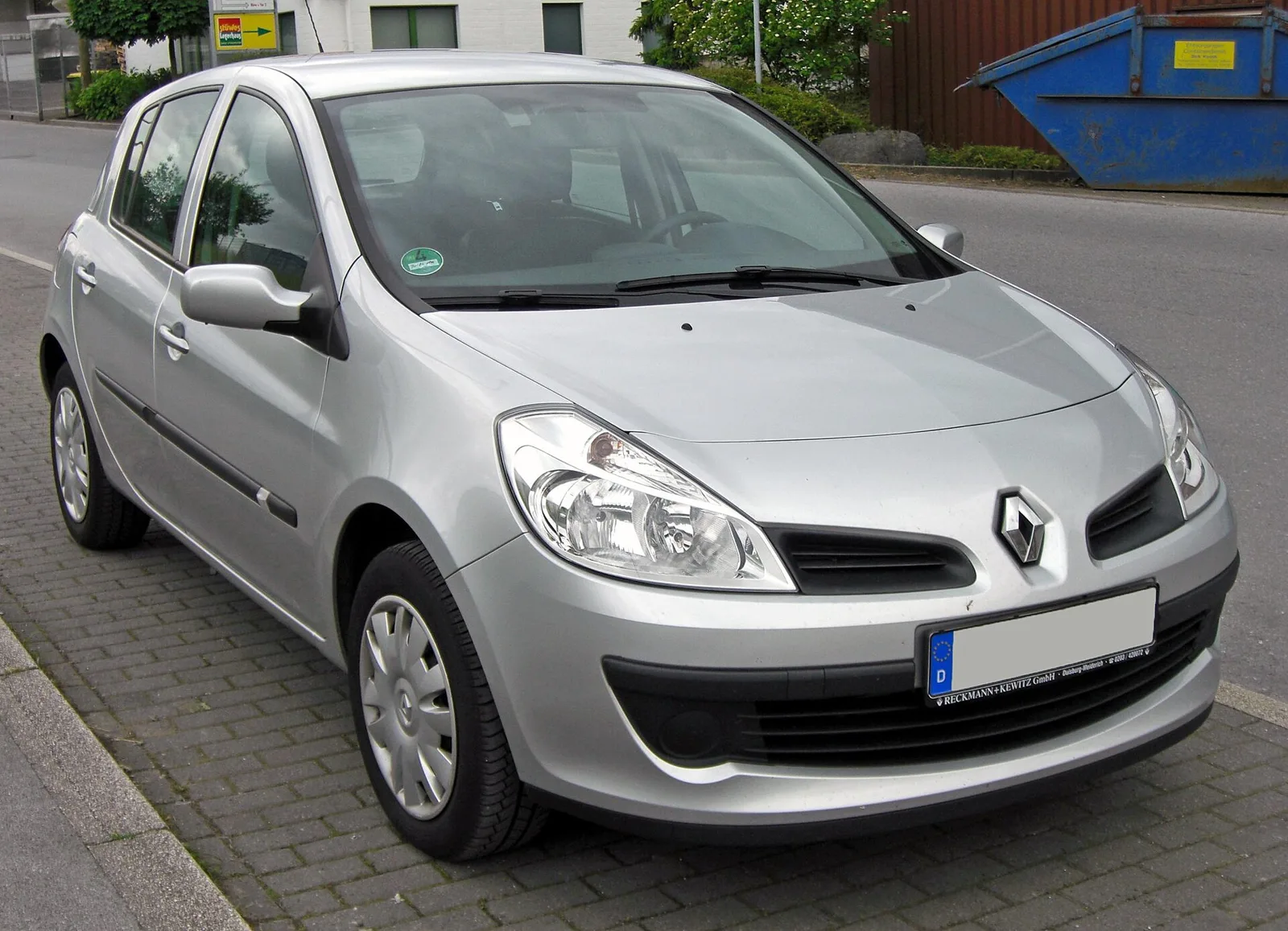
The third-generation Renault Clio, its growth past four metres, five Euro NCAP stars and the RS that carried the sporting badge alone.
Built from 2005 to 2013, the Clio III was Renault's third-generation supermini. Engines ran from a 1.2 16v with 75 PS to 1.5 dCi diesels, and the RS reached 215 km/h (134 mph) in its launch form. The RS was the sporting flagship.
The Renault Clio III was the third series of the French supermini, a B-segment car built from 2005 to 2013. It was sold in Japan as the Lutecia, and it won the Car of the Year title at the end of 2005. Its design grew noticeably larger than the car it replaced.
Why did the Clio III grow so much?
The third Clio grew sharply in size, breaking the four-metre barrier from bumper to bumper. Other rivals, including the Grande Punto, the Peugeot 207 and the Opel Corsa D, followed the same trend. Much of the extra length went into programmed deformation zones that earned five stars from Euro NCAP.
The front echoed the Scenic III and the late Clio II. Its sharp triangular light units pointed their apex upwards, flanked by two thin air intakes, and the direction indicators moved into the door impact strips.
The rear was the most distinctive part. Three-door and five-door cars had different rear flank designs, and the curved hatch came from the Megane II. Trapezoidal light units inspired by the Scenic II finished the tail, while the dashboard inside was simple and easy to read.
The platform was not new. Until then only the third-generation Nissan Micra had used it in any numbers, and it later served the compact people carriers Nissan Note and Renault Modus.
A supermini that grew past four metres, earned five Euro NCAP stars and had the RS as its top model.
How roomy was the Clio III inside?
The cabin offered more room than the Clio II, though not by much given the bigger outside. The real gain was in the rear seats, thanks to a long wheelbase, while the boot held 280 litres in standard form and 1,038 litres with the rear seat folded.
Rivals of the time had shorter wheelbases, so the difference showed most clearly in the back. The dashboard had few controls, which kept the layout tidy and legible for the driver.
Which engines did the Clio III launch with?
The launch range carried over the Clio II's engines, with four units: a 1.2 16v of 1,149 cc (70.1 cu in) making 75 PS (55 kW; 74 hp), a 1.4 16v at 98 PS (72 kW; 97 hp), a 1.6 16v at 110 PS (81 kW; 108 hp) and a 1.5 dCi diesel in three power levels.
The 1.5 dCi came with 68, 85 and 105 PS (50, 63 and 77 kW). It used common-rail technology.
Most cars had a five-speed manual gearbox, and the 1.5 dCi of 106 PS had a six-speed manual instead. A four-speed automatic could be ordered only with the 1.6 16v.
The front suspension was a MacPherson strut, and the rear used a twist-beam axle. Both axles had coil springs and hydraulic telescopic dampers, and the front discs were ventilated whatever the engine.
The braking system was mixed on the 1.2, 1.4 and 1.5 dCi versions of 68 and 86 PS, while the other versions used four discs.
Which trim levels did buyers choose from?
At launch there were five trim levels, from the base Pack to the top Initiale. The Pack already had ABS, a double front airbag and side airbags. The Initiale came only with the 1.6 16v or the 105 PS diesel, and it added parking sensors, leather seats and metallic paint.
The Confort added rear headrests and air conditioning. The Dynamique brought alloy wheels, head airbags and fog lights, while the Luxe added a car radio. The alarm, ESP and traction control were optional across the range.
Satellite navigation and a sunroof could be ordered on request, except on the Pack trim. The Pack was the level offered with the 1.2 and the 68 PS 1.5 dCi.
How did the Clio III change between 2006 and 2008?
A 1.2 detuned to 65 PS extended the range downwards in 2006, while the Clio RS arrived with 197 PS (145 kW; 194 hp). In 2008 a turbocharged 1.2 TCe replaced the 1.4 16v, with 101 PS (74 kW; 100 hp) from its 1,149 cc (70.1 cu in) capacity.
Production began in the second half of 2005 at Flins in France and Bursa in Turkey. The 1.2 TCe was chosen in the push towards downsizing, which meant cutting engine capacity while keeping performance at similar or fairly close levels.
The SporTour estate was unveiled at Frankfurt in 2007 and went on sale early in 2008. A 2.0 16v with 140 PS (103 kW; 138 hp) slotted between the 1.6 and the RS that same year, and the RS was offered in normal, Luxe and R27 F1 Team trims.
The automatic option was extended in 2007 to the 1.2 16v of 75 PS and the 1.5 dCi of 85 PS. It became the only gearbox option for the 1.6 16v.
What changed in the 2009 restyling?
The March 2009 restyling changed the front most, with the two side air intakes replaced by one slot and teardrop-shaped light units. The rear changed only in the arrangement of its lights, and the base 65 PS version left the price list because it did not meet Euro 5 rules.
The optional list gained the TomTom navigation system, and the cabin received new fabrics and colours. The Clio GT arrived with a revived 1.6 petrol unit from the early Clio III, and its power was raised to 128 PS (94 kW; 126 hp).
What happened to the Clio III in 2010 and 2011?
In 2010 the 1.6 petrol of 110 PS returned in the Clio 1.6 BVA, where the abbreviation stood for Boite de vitesse automatique, meaning automatic gearbox. In 2011 the Clio GT Gordini, with a light blue livery, joined the Italian price lists, and the 1.2 GPL became the first bi-fuel version.
The two lowest 1.5 dCi engines rose from 68 to 75 PS and from 85 to 88 PS. The 105 PS diesel was dropped from some price lists, including the Italian one, but it stayed on others.
A special series was introduced for the twentieth birthday of the Clio. Called simply 20th, it was offered with all the petrol engines and the 1.5 dCi of 75 PS. The Gordini's livery recalled the Renaults prepared decades earlier by Amedeo Gordini.
The Gordini used the 1.6 of the earlier Clio GT, which had not originally been planned for the Italian market.
Why did the Clio III stay on sale after 2012?
The Clio IV had first appeared in official photos in summer 2012. It was presented at the 2012 Paris motor show, but Renault kept the Clio III in production under the Clio Collection name, in a simplified range.
The Clio III remained on the price list until March 2013, after the SporTour and RS versions had been discontinued. It was no longer produced for the other European markets by then.
The Clio Collection kept selling in some European countries, among them France, Germany, Spain and Switzerland. Two engines were on offer: a 1.2 16V with 75 PS and a 1.5 dCi, also rated at 75 PS. France had a single trim, the Alize, in three-door and five-door forms.
In Germany the Clio Collection was sold only with the petrol engine and in the Collection trim, which was richer than the Alize sold in France. In Spain the Collection trim was a little plainer than the French version of the same name, though slightly richer than the French Alize.
Switzerland had a Collection trim of its own, available only as a five-door. Inside it was richer than every other trim, while outside it was as plain as the French Alize, with the single 1.2 petrol engine of 75 PS.
What was the Clio RS like?
The RS was the only sporting version of the third series, reaching 215 km/h (134 mph). Its 197 PS (145 kW; 194 hp) engine and extra weight left it slightly behind the last Clio II RS, which had 15 PS less.
The engine was directly derived from that of the previous RS, and so it was related to the 2-litre of the Williams of the nineties.
The car was distinguished by a body kit with enlarged wings, air intakes behind the front wings and a rear air extractor. It weighed 200 kg (441 lb) more than the last Clio II RS after the substantial growth in size.
The R27 F1 Team edition arrived in 2007, with the Renault F1 Team logo and anthracite alloy wheels. It had the cup chassis with stiffened suspension, the same engine as the RS and Recaro seats. The Luxe arrived at the same time, with xenon headlights and electrically folding mirrors.
The 2009 restyling brought a more modern and aggressive style and a power rise to 203 PS (149 kW; 200 hp). A grille in contrasting black or grey set the car apart, and the front flap called the F1 blade channelled airflow under the car.
The rear extractor was not a mere styling element. It produced 40 kg (88 lb) of downforce at 200 km/h (124 mph), where cars normally generate lift. The RS Light lacked air conditioning, electric mirrors and the radio, and it sat 7 mm (0.3 in) lower on a stiffer suspension.
A World Series version used a simplified trim, the cup chassis and a six-speed gearbox with lengthened top ratios. Later special editions included the Cup, the Trophy, the 20th and the Gordini. In 2013 the RS was replaced by the Clio IV in RS form.
What did the SporTour estate add?
The SporTour was an estate version, first shown as a concept at Geneva in 2007 and presented as the Clio Estate at Frankfurt that year. It used the saloon's platform with a rear overhang extended by 216 mm (8.5 in), giving a boot of 439 litres that grew to 1,277 litres.
The rear window was set at an incline to keep the line sleek, and two roof bars and a small spoiler on the top of the hatch completed the look.
It was aimed at the Peugeot 207 SW, the Skoda Fabia Wagon and the SEAT Ibiza ST. At launch the engines were the 1.2 16v of 75 PS, the 1.2 TCe of 101 PS, the 1.6 16v of 110 PS and the 1.5 dCi in its three power levels.
The 1.6 version lasted only a few months and was gone by the end of 2008. Unlike the saloon, the Clio 1.6 SporTour had a five-speed manual gearbox. The 1.6 GT of 128 PS never fitted under the estate's bonnet.
The estate left European price lists in March 2013 to make way for the new Clio Estate, called Clio Sporter in Italy and based on the fourth generation of the French compact.
Renault Clio III specifications
| Specification | Detail |
|---|---|
| Built | 2005 to 2013 |
| Japanese name | Lutecia |
| Launch petrol engine | 1.2 16v, 1,149 cc (70.1 cu in), 75 PS (55 kW; 74 hp) |
| Launch diesel engine | 1.5 dCi, 1,461 cc (89.2 cu in), 68, 85 or 105 PS |
| Boot | 280 litres; 1,038 litres with rear seat folded |
| RS power | 197 PS (145 kW; 194 hp); 203 PS (149 kW; 200 hp) after 2009 |
| RS top speed | 215 km/h (134 mph) |
| RS downforce | 40 kg (88 lb) at 200 km/h (124 mph) |
| SporTour boot | 439 litres; 1,277 litres with rear bench folded |
| Euro NCAP | Five stars |