Opel's 2006 small car, its sporty OPC and Nurburgring variants, and the 2007 sales fight with the VW Polo.
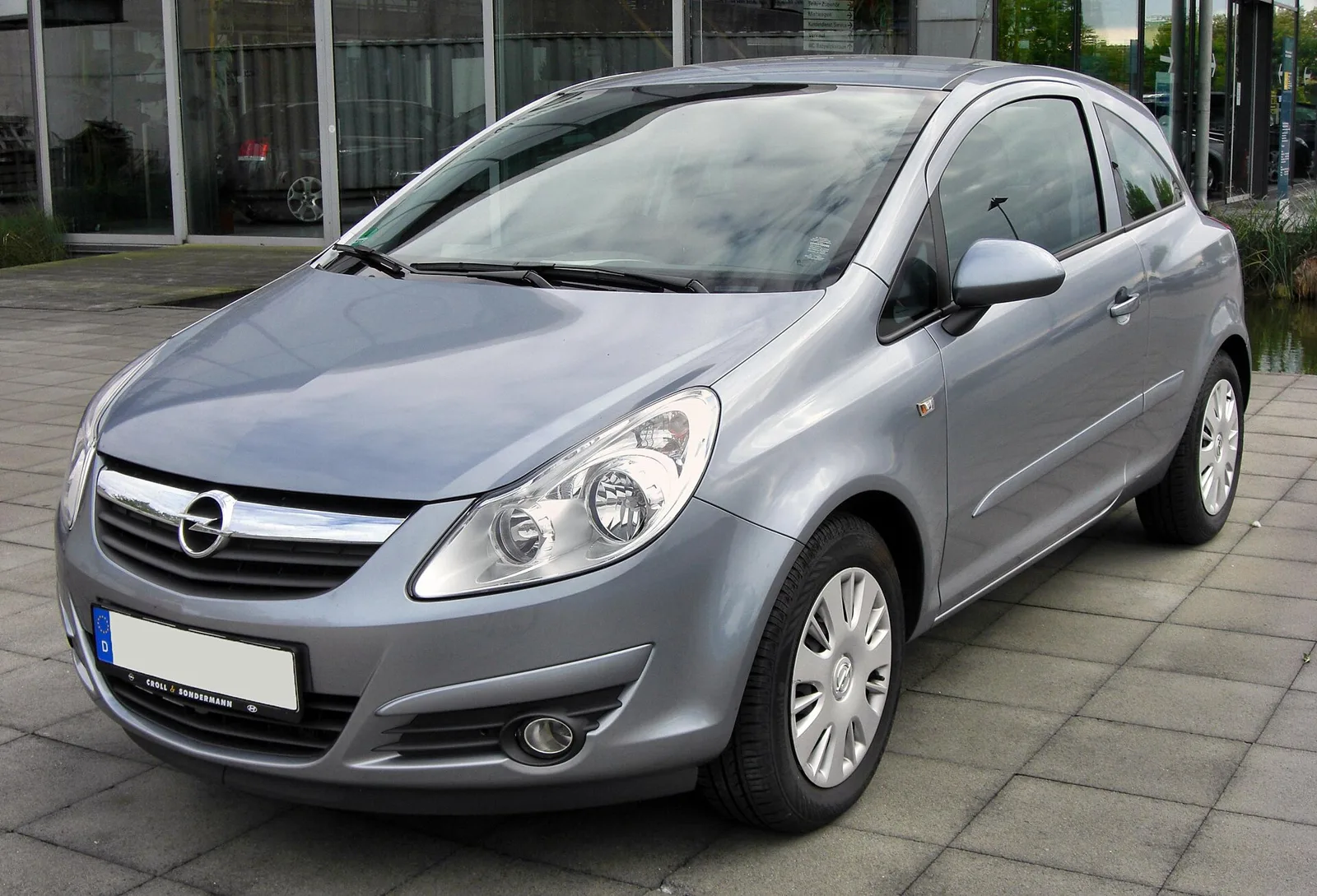
Opel's Corsa D replaced the Corsa C in 2006 and grew in every dimension. Sporting OPC and Nurburgring Edition versions followed, and the OPC's engine delivered 141 kW (192 PS; 189 hp).
The Opel Corsa D was a small car built from summer 2006 to October 2014 as the successor to the Corsa C. It grew in every dimension over its predecessor, and its OPC and Nurburgring Edition versions added a sporting edge. The OPC's 1.6-litre turbo made 141 kW (192 PS; 189 hp), and in 2007 the Corsa D outsold the VW Polo in Germany over the full year.
How big was the Corsa D compared with its predecessor?
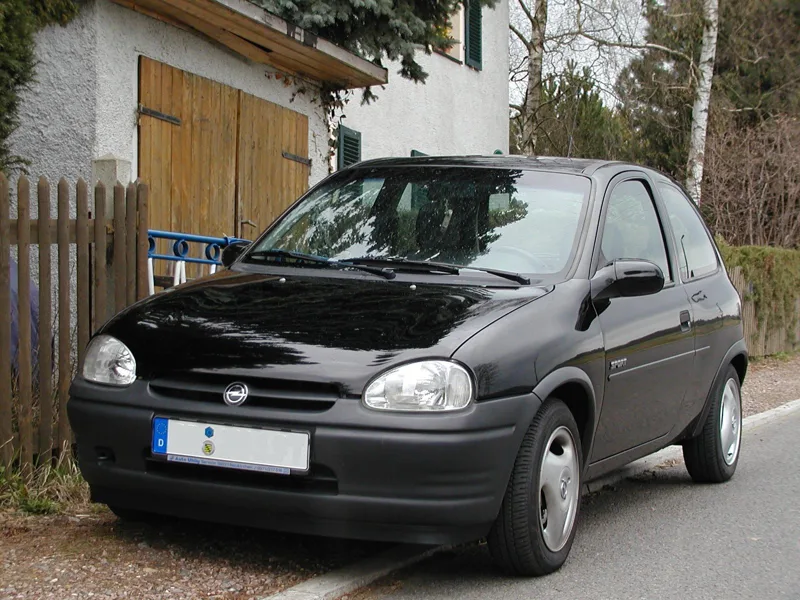
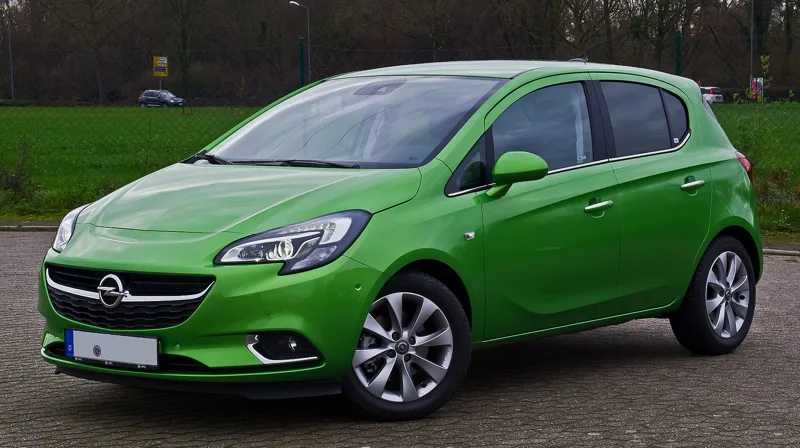
The Corsa D grew in all dimensions, and its length rose by 160 mm (6.3 in) to 3,999 mm (157.4 in). That kept it just under the 4-metre mark, unlike the Fiat Grande Punto or the Peugeot 207, which both went past it. The three-door was the more sporty body style, while the five-door showed the extra room more clearly.
The OPC is a three-door measuring 4,040 mm (159.1 in) long. The three-door weighs from 1,100 kg (2,425 lb) unladen, while the five-door starts at 1,145 kg (2,524 lb). Payloads reach 445 kg (981 lb) and 420 kg (926 lb) respectively. Longer gearing held fuel consumption at the level of the Corsa C despite the extra weight, although acceleration times were slightly longer.
A small car that grew in size and in sporting intent, and in 2007 outsold the VW Polo in Germany.
Engine and gearbox range
Three petrol engines launched the range: the 1.0-litre (61 cu in) three-cylinder made 44 kW (60 PS; 59 hp), the 1.2-litre (73 cu in) produced 59 kW (80 PS; 79 hp), and the 1.4-litre (85 cu in) gave 66 kW (90 PS; 89 hp). Two 1.3-litre (79 cu in) CDTi diesels produced 55 kW (75 PS; 74 hp) and 66 kW (90 PS; 89 hp), and a 1.7-litre (104 cu in) CDTi gave 92 kW (125 PS; 123 hp).
The OPC, the GSi and the two diesels had six-speed gearboxes, while the other models had five speeds. Easytronic, an automated gearbox, offered five or six speeds depending on the engine, and a four-speed automatic suited the 1.4-litre petrol.
Key engines at a glance
| Version | Engine and output | Notable figures |
|---|---|---|
| Corsa OPC | 1.6-litre turbo, 141 kW (192 PS; 189 hp) | 230 Nm (170 lb ft), 225 km/h (140 mph) |
| Corsa GSi | 1.6-litre turbo, 110 kW (150 PS; 148 hp) | 210 Nm (155 lb ft), 210 km/h (130 mph) |
| Nurburgring Edition | 155 kW (211 PS; 208 hp) | 250 Nm (184 lb ft), 280 Nm with overboost |
| ecoFLEX | 1.3 CDTi, 70 kW (95 PS; 94 hp) | 3.7 litres per 100 km (76 mpg-imp; 64 mpg-US) |
| Autogas | 42-litre LPG tank | Added to the 45-litre petrol tank |
How fast was the OPC?
The OPC used a 1.6-litre turbocharged ECOTEC petrol engine with 141 kW (192 PS; 189 hp). It accelerated from 0 to 100 km/h in 7.2 s and reached 225 km/h (140 mph). The GSi, launched in September 2007, used a 110 kW (150 PS; 148 hp) version of the same 1.6-litre turbo and topped out at 210 km/h (130 mph).
The OPC arrived in March 2007 as the sportiest Corsa until then, at a base price of EUR 22,560. It was sold only as a three-door, and its 230 Nm (170 lb ft) of torque rose to 266 Nm (196 lb ft) with overboost.
The GSi came in summer 2007 as a three- or five-door, with base prices of EUR 19,950 and EUR 20,650. It had the sports suspension and brakes of the OPC, sports seats and 7x17-inch five-spoke alloy wheels.
What did the Nurburgring Edition change?
The Nurburgring Edition of the OPC raised output to 155 kW (211 PS; 208 hp) and torque to 250 Nm (184 lb ft), or 280 Nm with overboost. A new engine calibration for 100-octane petrol and an adjusted wastegate delivered the gain, and a mechanical multi-plate limited-slip differential was added.
Extras included 8x18-inch forged aluminium wheels in carbon grey, a lower sports suspension, a 305 mm front brake system and a rear silencer optimised for back pressure. Visual details included Nurburgring logos on the B-pillars and head restraints, and an exhaust with two tailpipes.
Its list price at launch was EUR 28,100. In a magazine test the uncompromising set-up put the edition at the top of its segment in events such as the 18 m slalom and a short lap at Hockenheim.
How safe and well equipped was it?
Every model came with front and side airbags. The anti-lock system included cornering brake control and brake assist, and electronic brake-force distribution and traction control were fitted too. Head airbags came as standard except on the base model, and ESP Plus became standard from the end of March 2009. The front passenger airbag could be switched off, so rearward-facing child seats could go on the passenger seat.
Only the four strongest models had rear disc brakes. The rear seat had room for two child seats, and Isofix mounts on the outer rear seats were standard.
Trim levels and special editions
The base Selection model had electrically adjustable door mirrors, a rev counter, height and reach adjustable steering column, a height-adjustable driver's seat and central locking. In summer 2010 the unchanged special model Limited was offered from EUR 8,990, which made it EUR 2,410 cheaper.
The Catch me now special model dated from 2007 and came with 16-inch alloy wheels, air conditioning and a CD radio. The Edition 111 Jahre added electric front windows, air conditioning, a leather steering wheel, cruise control and remote central locking. From November 2010 the Navi version replaced it, adding navigation and fog lights.
Xenon lights and the coolant temperature gauge were no longer available compared with the Corsa C, and leather seats were offered only on the OPC. A panoramic sliding roof and a heated steering wheel were optional extras.
How did the Corsa D change in its later years?
The November 2010 revision was recognisable mainly by its modified front end, and it came with a changed range of trims. The GSi version was dropped, and the revised car reached dealers from 29 January 2011. A January 2010 update brought Euro 5 to all petrol engines, and the diesels followed later that year.
Production of the Corsa D ended in October 2014. The Corsa E succeeded it in January 2015.
CO2 package and ecoFLEX
The three-door 1.3 CDTi was available at no extra cost with a so-called CO2 package. Aerodynamics were improved with a lip spoiler at the front, and the body sat 20 millimetres lower. The gearing was longer, and the tyres were narrower at 175/70 R14, against the standard 185/70 R14. Fuel tank capacity fell from 45 to 40 litres.
The package reduced emissions to 109 g/km of CO2 and cut consumption by 0.4 litres per 100 km. The ecoFLEX version of the 1.3 CDTi appeared in December 2009 with 70 kW (95 PS; 94 hp) and a standard fuel consumption figure of 3.7 litres per 100 km.
How well did the Corsa D sell?
More than 150,000 Corsa Ds were ordered within two months of the official presentation, one and a half times what Opel had expected. The stated aim was to take the top spot in German small-car registrations from the VW Polo in 2007.
Between January and May 2007 the Corsa had 31,947 new registrations, against 30,334 for the VW Polo in the same period. For the full year the Corsa recorded 79,098 registrations, making it Germany's best-selling small car ahead of the Polo's 76,683. It also collected 14 titles, among them Car of the Year and the Gelber Engel 2007 award voted for by ADAC readers.
Where was the Corsa D built?
Three-door cars came mainly from the Eisenach plant in Germany, and five-door cars came exclusively from Figueruelas in Spain. Since 2013 a partner company has also put the Corsa together at Obchuk in Belarus.