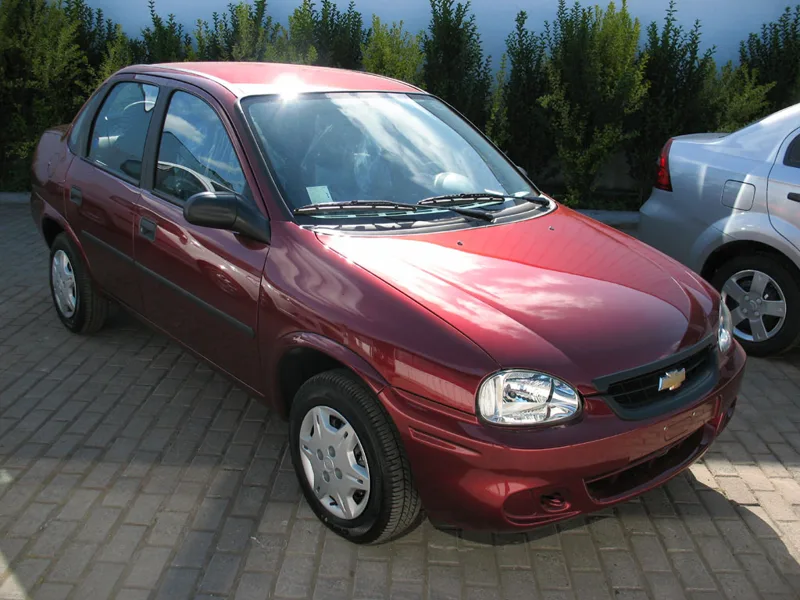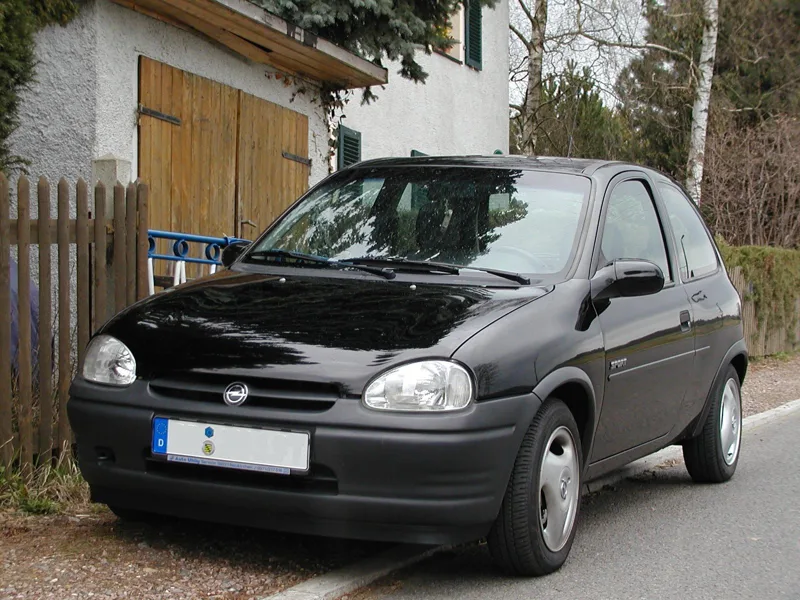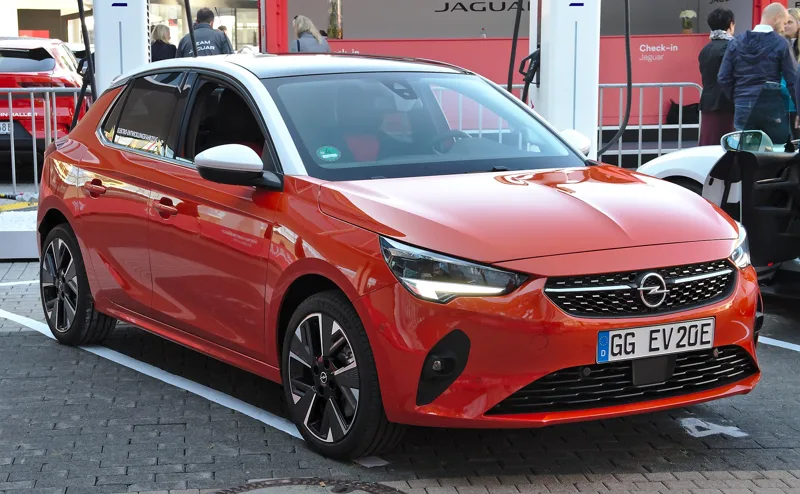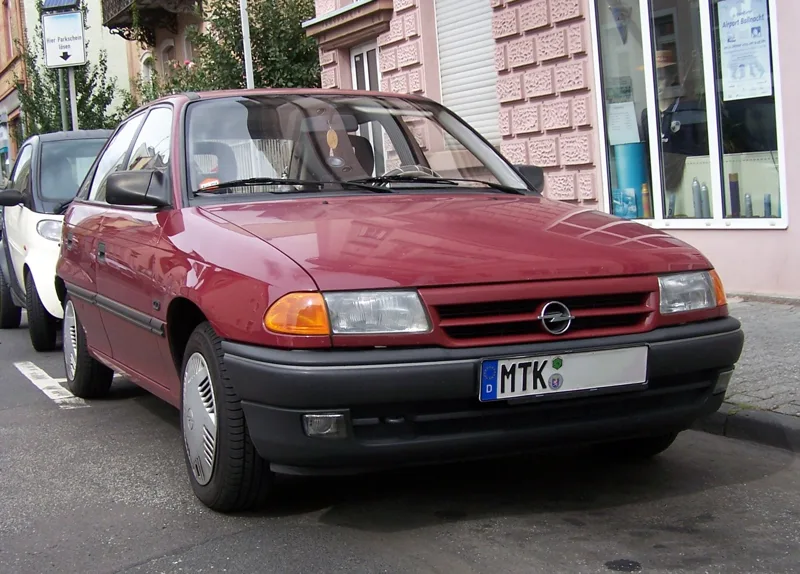
The third-generation Corsa of 2000 to 2006, built on the Gamma platform with a longer wheelbase, a safety-led rebuild and production on several continents.
Opel's Corsa C ran from 2000 to 2006 as a B-segment small car. It kept the proportions of its predecessor, added safety equipment and was built under several badges across the world.
The Opel Corsa C was the third generation of the Corsa, a B-segment supermini that Opel built from 2000 to 2006. The letter C is not part of the official name, but it marks the car out from the Corsa B it replaced.
Its arrival was preceded by renderings in the specialist press at the end of 1999. Opel kept the outgoing car's proportions and concentrated on safety, both passive and active.
Why did Opel keep the Corsa B's shape?
The Corsa B had been produced in several million units and had become the most widespread B-segment car in the world, often under different badges in different markets. That made the Corsa C's job a difficult one, because the outgoing model had built a very loyal customer base.
Rather than change the formula, Opel chose to keep the two-volume, rounded body and the overall balance of volumes. The new car was a few centimetres bigger in all three dimensions, and its Cx was 0.32.
A supermini that kept its proportions, added safety, and was built under many different badges around the world.
What did the Corsa C look like?
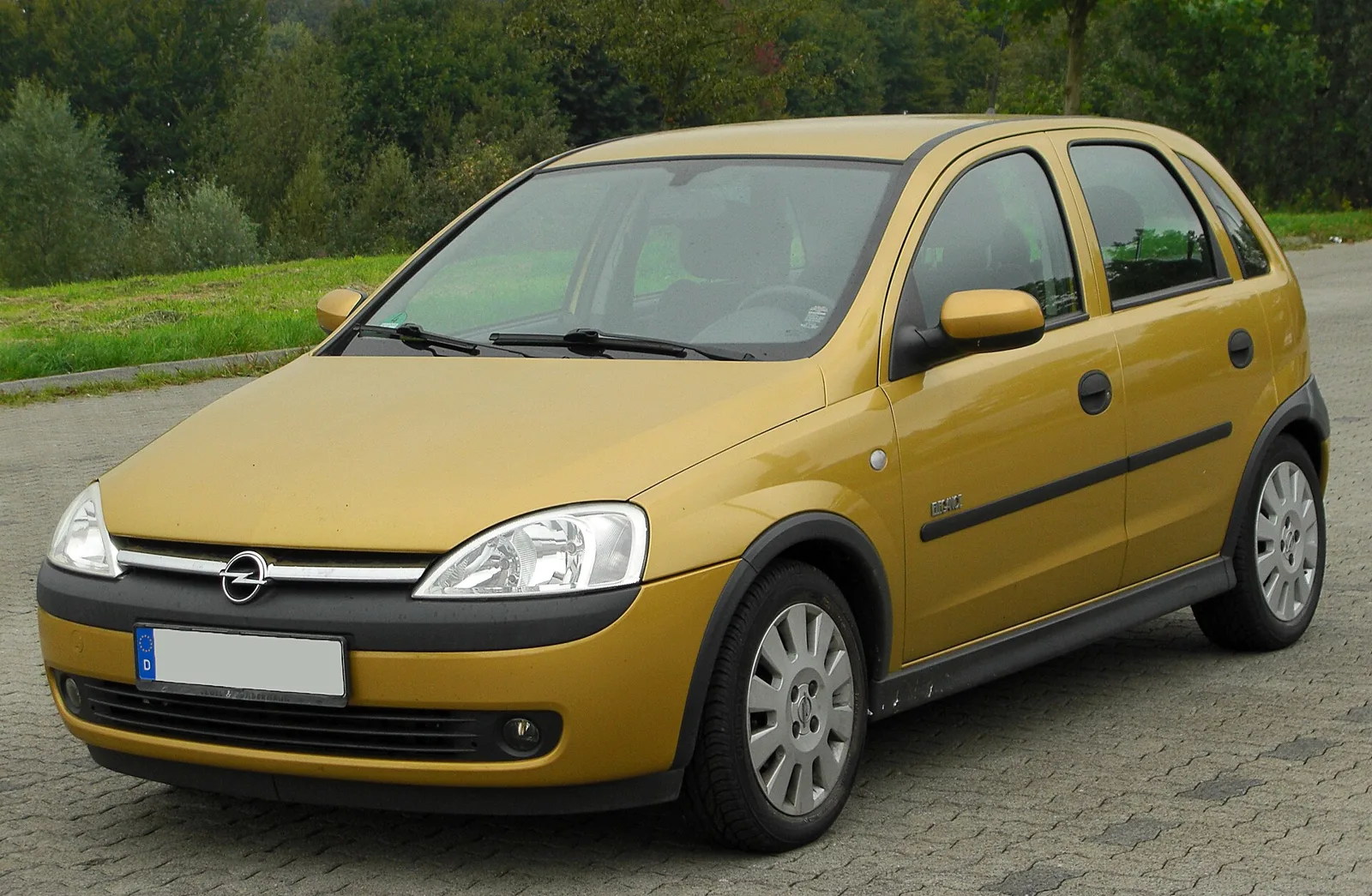
The Corsa C kept the styling approach of its predecessor, so the shape looked familiar at first glance.
The Corsa C came as a 3-door or 5-door, and the two bodies differed less than before. The rear changed with the door count, and the new styling had a much less soft cut than the Corsa B.
The front light clusters were larger and sharper, and they came to a point on their inner edges. A thin air intake ran the full width of the bumper beneath them. Along the flank the rear pillars were more massive, while the wheel arches and glass areas were redrawn.
At the rear the new vertical light clusters sat on the pillar. The tailgate lost its number-plate recess, which moved down to the level of the bumper.
How roomy was the Corsa C inside?
The cabin was roomier and more welcoming than the Corsa B's. The longer wheelbase gave the Corsa C the longest wheelbase of any B-segment car, a small record for the class. A new centre console could house a multimedia system with an integrated GSM phone, which was a notable touch for a small car of that period.
Luggage capacity stayed close to the old figure, at 260 litres in standard form. With the rear seat backs folded down it grew by 10 litres, from 1,050 to 1,060 litres.
What safety features did the Corsa C add?
Safety was the main point of the new car. The pedal box released on impact, a feature already introduced two years earlier on the second-generation Astra. The Corsa C also had active head restraints, which were new on a B-segment car, and seatbelts that could be adjusted for height.
In 2002 the Corsa C earned four stars from EuroNCAP.
The Corsa C rode on the new Gamma platform (GM4300), which later served other General Motors entry-level models. Its wheelbase grew from 2.465 m (97.0 in) to 2.491 m (98.1 in).
Which engines did the Corsa C launch with?
At debut the Corsa C offered five engines: three petrol and two diesel. Each had two camshafts and four valves per cylinder, and a five-speed manual was the only gearbox on the launch engines.
The entry point was a three-cylinder 1.0 12v of 973 cc (59.4 cu in) producing 58 PS (57 hp; 43 kW). The 1.2 16v was a four-cylinder of 1,199 cc (73.2 cu in) with 75 PS (74 hp; 55 kW), and the top launch engine was the 1.4 16v of 1,389 cc (84.8 cu in) with 90 PS (89 hp; 66 kW).
On the diesel side, the 1.7 DI was a turbodiesel of Isuzu origin with direct injection but no common rail, displacing 1,686 cc (102.9 cu in) and producing 65 PS (64 hp; 48 kW). The 1.7 DTI matched that unit but added an intercooler, lifting output to 75 PS (74 hp; 55 kW).
Late in 2000 the Corsa 1.8 16v GSi appeared in European price lists, with official sales from February 2001. Its 1.8-litre (110 cu in) engine produced 125 PS (123 hp; 92 kW), 19 PS more than the outgoing GSi. The same engine was used in the Astra G and the first-generation Zafira.
What did the Corsa C offer loyal Corsa B buyers?
The Corsa C kept the tried formula so as not to betray the loyal customer base of the Corsa B. It put its effort into safety, and the cabin was roomier than the Corsa B's.
Buyers of the old car would have found a familiar silhouette, with better safety equipment and a roomier cabin.
How did the Corsa C change during its life?
The year 2001 brought no noteworthy updates beyond the GSi, and in 2002 the updates concerned practically only the trim levels. The 2003 mid-life restyle updated the grille with a horizontal chrome bar, gave the bumpers a body-coloured finish and fitted clear reflectors to the front lights.
The 2003 restyle also brought engine changes. The 1.3 Multijet, a common-rail diesel with 70 PS (69 hp; 51 kW), replaced the 1.7 of 65 PS. The 1.7 CDTI, with 101 PS (100 hp; 74 kW), took over from the 75 PS turbodiesel, and it kept the Isuzu-origin base but added common-rail injection.
The 1.0 and 1.4 petrol engines received variable-geometry intake manifolds. The 1.0 grew from 973 to 998 cc (60.9 cu in), and the 1.4 fell from 1,389 to 1,364 cc (83.2 cu in). In 2004 the 1.2 received the same update, with its displacement rising to 1,229 cc (75.0 cu in).
What are the Opel Corsa C specifications?
| Specification | Detail |
|---|---|
| Generation | Third, built 2000 to 2006 |
| Platform | Gamma (GM4300) |
| Wheelbase | 2.465 m (97.0 in) to 2.491 m (98.1 in) |
| Drag coefficient | Cx of 0.32 |
| Launch engines | 1.0 12v 973 cc (59.4 cu in), 58 PS (57 hp; 43 kW); 1.2 16v 1,199 cc (73.2 cu in), 75 PS (74 hp; 55 kW); 1.4 16v 1,389 cc (84.8 cu in), 90 PS (89 hp; 66 kW) |
| Diesel engines | 1.7 DI 1,686 cc (102.9 cu in), 65 PS (64 hp; 48 kW); 1.7 DTI up to 75 PS (74 hp; 55 kW) |
| Gearbox | Five-speed manual |
| Luggage | 260 litres; 1,050 to 1,060 litres with rear seats folded |
Where else was the Corsa C built?
Like its ancestor, the Corsa C was a true world car. It was produced in many countries on several continents, sometimes under other General Motors badges and in body styles that were new to the range.
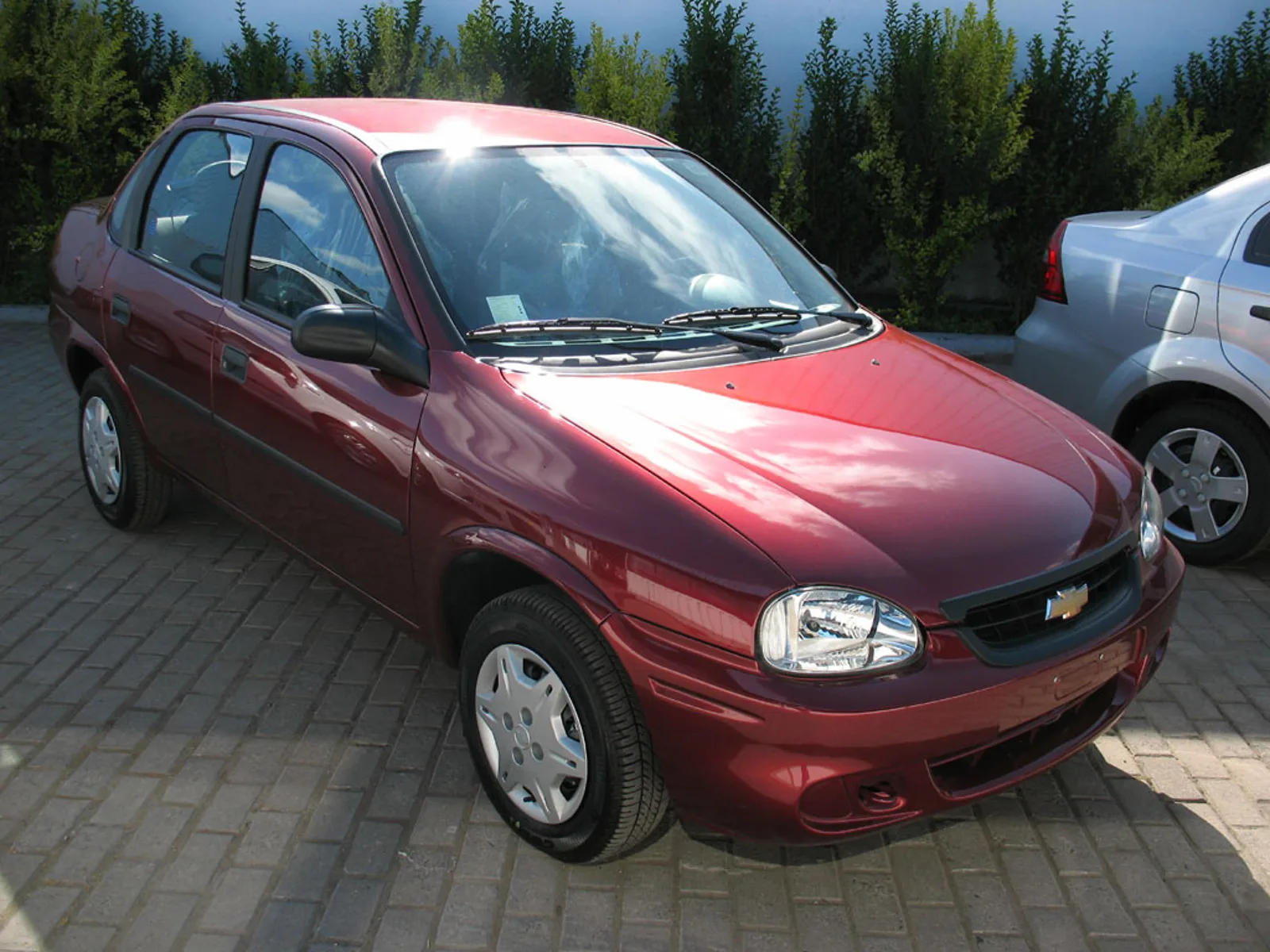
In the United Kingdom it was sold as the Vauxhall Corsa. In Brazil it was built at Sao Jose dos Campos under the Chevrolet name, with a three-box saloon and a pick-up. The pick-up was named the Chevrolet Montana, and the Chevrolet Tornado for the Mexican market.
South American production also took place at Alvear in Argentina and at Quito in Ecuador, where the local maker AYMESA built cars of various brands under licence. In South Africa the car was assembled at Port Elizabeth as the New Corsa, with a pick-up known as the Corsa Utility, and Egypt built it at 6th of October City.
The Corsa C therefore reached buyers on several continents, though the names changed from one market to the next.
In Australia the car was produced as the Holden Barina from the Holden plant in Melbourne, and the Barina was also exported to New Zealand.
When did the Corsa C leave the market?
The Corsa C left the price lists in 2006, when the Corsa D took over. Its 2004 update had been the final significant revision to the range, and the Corsa D became the fourth generation of the Corsa line.