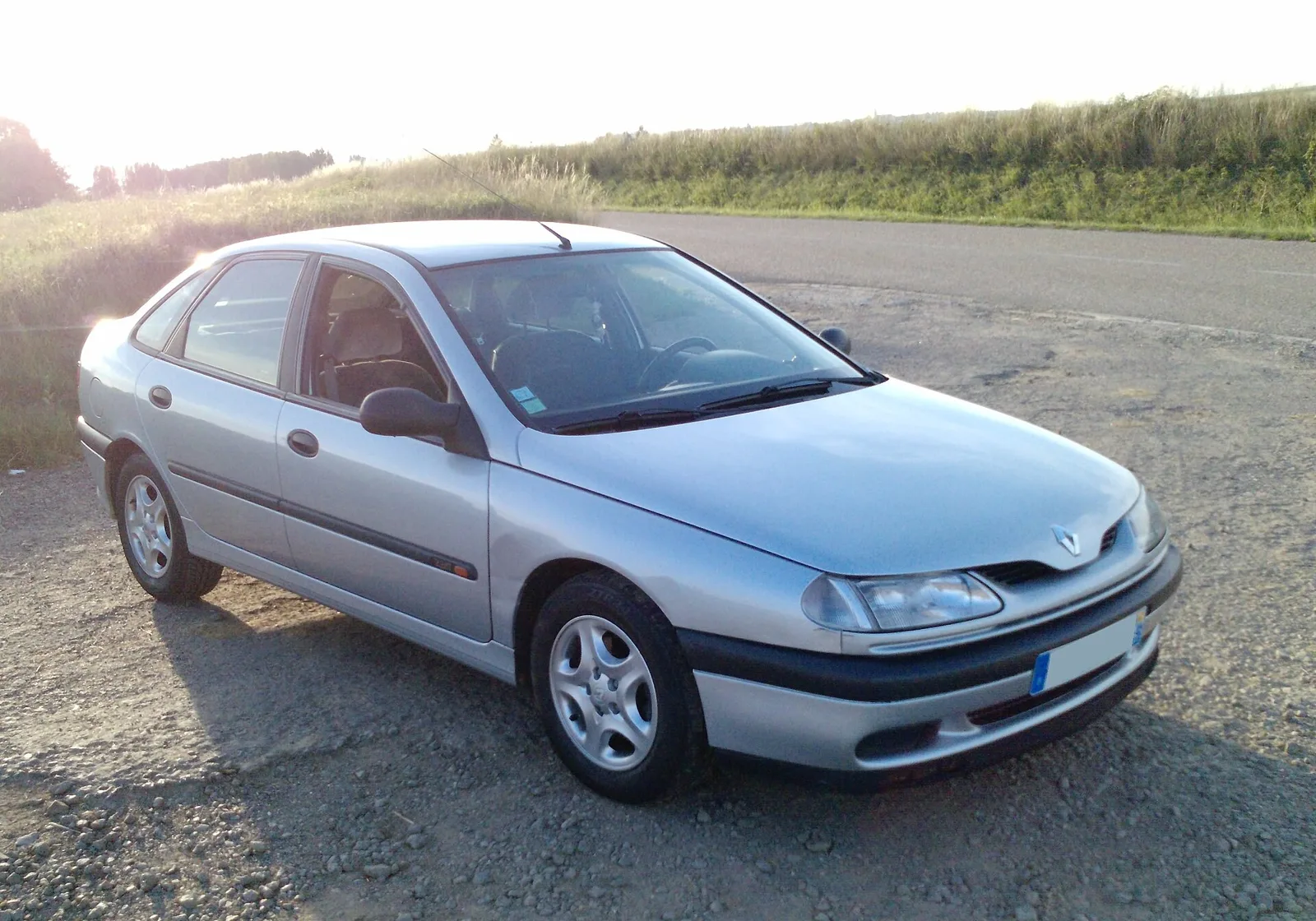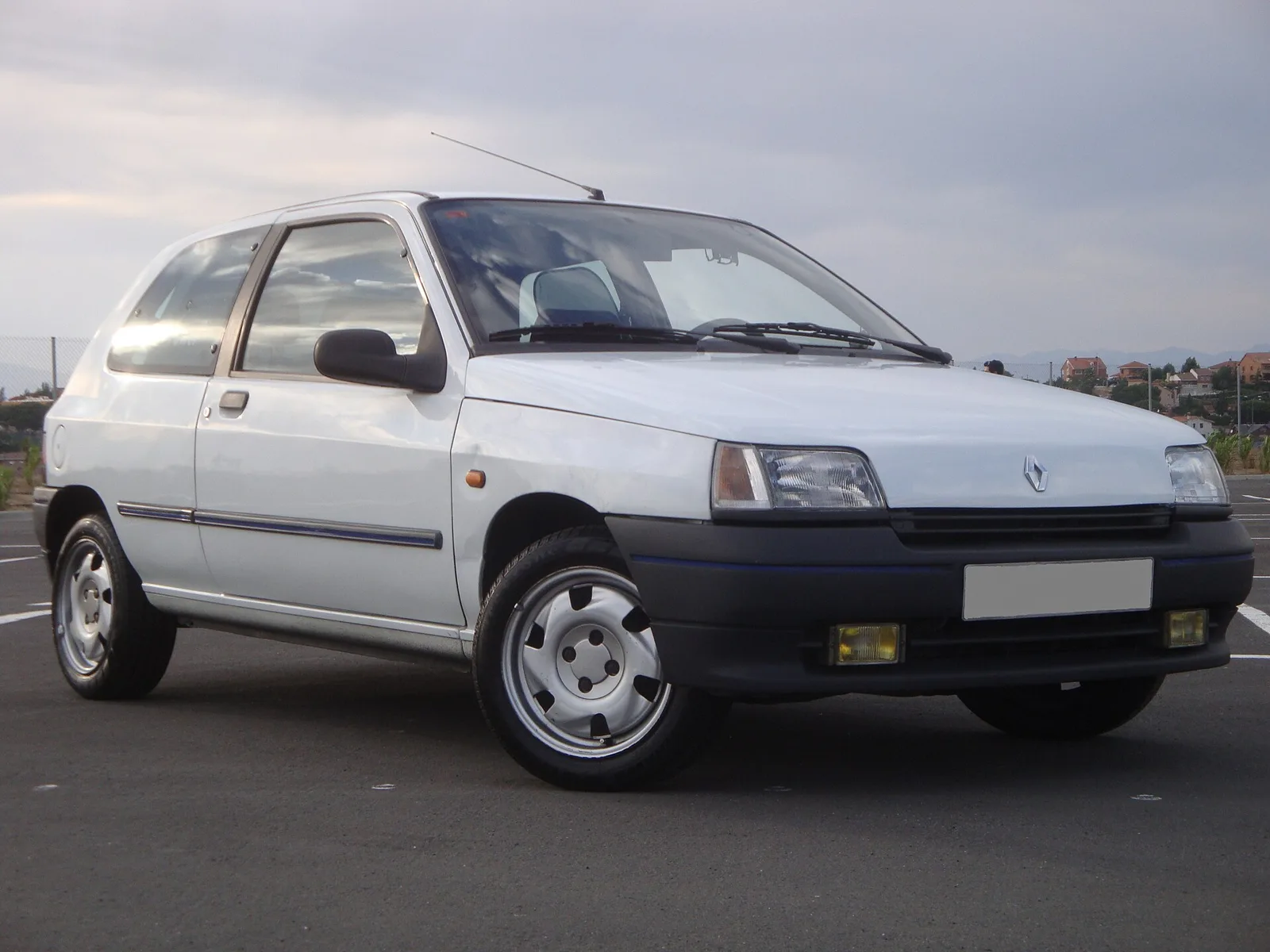
A name instead of a number, a fresh body from Renault's own studio, and a Williams edition that grew from 2,500 planned cars to 12,100.
The Renault Clio I was the first series of Renault's Clio small car, built from 1990 to 1998. It was named after the Greek muse of history and succeeded the Supercinque. It came with petrol engines from 1.1 to 1.4 litres, a 1.9 diesel and the 1.8 16v, and about 4 million were made.
Renault wanted a name rather than a number for its next small car, and the Clio arrived in June 1990 with exactly that. It succeeded the Supercinque on a new platform, and over eight years the first series spread into sporting, luxury and Williams editions.
Why did Renault need a new small car in the late 1980s?
Renault's finances in the mid-eighties were split in two. European sales of the Supercinque, the Renault 9/11 and the Renault 4 earned good money, and Formula 1 engine supply added to the image, but North American ventures lost heavily. The restructuring carried out by Georges Besse cut 21,000 jobs, and the Clio project began in that tense climate.
Project X57 started around 1985, shortly after the Supercinque had gone on sale, because that car already looked dated. Its brief put interior space first, with more storage compartments and a bigger boot. A full-size mock-up of the definitive car followed in 1986, and the arrival of Raymond Levy as the new chairman did not derail the project.
The dismissals were followed, at the end of 1986, by the assassination of Besse by an extremist group. Levy kept the programme on course, and the car that emerged from it was far more modern in every respect than the model it replaced.
The Clio did not end the Supercinque overnight. The new car went on sale in June 1990 alongside its predecessor, which carried on in some markets, France included, with a much smaller range.
A name instead of a number, and a body that broke cleanly with the Renault 5.
How was the Clio I designed?
The Clio I was a new car rather than a reworked Supercinque, with a longer and wider body and a wheelbase 7 cm longer. Its drag coefficient fell from 0.34 to 0.31, which helped fuel economy. Height barely changed, rising by only 5 mm.
The front was almost smooth. There was no traditional radiator grille, and air came in through a thin slot at the edge of the bonnet and through horizontal intakes in the front bumper. The headlights were quadrangular, but with more blunted corners than the Supercinque's, and the tail carried new lights of an unfamiliar shape.
From the side the car had simple, smooth lines with a dynamic character that would later reach its peak in the sporting versions. The rear was equally considered, its tail sitting well with the rest of the body and its new lights fitting into the shape. Underneath, it used a new platform with MacPherson struts and coil springs at the front and a rear axle on trailing arms with torsion bars. Steering was rack and pinion, and the gearbox was a five-speed manual.
Where did the Clio name come from?
Renault's chairman Raymond Levy wanted to drop the numbered names and choose a real one instead. Marcel Botton, a well-known deviser of names and brands, proposed Clio, a name from Greek mythology. The car went on sale in June 1990, and the name became Botton's first major success. Renault had long used numbers for its models, so the choice was a deliberate break with that tradition.
The search for a name began while the car was still being tested. In late 1988 the specialist press caught the first prototypes on the road, and by then they matched the definitive model in almost every detail apart from light camouflage. A 1:1 scale model had already been built in 1986.
In Greek myth Clio was the muse of history, so the name carried no link to the numbers the company had used on its cars before.
What engines did the Clio I offer?
At launch the Clio came with three petrol engines, from the 1.1 to the 1.4, all paired with five-speed manual gearboxes. A 1.9 diesel arrived in 1991, and the 1.8 16-valve became the model enthusiasts wanted. The engines came from Renault's own families, including the Cleon, ExF and Energy units.
| Engine | Displacement | Maximum power | Notes |
|---|---|---|---|
| 1.1 Cleon | 1,108 cc (67.6 cu in) | 48 PS (35 kW; 47 hp) | Twin-barrel carburettor, taken from the Supercinque |
| 1.2 ExF | 1,171 cc (71.5 cu in) | 58 PS (43 kW; 57 hp) | Single-point electronic injection |
| 1.4 Energy | 1,390 cc (84.8 cu in) | 78 PS (57 kW; 77 hp) | Twin-barrel carburettor |
| 1.9 diesel F8Q | 1,870 cc (114.1 cu in) | 64 PS (47 kW; 63 hp) | Introduced in 1991 |
| 1.8 16v | 1,764 cc (107.6 cu in) | 137 PS (101 kW; 135 hp) | Top speed 212 km/h (132 mph); 209 km/h (130 mph) catalysed |
For the Clio, the 1.1 Cleon's power was raised from 46 to 48 PS (35 kW; 47 hp). Catalytic converters arrived in 1991 and cost a little power. The 1.2 dropped from 58 to 55 PS, the 1.4 from 80 to 78 PS, and the 1.8 16v from 137 to 135 PS. The 1.1 was the one engine left out of the catalysed versions, and it disappeared from the price list in 1992, as it was judged unsuitable for the coming Euro 1 rules.
The 1.9 diesel was the exception. Thanks to an EGR valve it could go without a catalytic converter even after the start of 1993 and still meet the Euro 1 standard.
The range grew again in 1992. The Clio 1.4 S was a three-door only model with a sporty trim and the same 78 PS engine as the other 1.4 versions. The Baccara received a different 1.8, a single-camshaft, two-valve unit of 1,794 cc (109.5 cu in) producing 95 PS (70 kW; 94 hp), and this time the Baccara was also sold in Italy.
Which trim levels did the Clio I come in?
The first Clio came in two trims, RN and RT, and the RT added electric front windows, central locking and fog lamps as standard. By 1996 the range had passed through RL, RN, Ice, RTi, Si and RSi, with Ice adding air conditioning, a feature still rare on small cars.
The RN was the base trim, paired with the 1.1 and 1.2 engines, and it came ready for a radio and a rear-window wiper. Optional extras included a split rear seat, a manual sunroof and metallic paint. The RT could be had with the 1.2 or the 1.4, and its options included alloy wheels, electric mirrors and power steering.
The RL arrived at the end of 1994 as a new basic trim, available only with the 1.2 litre engine. In 1995 the RL gained the 1,239 cc (75.6 cu in) engine borrowed from the smaller Twingo, which produced up to 54 PS (40 kW; 53 hp).
What was the Clio I like inside?
The interior ranged from plain to plush. The RN and RL were simple, the Si brought ABS and an immobiliser, and the Baccara offered a cabin fitted out in the manner of a small luxury car. The 1996 update also brought new upholstery to every version.
The Baccara's seats and door panels were trimmed in ash-coloured Agena leather, with burr-wood inserts on the dashboard and a three-spoke sports steering wheel covered in leather. Power steering, electric mirrors, air recirculation and a garment hook fitted under the parcel shelf completed the car. Its engines were the 1.7 and the 1.8, producing 92 and 95 PS.
In spring 1994 the RTi, the cheerful BeBop and the Si were introduced. The BeBop was the youthful entry trim of the range, while the Si replaced the S trim with ABS and an immobiliser but no airbag. Richer versions received a driver's airbag as standard, and the airbag was optional elsewhere.
Why did the Clio Williams matter?
The Clio Williams, introduced in spring 1993, celebrated the Constructors title won by Williams-Renault in 1992. Under the bonnet of the 1.8 16v body sat a 2-litre 16-valve engine producing 147 PS (108 kW; 145 hp), which gave a top speed of 215 km/h (134 mph) and a 0 to 100 km/h time of eight seconds. It was also the first segment B car to carry a 2-litre engine, and the team had taken the Drivers title that season with Nigel Mansell.
Renault planned 2,500 cars for all of Europe, but demand pushed that figure to 3,500 and then to 3,800. The final total across Europe was 12,100. Blue metallic paint, gold-finished wheels and Williams badging on the flanks and tail made the car easy to spot.
The Williams had been meant as a limited edition, and in Italy it sold so well that Renault kept it in the range from 1995, when it was dropped from the other European lists. In its later edition the Williams was updated with the rest of the range, and its engine output rose from 147 PS to 150 PS (110 kW; 148 hp).
Which sporting Clios did enthusiasts buy?
The 1.8 16v was the car enthusiasts talked about most, but the range also included the Clio S, the RSi and the Baccara. Young drivers and novice racers used many of them in competition. The 1.8 16v was the first small Renault to offer a twin-camshaft, multi-valve engine as standard.
The Clio S was mostly about its looks, with white-painted wheels, three doors, fog lamps and a green line running around the body. It used the 78 PS engine of the other 1.4 versions. The RSi took the Baccara's 1.8 from 95 to 108 PS (79 kW; 107 hp) and added five-spoke alloy wheels with an RSi badge on the lower flanks.
In its original form the 1.8 16v developed 137 PS (101 kW; 135 hp), and 135 PS when catalysed. Its top speed was 212 km/h (132 mph), or 209 km/h (130 mph) catalysed. Its wings were widened, the bonnet bulged, and an air intake was built into it, all of which sporting buyers found appealing.
How did the Clio I change during its life?
The Clio I received two facelifts, in spring 1994 and in 1996, and production spread beyond France in 1996. The first update changed the grille, mirrors and rear lights, and the second reshaped the headlights and added a third brake light. The second generation arrived in March 1998.
In spring 1994 the thin front grille, the mirrors and the rear light clusters were redesigned, and the rear badging moved above the moulding. Equipment also became more complete, especially in the richer versions. The engine range stayed essentially unchanged.
In 1997 the range was reorganised once more, with the RL and RSi trims removed from the list.
The 1996 update brought rounder, larger headlights that overlapped upwards, a third brake light in the centre of the tailgate and new upholstery across the range. The base 1.1 switched to the new D-family unit of 1,149 cc (70.1 cu in) and 59 PS (43 kW; 58 hp), while the Baccara gave up its 95 PS 1.8 for the cheaper 1.4 of 78 PS.
Production also started in 1996 at the Renault plants in Envigado, near Medellin in Colombia, and in Cordoba in Argentina. The second generation arrived in March 1998, and about 4 million examples of the first series were built.