A family-owned French maker that moved from belt-driven experiments to 1930s racing wins, military vehicles and a 1954 closure.
Delahaye was a family-owned French car maker founded by Emile Delahaye in Tours in 1894. Its works later operated from Paris, and it became known for racing cars in the 1930s, notably the Type 135 and the V12 Type 145. The firm shut in late 1954 after Hotchkiss took it over.
Delahaye began as an engine experiment at a Tours foundry and grew into a family-owned maker of luxury cars, trucks and racing machines. Emile Delahaye founded the firm in 1894, and it won a racing reputation in the 1930s. The company closed at the end of 1954, after a takeover by Hotchkiss.
Who founded Delahaye and where did it start?
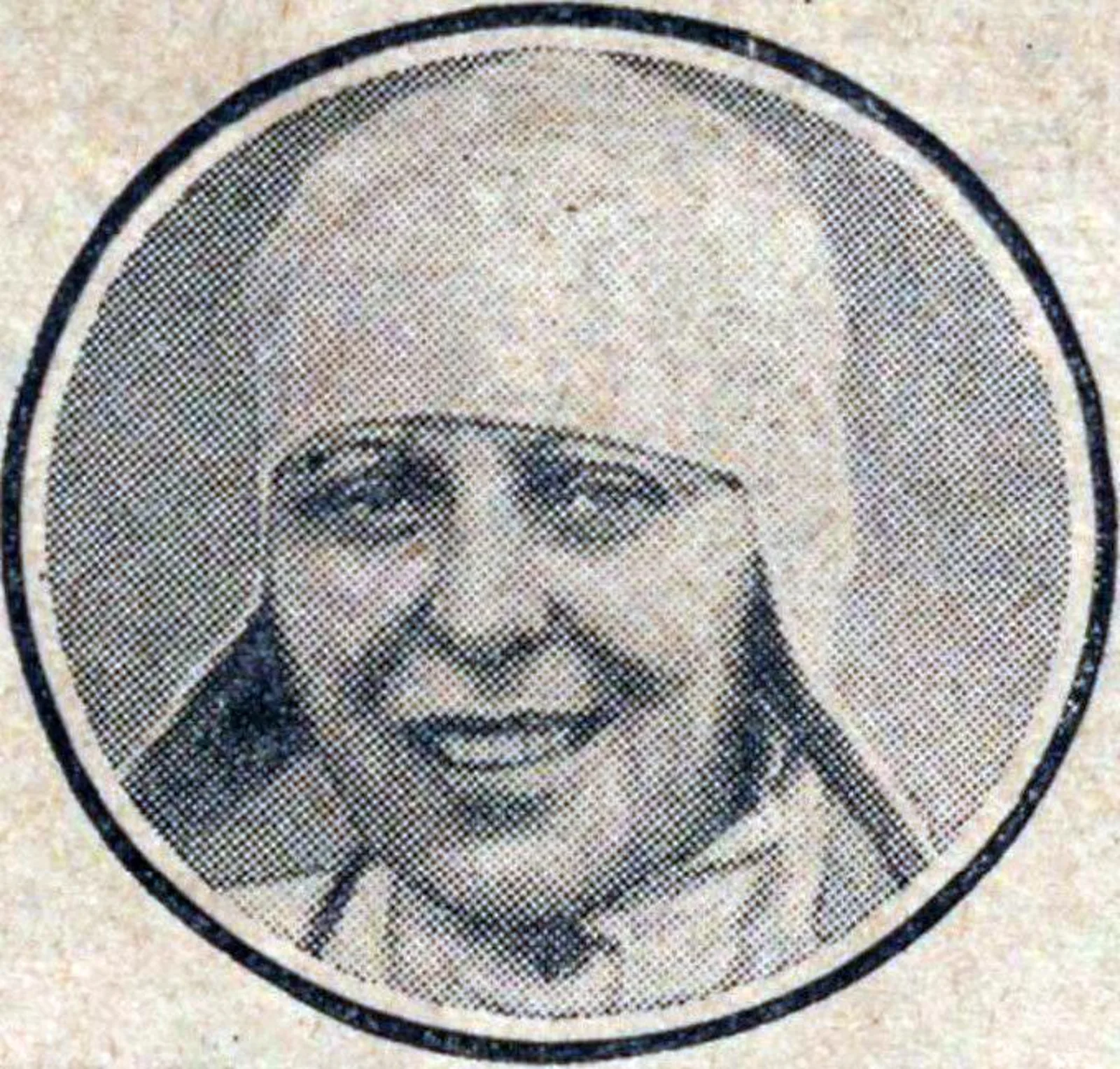
Emile Delahaye, an engineer and manager at the Brethon Foundry and Machine-works in Tours, began experimenting with belt-driven cars in 1894. He acquired the foundry so that its owner could retire, and he then entered his automobiles in the 1896 Paris-Marseille-Paris race. Those early outings were the first public test of the cars.
Emile soon entered his cars in the 1897 Paris-Dieppe race. In 1898 they appeared in the Marseilles-Nice rally, the Course de Perigueux and the Paris-Amsterdam-Paris race, which gave the young company an early and demanding test of its designs.
By 1898 demand had grown beyond what the Tours works could supply. Delahaye needed to expand and find investment capital, and that need set the company on the path to becoming a separate business.
A belt-driven experiment in Tours grew into a racing name, then closed as part of a larger industrial group.
How did the company move to Paris?
The business was incorporated in 1898 with George Morane, who had raced one of its cars in the Marseilles-Nice rally, and with Morane's brother-in-law Leon Desmarais as partners. Emile Delahaye was an equal partner in the arrangement.
Manufacturing moved from Tours to a former hydraulic machinery plant in Paris owned by the Morane family, which made the move a family arrangement from the start. Charles Weiffenbach took on the role of operations manager and stayed central to the company for decades.
The Paris range started with three machines: the 1.4 litre single-cylinder Type 0 and the twin-cylinder Type 1 and Type 2. Each was steered by a tiller, carried its water-cooled engine at the rear and opened its valves automatically, with fuel supplied through a surface carburettor and ignition from a trembler coil.
Power went through a mix of belt and chain, with three forward gears and a single reverse. These were practical machines for the roads and events of their time, and they formed the base for everything that followed.
What technical firsts did Delahaye achieve?
The firm's engineers introduced several innovations, especially in its first years. The first production four-cylinder appeared in 1903, and shaft drive followed in 1907. The company's Type 44 of 1911 was its first production V6, an engine pioneered by chief design engineer Amedee Varlet.
Varlet also designed the Titan marine engine, a large cast-iron four-cylinder with multiple valves and twin camshafts. It was fitted to the speedboat La Dubonnet, which briefly held the world water speed record.
Shaft drive was a notable step away from the belt and chain layout of the earliest cars.
Who ran Delahaye after Emile Delahaye retired?
Desmarais and Morane took control when Emile Delahaye retired in 1901, and Weiffenbach took over from them in 1906. The company gave up racing after Emile's death in 1905, and Weiffenbach focused on practical chassis, heavy commercial vehicles and early fire trucks for the French government.
Weiffenbach had little interest in motor sport. By 1904 about 850 automobiles had been built, and the company's effort went into production cars, commercial vehicles and fire engines rather than competition.
Emile had been the company's president and sole engineer until his retirement. Amedee Varlet and Weiffenbach joined him in 1898, and both men stayed with the company for their entire working careers.
Which firms built Delahaye designs under licence?
German maker Protos began licensed production of Delahaye models in 1907, and H. M. Hobson began importing Delahaye vehicles into Britain in 1909. The American firm White copied the design. Hostilities during the First World War stalled any attempt to claim compensation, and by its end trucks made up most of the firm's income.
The White episode shows how readily the designs were copied across borders, and how hard it was for a small French maker to protect its work overseas. Licensing spread the name, but it also gave away much of the early value.
Why did the 1920s collaboration fail?
In 1927 Delahaye joined a tripartite agreement with the FAR Tractor Company, Chenard and Walcker and the entry-level maker Rosengart, to adopt a modest form of assembly-line production. The range proved too wide and too diverse, and shrinking sales meant the partnership had broken up by 1931.
The vehicles produced were excessively extensive and lacked practical standardisation, which made the plan hard to carry out. Sales volume shrank far enough to threaten the company's survival, and the triumvirate had disintegrated by 1931.
It has been alleged that Weiffenbach sought the opinion of his friend and competitor Ettore Bugatti on how to turn the company around. The sporting revival followed soon after.
How did Delahaye return to racing in 1932?
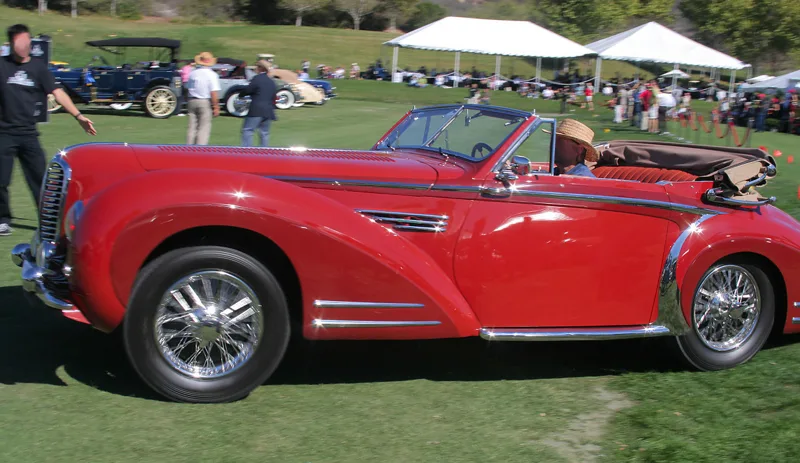
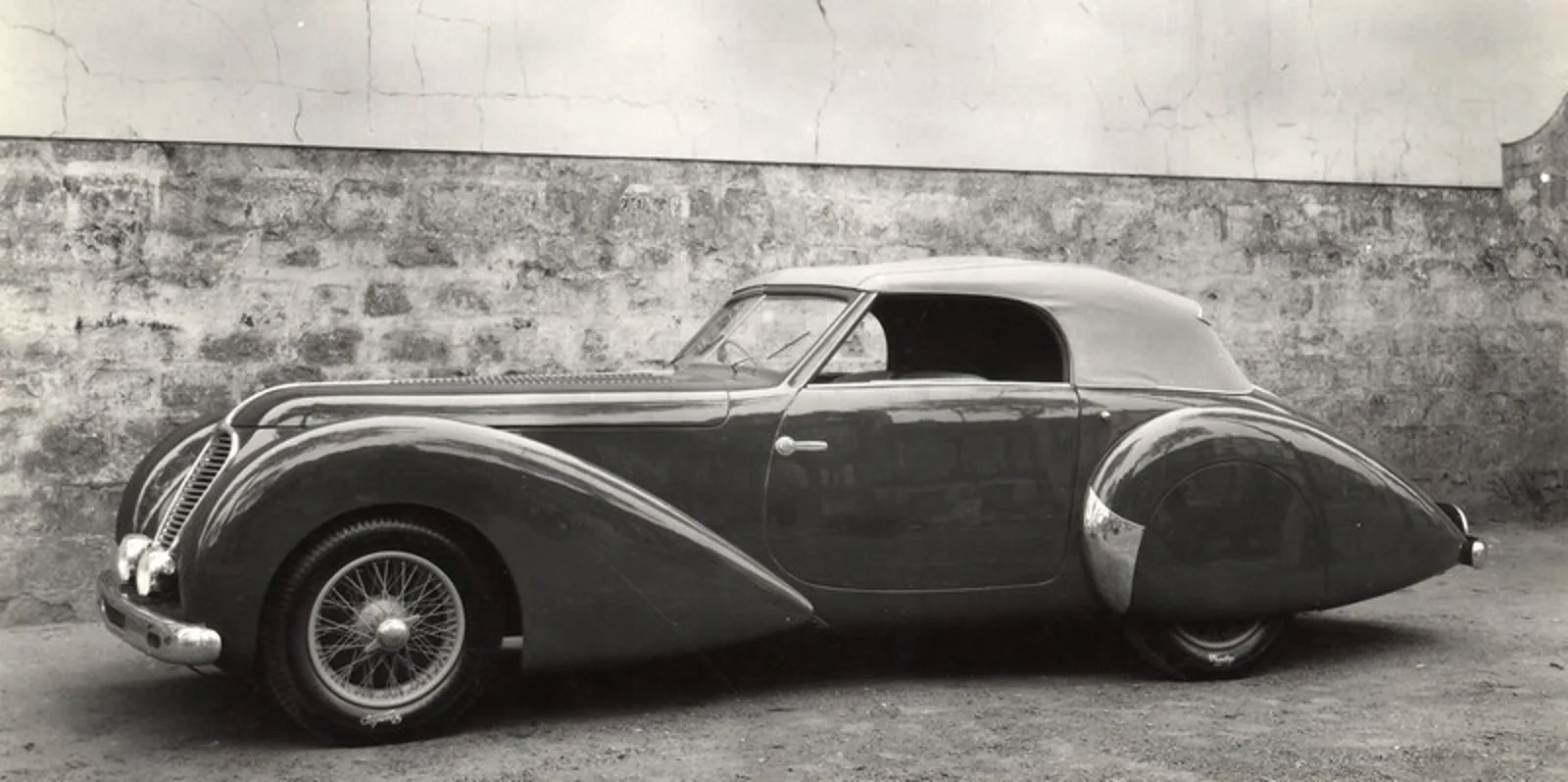
In 1932 Madame Leon Desmarais, the widow and majority shareholder, asked Weiffenbach to develop a higher quality, sportier chassis line at a higher price. The result was the Type 134, followed almost at once by the International speed record setting Type 138 and the Type 135, which became the company's best known model.
Varlet was given the job of setting up a new drawing office and a racing department, neither of which Delahaye had before. Weiffenbach hired Jean Francois as Varlet's assistant and as the company's chief design engineer.
Varlet was by then over eighty, but his standing in the company earned him the role of heading the new drawing office. Francois, then 42, was the younger engineer who assisted Varlet in the new racing department.
Delahaye had escaped near disaster to arrive at immediate success with its new cars. The repositioning was aimed at a wealthier, younger and more sporting group of customers, and the new range gave the brand a clear identity.
What was the 102 3L?
The Type 102 and Type 102M were produced in very limited numbers in the late 1920s, with 7 units of the 102 and 30 units of the 102M. Both used a four-cylinder block with an 82.5 mm bore and a 125 mm stroke, a capacity of roughly 2,675 cm3 (2.675 litres). The 102M differed mainly in chassis evolution and some construction details.
The 102M was the sporting version, and its main hill climb results came between 1926 and 1929. It won the 3-litre Touring and 3-litre Sports categories at the Laffrey Hill Climb in 1927. In 1928 it posted good general classifications at Mont Revard and Mont Ventoux, which were notable for mechanical reliability.
The 102 3L was the exceptional variant, and only one factory-modified unit is known. It had a short chassis with a 3.115 m wheelbase, a front axle with ventilated brakes, and a 140 mm stroke that gave a displacement of 2,991 cm3 (3 litres).
The 102 3L was conceived as a response to 3-litre European sports cars such as the Bentley 3 Litre, the Hispano-Suiza 3 Litre, the Sunbeam 3 Litre and the Delage 3 Litre. Its original bodywork is not known with certainty, but it was likely a torpedo or boattail, which were common on competition sports cars of the period.
How well did Delahaye race in the 1930s?
In 1934 Delahaye set eighteen class records at Montlhery with a stripped and streamlined 18 Sport. The 1935 Alpine Trial success led to the Type 135 Coupe des Alpes, and by the end of 1935 the company had won eighteen minor French sports car events and several hill climbs.
The Ulster TT of 1936 saw four 160 hp (120 kW; 160 PS) machines derived from the Type 135, and Delahaye placed second to Bugatti. It also entered four cars at the Belgian 24 Hours, which finished 2-3-4-5 behind an Alfa Romeo.
The racing success helped Delahaye acquire the automaker Delage in 1935, which broadened the company's range at a time when a sporting image was a commercial asset.
The company's 1934 and 1935 results had shown that the new cars could compete at the top of French sports car racing, and the momentum carried into the years that followed.
Who funded the Competition Court cars?
American heiress Lucy O'Reilly Schell paid the development costs of short Competition Court Type 135 cars with a 2.70 metre wheelbase. She bought 12 of them, keeping half for her Ecurie Bleue amateur racing team. The cars were built for both rallying and racing.
The short wheelbase was the key feature of these cars. The layout later evolved into the special short-wheelbase sports racer known as the Type 135CS, which made the Type 135 family a sporting name in its own right.
What did the Type 145 achieve?
The Type 145 was a racing car powered by a four-and-a-half-litre V12, which Delahaye built to challenge the German government-backed Mercedes-Benz and Auto Union teams. In 1937 it averaged 91.07 mph (146.56 km/h) over 200 km (120 mi) at Montlhery and earned a 200,000 French franc government prize.
Its nickname, the Million Franc Delahaye, came from a race win, and the initial car was driven by Rene Dreyfus. Dreyfus later won in an Ecurie Bleue Type 145 at Pau in 1938, beating the stronger Mercedes-Benz W154 on the strength of the car's fuel economy.
A second Type 145 took third place at Pau. In 1937 Rene Le Begue and Julio Quinlin also won the Monte Carlo Rally in a Delahaye, and the company ran first and second at Le Mans in the same period.
How did the war and occupation affect Delahaye?
Demand for Delahaye cars stayed strong until the German occupation of France during the Second World War. The French government had ordered all private car production to cease in June 1939, so the company's civilian output was effectively halted.
In early 1940 Renault bodied 100 Type 134N and Type 168 chassis for military use under an army contract. Some cars were still built for the German occupiers until at least 1942.
The sporting successes of the late 1930s had combined with French patriotism to keep buyers loyal. That loyalty was an asset the company could not use once the war had closed the market.
Why did Delahaye struggle after the war?
After the war French luxury car makers faced a depressed economy, and the Pons Plan allocated most vehicles for export. It also brought a punitive tax on cars with engines larger than two litres. In 1947 some 88% of Delahaye production was exported, mainly to French colonies in Asia and Africa.
Delahaye's output in 1948 was 573 cars, against 34,164 for the market leader Citroen. That gap made the company's position unsustainable, and the postwar range had to be rebuilt quickly.
Industrial designer Philippe Charbonneaux styled the postwar cars inside the company. The outdated pre-war Type 135 and 148L were resumed in 1946 to restart cash flow, because the Type 175 and its longer-wheelbase versions were not yet ready.
The Type 175 had been envisioned as very modern in 1938, but its production was delayed until 1948 by the war, post-war shortages and the death of its designer.
What went wrong with the Type 175?
The Type 175 was built under a licence agreement, but its suspension components failed catastrophically. Delahaye was obliged to buy back a number of vehicles to avoid litigation, and the Type 175, 178 and 180 models were unable to recover their development and production costs. Their production was discontinued in mid-1951.
No records were kept of the buy-backs, which reflected how worried the firm was about bad press. The affair could not be contained, and it left prospective buyers uninterested in the car.
Which vehicles kept Delahaye going after the war?
Demand from the French army for light reconnaissance vehicles kept the company running until early 1951. Small but steady demand for the Type 163 trucks also helped it stay solvent. By 1952 thirty Type 171s were being produced each month.
The Type 171, a one-ton light truck, made its debut at the 1949 Paris Motor Show. During the next twelve months it spawned several versions, including ambulance and 9-seater familiale variants. Its large wheels and high ground clearance suited France's African colonies, and it was also exported to Brazil.
Delahaye's last entirely new model was the VLR, a 2-litre Jeep-like vehicle released in 1951. During 1953 the company built 1,847 VLRs and 537 special military vehicles, but no more than 36 Delahaye or Delage passenger cars were registered that year.
What was the Type 235?
The Type 235 arrived in 1953 as an updated Type 135 with hydraulic brakes in place of mechanical ones. It used a triple Solex carburetted version of the 3.6-litre engine, producing 152 hp (113 kW; 154 PS). Only 84 examples were built.
Fernand Lecour, working with a small group of enthusiastic factory staff, convinced Weiffenbach to build the car. Its output was roughly equal to that of the previous series, and the 3.5-litre six-cylinder overhead-valve engine was later shared with the Type 171 truck.
How did Delahaye come to an end?
Competitor Hotchkiss obtained a licence to build the Willys Jeep in France, and the French army began to prefer the simpler machine. The army cancelled the contract for the more sophisticated Delahaye VLR, and in August 1953 the company laid off more than 200 employees.
A merger with Hotchkiss, which was facing similar problems, was discussed. An agreement was signed on 19 March 1954, and shareholders accepted the takeover of Delahaye on 9 June. Hotchkiss then shut down Delahaye car production.
Pierre Peigney and Paul Richard signed for their respective companies, and neither firm could stand alone against the large Brandt group. By the end of 1954 the combined firm had been taken over by Brandt, and Delahaye closed for the last time on 31 December 1954.
By 1956 the Delahaye, Delage and Hotchkiss brands were no longer in use. The name that began with a belt-driven experiment in Tours had ended within the larger industrial group that had absorbed it.
Who owned and ran Delahaye?
Delahaye remained a private, entirely family-owned company from its incorporation until it closed at the end of 1954. The Desmarais and Morane families were connected by marriage, which made the business a family concern from 1901 until the Hotchkiss takeover.
Charles Weiffenbach ran the company as chief executive, a role the partners had given him. Pierre Peigney, a family relative, was president, but his role was more formal, since Weiffenbach ran the business almost single-handedly.
Varlet, a qualified mechanical engineer, concentrated on technical design and manufacturing. Both men spent their entire working careers with the firm, and their combined expertise shaped the company's technical record.
What were Delahaye's most notable models?
| Model | Years | Note |
|---|---|---|
| Delahaye 1 | 1895 to 1901 | Earliest cars from the Tours and Paris period |
| Delahaye 44 | 1911 to 1914 | First production V6 |
| Delahaye 134 | 1933 to 1940 | Sportier chassis of the 1932 revival |
| Delahaye 135 | 1935 to 1954 | The model that made Delahaye famous |
| Delahaye 145 | 1937 to 1939 | Million Franc V12 racer |
| Delahaye 168 | 1938 to 1940 | Chassis bodied by Renault for the army |
| Delahaye 175 | 1948 to 1951 | Postwar model hit by suspension failures |
| Delahaye 235 | 1951 to 1954 | Updated Type 135 with hydraulic brakes |
| Delahaye VLR | 1951 to 1954 | Jeep-like light reconnaissance vehicle |
Delahaye's story is one of a small maker that combined luxury cars, trucks and competition. It closed when the postwar market and a larger industrial group left no room for an independent French marque.
The 102 3L, the Type 135 family and the Million Franc V12 are the models that enthusiasts still discuss most. Each represents a different phase of a company that began as a foundry venture and ended as part of a conglomerate.