The American driver who led a French Grand Prix team, won the Le Million challenge in 1937 and sent a car to Indianapolis in 1940.
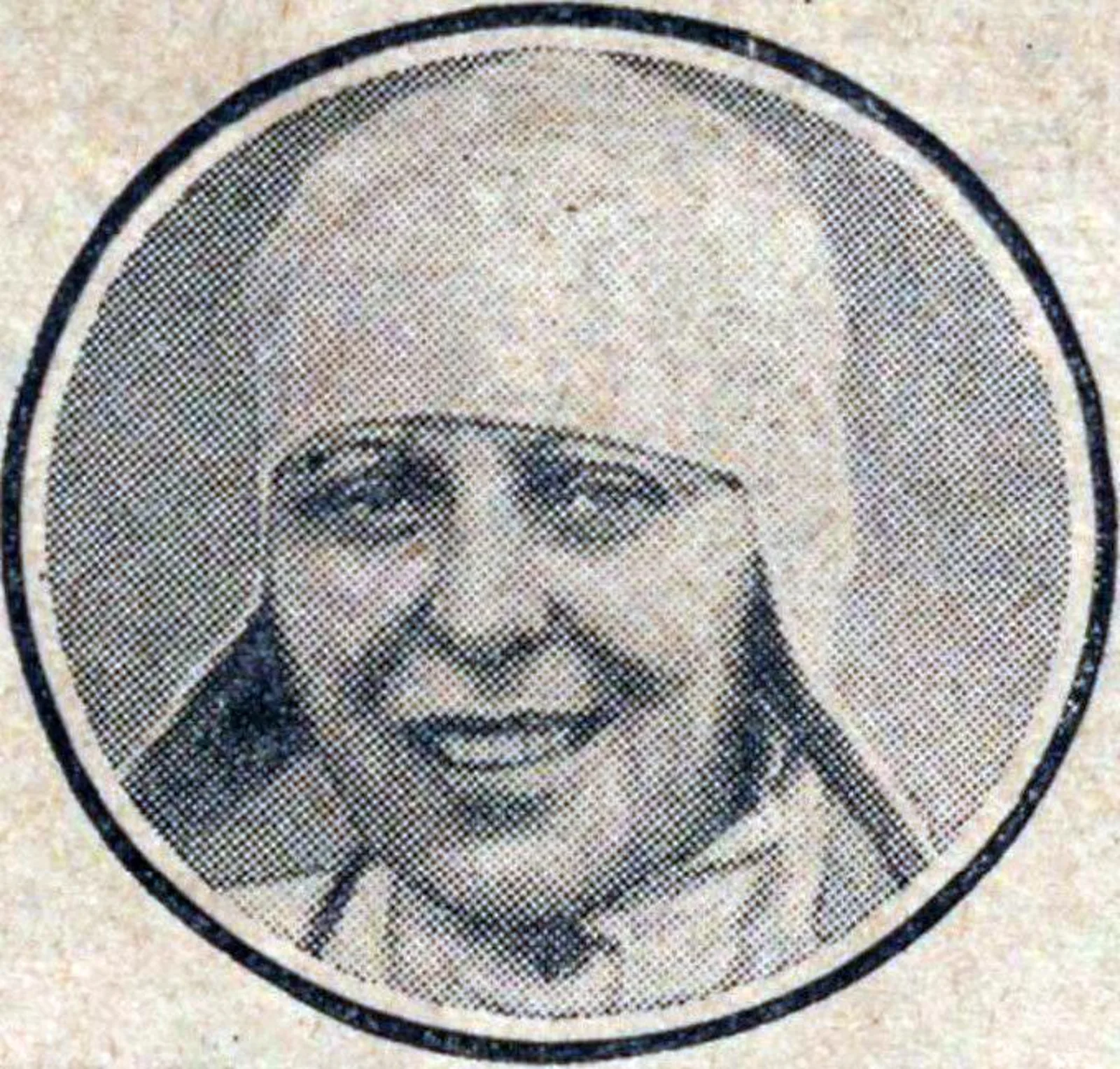
Born in Paris on 26 October 1896, Lucy O'Reilly Schell raced Bugattis, Talbots and Delahayes and ran her own team, Ecurie Bleue. Her team won the Le Million challenge in 1937, and she died in Monte Carlo on 8 June 1952.
Lucy O'Reilly Schell was an American racing driver, team owner and businesswoman whose career centred on Grand Prix racing and rallying. She was an early pioneer for American women in international Grand Prix events, and she set up a Grand Prix team of her own. That team, Ecurie Bleue, became the effective factory racing programme for Delahaye.
Where did Lucy O'Reilly Schell's life begin?
Lucy O'Reilly Schell was born in Paris on 26 October 1896, the only child of Francis Patrick O'Reilly and Henriette Celestine Roudet. Her parents had married in Brunoy, France, in January 1896, and she arrived nine months later.
Her grandparents had emigrated from Ireland during the Great Famine. Her father built a construction business and later became wealthy through investments in factories near Reading, Pennsylvania. Lucy always thought of herself as an American, even though she lived much of her life in France.
Before the First World War she met Selim Laurence Laury Schell, who had been born in Geneva and lived mainly in France. Laury was the son of an American diplomat. Early in the war she worked as a nurse in a Parisian military hospital, and in April 1915 she left for the United States with her mother, Laury and his brother.
Two years later she and Laury returned to Paris to marry. They had two sons: Harry, born in 1921, and Phillipe, born in 1926. Harry became one of the first American Formula One drivers and died in a racing crash at Silverstone in 1960.
Her father's estate came to her in 1936, and she used the money to fund racing cars built to her requirements. On 18 October 1939 Laury died in a car crash in France, and she was seriously injured in the same accident. She later moved her family back to the United States. She died in Monte Carlo, and her remains were moved to the family tomb in Brunoy, where her husband and both sons were also buried.
An American who built a French Grand Prix team around a Delahaye, then took its cars to Pau, Montlhery and Indianapolis.
How did she start racing and rallying?
Her first major race was the 1927 Grand Prix de la Baule, where she finished twelfth in a Bugatti T37A. In 1929 she turned to rallying as well, finishing eighth at the Monte Carlo Rally and winning a Coupe des Dames in a Talbot M 67.
In 1928 she and the Bugatti finished eighth at La Baule and sixth at the Grand Prix de la Marne. At the Grand Prix de Bourgogne they won the voiturette class. She appeared at La Baule a third time in 1929, but she was unclassified.
Her rallying was steady. She finished third in the 1931 Monte Carlo Rally in a Bugatti and third again in 1935 in a Delahaye. In 1936 she finished second in the Monte Carlo Rally with her husband, two-fifths of a second behind the winner, driving a six-cylinder Delahaye Sport 18CV.
She also took Coupe des Dames trophies at Paris-Nice events in 1934 and 1935. Throughout the 1930s she raced and rallied a varied set of cars, including Bugattis, a Talbot M 67 and several Delahayes.
What was the Delahaye 135?
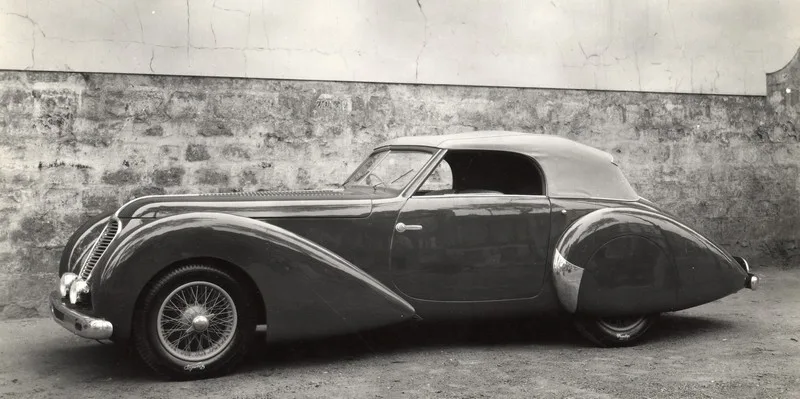
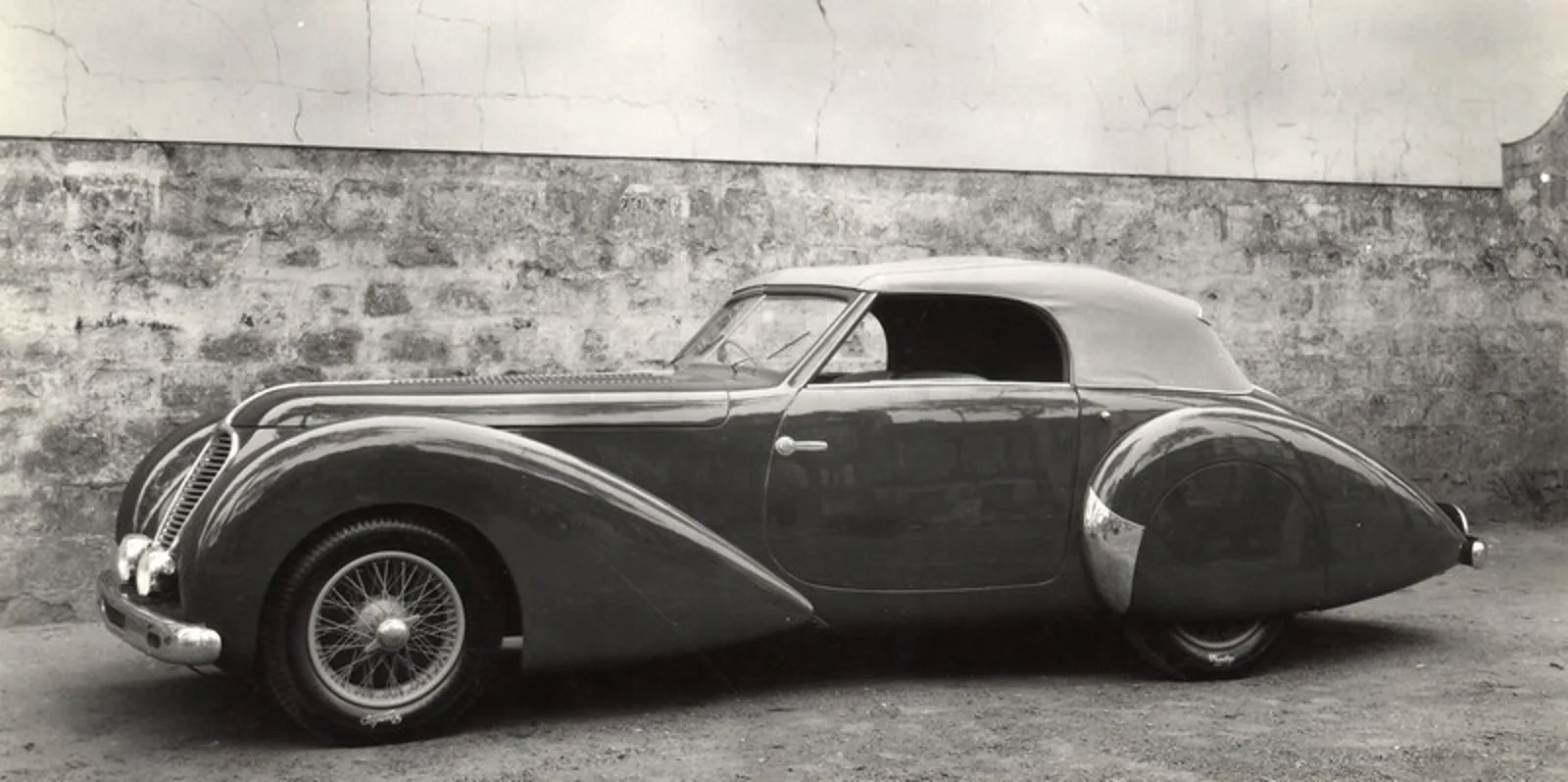
The Delahaye 135 was built in 1933 at Lucy O'Reilly Schell's request, combining the 3.2 L engine of the 138 with the shorter chassis of the 134. It became the car she is most closely associated with, and it spawned several variants.
Delahaye was then better known for trucks than for sporting cars. In 1933 Madame Desmarais, the widow of one of the original partners and the majority shareholder, decided to return the company to racing. She directed Charles Weiffenbach to establish a racing department, and a new chief engineer, Jean Francois, was hired to develop cars for the comeback.
The first results were the four-cylinder 134 and the six-cylinder 138, both shown at the Paris Salon. Weiffenbach was then visited by O'Reilly Schell and her husband, who asked for a special car that put the more powerful engine into the shorter chassis. The result was the 135.
The 135 family grew to include the 135 Sport, the 135 Coupe des Alpes and the 135 Competition. Lucy then asked for a version built specifically for racing. To show her determination, she persuaded about a dozen like-minded buyers to order the model in advance. The finished product was the 135 Competition Speciale, or 135 CS.
How did Ecurie Bleue become Delahaye's racing team?
When Delahaye dissolved its works team at the end of 1936, the couple stepped in and became the company's factory racing programme under the name Ecurie Bleue. The team's aim was to be to France what Scuderia Ferrari was to Italy.
The cars were painted French Blue, in a slightly different shade from the Talbot team's. Drawing on her father's estate, O'Reilly Schell paid for a new car worthy of the team's ambitions. Under Jean Francois' direction a 4.5 L V12 was developed, and the car, the 145, was released in 1936 as a two-seater because it was meant for Grand Prix and sports-car racing alike.
Drivers over the years included Laury Schell, Rene Carriere, Joseph Paul, Rene Dreyfus, Gianfranco Comotti, Rene Le Begue and Comte George Raphael Bethenod de Montbressieux, who raced as Raph. Team results included a 1937 Paris-Nice Criterium win for Joseph Paul.
In the 1937 Mille Miglia, Laury Schell and Carriere finished third overall and won the naturally aspirated category in a 135. In the 1937 24 Hours of Le Mans, Dreyfus and Stoffel finished third in a 135.
What was the Le Million challenge?
Le Million was a 1937 French performance challenge that promised 1,000,000 FF to the manufacturer and team whose car could cover 200 km at more than 146.5 km/h at Montlhery. Delahaye 145 chassis 48771, run by Ecurie Bleue and driven by Rene Dreyfus, met the requirement on 27 August 1937.
The prize fund came from a surcharge on French driving licence renewals. It had been set up after the government backed a French Grand Prix car project that proved uncompetitive. Bugatti collected the first performance prize of 400,000 FF on 12 April 1937, but mechanical breakdowns stopped its attempt on Le Million before the deadline.
The winnings were split evenly between Delahaye and Ecurie Bleue, and O'Reilly Schell passed half of the team's share to Dreyfus. Afterwards she had a red and white stripe painted diagonally across the cars, and some have suggested it was the first racing stripe.
How did the 1938 Pau Grand Prix go?
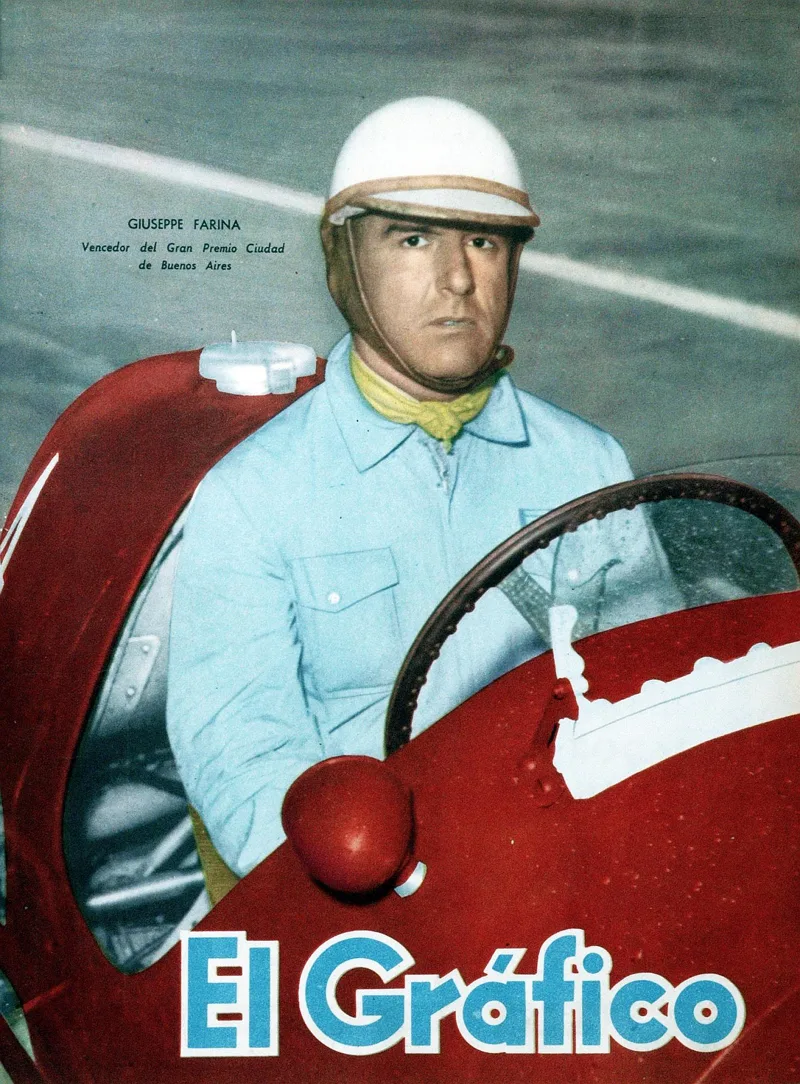
The Pau Grand Prix on 10 April 1938 opened the Grand Prix season. Rene Dreyfus won in a Delahaye 145, beating the Mercedes-Benz W154 by over two minutes despite the far greater power of the German car.
New rules for 1938 brought fresh competition. Mercedes-Benz debuted the W154 at Pau with Rudolf Caracciola and Hermann Lang, and Alfa Romeo's new Tipo 308 was expected from Alfa Corse, which had taken over from the broken-up Scuderia Ferrari. Auto Union did not appear.
Practice was troubled. Tazio Nuvolari's Tipo 308 caught fire and was withdrawn, and Emilio Villoresi's sister car was also withdrawn as a precaution. Lang crashed his Mercedes in practice, and Caracciola's W154 suffered clutch slip and fouled sparkplugs.
The twisty road course limited the Mercedes' power advantage. Caracciola's W154 developed an estimated 468 bhp (349.0 kW), while the Delahaye V12 produced 230 bhp (171.5 kW). The track also became slick with oil and rubber as the race went on. Dreyfus used the Delahaye's much lower fuel consumption to run non-stop, while Caracciola handed over to Lang at the halfway fuel stop because the gear changes had aggravated an old leg injury.
Comotti finished third for Ecurie Bleue. After the German invasion of France, it is said that Hitler ordered the Pau car, chassis 48771, seized. To protect it, the Le Million car and others were disassembled and hidden.
Why did Ecurie Bleue boycott the 1938 French Grand Prix?
Ecurie Bleue boycotted the French Grand Prix on 3 July 1938, even though three of its cars had been registered. The team had hoped for more of the new prize money, and 600,000 FF of the second prize went to Talbot instead of to Delahaye and Ecurie Bleue.
In February 1938 the French government added another million francs to the pool to encourage manufacturers. Ecurie Bleue had already produced the car that won the first million-franc prize, had won the Pau Grand Prix against German and Italian opposition, and had won again at Cork against a reduced field. O'Reilly Schell wanted that money to finish her next project, the Delahaye 155 single-seater.
In 1939 the team bought two Maserati 8CTF single-seaters for the Swiss Grand Prix, and shortly afterwards it moved to Monaco. After the death of Laury Schell at the end of 1939, the team was renamed Ecurie Lucy O'Reilly Schell.
What happened at the 1940 Indianapolis 500?
In 1940 the team entered its two recently acquired Maseratis at the Indianapolis 500. Rene Le Begue qualified chassis 3030 in thirty-first position, and Dreyfus and Le Begue shared one car to finish tenth after completing 192 of the 200 laps.
The drivers and Luigi Chinetti sailed to the United States in May 1940 on the Conte di Savoia. Dreyfus was unaware of Indianapolis' unusual qualifying rules and did not qualify chassis 3031. He borrowed 3030 for a second run, which broke a connecting rod and holed the block, so the engine from 3031 was transferred into 3030.
Le Begue drove the first 250 miles and Dreyfus the last part of the race. Wilbur Shaw had won the previous year's race in Maserati 8CTF 3032. Afterwards the Maseratis were sold to Lou Moore, who rebranded them as the Elgin Piston Pin Specials.
Dreyfus and Chinetti both chose to stay in the United States after the race. O'Reilly Schell helped Dreyfus obtain United States citizenship.
Career results at a glance
| Year | Event | Car | Result |
|---|---|---|---|
| 1927 | Grand Prix de la Baule | Bugatti T37A | Twelfth, her first major race |
| 1928 | Grand Prix de la Baule | Bugatti T37A | Eighth |
| 1929 | Monte Carlo Rally | Talbot M 67 | Eighth overall, Coupe des Dames |
| 1935 | Monte Carlo Rally | Delahaye | Third |
| 1936 | Monte Carlo Rally | Delahaye Sport 18CV | Second, with her husband |
| 1937 | Le Million | Delahaye 145 | Challenge met on 27 August |
| 1938 | Pau Grand Prix | Delahaye 145 | Dreyfus first |
| 1940 | Indianapolis 500 | Maserati 8CTF | Tenth |
What is her legacy?
Lucy O'Reilly Schell is remembered for breaking ground as an American woman in international Grand Prix racing and as a team owner in her own right. Her Le Million success and the stripe painted on the team's cars are also part of the story.
Although most of her adult life was spent in France, she regarded herself as American. The team's name changed to Ecurie Lucy O'Reilly Schell after Laury's death.
Her legacy rests on her roles as driver, team owner and businesswoman. Her son Harry carried the family's link with Formula One forward before his death at Silverstone in 1960.