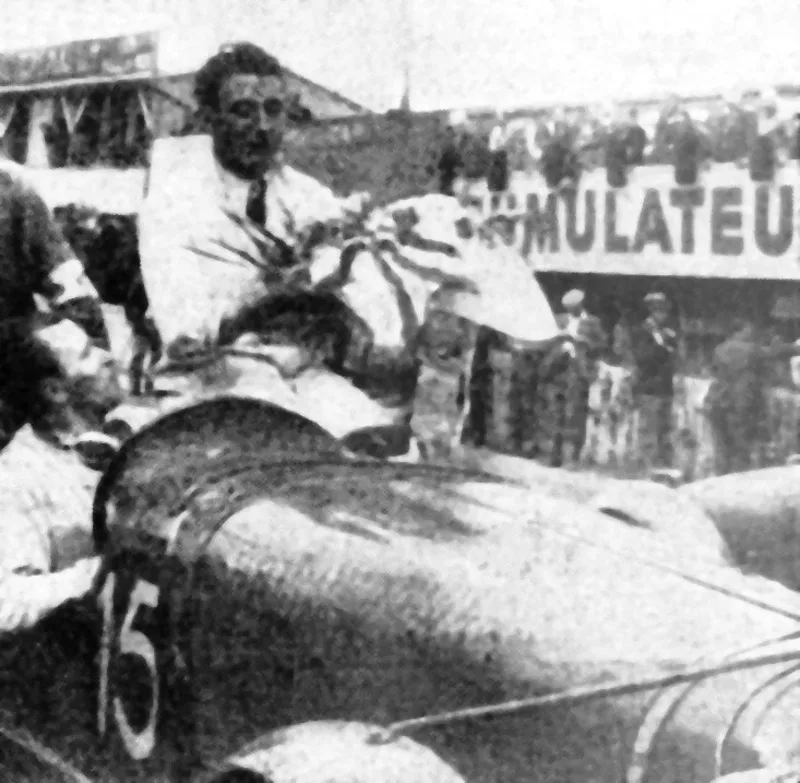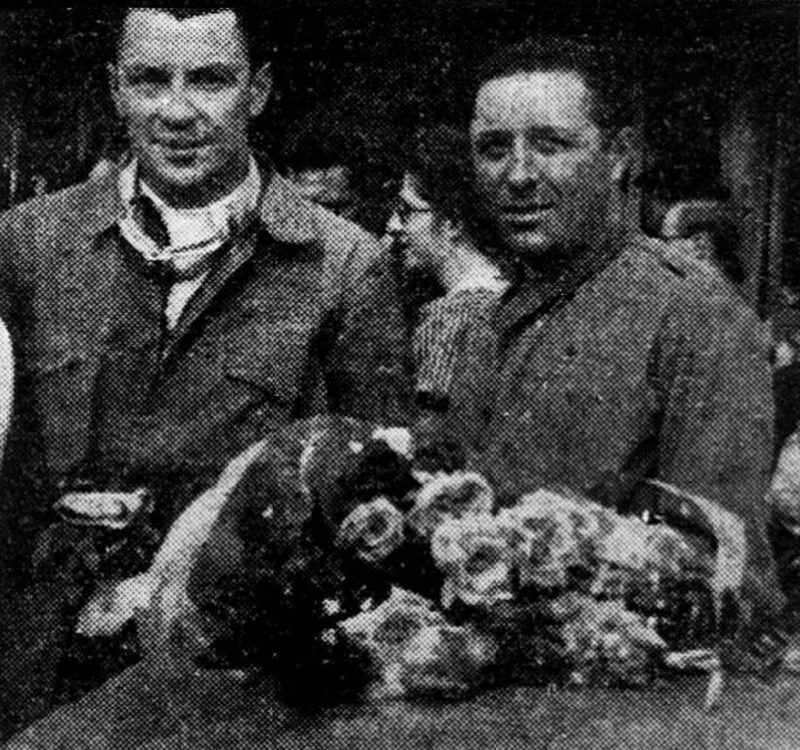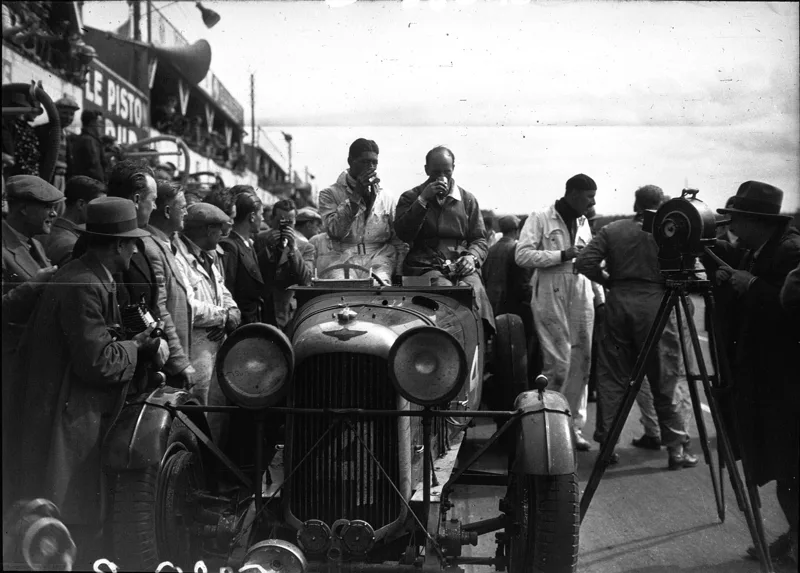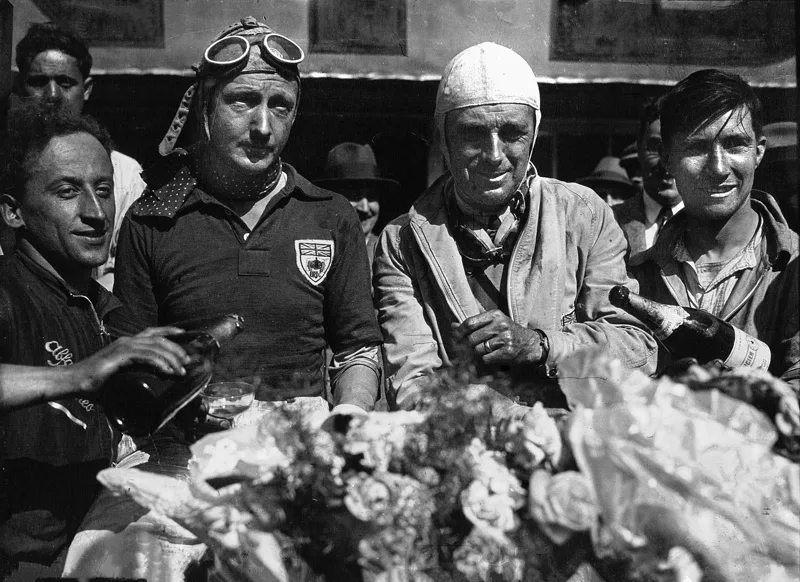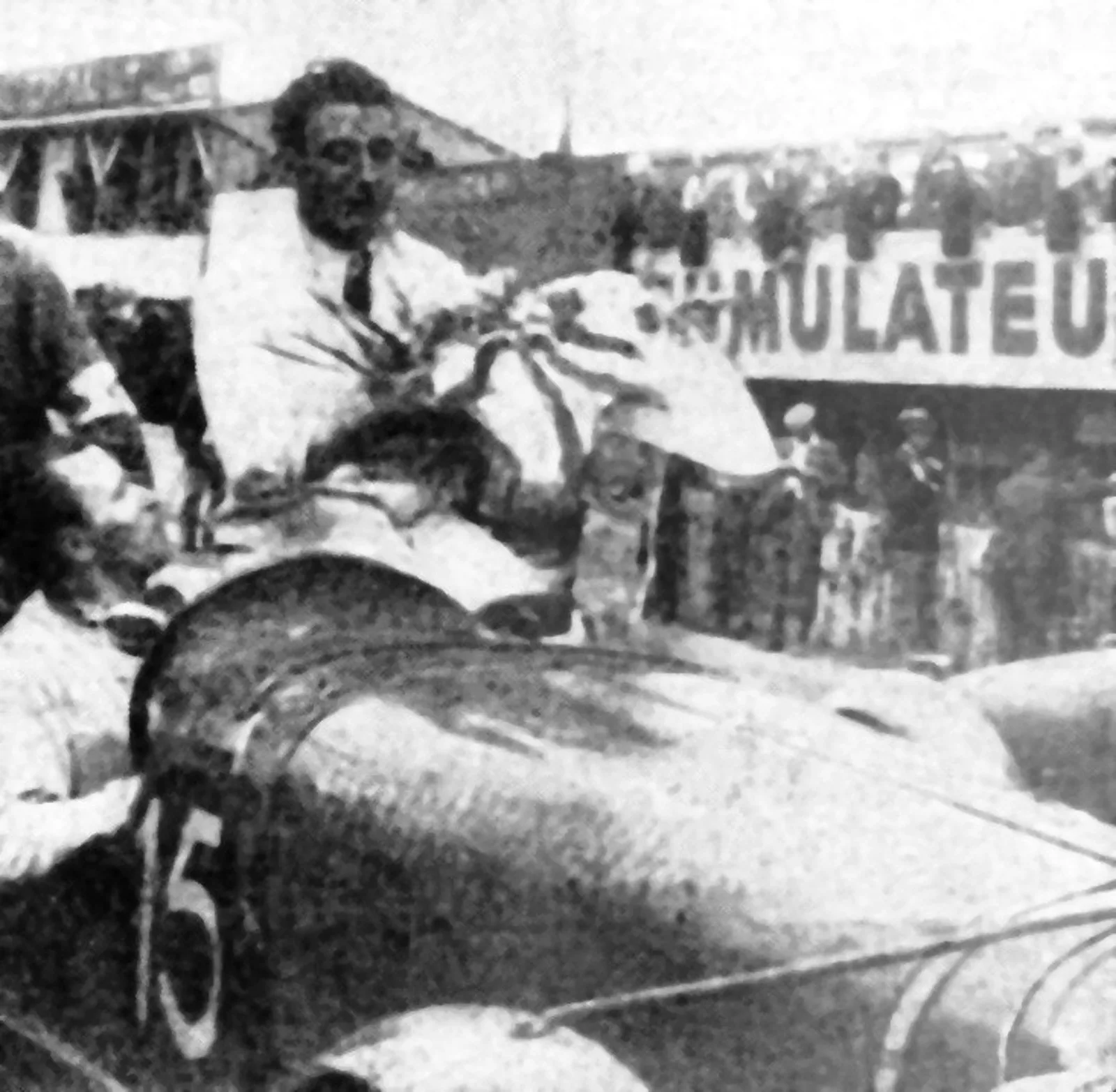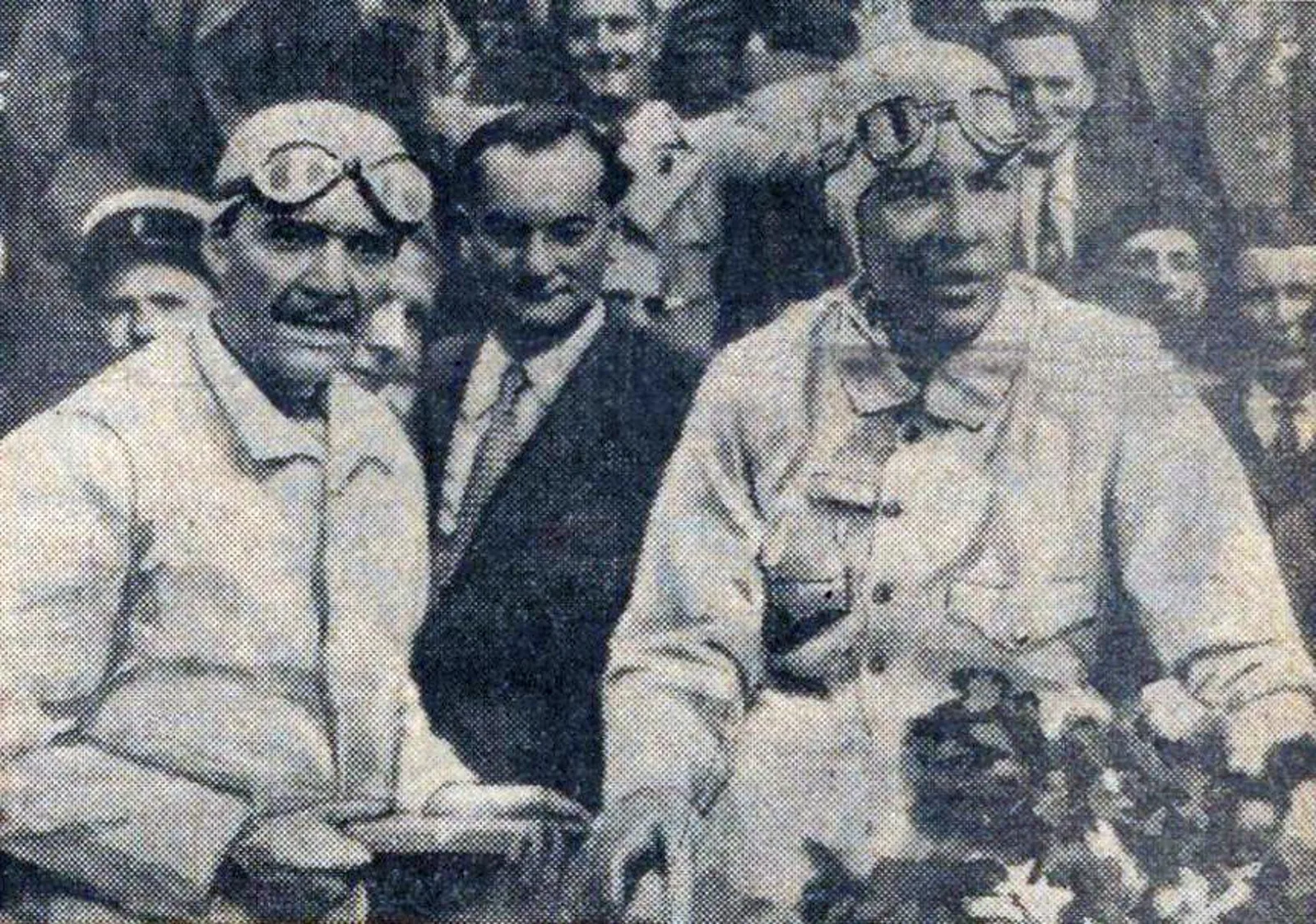
Wimille and Benoist's Bugatti won at record pace, but the race is remembered for the crash at Maison Blanche that killed one driver and led to the first stoppage in its history.
The 1937 race was taken by Wimille and Benoist's Bugatti, 100 km clear of the field. It is remembered for the Maison Blanche crash, which killed Rene Kippeurt and brought about the first stoppage in the race's history, and it is also remembered for the record pace of the winning car.
Jean-Pierre Wimille and Robert Benoist won the 1937 24 Hours of Le Mans in one of Roger Labric's works-supported Bugatti Type 57G cars, at record pace and beyond 2,000 miles for the first time. The race is remembered for something else as well: a crash at Maison Blanche in the first hour killed Rene Kippeurt and led to the first stoppage in the race's history.
Why was the 1937 race a French affair?
The race ran under the French sports-car rules of 1936, which the Automobile Club de l'Ouest chose to follow closely. Only two-seaters were allowed, with doors optional, and manufacturers had to show that at least 30 cars were made, sold or in the process of being built. The supercharger equivalence was lifted from x1.4 to x1.6.
The eight classes were named A to H, with the smallest class covering 500 to 750cc. Esso supplied the fuel, with four choices including 100% gasoline. The 1936 race had been cancelled, and 1937 finally brought the competitive entry list that the new French rules had been expected to produce.
The AIACR also formalised the flag codes used by circuit marshals. The red flag stopped all cars, a yellow flag warned of danger ahead, a blue flag signalled a faster car approaching from behind, and the black-and-white chequered flag ended the race. These were used at Le Mans for the first time, with coloured lights around the circuit for the dark hours.
A Bugatti won at record pace, but the Maison Blanche crash is the moment the 1937 race is remembered for.
What were the main cars in the race?
Bugatti entered its Type 57G, a streamlined 3,266cc straight-six with 170 bhp and a 130-litre fuel tank. The car had a full-width magnesium-alloy body, nicknamed the tank, and it could reach almost 220 km/h (135 mph) on the long back straight. Wimille shared one car with Robert Benoist, and Roger Labric drove the other with Pierre Veyron.
Delahaye returned with the help of the wealthy American couple Laury and Lucy Schell, who bought four 135 CS cars and encouraged their French racing friends to buy more. The 135 CS had a 3.6-litre straight-six of 170 bhp and a semi-automatic gearbox. Dreyfus shared a Delahaye with Stoffel, and Laury Schell raced with Carriere.
Alfa Romeo entered only one car, Raymond Sommer's 8C-2900, after Ferrari's three entries were withdrawn when Alfa Romeo bought out an 80% share of the Scuderia. The twin-supercharged 3-litre engine produced 220 bhp, and Giovanni Battista Guidotti was Sommer's co-driver, supported by Meo Costantini.
Talbot's T150 Course had a 4-litre dry-sump engine of 165 bhp. Chinetti and Louis Chiron ran one car, and Embiricos and Raph ran another. Lagonda entered its LG45, a 4.5-litre car of 130 bhp that could reach 200 km/h, with Hindmarsh and Brackenbury.
Which smaller cars and British entries made up the field?
Aston Martin entered the Speed model, with Hertzberger and Morris-Goodall among its drivers. Two Riley cars came from the Ecurie Eudel, with Paulin streamlined bodies, and the cars of Lapchin and Trevoux and of Forestier competed in the 1.5-litre class.
BMW entered three 328s, two of them badged as Frazer Nash-BMWs, with Aldington sharing one with Fane. Adler's streamlined Rennlimousine was a 1.7-litre side-valve car, and the team's lead car had won its class at the previous year's Spa 24 Hours. Peugeot's Darl'mat Speciales had 70 bhp 2-litre engines.
Simca ran Gordini-prepared Six and Cinq cars, and Chenard-Walcker Z1 cars were entered by Giraud-Cabantous. The Chenard-Walckers had last raced at Le Mans in 1925, when they helped secure the Biennial Cup and the first and only Trienniale Cup for the manufacturer. After the company stopped racing in 1926 the cars had sat in a warehouse until Giraud-Cabantous bought them, and he fitted one with a supercharger that took it into the 2-litre class. An Austin EK75, a Ford Model CX entered by the Australian Joan Richmond and her fiance Maurice Bilney, and an MG PB driven by Dorothy Stanley-Turner with Enid Riddell completed the grid.
Gordini brought five cars, three Sixes and a pair of Cinqs. He drove a Six himself with the team regular Philippe Maillard-Brune, Jean Viale ran a Cinq, and the Alin brothers, who had raced a BNC twice previously, joined as co-pilots. Just-Emile Vernet's privateer Six ran alongside them, with Suzanne Largeot as co-driver.
How did practice go before the race?
Benoist had tested the first Bugatti before the race, but the second car was only finished during race week. Veyron drove it from the factory at 8am on the Tuesday, covering 700 kilometres in under eight hours to arrive in time for scrutineering.
Louis Gerard, who had never raced before, put in more laps than anyone to learn the circuit and his new car. The Bugatti team practised its pit stops on the Friday night, changing four tyres and replenishing fuel, water and oil in just over 100 seconds, far quicker than the other teams.
The Bugatti's fuel economy was impressive too, at less than 20 litres per 100 km, which gave it a range of about 500 km. The little HRG team had a more difficult week, when its car was damaged in a minor accident on the way and a plane had to be chartered to fly in a new suspension unit.
Roy Eccles was to have raced a Singer with his wife, but he celebrated too hard the night before the race and missed the start, and Freddie Clifford took his place. Donald Barnes was called back to London for the birth of his child, and his brother Stan, a team co-owner, took over his seat in the Singer.
How did the race start?
Honorary starter John Cobb, the British driver and all-time record holder at Brooklands, sent the field away. The Lagonda led under the Dunlop bridge, but it was Raph's Talbot that reached the front on the Hunaudieres straight. On the way to Indianapolis, Sommer moved ahead.
Wimille, ninth after the opening lap, was content to let his engine come up to temperature. On lap 3 he broke Sommer's four-year-old track record, and Veyron let him past to take third. Wimille then passed Brunet and Sommer in turn to take the lead. Chiron had to pit five laps in to change his sparkplugs, costing him three laps.
What was the Maison Blanche accident?
The Maison Blanche corners already had a notorious reputation, with serious multi-car accidents in the 1927 and 1932 races. The 1937 crash came at the end of the first hour, when the field came round a blind corner to find the wreck of Kippeurt's Bugatti.
At the end of the first hour, Rene Kippeurt lost control of his Bugatti through the left-right combination at Maison Blanche. The car hit the bank hard, took off and threw the driver onto the circuit, then tumbled down the road. Behind it came the BMWs of Roth and Fairfield.
Roth swerved right, went over a ditch and rolled his car. Fairfield went the other way and crashed head-on into the Bugatti, and the impact was so hard it knocked the engine off the Bugatti's chassis. Ten cars were eventually involved, including the Talbot of Raph and the Riley of Forestier.
Forestier got out of his car and, joined by a marshal waving a red flag, ran down the track to warn the approaching field. Wimille threaded through by braking hard. Sommer had to swerve around spectators who had run onto the track to move the still body of Kippeurt. He over-revved the engine trying to slow down, and his race was effectively over.
For the first time in the race's history, the field was stopped while the wreckage was cleared. Kippeurt died at the scene, five more were taken to hospital, and Raph had two broken legs. Fairfield underwent emergency surgery and died on the Sunday evening. After only ten minutes the wrecks had been pulled to the side of the road, and the race resumed.
How did the race go on after the stoppage?
Wimille had come round to the back of the queue with almost a full lap in hand, and by 7pm it had grown to a two-lap lead. The team car of Veyron and Labric was second, followed by the leading Delahaye of Schell and Carriere.
When the first fuel stops came, the Delahayes queued in the pit lane, one behind another. Stoffel broke the door hinges getting into the car he shared with Dreyfus, and forty minutes were lost. Brunet's Delahaye was put into the Mulsanne sandbank by novice driver Parguel, who had taken over on the first lap.
The Bugattis were frugal. Veyron did 33 laps and Wimille did 38 before the first pit stop, which came nearly at 7.30pm. Von Hanstein's Adler was disqualified after it refuelled without topping up its oil within the required 24-lap margin, and his co-driver Anne-Cecile Rose-Itier was furious.
An 8pm thunderstorm lasted half an hour and flooded the pit lane. As the cars eased back, Schell's Delahaye moved up to second. The only casualty was an unsupercharged Chenard-Walcker that skidded off at the Mulsanne corner and planted itself in the sandbank.
What happened through the night?
The storm passed and the night stayed dry. Wimille and Benoist circulated at a steady pace, without incident. In the 2-litre battle, Aldington's BMW had been leading and running sixth overall, until Fane stopped on the Hunaudieres straight with ignition trouble.
By midnight Wimille and Benoist had extended their lead to three laps. The class lead had passed to the Aston Martins, and the Dutch driver Hertzberger was running seventh overall. Half the field had retired by nightfall, and the rest of the race was largely a question of attrition.
Who won the 1937 race, and what was the result?
Wimille and Benoist won the 1937 race in the Bugatti Type 57G, 100 km ahead of the field. The same car also took the Index of Performance prize, and the race exceeded 2,000 miles for the first time. French cars took the top four places, and the German Adler finished sixth behind the Aston Martin.
French cars took the top four places. The Aston Martin, which won the 1.5-litre class, finished fifth, and a German 2-litre Adler finished sixth. The Bugattis' frugal fuel use meant they made fewer stops than their rivals, which was a real advantage over the distance.
| Place | Entry | Result |
|---|---|---|
| 1st | Bugatti Type 57G, Wimille and Benoist | Record pace, winning by 100 km |
| 2nd to 4th | French cars | Top four places went to French entries |
| 5th | Aston Martin Speed | Winner of the 1.5-litre class |
| 6th | Adler Rennlimousine | German 2-litre car, sixth overall |
What did the 1937 race leave behind?
Few accidents in the race's history were as serious as the one at Maison Blanche. Kippeurt died at the scene, and Fairfield died the following day from his injuries. Five others were taken to hospital, and Raph suffered two broken legs.
The flag codes formalised in 1937 have remained in use, unchanged, ever since. Forestier's red flag at Maison Blanche was a first for the race, and as of 2026 it remains the last time a red flag was waved during the 24 Hours.