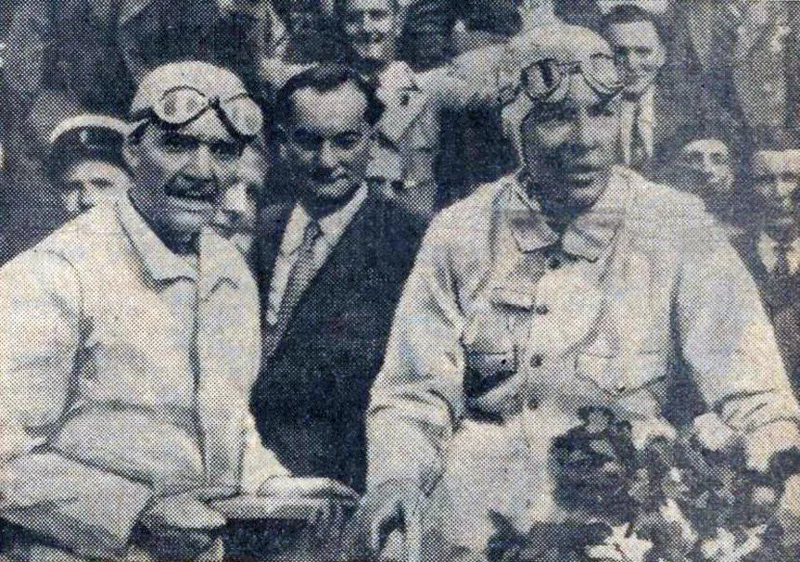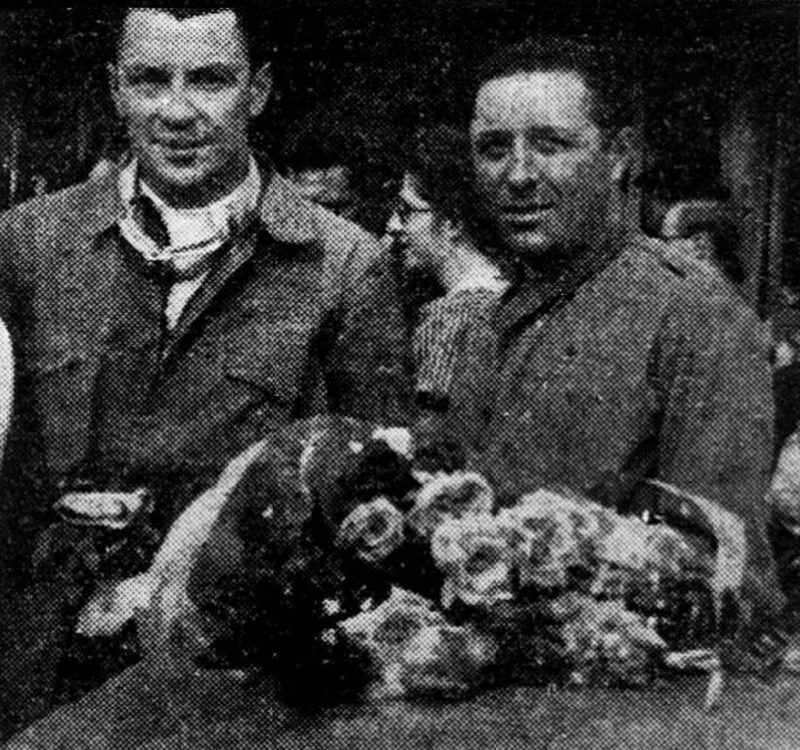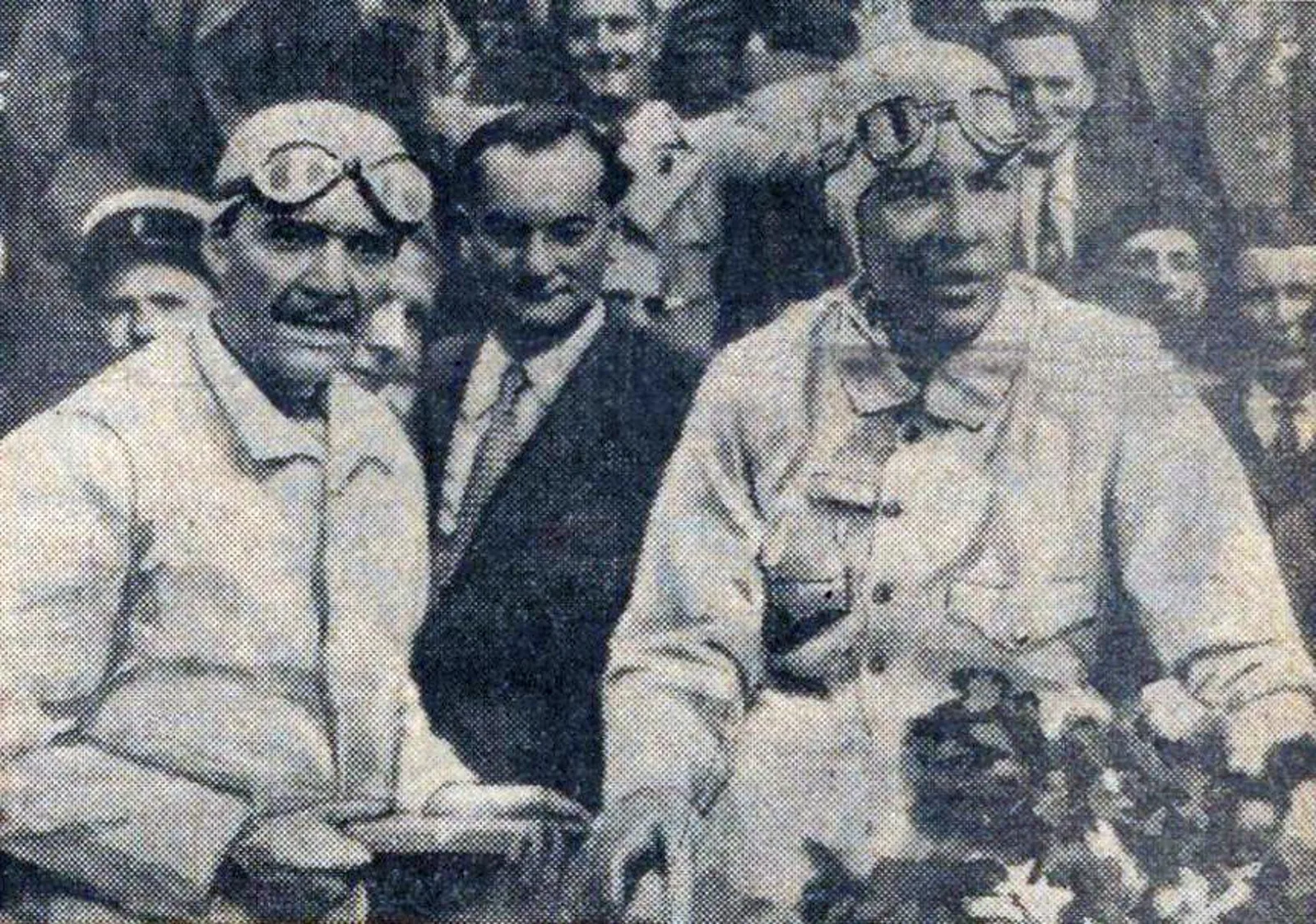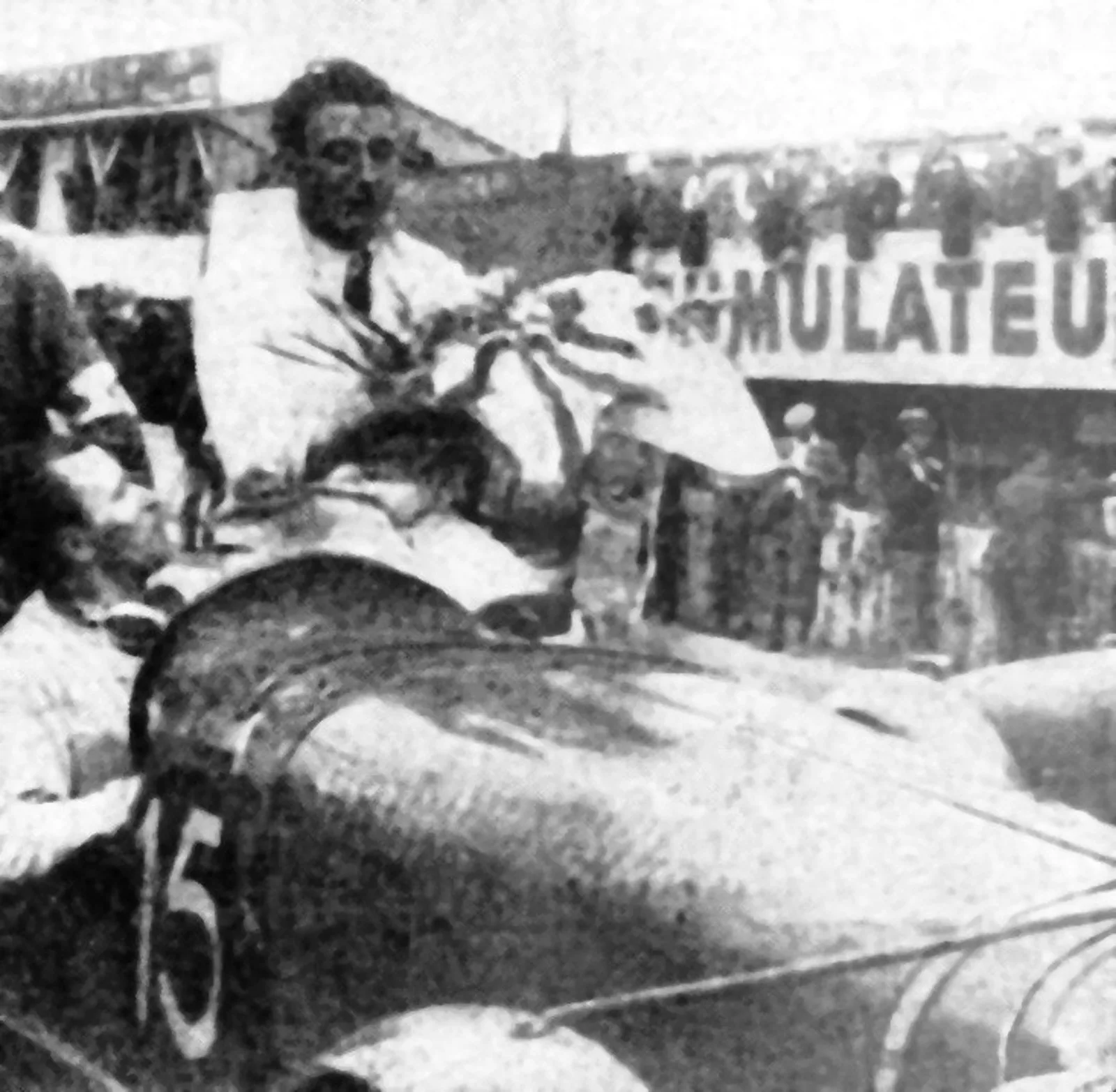
Chaboud and Tremoulet's privately entered Delahaye 135 CS beat an Alfa Romeo that had led most of the race, after a tyre burst and a long push ended its run.
The 1938 race was taken by a privately entered Delahaye 135 CS driven by Chaboud and Tremoulet, two laps clear of a sister Delahaye. Alfa Romeo's Sommer and Biondetti had led for most of the race until a tyre failure ended their chance at 12.45 p.m.
Eugene Chaboud and Jean Tremoulet won the 1938 24 Hours of Le Mans in a privately entered Delahaye 135 CS, after a race in which only 15 of the 42 starters reached the finish. Their gearbox troubled them for most of the race, so they drove in top gear for long stretches and still won by two laps from another Delahaye, with a standard Talbot saloon third.
Why was 1938 a contest of big French cars?
Bugatti rested on its laurels, so for the first time that decade there were no works Bugattis at Le Mans. The heavy hitters were the works-supported Delahayes and Talbots, built to French sports-car rules, and their main rival was Raymond Sommer's Alfa Romeo coupe.
The AIACR revised its Grand Prix rules that year to allow 3.0-litre supercharged or 4.5-litre normally aspirated engines, and it gave provision for two-seater sports cars. The ACO lifted the supercharger equivalence from x1.6 to x1.65, which had the desired effect: only three supercharged cars entered.
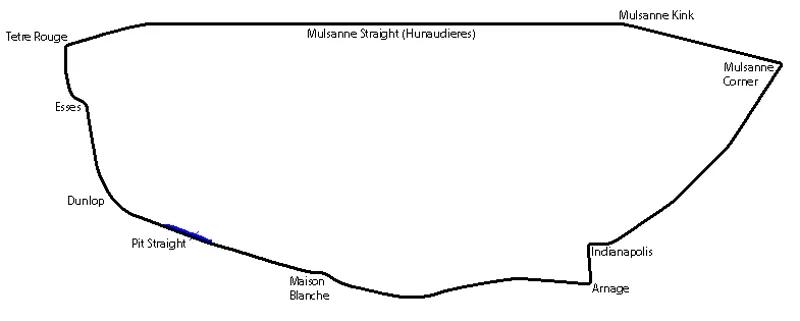
Target distances were raised by about half a dozen laps for the medium and large classes, while the 750cc class was slightly reduced. Shell supplied four fuels, including a ternary blend of regular petrol with benzole and ethanol. Most of the circuit was resurfaced, and the track was widened from Arnage through Maison Blanche to the pit straight.
Painted circles bearing the car numbers were laid on the pit straight to stop over-eager drivers jumping the flag. New grandstands and a dedicated timing tower were completed, and dance bands and food stalls gave the track a festive midsummer atmosphere.
A privately entered Delahaye won at Le Mans after its drivers spent most of the race in top gear.
Which cars and drivers stood out in the big classes?
Delahaye's new 145 was a V12 with three camshafts, 245 bhp and a four-speed gearbox. Two were entered for Laury and Lucy Schell's Ecurie Bleue, with Dreyfus paired with Louis Chiron and Comotti with Albert Divo. Six privateers ran the 135 Competition with its 3.6L straight-six, and
Chinetti ran a nominal works team for Talbot, with four cars. Two were open-top T150 C models, and Chinetti's car had the latest 4.5L Grand Prix engine, with Philippe Etancelin as co-driver. Two 4-litre Figoni et Falaschi coupes were owned by Jean Prenant, who raced with Andre Morel, and by Louis Rosier.
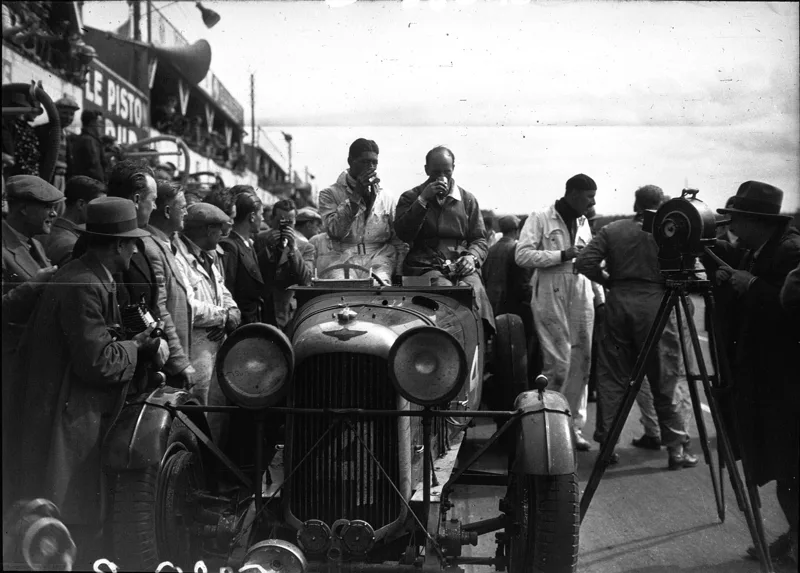
Alfa Corse, the works team, did not enter, but Sommer had a streamlined coupe built by Touring on the Superleggera principle, with thin tubes forming the structure and wrapped in thin aluminium panels. The shape could reach 220 km/h (135 mph), and Alfa sent its works driver Clemente Biondetti, the Mille Miglia winner, as co-driver, along with an expert pit crew.
Marcel Horvilleur brought an older Alfa 8C Monza that had finished second in the 1933 Mille Miglia. Its engine had since been upgraded to a bigger 2.7L supercharged unit.
Louis Gerard had debuted the year before, and despite never having raced he had won his class and finished fourth overall in his Delage D6-70 coupe. He then sold the heavy bodywork and bought an open-top replacement from Figoni et Falaschi, which was almost 200 kg lighter, and he raced it again with the Societe R.V. team.
How did the small-engined cars compete?
Gordini ran a six-car works-supported team with Huit, Six and Cinq models. The Simca 8 had a 1089cc engine tuned to 60 bhp, and the tiny 570cc Simca Cinq was the smallest car in the field. Just-Emile Vernet ran three Simca 8s, and Team Autosports entered Singers for Donald Barnes and Tommy Wisdom.
Morgan was a well-established British company, and its 4/4 had either a 1122cc or 1098cc Coventry Climax engine producing just over 30 bhp. Prudence Fawcett had watched the 1937 race as a spectator and resolved to enter herself, and Lance Prideaux-Brune persuaded H.F.S. Morgan to lend a car for the 1.1-litre class.
Hichens's Aston Martin Speed returned to defend its 2-litre class win with Morris-Goodall. Atalanta's first car had a 1496cc engine producing 78 bhp through a three-speed gearbox, and its driver Neil Watson was the majority shareholder in the team.
Adler's Super Trumpf Rennlimousine team was led by Count Peter Orssich and Rudolph Sauerwein. Its side-valve 1980cc engine could reach 170 km/h (105 mph), and it was smaller than the Peugeot that cost Adler about 12 seconds a lap.
What happened in practice?
Dorothy Stanley-Turner, who was to drive her MG, came down with a severe case of diphtheria on the way to Le Mans and could not race. Arthur Dobson, an ERA works driver, was drafted in at short notice and made his Le Mans debut in the race.
Roger Labric's Bugatti, one of the Type 57S streamliners nicknamed tanks, ran in practice but was then withdrawn, seemingly for lack of works backing. The new Atalanta slid off the track and the mechanics had to repair its rear corner. Practice times showed that the fastest cars were Sommer's Alfa Romeo and the Delahaye 145s and Talbot T150s.
How did the race begin?
On a hot, humid Saturday, race director Charles Faroux waved the flag at 4pm. Giraud-Cabantous was quickest away, but by dint of starting furthest along the road it was Dreyfus and Comotti who led under the bridge. Sommer's Alfa then passed the cars ahead of it on the Hunaudieres straight and reached third.
Sommer took the lead at Arnage on lap 3, passing Dreyfus. Dreyfus hit back on lap 6, blasting past the Alfa down the long back straight at around 240 km/h (150 mph). Comotti pitted on lap 7 with gearbox trouble, and Divo took over and retired a lap later.
Etancelin then picked off Dreyfus and then Sommer to reach the front on lap 10. For the next 20 minutes he and Sommer swapped the lead, and Dreyfus's Delahaye, which had overheated, retired with no oil pressure. Gordini's Simca had been running 14th overall by lap 10, among the bigger 3-litre cars. A fortnight earlier Gordini had won the Bol d'Or 24-hour race in his new Simca 8, and the marque had taken a 1-2-3-4 in the 1100cc class there.
Which cars fell out in the first half?
Mazaud's Delahaye, running in the top six, was just into its second stint when smoke came from the engine before 9pm. It caught fire, and with no extinguishers nearby the spectators threw dirt onto the engine to put it out. The car could go no further.
The Atalanta retired on lap 4 after a driveshaft pin sheared, a fault from damage it had taken in practice, and one of the Darl'mat Peugeots broke its gearbox after six laps.
Tremoulet was struggling too. He could not change down at Arnage, the slowest corner on the track, so he drove mostly in top gear and pitted only after an unprecedented 40 laps.
By midnight a dozen cars had retired. Chinetti's Talbot, which had been running second with Etancelin, started sounding rough and retired with terminal engine trouble, and the Le Begue Talbot's gearbox broke soon after midnight.
What did the field look like at the halfway point?
At the halfway point the Alfa had completed 128 laps and was five laps ahead of the privateer Talbot of Trevoux. Only 25 cars were still running. The Chaboud and Tremoulet Delahaye was ten laps back, running only in top gear, but still ahead of the similar cars of Serraud and Villeneuve.
The Gordini Simca had just spent half an hour in the pits fixing suspension problems, but it still held the 1100cc lead. The Aston Martin had been running with a dodgy cylinder through the night and had lost much time with its exhaust.
What happened to the Talbots in the morning?
By 7am the Alfa had a six-lap lead over the Trevoux Talbot, with the Chaboud Delahaye up to third. Within half an hour of 8am, both Talbots were out. Trevoux's car had a blown head gasket and an engine fire, and Mathieson was engulfed in smoke near Maison Blanche.
The Chaboud and Tremoulet Delahaye, still struggling with its gearbox, now moved up to second, and three Delahayes were chasing the Alfa. Serraud and Giraud-Cabantous were running like clockwork in third, and the Villeneuve and Biolay car was starting to show engine problems in fourth.
The 2-litre Adler was pushing hard to close on the Peugeot, which had been four laps ahead. When the Aston Martin retired late in the morning, the Adlers had a lock on their class.
How did the Alfa's lead end?
At 12.45 p.m., without warning, Sommer's front-right tyre ruptured at full speed on the Hunaudieres straight. He kept the car under control and limped slowly back to the pits, but the rubber cords had thrashed the bodywork and the engine mounts. The crew replaced the wheel and hammered out the worst of the damage, and Biondetti rejoined.
The engine was still sounding bad, and another pit stop did not solve the problem. The Alfa ground to a halt on the next lap near Mulsanne, and Biondetti resolved to push it back to the pits. By 3pm he had reached Arnage, but he was exhausted and admitted defeat, four kilometres short of the pits.
Chaboud and Tremoulet, who had been twelve laps behind the Alfa, took more than an hour to pass it. They then nursed the gearbox to a two-lap lead over the second Delahaye, not daring to risk an engine mishap.
Who finished, and in what order?
Chaboud and Tremoulet won in the Delahaye, two laps ahead of Serraud and Giraud-Cabantous in another Delahaye. Prenant and Morel's Talbot coupe took third, fourteen laps back, after holding steady while its rivals retired. The Darl'mat Peugeot of de Cortanze and Contet finished fifth, ahead of two Adlers.
| Place | Entry | Result |
|---|---|---|
| 1st | Delahaye 135 CS, Chaboud and Tremoulet | Two laps ahead of the second Delahaye |
| 2nd | Delahaye, Serraud and Giraud-Cabantous | Two laps behind the winner |
| 3rd | Talbot-Lago coupe, Prenant and Morel | Fourteen laps back |
| 5th | Darl'mat Peugeot, de Cortanze and Contet | First in the 2-litre class, ahead of two Adlers |
| Rear | SIMCA Cinqs | Took the rear positions, with successive Index awards |
What did the 1938 result mean?
Blue cars finished first to fifth overall, an unprecedented result for the French marques. Only two of seven British teams made it to the flag, both far behind the class winners. The Simca Cinqs, at the back of the field, still won successive Index awards over the Adlers.
Only 15 of the 42 starters reached the finish. Race director Faroux hailed Gordini as a 'sorcier', or wizard, after the race, and the nickname stayed with him for the rest of his career. Even though the Peugeot won the 2-litre class, the Adler teams took the Biennale Coupe, awarded on cumulative results over two years.
Chaboud raced again at Spa within a month, in a race run in almost constant rain. Tremoulet crashed into a tree during the night and wrecked the car. Gerard's Delage finished second at Spa, behind a works Alfa Romeo.