Hindmarsh and Fontes ended four straight Alfa Romeo victories, and 22 of the 28 finishers were British cars.
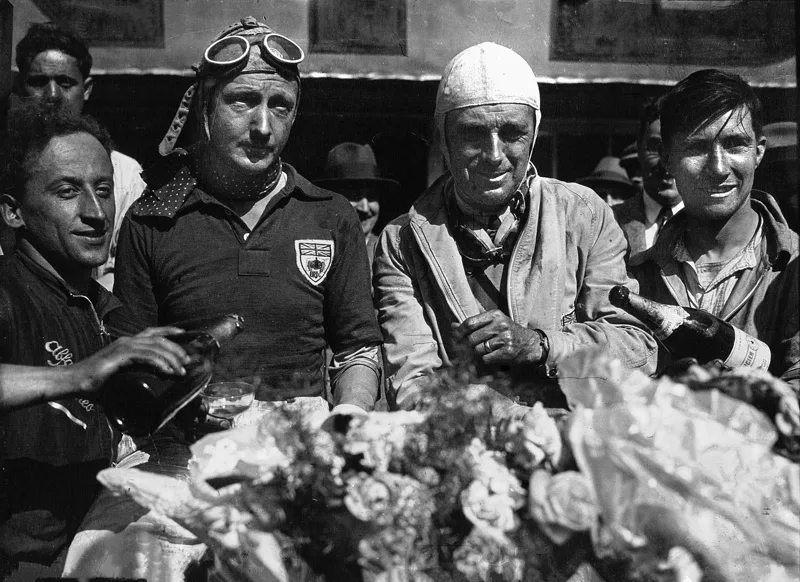
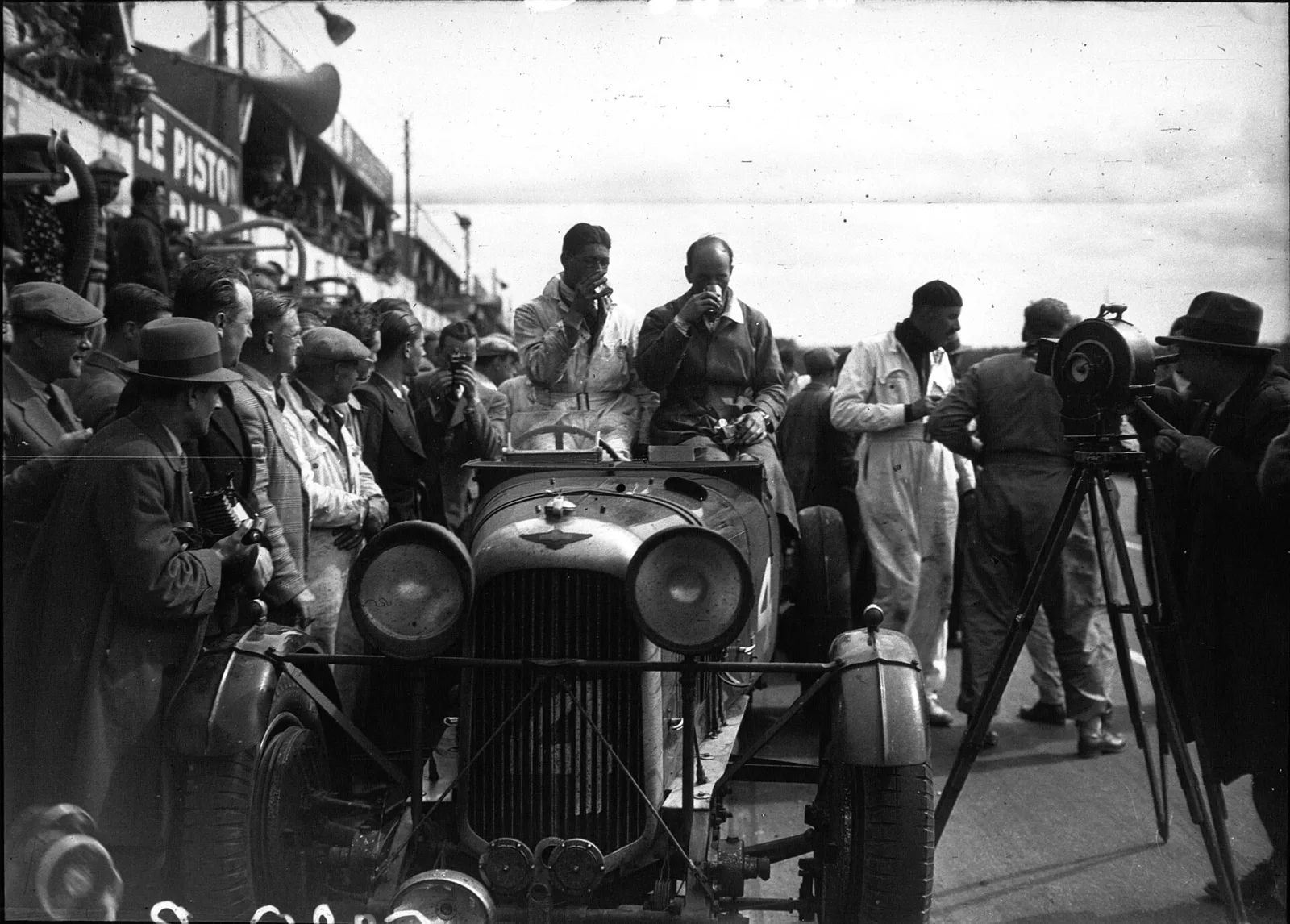
Johnny Hindmarsh and Luis Fontes won the 1935 race in a British Lagonda, ending four straight Alfa Romeo wins. They finished half a lap ahead, and 22 of the 28 finishers were British cars. A record 37 British cars and ten women had entered the event.
The 1935 24 Hours of Le Mans was the 13th Grand Prix of Endurance. Johnny Hindmarsh and Luis Fontes won in a British Lagonda, breaking a run of four consecutive Alfa Romeo victories, and they did it by half a lap. A record 37 British cars entered, and ten women were among the drivers, so the race had a strong British flavour from start to finish.
What changed for the 1935 race?
To avoid argument, the Automobile Club de l'Ouest introduced a mathematical formula for the Index of Performance target distances. It was based on engine size, although a variation applied to 2-seater cars under 1.5-litres. The change mainly affected the smaller engines, which gained roughly 8 to 12 laps on their targets.
The class divisions stayed as they had been, except that an extra bracket at 4-litres was added to the over-3-litre class. Shell was the fuel supplier again and offered four choices, including a 70/15/15 blend of regular fuel, benzole and ethanol. The French Office National des Combustibles Liquides put up a bonus of ten thousand francs for any team that won the Index or the Biennial Cup on the ternary fuel.
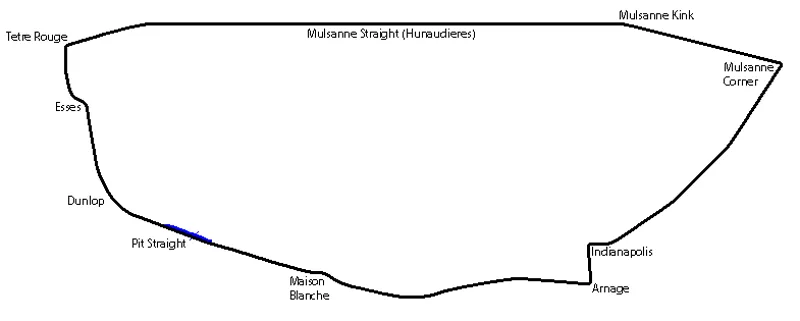
Numbered circles were painted on the pit straight opposite the grid positions, to stop drivers jumping the start. The track and facilities were otherwise unchanged that year.
A Lagonda won by half a lap after an Alfa Romeo had run out of petrol and oil, and the whole race was decided by who could keep their engine running.
Why were so many British cars entered?
A total of 59 cards were entered for scrutineering at the start of race week, the largest entry for a pre-war edition of the race. Alfa Romeo and Bugatti were the strongest entrants among the big cars, but the British marques dominated the medium and small classes. They supplied 36 of the 44 small-engine entrants, including works entries from Austin, Riley and Singer.
The ACO secretary, Georges Durand, said that the British entries were in the majority because road racing had been banned on the British mainland, and that British makers were not content to stand aside. The 59 British drivers entered that year also set a record for the event.
Ten women were entered, and three of the crews were all-female. It was also the first time a husband and wife raced at Le Mans, Tommy and Elsie Wisdom, although they drove different cars.
Who were the Alfa and Bugatti contenders?
Alfa Romeo had won four races in a row, and it hoped for a fifth. Luigi Chinetti was paired with Jacques Gastaud, and Raymond Sommer, another two-time winner, drove with Raymond d'Estrez Sauge. Earl Howe, running with Brian Lewis and Baron Essendon, brought the three-year-old Alfa he had run the year before. Louis-Dreyfus, racing as Helde, enlisted Henri Stoffel as his co-driver.
Guy Weisweiller raced an Alfa 6C-1750 SS under the name Guy Don, with the supercharged 1774cc engine tuned to 85 bhp. Bugatti's largest entry yet at Le Mans saw eight cars arrive. Two were ex-works Type 50 Sports with 5-litre supercharged engines, and Roger Labric had works support, with Pierre Veyron as his driver.
A Type 57 had its supercharged straight-eight bored out to 3.3-litres, giving 135 bhp. The Ecurie Argo team entered two cars, and the Type 51A of Louis Villeneuve was a 1.5-litre car that had to race against 3-litre machines because of its supercharger factor.
Fox and Nicholl had a 4.5-litre Lagonda M45 Rapide with a straight-six making 140 bhp. Two shorter-wheelbase cars were entered, with 120-litre fuel tanks and better brakes. Hindmarsh and Fontes drove one of them, and Dudley Benjafield, with Sir Roland Gunter, drove the other.
Delahaye had gone back to standard saloons until the wealthy heiress Lucy O'Reilly Schell encouraged a competition department. Its Type 138 Sports had a 3.2-litre engine producing 100 bhp, and five were built. Prince Nicolas of Romania returned with the 7-litre Duesenberg.
Which small-car teams raced in 1935?
Riley arrived with confidence after a strong 1934. Six new cars had been built on the Riley Sprite mechanical layout, two of them with its 1496cc 12/4 engine, producing 70 bhp. Dorothy Champney entered one of the Rileys with Kay Petre and Elsie Wisdom, and the older MPH cars with 1458cc straight-six engines went to Dixon and Paul, Newsome and Maclure, and Sebilleau and Delaroche.
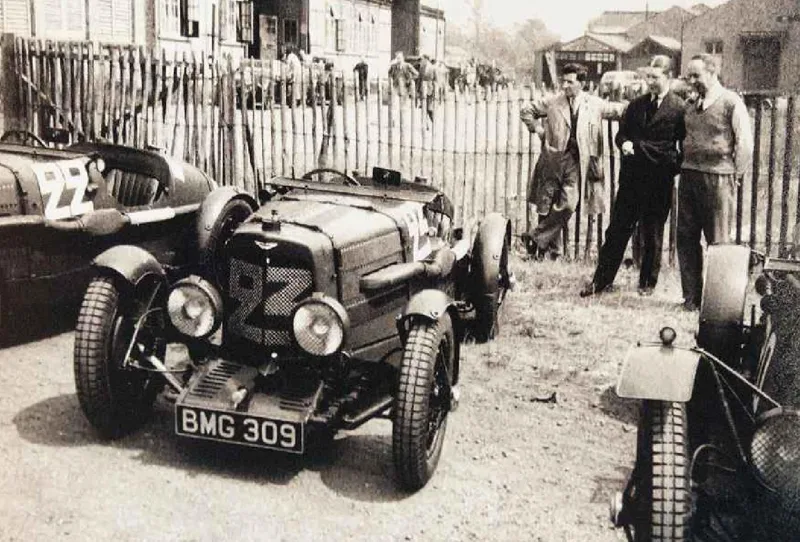
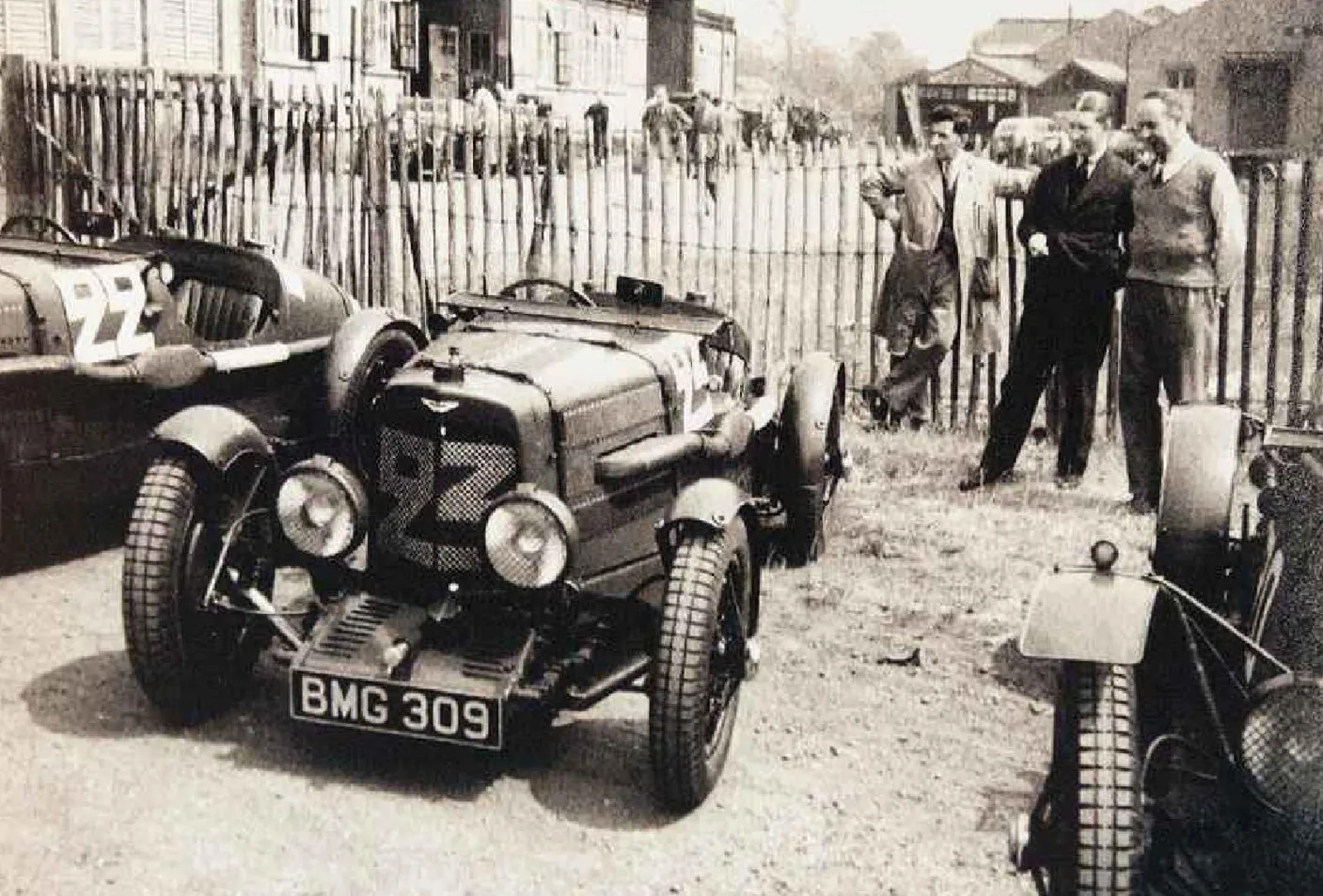
Aston Martin mounted a serious assault with seven entries, all of them the new Ulster model for the 1.5-litre class. The works cars were entered privately under the drivers who had qualified for the Biennial Cup. The works team was supported by four privateers, and the works Astons were painted red that year, like the Lagondas.
Singer had eight entries, including three new works cars for the Biennial Cup. The Nine Le Mans Replica had a racing engine producing 50 bhp and was almost 200 kg lighter than the standard car. Sammy Davis was team manager, allowing Stan Barnes to drive.
George Eyston prepared three all-female MG crews for the 1-litre class. Margaret Allan and Corinne Eaton, Joan Richmond and Eva Gordon-Simpson, and Doreen Evans and Barbara Skinner drove the Midget PAs. A fourth MG was entered by Philippe Maillard-Brune's team.
SIMCA, set up by Fiat to make its cars in France, sent a 995cc 6CV that Amadeo Gordini had tuned to 36 bhp. Gordini had won his class at the Bol d'Or in May, and he used the prize money to buy the car, with Carlo Nazzaro as co-driver. The four Austins ended the grid.
What happened in practice?
During practice a stone punctured the fuel tank of Labric's Bugatti, and the team fitted wooden slats to the floor to stop the problem recurring. The most serious incident came in the last practice on Friday night, when De Valence lost control of a big Bugatti after leaving the first corner. His lead mechanic was thrown onto the track.
George Delaroche, in a Riley, managed to stop without hitting the unconscious mechanic, but his lead mechanic was in a coma for nine days before he recovered. The Bugatti was a write-off and did not take the start. The weather had been poor through the week, which suited the heavier British cars.
How did the first hours unfold?
Raceday started grey and drizzly, but the rain eased as the cars formed up. The big news was that Sommer's co-driver had been taken ill and could do little driving. Sommer found Christian d'Auvergne among the spectators, but the ACO ruled that it was too late for a substitute, so Sommer faced a long race alone.
At flagfall Brian Lewis was the first away, though the big Duesenberg was first under the Champion bridge. By the end of the first lap the Alfas were at the front. Sommer took the lead on lap three, then pitted to reconnect a sparking plug cable. Lewis lost over ten minutes and two laps on lap five when a distributor had to be replaced.
Sommer excelled as the track got wetter, and he was second by 5pm. At 6.30pm the leaders completed their mandatory 24 laps and began pitting. By 7pm Sommer had put a lap on the field, having done 29 laps. Fontes was second with the Lagonda, and the other Lagonda was fifth.
Jim Elwes aquaplaned off at the first corner in a sharp rainburst, and his car went backwards into the fence. Later, as dusk fell, Fothringham's Aston misjudged the White House corner and rolled, throwing its driver out. The Sammy Newsome Riley was dumped into the sandbank at Arnage, and over-enthusiastic spectators helped him out, which got the team disqualified.
How did the night and the morning turn?
By 10pm the Duesenberg had retired with ignition failure. Sommer then stopped at Mulsanne with fuel-flow trouble and needed an hour to crawl back to the pits. He rejoined seven laps down, and at 1.15am he came in again, still with engine problems. After nine hours alone, he retired.
At halfway Howe led Veyron by two minutes, with 113 laps. Louis-Dreyfus was a lap behind, Hindmarsh was close behind him, and Chinetti and Gastaud were fifth on 108 laps. Veyron's Bugatti broke its rear axle three laps later, and Chinetti's Alfa suffered a suspension failure in the same hour. At 5.30am Howe parked his Alfa with a holed piston.
By 6am Louis-Dreyfus led by about a minute on 131 laps. Hindmarsh and Fontes drove hard, though, and by 10am they had retaken the lead. Stoffel's Alfa lost seven minutes fitting new sparkplugs, and Bodoignet's Talbot lost its brakes at Arnage, ran up the escape road and later retired at midday with a broken oil pipe.
Around 9am Delaroche's Riley rolled at Arnage, and the driver spent 45 minutes levering it back onto its wheels. Spectators gave it a push start, and he was headed for disqualification. Soon afterwards Dixon's Riley burst into flames after suspension trouble, and both cars were out of the race.
How was the winner decided at the finish?
Fontes pitted at 3pm, off-schedule, because the oil had not been topped up at the last stop. With less than an hour to run he went out again on the low oil pressure, and the pit crew urged him on. The Lagonda had a two-lap lead, but it was running on very little oil.
Louis-Dreyfus was driving hard, and with 20 minutes to go the public address reported he was closing on the Lagonda. He overtook Fontes on the next lap, and the pit team signalled him to ease off because they thought he was leading. At 3.55pm the announcer admitted the error: the Alfa was still three minutes behind on the same lap, and it was too late to catch the Lagonda.
Official figures from the 1935 race
| Item | Detail |
|---|---|
| Dates | 15 and 16 June 1935 |
| Winners | Johnny Hindmarsh and Luis Fontes, Lagonda M45 Rapide |
| Winning margin | Half a lap |
| Finishers | 28, of whom 22 were British |
| British cars | 37, a record for the event |
| Women entered | Ten, a record for one Le Mans |
What happened to the field and the teams afterwards?
Martin and Brackenbury's Aston Martin finished third, seven laps behind the winners, and won both the Index and the Biennial Cup. Van der Becke and Richardson's Riley was fourth, and the Delahaye of Toulouse and Mongin finished a lap further back. Weisweiller and Desvignes took sixth in their Alfa and won the 3-litre class.
Of the 28 finishers, 22 were British cars. Maillard-Brune won the 2-litre class in his MG Magnette, and Barnes and Langley won the 1-litre class by 11 laps from the SIMCA-Fiat of Anne-Cecile Rose-Itier. All three of Eyston's all-female MG teams finished, in 24th, 25th and 26th places.
The Lagonda company was in liquidation at the time, and the receivers promptly sold the winning car after the race. Within months, Alan Good rescued the company and brought in W. O. Bentley as designer. Production of the Rapide and Rapier then ended.
The race also marked the final appearance of La Lorraine after twelve years and eight entries, and the last Le Mans for BNC. Anthony Lago completed his purchase of the Talbot company, and the success of Amedee Gordini convinced SIMCA to appoint him to its racing programme for the new year.