A new bypass section, a shortened circuit and an Alfa Romeo that won by two laps after one driver covered most of the distance alone.
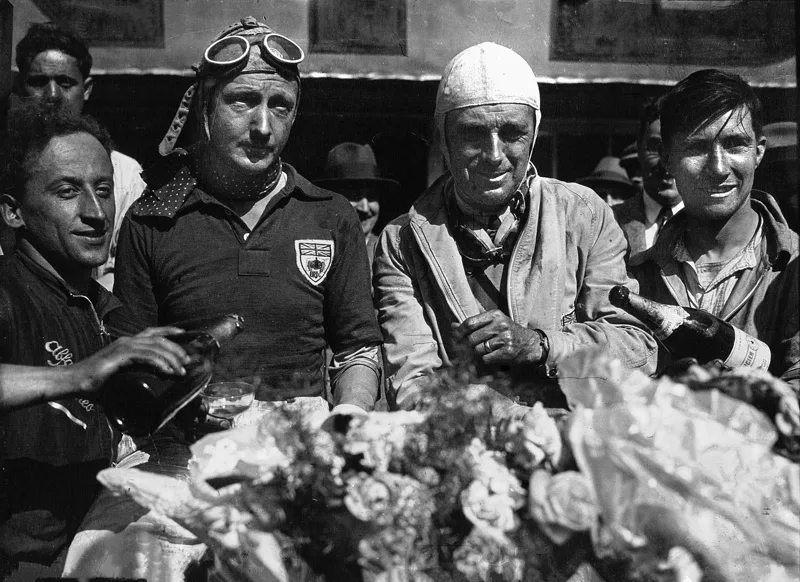
The 1932 race was won by Raymond Sommer and Luigi Chinetti in an Alfa Romeo 8C-2300. Sommer drove most of the distance alone, over twenty hours, and the win came on a circuit almost three kilometres shorter than before. The second-placed car was the other works Alfa.
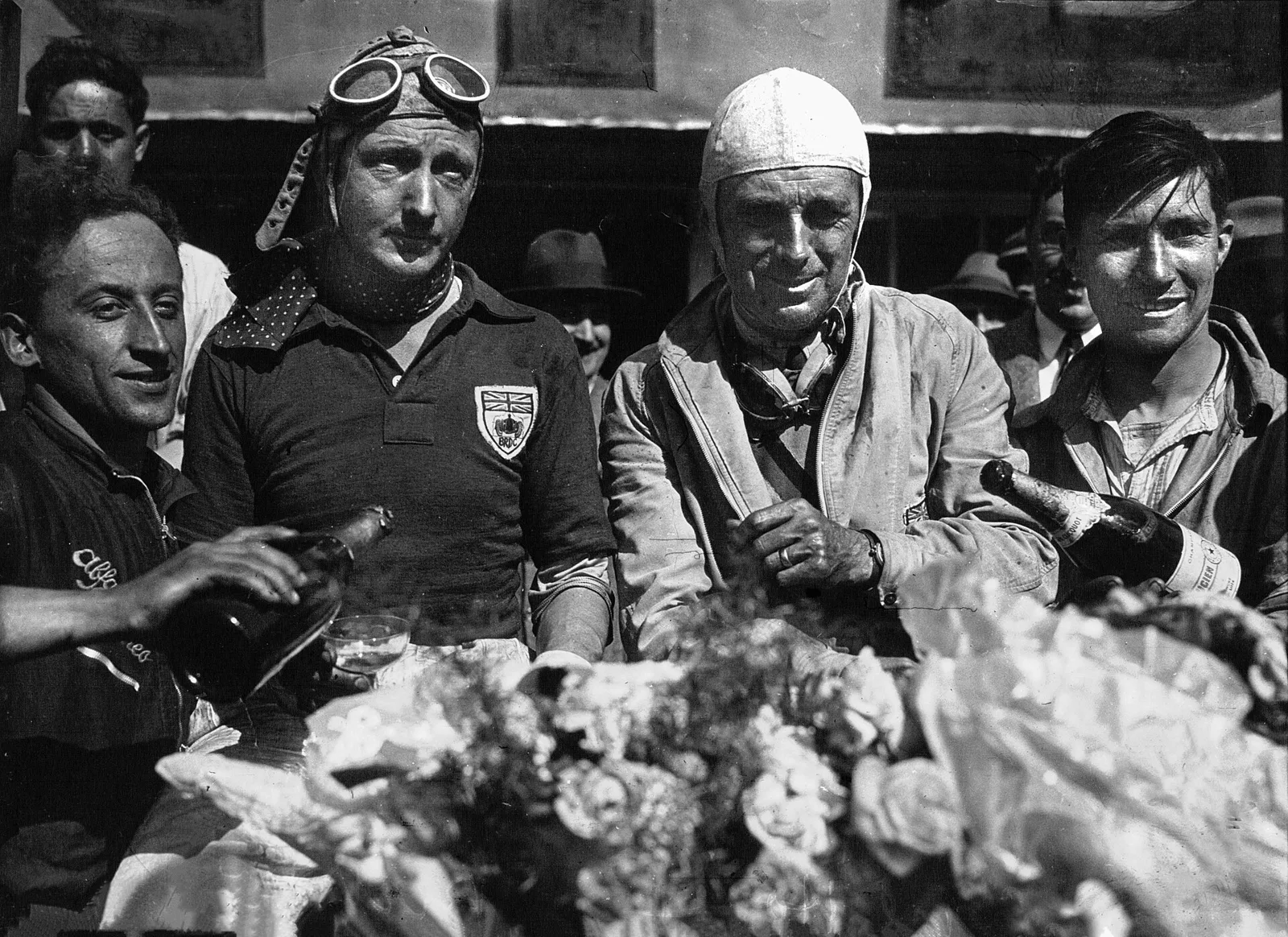
The 1932 24 Hours of Le Mans was the tenth Grand Prix of Endurance and the year the circuit took its modern shape. Raymond Sommer and Luigi Chinetti won in an Alfa Romeo 8C-2300, but Sommer drove most of the race alone after Chinetti fell ill. They finished two laps ahead of the works Alfa of Franco Cortese and Giovanni Battista Guidotti, and their win came after a long, lonely drive on a circuit that had been shortened by almost three kilometres.
What changed at the Sarthe circuit in 1932?
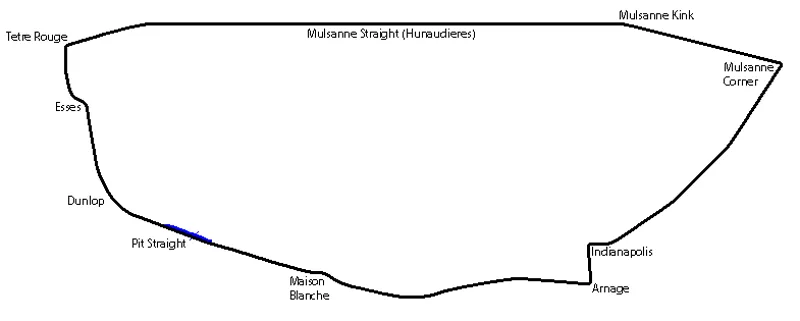
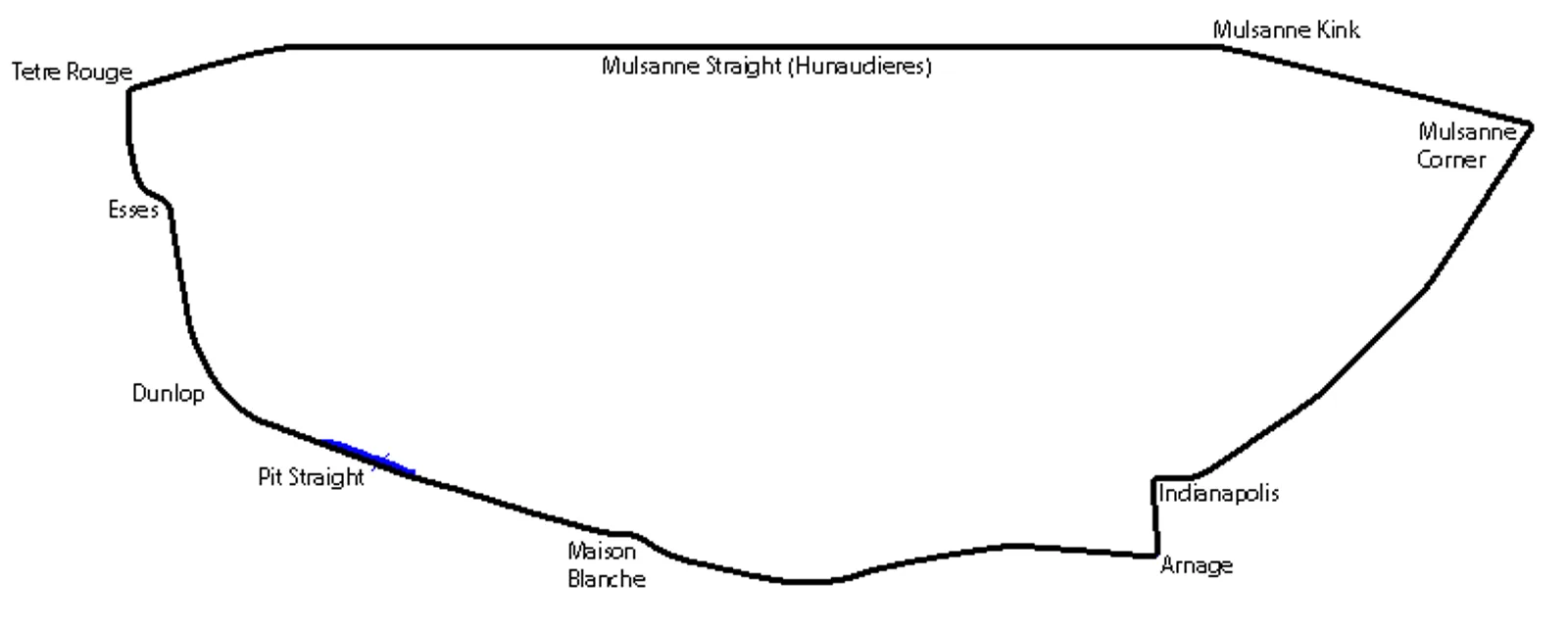
A new section of road bypassed the Pontlieue suburb, starting with a long right turn after the pits and climbing over a hill before dropping into the Esses. It rejoined the Hunaudieres Straight at a new corner called Tertre Rouge. The circuit was reduced to 13.491 km (8.383 mi), almost three kilometres shorter than before.
The Automobile Club de l'Ouest bought 75 hectares of land beyond the start-finish straight to build the new layout. Viewing and camping areas were added on that land, raising the official capacity to around 60000 spectators. Two footbridges crossed the new section so that pedestrians could reach the infield, and they were sponsored by a sparking plug company.
The layout has remained essentially the same ever since, aside from periodic changes for safety and surfacing. The same year saw the start of an extensive public entertainment village.
One driver, one lap down on the leaders for most of the night, and a new circuit that set the layout for decades.
Why did the ACO change its rules in 1932?
It was a watershed year for the ACO, with several changes made at once. The partnership with founding sponsor Rudge-Whitworth ended after nine years, so the cup was renamed the Biennial Cup of the Automobile Club de l'Ouest. The ACO also dropped the passenger-ballast requirement, which had weighed a car down with 180 kg on the larger cars.
On the new layout the minimum refuelling interval became 24 laps, up from 20 on the old 16.4 km circuit, which kept the 320 km (200 miles) distance. The ACO also limited each car to seven new tyres in the race, including the four it started on, after the tyre wear of 1931.
The class distances were also reworked. The ACO cut the targets for the smaller engines and raised the required distance for the premier 3-litre class. The supercharger equivalence moved from 130% to 133%, and two-seater eligibility was extended to include 1.5-litre cars.
Esso's French distributor took the fuel contract that year, offering its regular fuel, a premium grade and 100% benzole. The ACO had decided to alternate the contract between Esso and Shell each year, so the supplier changed.
Who was racing in 1932?
Alfa Romeo had the largest entry, with seven 8C-2300 cars. Its two works cars were run by Franco Cortese with Giovanni Battista Guidotti, and Nando Minoia with Carlo Canavesi. Alfa test driver Attilio Marinoni was seconded to a customer car owned by Georgian exile Prince Dmitri Djordjadze.
Raymond Sommer, the French star, had bought a short-wheelbase Mille Miglia 8C on display at the Paris Salon and asked Luigi Chinetti to convert it. The car was fitted with two small rear seats, an oversized fuel tank, streamlined fairings and an external exhaust. Chinetti became his co-driver. Sommer's Alfa ran on Englebert tyres, while the rest of the field used Dunlops. Earl Howe, the 1931 winner, returned with Birkin in another new Alfa.
Bugatti's works effort was less visible. Two cars were entered under the drivers' names, using the 2.3-litre supercharged engine of the Type 51 in a Type 44 body that had been detuned to 130 bhp. Guy Bouriat ran with Louis Chiron, and Stanislaw Czaykowski with Ernest Friderich. The Type 55 itself was a two-seater, so it was ineligible for the race because of its engine size.
Talbot returned with the AV105 through its Fox and Nicholl customer team, after a strong run in the Mille Miglia. Finances limited the entry to one car for the Biennial Cup, with the engine upgraded to 132 bhp and driven by Brian Lewis, Baron Essendon and Tim Rose-Richards.
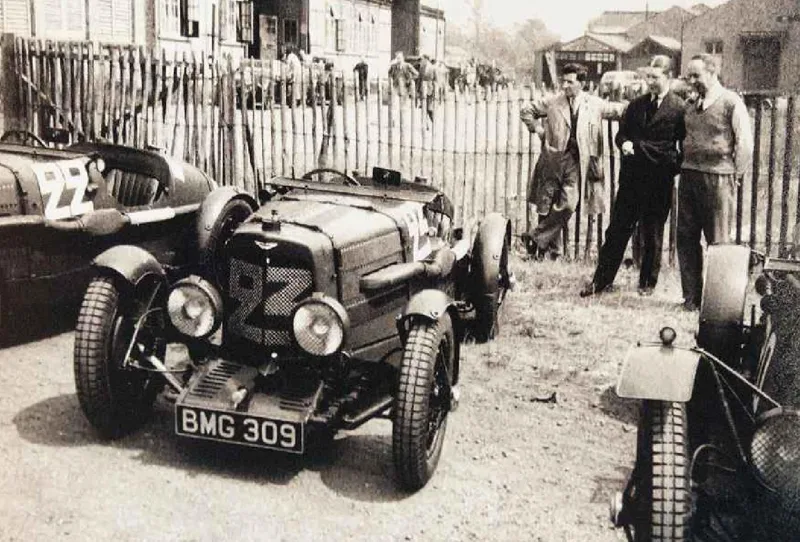
Aston Martin had moved to its Mark 2 International, and three two-door Le Mans cars were prepared. Technical director Bert Bertelli ran the Biennial Cup entry with Pat Driscoll, while Ken Peacock and Jack Besant and Sammy Newsome and Henken Widengren drove the other two. The team was managed by Sammy Davis, the 1927 Le Mans winner.
Henri de la Sayette entered the first Citroen to race at Le Mans, a C4 with a standard open tourer body and a 1554cc engine. It was given a lower target distance of 147 laps, which was less than the smaller Astons, but it was still badly underpowered against the supercharged Alfas.
How did practice and the opening hours go?
The new layout was officially opened in a ceremony before the Wednesday practice, and the practice itself was limited to the evening hours.
Arthur Fox's Talbot crew had been in a road crash on the way to the event, after the car ran into unmarked roadworks. Several people were hurt, though not seriously. Fox also complained that practice was limited to evening sessions, which stopped teams from tuning their cars for the daytime heat.
Race day was extremely hot, and tar melted through the new road surface. The pre-race ceremony included a lap of honour by Earl Howe in the previous year's winning car, and a minute's silence was held for Andre Boillot, the post-war French driver killed at a hill-climb a fortnight before. Two land speed record cars, driven by George Eyston and John Cobb, were also shown to the crowd.
Race director Charles Faroux had to hold back over-keen drivers running to their cars, and he recalled them several times before he waved the yellow flag. Cortese and Minoia put their works Alfas into the lead at once, and the first lap ended with the Alfas in close formation.
Early trouble struck the field. Jean Trevoux's Bentley rolled at the White House curves on the first lap, and it was not the last incident there. Marinoni went off at Arnage and lost more than an hour digging out of the sandbank, and Minoia lapped Brisson's Stutz just before the White House corner and crashed.
How did the race unfold through the first night?
Cortese and Minoia raced very hard, passing and repassing each other, which exasperated the team manager, Aldo Giovannini. Giovannini had told the Alfa drivers to keep the revs below a set limit to preserve their cars. The Talbots and the Aston Martins were hit by misfires caused by heat and the French fuel.
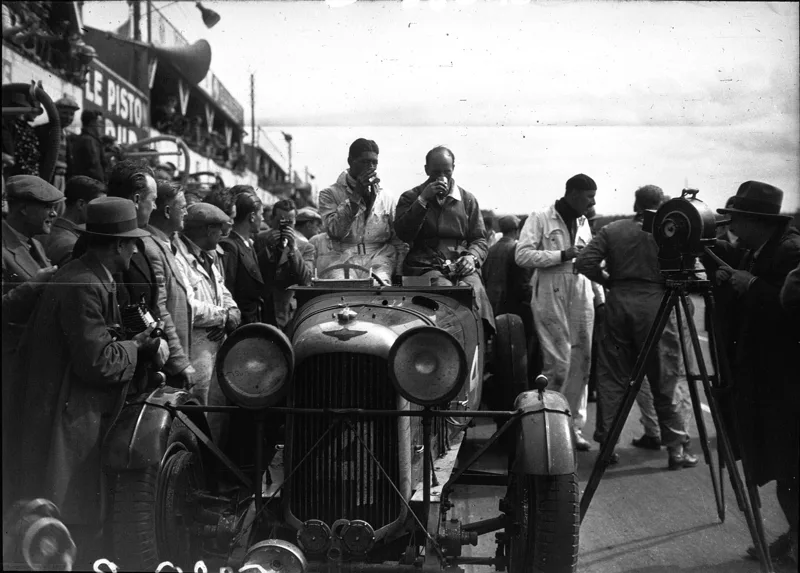
After the first stops Cortese led from Birkin and Howe, with Sommer and Chinetti close behind. Trouble in the pits remained a theme. Guidotti made a stop around 10pm to repair a broken windscreen bracket, and the Alfas dropped to third behind the Howe and Birkin car and the Sommer and Chinetti car.
Just after midnight the MG was stopped by a bolt breaking on its fuel tank, which caused the tank to split, and the third Aston Martin retired with a broken rocker arm. Lewis brought the Talbot in at 2am with a damaged throttle, and an hour was lost making a fix.
The scoreboard showed each car's laps against its target, so spectators could follow the Biennial Cup contest between Howe's Alfa, Bertelli's Aston, the Talbot and the Caban.
The Howe and Birkin car held the lead until 3am, when its head gasket failed. Sommer then took the lead. He had been left to drive most of the race himself, since Chinetti had fallen ill after working long hours to prepare their car, and he had driven just one shift.
How did the morning and the finish play out?
As dawn broke, Cortese and Guidotti were catching the leader, but their progress was repeatedly halted by stops to fit broken parts, first fenders, then headlamps, then the battery box. The delays let Czaykowski's Bugatti close on them, while Lewis and Rose-Richards had climbed to fourth by 8am.
Trouble continued through the morning. Druck's Bugatti had no brakes at the end of the Mulsanne Straight and went into the escape road. Sommer's exhaust pipe broke, and fumes poured across him for the rest of the race. At 10.15 the Talbot misfired and would not restart, and a battery change cost the crew its chance for the Biennial Cup.
Hopes of a French win were dashed when a Bugatti stopped at Arnage with a broken piston, after a detached oil line caused the damage. The Biennial Cup went down to a three-way battle, and the little Caban kept circulating reliably while its bigger rivals stuttered.
Sommer held on despite the fumes, and he was at the wheel for over twenty hours. His pace also gave him the Index of Performance, going over 20% beyond his target. Cortese and Guidotti came home two laps adrift, while the Talbot took third place, 36 laps behind.
Odette Siko's Alfa came in fourth, one lap down, and took the 2-litre class. It was the best finish by a woman at Le Mans to that date. Newsome and Widengren's Aston Martin finished fifth and won the 1.5-litre class, and a Bertelli and Driscoll Aston beat its target by 20 laps.
Official figures from the 1932 race
| Item | Detail |
|---|---|
| Dates | 18 and 19 June 1932 |
| Winners | Raymond Sommer and Luigi Chinetti, Alfa Romeo 8C-2300 |
| Winning distance | 2,954.04 km (1,835.56 mi) |
| Average speed | 123.08 km/h (76.48 mph) |
| Fastest lap | F. Minoia, 142.44 km/h (88.51 mph) |
| Circuit length | 13.491 km (8.383 mi) |
What did 1932 mean for Alfa Romeo?
Alfa Romeo's dominance began with a Mille Miglia win for its works team, followed by the Targa Florio for the works-supported Scuderia Ferrari. It then had a dominant year in European racing. The 8C, in its sports and racing forms, also won the Targa Florio, the Mille Miglia, the Spa 24 Hours and the Monaco Grand Prix, and Alfa drivers took the first three places in the European Championship.
Financial pressure then led both Alfa Romeo and Talbot to leave racing at the year's end. Arthur Fox, whose Talbots had finished third in three consecutive races, was awarded a gold medal by the ACO, but on his return to England customs charged him 30% import duty on it.
Several debutants did not return either. The Citroen and the Alta made their first appearances in 1932 and never raced at Le Mans again, and the Stutz and the Caban, despite better results, also left the event. Mercedes-Benz followed a similar path and stayed away for two decades.
Birkin, who had won Le Mans twice, was not to return. He burned his arm on an exhaust pipe at the Tripoli Grand Prix the following May, and he died of septicaemia a week after the 1933 race, aged 36.