Six finishers, a first Italian win and a race decided by tyre failures and a fatal accident on the Mulsanne Straight.
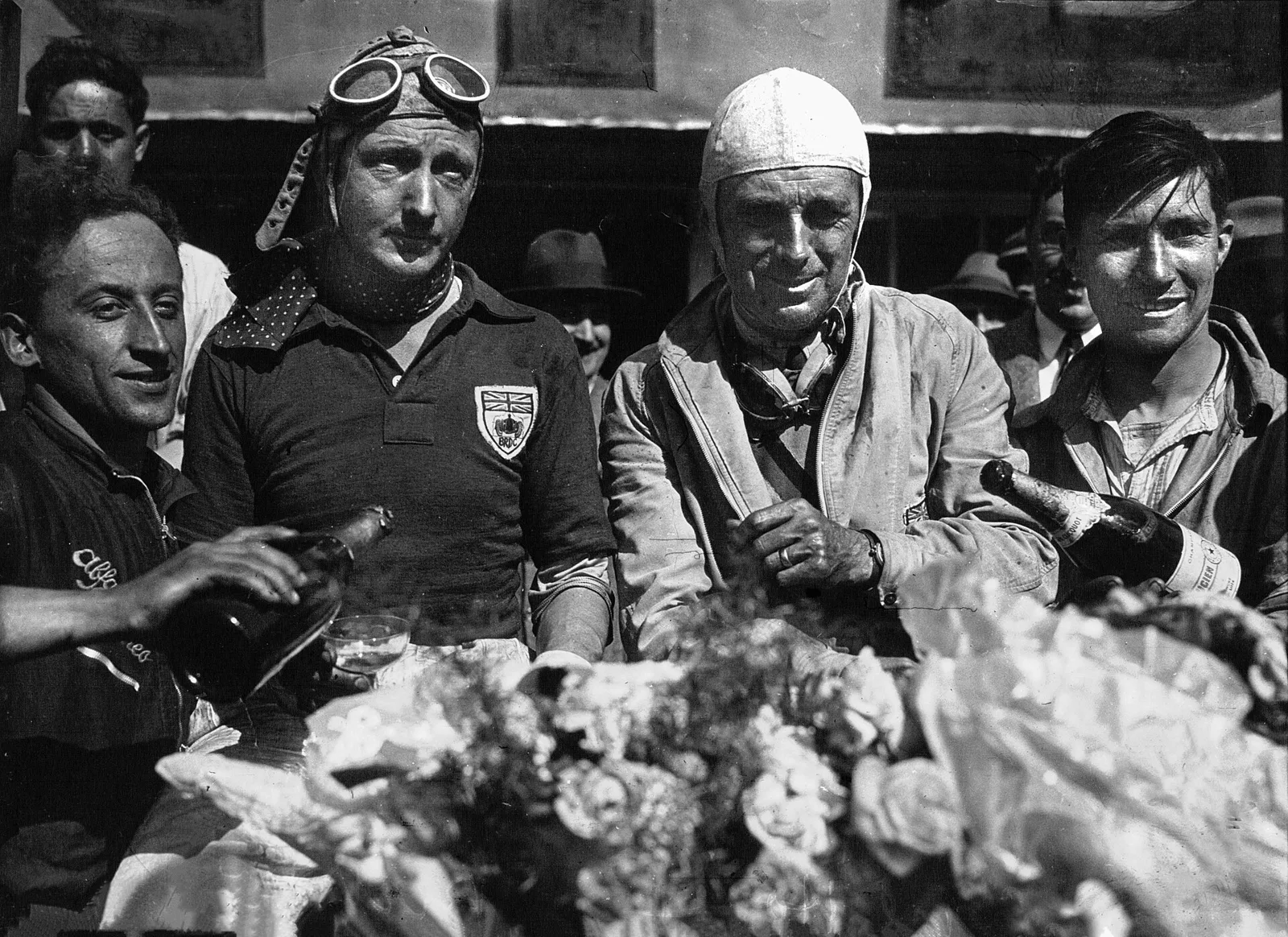
Earl Howe and Tim Birkin won the 1931 race in an Alfa Romeo 8C-2300, the first Italian win at Le Mans. They finished seven laps ahead of the Mercedes-Benz SSK and claimed the Index and Biennial Cup too. Only six cars were classified, a record low for the event.
The 1931 24 Hours of Le Mans was the ninth Grand Prix of Endurance, and it ended with a first Italian win and the fewest classified finishers the race had ever recorded. Earl Howe and Tim Birkin drove a privately entered Alfa Romeo 8C-2300 to victory, seven laps ahead of a Mercedes-Benz SSK. Only six cars were classified after a race marked by tyre failures, a fatal crash and a violent storm.
What changed in the rules for 1931?
Neither the AIACR Appendix C rules nor the ACO's own regulations changed for 1931. The biggest difference came in the pits, where refuelling from 10-litre cans gave way to reservoir towers. Those towers were four metres high and held 1000 litres, feeding three hoses by gravity at about 250 litres per minute.
Shell again held the fuel contract and offered its three standard options. The ACO also allowed a mechanic to help the driver with refuelling, which sped the stops. Index target distances were adjusted once more as engine power advanced, which kept the scoring under review.
Six cars classified, one Italian victory, and a race that Bugatti's tyres and a spectator fatality made unforgettable.
Why were there so few entries?
Bentley's financial troubles had ended its works team, and the Bentley Boys had scattered. Alfa Romeo and Bugatti stepped into the gap with works teams, but most of the 30 entries came from privateers and gentleman drivers. Only four cars were entered in the final of the Biennial Cup.
The total was only slightly better than the record low of the previous year. Daimler-Benz had withdrawn from official racing in 1930, leaving privateers to run its cars, and the field reflected that shift.
Paris-based Russian Valeriani-Vladimir Tatarinoff entered an SSK on behalf of Count Boris Ivanowski, who had been refused an entry for a stripped-down Alfa Romeo in 1928. The SSK had a 7.1-litre engine that could be supercharged to 250 bhp, and Henri Stoffel shared the driving.
Bugatti had raced almost exclusively in Grand Prix events, but this year it brought its first works team to Le Mans. The Type 50 was a development of the big Type 46. It carried a 5.0-litre straight-eight with a Roots supercharger, making 250 bhp, and a 3-speed gearbox gave it a top speed of 195 km/h (120 mph).
Alfa Romeo's new 8C-2300 had a supercharged 2.3-litre engine producing 155 bhp. It came in two styles, a short corto two-seater for Grand Prix and Mille Miglia work, and a four-seat lungo for touring-car rules. Two Englishmen were among the early buyers, and Earl Howe had his car delivered to replace the 6C that Achille Varzi had crashed the year before.
Who were the favourites before the start?
The works Alfas of Campari with Marinoni and Minoia with Zehender were expected to lead, with the Bugatti works team as the main opposition. Howe and Birkin, the British privateers, were also in the mix in their own Alfa, and a lone privateer Mercedes SSK was the outside chance.
Henri de Costier entered a pair of big Chrysler straight-eights. He drove the larger CG Imperial Eight, a 6.3-litre car making 125 bhp, while the CD Eight, with a 3.9-litre engine producing 100 bhp, went to the young French driver Raymond Sommer.
Lorraine-Dietrich had not raced at Le Mans since 1926. One of its four mothballed B3-6 specials was sold to Henri Trebor, and Roger Labric entered it on his behalf with Louis Balart as co-driver.
Aston Martin came back after a three-year absence with three works cars. The 1.5-litre International was still in a short production run, and the factory had built only seven racing chassis. MG was present too, with the C-type that grew out of the EX120 special Eyston had used for his 100mph record in February 1931.
The Bugatti works drivers were Louis Chiron with Achille Varzi, Albert Divo with Guy Bouriat, and Maurice Rost with Caberto Conelli. Pierre Louis-Dreyfus and Antoine Schumann raced under the name 'Ano-Nime', and Odette Siko and Marguerite Mareuse returned with a smaller Bugatti.
Fox and Nicholl had four Talbots available, and two went to Le Mans with a third as a test vehicle. The drivers were Brian Lewis with Baron Essendon, Johnny Hindmarsh, and Tim Rose-Richards with Owen Saunders-Davies. Their 105 model had a 3-litre engine producing 120 bhp and a top speed of 175 km/h (110 mph).
Yves Giraud-Cabantous, a former Salmson mechanic, built a special on a Salmson chassis with a 1.1-litre Ruby engine producing 35 bhp. Roger Labric encouraged him and offered to enter two cars under his name.
What happened in practice and before the start?
In practice the Alfa Romeos suffered ignition problems caused by the hybrid fuel, which the Bentleys had also struggled with the year before. Parts were delayed from the factory in Milan, and mechanics worked through the night. By race morning only three of the cars were ready, and the team manager stood down Campari and Minoia and paired Marinoni with Zehender.
The Bugatti team drove its cars from Molsheim and arrived on the Thursday, after racing elsewhere the weekend before. Arthur Fox had carried Birkin, Howe and Campari from Dublin, where the three had raced at the Irish Grand Prix meeting the week before.
The ACO was celebrating its Silver Jubilee, having been formed in 1906 to run the first French Grand Prix. Ferenc Szisz and Felice Nazzaro, who had finished first and second in that race, were guests at the Saturday luncheon. ACO secretary Georges Durand, who had served the club for 25 years, was the honorary starter.
How did the first hours unfold?
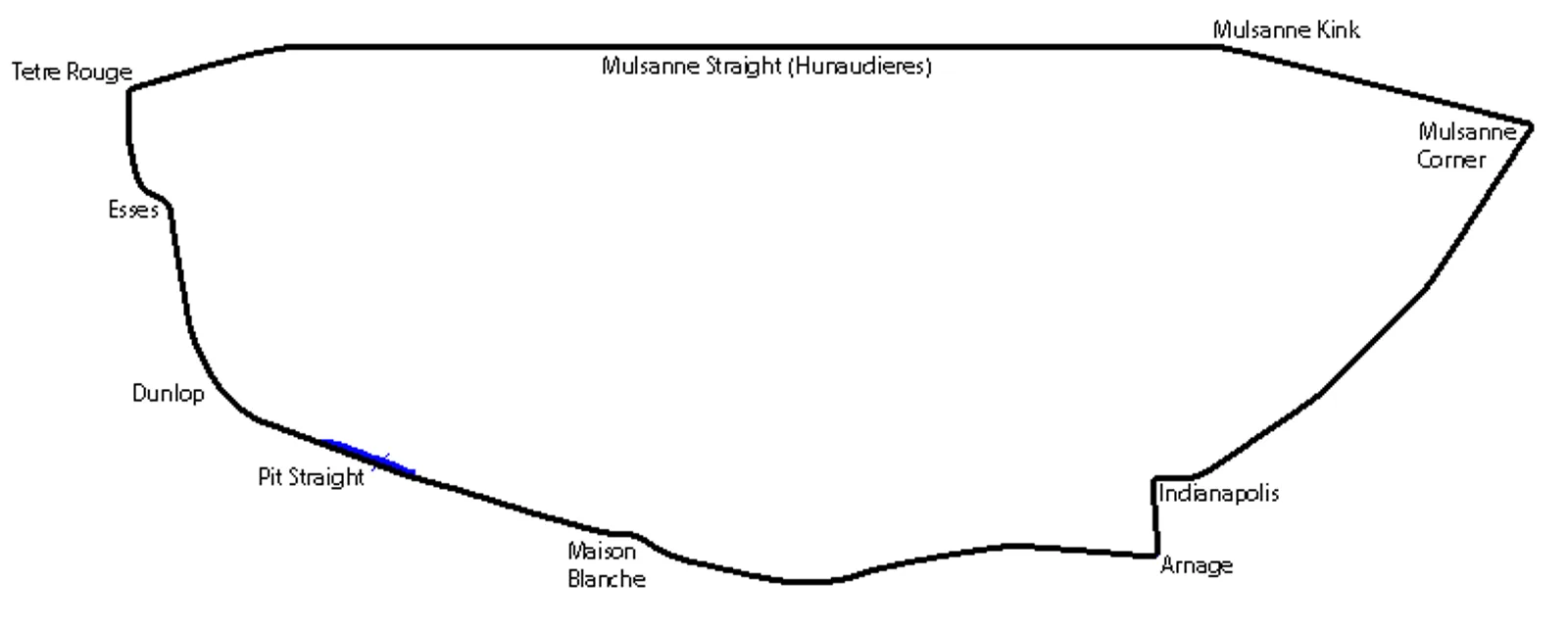
The race began at 4pm with the two Chryslers first away, but their lead was short-lived. The Bugattis of Chiron and Divo passed them, and then Henri Stoffel wound up the Mercedes supercharger and blasted past all four cars into the lead. The Alfas and the Bugattis of Rost and Louis-Dreyfus filled the top nine.
By lap ten the order had changed completely. Birkin pitted with a misfiring sparkplug just as Stoffel and Chiron arrived with flat tyres. Marinoni's Alfa was now in front, with the two Bugattis of Divo and Rost behind it.
Chiron's climb back up the field was interrupted when another rear tyre blew at top speed on the Hunaudieres straight. He regained control and crept back to the pits, but the damage was done.
Then came the crash that defined the race. Rost's Bugatti, running third at 175 km/h, had a tyre blow, and the car went through the roadside fence and trees. Three men in a spectator-prohibited zone were run down, and one of them, Jules Bourgoin, was killed. The other two were seriously injured, and Rost himself suffered head injuries and broken ribs.
Why did the Bugatti team withdraw?
Tyre delamination and the fatal accident were the main reasons. Chiron pitted with a third delaminated tyre, and the works Bugattis were withdrawn despite boos from the crowd. The team had chosen a new heavy-tread Michelin tyre, perhaps in expectation of bad weather.
The works team was run by Ettore Bugatti's son, Jean, and it had been managed on the ground by Meo Costantini. Costantini had told the drivers not to exceed 4000rpm for the first six hours, to limit top speed and protect the cars.
Odette Siko's Bugatti was also disqualified, after its second stop came two laps before regulations allowed refuelling. The reason for the early stop is unknown, and the car was disqualified.
How did the night and morning change the order?
Marinoni and Zehender led the Alfa team into the night, but Howe and Birkin overtook them after midnight. A violent squall at 2.30am flooded the track for an hour, and Zehender aquaplaned off at Indianapolis and lost four laps. The Talbots kept running reliably in third and fourth. The Caban of Labric and Giraud-Cabantous was beached at Pontlieue after midnight, and it lost much time digging out.
Both Talbots broke a headlamp bracket, and the Aston Martins suffered similar problems. Their heavier Zeiss lamps had shaken loose on the rough roads, and each team lost time securing them again.
As dawn broke nearly half the field had retired. Howe and Birkin had covered 92 laps, four ahead of Marinoni and Zehender, and the two Talbots were a further two laps back. Around 6am the second-place Alfa broke its rear axle and was out.
The MG of Samuelson and Kindell hit an earth bank while avoiding another car, and it lost three-quarters of an hour fixing the suspension. Ivanowski found Dunlop tyres to replace his troublesome Englebert set. He then drove very quickly, set the fastest lap of the race, and overhauled one of the Talbots.
At 9am the Bezzant and Cook Aston Martin lost a front-wing support, and without spare parts it could not continue. Around 9.30am Lewis noticed the rear fuel tank of his Talbot moving on the chassis, and the frame was found to be cracked above the rear axle. The metal fatigue was blamed on this race and the earlier Brooklands Double-12. Going into the afternoon there were only nine cars left running, and the last Bugatti had just retired when Jean Sebilleau's privateer lost its failing clutch.
How did the 1931 race end?
Howe and Birkin finished seven laps ahead of the Mercedes, which had moved into second when the Talbot ahead of it retired. The pair had kept a comfortable margin for most of the afternoon, but they could not ease off, because the Talbot in third kept up the pressure for the Index and Biennial Cup.
The Mercedes lasted the distance and finished four laps ahead of the Talbot of Rose-Richards and Saunders-Davies. The old Lorraine-Dietrich took fourth, 23 laps down, after a race spent running among the Aston Martins.
The two Aston Martins had varying fortunes. Peacock and Newsome retired with less than two hours left because of bodywork trouble, while Bertelli and Harvey made it to the flag by a single lap, finishing fifth and winning the 1500cc class.
The last classified car was the Caban of Vernet and Vallon, which met its target by a few metres and finished more than nine hundred kilometres behind the winner. Those six classified finishers were the fewest the race had ever recorded.
Official figures from the 1931 race
| Item | Detail |
|---|---|
| Dates | 13 and 14 June 1931 |
| Winners | Earl Howe and Tim Birkin, Alfa Romeo 8C-2300 |
| Winning margin | Seven laps over the Mercedes-Benz SSK |
| Distance covered | 3,017.65 km (1,875.08 mi) |
| Average speed | 125.74 km/h (78.13 mph) |
| Fastest lap | B. Ivanowski, 139.23 km/h (86.51 mph) |
| Classified finishers | Six cars |
Why did the 1931 win matter?
It was the first Le Mans win for an Italian car, and Howe and Birkin claimed all three prizes: outright distance, the Index of Performance and the Biennial Cup. Their total distance also broke the 3000 km barrier for the first time.
The pair earned personal congratulations from Mussolini. Birkin's second Le Mans win came two years after his first, which had been with Bentley.
Only six cars were classified, the lowest number the race had ever recorded. The Samuelson and Kindell MG was among the unclassified cars. A conrod broke with an hour to go, and when the final lap took 32 minutes against a 30-minute limit, the car was not classified.
Alfa Romeo developed the 8C-2300 into a shorter Grand Prix version with 180 bhp. After a win in the Italian Grand Prix, it gained the Monza name. Bugatti mothballed its Type 50s to concentrate on the Type 51, and the Type 50 engines went into the new Type 54.
Ivanowski and Stoffel took the Mercedes on to the French Grand Prix, where it did not finish, and the Spa 24 Hours, which it also failed to complete. At Belgium's Grand Prix they finished fifth.