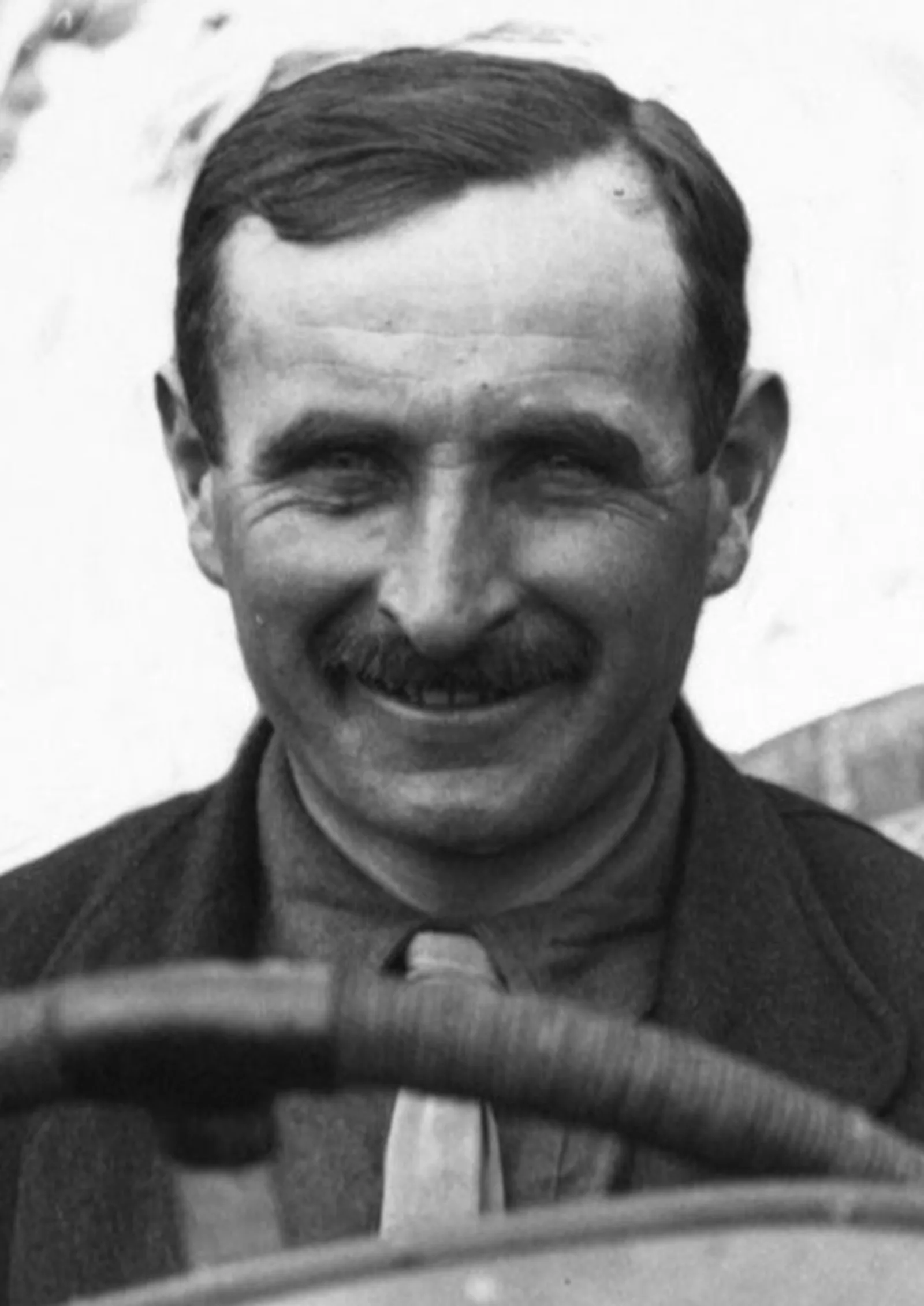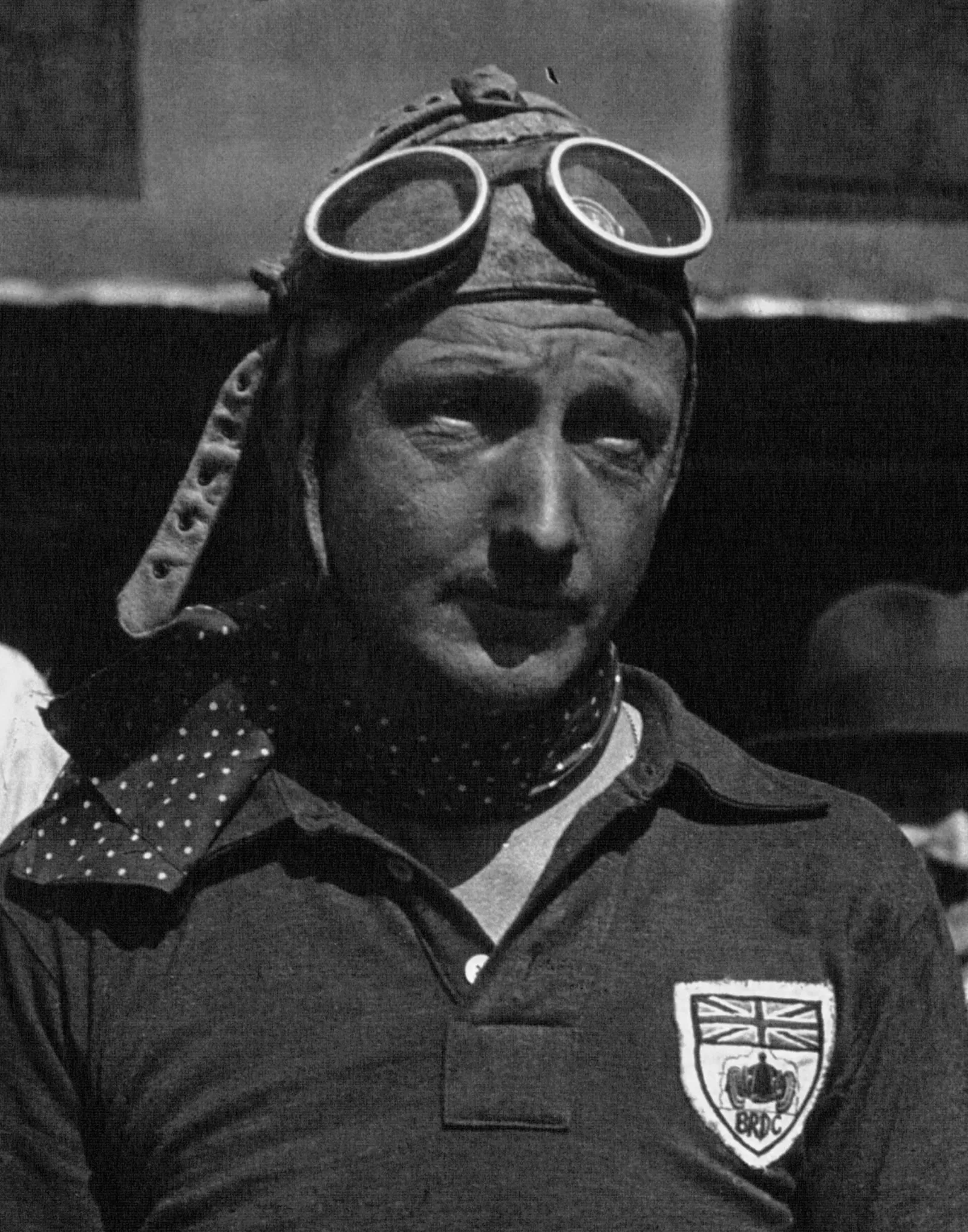
A 1920s Bentley Boy who developed his own supercharged car, won Le Mans twice and set a Brooklands lap record before his death in 1933.
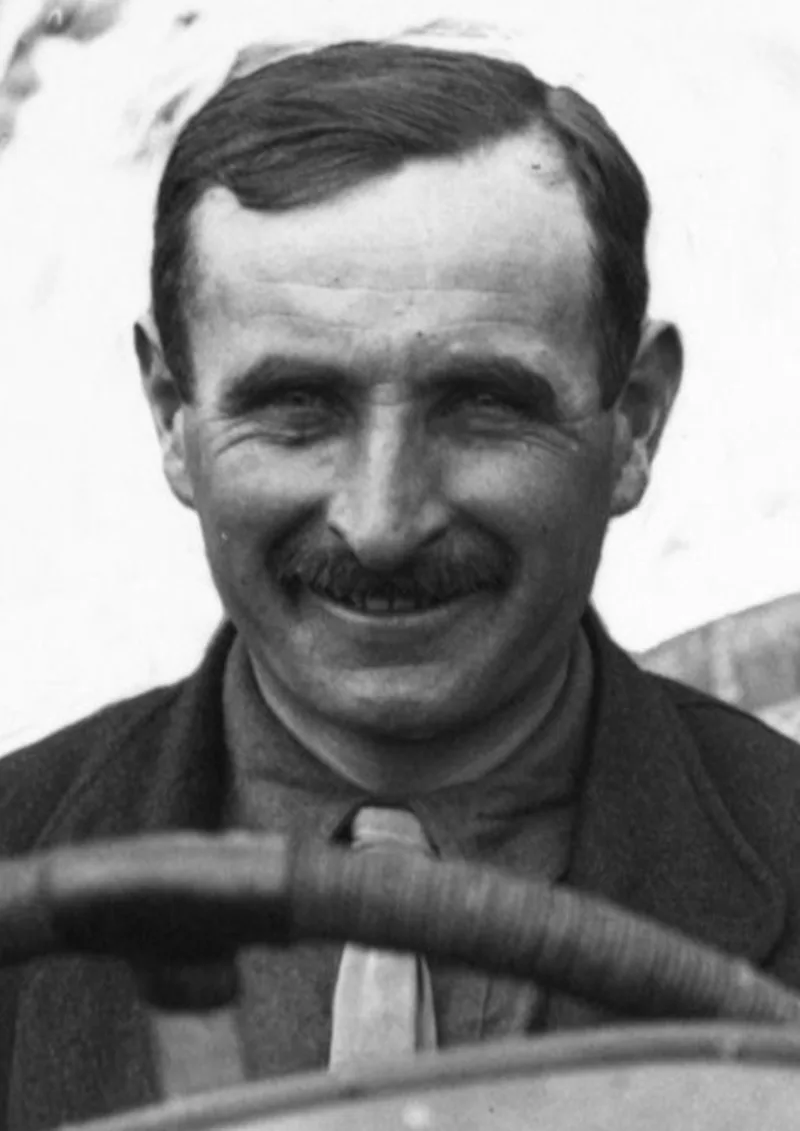
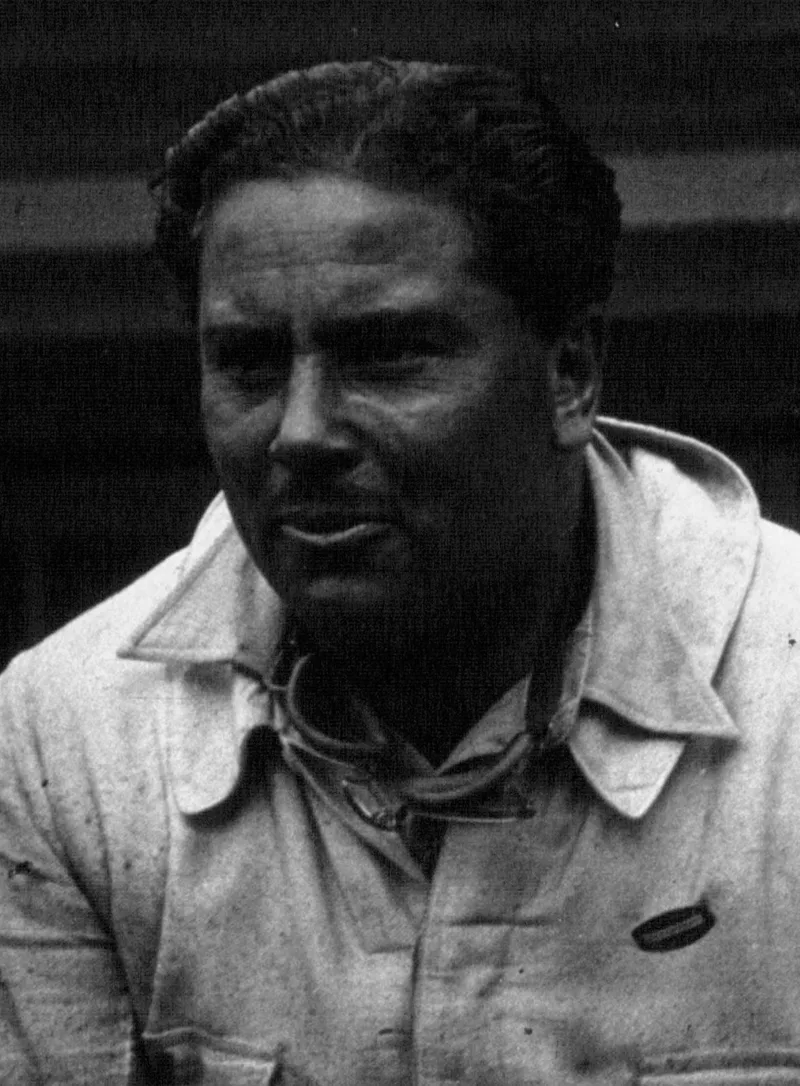
Tim Birkin was a British racing driver of the 1920s, one of the Bentley Boys. He developed the supercharged Blower Bentley, won Le Mans in 1929 and 1931, set a Brooklands lap record in 1932 and died of an infected burn and malaria in 1933.
Sir Henry Birkin, known to everyone as Tim, was a British racing driver and a Bentley Boy in the 1920s. He is best remembered for the supercharged Blower Bentley, which he developed himself, and for winning Le Mans twice, in 1929 and 1931.
Who was Tim Birkin?
Tim Birkin was a British racing driver, born Sir Henry Ralph Stanley Birkin on 26 July 1896. He raced in the 1920s as one of the Bentley Boys and died in 1933, aged thirty-six. His career included Le Mans wins in 1929 and 1931 and a second place at the 1930 Pau Grand Prix.
Born into a wealthy Nottingham family, he picked up the nickname Tim as a child, after the popular comic-strip character Tiger Tim, and he kept it all his life. His younger brother Archie died while practising for the 1927 Isle of Man TT events.
As the 3rd Baronet he had no sons of his own when he died in 1933, so the title passed to his uncle, Sir Alexander Russell Birkin, the 4th Baronet, who died in 1942.
During the First World War he joined the Royal Flying Corps and became a lieutenant in a Norfolk and Suffolk Yeomanry field brigade, numbered 108th. His service in Palestine brought on malaria, a disease that troubled him for the rest of his life.
A Bentley Boy who developed his own supercharged car, then shared a Le Mans win in the Speed Six he had helped rival.
How did Birkin start racing?
Birkin first raced at Brooklands in 1921, but business and family pressures kept him off the tracks until 1927. That year he entered a three-litre Bentley in a six-hour race. In 1928 he bought a four-and-a-half-litre car and returned to racing, against his family's wishes.
He soon became a regular in the Bentley works team and a familiar face at the major races. His 1928 Le Mans was a showcase for his speed. He led the opening twenty laps until a jammed wheel pushed him back, and he finished fifth with co-driver Jean Chassagne, who had rescued the badly damaged car. W.O. Bentley presented Chassagne with a trophy for that feat.
What was the Blower Bentley?
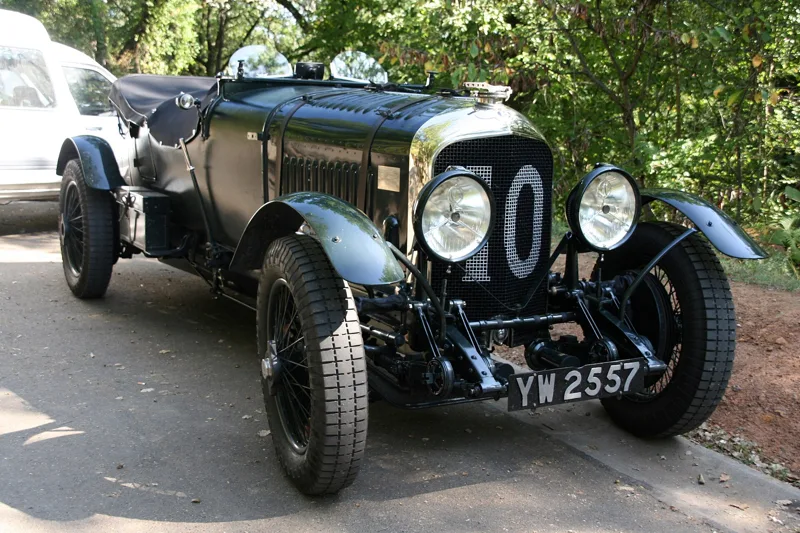
The Blower Bentley was a four-and-a-half-litre Bentley fitted with a Roots-type supercharger mounted in front of the radiator and driven straight from the crankshaft. Birkin developed it himself after Bentley Motors refused to build a supercharged model. The car produced 242 bhp, and its unusual front-mounted blower gave it a striking look.
By 1928 Birkin had concluded that the future lay in more power from a lighter car, and supercharging a four-and-a-half-litre Bentley was the route he chose. Ettore Bugatti once remarked that the big Bentley was the fastest lorry in the world, and Birkin's answer was to build something lighter and more powerful instead.
Clive Gallop provided technical help, and supercharger specialist Amherst Villiers contributed as well. Dorothy Paget financed the project after Birkin's own money ran out. The work was carried out at an engineering works Birkin set up at Welwyn Garden City in Hertfordshire.
Bentley Blower No.1 made its debut in the Essex six-hour event held at Brooklands on 29 June 1929, but it was initially very unreliable. W.O. Bentley never accepted the blower idea. Woolf Barnato's support nonetheless persuaded him to produce the fifty supercharged cars needed for the model to qualify for Le Mans. Birkin also put together a team of four remodelled prototypes and built a fifth car from spare parts.
What was the Speed Six?
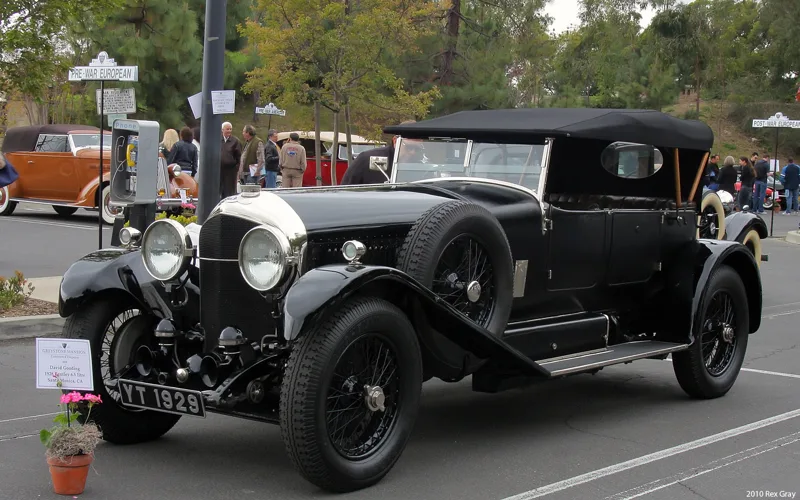
The Speed Six was Bentley's answer to demand for more power, a bigger model that was a huge car by any measure. Birkin shared it with Woolf Barnato, and the pair went on to win the 1929 Le Mans race in it.
Barnato's support also mattered for the blower project. With his backing, Birkin persuaded W.O. Bentley to produce the fifty supercharged cars needed before the model could enter Le Mans, even though W.O. never accepted the blower idea himself.
What made Birkin stand out as a driver?
Birkin combined speed with a fearless style, and he was easy to spot on the track, wearing a blue and white spotted silk scarf. At Pau he sounded his horn to get a Bugatti out of his way, a moment spectators still discussed.
His style was tested most famously at Le Mans in 1930, when his blower Bentleys dueled with rival cars. The courage he showed there is still cited as an example of the vintage era at its best.
Did Birkin win Le Mans?
Yes, twice. He won in 1929 as co-driver to Woolf Barnato in the Speed Six, and he won again in 1931 with Earl Howe in an Alfa Romeo. His own blower cars never reached the finish in 1930, when the works Speed Six driven by Barnato and Kidston took the victory.
Birkin's blower Bentleys had been too late to race at Le Mans in 1929, so 1930 was their first real test at the French race. The 1930 race was a fierce battle. Birkin's privately entered blower Bentleys dueled with Dudley Benjafield's car and Rudolf Caracciola's Mercedes SSK, and all three retired. Birkin's relentless pursuit of Caracciola is remembered as a defining moment of the vintage era, showing courage that many saw as the true spirit of the period.
The 1931 Alfa Romeo win also brought a telegram from Benito Mussolini, congratulating Birkin on what was described as a win for Italy.
How did Birkin do at Pau in 1930?
In 1930 Birkin finished second at the Pau Grand Prix, a race on a triangular, Le Mans-type circuit outside the city. He drove a supercharged Bentley touring car stripped to racing trim, the only car of its kind in a field dominated by single-seaters. He finished fourteen seconds clear of Zanelli at the flag.
Pau had its own Grand Prix tradition, having held the first race ever called a Grand Prix in 1901. The Saint-Gaudens track had hosted the 1928 French Grand Prix after a 1925 race backed by Eugene Azemar, and Pau wanted an event of its own. The organisers had hoped for International Formula cars, but a poor response led them to switch to Formula Libre rules. That change kept the Italian teams away.
The field was largely French, with sixteen Bugattis, two Peugeots and one Delage among the 25 starters. The race covered 25 laps of the 15.8 km circuit, making a total of 396 km. Birkin was running sixth early on, and he moved up as the leaders struggled. At one point he used his horn to warn a Bugatti to move over, a moment that became a talking point.
Chiron led at the first third of the race, but oil pressure trouble after eleven laps handed the lead to Etancelin. A crash at lap ten left Birkin only a whisker from disaster. Zanelli then charged through the field, and with seven laps to go he made a late pit stop that let Birkin move into second. Etancelin took the win, and Birkin held on to second, fourteen seconds ahead of Zanelli at the flag.
What happened to Birkin after Bentley left racing?
Birkin's fortunes changed at the end of 1930. Dorothy Paget withdrew her support from Birkin's road team in October that year, and Bentley Motors withdrew from racing and closed the following year. Birkin's own racing life continued regardless, and he kept the Brooklands Battleship in competition.
She continued to back the Brooklands Battleship, the red single-seater track car. Reid Railton gave it a single-shell body after a fire in the 1929 500-mile event damaged the original fabric two-seater. On 24 March 1932 Birkin set a new Brooklands Outer Circuit lap at 137.96 mph in it. That record stood for two years before John Cobb beat it with his 24-litre Napier Railton.
Birkin kept his motor workshop going by partnering with Mike Couper to tune high-performance cars. The works also made a toy version of the Brooklands track, a miniature motorised game with cars running on single rails. The partnership with Couper ended in 1932, and the works closed.
How did Birkin die?
Birkin died on 22 June 1933 at a London nursing home, aged thirty-six. Earlier that year he had finished third at Tripoli. During a pit stop he had burned his arm on a hot exhaust pipe, and the wound became infected. Accounts differ, but the most likely cause was that infection combined with malaria.
His grave is at St Nicholas Church in Blakeney, Norfolk. The Maserati 8C he drove at Tripoli belonged to Bernard Rubin, a fellow competitor, and it was among the last races of his career.
Birkin's racing highlights
| Year | Event or car | Result |
|---|---|---|
| 1927 | Three-litre Bentley, six-hour race | Return to racing after a gap |
| 1928 | Le Mans, four-and-a-half-litre Bentley | Fifth, with Jean Chassagne |
| 1929 | Le Mans, Speed Six with Woolf Barnato | Winner |
| 1929 | Essex six-hour race at Brooklands, Blower No.1 | Debut of the supercharged car |
| 1930 | Pau Grand Prix, supercharged touring car | Second, fourteen seconds clear of Zanelli |
| 1930 | Le Mans, blower Bentleys | All three cars retired |
| 1931 | Le Mans, Alfa Romeo with Earl Howe | Winner |
| 1932 | Brooklands Outer Circuit, Battleship | Lap record at 137.96 mph |
| 1933 | Tripoli Grand Prix, three-litre Maserati 8C | Third |
How has Birkin been remembered?
Birkin is remembered in film, in car names and in art. A 1995 television drama, Full Throttle, cast Rowan Atkinson as Birkin, and Birkin had written a 1932 book with the same title, published in London by G.T. Foulis and Co. Several tributes have followed over the decades.
A 2009 book, The Man Who Supercharged Bond by Paul Kenny, tells the story of Amherst Villiers and the supercharging work. In 2000 the last 54 cars in the Bentley Arnage Green label were built in a limited run badged The Birkin Arnage. The German firm MTM later offered a tuned Continental GT badged The Birkin Edition, rated at 641 hp. A Victorian guest house in Stinsford near Dorchester, Birkin House, also takes its name from him.
The artist Terence Cuneo's painting The Spirit of Brooklands shows Birkin passing John Cobb in a wager of three laps. Cobb's car was a Delage of ten and a half litres, while Birkin drove his supercharged Bentley. The actual contest took place over the August Bank Holiday weekend in 1932, and Birkin came out ahead by 25 yards, having been running at about 137 mph by the third lap.