A German driver who won three European titles, set road speed records and survived three serious crashes, Caracciola became the benchmark for wet-weather driving.
Rudolf Caracciola (1901-1959) was a German driver who raced for Mercedes-Benz and Alfa Romeo and won three European Championships. His six German Grand Prix wins remain unbeaten, and his 1938 speed records on public roads are still among the fastest ever set.
Rudolf Caracciola was a German driver whose three European Drivers' Championship titles came in the 1930s. Nicknamed the Rainmaster for his wet-weather skill, he drove for Mercedes-Benz in its Silver Arrows years, switched briefly to Alfa Romeo and then returned to the works team. Few drivers of his era were more consistent in poor conditions.
Where did Caracciola's racing career begin?
Born in Remagen on 30 January 1901, a town just south of Bonn, he was the fourth of Maximilian and Mathilde's children. His parents ran the Hotel Furstenberg, and his ancestors had come north from Naples in the seventeenth century.
He wanted to race from the age of fourteen and was already at the wheel of an early Mercedes in the war years. After school his father died before he could go to university, so he took an apprenticeship with Fafnir, a car maker in Aachen. There he won endurance events on an NSU motorcycle, and in 1922 he finished fourth overall in a works Fafnir at the AVUS track, the first in his class.
In 1923 a borrowed Ego 4 hp carried him to victory in the ADAC event at the Berlin Stadium, and later that year the Daimler Motoren Gesellschaft hired him as a car salesman at its Dresden outlet. He kept racing and won four of the eight events he entered in a Mercedes 6/25/40 hp that year.
Few drivers were as dependable in the rain, and none were as dependable in the Mercedes years, when the cars were fastest and the conditions least forgiving.
Why is the 1926 German Grand Prix important in his career?
The 1926 German Grand Prix at AVUS was set for the same day as a major race in Spain, and Mercedes-Benz sent its main team to Spain. Caracciola took leave from his job and asked the Stuttgart office for a car, and the company lent him and Adolf Rosenberger a pair of 1923 2-litre M218 cars, on the understanding that they raced as independents.
The race began in front of 230,000 spectators. Caracciola stalled at the start and his riding mechanic, Eugen Salzer, pushed the car to get it going, leaving them more than a minute behind. Rain began to fall, and he passed many cars that had retired. On the eighth lap Rosenberger lost control while overtaking and struck the timekeepers' box, killing all three people inside. Caracciola pressed on through the fog and rain, unsure of his position, and crossed the line on the final lap to find he had won.
The German press gave him the nickname Regenmeister, or Rainmaster, because of his skill in wet conditions. He used the prize money of 17,000 Reichsmark to open a Mercedes-Benz dealership on the Kurfurstendamm in Berlin, and he married Charlotte, whom he had met in 1923 at the Dresden outlet.
How did Caracciola perform before the Depression?
In 1927 he won the first race held on the newly completed Nurburgring, the Eifelrennen, and he won eleven competitions that year, most in the Ferdinand Porsche-developed Model S. He regained the German Grand Prix at the Nurburgring in 1928, sharing the 7.1-litre SS with Christian Werner after he collapsed from heat exhaustion at a pit stop.
The 1929 Monaco Grand Prix saw him start from the back row and battle for the lead with Bugatti driver William Grover-Williams. A pit stop that lasted four and a half minutes while his heavy SSK was refuelled cost him the lead, and he finished third. That year he also took the RAC Tourist Trophy on a slick track, reinforcing his wet-weather reputation.
In 1930 he finished sixth at the Mille Miglia with Werner and retired at Le Mans when a generator burned out. He won the Irish Grand Prix at Phoenix Park and took the European Hillclimb Championship for the first time. Then the Great Depression hit, and his Berlin dealership closed after the company went bankrupt.
How did the Mille Miglia win in 1931 change his standing?
Mercedes-Benz officially left motor racing in 1931, citing the economic downturn, but it kept Caracciola and a few other drivers running covertly under Alfred Neubauer. He won the German Grand Prix at the Nurburgring that year in front of a crowd of 100,000, passing the spray-soaked Luigi Fagioli at the Schwalbenschwanz corner and holding off Louis Chiron's Bugatti despite its faster lap times late in the race.
His biggest win of 1931 was the Mille Miglia, which he took in record time with co-driver Wilhelm Sebastian, who let him drive the entire race. They became the first non-Italians to take the race, and only Stirling Moss and Denis Jenkinson managed the same in 1955, in another Mercedes-built machine.
| Honour | Detail |
|---|---|
| European Drivers' Championship | Three titles: 1935, 1937, 1938 |
| German Grand Prix | Six wins: 1926, 1928, 1931, 1932, 1937, 1939 |
| European Hill Climb Championship, sports cars | 1930 and 1931 |
| European Hill Climb Championship, Grand Prix cars | 1932 |
| Mille Miglia | Won in 1931 with Wilhelm Sebastian |
| Swiss Grand Prix | Three wins: 1935, 1937, 1938 |
| Italian Grand Prix | Two wins: 1934, 1937 |
| Speed record, 1938 | 432.7 km/h (268.9 mph) flying kilometre |
Why did Caracciola join Alfa Romeo in 1932?
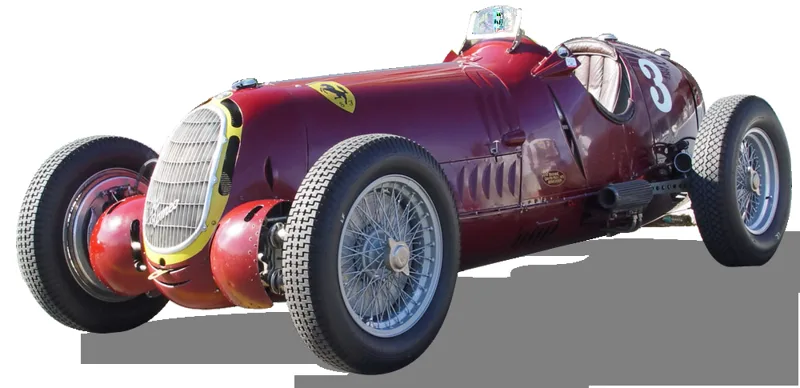
Mercedes-Benz withdrew entirely from racing at the start of 1932, so Caracciola signed with Alfa Romeo on the understanding that he would return if the German team resumed. His contract made him a semi-independent, and his first race for the Italian team was the Mille Miglia, which he led before a valve connection failed.
At Monaco he ran fourth early on, moved into second when Baconin Borzacchini pitted and Achille Varzi's Bugatti broke an axle, and finished just behind Tazio Nuvolari. The crowd jeered him for what they believed was a deliberate loss, but the result earned him a full place in the Alfa Romeo team. He took a win in Germany that year, along with the Polish and Monza Grands Prix, and a third and final hillclimb title.
What happened after his 1933 Monaco crash?
When Alfa Romeo quit the factory team for 1933, Caracciola and his friend Louis Chiron formed a privateer team, Scuderia C.C., with three Alfa Romeo 8C Monzas. On the second day of practice at Monaco, Caracciola was showing Chiron the circuit when three of the four brakes failed at the Tabac corner. He chose the wall over the sea, and the impact broke his right thigh in several places.
His doctors doubted he would race again, but he healed faster than expected, spending six months in a plaster cast in Bologna. Neubauer had already offered him a contract for 1934 if he could prove his fitness at AVUS. The following February his wife Charlotte died in an avalanche in the Swiss Alps, and he nearly retired before a visit from Chiron persuaded him to return.
His right leg finished about five centimetres shorter than the left, so he walked with a limp, yet he was cleared to race. At the 1934 German Grand Prix he took the lead from Hans Stuck at the Karussel, but his engine failed a lap later. At the Italian Grand Prix the pain forced him to hand his car to Fagioli after 59 laps.
How did Caracciola win his European Championships?
Caracciola won the European Championship in 1935 with four Grand Prix wins in France, Belgium, Switzerland and Spain. He had started the season with a pole at Monaco but retired past the halfway point, and the wins were enough to take the title despite a transmission failure at Monza. He also won the 1935 Tripoli Grand Prix, which was organised by the Libyan governor Italo Balbo and held around a salt lake in the desert.
In 1936 Mercedes-Benz enlarged the W25's engine to 4.74 litres but did not improve the chassis to match. Caracciola won the rain-soaked Monaco Grand Prix from third on the grid and the Tunis race, but the team was so uncompetitive that Neubauer withdrew it mid-season, leaving Auto Union's Rosemeyer to take the title.
The 1937 W125 was a major step forward, with a supercharged 5.6-litre straight-eight producing 650 brake horsepower. Caracciola won the German Grand Prix from second on the grid, then the Swiss race in the rain at a new lap record of 169 km/h (105 mph). At Livorno in the Italian Grand Prix he took pole, held off a false start, and won by 0.4 seconds from his teammate Hermann Lang, which clinched his second European title. He married Alice Hoffman-Trobeck that June in Lugano.
Why were the 1938 speed records so significant?
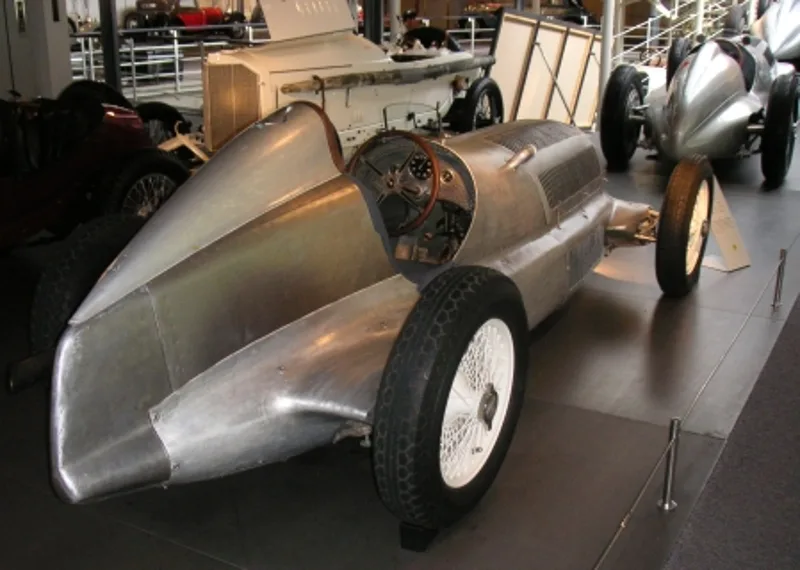
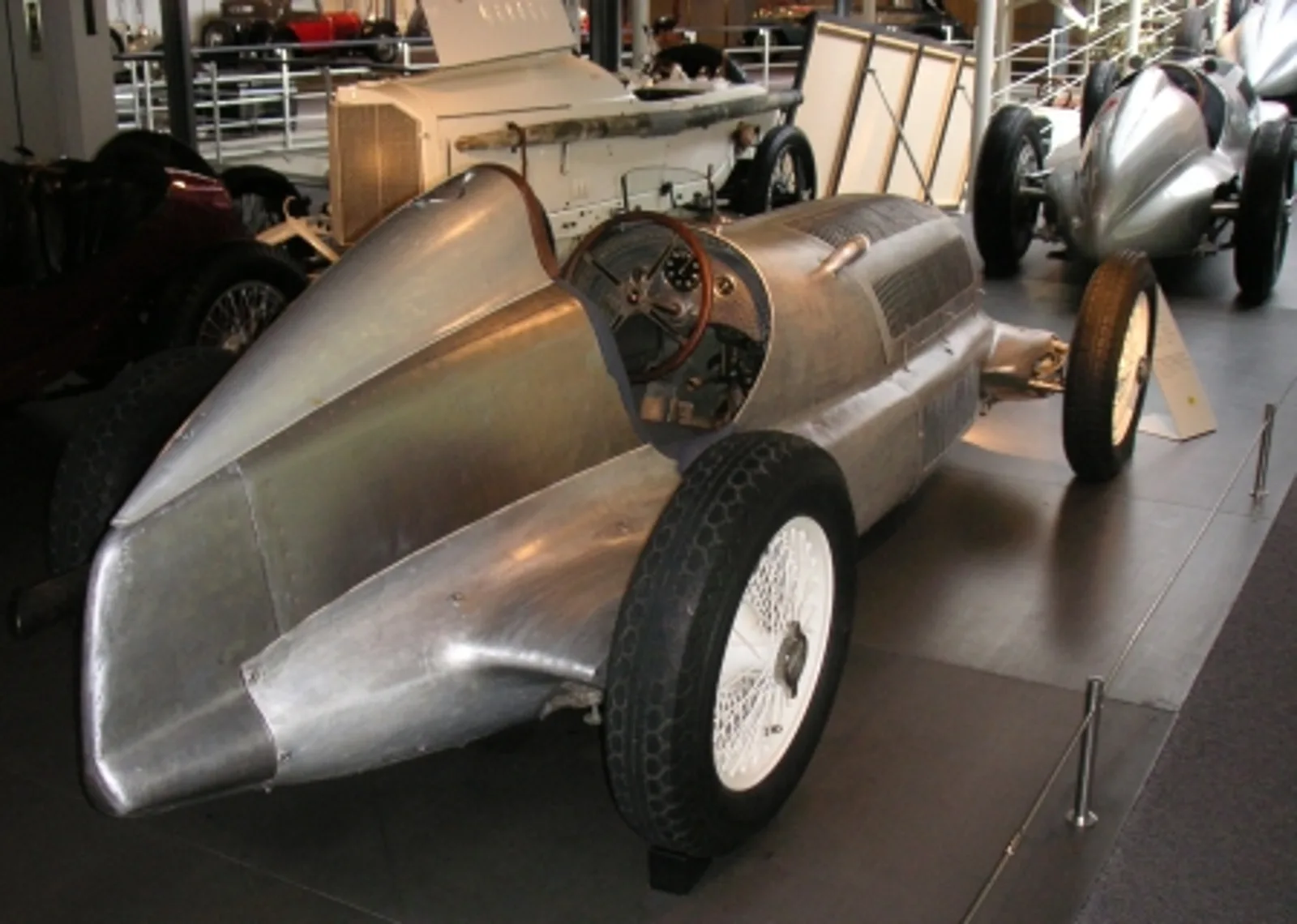
On 28 January 1938 Caracciola took a streamlined record car onto the Reichsautobahn between Frankfurt and Darmstadt, with the Mercedes crew on hand. The averages came out at 432.7 km/h (268.9 mph) over the flying kilometre and 432.4 km/h (268.7 mph) over the flying mile, figures still counted among the highest ever recorded on open roads.
The day turned tragic. Bernd Rosemeyer set out to beat those figures in his Auto Union, but a gust of wind hit his car at around 400 km/h (250 mph), throwing it off the road, where it rolled twice and killed him. Caracciola was deeply affected and later questioned what the chase for speed was worth, concluding that every life follows its own laws.
The 1938 season also brought a third European title. Mercedes-Benz's new W154 gave the team a 1-2-3 at the French Grand Prix, with von Brauchitsch winning ahead of Caracciola and Lang. Caracciola won the Swiss race in heavy rain after losing his helmet visor and took the Coppa Acerbo, then finished second at the French, German and Pau Grands Prix.
What was the 1939 dispute with Mercedes about?
The 1939 season was held under the shadow of the coming war. Caracciola spun at La Source during the Belgian Grand Prix and pushed his car off to safety, while Richard Seaman was killed in the same corner when his car caught fire. Caracciola then won the German Grand Prix, his sixth and final win there, in the rain from third on the grid.
The Tripoli Grand Prix that year was the scene of a dispute. The organisers cut engine capacity to 1.5 litres at short notice, but Mercedes-Benz had learned of the change in advance and built two W165s in eight months. Caracciola believed the team favoured Lang, and in a letter to the Daimler-Benz chief Wilhelm Kissel he complained that the mechanics and engineers were on Lang's side. The National Socialist Motor Corps named Lang the 1939 champion, a title the AIACR never ratified.
How did war and the Indianapolis crash affect his career?
Petrol rationing ended racing during the war, and his leg worsened. He spent much of the war trying to keep the two W165s safe, but they were seized by Swiss authorities as German property in early 1945. Caracciola went to the 1946 Indianapolis 500 to watch, and during practice he was hit on the head by something, probably a bird, and his car ran into the south wall.
A tank driver's helmet, which the organisers had insisted he wear, probably saved his life. A serious concussion followed, and he stayed unconscious for days. Tony Hulman, who ran the speedway, offered the couple his lodge near Terre Haute during the recovery.
What were Caracciola's final years like?
He returned to racing in 1952, when Mercedes-Benz recalled him for sportscar events with the W194. In the Mille Miglia he finished fourth, and afterwards he learned that his car carried a weaker engine than those of his teammates. His career ended the same year, when the brakes on his 300SL locked during a support race for the Swiss Grand Prix and he hit a tree at the Bremgarten circuit, fracturing his left leg.
After retiring he worked as a Mercedes-Benz salesman, touring NATO bases in Europe with shows and demonstrations that helped lift sales. In early 1959 he developed jaundice, and later that year he was diagnosed with advanced cirrhosis. He died of liver failure in Kassel on 28 September 1959, aged 58, and was buried in Lugano, the Swiss town that had been home since the early thirties.
How close was Caracciola to the Nazi regime?
Caracciola first met Adolf Hitler in 1931, when he delivered a Mercedes-Benz 770 to the Brown House in Munich after a late delivery angered the leader. Like most German racers of the period, he belonged to the NSKK, a motor corps attached to the Nazi Party, but he never joined the party itself. He later wrote that he found the leader unimpressive at their first meeting.
He occasionally used his fame to back the regime, including in 1938 during the Reichstag elections. He also refused an NSKK request to entertain German troops in 1942, writing that he could not cheer up young men for a victory he himself did not believe in. Daimler-Benz stopped his pension that year under pressure from the Nazi Party.
What is Caracciola's legacy?
Historians place Caracciola with Nuvolari and Rosemeyer among the finest pre-war Grand Prix drivers. He had a reputation as a perfectionist who rarely had accidents or mechanical failures, and his bond with Alfred Neubauer, the Mercedes racing chief, is often credited with helping his results. After his death Neubauer called him the finest driver of his generation.
His trophies went to the Indianapolis Hall of Fame Museum; the International Motorsports Hall of Fame admitted him in 1998. A monument went up in Remagen in 2001, Caracciola Square was dedicated there in 2009, and the Karussel corner at the Nurburgring was renamed the Caracciola Karussel. His six German Grand Prix wins remain unbeaten.