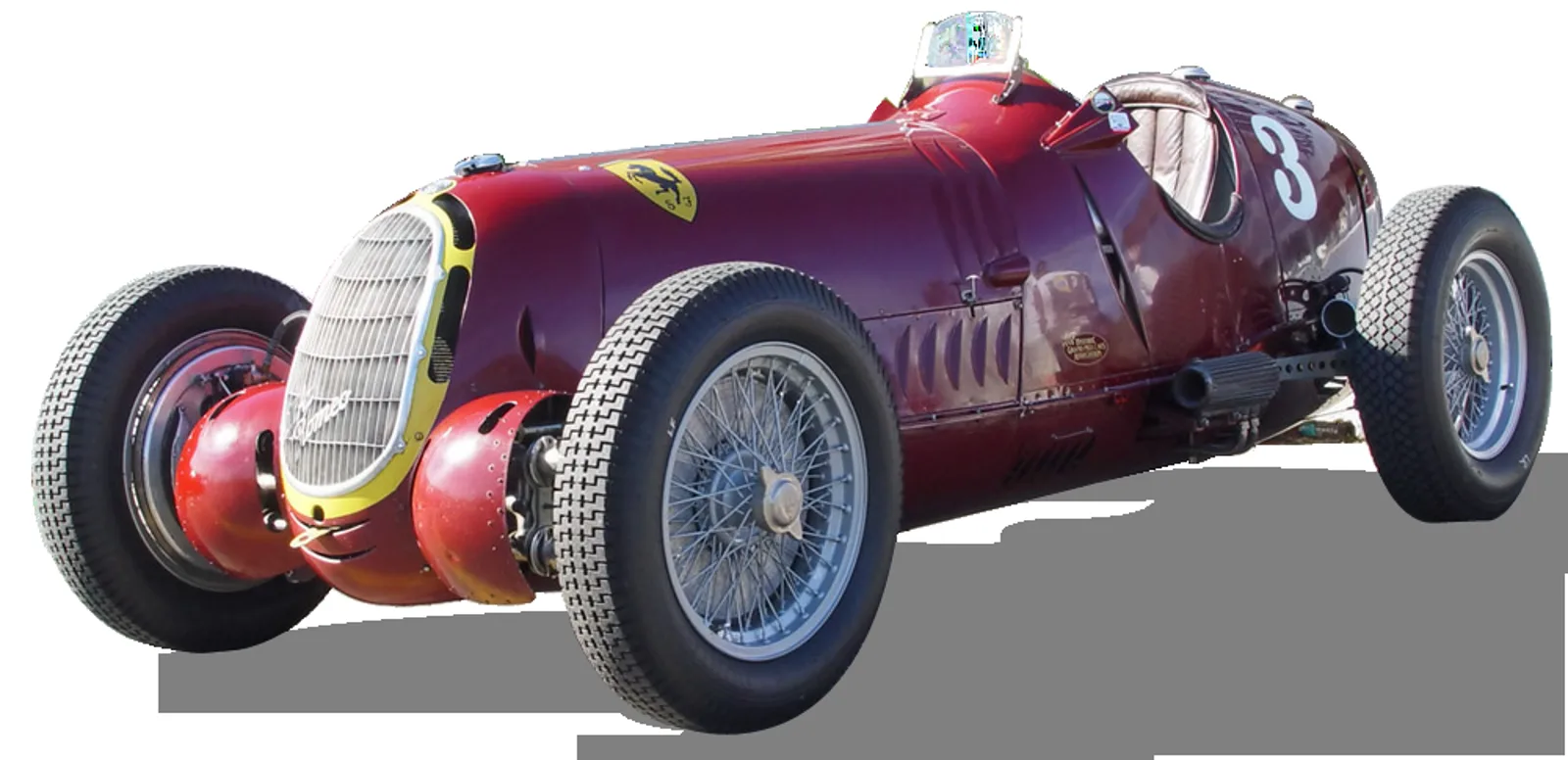
From the Targa Florio and the P3 era to Formula One constructor years, the Autodelta sportscars and a run of European touring car titles.
Alfa Romeo raced from 1911 and took Grand Prix wins with the P3 in 1932. It also won the Mille Miglia, Le Mans class honours and European touring car titles over several decades.
Alfa Romeo has competed in Grand Prix racing, Formula One, sportscar racing, touring cars and rallies, both as a constructor and as an engine supplier. Its P3 won Grands Prix in the early 1930s, its cars took the Mille Miglia and Le Mans in the same era, and its touring cars won European titles in the 1960s and 1980s.
What is Alfa Romeo's motorsport record?
Alfa Romeo has competed in many categories, from Grand Prix racing and Formula One to sportscars, touring cars and rallies. It worked through works entries, usually run by Alfa Corse or Autodelta, as well as through private teams.
The marque's racing role has been one of the defining parts of its image. The sporty identity that Alfa built through racing still shapes how its road cars are perceived.
A marque whose P3, Mille Miglia cars and touring car titles built a sporty identity that still runs through its road cars.
How did Alfa's racing begin?
A.L.F.A. first raced in 1911, when Franchini and Ronzoni took two 24 HP models to the Targa Florio. The first racing car was built in 1913, three years after the company's founding, and was a 40/60 HP with a 6-litre straight-four engine.
The marque's first result of note came in 1913, when Nino Franchini took second at the Parma-Poggio Berceto event. In 1920 Giuseppe Campari won at Mugello with a 40/60 HP, and in 1923 Ugo Sivocci won the Targa Florio with an RL.
Where did Alfa's green cloverleaf come from?
Sivocci's car was painted with a green cloverleaf on a white background. That design became Alfa's symbol on its sportiest models, and it has stayed with the marque ever since.
The emblem was linked to racing success from the start, so the symbol carried the same message as the cars on the track. It was a clear sign that the company wanted its sports cars to be seen as competitive machines.
Who designed the early Grand Prix cars?
Vittorio Jano moved from FIAT to Alfa in 1923 and designed the engines that gave the team racing success into the late 1930s. In 1925 Alfa Romeo won the European Grand Prix at Spa and the Italian Grand Prix at Monza.
Jano's P3 was the defining car of the early 1930s. It won its first race in 1932 with Tazio Nuvolari at the Italian Grand Prix, and it took five more Grands Prix that year with Nuvolari and Rudolf Caracciola.
What happened to the P3 after 1933?
Alfa Romeo became insolvent in 1933 and passed to Enzo Ferrari's Scuderia Ferrari, but the P3 kept winning races that year. Louis Chiron won the 1934 French Grand Prix, and the car still managed some Grand Prix wins despite falling behind.
The end of the P3 era came in 1935, when the German Silver Arrows outclassed it. Nuvolari gave the car one of its most memorable victories that year by winning the German Grand Prix at the Nurburgring.
Why were Alfa's sportscars so dominant?
Nuvolari's 1930 Mille Miglia win came in a 6C 1750. Late in the race he passed Achille Varzi with the headlights off, having let Varzi believe he had a healthy lead. It was one of the boldest finishes the race has seen.
Alfa cars won the Targa Florio six times in a row in the 1930s and won the Mille Miglia every year from 1928 to 1938 except 1931. The 8C 2300 won the Le Mans 24 Hours from 1931 to 1934, which underlined the sportscar strength of the marque.
Clemente Biondetti won the 1938 Mille Miglia in an 8C 2900B Corto Spider. He won the first post-war Mille Miglia in 1947 with another 8C 2900B, linking the pre-war and post-war eras.
How did Alfa perform in Formula One?
Alfa Romeo raced in Formula One from 1950 to 1987, as both constructor and engine supplier. The works team dominated the first two seasons with the 158/159 Alfetta, but it withdrew from Formula One at the end of 1951.
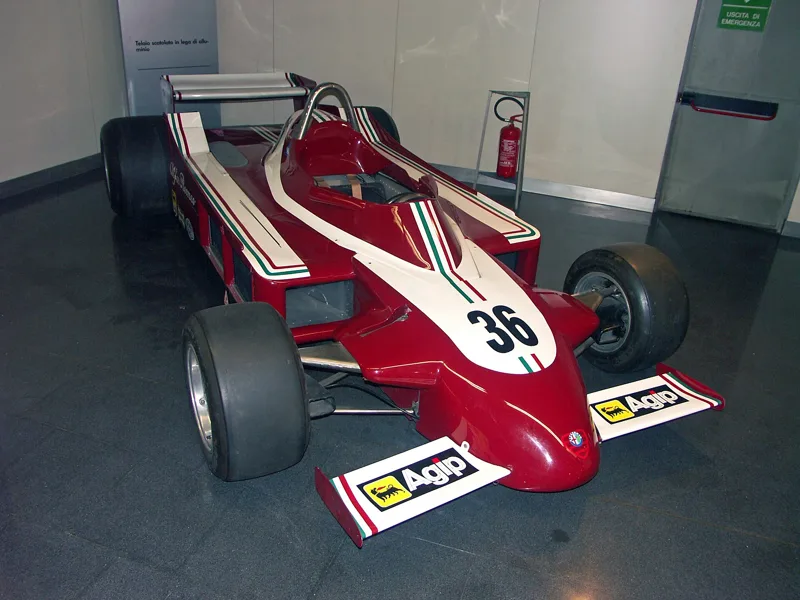
During the 1960s minor teams used Alfa straight-four engines, and in the early 1970s a V8 appeared in McLaren and March cars. Brabham used Alfa engines from 1976 to 1979, and Alfa was a constructor again from 1979 to 1985.
A 1987 engine deal with Ligier was also lost when Fiat took over the company. The period showed how ownership changes could end a racing programme quickly.
What was the Sauber partnership?
Sauber signed a technical and commercial partnership with Alfa Romeo in November 2017, and the team was renamed Alfa Romeo Sauber F1 Team for 2018. On 1 February 2019 it announced that it would compete in 2019 as Alfa Romeo Racing.
The ownership, racing licence and management structure stayed the same under the new name. The partnership ended after the 2023 season, which closed the marque's most recent Formula One chapter.
How did Alfa do in single-seater categories?
Alfa has supplied engines to Formula Three cars for decades. In Europe it won five FIA European Formula 3 Championships, and Michele Alboreto won the 1980 title with a March-Alfa Romeo. Alfa also took the Italian Formula 3 title four consecutive times from 1981 to 1984.
Alfa launched the Formula Alfa Boxer racing car in 1987 after the success of the Trofeo Alfasud. Its IndyCar project ran from 1989 to 1991, with Roberto Guerrero's best result 8th at Detroit in 1989.
Danny Sullivan finished 11th in the 1991 points with a best of 4th, and the IndyCar project produced no podium, pole position or race win. It was a difficult end to a short series of attempts.
Which rallies did Alfa win?
Alfa cars have been used in rallying, mostly by private teams. The Alfa Romeo Giulietta won the 1958 1000 Lakes Rally, and Alfa's Giulietta SZ, Giulia TZ and GTA won the Alpine Rally in later years.
Alfa's rally story also includes the Alfetta GT and GTV racing versions built by Autodelta in the 1970s. The GTV6 was one of the fastest Group A cars in 1986 before the FIA reclassified it, which cost it competitiveness.
Greg Carr drove the GTV6 to the 1987 Australian Rally Championship, and the car became the last rear-wheel-drive car to win that title.
How did Alfa win touring car titles?
Starting in the 1960s Alfa won many touring car titles. The GTA won the European Touring Car Championship in 1966, 1967 and 1969, and the later GTAm won further titles in 1970, 1971 and 1972.
The Alfetta GTV6 won four consecutive European Touring Car Championship titles from 1982 to 1985. Andy Rouse won the 1983 British Touring Car title in an Alfetta GTV6, and Gabriele Tarquini won the 1994 British title in an Alfa 155.
In 1993 Nicola Larini won the DTM title with an Alfa 155 V6 Ti, a season that set a record of 11 race wins. The Alfa 156 took four straight European Touring Car titles from 2000 to 2003, with Fabrizio Giovanardi and Gabriele Tarquini among the drivers.
What else did Alfa race in single-seaters?
Alfa supplied engines across single-seater categories for decades, and its own Formula Alfa Boxer series became a proving ground for young drivers. Amato Ferrari won the debut championship in 1987, while Mirko Savoldi won in 1988 and Alessandro Zampedri in 1989.
Piercarlo Ghinzani won the 1979 Italian Formula Three title with a 2-litre Alfa engine. The Twin Spark engine adopted in 1987 fostered further success, and in 1990 a Quadrifoglio Verde engine replaced the original Boxer unit.
Alfa's reach extended to South America and Mexico. It won four Formula 3 Sudamericana titles and seven Mexican Formula 3 championships. A Tatuus T-318 with an Alfa 1.75 L turbo engine raced in 2019 and 2020 in the W Series and other series.
How did Autodelta run the sportscar programme?
Autodelta was established on March 6, 1963 under Carlo Chiti, a former Alfa and Ferrari engineer. The team began to collect wins in its 1.6 category with the Alfa TZ, including a class result at the 1964 24 Hours of Le Mans.
Chiti designed a 90-degree V8 for the Tipo 33 in 1967. Those cars raced in the World Sportscar Championship from 1967 to 1977. The 33TT12 won the 1975 World Championship for Makes, and the 33SC12 took the 1977 World Championship for Sports Cars.
The company later developed a Group C prototype, the SE 048SP, in the early 1990s. It never raced, which closed the sportscar story on a quieter note than the earlier decades.
What are the key results at a glance?
| Year | Series | Driver or model | Result |
|---|---|---|---|
| 1913 | Racing | Nino Franchini | Second in the Parma-Poggio Berceto race |
| 1923 | Targa Florio | Ugo Sivocci | Win with an RL |
| 1925 | Grand Prix | Alfa Romeo | European Grand Prix at Spa and Italian Grand Prix at Monza |
| 1930 | Mille Miglia | Tazio Nuvolari | Win in a 6C 1750 |
| 1932 | Grand Prix | Tazio Nuvolari | First P3 race win at the Italian Grand Prix |
| 1935 | Grand Prix | Tazio Nuvolari | German Grand Prix win at the Nurburgring |
| 1938 | Mille Miglia | Clemente Biondetti | Win in an 8C 2900B Corto Spider |
| 1951 | Formula One | Works team | Withdrawal after dominating the first two seasons |
| 1964 | Le Mans | Alfa TZ | Class win at the 24 Hours |
| 1975 | Sportscar | 33TT12 | World Championship for Makes |
| 1980 | Formula Three | Michele Alboreto | European title with a March-Alfa Romeo |
| 1983 | British Touring Car | Andy Rouse | Title in an Alfetta GTV6 |
| 1993 | DTM | Nicola Larini | Title with the Alfa 155 V6 Ti |
| 2003 | European Touring Car | Alfa 156 | Fourth consecutive title |
Why does Alfa Romeo's motorsport record matter?
Alfa Romeo's record matters because it shows a marque that won early Grands Prix, dominated the Mille Miglia and took touring car titles across several decades. Its cars helped define the sporty image that Alfa still uses.
The record also shows the cost of changing ownership. Alfa's Formula One and IndyCar efforts ended when the company's control changed, and that pattern repeated in later years when partnerships were cut short.