A compact Alfa from 2010 with MultiAir engines, a Quadrifoglio performance flagship and a long run in touring car racing.
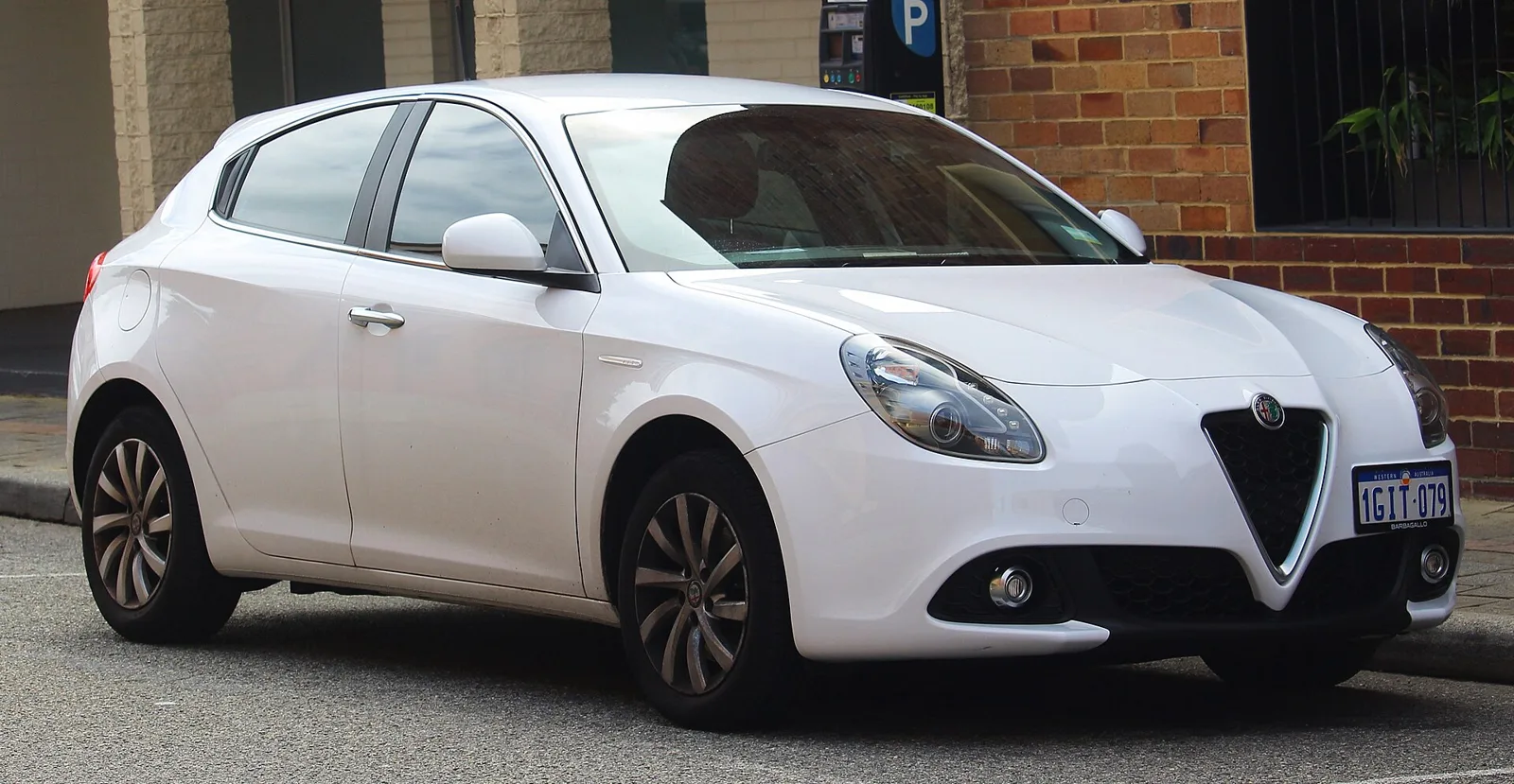
The Giulietta was a five-door hatchback built from late 2009 to 2020, using turbocharged petrol and diesel engines and the MultiAir valve system. Its Quadrifoglio Verde flagship and racing versions gave the car a reputation that outlasted its production run.
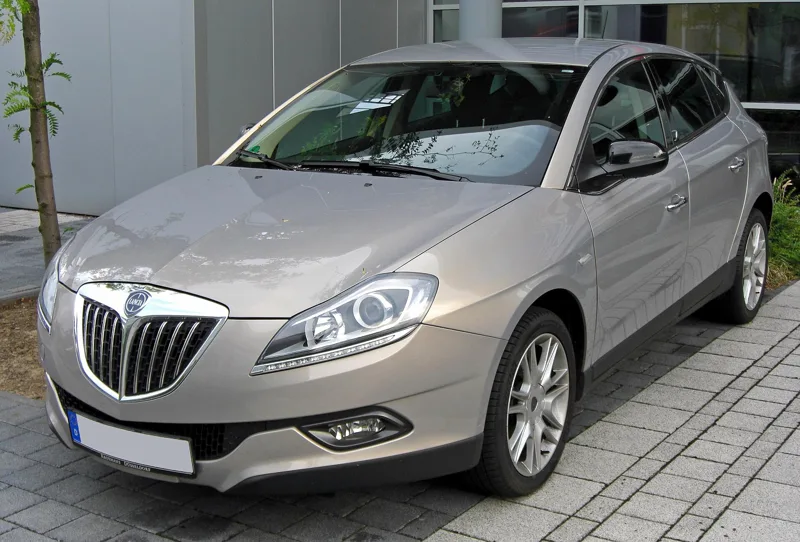
The Alfa Romeo Giulietta was a five-door small family hatchback that Alfa built from late 2009 until December 2020. It was shown at the Geneva Motor Show in March 2010, collected a string of awards and then enjoyed a long second life in touring car racing.
When did the Giulietta launch and how many were built?
Production of the Giulietta started near the end of 2009, and the car made its public debut at the March 2010 Geneva show. Alfa announced the model's end in 2020, and the last cars left the line on 22 December 2020 after 469,067 examples had been built over the decade.
The hatchback was offered as a five-door only design and was built on the Fiat Group Compact platform. That platform succeeded the C-platform that had underpinned the Fiat Stilo, the Fiat Bravo and the Lancia Delta, and the group put around 100 million euros into developing it.
In 2011 the hatchback came close to top honours in European Car of the Year voting, taking the runner-up spot. Its sales life was a full decade, running from 2010 to 2020, and the model became one of the most recognised compact Alfas of its time on the strength of its styling and its engines.
Plans for the US market had first been set out in early 2009. A viability plan given to the American government that February suggested the 147 replacement could come to market as the Milano and be built in the United States. By early 2010, however, Fiat was focusing on bringing larger models to America, such as the Giulia.
A compact five-door Alfa with turbo engines and a Quadrifoglio flagship, which then became a touring car racer in its own right.
What was the Giulietta's platform and body made from?
The Giulietta used the Compact platform developed by Fiat Group, which carried over only the central front section of the earlier C-platform, and even that part was modified. Everything else was new, with a longer wheelbase, shorter overhangs and a fresh suspension layout.
Steel dominated the structure. Hot-forged high-strength and ultra-high-strength steels made up 84% of the body, hot-formed steels 7% and low carbon mild steels 3%. Aluminium accounted for 3.7%, while a polymer called Xenoy, with high energy absorption, made up 2.3%.
The front suspension used an advanced MacPherson strut design, and the rear used a multi-link arrangement. Compared with older Fiat platforms, the wheelbase was longer and the overhangs were shorter, which gave the car a more balanced stance on the road.
The car was around 4.3 metres (14 ft) long. Depending on market and trim, it rode on 16-, 17- or 18-inch wheels, using a five-hole pattern with a 110 mm bolt circle. Tyre sizes ran from 205/55 R16 through 225/45 R17 to 225/40 R18.
How did the Giulietta's engines and gearboxes work?
The Giulietta's engines were built around the 1.4-litre T-Jet petrol and M-jet diesel families, all turbocharged. A six-speed manual gearbox and the TCT twin-clutch unit were offered, with the TCT first shown at the 2010 Paris International Motor Show.
The MultiAir system governs when air enters each cylinder and how far the inlet valve opens. It does this through a tappet between the camshaft and the valve, with oil pressure controlling the valve's effective lift. Alfa claimed a 20% torque gain, with emissions cut by roughly the same proportion.
On the 1.4 MultiAir petrol and 2.0 MultiJet diesel, the six-speed TCT reduced fuel use and CO2 compared with the manual versions. The diesel fell to 119 g/km of CO2, and the petrol to 121 g/km, giving the petrol best-in-class emissions and output for its class.
Start and stop was fitted to every engine except the 1750 TBi, and all engines until 2016 met Euro 5 rules. From late 2015 every engine in the range met Euro 6 standards, and most also gained CO2 and economy improvements.
What did the 2013 facelift change?
At the 2013 Frankfurt International Motor Show Alfa unveiled an updated Giulietta with a new Uconnect infotainment system, a revised front grille, a chrome frame for the fog lamps and a more supportive seat design. The update also brought a new diesel variant to the range.
The updated car gained a 5-inch or 6.5-inch Radionav touchscreen, new 16, 17 and 18-inch wheel designs and new exterior colours. The palette was Moonlight Pearl, Anodizzato Blue and Bronze, which gave the car a fresh look without changing its basic shape.
The new 2.0-litre JTDM 2 diesel produced 150 PS (110 kW; 148 hp), along with 380 N m (280 lb ft) of torque. By the 2014 range, every engine complied with Euro 5+ rules and was ready for the Euro 6 standard that followed.
What changed in the 2016 and 2019 updates?
The 2016 Geneva revision gave the Giulietta a facelifted front that resembled the larger Giulia, and the lettering and logo moved to the new Alfa Romeo brand design. The trim line-up was rebuilt around Giulietta, Super and Veloce, replacing the earlier QV while keeping its engine.
A new 1.6-litre JTDm diesel producing 120 PS (88 kW; 118 hp) arrived with the 2016 revision, available with the TCT automatic. New exterior colours and wheel designs completed the changes, and the updated car kept the competitive position it had built over the previous six years.
For 2019 the engines were revised to Euro 6 D standard. The line-up became a 1.4 turbo petrol at 120 PS, a 1.6 Multijet at 120 PS with a manual or TCT choice, and a 2.0 Multijet at 170 PS with TCT.
What were the Giulietta's performance and special versions?
The Quadrifoglio Verde was the top model from 2010 to 2016. The engine was a 1.74-litre TBi turbo, with 235 PS (173 kW; 232 hp) on tap, with a lowered ride height of 15 mm at the front and 10 mm at the rear, 18-inch alloys and 225/40 R18 tyres.
The QV's brakes used 330 mm discs up front and 278 mm at the back, and their calipers were painted Alfa red. Inside, it had dark tinted windows, aluminium pedals, cloverleaf badges and a dark brushed aluminium dashboard, with sports leather seats available as an option.
In the UK the QV was first marketed as the Giulietta Cloverleaf, then as the Quadrifoglio Verde from 2014 to 2015, before the Veloce name took over in 2016. The engine in that range was the same 1750 unit that gave the car its character.
At the 2014 Geneva Motor Show, Alfa introduced an updated QV with a new 1,742 cc turbo direct-injection aluminium-block engine. Its output was 240 PS (177 kW; 237 hp), reached at 5750 rpm, with 340 N m available from 2000 rpm, and it used the TCT six-speed unit borrowed from the 4C.
With the new engine the flagship could exceed 240 km/h (149 mph) and reach 100 km/h from rest in 6.0 seconds. The launch was marked by a limited Launch Edition of around 700 numbered cars, distinguished by black sills and offered in matt Grigio Magnesio Opaco, Rosso Alfa or Rosso Competizione.
The 120 PS 1.4 LPG Turbo ran from 2011 to 2020 on either LPG or petrol. It came in Giulietta, Progression and Distinctive trims with a six-speed manual, and its toroid-shaped 38-litre LPG tank sat in the spare wheel housing.
In October 2014 Alfa launched a 60th anniversary Giulietta Sprint at Balocco. It carried a 1.4-litre MultiAir engine rated at 152 PS (112 kW; 150 hp), carbon-effect interior trim and sportier styling with side skirts and a rear diffuser.
The 2015 Squadra Corse TCT was built for South Africa, with 100 cars produced. A modified 1750 turbo made 286 PS (210 kW; 282 hp), and the car also had a bespoke exhaust and the TCT gearbox.
How did the Giulietta perform in safety tests?
The Giulietta earned five stars from Euro NCAP with an overall score of 87 out of 100. That score put it at the top of the compact class tested so far, and it was named the best performing small family car of 2010.
The car was designed with five-star Euro NCAP rating as its target. Its standard electronics included VDC stability control, DST dynamic steering torque, a Q2 electronic differential and the Alfa DNA selector, which chose between Dynamic, Normal and All-Weather settings.
The individual scores were 97% for adult occupants, 85% for child occupants, 63% for pedestrian protection and 86% for safety assist. The result meant the car would keep its five-star rating when the Euro NCAP system reached its maximum severity in 2012.
The Giulietta was retested in 2017 under the updated Euro NCAP procedures, which had grown stricter in the years since the original tests. The later results confirmed how far the scoring rules had moved on.
How did the Giulietta do in motorsport?
The Quadrifoglio Verde served as the official safety car of the Superbike World Championship. American rounds were the exception, because the Giulietta was not sold in the United States and FCA used Dodge and Ram vehicles there instead.
The Italian tuning garage Romeo Ferraris started racing the Giulietta in the TCR International Series in 2015, working without the marque's direct help and appearing under the Mulsanne Racing banner. Michela Cerruti was the driver in the opening two rounds of 2016.
The team later ran a second car with Petr Fulin and changed the colour scheme, and the engine was tuned to 330 PS for the 2016 season. For 2018 the car produced over 350 PS, which helped the team step up to the World Touring Car Cup with two Giuliettas.
In 2018 Gianni Morbidelli and Fabrizio Giovanardi drove for the Mulsanne team in the World Touring Car Cup, and Kevin Ceccon scored a race win at Suzuka. In 2019 the car received a major aerodynamic upgrade and was renamed the Alfa Romeo Giulietta Veloce.
In 2020 the Jean-Karl Vernay car finished third in the championship and took the WTCR Trophy for the top car running without factory backing. The team had earlier been among the strongest privateer entries in the series.
Daytona's Michelin Pilot Challenge produced a TCR class win for the Giulietta in January 2022. The team KMW Motorsports kept the car in that series until 2025, when its homologation ran out.
A Giulietta also made its way into popular culture. It appeared on screen in the 2013 blockbuster Fast & Furious 6 as a featured car, and Alfa published photos of Giuliettas destroyed during production. Six cars came with a dashboard plaque autographed by the cast.
Handy Motorsport took an NGTC-specification Giulietta into the 2018 BTCC, and it won a race. The result showed the car could compete with the sports touring machinery of the period.
Which awards did the Giulietta win?
The Giulietta was runner-up in the 2011 European Car of the Year contest, and its MultiAir engines were voted the best new engine of 2010. Several national awards followed, including the Greek and Czech Car of the Year titles in 2011.
Other honours included the Auto Europa award for 2011 and the Auto Trophy design prize from Auto Zeitung for 2010. The Trophee L'Argus gave the car its Compact Car of the Year title, which recognised the balance of design and everyday usefulness.
Auto, Motor und Sport included the Giulietta among its best imported compact cars in both 2010 and 2011. In 2019 Auto Bild gave the car a design award in its Best Brands competition, a late recognition for a model in its final decade on sale.
What are the Alfa Romeo Giulietta specifications?
| Specification | Detail |
|---|---|
| Type | Five-door small family hatchback, Type 940 |
| Production | Late 2009 to 22 December 2020; 469,067 built |
| Platform | Fiat Group Compact, around 100 million euros to develop |
| Petrol engines | 1.4 MultiAir and T-Jet petrol families, all turbocharged |
| Diesel engines | 1.6 and 2.0 MultiJet, 2.0 MultiJet2 with 150 PS (110 kW; 148 hp) |
| Quadrifoglio Verde | 1.74 L turbo TBi, 235 PS (173 kW; 232 hp) |
| 2014 QV | 240 PS (177 kW; 237 hp), 0-100 km/h in 6.0 seconds |
| Transmission | Six-speed manual or TCT dual dry clutch |
| Wheels | 16, 17 or 18 inches; 110 mm bolt circle |
| Fuel and CO2 | 121 g/km petrol and 119 g/km diesel with TCT |
| Euro NCAP | Five stars, 87 out of 100 |