A famous story says the silver livery began with one overweight kilogram. The record is less tidy, and the cars, drivers and engines behind the legend are better than the myth.
Silver Arrows is the nickname for the silver Mercedes-Benz and Auto Union Grand Prix cars that dominated racing from 1934 to 1939. A popular story says they were stripped of white paint to meet a weight limit, but it first appeared in 1958 and lacks contemporary evidence. The 1937 Mercedes W125 made 595 hp.
For decades the story went like this: in spring 1934, a new Mercedes-Benz racing car weighed in at 751 kg on the scales at the Nurburgring, one kilogram over the limit, so the team scraped off its white paint and raced in bare silver aluminium. It is a wonderful tale, and there is no sign of it in the records from the time.
What does Silver Arrows mean?
Silver Arrows, in German Silberpfeile, is a nickname for silver racing cars with a significant link to a German maker. The term was coined in 1932 but passed into popular use for the dominant Mercedes-Benz and Auto Union cars of 1934 to 1939. It came back for Mercedes-Benz's 1954 and 1955 Formula One and sports cars, for Sauber's Group C prototypes of the late 1980s, for McLaren-Mercedes in the late 1990s and 2000s, and now for the Mercedes-AMG Petronas cars from 2010.
Colour mattered because, until sponsor liveries arrived, each country had its own racing colour. The Germans used silver, the Italians red, the British green and the French blue. It had not always been so. The Blitzen Benz was white, as were the three Mercedes that finished 1-2-3 in the 1914 French Grand Prix, and Mercedes even won the Targa Florio in red in 1922 and 1924 to blend in with the local teams. The supercharged SSKL in which Rudolf Caracciola won the 1931 Mille Miglia, with 200 hp, was nicknamed the White Elephant.
The silver paint story may be a legend, but the 595 horsepower under the aluminium was real.
Where did the silver paint really come from?
The weight story came from Alfred Neubauer, Mercedes' racing manager, who described it in 1958. The 1934 rules capped Grand Prix cars at 750 kg (1,653 lb), without tyres and fuel. Neubauer said the new W25 registered 751 kg before the Eifelrennen, and that he and driver Manfred von Brauchitsch had the idea of stripping the white lead-based paint. The shining aluminium beneath passed scrutineering, and after von Brauchitsch won in the 350 hp car, the nickname was born.
Why historians doubt it
There are problems with that account. It did not appear until 1958, and no contemporary source mentions it. As early as 1932 von Brauchitsch had driven a silver streamlined SSKL at the AVUS, and live radio coverage called it a Silver Arrow. In 1934 both Mercedes and Auto Union entered the Avusrennen in silver. The Eifelrennen that year was run to Formule Libre, because few cars built to the new rules were ready, so weight was not a critical issue. Modern aircraft already used polished, unpainted aluminium for streamlining and weight saving. Neubauer's autobiography has also been shown to contain embellished stories, including a fabricated hoax about the 1933 Tripoli Grand Prix. The silver may well be real. The reason for it, in the form usually told, is not documented.
How did Mercedes rebuild itself for 1937?
By 1936 the W25 was not competitive, and Mercedes pulled out of that Grand Prix season midway to concentrate on a new car. A new racing department, the Rennabteilung, was formed. Rudolf Uhlenhaut, a production car engineer who had never designed a racing car but knew the Nurburgring from testing road cars there, took charge of the design in late 1936.
He found the W25 too stiff in its suspension for the wheels to follow the road. In one test a wheel came off, and Uhlenhaut kept driving as if nothing had happened. The stiffness made the chassis flex and bent the rear axle by 7 to 10 cm (2.8 to 3.9 in) under braking. His brief for the new car asked for a stiffer chassis and more suspension travel.
What was special about the W125?
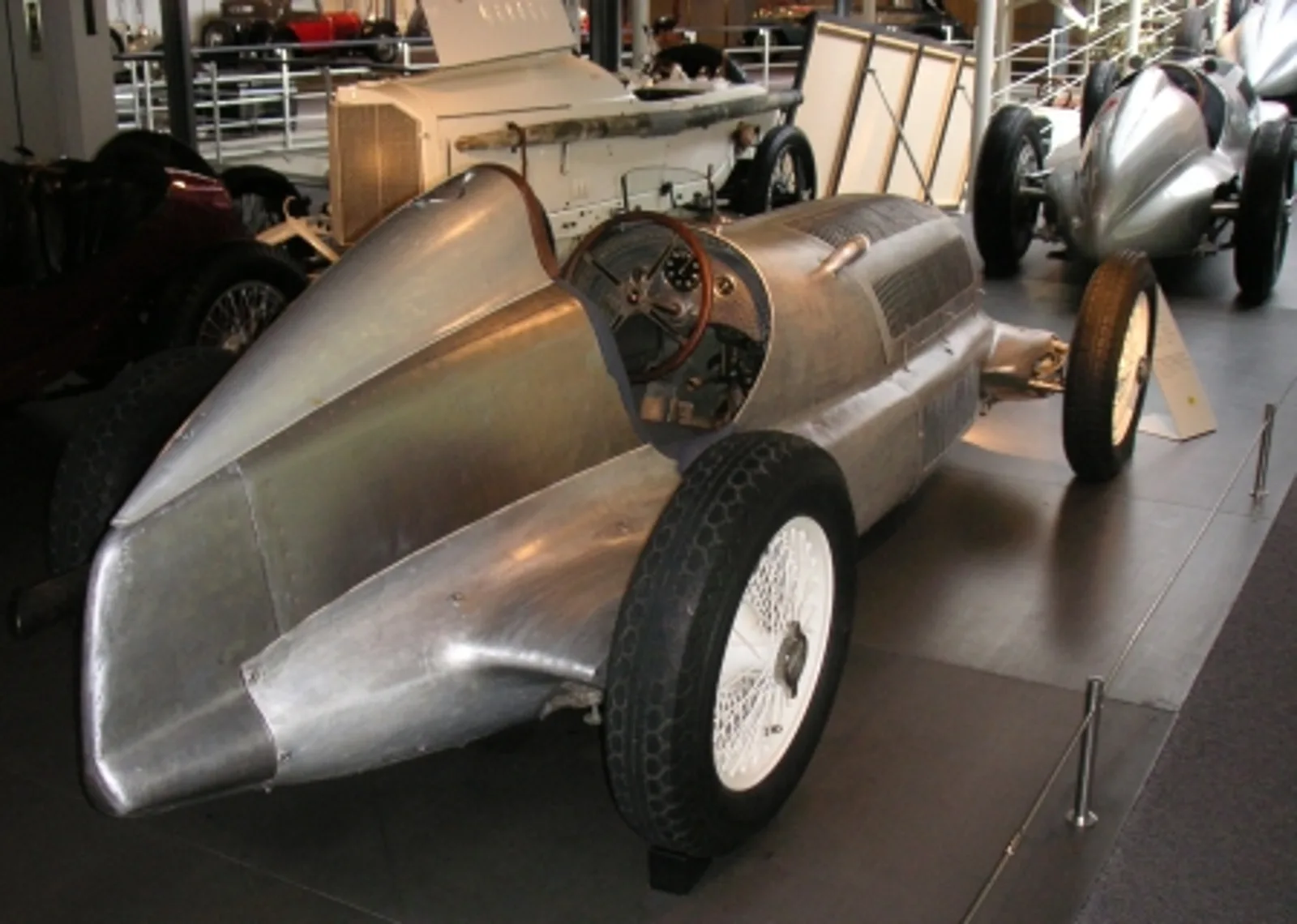
The W125 had a tubular frame of oval nickel-chrome molybdenum steel tubes that flexed far less than the W25's. The aluminium bodywork was left unpainted, which gave Mercedes and rival Auto Union the Silver Arrows tag. The 1937 rules had no engine size limit and only a 750 kg weight cap, so Mercedes built a supercharged double overhead camshaft 5.7 litre inline-8, displacing 5,663 cc, with a Roots-type blower.
Power, fuel and temperament
Engines produced between 560 and 595 hp (418 to 444 kW) at 5,800 rpm in race trim, and the best test bed reading was 637 bhp (646 PS). Torque at the start of the season was 632 lb ft (857 N m). The fuel was a custom mixture of 40% methyl alcohol, 32% benzene, 24% ethyl alcohol and 4% light petrol. The engine weighed 222 kg (489 lb), about 30% of the car, and sat in the front. It ran roughly, and if it ever began to run smoothly, the crankshaft would start to crack. A four-speed manual gearbox was changed to a constant-mesh design for better reliability.
These numbers stood up for decades. No road racing car was thought more powerful until big American V8s in Can-Am sports cars drew level in the late 1960s, and in Grand Prix racing the output was not exceeded until the turbocharged engines of the early 1980s. In 1937 it topped 300 km/h (190 mph) in races by a wide margin, especially on the AVUS in Berlin with a streamlined body, and a special W125 Rekordwagen with a 5,576.75 cc V12 of 726 hp was clocked at 432.7 km/h (268.9 mph). That engine made the car too heavy for Grand Prix racing.
How did the 1937 season unfold?
The W125 won on its debut in May at Tripoli, with Hermann Lang taking his first Grand Prix victory and Mercedes its first win over Auto Union since May 1936. At the AVUS, a streamliner 25 km/h (16 mph) faster than the standard car retired from the lead on lap three with a gearbox failure. A new suction-carburettor supercharger system was tried by Christian Kautz, then by Richard Seaman in the Vanderbilt Cup, where he finished second, and after that it was fitted to every W125.
Caracciola won the German Grand Prix, with von Brauchitsch second, then von Brauchitsch won at Monaco with Caracciola behind. Mercedes took the top three places in Switzerland. At Livorno, Caracciola held off Lang by 0.4 seconds to become European Champion, and Mercedes drivers filled the top four places in the table, with von Brauchitsch second. The non-championship Coppa Acerbo in Italy saw Seaman crash into a house in practice and wreck his car, so only von Brauchitsch and Caracciola started. Seaman took over Caracciola's car during the race and, despite an engine fire, finished fifth, while von Brauchitsch was second. Caracciola won the Masaryk Grand Prix, a race overshadowed when Lang crashed into spectators on lap five, with twelve injured and two killed. The final race was at Donington Park, where Bernd Rosemeyer of Auto Union won ahead of von Brauchitsch and Caracciola.
Who was Bernd Rosemeyer?
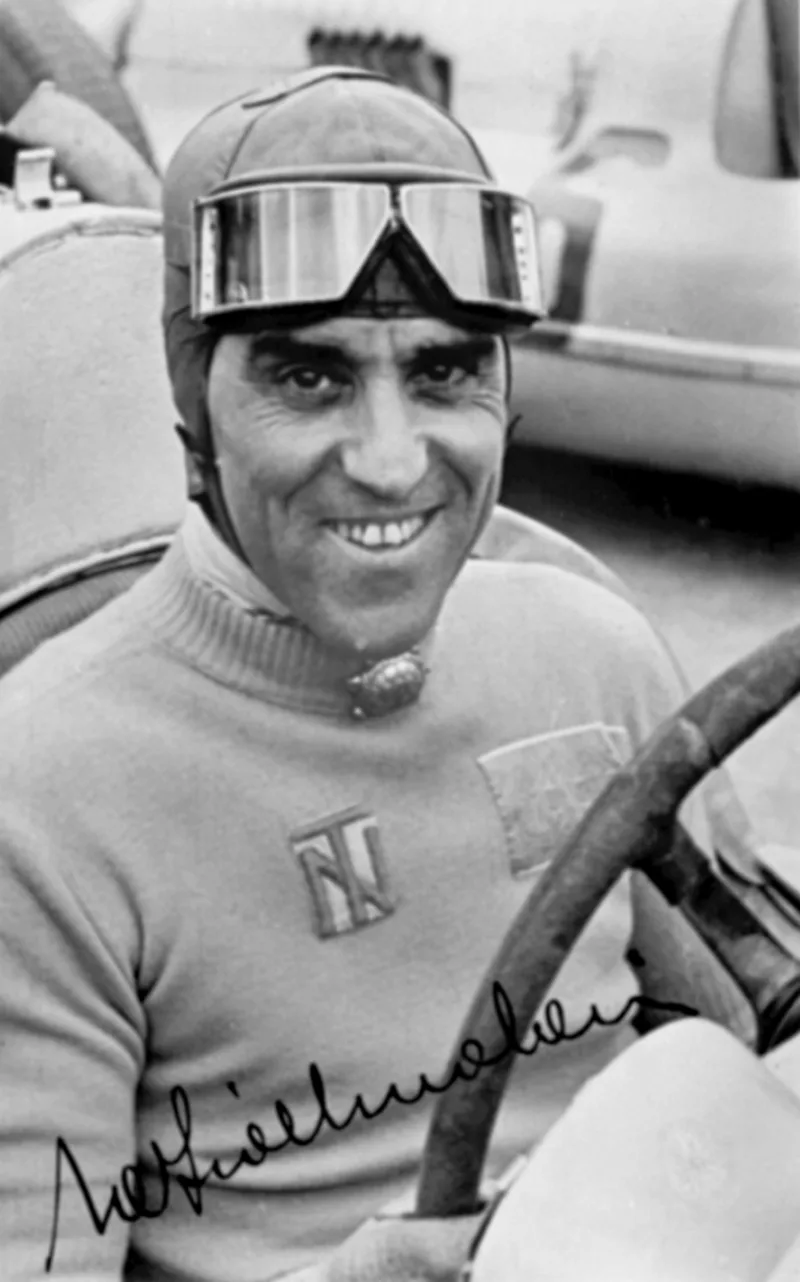
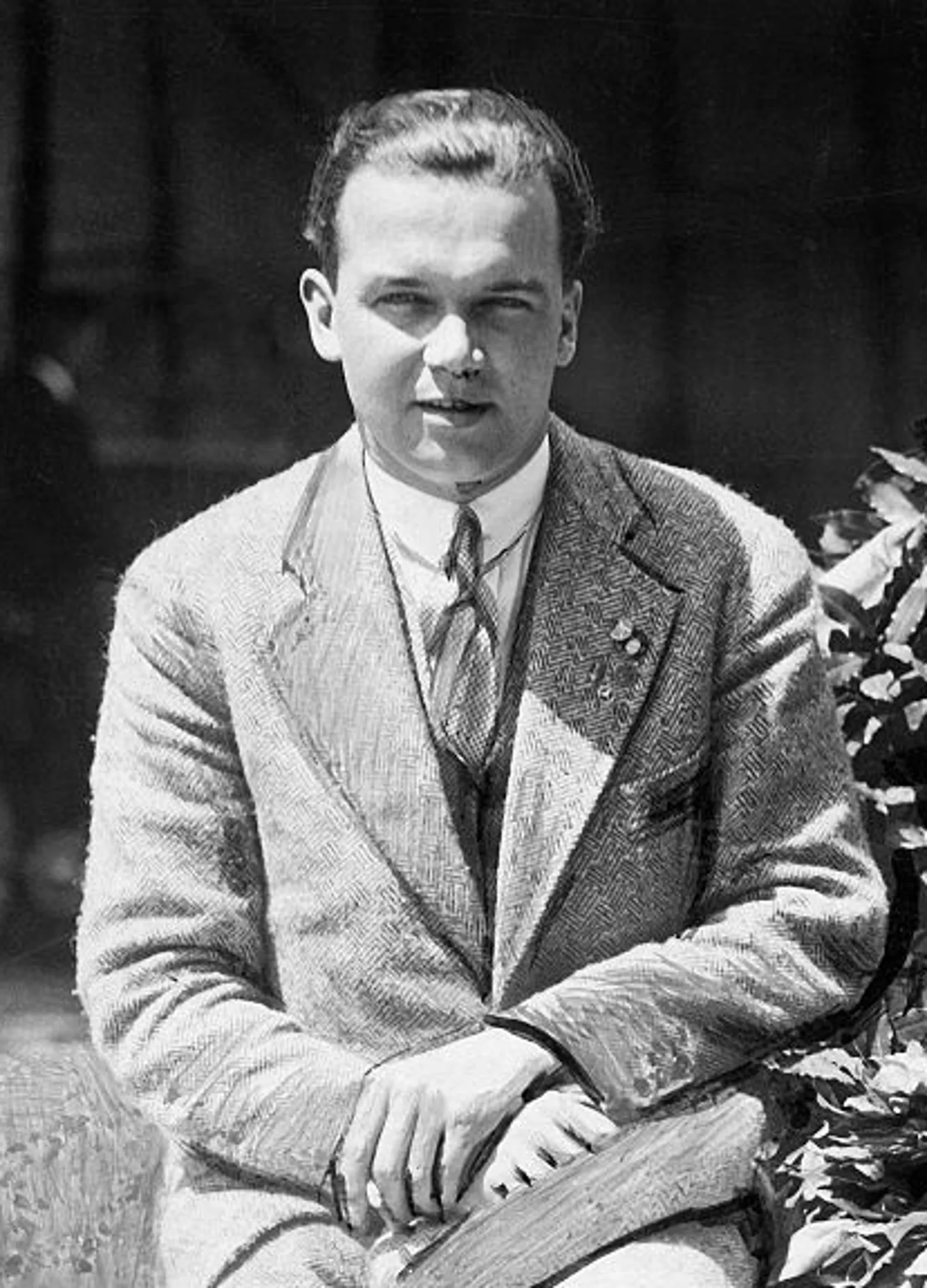
Rosemeyer (14 October 1909 to 28 January 1938) came from a family garage and began on motorcycles. He joined Auto Union with very little car racing experience, which turned out to be an advantage because he was not used to the handling of conventional cars. Auto Union's Ferdinand Porsche-designed, mid-engined cars were fast but hard to drive. Rosemeyer and Tazio Nuvolari tamed the 500 bhp (370 kW) machines, and Hans Stuck did so to a lesser degree. A skilled mechanic, he gave Porsche and development engineer Eberan von Eberhorst useful technical feedback.
In only his second Grand Prix, at the Nurburgring, he took the lead from Caracciola, then missed a gear and was overtaken. He later won three consecutive races there, one famously in thick fog, and his first Grand Prix victory came at Brno in Czechoslovakia in 1935. He was European Champion in 1936. In 1937, of the twelve Grands Prix between Mercedes and Auto Union, he won four of Auto Union's five victories. His wins included the Vanderbilt Cup in the United States.
He also became a propaganda figure. His marriage to the aviator Elly Beinhorn on 13 July 1936 made the couple celebrities, and the Nazi Party used them as an ideal German pair; he was given SS membership as a propaganda move. His career ended on 28 January 1938, when he was killed on the Autobahn between Frankfurt and Darmstadt while chasing a land speed record against Caracciola. After setting a class record of 432 km/h (268 mph), he made a third run at 11:47 despite a report of rising wind, and the Auto Union streamliner skidded out of control and left the road.
Rosemeyer thought 13 was his lucky number. He married on 13 July 1936, won the German Grand Prix 13 days later, took his last Nurburgring victory on 13 June 1937, and won his last race at Donington Park, the 13th start of his 1937 season. His son, Bernd Jr., arrived in November 1937, just ten weeks before the crash.
How do the two Silver Arrows compare?
| Mercedes-Benz W125 | Auto Union | |
|---|---|---|
| Designer | Rudolf Uhlenhaut | Ferdinand Porsche |
| Layout | Front-mounted supercharged inline-8 | Mid-engined |
| Power | 595 hp (444 kW) in race trim | 500 bhp (370 kW) |
| Handling | Stiff tubular frame, more suspension travel | Fast but hard to drive |
| Lead drivers | Caracciola, Lang, von Brauchitsch | Rosemeyer, Nuvolari, Stuck |
| 1937 result | European Championship and top four places | Four wins from Rosemeyer |
Why did the W125 stop racing?
The rules changed for 1938. The weight limit gave way to a cap on engine capacity, with supercharged cars restricted to 3000 cc, and a minimum weight was introduced. The W125 could not enter without major modification, so Mercedes-Benz developed the W154 and withdrew the older car.
How has the name lived on?
Mercedes-Benz returned to Formula One in 1994 as an engine supplier, first with Sauber and then with McLaren from 1995. When Marlboro's sponsorship ended after 1996, McLaren adopted a silver livery and its cars were called Silver Arrows. After buying Brawn GP in 2010 and renaming it Mercedes GP Petronas, Mercedes-Benz became a constructor again, and the press and the team itself have used the nickname since. At the 1999 Le Mans 24 Hours, seven cars described as Silver Arrows ran in the prototype class. German makers also sell a silver shade in their catalogues called Silver Arrow Grey.
The team has played with the colour. For the 2019 German Grand Prix, its cars wore a livery that echoed the peeled-paint story, to mark its 200th start. In 2020 Mercedes switched to an all-black livery, prompted by Lewis Hamilton and tied to support for Black Lives Matter and a push for diversity, and it stayed in 2021 before silver returned in 2022. The 2023 W14 was black again, this time to save weight after the team struggled with the W13, by leaving most parts as bare carbon.