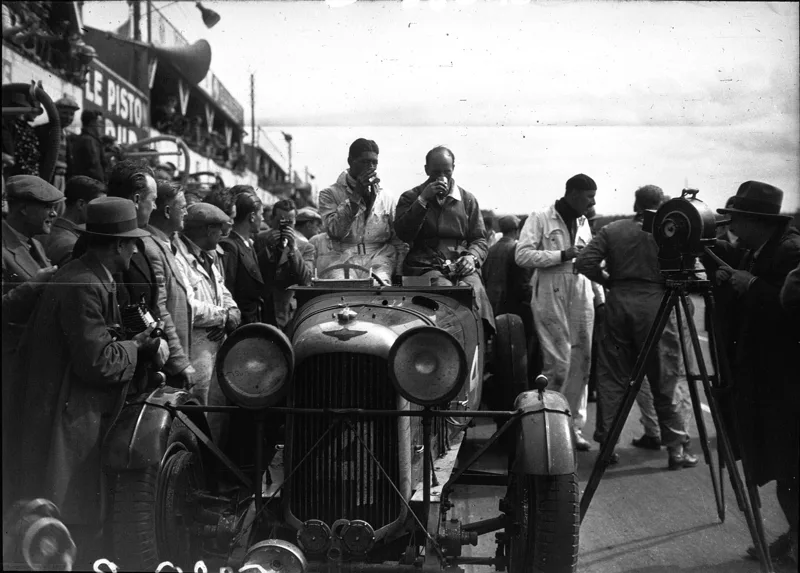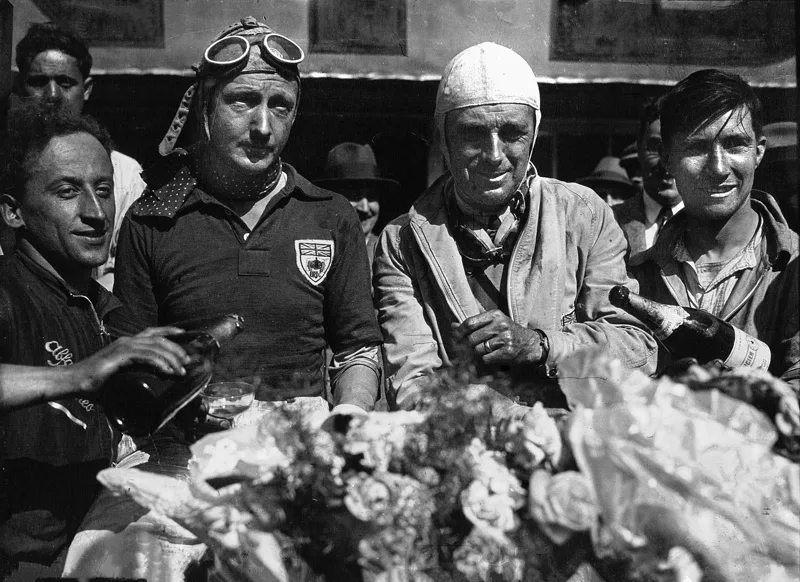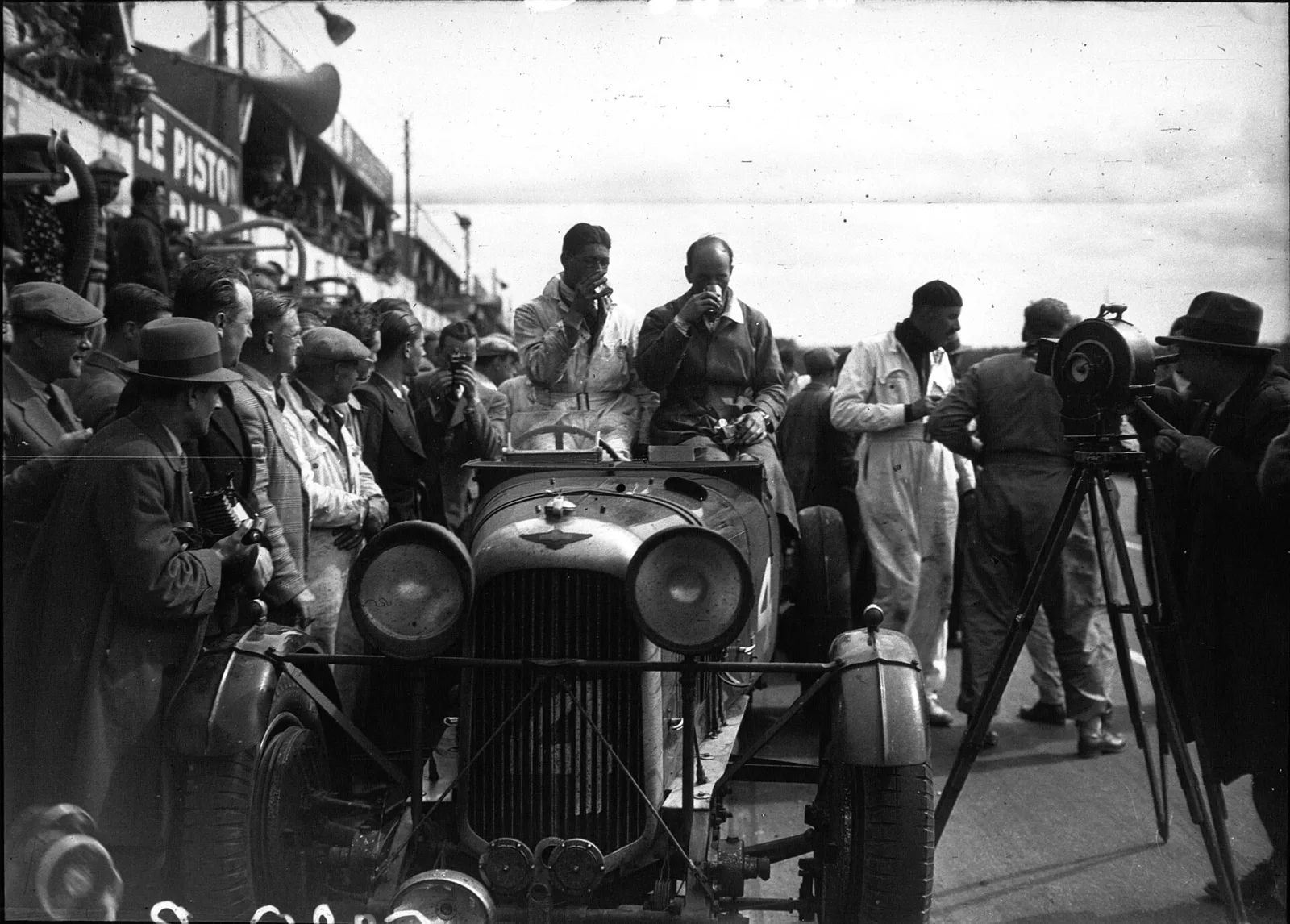
Chinetti and Etancelin won by thirteen laps, but the Riley works team took the Index and the Biennial Cup while British cars filled the field.
Chinetti and Etancelin won in an Alfa Romeo 8C-2300, finishing 13 laps clear of the next car. Riley's works cars claimed the small-car honours, and 16 of the 23 finishers were British, which underlined how strong the British entry had become.
The 1934 24 Hours of Le Mans was the 12th Grand Prix of Endurance. Luigi Chinetti and Philippe Etancelin won in an Alfa Romeo 8C-2300 by thirteen laps and 180 km (110 mi), while the Riley works team took the Index of Performance and the Biennial Cup. Of the 23 finishers, 16 were British cars, which made the race a British battle for the smaller classes.
What changed at the circuit and in the regulations?
The Automobile Club de l'Ouest finished the renovation of the circuit and its facilities. A new concrete pit complex was built for 60 cars, separated from the track by a wooden picket fence. Race control moved into it, with new viewing balconies above the pits, although the 25 pound entry fee kept many small teams away from the balconies.
Each pit box was fitted with a 1000-litre tank, a gantry and hoses, so cars could be refuelled directly at 120 litres a minute. The ACO allowed a second mechanic in the pits, named solely as the refueller, to help with the new equipment. The minimum running distance between refuelling stops stayed at 24 laps.
Esso offered four fuel choices, including a 70/15/15 blend of its regular fuel with benzole and ethanol. Three 8-hour practice sessions were held on the Wednesday, Thursday and Friday nights from 10pm to 6am, and the public could use the roads only in the direction the cars were travelling.
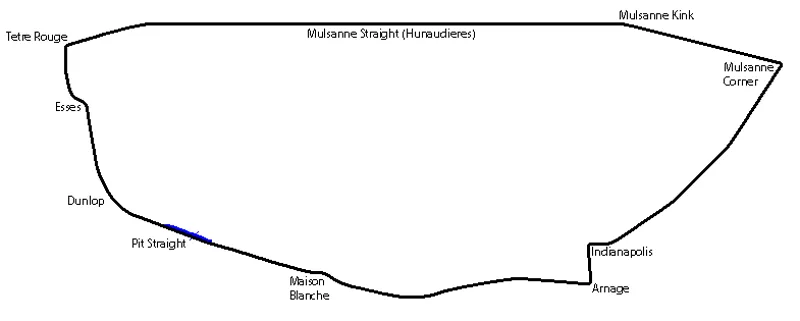
The organisers also added a 25-hectare golf course inside the circuit and built a large restaurant beside the main grandstand. Loudspeakers were placed every 100 metres along the new stretch between the pits and Tertre Rouge, where the largest crowds gathered. The target distances for mid-range engines rose, with an extra 125 km for 3-litre cars.
The biggest margin of the decade went to an Alfa, but the small British cars took the prizes that mattered to the smaller classes.
Who entered the 1934 race?
There were 52 applicants, and 45 arrived on race-week for scrutineering. Works entries came from Aston Martin, Riley, Singer and the French manufacturer Tracta, and British cars made up almost half of the field. It was the largest entry for ten years, and twelve of the thirteen finishers from the previous race returned to contest the Biennial Cup.
Grid order and Index distances were based on engine size, and there were no prizes for class victory. The nominal class groupings were therefore largely irrelevant to the result.
Alfa Romeo had put eight privateer entries forward, but only half arrived. Luigi Chinetti was paired with Philippe Etancelin, and Raymond Sommer, who was aiming to equal Woolf Barnato's three consecutive wins, drove a Monza chassis owned by a Parisian doctor, Pierre Felix. Earl Howe returned with his 8C-2300 Le Mans and Tim Rose-Richards as co-driver.
Sommer and Chinetti had won together in 1932 and had finished first and second in 1933, and both were back to contest the Biennial Cup.
Bugatti sent five large cars, and Roger Labric had works support with two mechanics from Molsheim and a test driver, Pierre Veyron. His car was the biggest Bugatti, a supercharged 5-litre Type 50 that had been run by Bouriat and Divo in an earlier race. Prince Nicholas of Romania returned with a Duesenberg, now partnered by Whitney Straight.
Daniel Porthault brought back his veteran Lorraine-Dietrich, and Just-Emile Vernet was again his co-driver. Vernet's tenth-place finish in a Salmson the year before had earned the team its Biennial Cup entry.
Which British cars made the strongest challenge?
The British cars dominated the medium-sized classes. There were six Rileys, including a squad of four works cars, and two new designs were unveiled that year. The MPH had a 1458cc straight-six engine producing 70 bhp, and the Riley Nine Imp was a short-wheelbase, low-slung car with a 1087cc four-cylinder engine producing 50 bhp.
Aston Martin had its first Mark 2 Le Mans, the new design from Technical Director Bert Bertelli, with a 1.5-litre engine that could reach 175 km/h (110 mph) in its lightened frame. The works team was managed by Sammy Davis, the former Le Mans winner. Singer made a concerted effort with two customer teams: Stanley Barnes, who had raced the Singer the year before, and Arthur Fox, who had run Lagondas and Talbots for five years and was still waiting for the new Lagonda. His drivers were Brian Lewis, Baron Essendon, fresh from winning the Mannin Moar, and Johnny Hindmarsh.
The MG K3 had proved a giant-killer in handicap races, with a Roots supercharger on its 1087cc engine producing 115 bhp. John Ludovic Ford and Roy Eccles brought new cars, though Eccles ran his unsupercharged to take a shorter distance in the Index. Gwenda Stewart drove a Derby L8 with Louis Bonne, and Louis Villeneuve and Georges Hamel entered the second of the Derby cars.
How did practice and the start go?
Etancelin set the fastest practice lap of the race, with Brunet's Bugatti and Howe's Alfa also quick in the warm-up sessions. The only casualty was the big Duesenberg, whose throttle valve stuck open on the morning warm-up. Excess petrol stripped the oil off the pistons and seized the engine.
Tim Rose-Richards got away first, pursued by Sommer. Bertelli's Aston stuck in first gear coming out of Arnage on the opening lap and spun in the road, but the field passed him safely. By lap three Sommer had taken the lead, and he was ten seconds a lap faster than the rest of the field.
By the end of the first hour Sommer had nearly a kilometre of lead over Rose-Richards and Chinetti. Then at 5.30pm the radio announced that the leader had stopped on fire at Arnage, with steam and smoke pouring from the engine. Sommer was the first retirement, and Max Fourny's Bugatti was later disqualified for receiving outside help.
How did the night unfold?
Howe led into the night until his headlights failed at 10.30pm. He stopped on the Hunaudieres Straight and spent over an hour on repairs, then resumed in 11th place. He fought back to sixth by 1am, when his clutch failed and ended his race.
Chinetti and Etancelin had a fuel tank that leaked, and as the leaders had done the year before, the mechanics sealed it with chewing gum. The big Labric Bugatti was in second place until, just after midnight, its engine broke on the Mulsanne Straight.
The small-car fight was the real story. Ford's MG was running second overall for a time, but a three-car pile-up at Maison Blanche ended its race. Brunet's Bugatti was blinded by the lights of a car approaching the other way and ended in the ditch beside the MG, and Quinault's Tracta was also run off the road.
The Biennial Cup was being dominated by the small British cars. Von der Becke's Riley led the MG, and the Fothringham and Appleton Aston Martin was third. Appleton then spun on gravel at Tertre Rouge and buried his car in the sandbank, and he needed two hours to get back into the race.
Meanwhile the Morris-Goodall Aston Martin was second overall, with the three Rileys of van der Becke, Sebilleau and Dixon next in the order. The team was having an excellent race.
After the halfway point the race settled. At 4am two cars were disqualified for failing to complete the minimum halfway distance. One was Hendy's privateer Singer, which had been delayed by fuel-feed problems, and the other was the Bertelli Aston Martin, whose gearbox had packed up and taken too long to repair. By then all but two of the large-engine cars had retired.
What happened at dawn and in the morning?
As dawn broke the Alfa had a lead of more than an hour. Morris-Goodall lost seven minutes securing the steering column of his Aston, though he remained second. The three Rileys had changed positions, with Dixon now third ahead of Sebilleau and van der Becke.
Soon after 10am the Aston Martin team suffered three disappointments. Appleton stopped with low oil pressure, and Morris-Goodall's car was stranded with a broken oil pipe after running second for almost eight hours. Reggie Tongue's private Aston crept into the pits with a shredded tyre on the same lap.
Official figures from the 1934 race
| Item | Detail |
|---|---|
| Dates | 16 and 17 June 1934 |
| Winners | Luigi Chinetti and Philippe Etancelin, Alfa Romeo 8C-2300 MM-LM |
| Winning margin | 13 laps, 180 km (110 mi) |
| Distance covered | 2,866.94 km (1,781.43 mi) |
| Average speed | 120.29 km/h (74.74 mph) |
| Fastest lap | P. Etancelin, 142.44 km/h (88.51 mph) |
| Finishers | 23, of whom 16 were British |
How did the Riley team win the small-car prizes?
After the winners, four of the next five places went to Riley's works team. Sebilleau and Delaroche led them, a lap in front of Dixon and Paul. Peacock and van der Becke's car, which finished fifth, repeated its Index win from the year before, completing 52 laps (37%) over target. The margin was narrower this time, but it was enough for the Biennial Cup.
The Bugatti tourer of Mahe and Desvignes was the only other car over 2-litres to finish apart from the winner, coming home ninth. It was not built for speed, but it was easier on its engine, and its reliability carried it into the top ten. Lord de Clifford's Lagonda finished 16th.
Interrupting the Riley procession was the supercharged MG Magnette of Eccles and Martin, which had overtaken an unsupercharged Riley earlier in the afternoon. The Singer of Lewis and Hindmarsh was seventh, and it finished second in the Biennial Cup after driving hard through the night to make up time.
With 23 finishers, the field was the largest since the first race in 1923, and 16 of those cars were British. With virtually all the big-engine cars retired, the podiums belonged to the smaller cars.
Among the female drivers, Champney and Petre finished 13th in their Riley, and Anne-Cecile Rose-Itier came 17th in her MG, which beat its target distance by 30 laps. Gwenda Stewart retired after only sixteen laps in the Derby-Miller, though she set a speed record later in the year at Montlhery.
What did the 1934 race leave behind?
The winning margin of 13 laps and 180 km (110 mi) was the biggest of the decade, second only to Bentley's win in 1927. With the rivals gone, the winners eased off, so the distance covered was the shortest of the decade.
Etancelin received a civic reception in Rouen, his home city, and planned to drive the winning car there himself. The fuel tank had not been repaired since the finish, however, and the petrol leaked out across the forecourt.
Tracta made its last Le Mans appearance. Founder Jean-Albert Gregoire turned instead to marketing his four-wheel-drive technology and worked with other manufacturers, including Willys, whose system later appeared on the Jeep.
Aston Martin's challenge collapsed in two laps, with three works cars out, which left the Riley team to take the Index and the Biennial Cup.