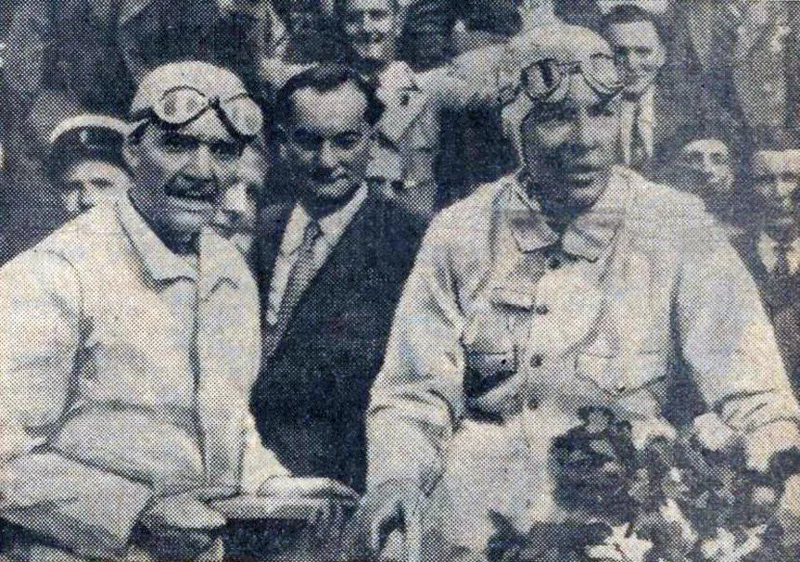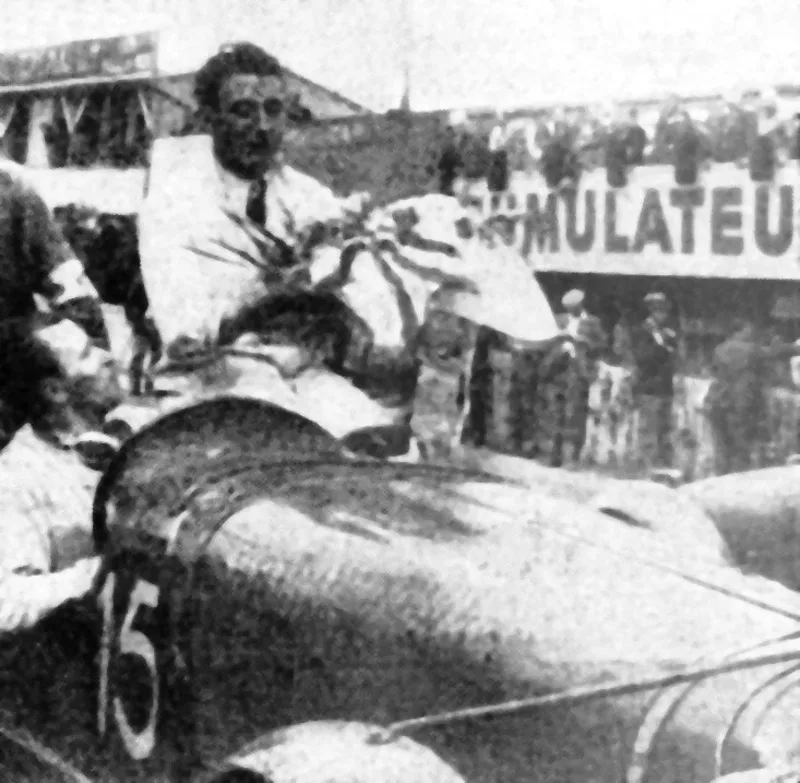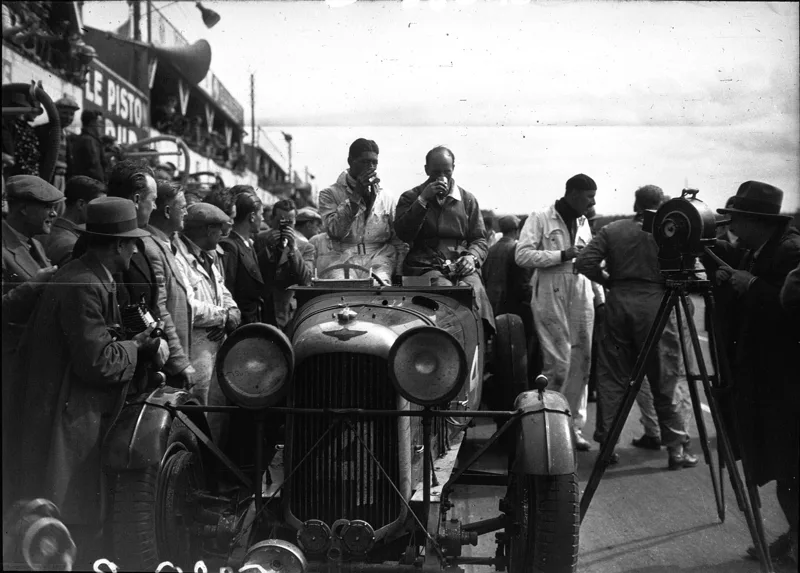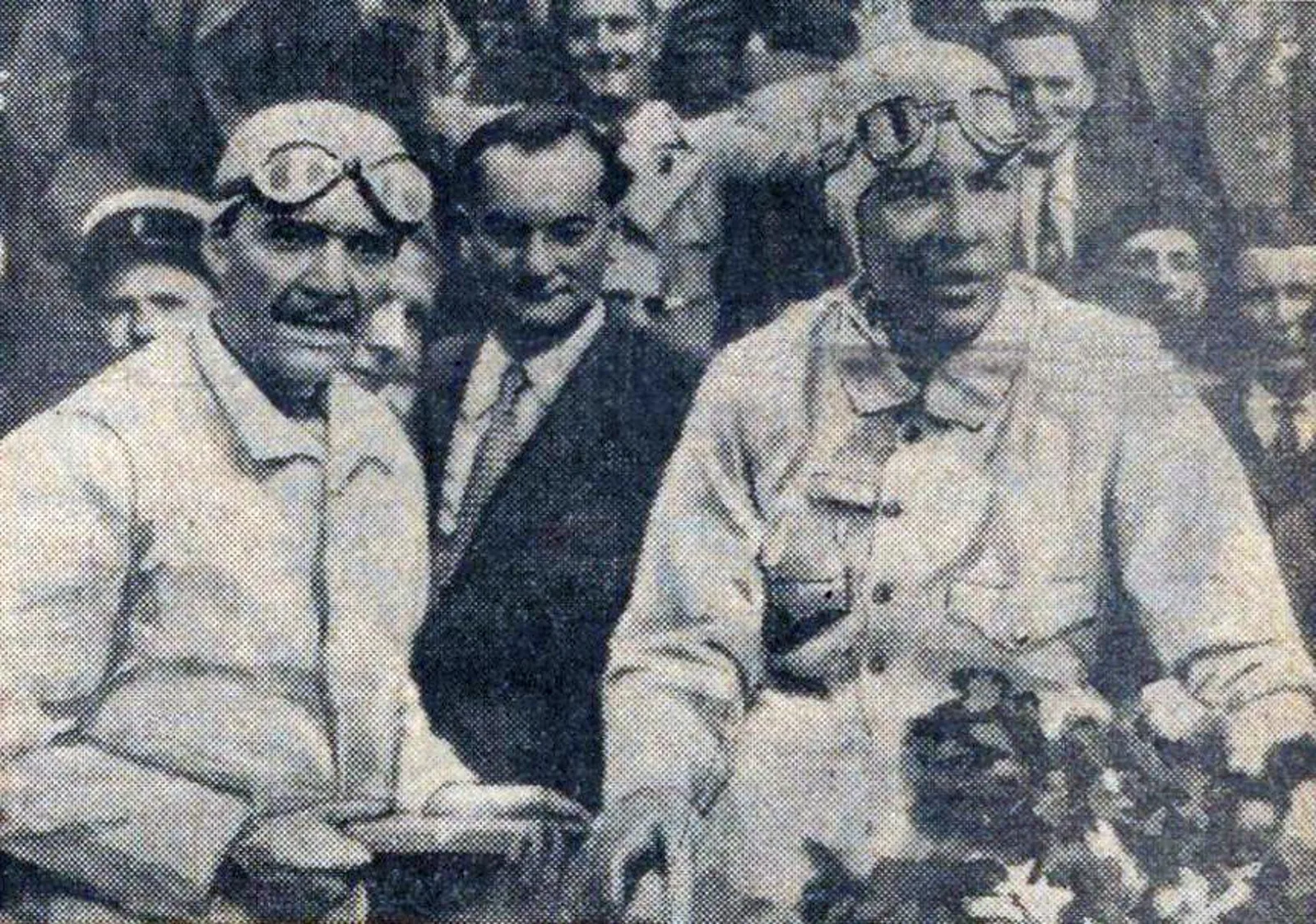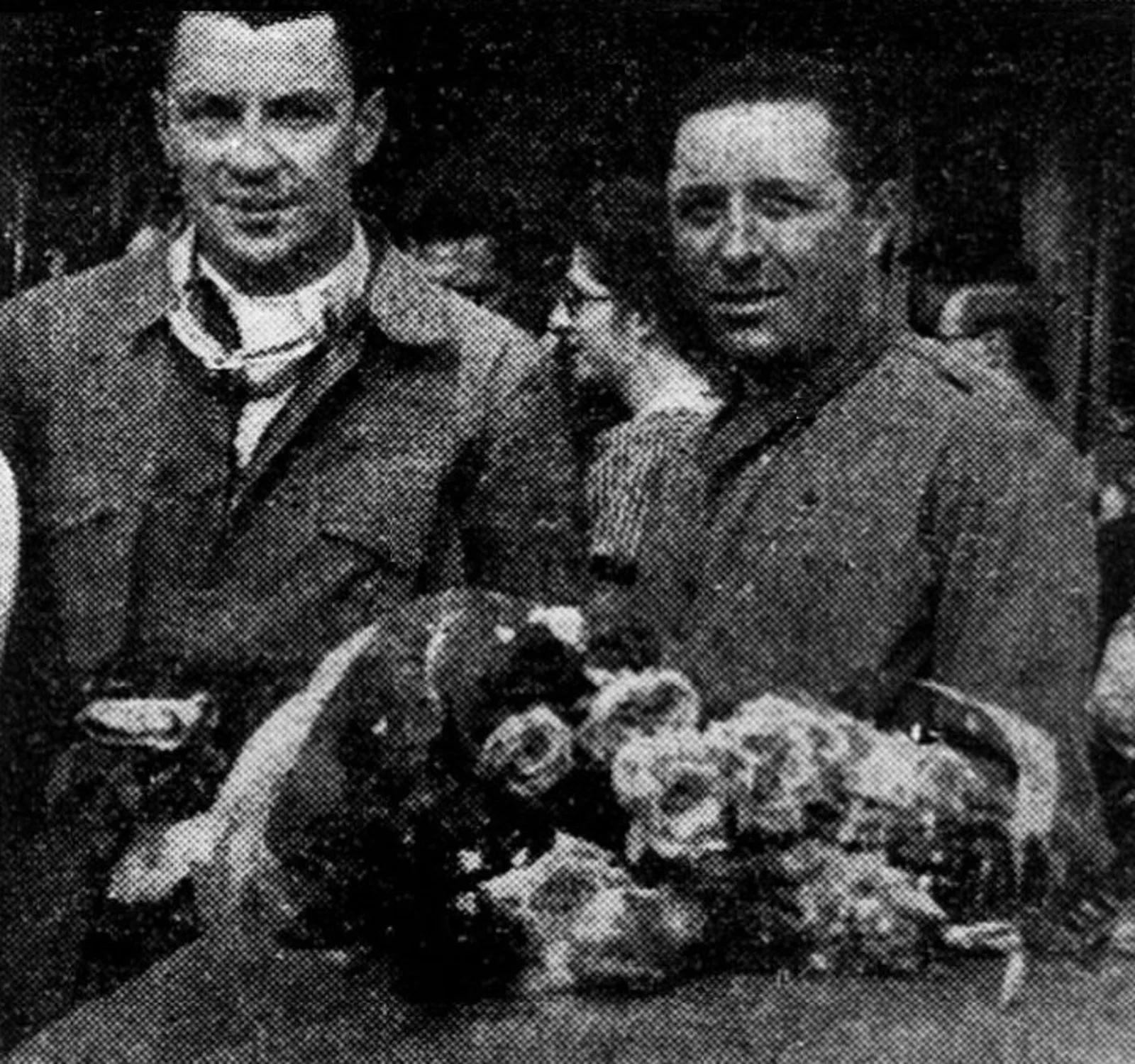
Wimille and Veyron's supercharged Bugatti 57C beat a French field of Delahayes, Talbots and Delages, with the Lagondas and BMWs in the frame behind it.
The 1939 race went to Wimille and Veyron in a supercharged Bugatti Type 57C, which set a new overall distance record. Louis Gerard's Delage finished second, three laps behind, with the Lagonda V12s third and fourth, and neither Lagonda needed a wheel change.
Wimille and Veyron's supercharged Bugatti reached the finish in the 1939 24 Hours of Le Mans at 4pm, having beaten the overall distance mark with time to spare. It was the 16th Grand Prix of Endurance, run on 17 and 18 June in weather that stayed good throughout, and the French marques filled the leading places behind it.
Why was the 1939 race an even contest between French marques?
The race pitted the big French names against each other: Delahaye, Talbot, Bugatti and Delage. The French Automobile Club had widened its national championship that year to 11 races, five of them sports car events, and Le Mans was one of those five.
The Automobile Club de l'Ouest made no notable changes to its own rules beyond the usual adjustment of the Index targets. For the first time it went looking for sponsors, and a total of FF100,000 in prizes was put together with three companies. Le Matin paid FF1000 to the overall leader each hour, and MGF Insurance offered FF10000 for the winner of the Coupe Biennale.
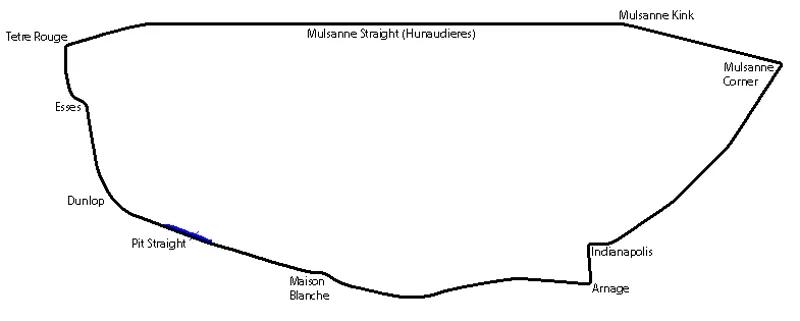
Esso supplied the fuel, with four options. A new spectator bank was built along the first curve, and the race saw the first use of an electronic timing system, provided by the French club. It was a great improvement on stopwatch timing, particularly at night and in poor visibility.
A supercharged Bugatti broke the distance record at Le Mans, and the marque's last great win came in 1939.
How was the field prepared in practice?
Practice was run in good weather during the week, and night practice took place from 1am to 6am so as to minimise the impact on the public roads. Sommer's Alfa Romeo had struggled to reach scrutineering, with heavy snow on the Mont Cenis Pass, and it arrived at 3.45pm, only a few minutes before the deadline.
At scrutineering Lord Howe, the RAC representative, pointed out that the Adler team was not following the regulations for fuel-tank security. It was worse for the new Adler, which crashed heavily in practice and could not be repaired in time for the race. Bugatti's own practice was troubled too, when its car blew an engine and spare pistons had to be sent from the factory overnight.
Brunet's streamlined Riley had an engine failure, and without spares it had to be scratched. Its co-driver, Lucien Langlois, a former Delahaye owner, found a seat in the Delahaye of Joseph Chotard. Prince Bira, who had come to Le Mans as a spectator in 1935, joined the night practice by driving his open-top Bentley onto the circuit at the Tertre Rouge corner and completing several fast laps before slipping away unnoticed.
Who were the favourites in 1939?
The big cars came from Delahaye, Talbot and Delage, and each had a works or semi-works team behind it. The Bugatti was the outlier: a one-off Type 57C with a supercharged 3,250cc straight-four and around 200 bhp, its magnesium-alloy bodyshell fitted with a minimal windscreen and an angled spotlight on the right side to light the apex of the corners.
Wimille, the works driver, shared the car with Pierre Veyron, who had not raced for two years. Jean Bugatti had prepared the one-off car, and the team's lead driver, Wimille, entered it and took it to the front of the field.
Chinetti ran a nominal works team for Talbot, with four cars carrying the 3-litre straight-six developed to 230 bhp. Lagonda returned with a new 4480cc V12 that produced 180 bhp in production trim and had been tuned to 210 bhp for the race. Its designer, W.O. Bentley, had moved to Lagonda after his own company's liquidation.
Dick Seaman, who would have driven one of the Lagondas, was not released by Mercedes, and the experienced ERA driver Arthur Dobson was brought in to partner Charles Brackenbury. Lord Selsdon had paid for a second Lagonda to be prepared, and it was ready at the final moment, having been driven at speed to Le Mans for its pre-race test.
BMW entered three improved 328s with 135 bhp, able to reach 220 km/h (135 mph). One was an aerodynamic coupe with a body by Carrozzeria Touring, driven by Prinz zu Schaumburg-Lippe with BMW engineer Fritz Wenscher, while the two roadsters were driven by Ralph Roese, Paul Heinemann, and Willi Briem with Rudolf Scholz.
Adler's racing model of its Typ 10 saloon used a 2.5L side-valve straight-six tuned to 80 bhp, which could reach 150 km/h (95 mph). Huschke von Hanstein was the lead driver and was relying on better fuel economy to beat BMW. The defending 1.5-litre class winners, Paul von Guilleaume and Otto Lohr, returned with the Adler Trumpf Rennlimousine.
How did the race start?
Arthur Dobson's Lagonda led under the Dunlop bridge, but by the third lap Louis Gerard's Delage had taken the lead. By the end of the first hour Gerard had a good margin over the Delahayes of Mazaud and Paul, with Wimille and the Talbots of Chinetti, Helde and Le Begue behind.
Mazaud then began his own pursuit. On lap 25 he broke the track record with a lap of 5:12.1, which had been set by Robert Benoist in a Bugatti 57G. He passed Gerard just after the two-hour mark, and for the next hour the pair ran nose to tail, passing one another.
In the third hour race director Charles Faroux black-flagged Forestier's Talbot for a mechanical problem. The flag had no number attached, so the driver did not know it was meant for him, and several laps went by before the pit crew could make him stop. The Talbot had an oil leak, because an ACO official had not properly secured the oil-filler cap at an earlier stop, and the oil covered the track.
Elsewhere, Mahe spun a Talbot coupe but escaped damage. Anne-Cecile Rose-Itier crashed her Simca 8 on the slippery track at Arnage and rolled it, and another Simca hit the oil after the pits and skated down the track backwards. Its driver, Jean Breillet, was tossed out without a seatbelt and was lucky to escape uninjured.
What happened in the night?
Heavy clouds had been building up through the evening, but the night was clear and the rain stayed away. Between them the Gerard and Monneret Delage, the Mazaud and Mongin Delahaye and the Chinetti and Mathieson Talbot swapped the lead according to refuelling stops and driver changes.
Strong driving by Gerard put him back in the lead by midnight, a lap ahead. Soon before 2am, Mazaud's Delahaye caught fire on the run from White House. He reached the last kilometre to the pits in a blaze, but the car could not be saved, its electrics burnt out and his race was over.
At the midway point, at 4am, the Delage had completed 129 laps and held a solid three-minute lead over Chinetti and Wimille, who had covered 128 laps. The sister Delage was still in touch, a further lap back, and by dawn the top four were all on the same lap, with the Index battle close behind them.
How did the leaders fall back in the morning?
At breakfast time, Mathieson suffered a puncture coming out of Tertre Rouge. Hug's Delage was following closely and collided with the Talbot, which was pitched into the sandbank. Mathieson later had its suspension destroyed at Mulsanne, and with all six Talbots now out, the French marque's challenge was over.
The Bugatti then lost ten minutes when it stopped on the track after Wimille felt a wheel hub breaking. He made his way back carefully and had it replaced. That left Gerard with a three-lap lead over the Bugatti by the morning.
Gerard and Monneret were lapping at 5:28, with Wimille in pursuit at 5:21 and the Lagondas at 5:46. Into the morning, attrition picked off cars steadily, and by 9am half the field had retired. Wisdom and Scott were disqualified for refuelling early, after rust and dirt from their Singer's fuel tank had tainted the fuel system.
Sommer and Bira, whose Alfa Romeo had run well after its initial engine problems, admitted defeat at 11am. The enclosed saloon was stifling and its rear brakes overheated, so the crew had to douse them with buckets of water at the pit stops. Around 9am Gordini had overtaken the BMWs in the Index competition, moving up near the top ten.
How was the race decided?
Shortly before 1pm, Monneret brought the Delage into the pits with a misfire and scorched feet. The bonnet went up and the plugs were changed, but the car still misfired. In that time Wimille had pulled back a lap, and when the Delage pitted again after an exploratory lap, the Bugatti swept back into the lead.
The Delage had a loose exhaust and a broken valve spring, and Gerard lost 40 minutes repairing it. Jean Bugatti told his drivers to ease off and not stress the engine. Everyone was focused on reaching the finish line as the clock ticked down, with several of the drivers in a sorry state.
Wimille beat his own distance record with half an hour in hand and crossed the line at 4pm. It was his second Le Mans victory and the last major win for Bugatti. Gerard finished three laps behind, collecting FF17000 in hourly bonuses along the way.
| Place | Entry | Result |
|---|---|---|
| 1st | Bugatti Type 57C, Wimille and Veyron | New overall distance record |
| 2nd | Delage, Gerard and Monneret | Three laps behind |
| 3rd and 4th | Lagonda V12s | Trouble-free runs, with no wheel change needed |
| 5th, 7th and 9th | BMW 328 team | Clean sweep of the 2-litre class, with the coupe leading the team |
| 10th | Simca, Gordini and Scaron | Dominated the small classes and won the Index |
What did the 1939 race mean for Bugatti and the others?
The win was Wimille's second Le Mans victory and what would turn out to be the last major victory for the Bugatti works. The distance record had been held by the Bugatti of Wimille and Benoist since 1937, and both leading cars beat it on the day.
The BMW coupe led the team home and beat the class distance record by 10%, which was 22 laps or 291 km (181 miles) further than the old figure. The Lagondas finished third and fourth without needing a wheel change, and Gerard broke his own 3-litre class record by two laps.
Simca's results were the other story. Gordini and Scaron finished tenth overall, while Simca took a 1-2-3 podium in the small class, with Lapchin and Plantivaux second, almost 250 km (18 laps) behind the winner and first and second on the Index of Performance.
Mussolini had barred Italian drivers from racing overseas in response to League of Nations sanctions, which left Sommer without a works team-mate, so the Frenchman had to find a co-driver. Prince Bira, a Siamese royal who was already a regular grand prix racer, joined him. The race is also remembered for the death of Dick Seaman, who was killed a week later at the Belgian Grand Prix.