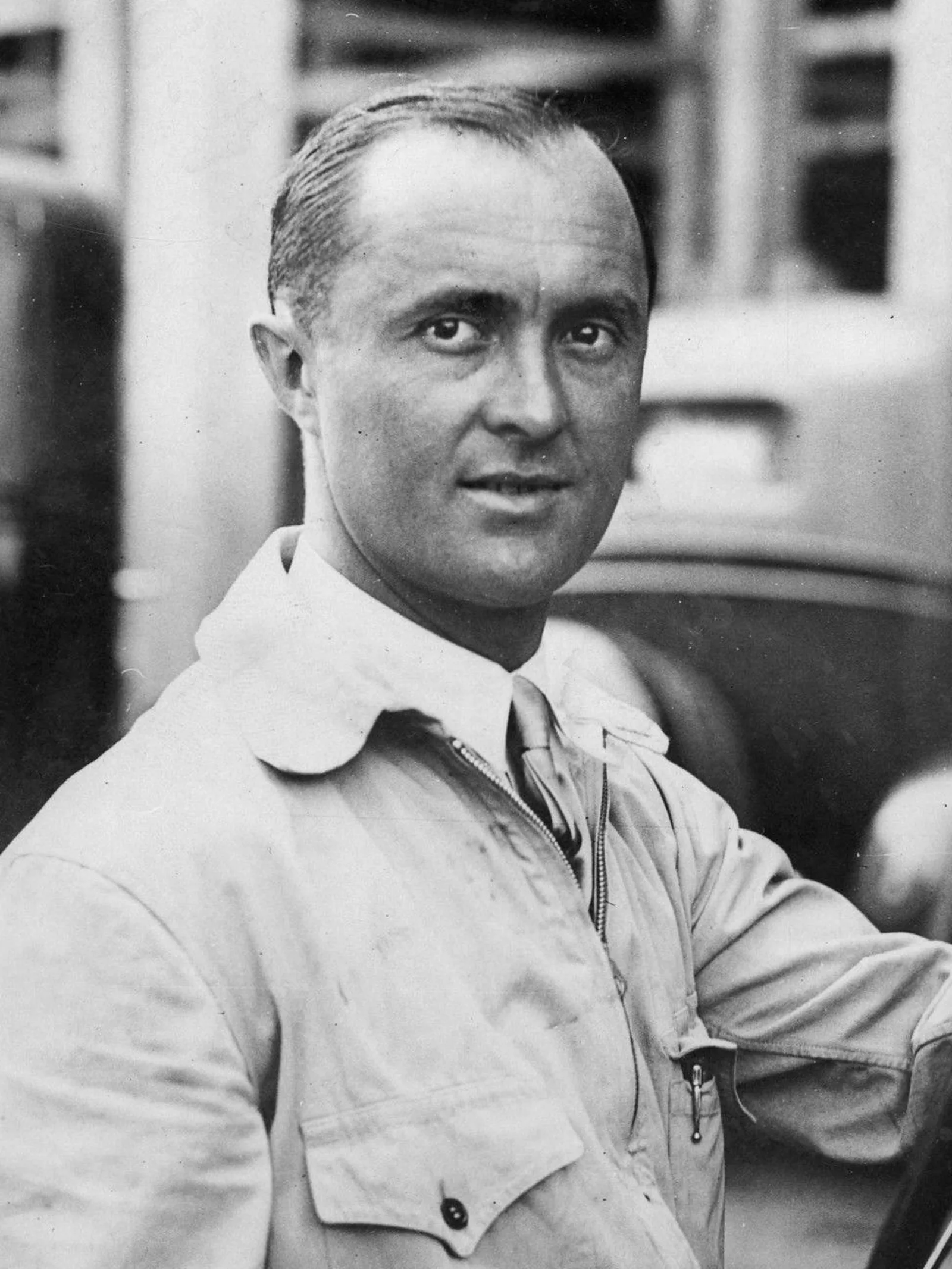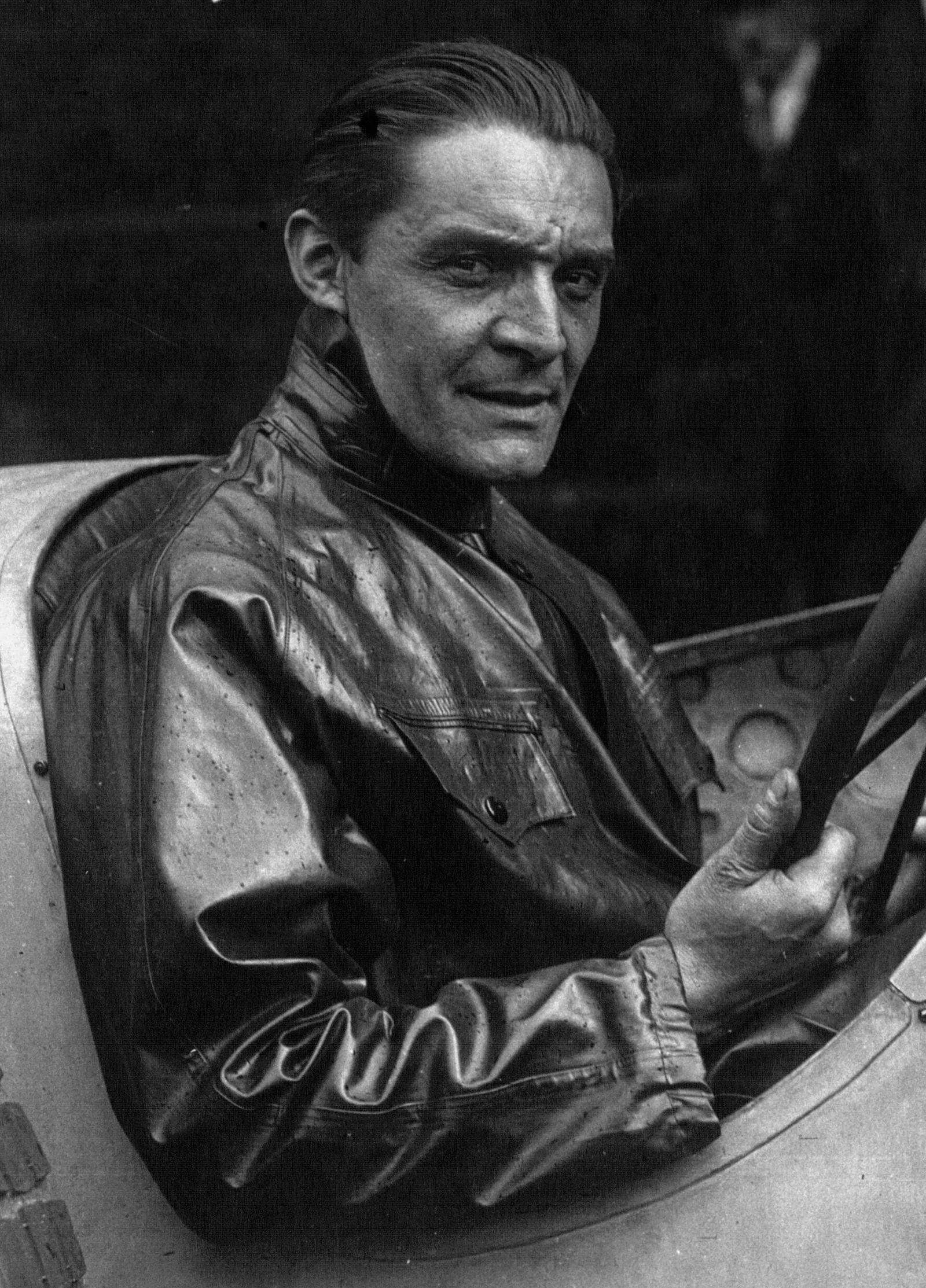
A 1937 Le Mans winner for Bugatti whose wartime sabotage work for the SOE ended in execution at Buchenwald in 1944.
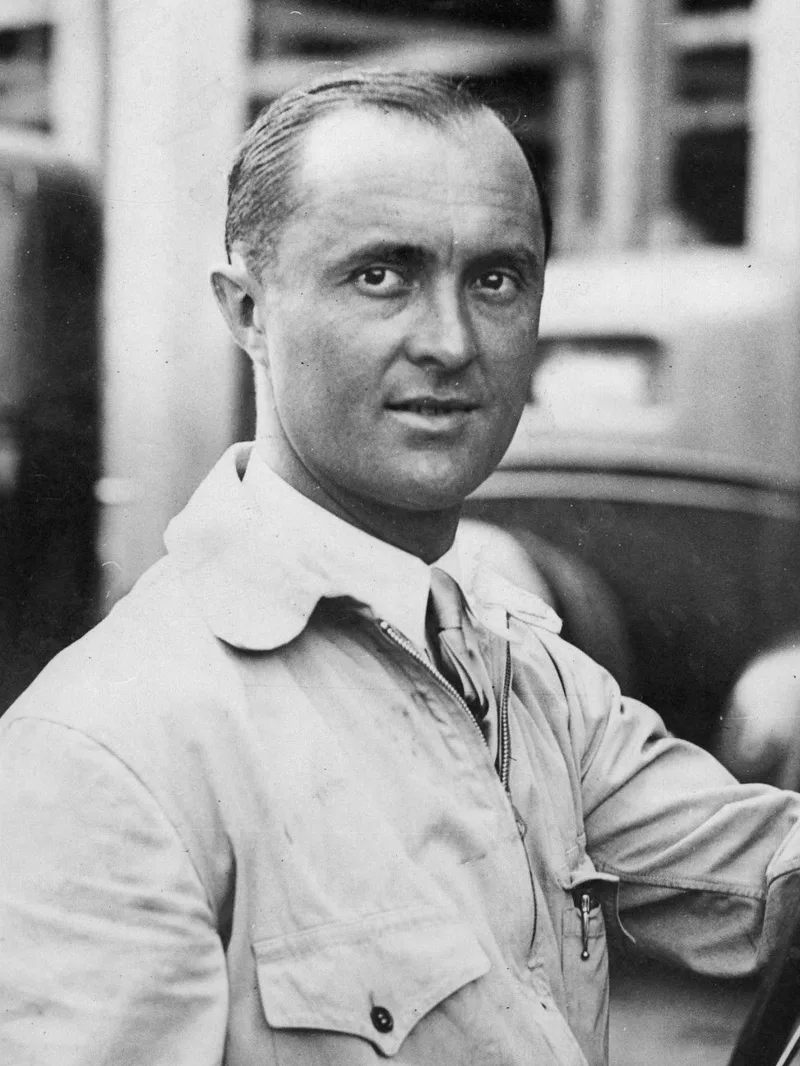
Robert Benoist was a French Grand Prix driver who won the 1937 24 Hours of Le Mans for Bugatti. He also worked as an agent for the British SOE in occupied France and was executed by the Germans at Buchenwald on 11 September 1944.
A Delage and Bugatti driver from France, Robert Benoist took the 1937 24 Hours of Le Mans. During the Second World War he served in occupied France as an agent of the British Special Operations Executive. The Germans executed him at Buchenwald in September 1944.
Who was Robert Benoist?
Robert Marcel Charles Benoist was born on 20 March 1895 at Auffargis, near Rambouillet, in France. He raced Grand Prix cars for Delage and Bugatti in the 1920s and 1930s, and he won the 24 Hours of Le Mans with Jean-Pierre Wimille in 1937. He was executed by the Germans in 1944 after his wartime work with the SOE.
Benoist's life falls into two halves. The first was the motor racing career of the 1920s and 1930s, when he drove for Delage and Bugatti and then ran Bugatti's racing department. The second was the wartime period from 1940 to 1944, when occupied France became the setting for his work.
His father was the gamekeeper on the estate of Baron Henri de Rothschild, and he had an older brother, Maurice. During the First World War he served in the French army and then flew as a fighter pilot with the French Air Force.
From Le Mans winner to SOE agent, Benoist combined motor racing success with a wartime role in occupied France.
How did Benoist's Grand Prix career begin?
After the war Benoist looked for excitement in motor sport and joined the de Marcay company as a test driver. He moved on to Salmson, where he did well in cyclecar racing, before Delage signed him in 1924. A year later he won the French Grand Prix.
That French Grand Prix was shared with Albert Divo, and the race is also remembered as the one in which the Italian star Antonio Ascari was killed.
In 1927, at the wheel of a Delage 15-S-8, he took victories at the French, Spanish, Italian and British events. That run gave Delage the manufacturers' title for the season, and it remained the high point of his years with the marque.
When Delage left racing, Benoist was without a team. He became manager of the Banville Garage in Paris and took occasional drives for Bugatti. A second place at the 1928 San Sebastian Grand Prix in Spain was one of those results.
Did Benoist win at Le Mans?
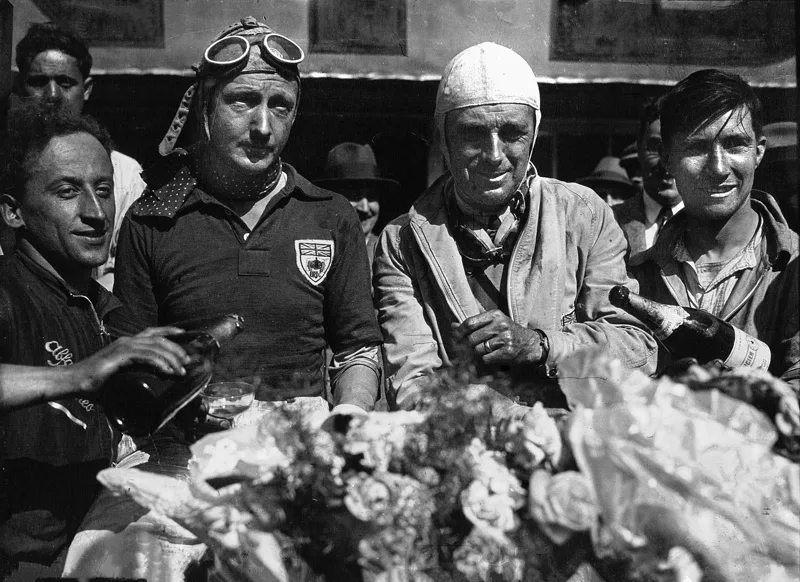
Yes. In 1937 Benoist shared the victory with Jean-Pierre Wimille, driving for Bugatti. He had returned to racing with the Bugatti team in 1934, rose to head of its competition department and planned the company's Le Mans programme before taking the win.
Earlier, he had partnered Attilio Marinoni to victory in the Spa 24 Hours, driving an Alfa Romeo. After the Le Mans victory he stopped driving but kept running Bugatti's racing department. The Le Mans programme had been planned under his direction, and the 1937 result came from the work he had masterminded.
| Year | Event | Detail |
|---|---|---|
| 1895 | Born | 20 March, Auffargis |
| 1924 | Joins Delage | Signed as a driver |
| 1927 | Manufacturer title | Delage 15-S-8, four Grand Prix wins |
| 1928 | San Sebastian Grand Prix | Second place while racing for Bugatti |
| 1937 | 24 Hours of Le Mans | With Jean-Pierre Wimille for Bugatti |
| 1943 | Escape from France | RAF Lockheed Hudson near Angers, 19 August |
| 1944 | Nantes sabotage | Power pylons blown on 16 May and 26 May |
| 1944 | Death | Executed at Buchenwald, 11 September |
What was the SOE?
The Special Operations Executive was a secret British organisation formed to counter the German occupation of France and of other nations. It encouraged French resistance to Germany and supplied the resistance groups with arms and equipment.
Its aims were espionage, sabotage and reconnaissance in countries held by the Axis powers, especially those under Nazi Germany. Its agents worked alongside French resistance groups, and the British government under Winston Churchill backed the work. Benoist's own role as an agent sat within this wider effort, which depended on local resistance groups for its reach across France.
What happened to the Chestnut network in 1943?
The Chestnut network was built near Paris by William Grover-Williams, a former racing driver and rival of Benoist, who parachuted into France on 29 May 1942. The network's purpose was to work near Paris and help the French resistance as it took shape. It received six large parachute drops of weapons and supplies from mid-February 1943, and the arms were stored at the Benoist chateau at Auffargis.
The collapse began on 31 July 1943, when German direction finders traced Roland Dowlen, the network's radio operator, and took him prisoner. On 1 August Benoist's brother Maurice was also taken. The next day Maurice led the German SD to the family chateau, where the Germans seized many containers of arms and equipment.
Grover-Williams was tracked down in a stable and taken into custody. Both Dowlen and Grover-Williams were later put to death by the Germans.
How did Benoist escape in August 1943?
Benoist was not at the chateau during the raid and went into hiding while he tried to learn what had happened. He was apprehended by three Germans in Paris on 4 August 1943, but he forced open the door of the moving car on the way to SD headquarters and got away into the crowd.
He then made his way over neighbouring rooftops. A night watchman in one building knew him from motor racing and offered him a drink before he continued his flight. He spent twelve days hidden at the flat of his secretary, Stella Tayssedre.
Many agents were in the same position that summer, as German forces arrested SOE operatives and hundreds of French helpers.
Benoist had been in contact with Henri Dericourt, the SOE air movements officer in France, who was later believed to have been a double agent also working for the Germans. Dericourt organised a secret landing near Angers for an RAF Lockheed Hudson, which on the night of 19 August collected Benoist and nine other SOE agents on the run. The journey to the field took him by train to Briollay and then three miles on foot, and the party reached England safely.
What was the Nantes sabotage campaign?
In October 1943 Benoist flew back into France on a limited mission to set up the Clergyman network under the code name Lionel. The aim was to destroy the power pylons that crossed the Loire at Ile Heron, near Nantes. He stepped beyond his brief by travelling to Paris and drawing up plans against senior SD officers, though none of those plans were carried out. He returned to Britain in February 1944 after lacking the explosives he needed.
He had trained in explosives while in England. SOE was reluctant to send him back because of his fame, but he argued for another attempt and was allowed to return in March 1944. The mission carried a budget of 500,000 francs, and SOE barred him from going to Paris, as his profile there was too high.
He landed in France with Denise Bloch, a radio operator with earlier SOE experience. On 16 May 1944 his saboteurs blew up the Ile Heron pylons that supplied Nantes, and the city was left in the dark for a week. The repaired pylons were destroyed again on 26 May, and Allied bombers struck Nantes on 28 May.
These operations were timed for the Normandy landings on 6 June, which took place some 250 km (160 miles) from Nantes. On 5 June radio word reached him that the invasion was imminent, and the network cut the telephone system in Nantes and sabotaged the railways. The wider plan was to disrupt German movements across France before and after the landings.
How did Benoist's last mission end?
On 17 June 1944 Benoist held a meeting of network members at his villa near Sermaise, against SOE guidance on keeping contact to a minimum. He then said he was leaving for Paris and warned that the network should disperse if he had not returned by lunchtime the next day. He was captured with Charlotte Perdrige, a courier for his network, before he could return.
The warning was not heeded. At 8 p.m. on 18 June the SD searched the villa and took Bloch and the rest of those present. One of the captives may have told the Germans about the Sermaise meeting, on the assumption that the group had already scattered.
How was Benoist executed?
Benoist was held at the SD's Paris headquarters, 84 Avenue Foch, where he was questioned for nearly a month. Interrogators combined apparent kindness with suggestions that someone close to him had betrayed him, and He was persuaded that Violette Szabo, a famous SOE agent, had betrayed him. On 8 August 1944 he was sent by train towards Germany with 36 other SOE agents. He was among 16 prisoners selected for execution at Buchenwald, and he was put to death on 11 September 1944.
Allied armies were approaching Paris and would take the city on 25 August. Allied fighters struck the train, but no prisoners were injured. On the journey Benoist was chained to a fellow agent, George Wilkinson, who later described him as charming, trustworthy, and someone who could have led the group had he tried.
The group was then held at the Neue Bremm camp near Saarbrucken. Some prisoners, Benoist among them, wanted an escape led by F. F. E. Yeo-Thomas, but others felt they could still be regarded as prisoners of war and not as spies, so the plan was dropped. After several days of brutal treatment the men were taken to Buchenwald and the three women to Ravensbruck.
On 9 September the Buchenwald commandant was ordered to select 16 prisoners for special treatment, which at Buchenwald meant execution. Thirteen of the 18 SOE agents still held there were executed or died of disease, and five survived. Three SOE women were executed on 5 February 1945, and Bloch, who had been Benoist's radio operator, was among them.
What is Benoist remembered for?
Benoist is remembered in motor racing through the Coupe Robert Benoist, a Paris race held in 1945, and through memorials to his wartime service. His name appears on the Brookwood Memorial in Surrey and on the Valencay SOE Memorial Roll of Honour in France.
Following Germany's surrender, the Coupe Robert Benoist was held in Paris on 9 September 1945 and was won by Jean-Pierre Wimille, his racing and resistance colleague. Auffargis named a street after him, the Linas-Montlhery track placed a monument to him, and a grandstand at the former Reims-Gueux circuit bears his name. Memorials and tributes in both France and Britain kept his name alive after the war.
He also wrote a practical driving manual, Au volant, published in Paris in 1933. From Le Mans winner to SOE agent, Benoist combined motor racing success with a wartime role in occupied France.
His wartime work is covered in published histories, including M. R. D. Foot's SOE in France, first published in 1966, and Joe Saward's The Grand Prix Saboteurs, published in 2006.