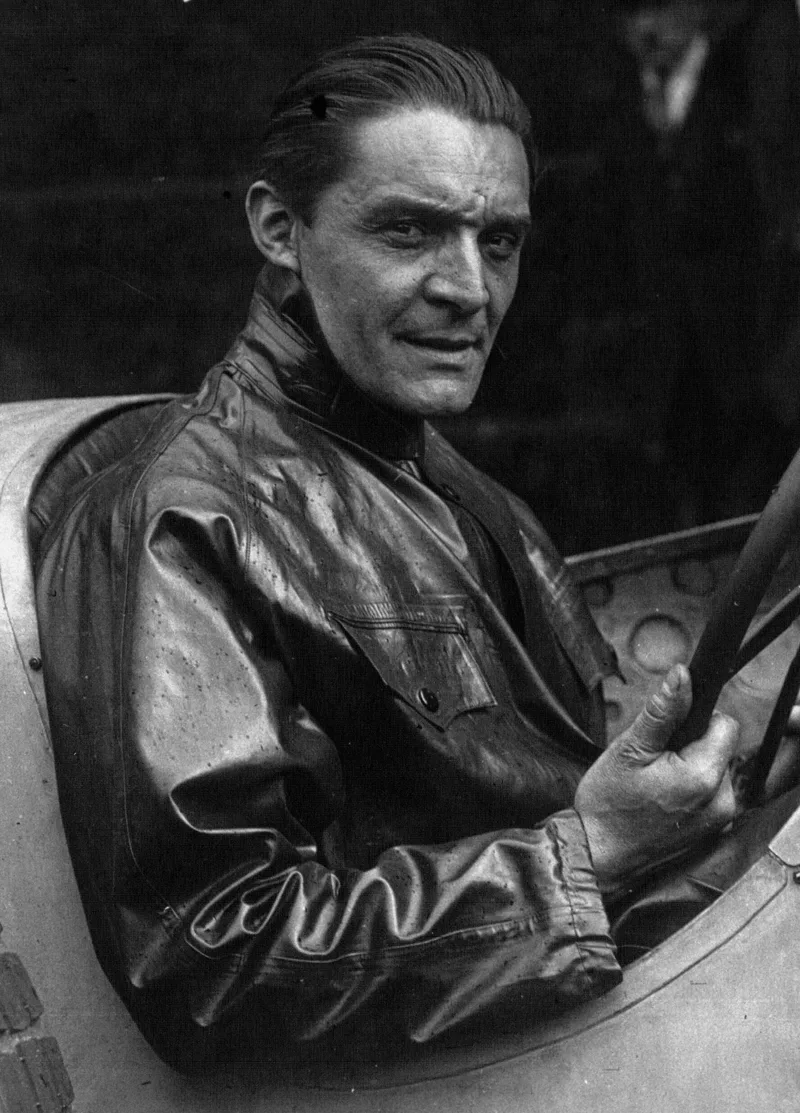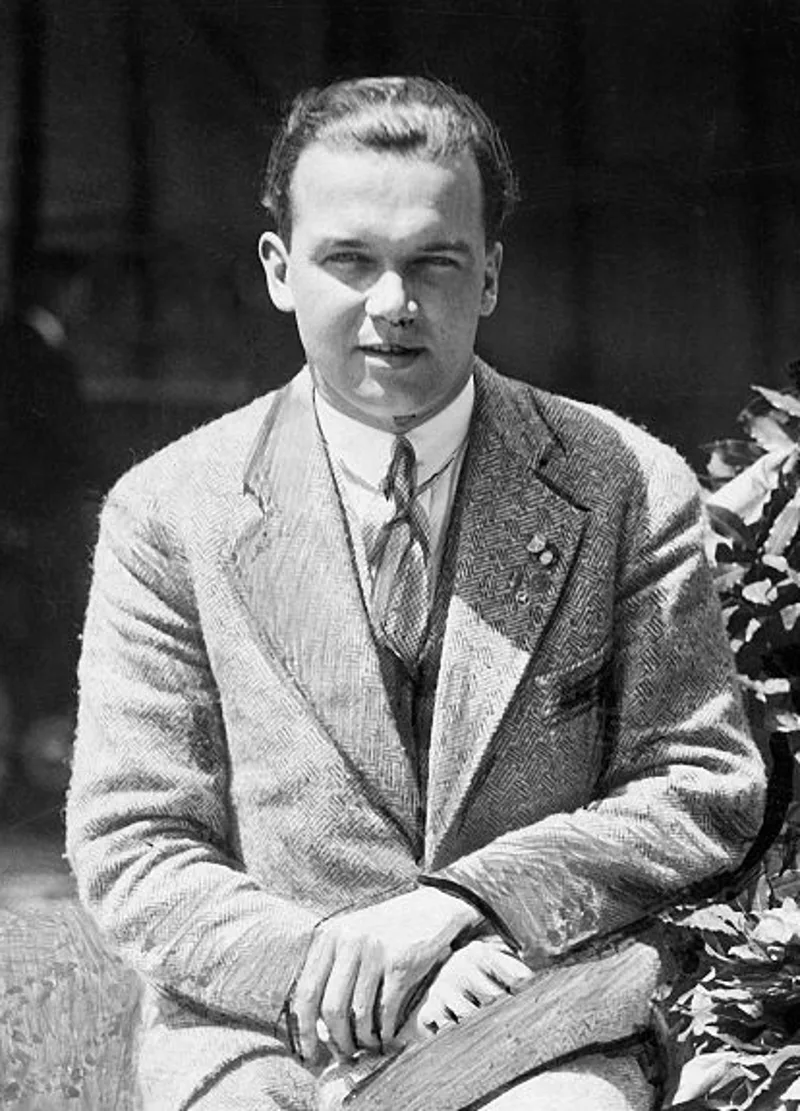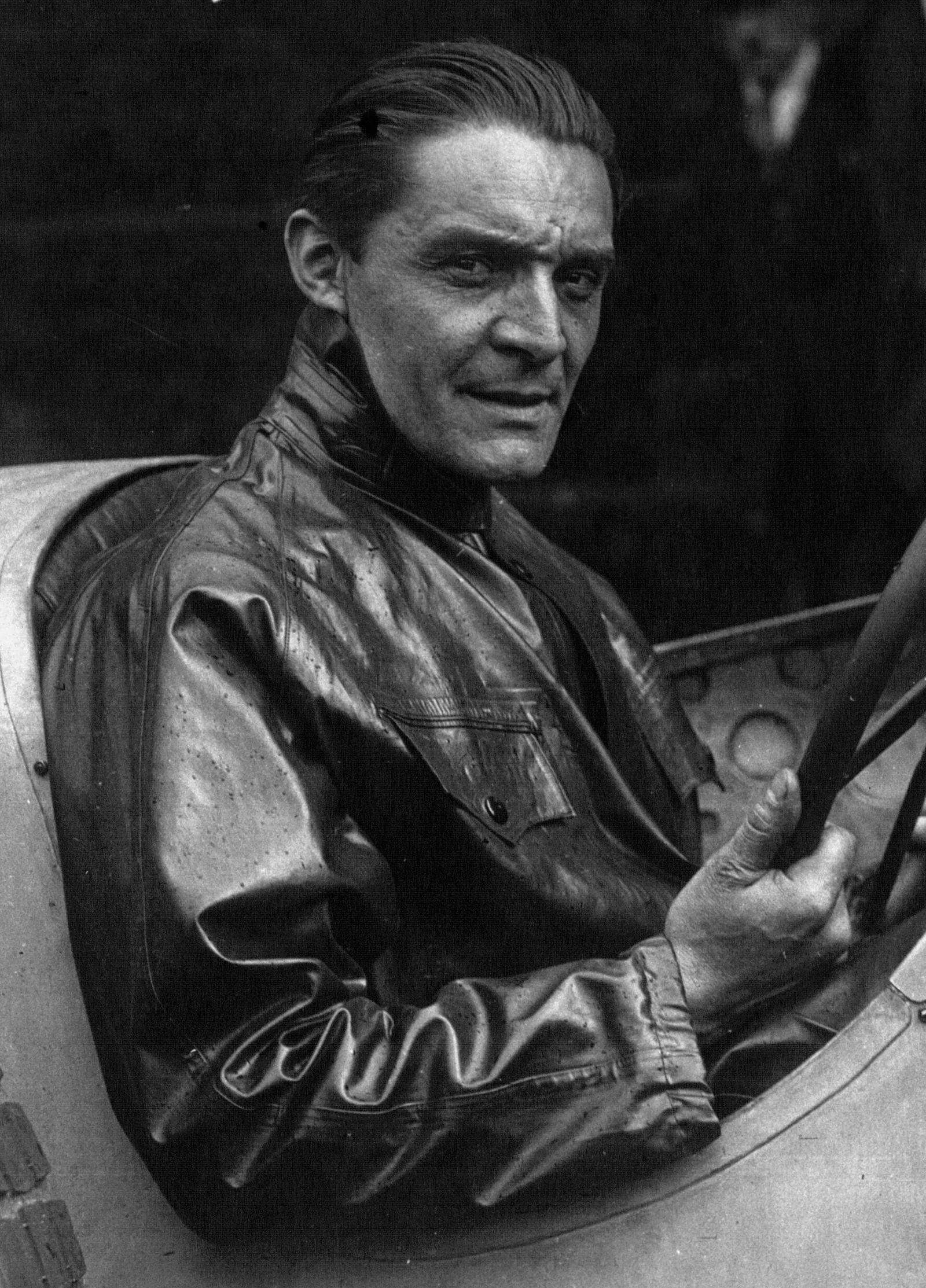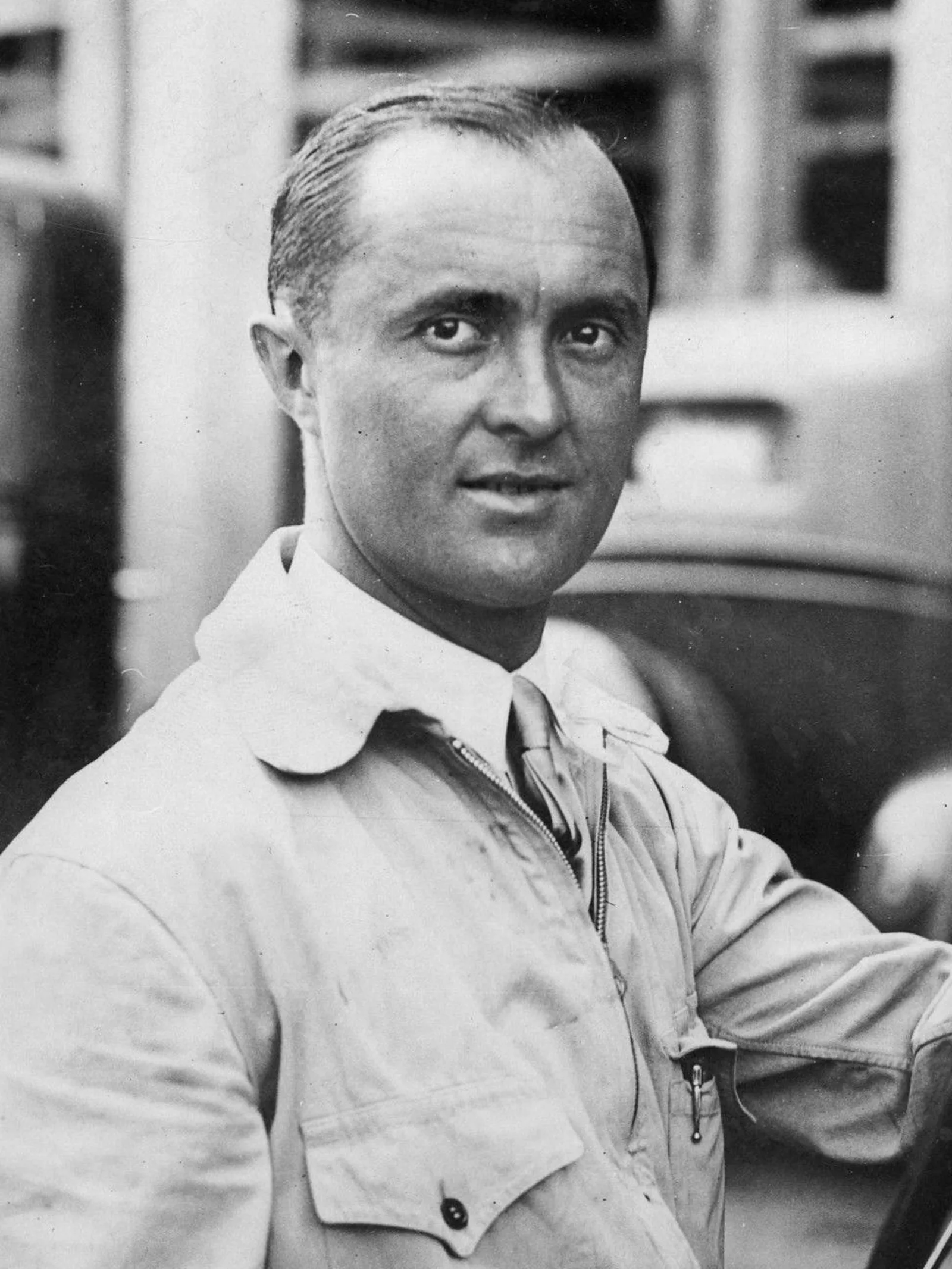
One raced for over thirty years and finished sixth at Monaco at 55; the other won Le Mans twice, hid in a stream from German troops and died practising in Buenos Aires.
Louis Chiron, a Monegasque who began as a hotel bellboy, won the 1931 Monaco Grand Prix and five French Grands Prix before finishing sixth at Monaco aged 55. Jean-Pierre Wimille won Le Mans in 1937 and 1939, served as a Resistance agent for Britain's Special Operations Executive, and died in practice for the 1949 Buenos Aires race.
On 18 June 1944 a Grand Prix winner bolted into woodland while German troops raided a chateau in the French countryside, slipped under the roots of a tree that overhung a stream, and stayed there with just his head clear of the water. Jean-Pierre Wimille, twice a winner at Le Mans, was working as an agent for Britain's Special Operations Executive in the French Resistance. He got away, returned to racing and was killed in a practice crash in 1949.
His great contemporary Louis Chiron lived a different kind of life. Chiron started as a hotel bellboy in Monaco, raced for more than thirty years and was still starting Grands Prix in his mid-fifties. Both men won in Bugattis, both won the French Grand Prix, and between them their careers stretch from the 1920s to the end of the 1950s.
Who was Louis Chiron?
Louis Alexandre Chiron, born on 3 August 1899 and died on 22 June 1979, came from Monaco and raced in rallies, sports car events and Grands Prix. His career spanned more than thirty years, from 1923 to the end of the 1950s, and no one older has ever started a Formula One World Championship race. The Bugatti Chiron carries his name.
He is ranked among the finest drivers of the years between the two World Wars. Until Charles Leclerc matched him in 2024, he was also the only Monegasque to have won at home in the Monaco Grand Prix.
Chiron started as a hotel bellboy in Monaco, raced for more than thirty years and was still starting Grands Prix in his mid-fifties.
How did a hotel bellboy become a Grand Prix driver?
Through a chain of lucky friendships. Chiron's family were wine-growers, and his father found work as a butler at the Hotel de Paris in Monaco. Louis joined the same hotel as a bellboy in his teens, and it was there that cars and racing first caught his imagination. In the First World War an artillery regiment lent him out as a chauffeur for two French marshals, Petain and Foch, a posting made possible by a driving licence that a Russian duchess from the hotel had paid for.
Peace found him earning a living as a dancer. Racing began in 1923, when a wealthy American woman, a friend, bought him a used Bugatti Brescia, and he started out on local hill climbs. By 1926 he had a Bugatti T35 and an industrialist patron in Alfred Hoffman, and with them he moved up to Grand Prix racing. Victory in the Grand Prix du Comminges followed that season, at Saint-Gaudens, close to Toulouse.
What did Louis Chiron win with Bugatti?
Major races, in a hurry. From 1928 he was a Bugatti factory driver while also running in Hoffman's private team, and for those few seasons he stood among the dominant figures of Grand Prix racing. He took the 1928 Italian Grand Prix, the 1929 German Grand Prix and the 1930 Belgian Grand Prix. His list of wins also includes the Spanish Grand Prix in 1928 and 1929, the Rome and Marne Grands Prix in 1928, and the Grand Prix de Nice in 1932.
In 1929 a Delage carried him to seventh place at the Indianapolis 500. In 1931, in a Bugatti T51, he won both the Monaco Grand Prix and the French Grand Prix. Czechoslovakia adored him after he won its Grand Prix three years in a row, in 1931, 1932 and 1933. Even 75 years later a phrase was still in use there, "He drives like Chiron", applied mainly to speeding motorists and to anyone who drives very quickly.
Why did Chiron leave Bugatti?
His partnership with Hoffman ended early in the 1930s after he was found having an affair with Hoffman's wife Alice, and the Bugatti factory team fired him at the end of 1932. With his friend Rudolf Caracciola he set up a new outfit, Scuderia CC. It barely got going: at its first event, the 1933 Monaco Grand Prix, Caracciola crashed and was out for the year, so Chiron moved mid-season to Alfa Romeo cars prepared by Scuderia Ferrari.
The switch paid off quickly. In 1933 he won the Spa 24 Hours in an Alfa Romeo 8C 2300 Monza, sharing with the endurance specialist Luigi Chinetti, and added the Spanish Grand Prix and the Grand Prix de Marseilles that year. In 1934, in an Alfa Romeo P3 run by Ferrari, he took the French Grand Prix at Montlhery against factory Mercedes-Benz and Auto Union cars, a result often ranked among the best of his career. He also won the Moroccan Grand Prix. In 1935 the Alfa Romeos struggled against the German machines, and Chiron could manage only a podium in Belgium and a minor win at the Lorraine Grand Prix.
How did Chiron's career end?
In stages, over two decades. In 1936 he moved to the Mercedes-Benz factory team and began the European championship with pole position at Monaco, only to crash on the first lap. At the next round, the German Grand Prix, a worse accident left him with head and shoulder injuries and ended his Grand Prix career, or so he decided. In 1937 he won the French Grand Prix, which that year was open only to sports cars, and in 1938 he stepped away from racing altogether.
The Second World War stopped motor racing a year later. When it resumed, Chiron came out of retirement and won two French Grands Prix in a Talbot-Lago. In 1950, the first season of the Formula One World Championship, he drove a factory Maserati and finished third at Monaco at the age of 50, the one points-scoring result of his career. With the Swiss driver Ciro Basadonna as co-driver he won the 1954 Monte Carlo Rally.
He drove his final race in 1955, bringing a Lancia D50 home sixth at Monaco, weeks short of turning fifty-six. That made him the oldest man ever to take part in a Formula One race. Three years later he turned up for practice at Monaco aged 58, the oldest entrant the sport has recorded.
How is Louis Chiron remembered?
In bronze, in a corner and on a car. After 35 years in racing he stayed on in an executive role with the organisers of the Monaco Grand Prix, who gave him a statue beside the circuit and named the Swimming Pool corner for him. Bugatti used his name on its 1999 18/3 Chiron concept and on the 2016 Bugatti Chiron, since no one had stood on the podium more often in Bugattis.
His Monaco firsts lasted decades. Chiron was the only Monegasque to score a point in Formula One until Leclerc managed it at the 2018 Azerbaijan Grand Prix, and the only one to stand on a podium until Leclerc managed it in Bahrain in 2019. Leclerc's win in the 2024 Monaco Grand Prix ended his sole hold on the home victory.
Who was Jean-Pierre Wimille?
A French driver, born on 26 February 1908 and killed on 28 January 1949, who also fought with the French Resistance in the Second World War. He won the 24 Hours of Le Mans in 1937 and 1939, and many rank him among the best French drivers of his generation.
Wimille was born in Paris, where his father worked as motoring correspondent for the newspaper Petit Parisien, and he was fascinated by racing cars as a boy. At 22 he made his Grand Prix debut, in a Bugatti 37A, in the French Grand Prix held at Pau in 1930.
What did Jean-Pierre Wimille win before the war?
He started in the Bugatti camp and won widely. In 1931 he finished second in the Monte Carlo Rally in a Lorraine-Dietrich. The next year brought a hill-climb win at La Turbie and victories in the Grands Prix of Lorraine and Oran. In 1934 a Bugatti T59 carried him to victory in the Algerian Grand Prix in Algiers. In January 1936 he was runner-up in the South African Grand Prix, run on the Prince George Circuit near East London, and then he won the French Grand Prix on home soil.
The same year he won the Deauville Grand Prix, run on the town's streets, in his T59. It was a grim race: the drivers Raymond Chambost and Marcel Lehoux died in separate incidents, and of sixteen starters only three finished. In 1936 he also crossed the Atlantic for the Vanderbilt Cup on Long Island, New York, where only the winner, Tazio Nuvolari, beat him.
Le Mans brought his biggest prizes. He won in 1937 in a Bugatti T57G, sharing the drive with Robert Benoist, and again in 1939 in a Type 57C alongside Pierre Veyron. His 1937 haul also included the Pau Grand Prix and the Grand Prix de la Marne, and in 1939 he took the Coupe de Paris and the Grand Prix du Centenaire in Luxembourg. In 1940 he and Marcel Lesurque developed an electric car capable of 50 km/h.
How did Wimille escape the Germans in 1944?
By hiding in a stream. When war broke out in 1939 Wimille joined the French air force, and after France's defeat in June 1940 he was demobilised. With racing on hold he worked on the electric car. In late 1943 fellow driver Robert Benoist recruited him as an agent for the Special Operations Executive, the British organisation that supported the French Resistance. William Grover-Williams, another Grand Prix driver, was also part of that circle. Only Wimille lived to see the war's end.
Benoist's network, code-named Clergyman, operated near Nantes. Wimille became Benoist's deputy, working with the wireless operator Denise Bloch and others, and the group managed to blow up several electricity pylons. On 18 June 1944 German troops raided Benoist's chateau at Sermaise, in Essonne, and seized a number of the network's members, among them Bloch, who was later executed. Wimille fled into the trees and lay under the roots of one that stood over a little stream, his head the only part of him above the surface. When the Germans were gone he found shelter on a farm and eventually reached Paris.
Christiane de la Fressange, known as Cric, who had skied for the French national team and was to become his wife, was one of those caught. In August 1944, on a train bound for a German concentration camp, she got away. Her brother happened to find her and helped her pass as a Red Cross nurse. Wimille stayed in the resistance after his own escape, served as a liaison officer with the Allied forces following the liberation of Paris that August, and then joined the French air force, where as a lieutenant he flew reconnaissance missions in Bell P-63s. Because both he and Cric had slipped away so narrowly, rumours spread that they were double agents; these suspicions are described as unfounded.
What did Wimille win after the war, and how did he die?
He resumed where he had left off. The 1945 Coupe des Prisonniers, among the earliest races after the fighting stopped, went to him in a pre-war Bugatti Type 59/50B. He married Christiane, and their son Francois was born in 1946. That season he alternated between Ecurie Naphtra Course and Alfa Corse, the Alfa Romeo works team, and won the Coupe de la Resistance and other races in an Alfa Romeo 308. In 1947 he shared his time between Alfa Romeo and Equipe Gordini, winning the Swiss and Belgian Grands Prix in the Alfa Romeo 158 and the Coupe de Paris in a Simca-Gordini.
The pattern held in 1948, with more commanding wins, among them his home French Grand Prix and the Italian Grand Prix, both in the Alfa Romeo 158. By then he effectively led the Alfa Romeo factory team. From 1946 he also designed and built cars of his own in Paris under the Wimille name; roughly eight were made up to 1950, first with Citroen engines and then with Ford V8s.
On 28 January 1949 his Simca-Gordini went out of control in practice for the Buenos Aires Grand Prix and hit a tree. Wimille is buried in the Cimetiere de Passy in Paris, and a memorial to him stands at the Porte Dauphine, beside the Bois de Boulogne.
Louis Chiron and Jean-Pierre Wimille side by side
| Louis Chiron | Jean-Pierre Wimille | |
|---|---|---|
| Born and died | 3 August 1899, 22 June 1979 | 26 February 1908, 28 January 1949 |
| Racing career | 1923 to the end of the 1950s | Grand Prix debut at 22, in 1930; raced until 1949 |
| Road in | Hotel bellboy, then a Bugatti Brescia bought by a friend | Son of a motoring correspondent, Bugatti 37A debut |
| French Grand Prix wins | 1931, 1934, 1937, 1947, 1949 | 1936, 1948 |
| Other headline wins | Monaco 1931, Spa 24 Hours 1933, Monte Carlo Rally 1954 | Le Mans 24 Hours 1937 and 1939, Italian and Belgian Grands Prix |
| Factory teams | Bugatti, Alfa Romeo with Ferrari, Mercedes-Benz, Maserati | Alfa Romeo, Equipe Gordini |
| War service | Driver for French marshals in the First World War | Resistance agent for the Special Operations Executive in the Second World War |
| Legacy | Monaco statue, corner name, Bugatti Chiron | Memorial at Porte Dauphine, Wimille cars |