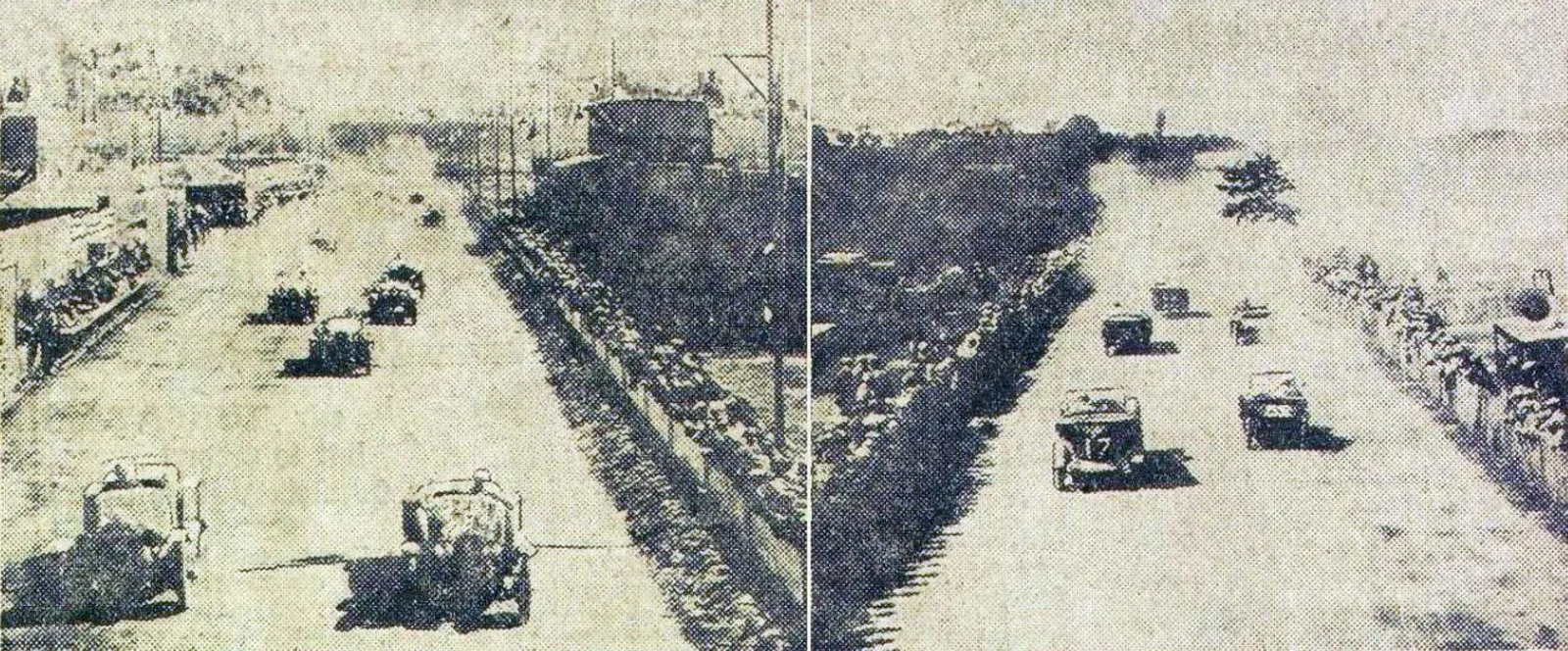
A 37-entry field, rain-soaked roads and a Triennial standing led by a Salmson that finished 12th.
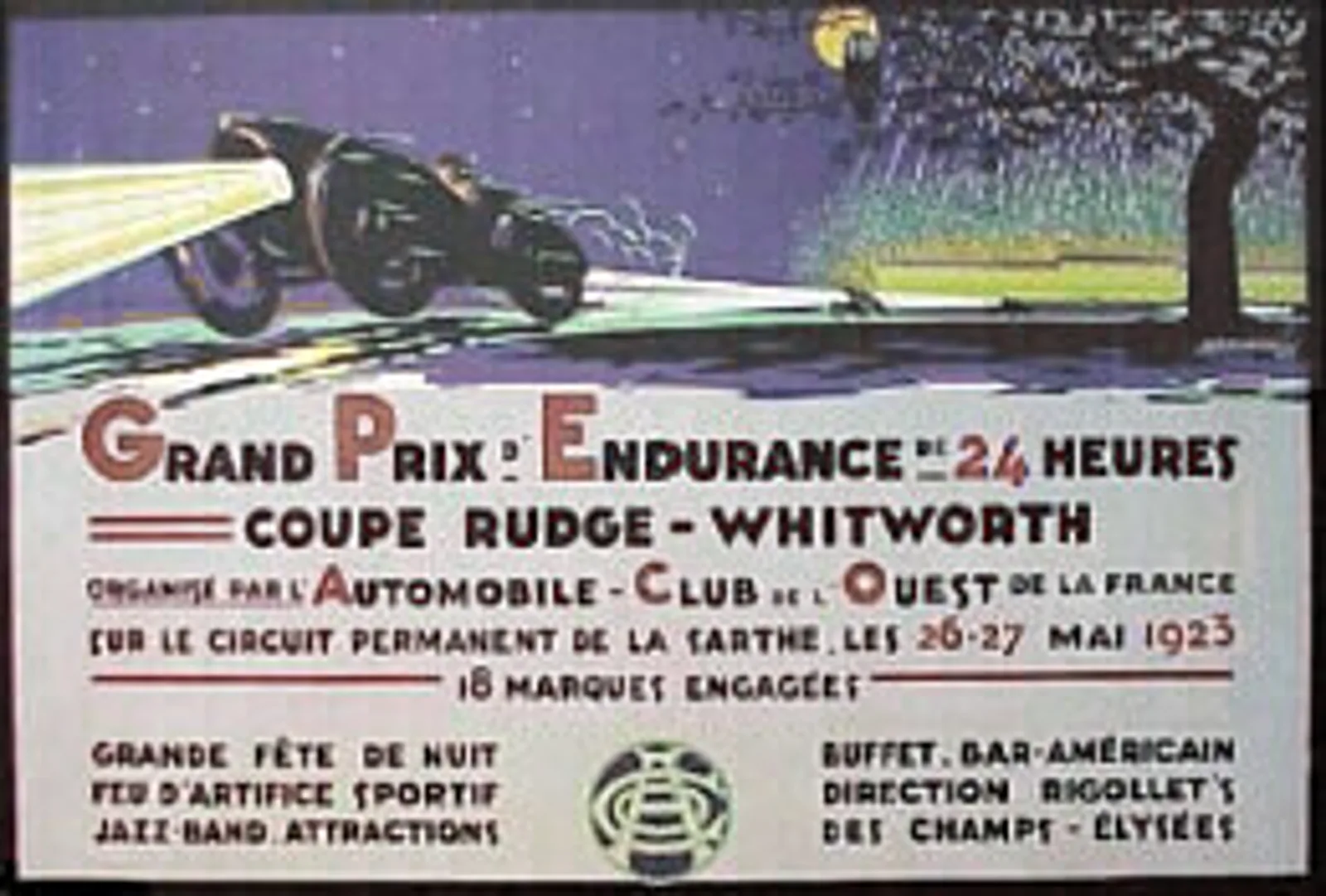
The inaugural 24 Hours of Le Mans was held on 26 and 27 May 1923 and was the first of three races for the Rudge-Whitworth Triennial Cup. Chenard-Walcker's Leonard and Lagache finished first on distance, while a Salmson held the Triennial lead at this stage.
The first 24 Hours of Le Mans ran on 26 and 27 May 1923 and opened a three-year series for the Rudge-Whitworth Triennial Cup. Chenard-Walcker took a 1-2 on distance, with Leonard and Lagache first, but the Triennial standing after this race belonged to a Salmson that finished 12th.
What were the rules for the first race?
Every car had to be a standard four-seater production model, although small two-seaters were allowed. Each passenger space carried lead ballast, and the organisers set a minimum distance that cars had to reach at 6, 12 and 18 hours. The final regulations were not completed until February 1923, which left the teams little time to prepare.
Two drivers were allowed per car, and only they could refill the fuel, oil and water. The ACO supplied the fuel itself. Engines had to be switched off at pit stops and restarted with an onboard starter.
The Rudge-Whitworth trophy had an unusual twist. It went to the manufacturer whose best car beat its target by the greatest margin over three consecutive years, so there was no prize for the outright winner. The race itself also ran across a clock change, starting at 4pm on Saturday and finishing at 5pm on Sunday.
Thirty cars finished, a number Le Mans would not equal again until 1993.
The circuit and the spectators
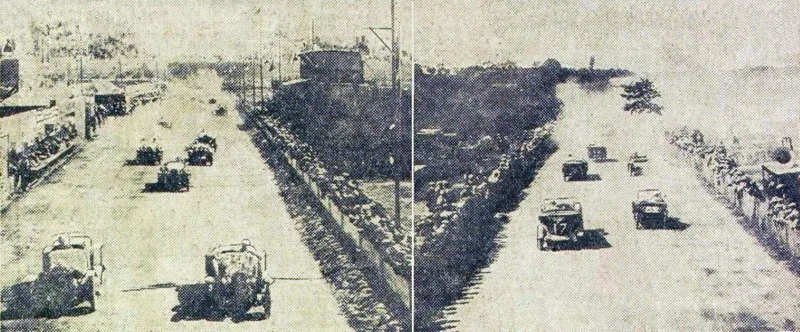
The circuit was 17.26 km (10.72 mi) long and ran from the outskirts of Le Mans south to Mulsanne and back. Much of it was on public roads, and several stretches were narrow, particularly the country roads near Mulsanne and Arnage and the approach to the Pontlieue hairpin.
The roads were not tar-sealed, so engineers laid a temporary mix of gravel, dirt and tar before the race. Army acetylene floodlights lit the sharp bends at Pontlieue, Mulsanne and Arnage.
Automobile racing had been part of the Sarthe region since 1906, so the local crowds knew what a long race looked like. Spectators had cafes, a dancefloor with a jazz band, and a scoreboard that was maintained by hand. Generators powered the public address system and the lighting, and a long board showed each car's position, laps completed and target distance.
Who entered the first race?
There were 37 entries, all submitted by manufacturers rather than individual drivers. The cars were numbered by engine size, and the biggest engines came from Excelsior, a Belgian luxury maker whose 5.3-litre cars were the largest in the field. Many models were also rated for the French CV horsepower tax.
The field was dominated by French makes. Chenard-Walcker sent three cars, with 3-litre U3 engines of 90 bhp, and Rolland-Pilain presented four cars, the biggest entry in the race.
Chenard-Walcker was a major Parisian company and a leading supplier of taxis to the city. Its bodies were built by the coachbuilder FAR, whose leading figures, Andre Lagache and Raymond Glaszmann, were keen racers themselves.
The Excelsiors were built by a company whose racing success and sales to the Belgian royal family had made its name. Its 1922 Adex C had a straight-six making 130 bhp, and its suspension may have been among the earliest to use an anti-roll bar.
Lorraine-Dietrich had started as a locomotive maker and had entered the early inter-city road races. Its Torpedo bodystyle was the fastest of the three variants sent to Le Mans, and it could reach almost 145 km/h (90 mph).
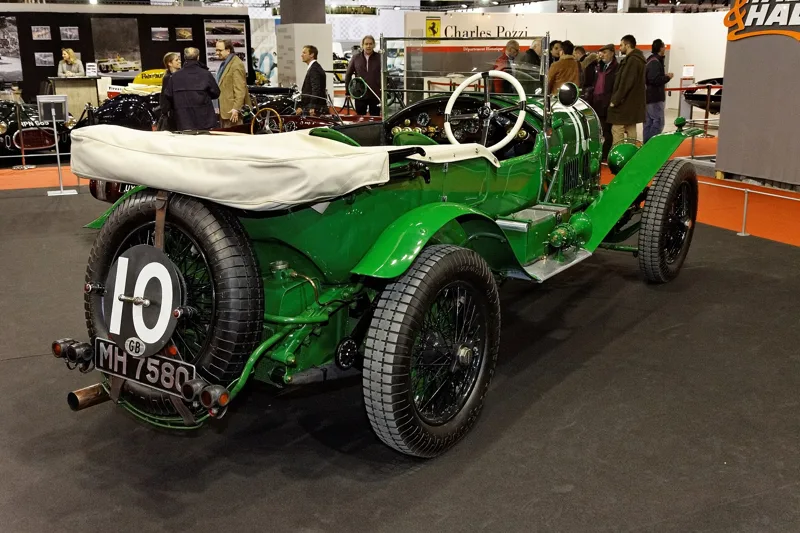
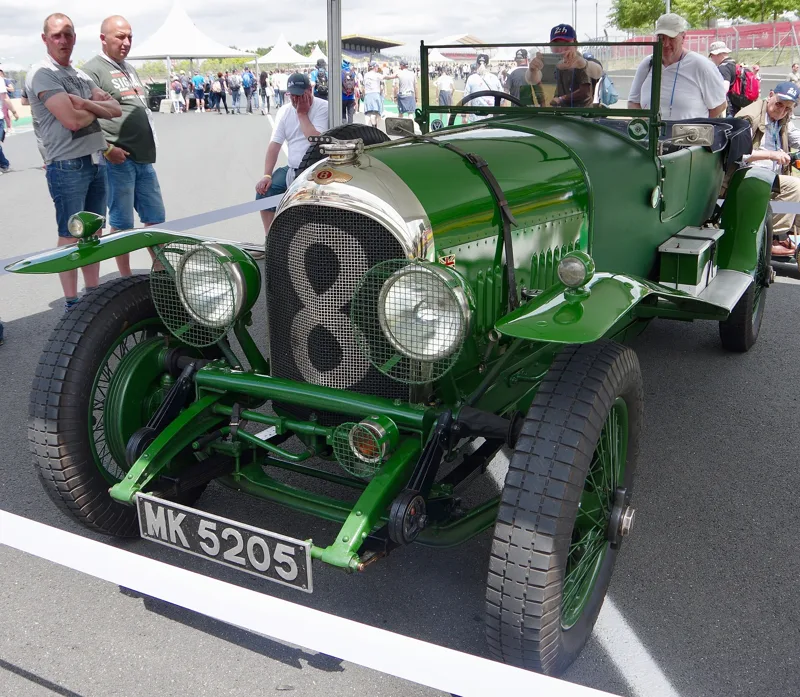
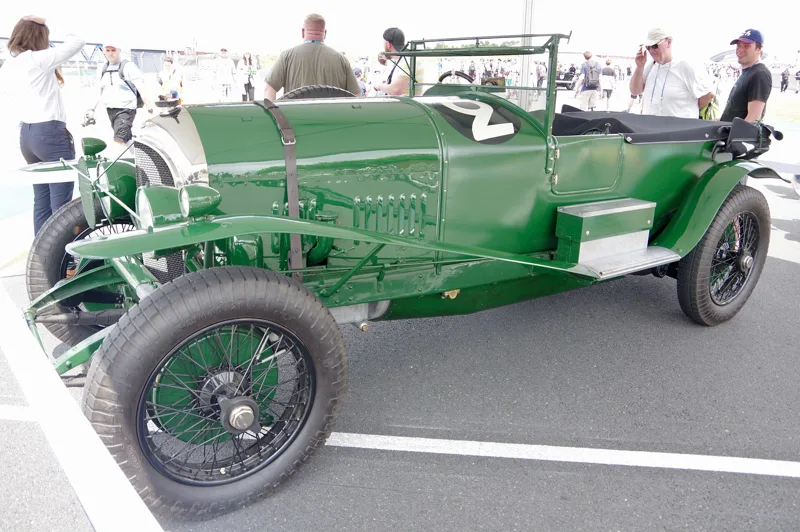
The only British car was a privately owned Bentley. John Duff's entry was the first the ACO received, and the Bentley ran rear drum brakes on Rapson tyres, a long-endurance design from Lionel Rapson.
John Duff was Bentley's new London agent, and he had built up almost 40 international records at Brooklands before breaking both ankles there in a crash. W. O. Bentley was not convinced the car should go, but he released his test driver, Frank Clement, to co-drive.
Duff drove the car to Newhaven, and Clement took it on to Le Mans, with two Bentley mechanics and a load of luggage and tools.
The innovative company from Tours held patents covering hydraulic brakes and a sleeve-valve engine, and its four cars were all different.
Ford's Bordeaux plant made about 20,000 cars a year by 1923, and Charles Montier, Ford's agent in France, raced a special with an engine of his own design. Brasier's TB4 had a 2062cc engine and a four-speed gearbox, while Berliet entered two VH models with 2617cc engines.
Delage's one-off special was a version of its popular production model, reworked with an overhead-valve head. Paul Torchy, a new works driver, shared it with the test driver Belbeu.
Bugatti was still a small company at the time, and its two privately owned Brescia cars were heavy. The passenger ballast the rules demanded added to their weight.
Salmson had begun as a pump and compressor maker, and during the war it had built aircraft. Its works team, formed in 1921, was led by former fighter pilot Robert Benoist, and it had the small-engine classes in its grip.
Lucien Chenard, the founder's son, created a works racing side in 1921, with Rene Leonard as its test driver. Raoul Bachmann and Christian Dauvergne shared the third Chenard, which had a less powerful engine than its sisters.
Georges Irat entered two Type A Torpedo cars with about 50 bhp, and Salmson fielded two VAL-3 voiturettes. The smallest car was the Amilcar CV, whose 18 bhp engine was given a 48-lap target to reflect its size.
Amilcar was a new Parisian company, formed in 1921 to build small cars and cyclecars. Its CC model had won Europe's first 24-hour event, the 1922 Bol d'Or, ahead of Salmson.
How did the first hours unfold?
The race began at 4pm in cold rain, and the rain lasted four hours without major incidents. The quickest cars early on were the Chenard-Walckers, the Bentley, an Excelsior and a Bignan. The first fuel and driver stops came after 7pm.
Cars waited in pairs on the front straight for the standing start, engines switched off. The Autocar review of the time said the cars went in the order the ACO had received their entries.
Carpe, the ACO chief timekeeper, dropped the flag, and Bloch's Lorraine-Dietrich passed the big Excelsiors early on. The Belgian-driven Excelsior later gradually lost time because of its sluggish acceleration.
Most drivers ran without hoods, because raised hoods cost top speed and fuel economy. Drivers also suffered mud-splatter from the cars ahead, and most went without goggles despite the rain.
How did the night and morning play out?
The night brought mud and failing lights as water got into the acetylene and electrical systems. SARA's car left the road when its lights went out, and it was the first car out in the event's history. The damage was too severe to continue.
A stone punctured Rene Marie's Bugatti fuel tank near Arnage. Marie walked 5km back to the pits, then returned with two fuel tanks, and the officials allowed it because the stop was an accident rather than a miscalculation.
Just before midnight a stone smashed the Bentley's headlamp. The team was offered a spare by the Chenard crew, but fitting it would have taken too long, so the car carried on with a single light.
At 5am Leonard and Lagache led the Bentley by two laps. Superior pitwork gave the three Chenards a three-lap cushion early in the morning, and the Bentley came back as the roads dried out.
Around midday a stone punctured the Bentley's fuel tank at Arnage, and its petrol drained away. Clement walked back and borrowed a gendarme's bicycle to bring two fuel tanks back to the Bentley.
Repairs took two and a half hours, with a cork in the hole. Clement then set the fastest lap of the race as the surface dried, and the Chenards could not be caught.
The first race at a glance
| Item | Detail |
|---|---|
| Dates | 26 and 27 May 1923 |
| Race | Inaugural 24 Hours Grand Prix of Endurance |
| Entries | 37, all submitted by manufacturers |
| Finishers | 30 cars |
| Winners on distance | Leonard and Lagache, Chenard-Walcker, 1-2 |
| Triennial interim leader | Desvaux and Casse, Salmson, 98 laps against a 52-lap target |
| Circuit length | 17.26 km (10.72 mi) |
| Longest distance | 2,209.54 km (1,372.94 mi) |
| Fastest lap | F. Clement, Bentley 3-litre, 107.33 km/h (66.69 mph) |
Who finished, and how far?
Leonard and Lagache won on distance, with Gros and de Tornaco's Bignan third. The Bentley, an Excelsior and the second Bignan were fourth equal on 112 laps. Only three cars were not running at the finish, and 30 cars completed the event.
Gros and de Tornaco's Bignan won the 2-litre category by eight laps. After the finish, Paul Gros was crossing the circuit to greet a friend when Raoul Bachmann's car struck him. Bachmann had come in late on his final lap, and the finishing area was already crowded with cars and spectators. Gros suffered a broken arm and bruises.
Leonard and Lagache's car is frequently named as the first winner. It won on distance, but the regulations made it only the first of three annual races, and the trophy went to whichever maker's best car finished furthest beyond its target.
The Bentley completed the race on a single set of its Rapson tyres, and so did the Berliet. Corre-La Licorne's smaller tourer was the only car that kept its hood up throughout.
Repusseau, the French agent for the American Hartford suspension firm, set up a dining area for drivers and pit crews. Afterwards its tally showed 150 gallons of onion soup, 50 chickens and 450 bottles of champagne had gone down over the weekend.
Georges-Irat asked the ACO to monitor its fuel consumption, and officials logged 8.6 L/100 km (32.7 mpg-imp) for its best finisher.
Which car led the Triennial standings?
Desvaux and Casse's Salmson was the leader at this stage, with 98 laps against a 52-lap target. It finished 12th overall, but it had exceeded its target by 46 laps, and that margin put it top of the Triennial standings after the first stage.
Desvaux, Benoist and Casse had finished 1-2-3 at the Bol d'Or cyclecar race the weekend before, so the Salmson team arrived in strong form.
The race also produced a record. The distance covered was a record for a 24-hour race, despite the weather, and a 90 per cent finish rate was the strongest for many years.
Why did the first race matter?
In effect, the race was a contest between makers rather than drivers, because the trophy went to a manufacturer and never to an individual. Leonard and Lagache are often cited as the race's winners, and the regulations made it the first of three annual events.
Salmson's racing side was broken up at year's end and did not return until 1926, while Delage stayed away for more than a decade.
The Bentley's story was the stones: one smashed a headlamp before midnight and another punctured its fuel tank before midday.
Excelsior did not return for the Rudge-Whitworth cup, although the team had further success in the Spa 24 Hours, its local endurance race.