A roadside pile-up on the first night, a repaired Bentley and a volunteer co-driver: the 1927 race was decided by what went wrong.
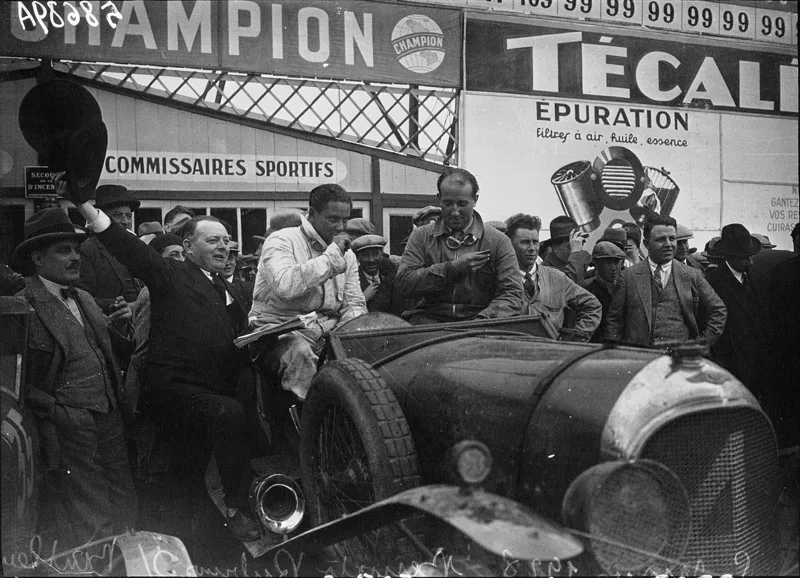
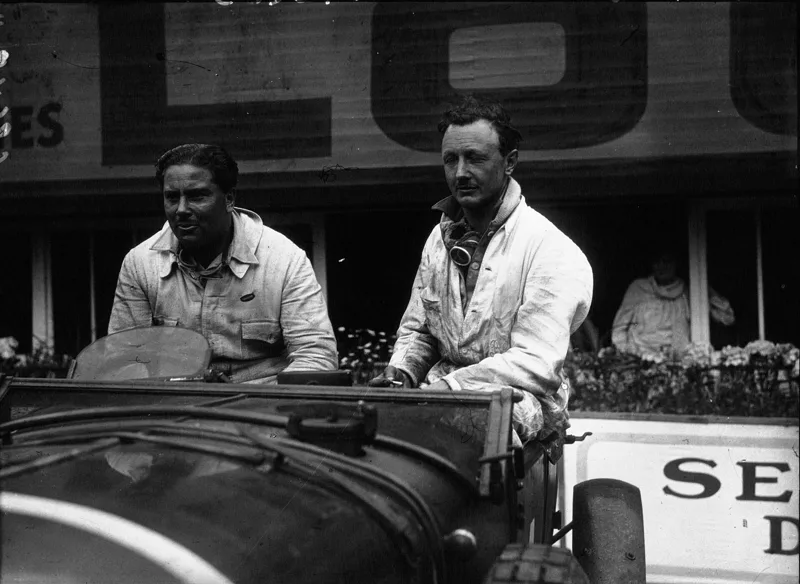
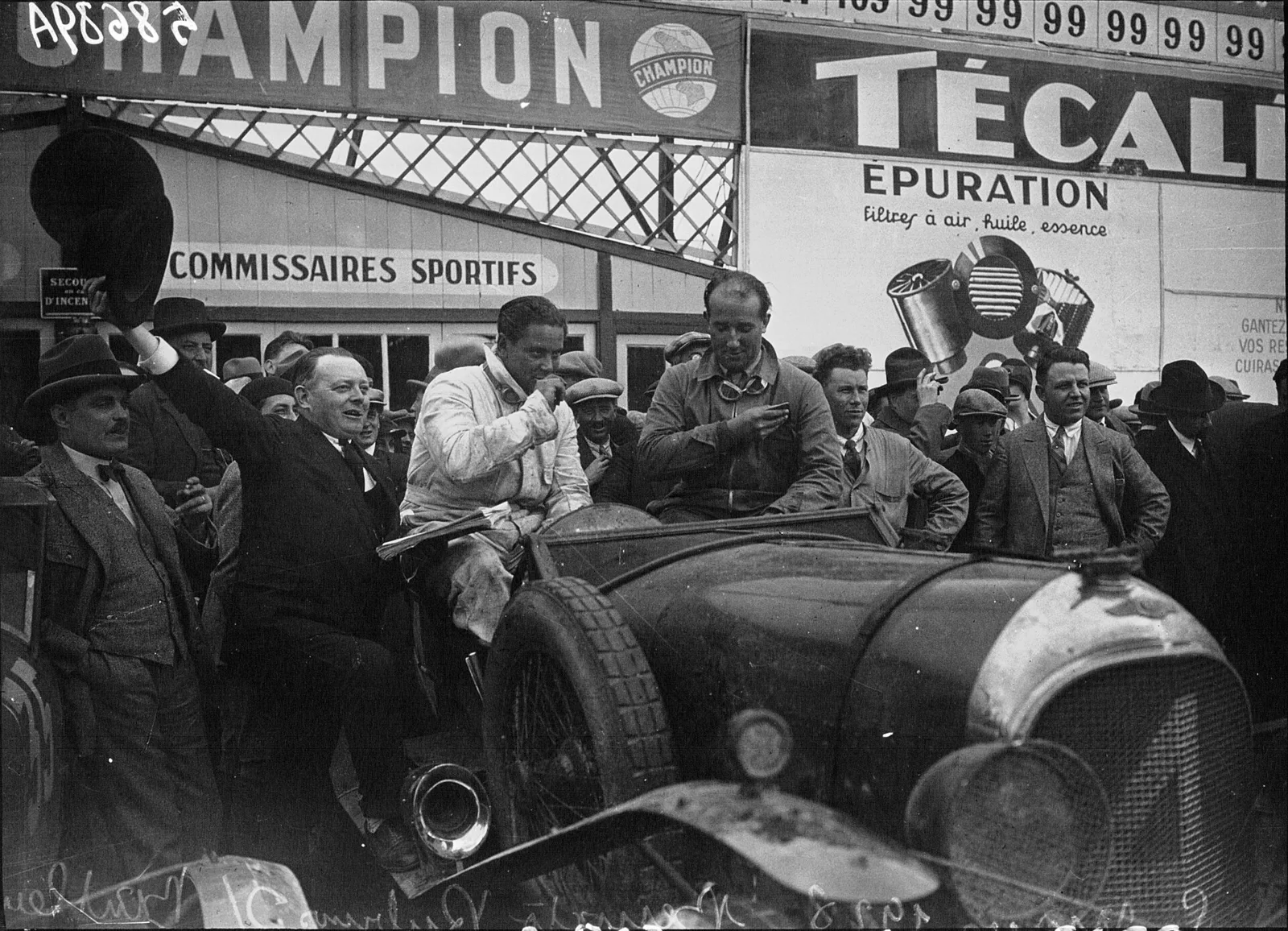
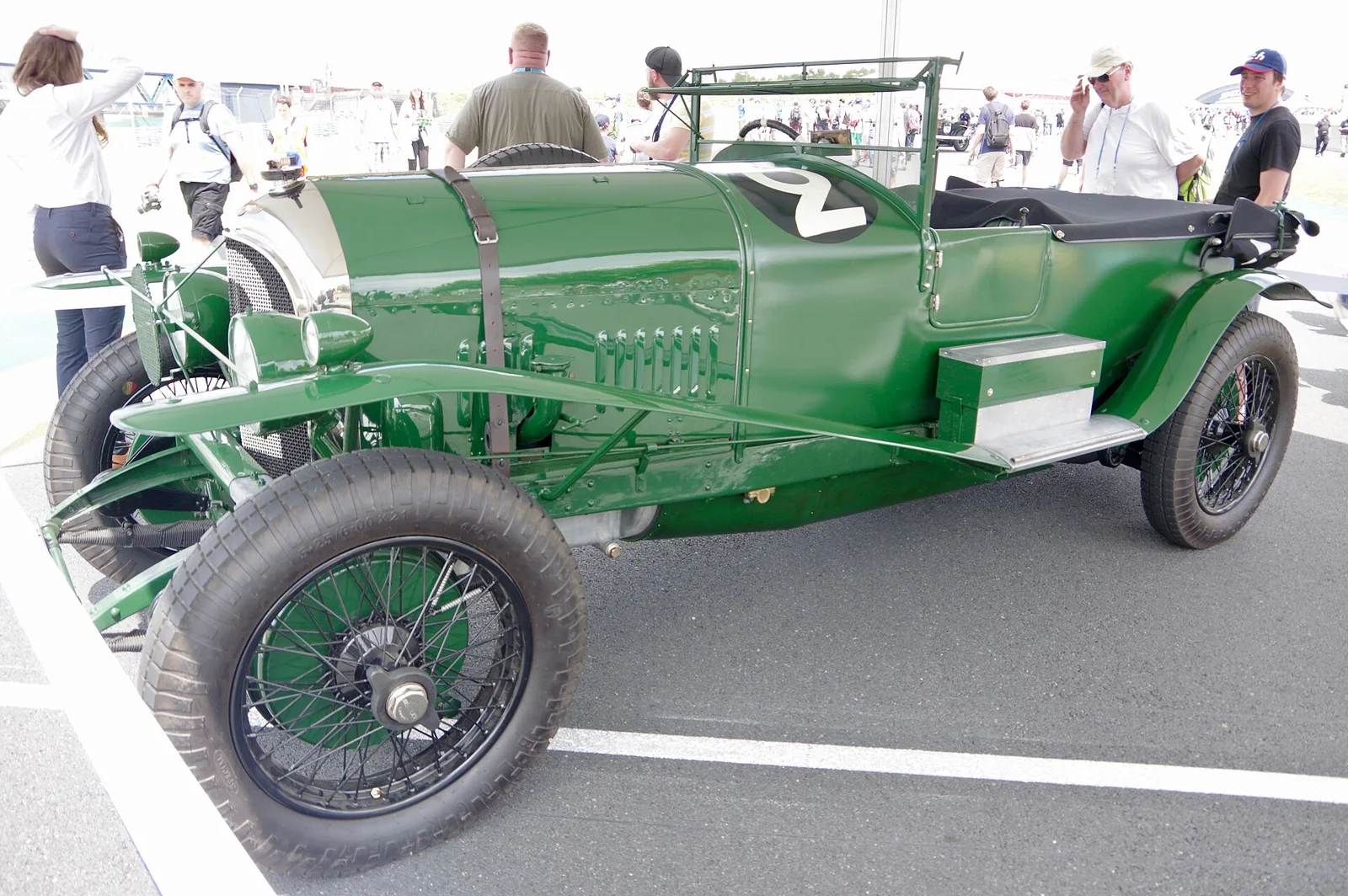
The 1927 24 Hours of Le Mans was won by Dudley Benjafield and Sammy Davis in a repaired Bentley 3-litre. The race is best known for the White House crash on the first night, which put all three favoured Bentleys in trouble. The victory was Bentley's second at Le Mans, and the margin was 20 laps.
The 1927 24 Hours of Le Mans is best remembered for the White House crash, a roadside pile-up on the first night that caught eight cars, including all three favoured Bentleys, and forced two of them out. The race was won by the third Bentley, which Dudley Benjafield and Sammy Davis had patched up after the accident. They finished 20 laps ahead of the two Salmsons, and the victory was Bentley's second at the event.
What were the rules and prizes for 1927?
The Automobile Club de l'Ouest raised the minimum production needed for eligibility from 10 cars to 30. Cars of 1100 to 1500cc could run with three seats, which removed 60 kg of compulsory ballast, and the Index prize rose to FF50000 from Grand Garage Saint-Didier, the Parisian dealership sponsoring the competition.
Fuel was standardised as well. Concerned about costly high-octane racing fuels, the ACO decided that every car would run the same commercial-grade gasoline. The organisers supplied 20-litre churns of Standard Oil's Eco-Essence, and a chemist analysed each car's leftover fuel after the race.
Teams had complained that the fuel rule would hurt their highly tuned engines. The Index targets also changed, and the smallest engines received a cut in distance, the first reduction of its kind in the Index.
A roadside wreck, a repaired Bentley and a volunteer co-driver made the 1927 race one of the most talked-about of the decade.
Who was racing in 1927?
Only 25 cars arrived after 41 had started the year before, as political unease and high inflation hit European manufacturers. Peugeot, Chenard-Walcker, OM and Lorraine-Dietrich all stayed away, and Rolland-Pilain withdrew weeks before the race. Aries was the only French maker left at the big-engine end of the grid, and Bentley were the favourites.
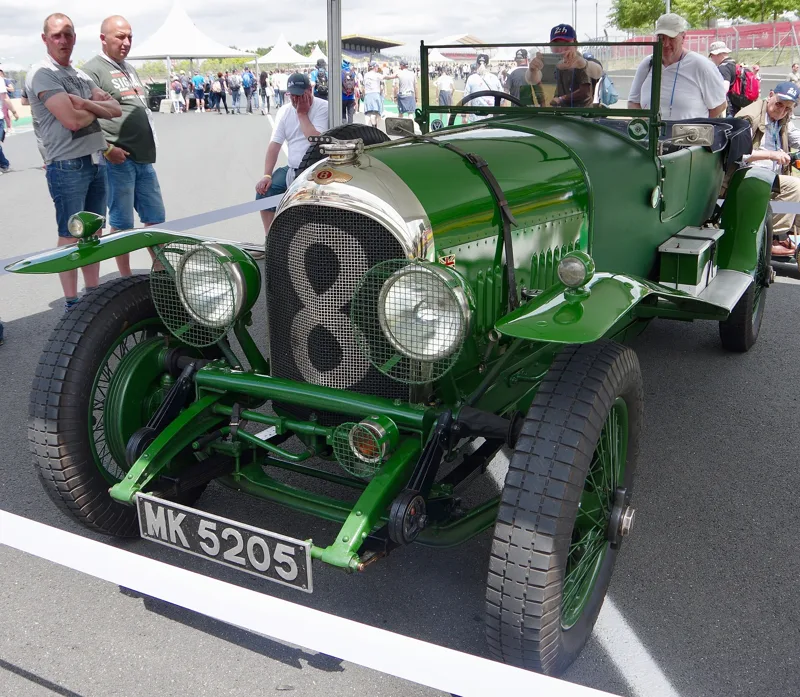
Bentley arrived with three cars, and the company had built over 1400 3-litre models by then, thanks to Woolf Barnato's investment. Benjafield and Davis were together again in the 3-litre Old Number 7, which they had crashed just an hour from the finish in 1926.
A second 3-litre went to Baron Andre d'Erlanger and George Duller. The new prototype, a four-and-a-half-litre with a four-cylinder version of the Straight-Six, was entrusted to Frank Clement and Leslie Callingham. Its engine made 115 bhp against the 3-litre's 88 bhp, and the drivers practised putting their hoods up.
Aries returned with its streamlined 3-litre tank for Jean Chassagne and Robert Laly, plus two 1100cc cars. One was a two-seater CC2, the other a four-seat CC4 that carried 120 kg of extra ballast for its additional seats.
Salmson brought three Grand Sport two-seaters with double-overhead-cam 1.1-litre engines. The Fasto company, formed in Paris in 1926, entered three lightened 2-litre A3 Sports. SCAP returned with two cars of its own build, one with a compact 1.5-litre straight-eight, and SARA entered a six-cylinder 1.5-litre SP7 with two 1100cc BDE cars.
The newcomers were Tracta. Its engineers, Jean-Albert Gregoire and Pierre Fenaille, had founded the company only in January 1927, backed by Fenaille's wealthy father. The Gephi cars used SCAP 1.1-litre engines and front-wheel drive, with a patented constant-velocity joint.
Practice week and the Tracta crashes
The public roads closed from 10pm on Friday until 6am on Saturday for private practice. Bentley tried more powerful Memini carburettors, but Benjafield's car caught fire at the Mulsanne corner. The damage was not severe, and the engine went back to its race specification.
A far worse loss came that same night. Marcel Michelot, commercial director of Gendron, went out for practice in thick fog, left the road between Mulsanne and Arnage at speed, and hit a tree. It was the third fatality in Le Mans history. His friend and co-founder Marcel Gendron withdrew the team's other car, which he had planned to drive himself.
On the Saturday morning the Tracta team was caught up in a road accident on its way to the circuit. Boussod misjudged a corner near Arnage and the car dropped into a ditch. Bourcier suffered a crushed leg, and Fenaille was left with a severe head injury and fell into a coma. Gregoire was bruised, but he got to the track determined to race for his new company.
Gregoire appealed to race director Charles Faroux and asked over the public address for a volunteer co-driver. Lucien Lemesle, a local mechanic, stepped forward, and Gregoire had just enough time to explain the car's unusual features before the start.
What happened at the White House corner?
Tabourin's Schneider spun at the Maison Blanche curves, blocking the road in the growing darkness. The leading Bentley arrived at speed and slid into the ditch, and the chain of collisions that followed took in eight cars, including all three favoured Bentleys. Two of them were forced out.
Pierre Tabourin had been delayed early on, and while pushing to make up time he was forced off line by an overtaking car. The leader, Leslie Callingham, was travelling at more than 70 mph (110 km/h) when he tried to avoid the stopped car, slid into the roadside ditch and was thrown into the road. George Duller arrived next. Seeing the danger he jumped clear just before impact, and his Bentley slammed into Callingham's car, which rolled and came to rest on top of it.
Duller staggered off to warn other drivers, but in the dark he had wandered to the far side of a roadside hedge, where nobody could see him. Thelussen's Fasto was able to slow and clipped the pile-up only lightly, while another Schneider, one of the small Aries and a SARA were all damaged.
Sammy Davis reached the scene and realised something was wrong. Gravel and debris covered the road well before the corner, so he took the bend more slowly than usual. Even so, he found the road blocked and too little room to stop. Rather than hit the stationary cars head-on, he slid the big Bentley sideways into them, striking first with the right-hand front wing.
Luckily the only major injury was to Tabourin, who broke an arm and some ribs. Davis then untangled his Bentley, squeezed through the wreckage and limped back to the pits with a bent chassis, damaged front suspension, mangled wings and a broken right headlamp.
Only Davis was allowed to work on his car, and only with tools carried aboard. With help from his mechanics and plenty of tape and string, he got it mobile again. Roughly half an hour later he was back out, covering six careful laps before Benjafield took over as planned. The steering pulled to the right, and the braking was uneven between the wheels.
The SARA was repaired and carried on, but it was disqualified at half-time, just three laps short of its target distance. The second Th. Schneider managed only six more laps before the team withdrew it after Tabourin's injuries.
How did the night and morning unfold?
With the three leading Bentleys out, the 3-litre Aries of Jean Chassagne and Robert Laly took the lead. They held it through a very wet night, while Benjafield gradually found his pace in the damaged Bentley and started closing the gap.
Just after midnight Benjafield was back on the lead lap, but he had to stop to re-attach the useless right headlamp. He fixed it by strapping a strong torch to the windscreen upright and carried on. Davis also stopped later to work on the right-hand wing.
At the six-hour mark the two smaller Aries cars were disqualified for insufficient distance. Both had been delayed by engine problems, and they were still working on them when the stewards ruled them out. The rain then became a heavy thunderstorm, and many drivers pulled over to wait it out until the squalls eased around 5.30am.
The Fasto team had a miserable morning. Its leading car, which had survived the crash and run as high as third during the night, failed with a magneto fault just after dawn. A second Fasto managed only three more laps before a valve spring broke, and a third suffered the same fault at midday.
The Aries had a bad midday too. An ignition fault at its pit stop cost 25 minutes, and the Bentleys closed to within four minutes. Chassagne and Laly put in fast laps to rebuild the margin, but the distributor failed completely on the 123rd lap, stranding Chassagne on the circuit.
Davis and Benjafield eased off and nursed their Bentley home. With a quarter of an hour to run, Benjafield handed the car to Davis so that Davis could take the flag. They crossed the line 20 laps ahead of the two Salmsons.
Who finished and how did the rest fare?
Salmson's Biennial Cup win came from Casse and Rousseau, while their team-mates shared the Index of Performance for the interim year. Only a small field reached the finish, and the Tracta of Gregoire finished seventh and last classified after one of the race's most heroic drives.
Fourth overall was the SCAP of Desvaux and Vallon, which passed its target by six laps. Their team-mates were also running at the finish, but they missed their target by six laps and were not classified.
Gregoire had driven fifteen of the first 20 hours, despite a bandage under his helmet, and his car met its target distance by four laps. Lemesle had grown uneasy about driving in heavy overnight rain. Once the target was reached by midday he stopped the car, and he was later found asleep beside it among the trees between Mulsanne and Arnage.
Fenaille, Gregoire's business partner, spent a fortnight in a coma and took two years to recover from partial paralysis and his head trauma.
The Fasto team recovered at the Spa 24 Hours, where all of its cars finished and one placed fourth overall. After a class win at Montlhery, the team quit racing after just three events.
Official figures from the 1927 race
| Item | Detail |
|---|---|
| Dates | 18 and 19 June 1927 |
| Winners | Dudley Benjafield and Sammy Davis, Bentley 3-litre Old Number 7 |
| Winning margin | 20 laps over the two Salmsons |
| Longest distance | 2,369.81 km (1,472.53 mi) |
| Average on longest distance | 98.74 km/h (61.35 mph) |
| Fastest lap | F. Clement, 8 minutes 46 seconds, 118.14 km/h (73.41 mph) |
| Field | 41 started in 1926; 25 arrived in 1927 |
Why did the 1927 race make the Bentley team heroes?
The crash and Davis's repairs turned the race into a national story. The team came home to a party hosted by The Autocar at the Savoy Hotel in London, with Old Number 7 as guest of honour, still muddied and damaged from its win.
The praise went beyond the motor press. Davis had searched the wreckage for his compatriots and rivals before carrying on, and the young men who had once been known for lavish parties were now seen as embodying much of what Britons admired in themselves. The race drew far wider press coverage than earlier editions had.
Clement's early pace was also rewarded. He set the fastest lap of the race, 8 minutes 46 seconds, and collected two FF1000 prizes, one from the Automobile Club du Nord and one from the Morris-Leon Bollee company.
Both drivers stayed prominent in British motorsport afterwards. Benjafield was a founder of the British Racing Drivers' Club, and Davis became sports editor of The Autocar and a founder of the Veteran Car Club.