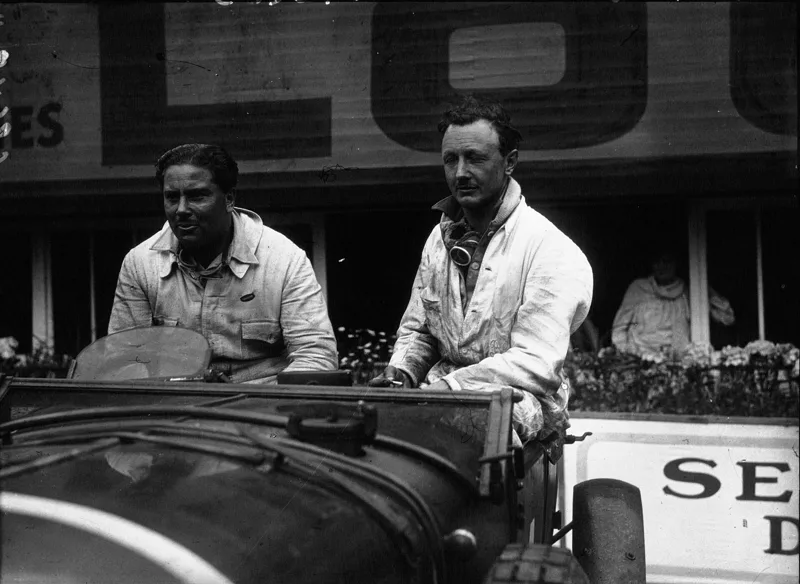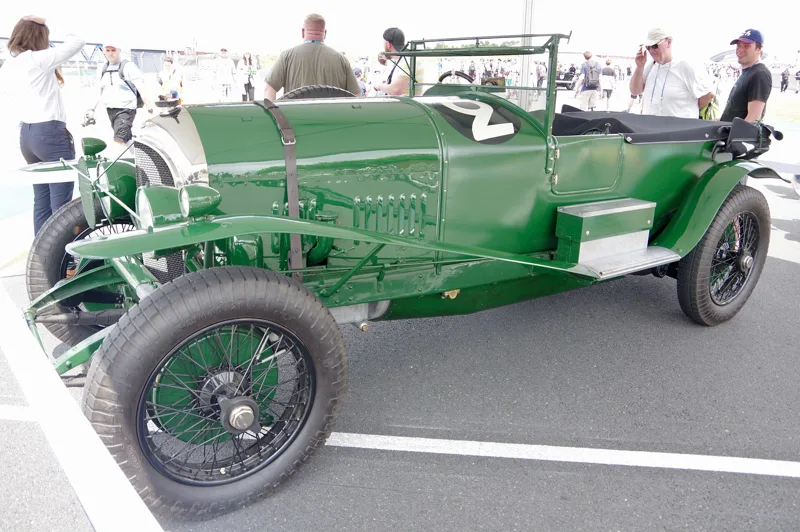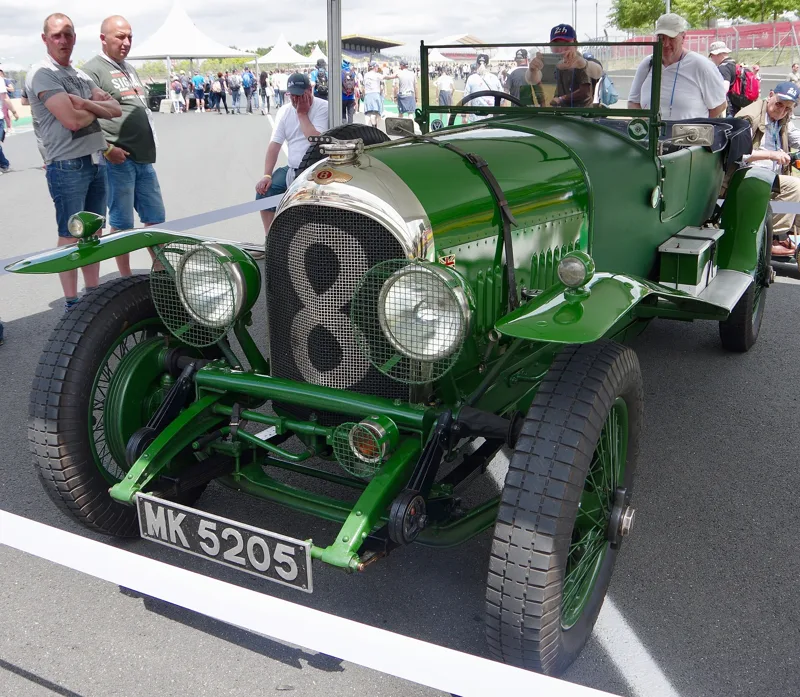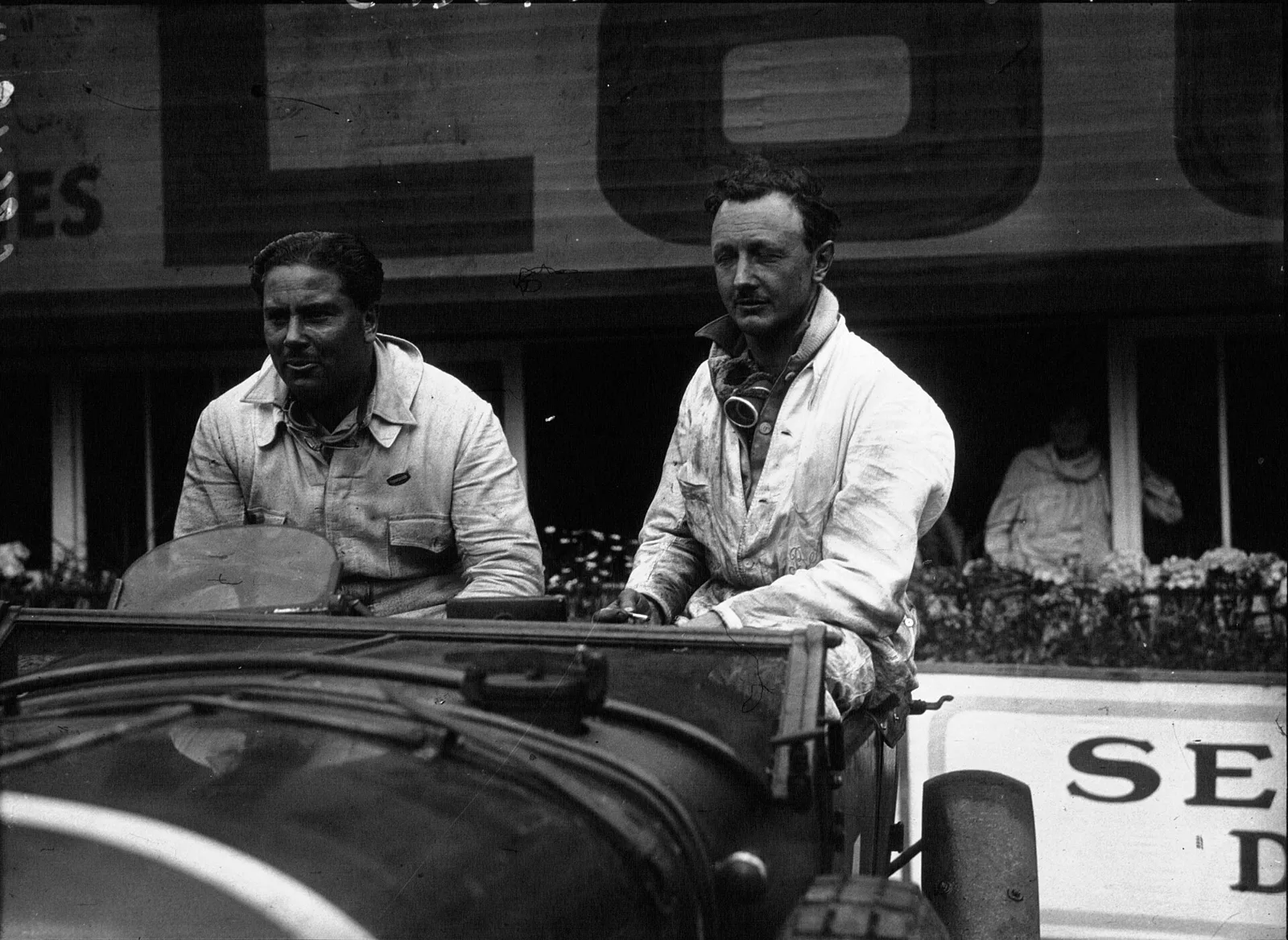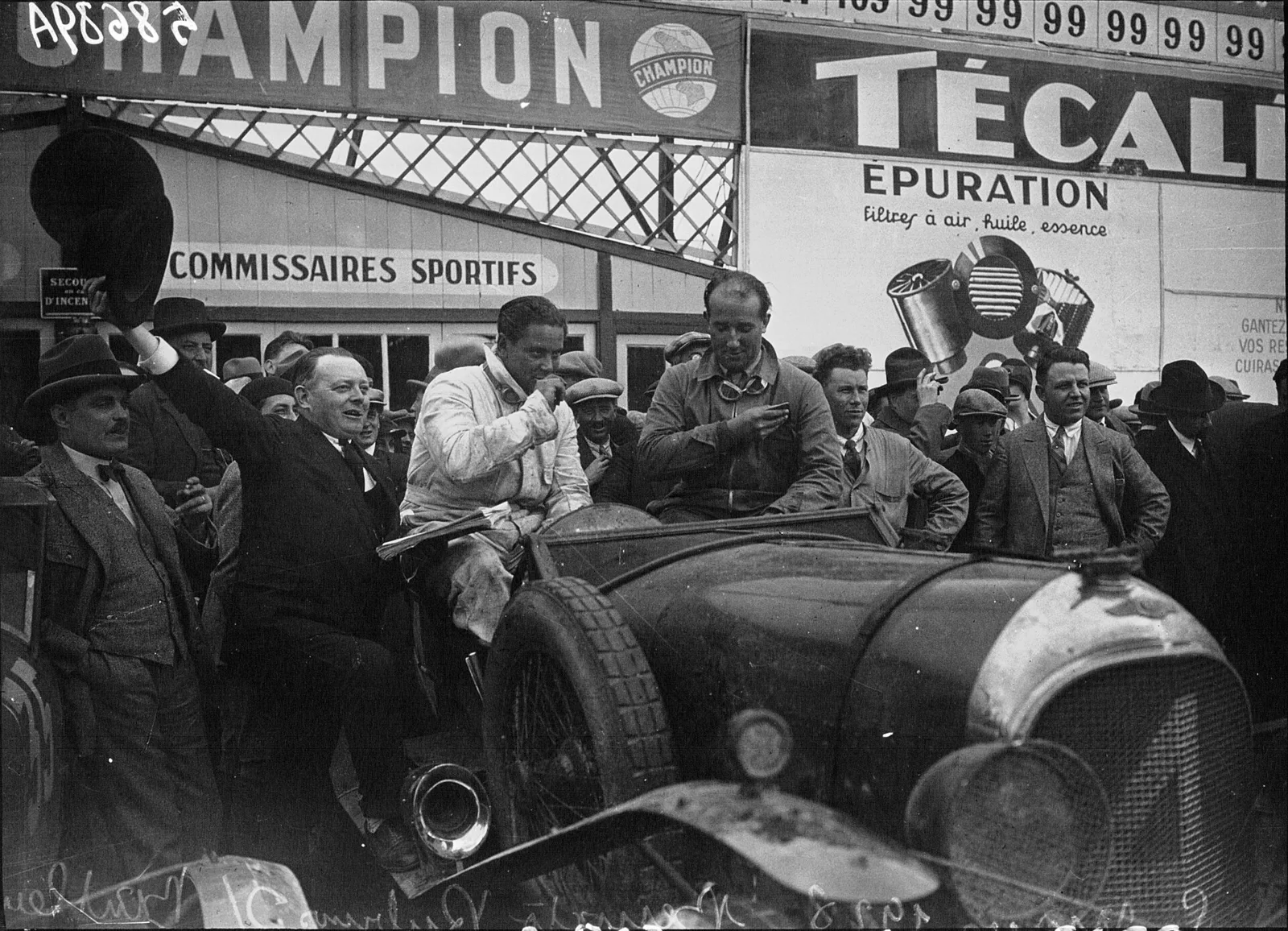
A night-long duel, a leaking radiator and a winning margin of 13 kilometres (8 miles) gave Woolf Barnato and Bernard Rubin the first prize for overall distance.
The 1928 24 Hours of Le Mans was won by Woolf Barnato and Bernard Rubin in a Bentley four-and-a-half-litre, after a long duel with a Stutz. The winning margin was only 13 kilometres (8 miles), and the pair took the new prize for overall distance. The Stutz of Brisson and Bloch finished second, and both cars broke the previous overall distance record.
The 1928 24 Hours of Le Mans was a Bentley win in the end, but only after a race-long duel with a Stutz. Woolf Barnato and Bernard Rubin took the car across the line 13 kilometres (8 miles) ahead of Edouard Brisson and Robert Bloch, and their distance also earned the first prize for overall distance. The race started at a record pace, and the two cars traded places through the night and into the morning.
What rules shaped the 1928 race?
The International Sporting Commission had issued new regulations, and the Appendix C rules tied minimum dry weights to engine capacity. In place of draining every car at scrutineering, the Automobile Club de l'Ouest allowed fifteen kilograms for fluids on cars over 3 litres and ten kilograms for those under.
The ACO's big innovation was the Coupe a la Distance, a prize for whichever car covered the most ground in the 24 hours. Supercharged engines were now allowed, although they could not run in the final round of the Biennial Cup. Their effective capacity was taken as 1.3 times the swept volume.
Two older rules fell away. The hood test, which had forced cars to run their first 20 laps with the roof up, was dropped, though convertibles still had to carry a hood. The Hors Course rule was relaxed too, so a car was only disqualified for insufficient distance at the 12-hour mark, and the requirement fell to 80% of target rather than 85%.
A Stutz and a Bentley traded the lead all night, and the winning margin was only 13 kilometres (8 miles).
Who was entered in 1928?
Foreign cars outnumbered French ones for the first time. Bentley, the defending distance winner, brought four cars and was the favourite for the new prize. Lagonda, Alvis and Aston Martin came from Britain, Alfa Romeo and Itala from Italy, and Stutz from the United States.
Bentley's cars each made 130 bhp and could reach 165 km/h (105 mph). The original Old Mother Gun, mangled in the White House crash the year before, was rebuilt for Barnato and Rubin. Benjafield was paired with Frank Clement, and Sir Henry Birkin, a debutant among the Bentley Boys, drove with Jean Chassagne, the veteran who had chased the team so hard in his Aries the previous year.
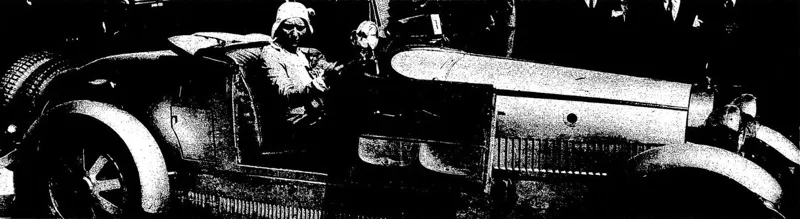
Stutz entered a BB Blackhawk with a 5-litre engine producing 125 bhp. Charles Terres Weymann entered it, and it was driven by Edouard Brisson and Robert Bloch, both former Lorraine-Dietrich men. The biggest threat to Bentley's distance prize was a car that had won many races in America.
Chrysler returned with four cars entered again by Grand Garage St Didier, using a 4.1-litre sidevalve engine that produced 85 bhp. Alfa Romeo's 6C-1500 Super Sport had dominated Italian races, but the ACO scrutineers rejected Count Boris Ivanowski's entry as too racy, with too many touring-car parts removed.
Itala's best racing days were before the war, but two cars came for a single appearance. Its Tipo 65 had a twin-cam 2-litre engine producing 70 bhp. Lagonda entered three 2-litre Speed Models that could reach almost 150 km/h (95 mph), and Alvis brought two front-wheel drive FA12/50 cars with 1.5-litre engines making 50 bhp.
Salmson returned with two cars, one of them a supercharged car that the rules let it run on a 1.43-litre equivalent, with 20 more laps added to its target. BNC entered a Monza with a Ruby 1100 engine producing 30 bhp, and Tracta brought three front-wheel drive cars, one of them driven by the first South American at Le Mans, the Argentine Hector Vasena. Aston Martin had two International prototypes with 1.5-litre engines.
How did the teams prepare for the race?
Morris Motors had bought the Leon Bollee factory near Le Mans to build cars for the French market. It offered its facilities to foreign teams needing repairs and machining, and Alvis, Lagonda and Aston Martin all used it to get their cars ready.
Practice produced a few problems but no serious setbacks, and the weather before the start was mild. A light squall crossed the circuit shortly before the flag, but it cleared and the rest of the afternoon was fine for racing.
How did the race start?
The Bentleys led the field from the start, with Birkin ahead of Brisson's Stutz, Laly's Aries, four Chryslers and two of the Lagondas. D'Erlanger had flooded his engine and was last away, and the Aries retired early with engine failure. Ledure's Chrysler, meanwhile, had lost its radiator water, the result of loose bolts on the frame.
The opening hour was torrid. Brisson kept pace with the Bentleys, but Barnato would not let him through, and the Stutz team protested the blocking to the officials. Bentley signalled Barnato to pull over, but a short shower then affected the Stutz's handling and Barnato pulled away.
Samuelson had been driving his Lagonda too hard, ignoring team orders to slow. He left the road at Mulsanne corner and buried the car in the sand. While he was reversing out, his team-mate d'Erlanger came through, making up time, and struck him. Samuelson's car was pushed back through the bank and into the fence, and it took two hours to dig it out. The gearbox casing was cracked, and d'Erlanger limped back to the pits with his front brakes and shock absorbers disconnected.
What went wrong for the leaders in the first stops?
Around the first fuel stops, the leaders lost time to mechanical and tyre trouble. Birkin's Bentley had a puncture at Mulsanne corner and did not arrive on its due in-lap. He spent 90 minutes cutting the tyre off, then tried to drive on the rim.
The rim collapsed at Arnage, and Birkin ran the five kilometres back to the pits. Chassagne smuggled out a second jack and ran back to help with the repair, and they got going again, though the delay had cost them three hours. Alvis had planned 22-lap stints, but its cars began sputtering after 19 laps because of the shape of the fuel tank, and the team had to change its strategy to reach the 20-lap minimum. Bertelli's Aston Martin hit a deep ditch while passing a slower car and wrecked its suspension.
Who led through the night?
The Stutz of Bloch and Brisson held the lead through the early night, with Barnato's Bentley close behind them. Brisson kept the Bentley back by blocking the road, even driving on the verge to throw stones up at it. Barnato closed in again, and the duel never let up.
Later in the night, fog and light rain came onto the circuit. The Benjafield and Clement Bentley retired when a water pipe came loose and emptied the pump well before the replenishment window. The chassis had flexed and broken under the strain of the hard racing.
The three Chryslers stayed in the top ten until around 3am, when Chiron's clutch began to fail. The car was later disqualified after the drivers tried to bump-start it. Davis had a blown tyre on his Alvis as he left Mulsanne corner, but he missed the roadside trees and limped to the pits. At the halfway point the supercharged Salmson, running well earlier, was disqualified alongside one of the SARAs for insufficient distance.
Shortly before dawn the Bentley pair regained the lead during a fuel stop. With the Chryslers third and fourth, the Itala trailed close behind, and the Alvis cars held sixth and seventh.
How did the finish play out?
The Stutz chased the British car for most of the morning, yet Rubin slowly pulled away. Shortly after midday the green Bentley had to pit with a water leak caused by a radiator that had worked loose on its cracked chassis, the same fault as its sister car. The Stutz's gearbox then began jumping out of top gear, and its French crew could not keep the pace.
At 10am Benoist tried to lap an Alvis at Pontlieue hairpin, and both drivers tried to outbrake each other. Both cars went onto the escape road. Benoist got a little further before stopping in the middle of the road, and it took an hour to get him back to the pits for repairs. Brisson came in at 2.30pm with no top gear, and the Stutz lost two laps.
In a tense finish, the radiator was running dry and the temperature needle was climbing, but Barnato babied the Bentley toward the line. He arrived at the line a minute too early and had to run an extra lap. Water was spattering him from the overheating radiator, so he slowed to 50 km/h, freewheeling down the slopes and stopping to let the engine cool. The Stutz overtook him, unlapping itself, but the Bentley won by 13 kilometres (8 miles).
Birkin set a new lap record on his final lap, 39 seconds faster than the previous year. He and Chassagne finished fifth, just managing their target of 135 laps.
Which smaller cars and teams took the prizes?
The Alvis of Harvey and Purdy won the 1.5-litre class after all the drama, finishing sixth overall. The Benoist and Dauvergne Itala dropped to eighth but still held a five-lap advantage over the last Lagonda and won the 2-litre class. D'Erlanger and Hawkes pushed on after their Saturday night repairs to finish 11th.
Salmson came tenth overall and again won the Biennial Cup, beating its target by 29 laps. The Index of Performance went to BNC, which passed its target by 33 laps and finished seventh, the first French car home.
Tracta had a complete change of fortune after a terrible 1927 race, with all three cars finishing. The best was the 1.5-litre Type A in 12th. No car from Tracta or Alvis retired. E.H.P. finished second in the Biennial Cup and beat its previous best distance by nine laps, although the company closed in 1929.
The SARA of Duval and Mottet was nominated for the Biennial Cup. It was delayed in the middle of the race, but it made up time to meet its target by a margin the ACO calculated at only 35 metres on the last lap. SCAP lost both its cars in the last few hours, just short of their required distances.
Official figures from the 1928 race
| Item | Detail |
|---|---|
| Dates | 16 and 17 June 1928 |
| Winners | Woolf Barnato and Bernard Rubin, Bentley four-and-a-half-litre |
| Runners-up | Edouard Brisson and Robert Bloch, Stutz |
| Margin | 13 kilometres (8 miles) |
| Distance covered | 2,669.27 km (1,658.61 mi) |
| Average speed | 111.22 km/h (69.11 mph) |
| Fastest lap | H. Birkin, 127.60 km/h (79.29 mph) |
Who gained most from the 1928 race?
Foreign cars set the pace in 1928, and Bentley and Stutz fought over the top two places. Smaller and unusual designs also finished, including the Alvis and Tracta front-wheel drive cars and BNC, which took the Index. Every car from both front-wheel drive teams, Tracta and Alvis, reached the finish.
The result also brought changes to the teams. Salmson closed its racing programme in 1929 while its record was still high. BNC had put money into larger passenger cars that did not sell, and Bollack and Netter were forced out of their company when it was bought by Charles de Ricou at the end of the year.