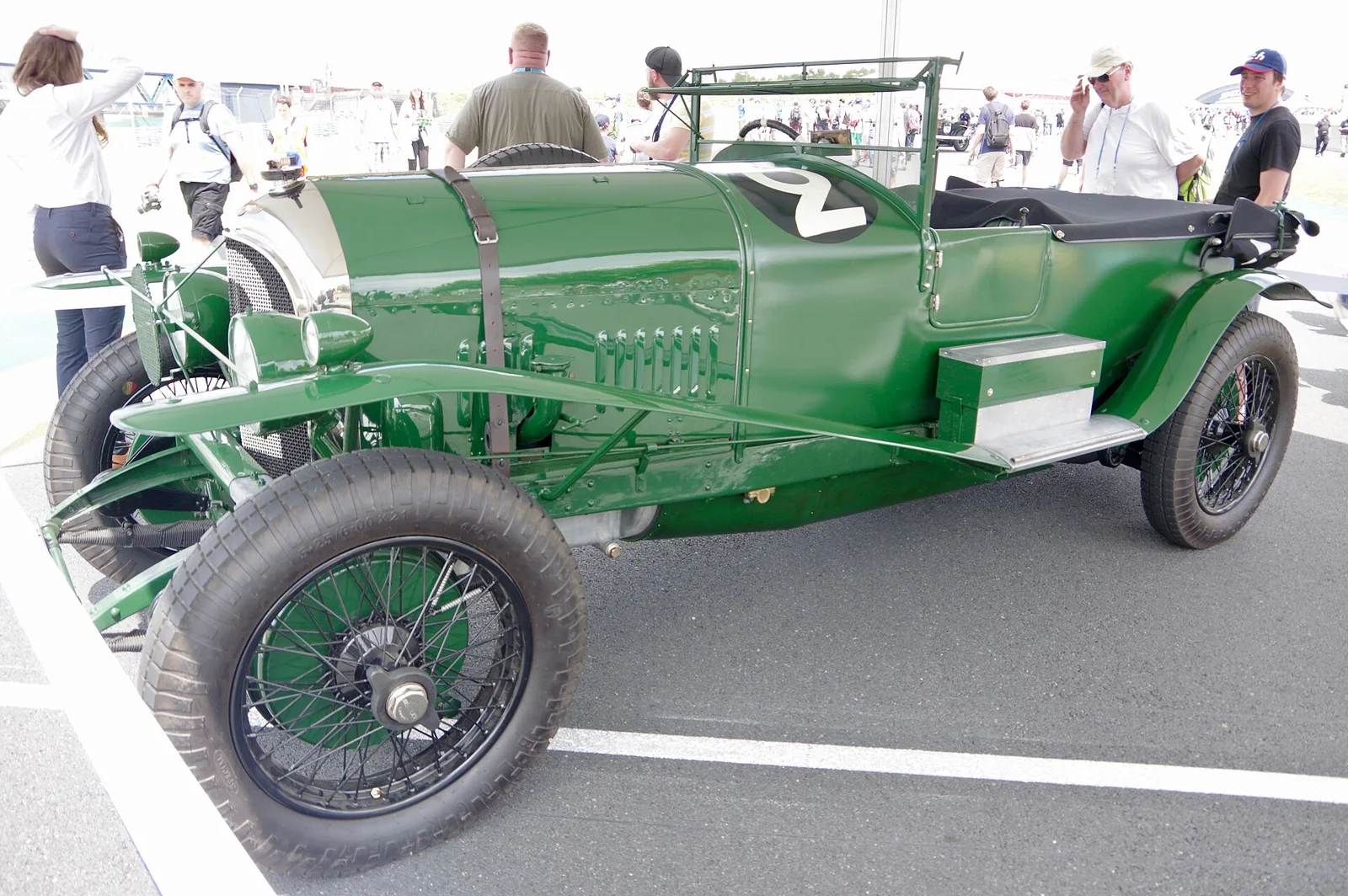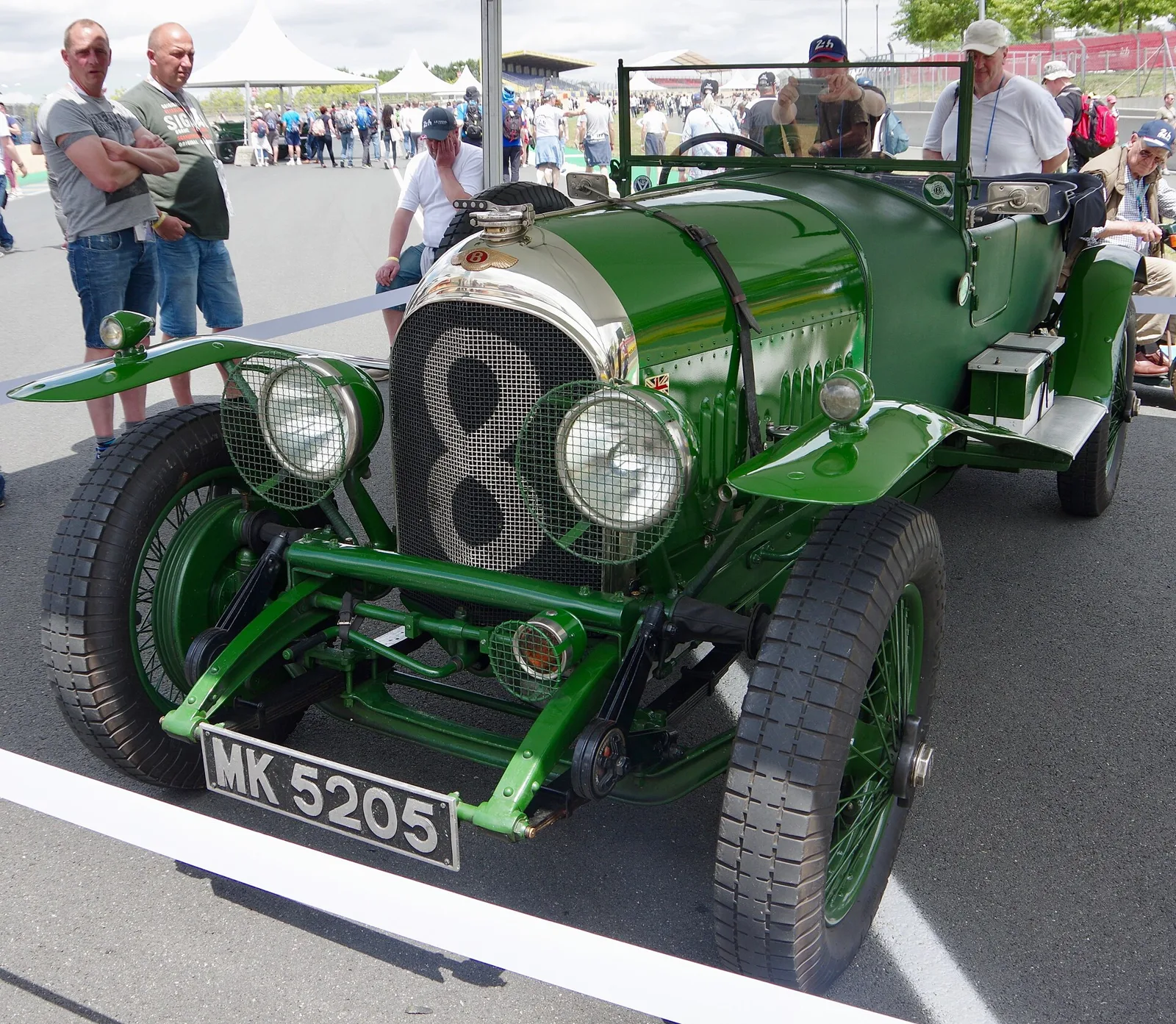
A new Index of Performance, a Peugeot works debut and a Bentley that ended in the sandbank as Lorraine-Dietrich took the top three places.
The 1926 24 Hours of Le Mans was won on distance by Robert Bloch and Andre Rossignol in a Lorraine-Dietrich B3-6, which took the first three places. It was the first race where the winner averaged more than 100 km/h, and it set a new 24-hour distance record. Peugeot made its works debut, and two of its cars were disqualified.
The 1926 24 Hours of Le Mans gave Lorraine-Dietrich a 1-2-3 finish, with Robert Bloch and Andre Rossignol winning on distance for the second year in a row. It was the first edition in which the winner averaged more than 100 km/h (62 mph), and it was the first to beat the 24-hour distance record that Selwyn Edge set at Brooklands in 1907. Peugeot arrived as a works team that year, but disqualifications and a late Bentley accident shaped how the field finished.
What changed in the rules for 1926?
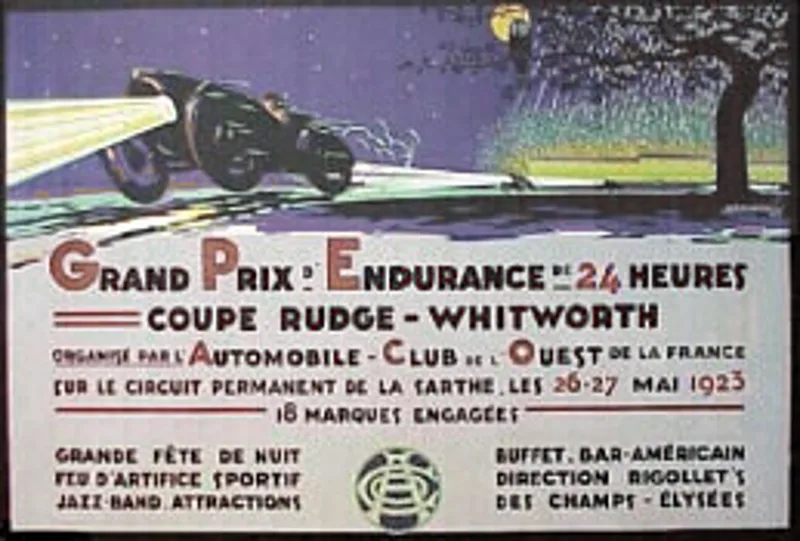
The old cup calculations had proved hard to apply, so the Automobile Club de l'Ouest introduced an Index of Performance. It rewarded the ratio by which a car beat its own target distance, and it used the average speed after a car reached target. Each car also had to complete its final lap within 30 minutes.
The Index carried a prize of FF10000 from Grand Garage Saint-Didier, a large Parisian car dealership that had entered a Chrysler in the previous year's race. Manufacturers needed to have built only ten examples of a model to enter it, which widened the field.
Pit work followed a strict sequence set by the ACO. Crews could refuel, add oil and water, and change tyres and wheels, but only with tools carried on the car. Smoking was banned in the pits, and every car had to carry a fire extinguisher.
Marshals were posted around the circuit with flags. A waved blue flag told a driver to slow while holding his line, and a yellow flag meant stop immediately. At night the lamps used blue or yellow filters.
Lorraine-Dietrich won on distance, but the race was decided as much by disqualifications and sandbanks as by speed.
Changes to the Sarthe circuit
Soon after the 1925 race, the owners of land on the Les Raineries side came back to the ACO with a fresh, more reasonable sale offer. With the deal done and help from local authorities, the organisers began a building programme. Permanent wooden pits and a 3000-seat grandstand went up, and the race-control tower was rebuilt.
The pits gained telephones, electricity and running water, and several cafes with electric table lamps served spectators. Car parks were extended to accommodate 3000 vehicles, and footbridges crossed the track near the pits, the Pontlieue hairpin and Maison Blanche.
Surfacing work followed. The Mulsanne Straight was sealed with tar, and lime went down on the Pontlieue hairpin and the run from Arnage to the pits to firm the road.
Who entered the 1926 Le Mans?
Lorraine-Dietrich arrived with three cars and the experience of the defending distance winners. Peugeot made its works debut, and Bentley returned with new money behind it. The entry list held 60 cars, but only 44 reached scrutineering, so the field was smaller than it looked.
Lorraine-Dietrich's B3-6 Sport had a strengthened chassis and a torpedo body. Weight savings let the car reach 150 km/h (95 mph) on its 3-speed gearbox. The 1925 winners were split across the cars, with Rossignol alongside Bloch, Gerard de Courcelles with Marcel Mongin, and Brisson with Stalter in the third entry.
Peugeot, France's biggest carmaker, had built nearly half of the country's production before the war. Its 174 Sport carried that success into the 1920s, with a 3.8-litre sleeve-valve engine making over 110 bhp. Boillot partnered Louis Rigal, while veteran Louis Wagner drove with Christian Dauvergne.
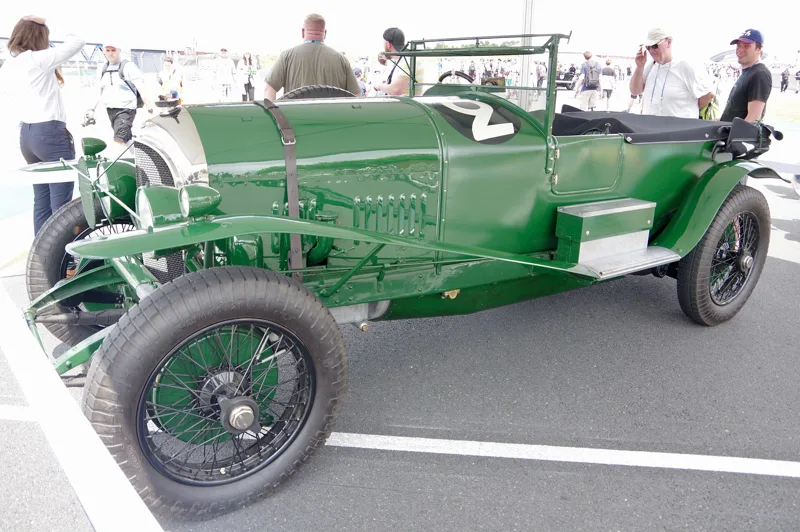
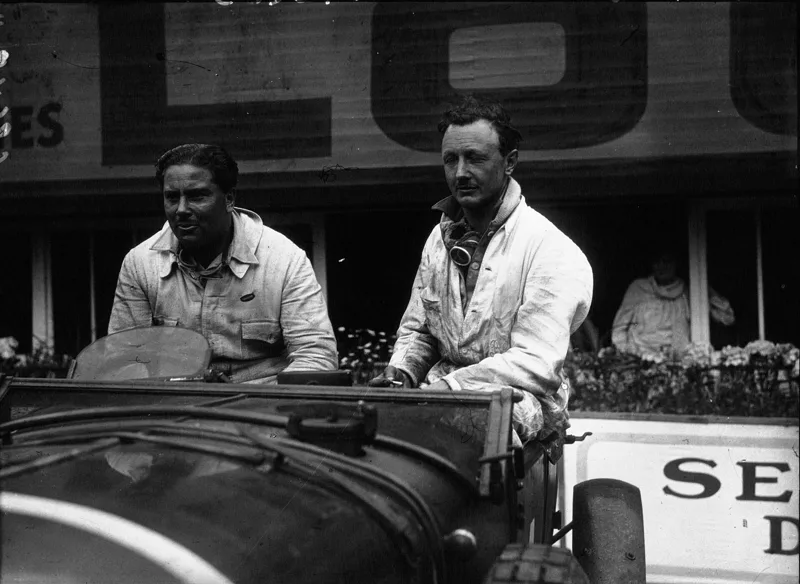
Bentley was short of money before the race. Woolf Barnato, heir to a South African mining fortune, had bought a controlling share through his investment company and become chairman. The company had been chasing 24-hour records without success. Two works 3-litre Speed cars were entered. Clement and Duller drove one, while Benjafield and Davis drove the other. A short-wheelbase 3-litre Super Sport was privately entered by Tommy Thistlethwayte, a 21-year-old gentleman driver.
Mechanic Les Pennel also changed the ballast. The compulsory 180 kg of passenger weight was normally carried in sandbags, which rolled about and dried out. Pennel used steel tubes filled with lead, bolted at the front and rear, which spread the weight more evenly and improved handling.
Aries entered four cars, including a streamlined 3-litre GP2 with a low tank-style body. Jean Chassagne joined Robert Laly after Wagner left for Peugeot. The Willys-Knight Great Six, a 3.9-litre sleeve-valve car making 65 bhp, arrived as a major new entry from America.
The American contingent was not small. John Willys had built the Overland company into a major maker, and its French agent, Henri Falconnet, entered three cars. The Overland entries had 2.8-litre sleeve-valve engines making 40 bhp, and both a hard-top and a coupe version arrived.
Smaller makers filled the rest of the field. OM returned with its upgraded Tipo 665S, Schneider brought a race-tuned 2-litre 25 SP, Jousset entered an M1 with a 1.5-litre CIME engine, and Salmson fielded Grand Sport cars with 1.1-litre engines. Corre La Licorne arrived with three cars, one of them a new 1.5-litre G6.
How did the 1926 race unfold?
Heavy rain fell throughout race week, but Saturday cleared to overcast with only occasional showers, and a record crowd came. Boillot's Peugeot led the first lap by 300 metres from the works Bentleys. As rivals hit mechanical trouble, the Lorraine crews gradually took control of the race.
The start itself was untidy. The Jousset saloon left first, since it had no hood to put up, while the two big Aries cars were last away because their drivers took great care fitting their hoods.
Robert Bloch passed the Bentleys and closed on Boillot, but his car lacked the power to pass him. The two big Aries had started last and needed an hour to work back to the leading group, where Laly reached sixth.
George Duller set a new lap record for Bentley, then overshot the Arnage corner and spent 20 minutes and two laps digging out of the sandbank. In the struggle he had taken off his helmet, which was not allowed, and for several laps the car risked disqualification. He was eventually persuaded to pit, and the helmet was found on the seat beside him.
Bloch overtook Rigal at twilight to take the lead. Accelerating out of the Pontlieue hairpin, Duray's Aries suffered a blowback and caught fire. He stopped quickly and used an extinguisher to save the car, although the Aries was out of the race.
At midnight the Lorraine had completed 48 laps, four more than the year before at the same time, and held a one-lap lead over the two Peugeots. At 1am the Aries tank pitted for a driver change and refuelling, but its generator had not been recharging and the battery was flat. Only electric starters were allowed, so the car had to retire.
Earlier in the night, Waldemar Lestienne's Corre La Licorne had reached the pits with a bent mudguard, a knocked wheel and a rear bumper trailing on the ground. He said another car had squeezed him into a ditch. Soon afterwards de Courcelles was closing on Dauvergne's Peugeot when both drivers came up behind a 1.5-litre EHP tank and spun off the road to get round it. Both teams lodged protests about unsporting driving, but the EHP's engine expired soon after anyway.
By the halfway point at 4am, Bloch and Rossignol led by a lap on 73 laps, with Boillot and Rigal on 72. The Peugeots' luck was about to run out. Boillot's car lost a windscreen stay, and then the glass fell out. Officials demanded a repair, but there was no spare, and the car was disqualified. Wagner's Peugeot later ran a flat battery, and when he reversed up the pit lane to bump-start it, he was disqualified too.
By 8am only 23 cars were still running. Duller's Bentley, which had been pushing hard since the sandbank, ended its charge with a broken valve as dawn approached. Privateer Gallop's Bentley retired with a broken rocker-arm, having run on three cylinders. Benjafield then picked up the pace of the remaining Bentley, closing on the Lorraines by as much as 20 seconds a lap. Mongin and de Courcelles raised their own pace in response and broke the lap record by seven seconds. Meanwhile the two OMs were still leading the 2-litre class, with a Bignan in eighth overall.
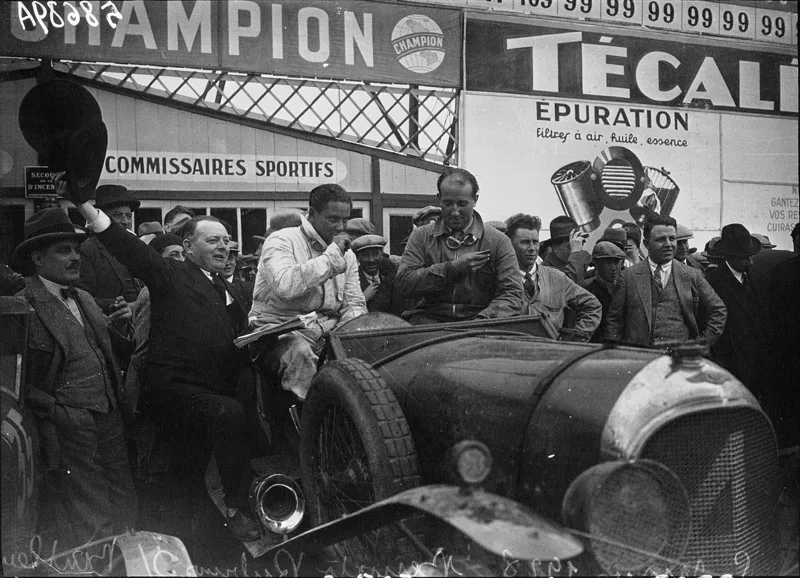
Half an hour before the flag, Davis caught and passed Mongin on the Mulsanne Straight. The hard chase had worn down the Bentley's brakes, and Davis arrived too fast at the sharp Mulsanne corner and put the car into the sandbank. Mongin stopped to check that he was all right, but he was not allowed to give assistance, and the Bentley could not be recovered in time to be classified.
In the last hour an OM was also excluded. Balestrero had stopped on the Mulsanne Straight after midday to pick up tools a mechanic had left there, which was not permitted, and he was disqualified.
Official figures from the 1926 race
| Item | Detail |
|---|---|
| Dates | 12 and 13 June 1926 |
| Winners on distance | Robert Bloch and Andre Rossignol, Lorraine-Dietrich B3-6 |
| Longest distance | 2,552.41 km (1,585.99 mi) |
| Average on longest distance | 106.35 km/h (66.08 mph) |
| Fastest lap | G. de Courcelles, 114.44 km/h (71.11 mph) |
| Entries | 60 entered, 44 arrived for scrutineering |
| Biennial Cup | OM, by countback over Lorraine-Dietrich |
Who finished where in 1926?
Bloch and Rossignol won on distance, and Lorraine-Dietrich claimed the first three places. Brisson and Stalter took third, while two Officine Meccaniche cars finished fourth and fifth on the road. The OMs also won the Biennial Cup on a countback, narrowly beating Lorraine-Dietrich.
The Lorraine trio held the front of the race through the morning, and Bloch and Rossignol kept a two-lap lead over their team-mate. Behind them, the American Overland had moved up to sixth in the last hour before it pulled in and retired, two laps short of its target.
Two SARA cars both finished, led by Marandet and Lecureul. Because the Index was now a ratio rather than absolute laps, a car's speed on its excess laps mattered to its score.
Duller and Mongin were each fined FF200 for racing at some point without helmets. Only three tyres were changed in the whole race, and all three Lorraines averaged over 100 km/h across the 24 hours.
Why does the 1926 race still matter?
The race is remembered for two firsts: a winning average above 100 km/h, and a distance beyond the old 1907 Brooklands 24-hour mark. Its new Index rules also angered the winning team, whose leading car was not entered for the Biennial Cup at all.
Several small French makers were struggling in a saturated touring-car market. Ravel, Bignan and Jousset were among the names forced to close.
The race was framed as an endurance trial for touring cars. Better road surfaces helped speeds, and tyre technology had improved, with most cars running the whole race on their original tyres. The leading Lorraine's distance equalled a crossing of the Atlantic from Ireland to Newfoundland in 24 hours.
Woolf Barnato had rescued Bentley shortly before the race. Davis's sandbank accident, half an hour from the flag, was the race's final big drama.